Ever tried holding a plank, wall sit, or support hold and realized the exercise itself is simple, but the setup makes all the difference? That is usually where people get stuck. They know static training works, but they are not sure what gear is actually worth buying. In this guide, I will break down the best equipment for static exercises in a practical way, especially if you train at home in the U.S. You will learn what static and isometric exercises really are, who benefits most, what equipment matters most, and which tools make the biggest difference for strength, control, safety, and progress.
What Are Static Exercises (And Why Does Equipment Matter)?
Static vs dynamic exercises: the key difference
If you have ever asked what are static exercises or what are isometric exercises, the short answer is this: they are exercises where your muscles work hard without visible movement at the joint. A plank, hollow body hold, wall sit, dead hang, and top pull up hold are classic examples. Your body stays in one position while the muscles create tension.
Dynamic training is different. In a squat, push up, or pull up, you move through a range of motion. Both styles matter. Dynamic work builds movement capacity, while static work improves control, positional strength, tendon tolerance, and awareness. In calisthenics, static strength is a big deal because skills like the L sit, handstand, front lever, and planche all depend on your ability to own a position, not just pass through it.
From my own training, I have found that static holds expose weak links fast. You can get away with momentum in dynamic reps. You cannot hide in a 20 second support hold on rings.
Why the right equipment makes static holds safer and more effective
Technically, many static exercises without equipment work well. Planks, glute bridges, split squat holds, and wall sits are enough for a beginner. But once you want better progression, safer joint angles, stronger grip confidence, or more skill specific work, equipment matters.
The best equipment for isometric strength training gives you three things: stable contact points, reliable grip, and progression options. A shaky bar, slippery handle, or weak frame turns a good hold into a frustrating one. On the other hand, solid parallettes, a dependable pull up bar, and quality rings let you focus on correct form for static holds instead of worrying whether the equipment will move first.
If you are building a small home setup, it helps to think in terms of function rather than quantity. One good pull up bar and one solid pair of parallettes can cover a lot more static work than a room full of random gear.
Who Benefits Most from Static Exercise Training?
Beginners and injury rehab: joint friendly and low impact
Static training is often a smart starting point because it teaches tension without demanding complex coordination. For beginners, that means learning how to brace the trunk, stack the shoulders, and control posture. For rehab or return to training phases, static work can be easier on irritated joints when used correctly.
Wall sits, incline plank holds, scapular hangs, calf raise holds, and split squat isometrics are all useful because they let you challenge muscle tissue without lots of repetitive motion. That is one reason static training shows up so often in physical therapy and performance programs.
Still, low impact does not mean no effort. Isometrics can get intense quickly, especially if you hold near your weak range. If you are coming back from pain, start conservatively and avoid turning every hold into a max test.
Intermediate and advanced athletes: building serious isometric strength
For experienced lifters and calisthenics athletes, static work becomes more specific. It helps you build stronger lockouts, improve body line control, and strengthen positions that carry over to advanced skills. Think top of dip holds, active hangs, tuck front lever holds, ring support holds, L sits, or handstand line drills.
This is where the best calisthenics equipment for static exercises really pays off. You want gear that lets you train challenging positions safely and repeatedly. Rings add instability and shoulder demand. Parallettes create wrist friendly angles for planche leans and L sits. A power rack or wall mounted setup gives you predictable height and support for lower body holds and rack based isometrics.
If your goal is advanced static strength, equipment is not about looking serious. It is about making progression possible.
What to Look for in Static Exercise Equipment
Stability and grip quality
The first thing I look at is stability. Does the gear stay planted? Does it wobble under load? Can you trust it when fatigue hits? Static training often means longer time under tension, so even a small amount of movement becomes distracting.
Grip quality matters just as much. Handles that are too slick, too thick, or poorly finished make holds shorter for the wrong reason. This is especially true with rings, pull up bars, and parallettes. If grip is your limiting factor before the target muscles are challenged, the setup is not ideal.
For many home athletes, wooden handles feel better than cheap glossy plastic because they offer a more natural grip. If sweaty hands are an issue, a bit of chalk helps. If you want to compare options, this guide on liquid chalk vs block chalk is worth reading.
Load capacity and durability
Even for bodyweight holds, load capacity matters. Support holds, ring work, weighted hangs, and explosive entries create more force than people expect. Thin welds, weak door anchors, and low quality straps can become a real problem over time.
Look for realistic user weight ratings, quality materials, and a brand with a good reputation. In calisthenics, simple gear often lasts the longest when it is built well. I would much rather have one durable pull up bar than a flashy all in one gadget that feels unstable after a month.
Size and setup: home, gym, or outdoor use
The best home equipment for static exercises is not always the biggest or most advanced option. It is the equipment you can set up easily and use consistently. A renter may need a doorway pull up bar or portable rings. A garage athlete can fit a rack or wall mounted bar. Someone training outdoors may care more about weather resistance and portability.
Before buying, think through your actual space, ceiling height, floor type, and whether you will leave the gear up permanently. That is how you build the best home gym setup for static exercises instead of collecting equipment you barely touch.
If you are starting from scratch, our guide to must have calisthenics equipment can help you narrow it down.
Best Equipment for Core Static Holds
Ab wheels and parallettes for planks and L sits
For pure core tension, ab wheels and parallettes are hard to beat. An ab wheel is not only for rollouts. It is also useful for extended plank variations and anti extension training, which directly supports static body line control. If your hollow body position breaks down easily, the ab wheel can highlight that quickly.
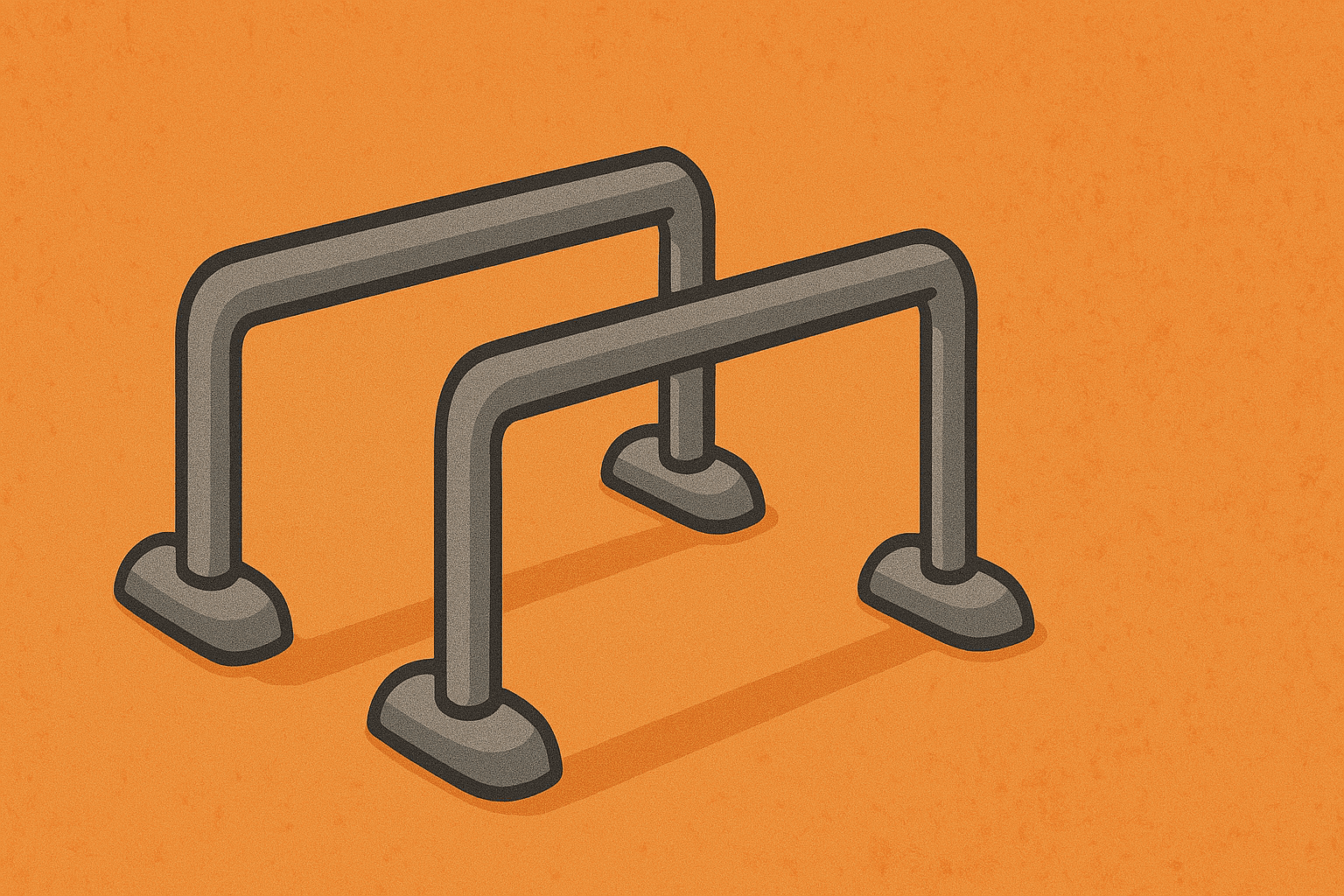
Parallettes are even more versatile. They are one of the best tools for parallettes for l sit holds, tucked compressions, plank variations, planche leans, and seated leg lift work. They elevate your hands, create more room for hip flexion, and reduce wrist extension compared with floor work. For many people, that alone makes L sit training much more practical.
If I had to recommend one calisthenics specific core tool, low parallettes would be near the top. Gornation parallettes are a strong option here because they usually have the grip feel, stability, and dimensions that suit serious bodyweight training rather than generic fitness use.
If the L sit is one of your goals, this guide on how to train the L sit is a helpful next step.
Pull up bars for hanging core work
A pull up bar opens the door to hanging knee raise holds, leg raise pauses, dead hangs, active hangs, and front lever progressions. Hanging work trains the core differently because your shoulders and grip have to stabilize while the trunk resists extension and swing.
For static core work, I like bars with enough clearance to hang freely and enough grip texture to feel secure without shredding the hands. Wall mounted bars and freestanding stations are usually better than flimsy doorway models for harder holds, but a solid doorway unit can still work for beginners.
If you are unsure what style fits your home, this comparison of doorway vs wall mounted pull up bar can make the decision easier.
Best Equipment for Upper Body Static Exercises
Gymnastics rings for support holds and upper body stabilization
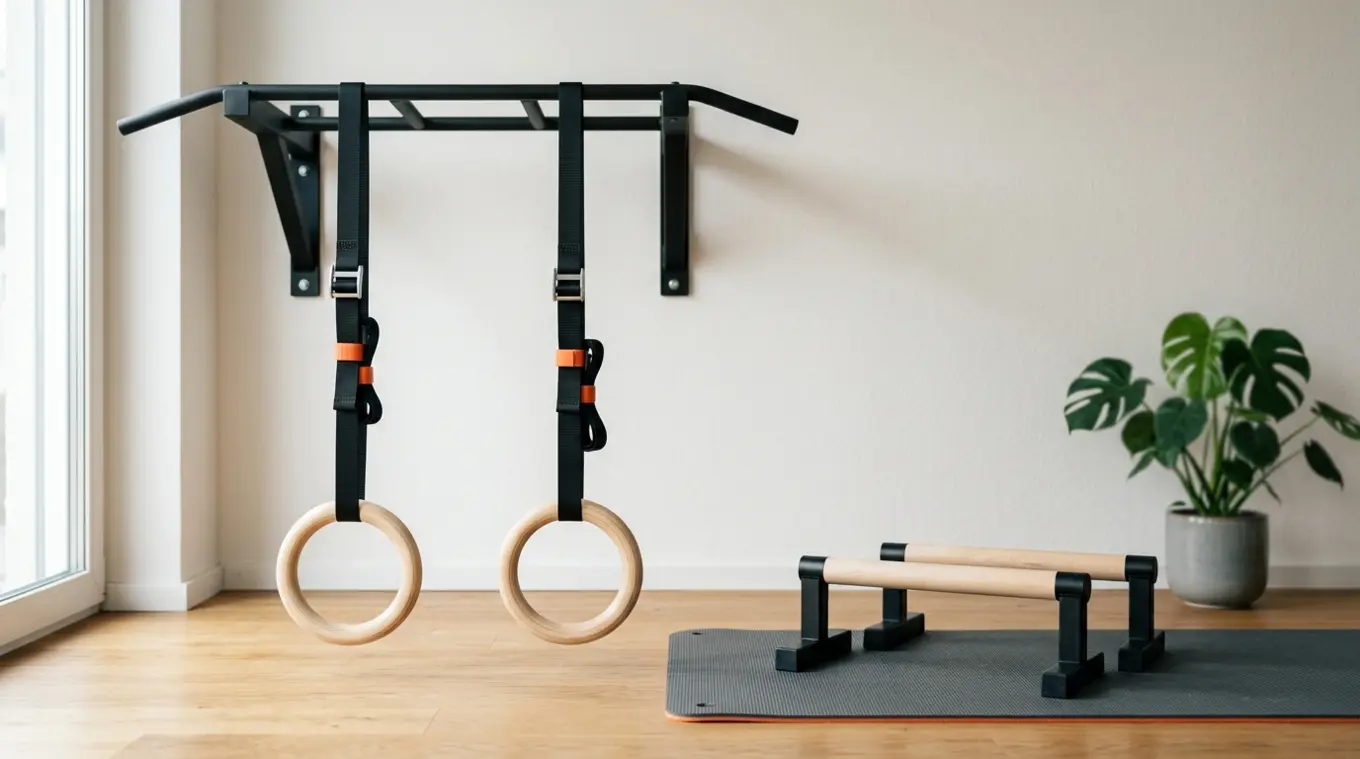
Rings are one of the smartest purchases for upper body static training. They allow support holds, top push up holds, ring rows with pauses, tuck front lever work, false grip hangs, and deep shoulder stabilization that fixed bars cannot match.
They also scale well. A beginner can use rings higher and easier for assisted holds. An advanced athlete can use the same pair for hard support holds and skill progressions. That is why rings often deserve a place in the best home equipment for static exercises conversation.
For anyone interested in strength with carryover to dips, muscle ups, and shoulder control, I usually recommend quality wooden rings. Gornation rings are a natural brand to consider because they are made for calisthenics style training rather than casual suspension workouts.
Parallettes for planche and dip holds
Parallettes come up again because they do so much. For upper body statics, they are excellent for planche leans, tuck planche holds, support holds, bottom dip pauses, and pseudo planche push up positions. They also let you train with a more neutral wrist angle, which can be a major benefit if flat floor pressure bothers your wrists.
Low parallettes are better for planche focused work and L sits. High parallettes can be better for deeper support work and some mobility drills. In most home setups, low parallettes are the more useful first buy.
In my experience, cheap parallettes often fail in the exact places static athletes care about most. They slide, flex, or feel too wide. A sturdy pair with good feet and a comfortable handle diameter is worth paying for.
| Equipment | Best for | Level | Main benefit |
|---|---|---|---|
| Pull up bar | Hangs, top holds, hanging core work | Beginner to advanced | Versatile anchor for upper body and core statics |
| Resistance bands | Assisted isometric progressions, shoulder prep | Beginner to intermediate | Easy progression and low space requirement |
| Low parallettes | L sits, planche leans, support holds | Beginner to advanced | Wrist friendly setup with strong carryover to calisthenics skills |
| Gymnastics rings | Support holds, false grip hangs, lever progressions | Intermediate to advanced | High versatility with added shoulder and stability demand |
| Power rack or wall mounted setup | Squat isometrics, supported lower body holds, overcoming isometrics | Intermediate to advanced | Stable structure for heavier or more specific static work |
Resistance bands for assisted isometric training
Resistance bands are one of the most underrated tools for static progressions. They help beginners hold positions they cannot yet control on their own. You can use them for assisted L sits, banded support holds, front lever progressions, handstand line drills, and pull up top position holds.
They are also one of the most practical options for people who want best home equipment for static exercises without taking up much space. A good band set gives you scalable assistance and resistance in one package.
For shoulder and scapular prep, bands are especially useful because they let you groove proper position before you load it fully. That matters a lot for how to safely perform static exercises, especially in the upper body.
Best Equipment for Lower Body and Full Body Static Holds
Wall mounted bars and power racks for squat holds and wall sits
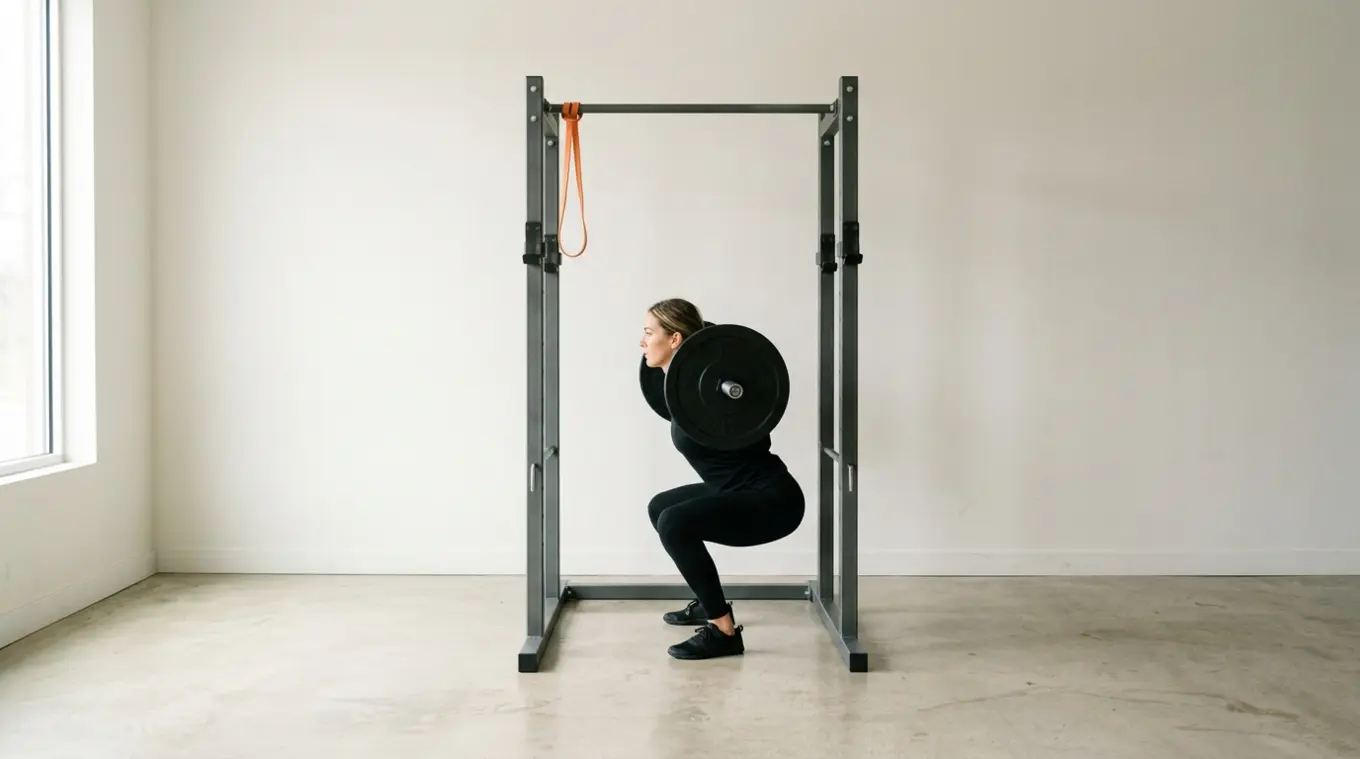
Lower body static training is often simple, but equipment still helps. Wall sits technically need only a wall, yet squat holds become more productive when you can control depth and setup. A power rack for static holds can be useful for squat position isometrics, split squat holds, calf raise supports, and overcoming isometrics where you push or pull against an immovable pin.
For garage gym users, a rack can do far more than traditional barbell work. It can support static squat positions at specific heights, give balance assistance, and help you train safely when fatigue sets in. If your goals include both weighted and bodyweight static work, a compact rack is one of the stronger long term investments.
That said, not everyone needs one. For many home athletes, wall sits, split squat holds, and supported single leg holds are enough until strength and training frequency justify bigger equipment.
Balance boards and slant boards for static stability work
Balance boards and slant boards are useful for ankles, calves, feet, and general lower body control. They are not mandatory, but they can add value if your static training includes rehab, balance development, or mobility based holds.
A slant board is especially useful for deep squat holds, calf stretching, and controlled lower leg isometrics. A balance board adds instability, which can challenge foot and hip stabilizers in a different way than standard floor holds.
Just be careful not to confuse unstable with better. If the goal is maximum force production in a hold, too much instability can reduce quality. I tend to use these tools as accessories, not the foundation.
Best Equipment for Static Stretching and Mobility
Yoga blocks and straps for passive static stretching
Static training is not only about strength. Position quality matters too. Yoga blocks and straps are simple tools that help you spend time in useful ranges without forcing bad positions. They work well for hamstring stretches, pancake progressions, shoulder opening, and supported split work.
If your mobility limits your static bar skills, these tools can make progress easier. For example, tight hamstrings make L sit work harder than it needs to be. A strap gives you a way to build tolerance and position awareness outside the strength session itself.
They are inexpensive, portable, and easy to store, which makes them a smart add on for nearly any best home gym setup for static exercises.
Foam rollers and massage tools as a static recovery complement
Foam rollers and massage sticks do not directly create static strength, but they support the training process. If your lats, hip flexors, forearms, or calves are constantly tight, recovery tools can help you feel better between sessions and move into better positions during holds.
I would not prioritize a foam roller over a pull up bar or parallettes, but once your basics are covered, it is a useful complement. Think of it as support equipment, not primary equipment.
Our Top Equipment Picks by Budget and Level
Best budget picks for beginners
If you are new to static training, keep it simple. The best budget setup usually includes a resistance band set, an exercise mat, and either a doorway pull up bar or basic push up handles. That combination covers planks, assisted holds, hangs, split squat isometrics, and mobility work with very little cost or space.
For true beginners, I often suggest starting with one anchor point and one assistance tool. In practice, that means a bar plus bands. You can already do active hangs, top holds, band assisted support drills, and core work.
If price matters most, read our guide to cheap calisthenics equipment before buying random products online.
Best mid range options for intermediate athletes
For intermediate training, my favorite mid range setup is low parallettes, quality wooden rings, and a solid pull up bar. This is probably the sweet spot for most people interested in the best calisthenics equipment for static exercises. You can train L sits, support holds, false grip hangs, tuck lever work, planche leans, top pull up holds, and a lot more without filling a whole room.
This is also where I would strongly consider Gornation. Their rings and parallettes fit the kind of training static athletes actually do, and that matters more than flashy extras.
Best premium gear for advanced static training
If you are more advanced and have dedicated space, premium choices include a wall mounted pull up bar, heavy duty dip station or high parallettes, quality rings, a power rack, floor mats, and a few support accessories like bands and mobility tools. That setup gives you almost everything needed for serious static bodyweight training at home.
The premium route makes sense when you train often and know your goals. If you are chasing harder L sit progressions, front lever work, weighted hangs, planche strength, or integrated lower body isometrics, better equipment pays for itself through consistency and confidence.
How to Build a Static Exercise Routine Around Your Equipment
How long to hold static exercises and how to progress
A simple rule is to choose holds you can perform with clean form for about 10 to 30 seconds. Beginners can start closer to 10 to 20 seconds. More advanced athletes may work up to 30 to 45 seconds depending on the exercise and goal. For max strength style isometrics, shorter harder efforts also work well.
The best progression methods are straightforward. Increase hold time, improve position quality, reduce assistance, add range, or increase leverage difficulty. For example, move from tuck L sit to one leg extended L sit, or from passive hang to active hang to top pull up hold.
More important than duration is correct form for static holds. If the shoulders shrug, the ribs flare, or the lower back collapses, stop the set. In static work, technique is the exercise.
Combining static holds with your existing calisthenics training
Static work fits well before, after, or inside a normal calisthenics session. Early in the workout is best for high skill holds like L sits, handstands, ring supports, and planche leans because you are fresher. Simpler holds like wall sits, hollow body holds, and split squat isometrics can go later.
A practical weekly structure might use two to four sessions. On upper body days, include active hangs, ring support holds, or top pull up holds. On lower body days, use wall sits, split squat holds, or calf raise isometrics. On core focused days, use hollow holds and parallettes work.
If your goals also include hand balancing, this article on learning how to do a handstand pairs well with static shoulder training.
When people ask me how to safely perform static exercises, I usually give the same advice: warm up the joints you are about to load, build tension gradually, breathe normally, and stop one step before your position falls apart. Static training rewards patience more than ego.
Common Mistakes to Avoid in Static Exercise Training
Static training looks simple from the outside, which is partly why the same errors come up repeatedly. Knowing what to avoid helps you get more out of every session and every piece of equipment.
Holding your breath. When a hold gets hard, many people instinctively stop breathing. This limits your time under tension and adds unnecessary strain. Breathe steadily throughout every hold, even when it gets uncomfortable.
Choosing a progression that is too advanced. If you cannot maintain clean form for at least 10 seconds, the position is likely too difficult. Use easier variations, more band assistance, or reduced leverage until you can genuinely control the hold.
Letting form collapse to add seconds. Extra seconds in a broken position do not build strength, they reinforce poor patterns. When your shoulders shrug, ribs flare, or hips drop, end the set. In static training, position quality is the exercise.
Skipping joint warm-up. Shoulders, wrists, and hips all benefit from preparation before demanding isometric holds. A few minutes of joint circles, light band work, or active mobility prep can make a meaningful difference in both feel and safety.
Rushing to harder progressions too soon. It is tempting to jump straight to front levers and planche work. But building consistent time in easier holds first, like active hangs and tuck L sits, develops the tissue tolerance and positional awareness that harder skills genuinely require.
Final Verdict: Which Static Exercise Equipment Should You Get?
If you want the shortest honest answer, start with equipment that gives you the most training value per dollar and per square foot. For most people, that means a pull up bar, resistance bands, and parallettes. That combination covers many of the best static bodyweight exercises and gives you a strong base for both strength and skill training.
If your focus is upper body control and long term calisthenics progress, add gymnastic rings next. If your focus is lower body or full home gym use, consider a rack once you know you will actually use it. Mobility tools like yoga blocks, straps, and foam rollers are smart support items, but they should not replace the main pieces.
My practical buying order for most U.S. home athletes would be this: first a solid pull up bar, second quality resistance bands, third low parallettes, fourth wooden rings, and fifth any larger setup like a dip station or rack. If you want a calisthenics specific recommendation, Gornation is one of the few brands I would naturally point people toward for rings and parallettes because the design usually matches real bodyweight training needs.
In the end, the best equipment for static exercises is the gear that feels stable, fits your space, matches your level, and helps you train consistently. You do not need a massive home gym. You need a setup you trust enough to use every week.
Static training can be incredibly simple, but choosing the right equipment makes it much more effective. If you train at home and want the best mix of value, versatility, and progress, start with a pull up bar, resistance bands, and parallettes. Add rings when you are ready for more upper body control and skill specific work. Bigger tools like a power rack make sense later, not first. Keep the setup practical, focus on good form, and let your equipment support your goals instead of distracting from them. That is the smartest way to build real static strength.
Frequently Asked Questions
1. What are static exercises exactly?
Static exercises are movements where you hold one position under muscular tension without moving through a range of motion. Common examples include planks, wall sits, dead hangs, and L sits. They are also called isometric exercises and are useful for building control, endurance, and position specific strength.
2. Can I do static exercises without equipment?
Yes, many static exercises without equipment are effective, especially for beginners. Planks, wall sits, glute bridge holds, and split squat holds are great starting points. Equipment becomes more useful when you want better progression, more exercise variety, or calisthenics specific skills like support holds and hanging core work.
3. What is the best home equipment for static exercises if I have limited space?
If space is limited, the best home equipment for static exercises is usually a pull up bar, resistance bands, and low parallettes. These tools take up little room but cover a lot of training options, including hangs, assisted holds, L sits, planks, and upper body isometric strength work.
4. How long should I hold static exercises?
Most people do well starting with 10 to 30 second holds using clean form. If the position breaks down before that, choose an easier variation. As you improve, you can increase time, reduce assistance, or move to a harder progression. The goal is quality tension, not just surviving longer.
5. Are rings or parallettes better for static training?
It depends on your goal. Rings are better for support holds, false grip work, and shoulder stabilization because they add instability. Parallettes are better for L sits, planche leans, and wrist friendly upper body holds. If possible, many calisthenics athletes eventually benefit from having both.