You want results, not a shopping spree. But when you search for cheap calisthenics equipment, it’s easy to end up with flimsy gear that wobbles, slips, or feels sketchy the first time you hang from it.
Cheap doesn’t have to mean low quality. It can mean smart value, simple tools that let you train hard, store easy, and keep progressing for months.
This guide gives you a clean plan to build a small setup on a tight budget, avoid junk buys, and pick gear that still makes sense when you get stronger.
Start with a budget setup that covers the most exercises
If your budget is tight, your goal is simple: get the most training options per dollar. You don’t need a garage full of gear. You need a few basics that cover push, pull, legs, and core, without taking over your space.
Think of your setup like a pocket knife. One good tool with multiple uses beats five cheap single-use tools. The best budget picks are also easy to store. That matters if you train in an apartment or share space.
Here’s the space-first way to choose:
- Apartment training: prioritize quiet, removable gear (doorway bar, rings, bands).
- Garage or basement: you can go bigger (dip bars, sturdier parallettes).
- Outdoor training: go portable (rings, bands, jump rope), and use a park bar when you can.
You also want gear that scales. A pull-up bar doesn’t stop working when you hit your first pull-up. Rings don’t stop working when you get strong, they get harder with you. That’s the sweet spot for budget training.
The best cheap picks for full body training
A tight budget works best when you choose “foundation” items first. These pieces cover the most exercises, and they combine well together.
| Equipment | What it unlocks | What to look for | Typical price range |
|---|---|---|---|
| Doorframe pull-up bar | Pull-ups, chin-ups, hangs, knee raises | Solid steel, stable fit, 300 lb+ rating, good padding | $25 to $70 |
| Gymnastic rings | Rows, push-ups, dips, support holds, core | Strong straps (at least 12 ft), sturdy buckles, comfortable grip | $25 to $60 |
| Resistance bands (set) | Assisted pull-ups, warm-ups, added resistance | Even thickness, smooth latex, no cracks, includes light to heavy | $15 to $50 |
| Jump rope or sliders | Conditioning, footwork, warm-ups | Smooth spin, correct length, durable cable, or thick sliders | $10 to $25 |
A doorframe bar is often the quickest “home gym” win. If you’re unsure what style fits your door and training, use this guide on how to choose a doorway pull-up bar.
Rings are the budget secret weapon. They turn a bar, beam, or sturdy tree branch into a full training station. If you want help picking strap and buckle features, this gymnastic rings buying guide lays out what matters without the noise.
Bands are cheap, but they shouldn’t feel cheap. A good set helps you get your first pull-up, keep your shoulders happy, and add load without buying weights. This resistance band guide for beginners is useful if you’re stuck choosing thickness.
If you can only buy one thing, buy this first
If you can only buy one item, don’t pick the “best deal.” Pick the tool that fixes your biggest limit this month.
Use this simple rule: buy the thing that blocks your next step.
- If you can’t train pulling at home, start with a pull-up solution (doorframe bar or rings).
- If pushing hurts your wrists or you can’t get good depth, start with parallettes or rings.
- If your joints feel beat up, start with rings and bands for smoother angles and easier scaling.
For most people, the first bottleneck is pulling. Push-ups are easy to do on the floor. Pull-ups aren’t. A bar is the cleanest option, but rings can also handle pulling if you have a safe place to hang them.
If your goal is push strength, rings are hard to beat for value. You can do ring push-ups, ring dips (when ready), and long support holds that build shoulder stability fast. It’s like turning every rep into a form check. The rings don’t lie.
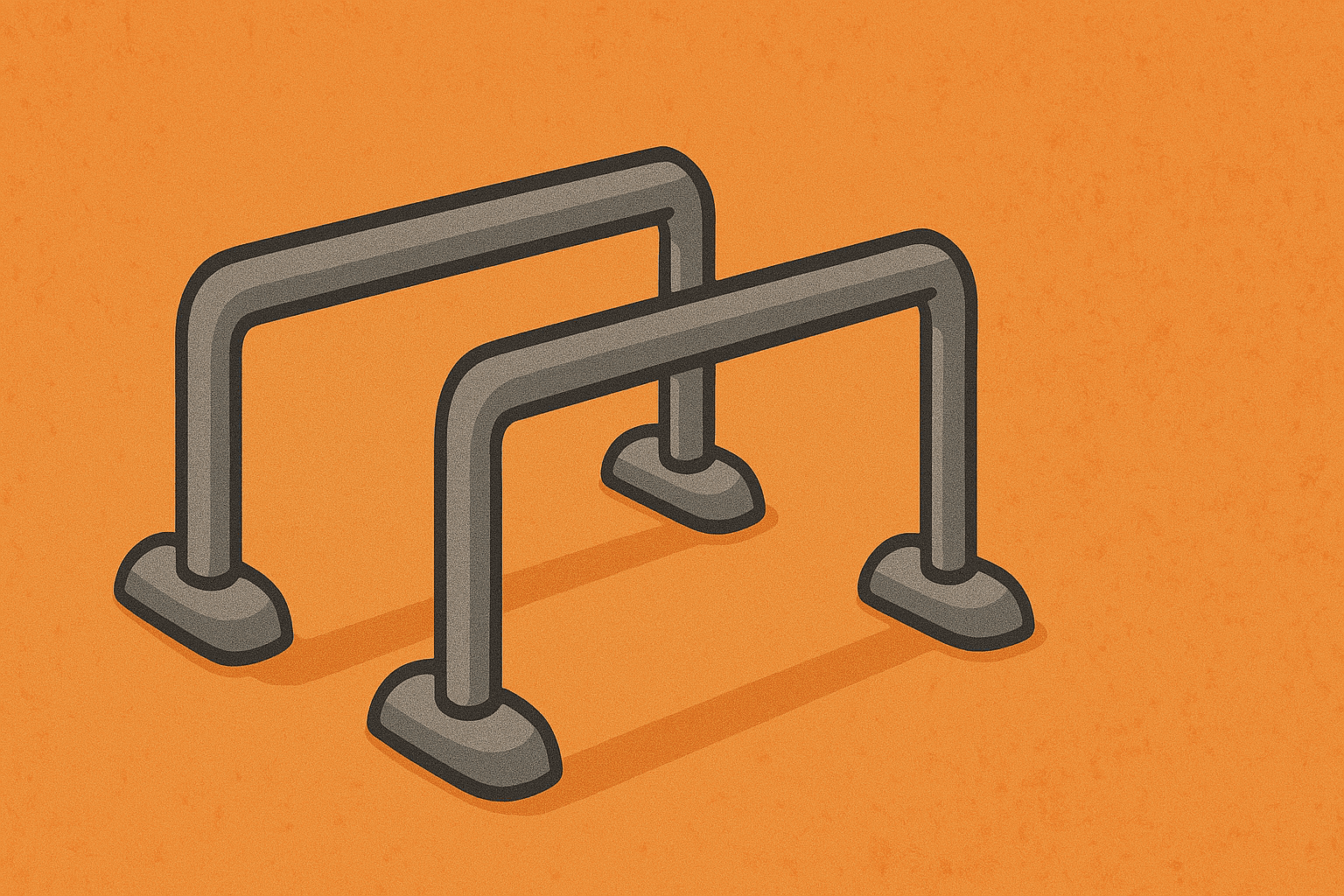
If your wrists complain, parallettes can be a cheap fix. They put your hands in a more neutral position and make push-ups, L-sits, and handstand work feel better. If you want help choosing height and materials, see best parallettes for calisthenics.
Buy one piece, train with it for four weeks, then decide what to add. That alone saves you from half the bad purchases people make.
How to spot low quality gear before you waste money
Cheap calisthenics equipment is only a bargain when it’s safe and consistent. The problem is that low-quality gear can look fine in photos, then fail in your hands.
Use a quick checklist before you buy:
Materials: Favor steel, thick nylon straps, and solid buckles. Avoid mystery plastic parts on anything that holds your bodyweight.
Stitching and seams: On straps, look for tight stitching, no loose threads, no thin “decorative” seams.
Hardware: Buckles should feel heavy and bite down without slipping. Carabiners should be rated, not generic.
Stability: Anything that touches the floor shouldn’t rock. If it rocks unloaded, it’ll shift under fatigue.
Honest ratings: A “high weight capacity” claim with no number is a red flag. Look for a stated limit in pounds.
Used gear can be a win, especially rings, parallettes, and dip bars. But don’t buy used straps or bands unless they look nearly new. Small cracks in a band become big tears fast.
Finally, returns matter. If the seller makes returns hard, you’re taking on extra risk. For bodyweight equipment, that’s not worth saving a few bucks.
Safety checks for pull up bars, rings, and dip gear
Most failures happen at the boring parts, the places where gear connects, locks, or meets the floor.
Doorframe pull-up bars can slip if the fit is off, the padding is slick, or the “locking” feature is weak. Before your first real set:
- Do a shake test with your hands on the bar.
- Do a partial load test with your feet still on the ground.
- Then do a short dead hang and listen for creaks or movement.
Skip explosive kipping on a doorframe setup. Cheap gear plus high swing is a bad mix.
Rings and straps usually fail at the buckle, not the ring. Check for fraying near the buckle, and make sure the strap lies flat, not twisted. After you set the height, pull down hard on each ring and watch for any slipping.
If you use carabiners for any setup, only use ones with a clear rating stamped on them. If it looks like a keychain clip, treat it like one.
Dip gear and stands should feel planted. Wobble isn’t a “feature.” Put your hands on the bars and shift your weight side to side before you start. If it walks across the floor, it’ll distract you every rep, and distraction is when form breaks down.
Hidden costs that make “cheap” expensive
The sneakiest costs don’t show up at checkout.
A cheap strap that frays means you buy rings twice. A cheap door bar that scuffs your trim can cost you in repairs, or your security deposit. A wobbly dip stand can push your shoulders into weird positions, and then you “pay” with missed training time.
Here are the common money traps:
- Replacing the same item because it stretches, slips, or cracks
- Extra mounting gear you didn’t plan on (hooks, anchors, backup straps)
- Damage to your home from pressure bars or poor padding
- Comfort issues that kill consistency (rough rings, painful grips)
Spend a little more on anything that holds your full bodyweight. That’s where cheap becomes risky. Comfort matters too, because comfort keeps you training when motivation dips.
Make cheap equipment feel pro with a smart training plan
Your progress won’t come from owning more stuff. It’ll come from doing the basics better, then slowly making them harder. A smart plan turns budget equipment into a full system.
The easiest way to keep improving is to track one thing for each movement:
- a harder variation
- more clean reps
- more total sets
- slower tempo
- longer holds
- shorter rest
You don’t need to change everything at once. Pick one “progress knob” per exercise and turn it a little each week.
Also, don’t treat conditioning as a separate life. A jump rope, fast ring rows, or band circuits can keep your work capacity high without buying machines. You’ll recover faster between sets, and your workouts won’t feel like a grind.
Progression ideas that do not require new equipment
You can make the same gear feel new just by changing the challenge.
Try these upgrades before you spend another dollar:
Range of motion: elevate your feet for push-ups, sink deeper on ring push-ups, raise your knees higher on hanging work.
Tempo: take 3 seconds down, pause 1 second, then come up strong.
Pauses: stop for a full second at the hardest point.
Assistance: use a band to practice clean pull-up reps, then reduce help over time.
Density: keep the same exercises, but shave 10 seconds off rest each week.
Here’s a simple week using only a bar, rings, and bands:
- Day 1 (Pull + core): band-assisted pull-ups, ring rows, hanging knee raises
- Day 2 (Push + legs): ring push-ups, split squats, band face pulls
- Day 3 (Conditioning): jump rope intervals, band presses, easy ring support holds
- Day 4 (Full body): pull-ups or rows, push-ups, squats, short core finisher
Keep it clean, keep it repeatable. If you can repeat a plan, you can beat it.
The best low cost upgrades once you outgrow the basics
Once you’ve trained consistently for a couple months, you’ll feel the next limit. That’s when small upgrades make sense.
Dip belt: Buy one when you can do about 10 to 15 clean pull-ups and want pure strength progress. It’s a simple way to add load without buying bulky gear. If you’re deciding between loading tools, this breakdown on dip belt vs weight vest for calisthenics helps you match the choice to your style.
Weight vest: Great when you want load for walking, push-ups, squats, and circuits. Avoid going too heavy too soon. A vest that bounces or crushes your shoulders will sit in a closet.
Sturdier parallettes: Upgrade when your wrists are your weak link, or when you want deeper push-ups and cleaner L-sits without hand pain.
Chalk or simple grips: If your hands get sweaty, your performance drops early. A small grip upgrade can add reps instantly, because you stop losing sets to slipping.
The trigger is always the same: upgrade when your training asks for it, not when ads do.
Conclusion
You can get strong with cheap calisthenics equipment if you buy for value, not hype. Start with one to two pieces that cover the most exercises, check quality like you’re checking a seatbelt, then follow a progression plan for four weeks before you buy anything else. Write a short shopping list based on your goal, then cross off anything that doesn’t solve your next problem. What will you train first, pulling, pushing, or both?