Best Outdoor Pull Up Bar

If I had to pick one piece of equipment for outdoor calisthenics, it would be a solid pull up bar. With the right setup, I can train muscle ups, toes to bar, dips, and full body sessions, building serious upper body strength without ever stepping into a crowded gym.

In this guide I will share what I consider the best outdoor pull up bar for calisthenics.

I focus on stable, durable setups that hold up and feel safe for dynamic skills. No flimsy bars bolted to a fence, just solid gear that can live as a garden pull up bar, on a terrace, or on a garage wall and actually get used.

If you want to build a full backyard setup, it can also be worth checking my overview of the best outdoor calisthenics gear.

Table of Contents

My top outdoor pull up bar picks for calisthenics

When choosing a doorway pull up bar for calisthenics, I look for bars that do not slip, do not twist under load, protect the frame, and offer useful grip options for real calisthenics training, not just casual fitness.

Here are my go-to types and models.

Gornation Outdoor Pull Up Station: Best All-In-One Outside Setup

Gornation premium pull up station
Get 10% OFF with code: "CE10"
Order now!
gornation.com

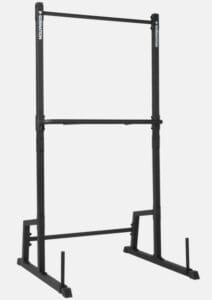
If you want more than a single bar, the Gornation Outdoor Pull Up Station is my top pick. It is a compact all-in-one pull up station that combines a pull up bar, barbell hooks, and low bars that double as a dip station for push ups and rows in about 16 square feet of space.

The design is tall and wide, so I get enough room for kipping pull ups, toes to bar, and muscle ups without feeling cramped. The frame is made from thick powder coated steel with a weight capacity of around 250 kg (about 550 lb), so it is strong enough for heavy weighted pull ups and squats.

There are indoor and outdoor versions, with a weather resistant coating that handles rain and sun much better than normal paint. The newer version also has better locking, plus holders for weight plates that double as extra ballast to make the frame even more stable.

What I like most is how easy it is to build a compact home or garden gym around this one station. I can add rings, a dip belt, resistance bands, or wrist wraps from calisthenics-focused brands and basically have a full training playground in a small corner of the yard. If you want a deeper look at similar multi-function towers, I also compare them in my guide to the best pull up stations and power towers.

Who this outdoor station is best for

I recommend this type of station if you want a permanent or semi-permanent outdoor setup and you have a small patch of flat ground to spare. The height works very well for pull ups, strict muscle up drills, and toes to bar, so it suits both skill work and volume training.

It is also a good fit if you like mixing calisthenics with barbell work. The built-in hooks let you squat, press, or rack the bar safely, which is rare in outdoor frames.

Because the frame is stable and the load rating is high, it works for beginners who need band-assisted pull ups as well as advanced athletes who train heavy weighted sets and static holds. Add a quality dip belt for calisthenics and a couple of resistance bands and you have a setup you will not outgrow for years.

Gornation Outdoor Wall Pull Up Bar

Gornation wall mounted pull up bar
Get 10% OFF with code: "CE10"
Order now!
gornation.com

If you have a sturdy outside wall but not much floor space, the Gornation Outdoor Wall Mounted Pull Up Bar is a very smart option. It is a heavy duty steel bar that bolts into a brick or concrete wall and stays rock solid.

The grip zone is wide, around 45 inches, so you can use narrow, shoulder width, and very wide grips to target the back muscles. The distance from the wall is roughly 30 inches, which is a big deal. That clearance gives you enough room for muscle ups, toes to bar, and leg raises without worrying about your feet hitting the bricks.

The bar can handle up to about 330 lb, which is plenty for most people even with a weight vest or dip belt. The outdoor version uses a weather resistant coating and galvanized parts so it holds up far better in rain and sun than a cheap painted bar.

You can also hang rings, resistance bands, or a sling trainer from the bar and turn a simple wall into a mini outdoor gym.

Who should pick a wall mounted outdoor bar

A wall mounted outdoor bar makes the most sense if you have a solid brick or concrete wall, like a garden wall, garage exterior, or the side of a house with enough open space around it. You get maximum stability with almost no footprint on the ground.

The large wall clearance is great for core training and skills. Dead hangs, leg raises, front lever progressions, and L-sit raises all feel more natural because you are not cramped against the wall.

Care is simple. Just wipe the bar now and then with a damp cloth, skip harsh cleaners, and try to keep it dry when I can for the longest life. If you add separate wall mounted dip bars near it, you can create a full outside calisthenics station that folds into the wall instead of taking over the whole patio.

Pullup & Dip Bar: Most Versatile Wall & Post System

pullup-dip-bar-indoor-outdoor-title
Get 10% OFF with code: "CE10"
Order now!
pullup-dip.com

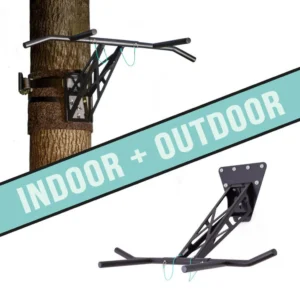
The Pullup & Dip wall system is a clever option if you want both pull ups and dips in one compact dip bar setup that can move between indoor and outdoor spots. It uses a base plate that you mount on a wall, post, or tree mount. The actual pull up and dip unit then slides in and locks, so you can remove it when you are done.

I like that you can install one base plate on an inside wall and another outside on a post, garden wall, or tree secured with a ratchet strap. That way, I can train indoors in winter and outside in summer without buying a second bar.

With the main unit and the optional straight bar, you get more than 20 exercises: pull ups, neutral grip chin ups, dips, leg raises, rows, and even muscle up practice if your wall is high enough. The pull up handles have several grip angles, and the dip handles are V-shaped so you can switch between narrow and wider dips.

For people who want one high quality piece of gear that covers both pull ups and dips and can travel between locations, this system stands out.

Why the Pullup & Dip bar stands out for outdoor training

For outdoor training, the big advantage is how fast I can switch setups. I can start with pull ups, lift the unit out, flip it, and lock it back in for dips in a few seconds. When I am finished, I just take the bar unit inside so it is not sitting in rain or snow all year.

If I add resistance bands or rings to the eyelet on the frame, I can build a full body session with very little gear. It is a strong pick for renters and anyone who is not allowed to build a big frame in the garden.

The base plate is compact and stays on the wall, but the heavy part comes inside, which also helps against rust. Compared with cheap doorway bars, this setup is far safer and more stable, especially for explosive pull ups or straight bar dips.

Khanh Trinh Portable Bar: Best Freestanding Travel Option

If you cannot drill into walls or want something you can fold away, the Khanh Trinh (KT) portable pull up bar is my favorite freestanding option for outside calisthenics. It is a freestanding rig made from strong alloy steel with corrosion resistance similar to stainless steel, so I can move it from the garden to the garage in a few minutes.

The height is adjustable from roughly 46 inches up to about 102 inches, which covers kids, shorter users, and tall athletes. I can set it low for rows or ring training, or high for muscle up practice and big kipping pull ups.

One of the biggest selling points is the very high max load, more than 440lb. The frame geometry is built to cut wobble by more than 90 percent compared with basic stands, so it feels much closer to a fixed bar.

Because the frame is wide and stable, it also works with aerial yoga hammocks, gymnastic rings, punching bags, and resistance bands. I see it as the top choice if I want a serious bar that I can set up on the patio, in a garage, or on the grass, then fold and store when I am done.

When a portable freestanding bar makes the most sense

A portable freestanding bar like the KT model is ideal for renters, people with strict landlords, or anyone who is not sure they will stay in the same place for long. It also shines if you like training outside in summer and inside in winter.

Compared with cheap stands that shake and tip, a high quality frame has a wide footprint, a high weight rating, and a coating that handles outdoor use much better. The broad base also makes it more family friendly, since the legs stick out less and there is less risk of clipping your shins during fast pull ups.

You still need a flat surface and enough height clearance, especially if you want to do muscle ups or big swings. I always suggest matching the model to your bodyweight and training style, since heavier and more explosive athletes benefit most from the stronger versions.

How To Choose The Best Outside Pull Up Bar For Calisthenics

Picking the best outdoor pull up bar for calisthenics comes down to a few simple questions. Where can you mount it, how stable is it, how will it handle weather, and what do you actually want to train?

Decide where and how you can mount the bar

First, look at your space. Do you have a strong brick or concrete wall, enough open ground for a freestanding station, or do you need something portable?

If you have a garden wall, garage wall, or balcony facade, a wall mounted bar like the Gornation model makes a lot of sense for installation. For a full all-in-one setup with pull ups, dips, and squats, an outdoor station is better.

If your walls are weak, like old crumbling brick or anything close to drywall, skip wall mounting for heavy loads and focus on safe installation practices. In that case, a freestanding frame or a portable stand like the Khanh Trinh bar is the safer move.

Check stability, max load, and wobble

Stability is more important than any extra feature. A good outdoor pull up bar should support at least 300 lb. Many full stations and quality stands go far higher.

Heavy steel stations like the Gornation models and the high rated Khanh Trinh stand are built for dynamic skills. Kipping pull ups, muscle ups, and front levers put a lot of force on the frame, so a wide base or strong anchors are key.

I avoid ultra cheap doorway bars for outdoor use. They are not designed for weather, posts, or hard swinging, and they can fail when you need them most.

Think about weather resistance and care

Outdoor use means sun, rain, and sometimes snow. I look for galvanized steel or a solid powder coating on any bar that will live outside to ensure it stays weather resistant.

The outdoor Gornation bars are coated for better weather resistance, but they still benefit from simple care. I like to clean the bar with a damp cloth now and then, skip harsh chemicals, and dry it after rain if possible.

Portable stands and detachable bars have an advantage here. You can store the main unit inside when you are not training, which helps a lot if you live in a very wet or very cold area.

Match the bar to your calisthenics goals

Your goals should guide your choice. For skills like muscle ups, front levers, and toes to bar, I want a bar with plenty of clearance and height, like a tall station or a wall bar with long distance from the wall.

If I plan to mix in squats and presses, a station with barbell hooks is more efficient. For simple pull ups, dips, and some core work to support your bodyweight workout, a compact wall mount or a Pullup & Dip system is enough.

Whatever you choose, remember that accessories expand the setup. Rings, resistance bands, and weighted gear can transform a single bar into a full gym. For ideas on add-ons, I break down my favorite options in a guide to the best wrist wraps and other calisthenics accessories.

Common Questions About Outside Pull Up Bars

Can I leave my pull up bar outside all year?

It depends on the bar and your climate. Outdoor versions made with galvanized steel or weather resistant coating handle rain much better than basic indoor bars.

Even then, some simple care helps. Cleaning, drying after heavy rain, and checking for rust spots will keep the bar in better shape. If you have a detachable or portable bar, storing it indoors in winter or near the sea is the safest choice.

How high should an outside pull up bar be?

As a rule, you want to hang with straight arms without your feet touching the ground, but still reach the horizontal bar without jumping too high. For most adults, that ends up around 7.5 to 8.5 feet.

If you plan to train muscle ups or big kipping pull ups, aim for the higher end of that range. Adjustable stations like the Khanh Trinh stand make this easier because you can fine tune the height for each user.

Are outside pull up bars safe for beginners?

Yes, as long as the chin up bar is built for the loads you put on it and installed correctly. I always check bolts, anchors, and ground stability before sessions, even with high quality bars.

Beginners should start with band assisted pull ups, rows, and dead hangs, then build up volume slowly. A stable wall bar or station from a calisthenics brand is usually safer than a random stand that has never been tested for real outdoor use.

What exercises can I do on an outdoor pull up bar?

You can do pull ups in many grips, chin ups, Australian rows, toes to bar, hanging leg raises, L sits, and front lever progressions. With enough height and practice you can add muscle up progressions too.

If your station has low bars, you can mix in dips, push ups, and support holds. Add rings or bands and the list grows even longer; this exercise versatility covers ring rows and dips to assisted levers and mobility work.

Conclusion

The best outdoor pull up bar for calisthenics training is the one that fits your space, your budget, and your training style, while staying rock solid year after year. For most people, the Gornation outdoor station, the Gornation wall bar, the Pullup & Dip system, and the Khanh Trinh portable bar will cover almost every need.

I always prefer one strong, stable setup over a pile of cheap, shaky gear. Think about where you can mount it, how it will handle your weather, and how you want to progress over time. Then pick your outdoor pull up bar, set it up safely, and start training in your new backyard gym.