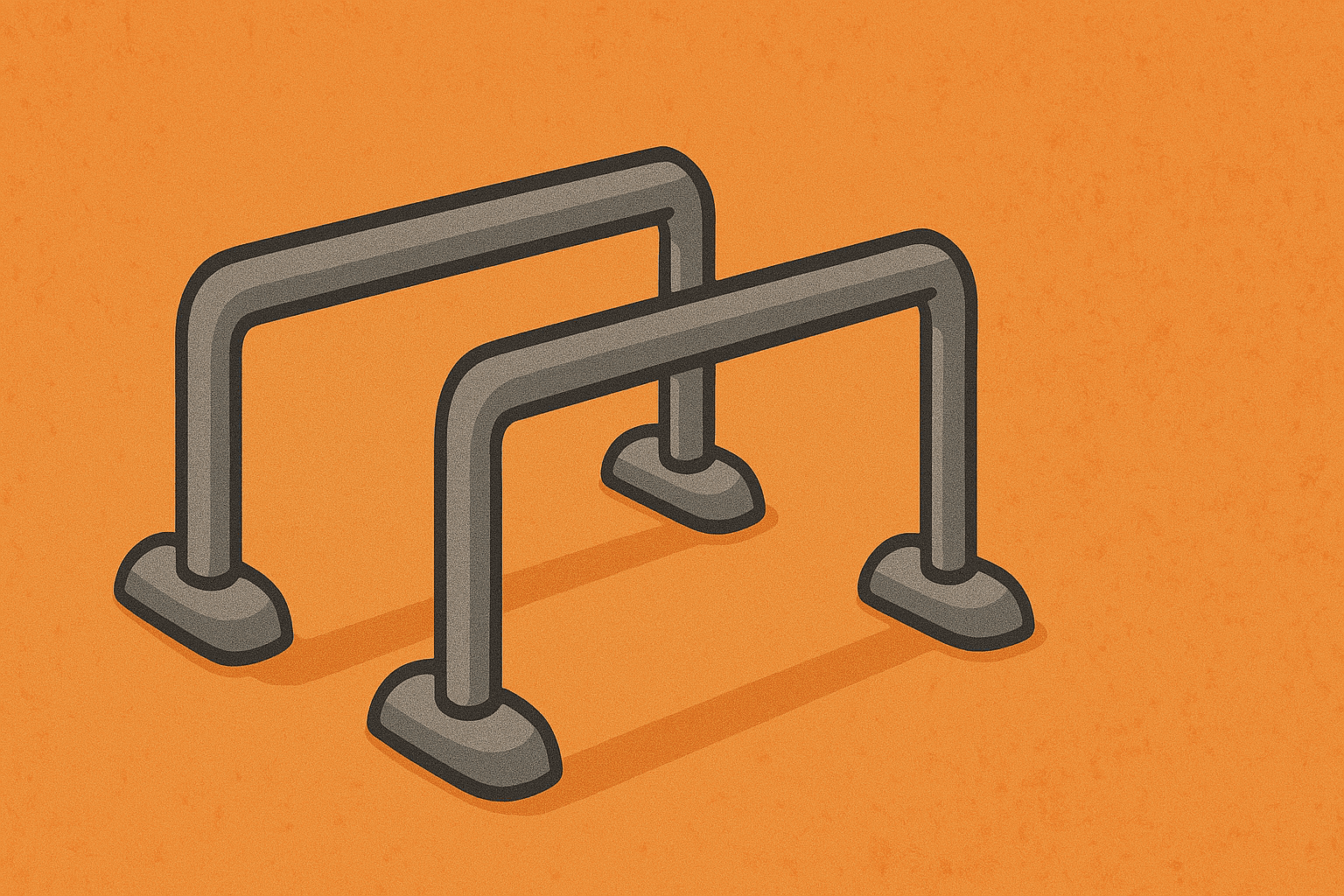
If you are on a budget but still want something that works for real training, the Uvedabul push up bar is a solid pick.
The frame is stainless steel, which is reassuring at this price point. It feels sturdy in the hand and rated for about 440 pounds, so even heavier athletes or light weighted work are fine.
The bottom uses suction cups to grip smooth surfaces. On tiles, polished wood, or other glossy floors, these cups lock in very well and give a secure base for push ups or basic core work. On rougher or dusty ground, the suction is weaker, so you may want a mat for safety.
The handles are covered with foam padding, about half a millimeter thick at the contact area. It takes some sting out of the pressure on your palms and wrists and feels comfortable for short to medium sessions.
These bars are light enough to move around easily and small enough to store in a closet or under a bed. If you want to try push up bars for calisthenics without a big investment, they do the job.
Strengths and limits of the Uvedabul budget option
I like the Uvedabul bars for what they are: a budget-friendly, no-frills tool that lets you do more than floor push ups.
Their biggest strength is grip on smooth indoor floors. The suction cups give a locked-in feel that is very reassuring when you are not yet confident with push ups on bars. For beginners practicing standard push ups, incline variations (by elevating the feet), or basic core drills, they feel stable.
The stainless-steel frame is another plus. It feels more trustworthy than thin plastic and should handle normal home training well.
The trade-offs are in long-term comfort and versatility. Foam padding tends to compress and wear faster than silicone grips, especially under heavy or daily use. For advanced planche work, explosive push ups, or long handstand sessions, I prefer firmer, more durable handles.
On rough outdoor surfaces, the suction cups are less useful. They lose some of their grip on uneven or dusty ground, which limits how much I trust them outside.
I see these as ideal for beginners, casual calisthenics athletes, or anyone who wants a spare pair at work or in a second training spot. For your main setup, especially if you are chasing advanced handstand or planche goals, I would still put money into a more premium pair.
How to choose the best push up bars for calisthenics training
Choosing the right bars comes down to how you train, where you train, and how your joints feel. Let us walk through the key points without overcomplicating it.
Stability and grip: the non negotiables for safe calisthenics
If push up bars wobble or slide, they are not worth using.
Look for:
- A wide, solid base that does not twist or flex
- Non-slip feet, rubber pads, or suction cups
- A build that feels tight, with no rattling parts
For handstands, explosive push ups, and deep lean work, this is non negotiable. GORNATION, for example, uses a non-slip rubber base that holds well on many surfaces. Uvedabul uses suction cups that are great on smooth floors.
Before a hard set, I always test the bars with a few light reps and small side-to-side shifts. If they move, I fix the surface or skip that pair.
Handle shape, padding, and wrist comfort
Handle design affects both comfort and performance.
- Straight fixed handles are best for balance skills and static holds.
- Rotating handles like the Perfect Pushup Elite are better for joint-friendly strength work.
Thicker handles spread pressure, which can feel nicer over long sets, but very thick grips can tire your fingers faster in handstands. Padding helps too. Silicone or high-quality foam gives more friction and comfort than bare hard plastic.
If your wrists already complain, look for neutral grip positions, some padding, and possibly rotation. Older athletes and anyone with past wrist issues should put comfort high on the list.
Height, width, and how they match your skills and goals
Height and footprint change how the bars feel.
- Low, wide bars are ideal for handstands and planche work. They feel closer to the floor and more grounded.
- Medium-height bars work well for general strength and hypertrophy, with more room for deep push ups.
- Very tall bars are more like mini-parallettes and are only needed for special goals.
Wider bases feel safer for static holds and side-to-side movement. Narrow setups can feel better for close-grip push ups or when you want your hands under your shoulders.
Match the bar size to your main goal. If your priority is handstands and static skills, stay low and stable. If you want deep push ups and chest growth, a bit more height is helpful.
Durability, portability, and where you train most
Think about where you will use your bars most often.
- Home gym or apartment: You want compact bars that store easily, like GORNATION or Uvedabul.
- Outdoor parks: Look for weather-resistant materials and easy cleaning. Dry and wipe them after use.
- Travel: Lightweight, fully assembled bars that fit in a backpack are ideal.
Steel, quality plastics, and proper coatings help your bars survive drops, sweat, and outdoor sessions. If you train several times per week, the extra money for better materials pays off over time.
Key benefits of training with push up bars for calisthenics
Push up bars look simple, but they can change how your upper body training feels.
You get less wrist strain, a bigger range of motion, better grip, and more exercise options. That is a powerful combo for calisthenics and handstand work.
Less wrist pain and more natural joint angles
Flat palm push ups force your wrists into a deep bend. For many people, that position feels fine at first, then starts to ache as volume goes up.
With push up bars, you grab the handles in a neutral position, closer to how you would hold a dumbbell or barbell. This angle usually feels more natural, especially for long sets or daily practice.
Less joint irritation means you can train more often and stay in the game longer. For beginners, this comfort can be the difference between sticking with calisthenics or giving up because everything hurts.
More range of motion and stronger push ups
Because the bars lift your hands off the floor, your chest can go lower on each rep. Used with control, that extra depth increases time under tension and muscle activation.
Your chest, shoulders, and triceps all work harder in that deeper range. Over time, that builds strength that carries over to regular push ups, dips, and harder skills.
I always tell athletes to build this slowly. Start with a depth you can control without shoulder pain, then gradually go deeper as your strength and mobility improve.
More exercises: from L sits to handstand push ups
Push up bars are not just for basic push ups.
You can use them for:
- L sits and V-sit progressions
- Tuck planche holds and planche leans
- Frog stands and bent-arm handstand entries
- Pike push ups and handstand push up progressions
- Core drills, such as mountain climbers and plank variations
The stable handles give you something solid to grip, lean on, and balance on. That makes it easier to progress from basic push ups to more advanced skills over time, without constantly fighting wrist pain.
FAQ: best push up bars for calisthenics
Are push up bars worth it for calisthenics and handstand training?
Yes, if you train push ups and handstands often, they are usually worth it. They protect your wrists, increase range of motion, and make balance work more comfortable.
A good pair can last years, so the cost is small compared to the value of better, safer training.
Can I use push up bars on any surface, like tiles or carpet?
Most quality push up bars work best on hard, flat surfaces like wood, tiles, or rubber gym floors. Anti-slip rubber bases and suction cups improve grip, but dust and loose carpet can still cause sliding.
I always test them with light pressure first. If the floor feels sketchy, I put them on a mat or move to a better surface.
Are push up bars safe for heavy athletes or with a weight vest?
Yes, as long as you pick models with clear weight ratings. The Perfect Pushup Elite supports around 400 pounds, and the Uvedabul bars are rated around 440 pounds.
If you are heavy or plan to use a weight vest, avoid flimsy, no-name plastic stands and stick with something that lists a solid weight capacity.
Can I learn handstands using push up bars?
Many athletes use low, stable push up bars for handstand practice. The neutral grip can feel better on the wrists than flat palms on the floor.
Stability is key. Fixed, non-rotating bars like the GORNATION model are better for this than rotating handles. I suggest starting with wall handstands on bars, then slowly building toward freestanding holds.
Do beginners need expensive push up bars to start calisthenics?
You can start calisthenics on the floor. You do not need bars to begin.
That said, a solid pair of push up bars can make training more comfortable and fun from day one. If money is tight, a good budget option like Uvedabul is enough to get started. If you know you are serious about calisthenics and handstands, investing in a premium option like GORNATION makes more sense in the long run.
Conclusion
To wrap it up, my three top choices cover different needs.
- GORNATION Push-Up Bars are the best overall choice for serious calisthenics and handstand athletes who want stable, compact, and durable gear.
- Perfect Fitness Pushup Elite is the joint-friendly ergonomic pick for strength-focused and weighted training.
- Uvedabul Push-Up Bar is the best budget option if you want to test push up bars without spending much, while still getting a stable tool for basic work.
Pick based on your main goal. Handstands and planche work call for low, stable bars. Heavy strength and joint comfort point toward rotating handles. Tight budgets point to a simple but sturdy steel setup.
With stable, comfortable push up bars, you give your body a better base for years of progress. Simple tools, smart training, and consistent effort are all you really need to build real strength and control.