A pull-up bar looks simple, but in calisthenics it acts more like a foundation. If the bar wobbles, sits too close to a wall, or chews up your hands, your training suffers fast.
So when you search for the Best pull up bar for calisthenics, what you really want is a bar that matches your style: stable enough for dynamic reps, enough clearance for knees and toes-to-bar, comfortable grip, and a setup that actually fits your space.
There isn’t one perfect bar for everyone. Your best option depends on where you train (doorway, wall, ceiling, freestanding, outdoors, or portable). Below you’ll get quick picks by category, then a deeper guide so you can buy once and train with confidence.
Table of Contents
Quick picks by pull-up bar type
If you just want the “point me in the right direction” version, start here:
- Pull-up station (power tower): Best if you want an all-in-one home setup (pull-ups, dips, leg raises) without drilling.
- Wall-mounted bar: Best if you want the most stable feel for hard calisthenics, including muscle-up practice and toes-to-bar.
- Doorway bar: Best for renters, small apartments, and beginners who want fast setup and removal.
- Ceiling-mounted bar: Best if you want clean clearance for hanging core work and lever training without a wall blocking you.
- Outdoor-ready bar: Best if you train on an exterior wall or in a covered patio and want weather resistance.
- Portable freestanding bar: Best if you move your setup often, train indoors and outdoors, or want a tall bar without drilling.
Next, you’ll see each type broken down with pros, cons, and a favorite pick.
Best pull-up bars by category
Find below all possible options. Including my favorite pick.
Best pull up station / power tower
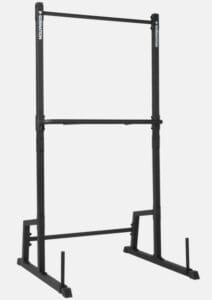
A pull-up station is a freestanding frame that often combines a pull-up bar with dips and a back pad for leg raises. Many also add push-up handles, and some even include squat hooks.
Who it suits best: a home gym, garage training, taller athletes, and anyone who wants options beyond pull-ups without drilling into walls.
Advantages
- You can train a lot in one footprint (pull-ups, dips, push-ups, knee raises, rows).
- Great for adding accessories like rings and resistance bands.
- Solid for skill practice if the frame is heavy and well-built.
Disadvantages
- It takes floor space, and it’s not “hide it in a closet” gear.
- It costs more than a doorway bar.
- Some towers wobble if they’re light or not tightened correctly.
Favorite pick: GORNATION Pull Up Station. A good station in this category supports high loads (often around 550 lb) and can be assembled in under an hour, which gets you training faster. For a deeper comparison, use this guide: Best Pull-Up Station Review.
Best wall mounted pull up bar (most stable for muscle-ups)
Wall-mounted bars bolt into a solid wall (brick, concrete, or properly anchored studs). For calisthenics, they’re popular because they feel “locked in” when you pull hard.
Who it suits best: you want a rock-solid bar, you have a strong mounting surface, and you train high effort reps (toes-to-bar, explosive pull-ups, muscle-up practice).
Advantages
- Excellent stability and confidence for aggressive pulling.
- Saves floor space.
- Often comes with a wide grip zone and generous clearance from the wall (a common heavy-duty design is about 45 inches wide with about 30 inches of wall clearance), which gives you room to move.
Disadvantages
- You have to drill and mount it correctly.
- Not ideal for renters.
- The wall decides what’s possible, weak surfaces are a no-go.
Favorite pick: GORNATION Wall Mounted Pull Up Bar Large. This style is often sold in indoor and outdoor finishes (matte powder coat for indoors, galvanized or weather-protected versions for outside). See full options here: Best Wall-Mounted Pull-Up Bar.
Best doorway pull up bar (best for renters and beginners)
Doorway bars are your fast, low-commitment setup. Some hook over the frame using leverage; others are telescopic and clamp into place. They shine when you want pull-ups today, not “measure studs and drill this weekend.”
Who it suits best: renters, small apartments, beginners chasing their first strict pull-up, and anyone who needs quick setup and removal.
Advantages
- Installs in seconds and stores easily.
- Usually affordable and easy to move room to room.
- Great for strict pull-ups, chin-ups, knee raises, and dead hangs.
- Many models can be used on the floor for push-ups or seated dips.
Disadvantages
- Limited for explosive skills and heavy kipping.
- Fit depends on door frame size and trim strength.
- Cheap telescopic bars can twist if the design is weak.
Favorite pick: GORNATION Doorway Pull Up Bar and strong doorway designs from Pullup & Dip. Look for safety features like anti-rotation, multi-point pressure distribution, and frame protection pads. Some bundles even include a light assistance band and a beginner guide, which helps if you’re not at full reps yet. Compare the top choices here: Best Doorway Pull-Up Bar Options.
Best ceiling mounted pull up bar
Ceiling-mounted bars attach overhead, so you’re not fighting a wall during hanging work. That extra open space is a big deal for strict leg raises, L-sits, and lever drills.
Who it suits best: you have a solid ceiling (concrete or strong beams), you want full range hanging core work, and you want a clean setup for front lever progressions.
Advantages
- Great clearance for knees, toes-to-bar, and long levers.
- Very stable when mounted correctly.
- Easy to use with accessories like rings and bands.
Disadvantages
- Overhead drilling can be annoying.
- Drywall or suspended ceilings aren’t suitable.
- Installation has to be done carefully, since overhead movement adds stress.
Favorite pick: GORNATION Pull Up Bar Multi for ceiling or wall mounting. In this category, it’s common for ceiling ratings to be higher than wall ratings, so always follow the manufacturer’s limits for your setup. For a full breakdown, read: Ceiling-Mounted Pull-Up Bar Guide.
Best outdoor pull up bar (weather resistant setups)
Outdoor pull-up bars can be wall-mounted on an exterior wall, set up as outdoor-rated stations, or built as a dedicated rig. The big question is simple: can it survive rain, sun, and temperature swings without turning into a rust project?
Who it suits best: you train in a yard, on an exterior wall, or under a covered patio and want fresh-air sessions without dragging equipment in and out.
Advantages
- You can train outside without clearing space indoors.
- Great for high-volume pull-up work and conditioning.
- A stable outdoor setup can handle swings and dynamic reps well.
Disadvantages
- Bad coatings rust, sometimes faster than you’d expect.
- Outdoor hardware can loosen over time.
- Mounting surfaces vary a lot, and not every exterior wall is “training-ready.”
Favorite pick: outdoor-ready wall bars with weather-resistant finishes (galvanized steel is a common choice in this category). If you’re building an outdoor setup beyond just the bar, this guide helps: Best Outdoor Calisthenics Gear.
Best portable pull up bar (foldable, travel-friendly towers)
Portable freestanding bars are like the middle ground between a doorway bar and a full tower. You don’t drill, you get more height and freedom than most door setups, and some models fold or move easily.
Who it suits best: you want a full pull-up setup without permanent mounting, you train in different rooms, you train outdoors sometimes, or you move often.
Advantages
- No mounting required, which keeps your options open.
- Works well with rings, bands, and strap setups (if the bar is rated for it).
- You can set it up where you actually want to train (garage today, backyard tomorrow).
Disadvantages
- More expensive than doorway bars.
- Stability depends on footprint size and build quality.
- Needs flat ground, soft lawns can feel sketchy.
Favorite pick style: the KT KHANH TRINH adjustable portable pull-up bar category is a strong benchmark for what to look for. In this class, the best designs offer a wide footprint, a tall height range (roughly 46.5 to 101.6 inches), high max load ratings (some list around 771 lb), and low wobble by design (some advertise wobble reduction around 93%). Aluminum alloy builds can also keep carry weight low (around 26.5 lb), which makes “portable” actually mean something. If you train outdoors, look for a weather-resistant powder coat.
Pull-up bar buying guide for calisthenics
You don’t need a huge checklist, but you do need the right one.
Start with four priorities that matter most for calisthenics: stability, clearance, grip comfort, and safe mounting.
- Stability for dynamic reps: If you plan to kip, swing, or train fast toes-to-bar, pick a wall mount, ceiling mount, or a heavy freestanding station. Doorway bars can work for strict strength, but they’re usually not built for chaos.
- Clearance for knees and feet: A bar that’s too close to the wall turns leg raises into knee tucks. Look for generous standoff distance on mounted bars, and enough height for your full hang.
- Grip comfort: Powder-coated steel tends to feel secure. Some bars add rubberized grips, which can feel good but also change the bar thickness. Your hands should feel “locked,” not chewed up.
- Mounting and materials: Concrete and brick are the safest for mounts. Outdoors, prioritize galvanized or weather-coated steel, plus hardware that won’t corrode.
Benefits of training with a pull-up bar and the muscles you work
A pull-up bar gives you simple training that scales forever. You can go from assisted hangs to strict pull-ups to weighted reps, all on the same bar.
Main benefits
- Stronger back and arms, without machines.
- Better grip strength, which carries into almost every calisthenics skill.
- A tougher core from hanging work, not just crunches.
- Better posture from balanced pulling, especially if your day involves lots of sitting.
Muscles trained
- Lats and upper back (your main pulling engine)
- Rear shoulders and mid-back (control and shoulder health)
- Biceps and forearms (pulling and grip endurance)
- Abs and hip flexors (leg raises, L-sits, toes-to-bar)
- Hands and grip (the limiter in high-rep work)
If you’re new, bands make pull-ups realistic right away. If you’re advanced, a dip belt or vest keeps progress moving.
Fixed vs portable bars, safety tips, and common buying mistakes
Fixed bars (wall or ceiling) usually feel the most solid. They’re ideal when you want to train heavy, hard, and often. The trade-off is commitment: drilling, anchors, and a permanent spot.
Portable bars (doorway or freestanding) win on convenience. You can move them, store them, and train without modifying your home. The trade-off is that stability depends on design and setup.
Safety tips that actually matter
- Choose a rating that covers your bodyweight plus any added load.
- Avoid mounting into drywall or weak trim.
- Tighten bolts regularly, especially on stations and wall mounts.
- Test the setup with partial weight before your first real set.
- Use a mat, and warm up shoulders and elbows before hard pulling.
Common buying mistakes
- Buying a bar with too little clearance for toes-to-bar.
- Ignoring door frame width and depth limits.
- Choosing a cheap telescopic bar that can twist under load.
- Underestimating how much you’ll swing once you get stronger.
- Settling for a grip width that forces awkward shoulders.
Quick home checklist: measure your space, confirm your surface (wall, ceiling, door), pick your goal (strict strength or skills), then match your budget to the safest option you can install correctly.
FAQ
What’s the best pull up bar for calisthenics at home?
The best choice is the one that matches your space and training style. Doorway bars fit small spaces and rentals, wall or ceiling mounts feel the most stable, and freestanding stations give you the most exercise variety without drilling.
Are doorway pull-up bars safe for calisthenics?
They’re safe for strict pull-ups and controlled hanging work when they fit your frame and are installed correctly. They’re usually not the best choice for heavy kipping, big swings, or repeated explosive muscle-up attempts.
Should you pick wall-mounted or ceiling-mounted for toes-to-bar?
If you want maximum freedom for leg raises and toes-to-bar, ceiling-mounted bars often give the cleanest clearance. Wall-mounted bars can work great too, as long as the bar extends far enough from the wall.
How much weight capacity do you need?
You want capacity above your bodyweight, plus any added weight, plus the extra force from dynamic movement. If you plan to add a vest or belt, or train kipping reps, choose a higher rating than you think you need.
What grip is best for calisthenics pull-ups?
A straight bar is the classic choice and works for almost everything. Multi-grip bars add variety for elbows and shoulders, but make sure the angles feel natural and the grip diameter doesn’t force your hands open too much.
Can you train muscle-ups on a pull-up bar?
Yes, but the setup matters. Wall-mounted bars with strong anchors, ceiling-mounted bars on solid beams, and heavy freestanding stations are the safest choices. Doorway bars usually aren’t built for repeated explosive transitions.
Conclusion
The Best pull up bar for calisthenics is the one that fits your space and your training style, not the one with the loudest marketing. Pick your category first, then choose the most stable option you can install safely and use consistently. Once your bar feels solid, you’ll train harder because you trust it. Your next PR usually starts with that kind of confidence.