Now that you have a few strong options, here is how I would pick the right one for your home.
Check your door frame size and wall type first
Before you buy anything, grab a tape measure.
I always check these dimensions:
- Inside width of the door frame, usually between 27 and 37 in
- Depth of the frame, from front trim to the wall behind
- The lip on top of the frame, how far it sticks out from the wall
Telescopic bars only care about the width. Hook-on bars care about all three.
Most brands list exact numbers, for example “door width 27 to 35 in” or “frame depth up to 9 in”. If your door is outside those ranges, the bar will either not fit in doorway or will not sit stable.
Wall type matters too. Most quality bars are tested on frames set into brick or concrete walls. Pure drywall with a light metal frame can flex and even dent. That is not what you want when you are hanging 200 lb or more.
Finally, look at your bodyweight and the stated limit. Many good bars sit in the 200 to 250 lb range. If you plan to add weight with a vest or dip belt later, pick a bar with some margin. If you want ideas for heavier setups beyond the doorway, my bigger pull up bar for calisthenics guide goes into wall, ceiling, and outdoor options.
Decide between telescopic and hook-on designs
Telescopic “in-between” bars are ideal if you like a clean look. There is no big frame around the door, just the bar itself. You can leave them in place or move them to different heights, making them a versatile adjustable bar. Just make sure the model you pick has:
- Anti-rotation technology
- Large non-slip pads at the ends
That is why I point people toward bars like the GORNATION Extend-it or Pullup & Dip telescopic bar, not cheap twist sticks.
Hook-on bars are the winners for speed and ease. You lift them, hook them over the frame, and you can pull. They are great for renters, since there is no drilling. Force is spread across the front of the frame and the wall above the door, maximizing vertical space for hanging and ensuring full range of motion, which is especially helpful for taller people, so the load is not focused on one screw.
If I lived in a very small apartment, I would go hook-on and foldable. If I traveled a lot, I would pick a light hook-on like the LYHOME bar. If I were a heavier user who wants maximum confidence, I would lean toward a higher-rated telescopic bar with triple slip protection for stability and security.
Match the grip options to your calisthenics goals
Your goals should guide your choice.
- Wide grip pulls focus on back width
- Neutral grip and parallel grips are usually kinder on elbows and shoulders
- Close grip and chin up grips hit the biceps harder
- Rotating or movable grips help you find pain-free paths for the joints
If you want the most options in one tool, a multi-grip bar like the Pullup & Dip doorway bar or GORNATION Hook-it makes sense. If you are happy with straight bar work and like minimal setups, a telescopic bar works fine.
Think about space, storage, and noise
Real life matters. If you share a place or worry about marks:
- Go for bars with soft rubber or silicone pads
- Avoid low quality plastic parts that squeak with each rep
- Pick a model that you can take down in seconds after a session
Foldable hook-on bars slide behind a couch or under a bed. Telescopic bars can live in one door and still look tidy. Planning where the bar will live when you are not training makes it far easier to keep a regular routine.
Benefits of a doorway pull up bar for calisthenics
A good doorway bar punches far above its size when it comes to training value.
Train back, arms, and core with one compact tool
With one bar you can hammer bodyweight exercises for:
- Back and lats with pull ups and neutral grip rows
- Biceps and forearms with chin ups and mixed grips
- Core with hanging knee raises and leg raises
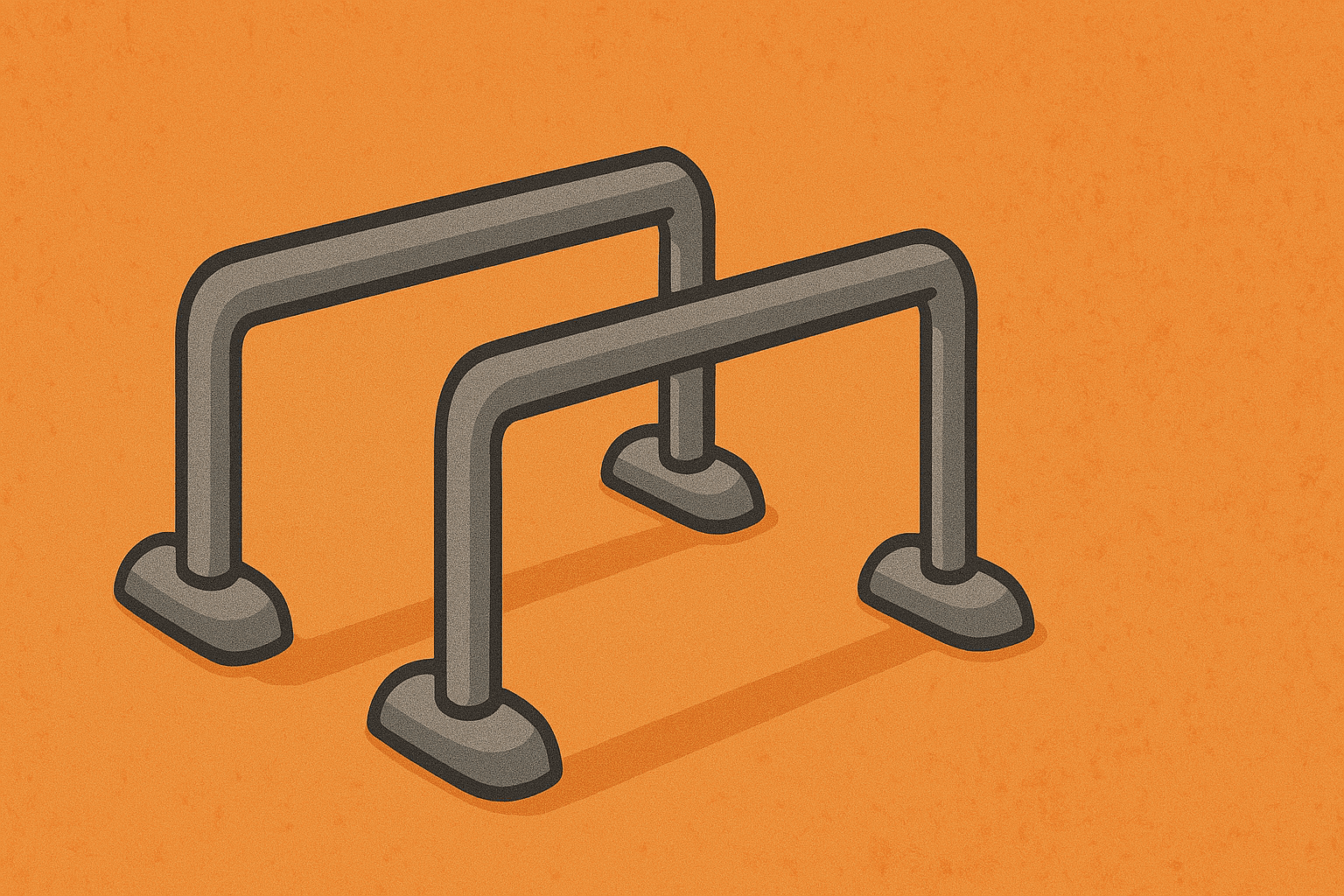
Many doorway bars double as low parallettes when placed on the floor. You can do push ups, seated dips, and even L-sits between the grips. For a lot of people, that covers most upper body work without needing bulky professional gym equipment.
If you want to add a few smaller tools around your bar, my breakdown of the best calisthenics accessories shows which extras are worth it.
Make calisthenics training easy to stick with
The biggest benefit in my view is habit. If your bar is in the doorway you walk through every day, it becomes normal to jump up for a few sets.
There is no drive to the gym, no waiting for a cable station. You hook the bar, do three sets, and get back to your day. That “low friction” setup is what keeps people consistent.
Add a couple of resistance bands and you can adjust difficulty up or down without buying plates. Lighter bands help beginners reach full range. Heavier bands can add load for strong athletes.
Progress to harder calisthenics skills
Once the basics feel solid, the same bar lets you work on:
- L-sit pulls
- Archer and typewriter pull ups
- Explosive pull ups and muscle up drills with bands
- Front lever progressions and tuck holds
Some doorway bars also have pull up bar attachments like an eyelet for a suspension trainer. Others take rings easily. That opens rows, ring pull ups, and ring dips, which is plenty for a serious skill routine.
Best doorway pull up bar exercises for calisthenics
Here are simple exercise ideas you can plug into your own program.
Beginner friendly doorway pull up bar exercises
For beginners, I focus on building grip and basic pulling strength:
- Dead hangs
Hang with straight arms and relaxed shoulders. Great for grip and shoulder comfort. - Scapular pull ups
Hang, then pull your shoulder blades down and together without bending the elbows. This teaches your body how to start a pull up correctly. - Band assisted pull ups
Loop a band over the bar and under your feet or knee. It reduces the load so you can practice full range. - Inverted rows with a low bar
Set a telescopic bar low in the frame, lie under it, and pull your chest to the bar with your heels on the floor. - Negative pull ups
Use a step to get your chin over the bar, then lower yourself as slowly as possible. This builds strength fast.
Intermediate doorway pull up bar exercises
Once you can do a few clean reps:
- Wide grip pull ups and chin ups in different grips and widths
- Neutral grip pull ups if your bar has parallel handles
- Hanging knee raises for the abs and hip flexors
- Seated dips or elevated push-ups with the bar on the floor
Small changes in grip width or angle shift the load between lats, upper back, and arms, so use that to target weak points.
Advanced calisthenics moves on a doorway bar
For advanced users with a solid, well-rated bar and a strong frame:
- Archer pull ups and typewriter pull ups
- L‑sit pull ups where the legs stay extended in front
- Explosive pull ups that bring your chest to the bar, useful for muscle up prep
- Hanging leg raises to the bar
- Tuck front lever holds if the doorway height allows a straight body
Keep in mind the bar and frame limits. I avoid big swinging kips on typical doorway setups, even quality ones. Save that for wall or ceiling bars once you outgrow the doorway.
FAQ about the best doorway pull up bar for calisthenics
Will a doorway pull up bar damage my door frame?
A good bar spreads the pressure over large rubber pads on the frame and wall. This cuts the risk of dents and scratches. Measure your door, stay under the weight limit, and keep the pads clean so dust does not grind into the paint.
Is a doorway pull up bar safe for heavy users?
Many premium bars have a maximum weight capacity of 200 to 250 lb or more. Always read the label. If you are close to the limit, pick a bar with an anti-rotation system, triple slip protection, and a long term warranty, not a bargain model. I also suggest doing a short “test hang” with bent knees close to the floor before you go all in.
Can beginners use a doorway pull up bar if they cannot do a pull up yet?
Yes. Start with dead hangs, scap pulls, band-assisted pull ups for full range of motion, and slow negatives. If you can set a telescopic bar low, add inverted rows. Many brands include a light band and a short guide with tips for the first pull up, which is a nice bonus.
What doorway pull up bar is best for renters?
Renters should look for no-drill bars that come on and off in seconds and use large rubber pads. Hook-on bars and high quality telescopic models are perfect. Just make sure your doorframe is solid wood or similar, not thin or hollow.
Can I attach other calisthenics equipment to a doorway pull up bar?
You can usually attach resistance bands, light suspension trainers, or rings, as long as you keep the total load within the rating and move in a controlled way. I do not hang heavy swinging loads like a punching bag from doorway bars, since that can stress the frame and the bar too much.
Conclusion
For me, the doorway pull up bar strikes a balance between safety, door compatibility, grip options, and ease of use. Telescopic in-between door bars like the GORNATION Extend-it or Pullup & Dip telescopic bar shine when you want a minimal look and adjustable height. The Pullup & Dip doorway frame bar is my pick if you want lots of fixed grips and the option to use it on the floor. The GORNATION Hook-it is ideal when storage space is tight, and the LYHOME bar adds rotating handles and travel-friendly weight.
Measure the dimensions of your doorway, check your wall type, review the shipping and returns policy, think about how you train, then pick the bar that fits your space and goals. Also check shipping and returns details before finalizing your purchase. Once it is up, use it often. Regular pull ups, rows, hangs, and core work on a simple doorway bar will build a stronger back, arms, and core over time.
If you want to go deeper on other options, also read my broader calisthenics pull up bar buying guide and my breakdown of the best pull up station power tower for calisthenics.