You want to get stronger at home with home workout equipment, but the gear options feel endless. One person says you need nothing, another person has a mini gym in their living room, and you’re stuck wondering what’s actually worth buying.
The truth is simple: for calisthenics beginners, a small, budget-friendly setup can cover pulling, pushing, core, and legs. The right must-have calisthenics equipment also helps you progress with less frustration, better grip, better range of motion, and fewer nagging joint aches.
If you buy smart, you won’t just “have equipment.” You’ll have tools that replace a lot of gym machines for bodyweight training, without taking over your space.
Start with the essentials that unlock the most exercises
If you only buy a few pieces, choose the ones that give you the most exercise variety per dollar and per square foot. Think like this: you’re not collecting gear, you’re building a basic training system.
The two biggest “unlockers” are a way to pull (bar or rings) and a way to adjust difficulty (your body angle, your grip, and later, added resistance). With those in place, you can train hard for years before you ever “need” anything fancy, progressing toward advanced skills like Muscle-Ups and Front Lever. If you want a quick checklist for a simple setup, use this Beginner calisthenics gear essentials guide to sanity-check what you’re about to buy.
Pull-up bar for back strength and a solid grip
A Pull-Up Bar is the closest thing calisthenics has to a “main machine.” It trains your lats, upper back, arms, and grip strength, plus it gives you a place to hang for core work.
You’ve got three common options:
- Doorway Pull-Up Bar: Great if you rent and want quick setup, but you must check frame strength and door trim shape.
- Wall-mounted bars: Very solid when installed correctly, but they need drilling and a strong wall.
- Free-standing stations: Best when you want one stable setup for pull-ups and more, and you don’t want to mount anything.
Before you buy a Pull-Up Bar, check four things: doorway width, head clearance (so you can pull without craning your neck), the max weight rating, and grip options (standard, neutral, or wider). If you want the simplest all-in-one approach, look at this Best pull-up station and power tower guide to understand what you gain and what footprint you’ll need.
Moves you can start today: dead hangs, scap pulls, chin-ups, pull-ups, and hanging knee raises. These build core stability too. If you’re new, keep it boring and effective: start with hangs, then slow negatives, then band-assisted reps, then full reps.
Gymnastic rings for full body training in a small space
Rings are a cheat code for variety. Gymnastic Rings let you adjust height in seconds, you can change difficulty by moving your feet, and your hands can rotate naturally, which often feels kinder on elbows and shoulders.
When you want to buy the best gymnastic rings, look for strap length (longer is more flexible), a buckle that locks tight, a ring diameter that fits your hands, and a safe anchor point. For quality, opt for wooden rings. That anchor can be a pull-up bar, a strong beam, or a sturdy outdoor structure you trust.
Starter ring exercises that build a full program fast: bodyweight rows, ring push-ups, support holds, and ring fallouts for core. Dips can come later, once you can hold a steady support position without shaking.
Keep safety simple: set the rings low at first, control every rep, and stop if your shoulder feels pinchy. Rings reward patience, and punish rushing.
Add pushing tools that make your wrists and shoulders feel better
Most people push a lot and pull too little. Push-ups are easy to do anywhere, so they pile up fast, and wrists and shoulders can start to complain. The fix often isn’t “stretch more.” It’s using tools that let your hands stay in a better position and let you use a deeper range safely.
These tools build upper body strength while being apartment-friendly. They store easily, they’re quiet, and they don’t require mounting anything. They fit right into street workout routines too.
Parallettes for push-ups, L-sits, and handstand practice
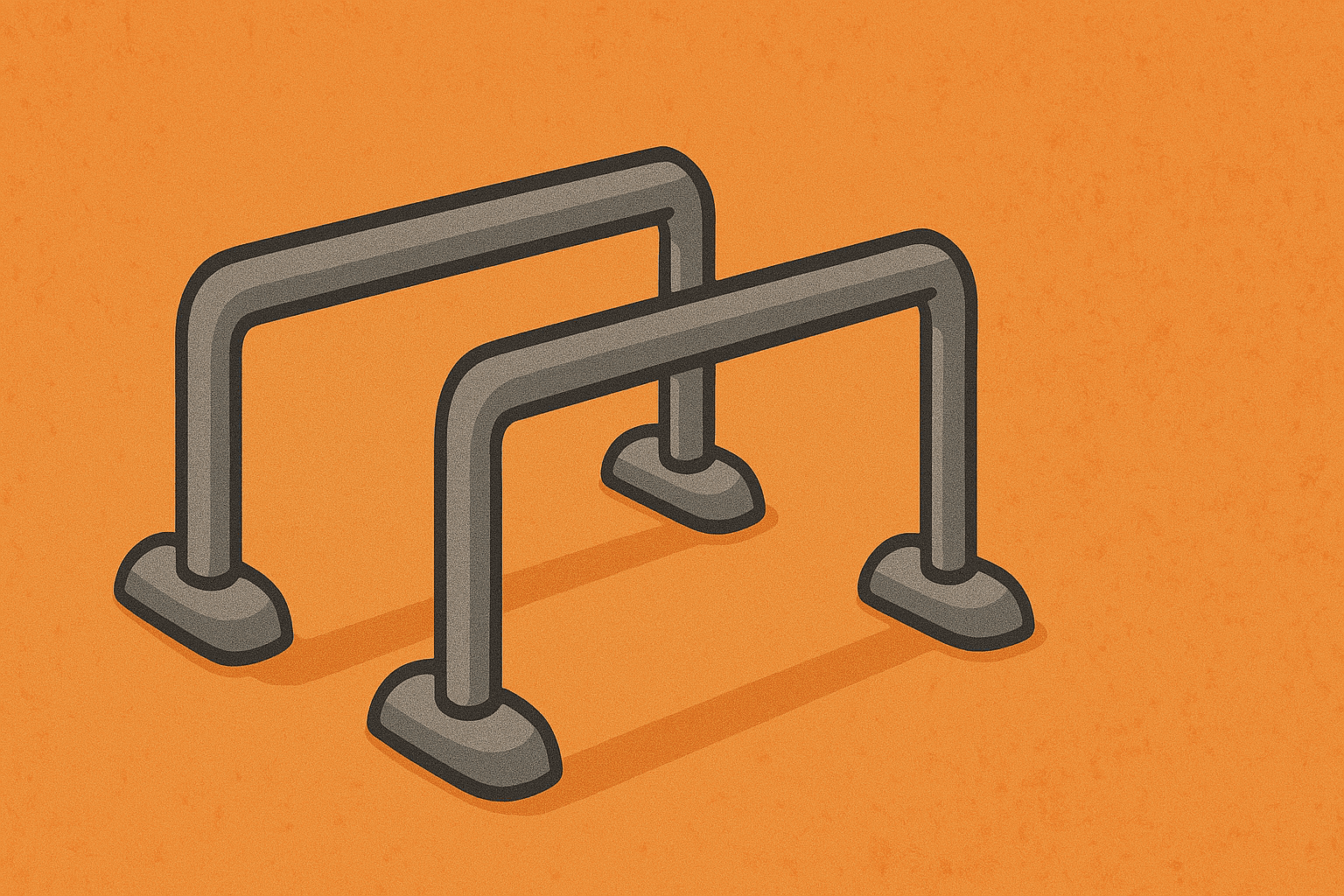
Parallettes look simple because they are simple, and that’s why they work. They keep your wrists more neutral, they give you clearance for deeper push-ups, and they help you stack joints better during handstand practice. Parallettes, also known as push up handles, make all the difference.
Low parallettes are great for push-ups and L-sits. Medium-height ones give you more clearance for knees and hips, which can make L-sit work less cramped. When you choose a set, pay attention to base width for stability and the grip feel. Wood often feels warm and grippy, metal can feel slick if your hands sweat.
Use them to build progressions that don’t stall:
- Incline push-ups to groove clean reps
- Deficit push-ups for more chest and shoulder range of motion
- Tucked L-sit holds, then longer holds, then one-leg extensions
- Pike holds, planche leans, handstand push-ups, and wall handstand kick-ups (keep it controlled, no wild launches)
If your wrists are the weak link, parallettes can be the difference between quitting and staying consistent.
Dip bars or a dip station for chest, triceps, and straight arm strength
Dips are one of the best pushing moves in calisthenics, but the setup matters. Portable dip bars are flexible and easy to move. A dip tower is convenient, but it takes more space. Rings can also handle dips, but they add instability, which you might not want early on.
What to check before buying: bar width (so your shoulders don’t feel jammed), bar height (enough clearance for your knees), wobble, floor grip, and weight rating. If the station shifts while you’re tired, it’s not “training instability,” it’s a safety issue. Solid dip bars prevent that hassle.
Start with a support hold at the top, shoulders down and back. Then do slow negatives, then band-assisted dips, then full dips. For shoulder-friendly form, keep your scapula pulled down, use a slight forward lean, and control depth instead of chasing a dramatic stretch.
Round out your training with smart add-ons for legs, core, and progression
Once you have a pull option and a push option, you’re covered. These add-ons are optional, but they’re high impact because they enable progressive calisthenics without needing heavier and heavier dumbbells. Perfect for calisthenics beginners, you can add them gradually as you get stronger.
They also help you keep training when motivation dips. A band-assisted pull-up day or a weighted push-up day can keep things fresh while still moving you forward. Smart picks include Resistance Bands, a Weight Vest or Dip Belt, liquid chalk, wrist wraps, a yoga mat, and jump rope.
Resistance Bands for assistance, extra resistance, and warm-ups
Resistance Bands, or loop bands, are the ones you’ll use most for calisthenics. You’ll want more than one strength of Resistance Bands, because the “perfect” band changes as you get stronger and as exercises change.
Practical uses that pay off right away: assisted pull-ups, assisted dips, band-resisted push-ups, face pulls, quick shoulder warm-ups, and jump rope sessions to fire up your legs. Resistance Bands also make mobility work feel smoother, especially for shoulders and hips, and they pair great with a yoga mat for core floor work.
When choosing bands, focus on length, durability, and how they’re finished. Avoid snap risk by inspecting them often, especially near the edges. If you see tears, thin spots, or rough patches, replace the band.
Weight vest or dip belt for easy strength overload
Add weight only after you can do clean reps with full control. If your pull-ups look like a fish flopping onto a dock, adding weight won’t help.
For weighted calisthenics, a Weight Vest loads your whole body and works great for push-ups, squats, lunges, and even step-ups. A Dip Belt shines for pull-ups and dips because the load hangs below you, letting your upper body move freely. Pair these with liquid chalk for grip and wrist wraps for joint support as essential safety and performance add-ons. If you’re unsure which one fits your training, this Dip belt vs weight vest comparison breaks it down in plain terms.
What to check: max load, comfort on shoulders or hips, adjustability, and how stable the weight feels. Then follow one rule that keeps you progressing for the long run: increase weight slowly, keep reps clean, and stop 1 to 2 reps before failure.
Conclusion
The Must-Have Calisthenics Equipment is less about owning a lot, and more about covering the basics well for bodyweight training. Get something to pull on (a bar or rings), something to push on (parallettes or dip bars) to build upper body strength, then add bands and load (vest or belt) when you’re ready.
Pick based on your space and goals, buy one or two items first, and let your progressive calisthenics training prove what you need next. For calisthenics beginners, your next step is simple: choose your first essential today, then plan three full-body sessions per week around it, and keep showing up.