If you have ever jumped to a pull up bar, tried one rep, and barely moved, you are not alone. A lot of people want to know how to get your first pull up, but they are not sure where to start or what resistance band for pull ups makes sense. That is exactly where band assisted pull ups help. They let you practice the real movement while reducing just enough bodyweight to make good reps possible. In this guide, I will walk you through resistance band pull ups step by step, explain how to choose the best band for pull ups, and show you how to progress toward clean unassisted reps.
What Are Band Assisted Pull Ups and Why They Work
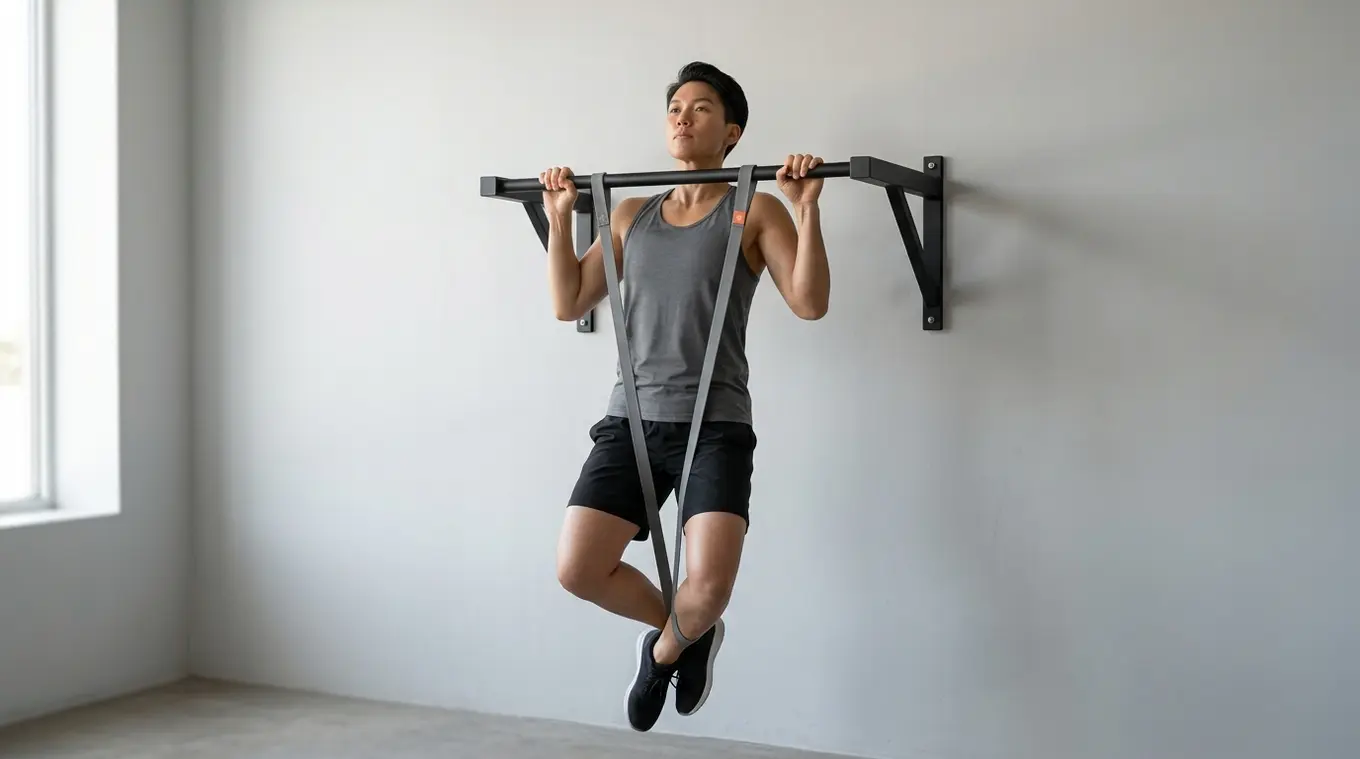
Band assisted pull ups are regular pull ups done with a loop resistance band attached to the bar. One foot, both feet, or one knee goes into the band, and the stretched band helps lift part of your bodyweight. That means you can train the same pulling pattern without needing full bodyweight strength yet.
The reason resistance band pull ups work is simple. You get to practice grip, shoulder position, core tension, scapular control, and the full path of a vertical pull. In other words, you are not just making the exercise easier. You are rehearsing the exact skill you want to own later.
In my experience, bands work best when they are treated as a bridge, not a shortcut. If the assistance is just enough, you still have to pull with your back, drive elbows down, and control the descent. That is where real progress happens. If the band does too much, your technique can look better than your actual strength. So the goal is always to use the minimum help that still allows solid reps.
They are especially useful for beginners, heavier athletes, taller athletes, and anyone returning from a long break. They also help if you can do one strict rep but cannot yet build enough volume to improve consistently.
Choosing the Right Resistance Band for Pull Ups
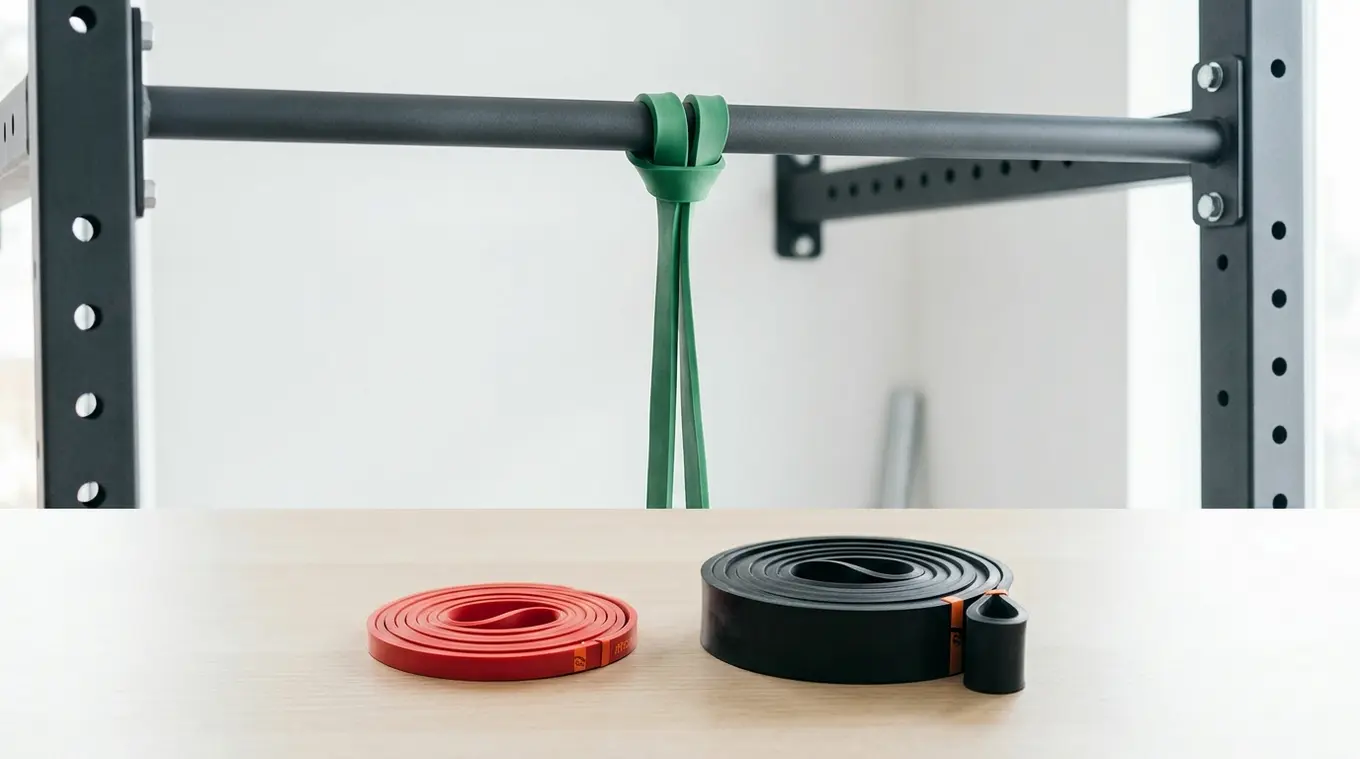
Choosing the right band is the first big decision because it affects both your technique and your rate of progress. When people ask what resistance band for pull ups to buy, I usually tell them not to think in terms of easiest or hardest. Think in terms of useful assistance. The best band for pull ups is the one that lets you perform controlled reps with a clear full range of motion.
If you are buying your first set, a quality range of loop bands is the most practical choice. A good option is a set from Gornation because the different resistance levels make progression much easier. Instead of getting stuck with one band that quickly becomes either too easy or too hard, you can move down step by step as your pulling strength improves. If you want a broader overview before buying, this guide on the best resistance bands for calisthenics is a useful next read.
Light vs Heavy Bands: Which One Do You Need?
Heavy bands give more assistance. Light bands give less assistance. That sounds obvious, but the real question is how that changes your training. A heavy band can help you get your first reps and build confidence, but it also changes the strength curve more dramatically. It helps the most at the bottom, where the band is stretched the most, and less at the top.
If you cannot do a single clean pull up, start with enough support to get 4 to 8 good reps. If you can already do one or two strict reps, a lighter band is often better because it keeps the movement closer to your true strength level. A common problem is using a pull up band that is too heavy for too long, which means the band is so supportive that your lats and upper back never have to work hard enough.
On the other side, a band that is too light can be frustrating. If you are kicking, craning your neck, or only moving halfway up, you probably need more support for now. Good training should feel challenging, not chaotic.
What to Look for in a Quality Pull Up Assist Band
Look for durable latex, smooth stretch, consistent thickness, and enough length to loop safely over a standard bar. Cheap bands often feel uneven or start fraying early, which is not what you want when bodyweight is involved. I also prefer bands with clear resistance labeling so you always know what you used last session.
If you train at home, a simple set of loop bands from Gornation is practical because you can use them for much more than pull up assistance. They also work well for rows, warm ups, mobility drills, and rehab style shoulder work. If you are still building a home setup, this article on must have calisthenics equipment can help you choose the essentials.
How to Set Up a Resistance Band on a Pull Up Bar
Learning how to set up a resistance band for pull ups properly matters more than many people think. A bad setup can make the exercise unstable, uneven, or just awkward enough that your reps become sloppy.
Step-by-Step Setup for a Standard Pull Up Bar
Start by taking a loop band and passing one end over the pull up bar. Then pull the hanging side through the other end of the band to create a choke around the bar. Tighten it so it sits securely in one spot and does not slide side to side.
Once the band is fixed, stand on a box, bench, or stable platform if needed. Never jump wildly into the band if you can avoid it. Place one knee or one foot into the bottom loop. If you want more assistance, putting a foot in the band usually stretches it more. If you want slightly less, placing one knee in the band is often smoother and easier to control.
Before your first rep, hang still for a second. Make sure the band stays centered and your body is not twisting. Your hands should be just outside shoulder width for most standard pull ups.
If you want a more general overview beyond pull ups, this guide on how to use resistance bands is also worth bookmarking.
Common Setup Mistakes That Reduce Effectiveness
The most common mistake is placing the band off center, which makes one side pull harder than the other. Another issue is stepping too deep into the band so it wraps awkwardly around the leg and affects balance. I also see people rushing the setup and starting with the band swinging. That first unstable moment often ruins the whole set.
Another mistake is using a doorway bar or unstable home bar without checking security first. Assisted pull ups still create dynamic force. If the bar shifts, the set is over immediately. Always test your setup before loading it with bodyweight.
How to Do Band Assisted Pull Ups with Proper Form
If you want band assisted pull ups to carry over to strict pull ups, your form needs to stay close to the real movement. Start from a dead hang or a controlled active hang, not a half rep. Brace your core, keep your ribs down, and think about making your body one tight line.
From there, begin the rep by setting the shoulders and pulling the elbows down toward your sides. This cue helps you pull with your back instead of trying to curl yourself up with your arms alone. At the top, aim to clear the bar with your chin while keeping your neck neutral. Then lower slowly until your arms are straight again.
I usually tell beginners to make every rep look the same. If rep one is smooth and rep five turns into kicking and twisting, that is not quality volume. Stop the set when the technique starts to break.
Foot vs Knee Placement: Which Is Better?
Both options work, but they feel different. Foot placement usually gives more assistance because the band stretches more. It can be useful if you are very close to zero pull ups and need the extra help. The downside is that some people end up pushing into the band too much and losing body tension.
Knee placement usually feels more natural and keeps the body a bit cleaner through the pull. It often works better once you can already control your torso and do a few decent assisted reps. Personally, I like knee assisted reps for most people because they reduce the temptation to bounce.
If you are unsure, test both. Choose the one that lets you keep a stable torso and a repeatable groove.
Scapular Control and Back Engagement Explained
This is where many people either learn pull ups correctly or stay stuck. The shoulders should not shrug all the way up and then stay passive while the arms do all the work. Instead, think about gently depressing the shoulders and engaging the upper back before you pull. You do not need to overdo it. You just want the shoulder blades involved.
A simple cue that works well is this: chest tall, shoulders away from ears, drive elbows down. That tends to create better lat engagement right away. If you cannot feel your back at all, try starting each set with one or two scapular pull ups first. That teaches you how the upper back contributes.
For stricter technique, you may also want to read how to do a pull up with perfect form after this article.
The Difference Between Pull Ups and Chin Ups with a Band
A pull up uses an overhand grip with palms facing away. A chin up uses an underhand grip with palms facing toward you. With a band, both movements become more accessible, but they still feel different.
Band assisted chin ups are often easier for beginners because the biceps contribute more and many people find the grip stronger. If your goal is simply how to get your first pull up, chin ups can be a smart stepping stone. They build confidence and teach you how to move your body vertically under control.
| Band / Placement | Best For | Effect |
|---|---|---|
| Heavy band + foot | Complete beginners, higher bodyweight, no strict pull up yet | Most assistance, easier to achieve 4 to 8 clean reps |
| Heavy band + knee | Beginners who want more control | High assistance with often more stable technique |
| Light to medium band + foot | People with 1 to 2 strict reps | Less assistance, but still enough to build volume |
| Light to medium band + knee | Trainees working toward strict reps | Good technique transfer and less tendency to bounce |
That said, if your target is a strict overhand pull up, you still need to practice actual pull ups regularly. The carryover is good, but it is not identical. I like using both in a program, with pull ups as the main skill and chin ups as extra volume.
How to Use Bands as a Progression Tool Toward Unassisted Pull Ups
Bands should move you forward, not keep you comfortable forever. The best way to use them is as part of a progression system. That means tracking your assistance level, reps, and quality over time. If your sets keep getting easier but the band never changes, you are not applying progressive overload effectively.
A simple method is to stay within a rep range, improve your quality and total reps, and then switch to a lighter band once that range feels solid. Over time, you can also mix in negatives, top holds, and unassisted singles to bridge the gap.
A Simple 4-Week Band-to-Strict Pull Up Plan
Week 1: Train twice per week. Perform 3 sets of 5 to 6 band assisted pull ups with a band that feels challenging but controlled. Finish with 2 sets of slow negatives for 3 reps.
Week 2: Keep the same band and aim for 3 sets of 6 to 8 clean reps. Add a 10 second top hold spread across 2 to 3 mini holds after your final set.
Week 3: Move to a slightly lighter band if you can still hit at least 4 good reps per set. Do 4 sets of 4 to 6 reps. Before your assisted work, attempt 1 to 2 unassisted singles.
Week 4: Start each session with strict attempts. Then do 3 sets of assisted reps with the lighter band, stopping one rep before form breaks. Finish with one controlled negative set. This structure works well because it blends skill practice and strength work without overloading your grip or elbows.
This is not the only plan that works, but it is one I have used successfully with beginners and returning trainees. The main point is steady reduction in assistance, not random workouts.
How Long Does It Take to Get Your First Strict Pull Up?
This varies depending on your starting strength, bodyweight, consistency, and how well you execute your training. That said, most beginners who train twice per week with proper band assistance and good form can expect to attempt their first unassisted rep somewhere between 6 and 12 weeks. Some people get there sooner, others take longer.
The biggest factor is not time, it is quality. Ten weeks of sloppy, bouncy assisted reps will not transfer as well as six weeks of controlled, full-range reps with the right band. If your sets consistently look clean and your assistance level is decreasing over time, you are on track regardless of the calendar.
A useful benchmark: if you can complete 3 sets of 6 clean reps with a light band, no swinging, and full range of motion, you are usually close to your first unassisted rep. That is the point where strict attempts start to feel possible rather than impossible.
When to Drop Band Assistance and Go Unassisted
You are ready to test more unassisted reps when your assisted sets look almost identical to strict reps. If you can do 3 sets of 8 with a light band, controlled tempo, no swinging, and full range of motion, it is usually time to start every session with fresh strict attempts.
Another good sign is when the band no longer changes your sticking point much. If you feel like you are doing nearly all the work anyway, the training effect may be better with real attempts plus a small amount of assistance after.
Do not rush this, but do not stay with the same support forever either. The band is there to teach and strengthen, not to become part of your identity on the bar.
Common Mistakes When Using Resistance Bands for Pull Ups
The biggest mistake is choosing too much assistance. It feels good because reps go up fast, but the movement often becomes bouncy and disconnected. If the band launches you out of the bottom, you are not building the control you need for strict pull ups.
Another common issue is incomplete range of motion. People stop halfway down to avoid the hardest part. That usually becomes a habit and later shows up as failed unassisted reps at the bottom. Go to straight arms under control unless shoulder pain says otherwise.
Swinging is another problem. Some movement is normal, especially on a flexible setup, but large swings shift tension away from the target muscles. Lock the ribs down, squeeze the glutes lightly, and pause briefly before each rep if needed.
Last, many people think only about getting the chin over the bar. That turns the rep into a neck reach. Focus more on the path of the elbows and torso. Drive elbows down, keep the chest proud, and let the chin clear naturally.
Resistance Band Pull Ups vs Other Assisted Pull Up Methods
Bands are popular because they are affordable, portable, and easy to use almost anywhere. But they are not the only assistance method. Assisted pull up machines offer very stable support and are useful in commercial gyms. The downside is that they can feel less specific to true body control on a free hanging bar.
Partner assisted reps can work, but they are hard to standardize. One set might be perfect and the next too easy. Jumping pull ups and negatives are also useful, especially if you want extra practice around the hardest positions.
If I had to rank methods for most home and calisthenics athletes, I would put bands near the top because they are accessible and effective when used well. Machines are fine if that is what you have. But for learning control on a real bar, resistance bands usually feel more transferable.
Our Recommended Resistance Bands for Pull Up Assistance
If you want a simple recommendation, go with a loop band set from Gornation. For pull up assistance, having multiple strengths matters more than owning one perfect band. Your bodyweight, strength level, and rep goal all affect what feels right, so a set gives you room to progress properly.
What I like about a good Gornation style set is that it covers the full journey. A stronger band can help you get started, medium levels often become the sweet spot for strength building, and lighter bands are ideal as you get closer to strict reps. That makes them a practical long term buy rather than a temporary fix.
If you also train rows, push ups, shoulder prep, or mobility work, they are even more valuable. Good bands are one of the few pieces of equipment that almost every calisthenics athlete ends up using regularly.
Frequently Asked Questions About Resistance Band Pull Ups
Below are some of the questions I hear most often from beginners working toward their first clean rep. They cover the practical details that usually determine whether band work actually leads to progress.
What resistance band for pull ups should a beginner use?
Most beginners should start with a medium to heavy loop band that allows 4 to 8 clean reps with full range of motion. If you cannot get your chin over the bar, go heavier. If you can easily do more than 10 reps, go lighter. The right band should challenge you without forcing bad form.
How many band assisted pull ups should I do?
A good starting point is 3 to 4 sets of 4 to 8 quality reps, two times per week. If you can do more than 10 clean reps easily, the band is probably too supportive and it is time to go lighter.
Are resistance band pull ups good for building muscle?
Yes, especially for beginners and intermediates. They train the lats, biceps, forearms, upper back, and core. As long as the band does not remove too much of the challenge, they can build both strength and muscle.
Should I use one foot, two feet, or one knee?
One knee is usually the cleanest option for technique. One foot can give more help. Two feet often create too much assistance for most people unless bodyweight is very high or strength is very low.
Can bands help even if I already have a few pull ups?
Absolutely. Once you have 1 to 3 strict reps, light band assistance is great for adding volume without compromising form. That extra quality practice can help you reach 5, 8, or 10 strict reps faster.
How to set up a resistance band for pull ups safely at home?
Loop the band over the pull up bar, thread one end through the other, and pull it tight so it stays centered. Use a stable step or bench to get into position instead of jumping. Before starting your set, test that both the bar and the band feel secure and do not shift.
Are band assisted pull ups better than the assisted pull up machine?
They are often better for home training and for learning body control on a real pull up bar. Bands feel more specific to actual pull ups, while machines are usually more stable and easier to scale precisely. Both can work, but bands are more practical for most calisthenics setups.
How often should I train resistance band pull ups?
Two times per week is a strong starting point for most people. That gives you enough practice to improve without overloading your elbows and grip. Aim for 3 to 4 sets per session and focus on clean reps, steady progress, and gradually reducing assistance over time.
When should I stop using resistance bands for pull ups?
Start reducing band reliance once your assisted reps look controlled and close to strict reps. A good sign is being able to do several sets with a light band and full range of motion without swinging. At that point, begin each workout with fresh unassisted attempts before using the band for extra volume.
What if I still cannot feel my back working?
Slow the movement down and focus on initiating each rep by setting the shoulders and driving the elbows down. Scapular pull ups, dead hangs, and controlled negatives usually fix this quickly when practiced consistently.
Resistance bands are one of the most practical tools for learning pull ups because they let you train the real movement while adjusting the difficulty to your current level. If you choose the right band, set it up safely, and keep your reps honest, band assisted pull ups can take you from zero reps to your first strict pull up much faster. My advice is simple: use enough help to move well, but not so much that the band does the work for you. If you need a reliable option, a multi level band set from Gornation is a smart place to start.