You want to start calisthenics, but the gear question gets confusing fast. Do you actually need equipment, or can you just train with your bodyweight and figure it out later? That is where most beginners get stuck. I have seen plenty of people waste money on random accessories while skipping the few tools that really help them make progress. In this guide, I will walk you through the beginner calisthenics equipment that matters most, what you can skip for now, and how to build a practical setup for your home, garage, apartment, or local park without overbuying.
Do You Actually Need Equipment for Calisthenics?
Technically, you can start calisthenics with no equipment at all. Push-ups, squats, lunges, planks, and floor-based core work are enough to begin building strength. But if your goal is to become more complete, especially if you want pull-ups, dips, muscle-up progressions, or better upper-body development, some starter calisthenics gear makes a real difference.
The biggest reason is pulling. Most beginners can do some kind of push exercise on the floor, but pulling is harder to train without a pull-up bar, dip bars, or rings. That usually creates an imbalance where people get decent at push-ups but make little progress on their back strength. In practice, a small amount of beginner calisthenics equipment solves that problem quickly.
From my own training, the people who improve fastest are rarely the ones with the biggest home gym. They are the ones with a simple setup they can use consistently. A doorway pull-up bar, one set of resistance bands, and one pushing tool can take you surprisingly far.
If you want a deeper breakdown of whether bodyweight training really needs gear, this guide on does calisthenics need equipment is worth reading after this one.
What Counts as Starter Calisthenics Gear?
Starter calisthenics gear means the first pieces of equipment that help a beginner train the main movement patterns safely and consistently. You are not trying to buy an advanced athlete setup. You are trying to cover the basics well enough to build strength, learn technique, and stick with training.
That usually means equipment for pull-up progression, support work, and better exercise scaling. In other words, gear that helps you train before you are strong enough for strict pull-ups, deep dips, or more advanced calisthenics progression equipment.
The difference between essential and optional gear
Essential gear helps you train movements that are otherwise hard to do at home. A pull-up bar is the best example. Resistance bands are another because they let you scale exercises up or down. Dip bars or another stable pushing tool can also move into the essential category if you train at home and want more variety than floor push-ups.
Optional gear is useful but not necessary on day one. Things like parallettes, liquid chalk, a weighted vest, wrist wraps, or an ab wheel can improve comfort or add progression options, but they are not required to get started. A lot of beginners flip this around and buy accessories first because they look cool or seem advanced.
If you are unsure, ask a simple question before buying anything: will this piece of gear help me train more often or progress on a foundational movement? If the answer is no, it can probably wait.
How your goals shape what you need
Your gear list should match your goal. If your main focus is getting your first pull-up, then the best pull-up bar for beginners and a few resistance bands matter more than anything else. If you care most about dips, support holds, and core strength, dip bars or rings may be the better early investment. If you train in a tiny apartment, then small space calisthenics equipment becomes the priority and bulky stations make less sense.
I usually recommend beginners think in terms of three main goals. First pull-up. Stronger full-body home workouts. Skill basics like L-sits and handstands. Once you know which of those matters most right now, the buying decisions get much easier.
The Essential Calisthenics Gear List for Beginners
If you want a short version, here it is. Most beginners do best with a pull-up bar, resistance bands, and either dip bars or a similar pushing tool. That covers pulling, pushing, core, progression work, and a lot of mobility drills too.
Pull-up bar
If I had to choose only one item of starter calisthenics gear, I would pick a pull-up bar. It opens the door to dead hangs, scapular pulls, negatives, band-assisted pull-ups, chin-ups, knee raises, hanging core work, and eventually full pull-ups and beyond. For most people, it is the single most valuable piece of beginner calisthenics equipment.
A doorway model works well for many apartments and rental situations, especially if drilling into walls is not an option. A wall mounted bar is usually better if you own your place, want more stability, or plan to progress into harder pulling skills. If you are comparing both options, this guide on doorway vs wall mounted pull-up bar can help.
When looking for the best equipment for pull ups, focus on fit, load capacity, grip comfort, and stability. Do not get distracted by gimmicks. A simple, well-built bar beats a cheap model with ten handles and questionable support every time.
If you want a product recommendation, Gornation is one of the brands worth checking when you want beginner-friendly gear with solid build quality. I would especially keep them in mind if you want equipment that looks clean, stores well, and is designed with bodyweight training in mind rather than generic home fitness.
Gymnastic rings or dip bars
This is where your setup and personality matter. Gymnastic rings are incredibly versatile. They can be used for rows, push-ups, dips, support holds, curls, face pulls, and later on for harder stability work. They pack small and work well in a garage, backyard, park, or any place with a bar or strong anchor point.
That said, I do not always tell absolute beginners to buy rings first. Rings are excellent, but they take more setup, and the instability can feel overwhelming if you are brand new. Dip bars are more straightforward. They are fast to use, easier for beginner rows and supported dips, and great for people who want a stable home base.
If you know you like simple equipment and quick workouts, dip bars are often the better first choice. If you value portability and flexibility, rings are hard to beat. For many people, dip bars win as true starter calisthenics gear, while rings become a great second purchase.
Gornation also makes products in this category that fit beginners well. If you want gear you can grow into instead of replacing in six months, that is usually the better long-term move.
Resistance bands
Resistance bands are the most underrated part of a beginner setup. They help with pull-up progression, dip progression, warm-ups, shoulder prep, mobility work, stretching, and accessory training. If someone tells me they cannot do pull-ups yet, bands are almost always part of the solution.
A good set lets you scale movements rather than avoid them. A heavier band can make your first pull-up possible. A lighter band can help with technique practice without doing all the work for you. They also work well for rows, push-downs, curls, tricep extensions, and joint prep.
In my experience, beginners who own a few band strengths stick with training more easily because they always have a version of the exercise they can do. That matters a lot more than buying gear meant for advanced athletes.
If you want more ideas, this page on exercises with resistance bands is useful once you have your set.
What Can You Train with Starter Calisthenics Gear?
Knowing what gear to buy is one thing. Knowing what you can actually do with it helps you start with a clear plan. A pull-up bar, resistance bands, and a basic pushing tool together cover four main training categories.
Pulling
Dead hangs, scapular pulls, band-assisted pull-ups, negative pull-ups, chin-ups, and hanging knee raises. Pulling is the movement pattern that is hardest to train without equipment, and a pull-up bar solves it directly. Resistance bands let you start with an assisted version before you have the strength for a full pull-up.
Pushing
Push-ups, dips, and support holds. Dip bars or parallettes add range of motion and wrist comfort compared to training on the floor. Rings introduce a stability challenge once the basics feel manageable.
Core
Hanging knee raises, hollow body holds, planks, and L-sit progressions. Hanging core work from a pull-up bar tends to be more demanding than floor work alone, which helps beginners build core strength faster as they progress.
Mobility and warm-up
Resistance bands work well for shoulder activation, thoracic warm-ups, hip mobility, and general joint prep before training. Running a short band routine before pulling sessions is a practical habit that helps beginners avoid shoulder discomfort early on.
Together, these four categories give you enough to run a structured full-body routine multiple times per week, work through exercise progressions, and build toward milestone movements like your first pull-up or first dip without quickly running out of options.
Nice-to-Have Gear (But Not Required to Start)
After the essentials, there are a few items that can make training better, but they should not replace the basics. Think of these as quality of life upgrades rather than must-buys.
Parallettes
Parallettes are excellent for push-ups, L-sits, tuck work, handstand drills, and wrist-friendly training. They are especially useful if your wrists get irritated on the floor or if you want extra range of motion during pushing exercises. For a lot of people, the best parallettes for beginners are low, stable, and easy to store.
I like parallettes once someone has a basic routine already. They make training more enjoyable, and that matters. But I would still put them behind a pull-up bar and bands for most beginners. If your budget allows, though, they are one of the better optional purchases, especially for a small space calisthenics equipment setup.
If you want to compare options in more detail, this article on best parallettes for calisthenics is a good follow up.
Ab wheel and other accessories
An ab wheel is useful for core strength, but it is not essential because you can already train the core hard with hanging raises, hollow holds, planks, and L-sit progressions. Liquid chalk or gym chalk can be genuinely helpful if your hands get sweaty on bars, especially in warmer climates or garage gyms. I would not call chalk necessary on day one, but once your training volume goes up, it can improve grip and confidence.
If you are deciding between products, liquid chalk is usually easier for home and apartment training because it is less messy. This comparison of liquid chalk vs block chalk explains the tradeoffs well.
Other accessories such as wrist wraps, weighted vests, and dip belts make more sense later. They belong to the next stage, not the starting line.
Home vs. Outdoor vs. Gym: Which Setup Fits You?
There is no perfect setup for everyone. The best starter calisthenics gear is the gear that fits your space, schedule, and routine. That is more important than copying what advanced athletes use.
| Gear | Priority | Best for | Why it helps beginners |
|---|---|---|---|
| Pull-up bar | Essential | Pull-up progression, hangs, core | Gives you a practical way to train pulling, which is hard to do without equipment. |
| Resistance bands | Essential | Assistance, warm-ups, mobility | Lets you scale pull-ups and dips, train around weaknesses, and stay consistent. |
| Dip bars or rings | Essential for many setups | Pushing, rows, support holds | Adds more upper-body variety and helps build pushing strength beyond floor work. |
| Parallettes | Optional | L-sits, wrist-friendly push work, handstand drills | Useful for comfort and skill work, but not necessary on day one. |
| Ab wheel or chalk | Optional | Core work, grip support | Helpful extras once the basic setup is already covered. |
Minimal home calisthenics setup
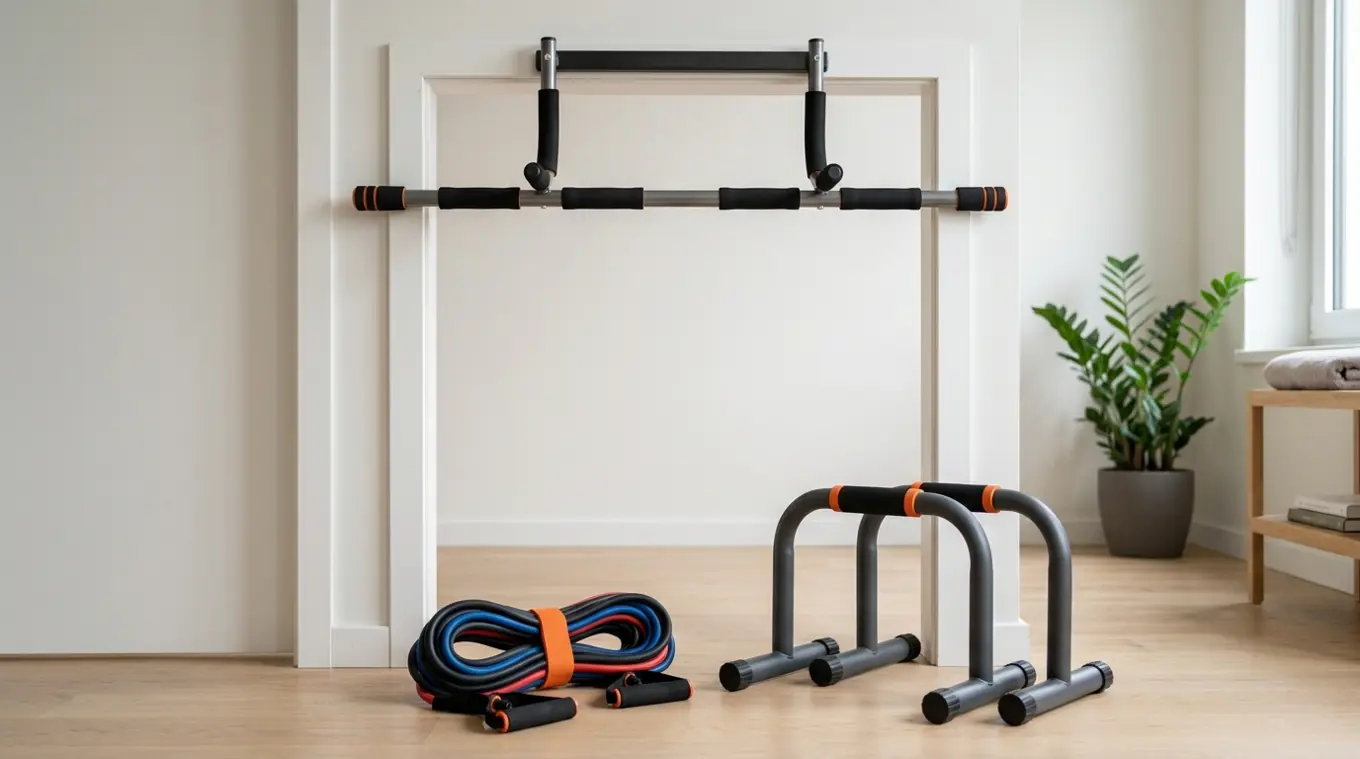
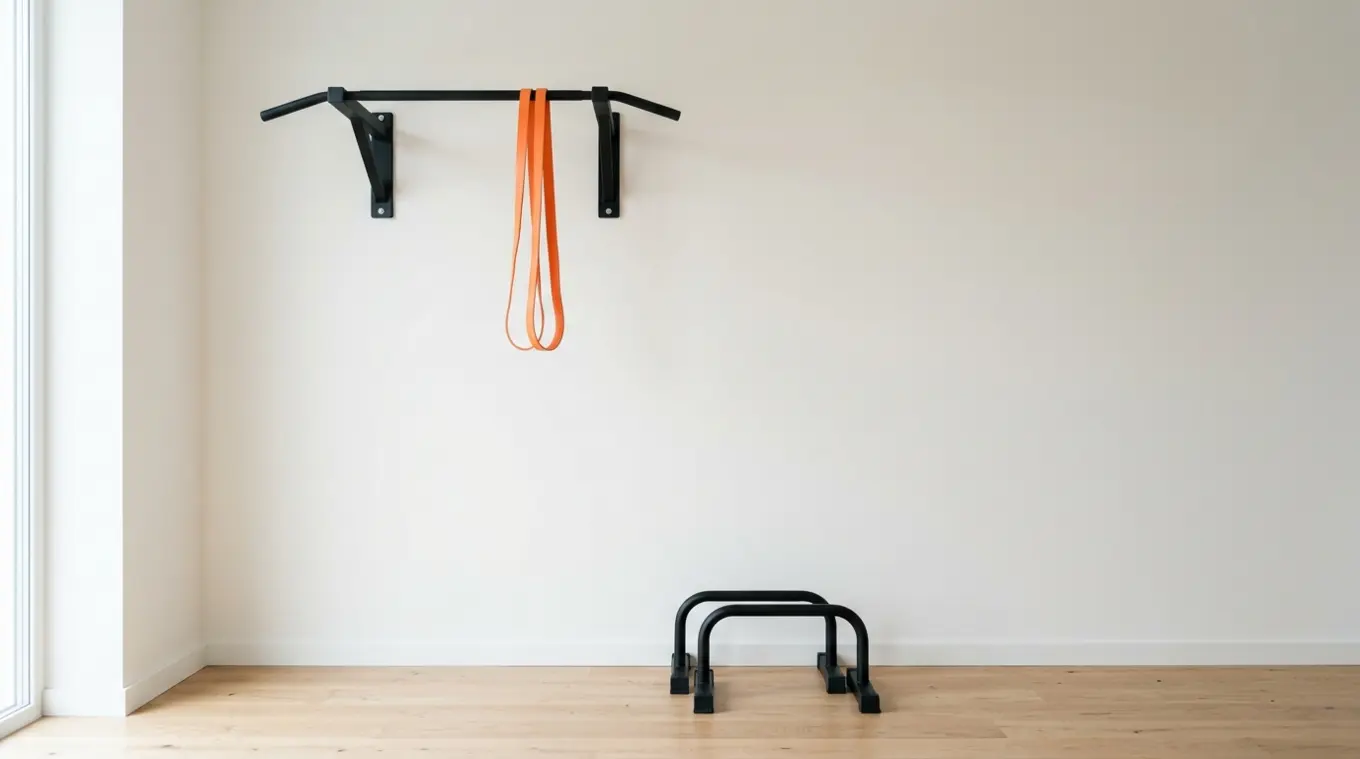
For most people, a minimal calisthenics home gym setup means three things: a doorway or wall mounted pull-up bar, a set of resistance bands, and either dip bars or low parallettes. That is enough for pull-up progression, pushing work, rows, dips, support holds, basic core work, and a lot of accessory training.
If space is tight, I would prioritize gear that stores easily. This is where a doorway bar, foldable bands, and compact push-up bars make a lot of sense. You do not need a giant power tower if you live in a one-bedroom apartment. In fact, many people train better with less clutter and fewer decisions.
For apartments and renters, I would stay focused on small space calisthenics equipment with a low footprint. Stable, compact gear beats oversized equipment that turns into a coat rack.
Training outside with limited gear
If you have access to a park, outdoor bars, or even a sturdy tree branch and some straps, your gear needs are even smaller. In that case, resistance bands, rings, and liquid chalk may be enough. Outdoor training is great because the environment gives you most of the structure for free.
The downside is consistency. Weather, travel time, and crowded parks can make it harder to stick to a routine. That is why many people still do better with at least one home option, even if they enjoy outdoor sessions. A simple pull-up bar inside can save a training day when the weather is bad or your schedule is packed.
If you know you will mostly train outdoors, choose portable equipment for pull-up progression and mobility rather than heavy stations that stay indoors.
What to Look for When Buying Beginner Calisthenics Equipment
Buying gear is not just about what exercises it allows. It is also about whether you will trust it enough to use it regularly. The right beginner calisthenics equipment should feel safe, stable, and practical from the start.
Build quality and stability
This is the first filter. If a pull-up bar feels sketchy, you will never hang on it with full confidence. If dip bars wobble every set, your training quality drops. Cheap gear often looks fine online but becomes frustrating as soon as you use it under real bodyweight.
I always tell people not to buy the cheapest option in categories where stability matters. That does not mean you need premium everything. It means your first concern should be whether the product can handle repeated use safely. Read reviews, check weight limits, and pay attention to how the product mounts or stands on the floor.
This is also where reputable calisthenics brands stand out. Gornation is a good example of a brand that generally understands what bodyweight athletes need from equipment, especially when it comes to grip feel, finish, and overall usability.
Size, space, and portability
A lot of people underestimate this part. A piece of gear can be excellent on paper and still be wrong for your home. Measure your doorway. Measure the floor area. Think about where the equipment will live when you are not using it. If it takes too much effort to set up or store, that friction adds up.
For a small apartment, a doorway pull-up bar, bands, and compact push-up bars are often better than a large dip station. For a garage, basement, or spare room, you can be more flexible. If you travel often, rings and bands are hard to beat.
Good starter calisthenics gear makes training easier, not more complicated.
Price vs. value: where to spend and where to save
The best place to spend is on your main movement tools. That means your pull-up bar, dip bars if you buy them, and anything else carrying a lot of bodyweight under tension. The best place to save is on simple accessories you do not use every day.
A cheap set of bands can work, but very low quality rubber tends to wear out faster. A cheap ab wheel may be fine. A cheap doorway bar that shifts under load is another story. Think in terms of value over time, not just checkout price.
For most beginners, I would rather see you buy two good items than six mediocre ones. Better equipment usually means better consistency, and better consistency is what actually gets results.
Common Mistakes Beginners Make When Buying Gear
The most common mistake is buying too much, too early. Beginners often imagine a future version of themselves doing muscle-ups, front levers, ring routines, and weighted dips, so they buy for that person instead of their current level. The result is clutter, wasted money, and equipment that barely gets used.
The second mistake is ignoring pulling. A lot of home workouts drift toward push-ups, abs, and squats because those are easy to do without equipment. Then people wonder why they are not progressing toward balanced strength. A pull-up bar and bands solve this better than almost any other purchase.
The third mistake is choosing unstable or poorly fitting gear. This happens a lot with doorway pull-up bars that do not match the frame, or dip bars that slide around on the floor. It also happens when beginners buy rings because they heard they are versatile, then stop using them because setup feels annoying.
Another mistake is chasing accessories before mastering basics. Liquid chalk, gym chalk, wrist wraps, weighted gear, and recovery tools all have their place, but they are not a substitute for solid training fundamentals. Start simple and earn the right to expand your setup.
Our Recommended Starter Calisthenics Kit
If you want a straightforward answer, here are the two setups I recommend most often. They are based on what beginners actually use, not just what looks good in a product photo.
Budget starter kit
A smart budget starter kit includes a doorway pull-up bar and a set of resistance bands. That combination gives you the biggest training return for the money. You can practice dead hangs, negatives, band-assisted pull-ups, scapular work, hanging knee raises, band rows, shoulder warm-ups, and plenty of accessory work. Add floor push-ups, bodyweight squats, split squats, and planks, and you already have a full-body routine.
If you have a little money left, add compact push-up bars or low parallettes. That makes wrist positioning more comfortable and gives you more room for L-sit practice and deeper push-ups.
This setup is ideal if you are building a calisthenics home gym setup in a small apartment, spare room, or rental. It is also the best answer for people searching for small space calisthenics equipment that still supports real progress.
Best value starter kit
The best value setup for most beginners includes a solid pull-up bar, a set of resistance bands, and either dip bars or low parallettes depending on your space. If you want the most complete setup without going overboard, this is it.
With that combination, you can train pull-up progression, horizontal rows, push-ups, support holds, dips, core work, mobility, and basic skill prep. It covers enough ground that you can make progress for a long time before needing anything else.
If you prefer buying from a dedicated calisthenics brand rather than mixing random fitness products from different sellers, Gornation is worth considering here. Their gear generally suits beginners who want equipment that feels more purpose-built and less generic. That is especially useful if you care about grip comfort, finish quality, and a setup that does not feel like a compromise.
If your long-term goal includes L-sits or handstand work, adding Gornation parallettes later can be a smart upgrade. But I would still build around the pull-up bar and bands first.
How to Think About Your First Calisthenics Setup
Most beginners do not need a huge list. What they need is the right order. Start with equipment that helps you train often and progress on foundational movements. That usually means a pull-up bar, resistance bands, and one pushing tool if your budget allows.
If you are still unsure, think in terms of training problems. Cannot do a pull-up yet? You need equipment for pull-up progression. Wrists feel beat up on the floor? Parallettes may help. Train in a tiny apartment? Focus on compact equipment with simple storage. Sweat makes bars slippery? Liquid chalk or gym chalk becomes more useful.
The goal is not to own the most gear. The goal is to remove the biggest barriers between you and consistent training. That is what good starter calisthenics gear should do.
If you are just getting into bodyweight training, keep your first setup simple. The best starter calisthenics gear is usually a pull-up bar, resistance bands, and a stable pushing option like dip bars or parallettes. That gives you enough beginner calisthenics equipment to train your whole body, scale exercises to your level, and keep progressing without filling your home with gear you do not need. Buy for your current level, choose quality where stability matters, and add extras only when they clearly solve a problem. That approach saves money, reduces frustration, and helps you build a setup you will actually use.
FAQs
What is the best starter calisthenics gear for complete beginners?
For most complete beginners, the best setup is a pull-up bar and a set of resistance bands. That gives you a way to train pulling movements, which are the hardest to replace with no equipment, and lets you scale exercises like pull-ups and dips as you get stronger.
Do I need dip bars or gymnastic rings first?
It depends on how you train. Dip bars are usually easier for beginners because they are quick to set up and feel more stable for rows, support holds, and dip progressions. Rings are more versatile and portable, but they take more setup and can feel less beginner friendly at first.
Are parallettes necessary for beginner calisthenics?
No, parallettes are helpful but not necessary. They are great for wrist comfort, deeper push-ups, L-sit practice, and early handstand work, but most beginners should buy a pull-up bar and bands first. Parallettes make more sense once you already have a basic routine in place.
What is the best pull-up bar for beginners?
The best pull-up bar for beginners is one that fits your space securely and feels stable under load. A doorway bar is usually the easiest option for apartments and rentals, while a wall mounted bar is often better for long-term use if you own your space and want more room to progress.
Should beginners buy liquid chalk or gym chalk?
Most beginners can wait, but chalk becomes useful if sweaty hands affect your grip on bars or rings. Liquid chalk is often the better option for home use because it is less messy and easier to carry. It is helpful, but it should come after your main training gear, not before it.