If you want to get better at pull ups, the hardest part is often not the exercise itself. It is figuring out what equipment actually makes sense for your space, budget, and training level. Maybe you live in an apartment and need a no drill pull up bar. Maybe you want the best pull up bar for home gym training, or maybe you need something sturdy enough for weighted reps and muscle up progressions. In this guide, I will walk you through the best pull up equipment for different situations, explain what matters before you buy, and help you avoid common mistakes that lead to wasted money.
What Is the Best Equipment for Pull Ups? (Quick Answer)
For most people, the best equipment for pull ups is a wall mounted pull up bar with multiple grip options. It gives you the best mix of stability, long term durability, and exercise variety. If you have solid wall space and you are allowed to install hardware, this is usually the smartest buy.
If drilling is not an option, a high quality doorway pull up bar is the best starting point. A good doorframe pull up bar is affordable, easy to remove, and works well for strict reps, dead hangs, and basic accessory work. For renters and apartment training, this is often the easiest answer.
If you want a complete setup for dips, knee raises, and pull ups in one station, a free standing pull up bar or power tower can make more sense. And if you train outside, an outdoor bar setup is hard to beat for clearance and freedom of movement.
My short recommendation is simple. Choose a doorway bar for convenience, a wall bar for serious long term training, and a freestanding station only if you truly need portability or a full bodyweight station.
Types of Pull Up Equipment: Which One Fits Your Situation?
Not every pull up bar fits every home. That is where a lot of people get stuck. A bar can look great online and still be wrong for your doorway, ceiling height, wall material, or training style. I have seen this a lot with beginners who buy the first cheap option they find, then realize it wobbles, hurts their hands, or simply does not fit their apartment.
The best way to choose is to start with your situation first, then pick the category.
Doorway Pull Up Bars
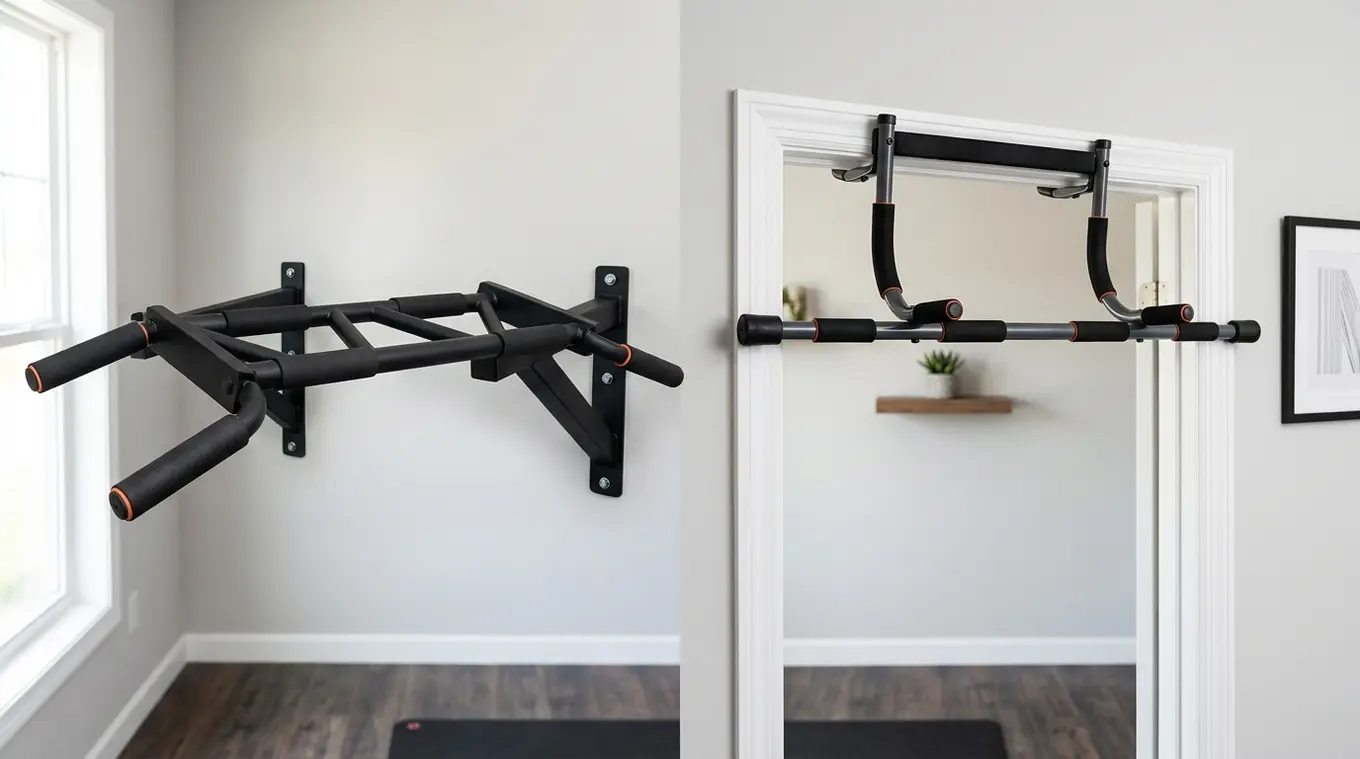
A doorway pull up bar is the easiest entry point for most people. It is usually the best pull up bar for small space setups, especially if you do not have a dedicated home gym. Many of these models hook over the frame and can be removed after training. That makes them a popular no drill pull up bar option.
The upside is obvious. They are affordable, quick to set up, and perfect for strict pull ups, chin ups, and hanging work. They also tend to be the best pull up bar under $100 for beginners who just need something simple and functional.
The downside is that not every door frame is safe or compatible. Some bars also limit range of motion, and cheaper models can feel unstable or put pressure on the frame in awkward ways. If you want to compare this category more closely, see our guide to the best doorway pull up bar for calisthenics.
Wall Mounted Pull Up Bars
A wall mounted pull up bar is the best choice for most intermediate and advanced athletes. It feels more secure, usually supports a higher weight capacity, and gives you better clearance than a doorway bar. If you plan to train hard for years, this is usually the strongest long term option.
Wall mounted bars are also ideal if you want a neutral grip pull up bar or a wide grip pull up bar. Multi grip setups let you rotate hand positions, which helps reduce overuse and adds more variation for lats, biceps, and upper back work.
This is the category I personally trust most when training weighted pull ups. Once installed properly, it simply feels better and more predictable than lighter bars.
Ceiling Mounted Pull Up Bars
Ceiling mounted pull up bars work well when wall space is limited but overhead joists are available. They can give you excellent body clearance, which is useful for taller athletes and anyone practicing more dynamic calisthenics. In some garage gyms, this is actually the cleanest setup.
The main catch is installation. You need proper anchoring and enough ceiling height. In apartments or finished basements, this is often not realistic. Still, if your room layout makes wall mounting awkward, a ceiling bar can be an excellent solution.
Free Standing Pull Up Bars and Power Towers
A free standing pull up bar or power tower makes sense when you cannot drill into walls and do not trust your doorway. These stations are also attractive if you want multiple exercises in one footprint, such as dips, knee raises, push ups, and pull ups.
That said, this category has tradeoffs. Cheap towers often wobble. Some dip arms are too wide. Some frames get in the way of muscle up drills or front lever progressions. I have trained on both solid and flimsy towers, and the difference is huge. A good one can be very useful. A bad one becomes a coat rack in a month.
If you are deciding between mounted and freestanding setups, stability should be your first filter, not just price.
Best Doorway Pull Up Bar: Our Top Picks
For many home users, the doorway category is where the search starts. It is easy to understand why. You get access to daily pulling work without dedicating a whole room to equipment.
Best Overall Doorway Bar
The best overall doorway pick is a premium over-the-door style bar with wide contact points, a secure frame design, and enough width for both standard and wide grip work. In this category, I would prioritize build quality over fancy features. What matters most is fit, comfort, and confidence every time you hang from it.
Look for a doorframe pull up bar that spreads force well across the frame and includes decent foam or textured grip areas. A slightly more expensive model is usually worth it if it feels more solid and leaves fewer marks. In my experience, cheap doorway bars are where most buyer regret happens.
If you want the safest route in this category, choose a model specifically built for strict pull ups and dead hangs rather than dynamic reps. Doorway bars are not where I would practice aggressive kipping or explosive transitions.
For readers who want more detail on fit and setup, our guide on pull up bars for renters is a useful next step.
Best Budget Doorway Bar
The best budget doorway bar is usually a straightforward no drill pull up bar from a known fitness brand or a well reviewed minimalist model that fits standard US door frames. This is where you will often find the best pull up bar under $100.
At this price, I would not chase too many extras. A basic, secure, removable bar with decent padding is enough for most beginners. If you are just learning the movement, even a simple doorway setup paired with resistance bands for pull ups can take you very far.
If you are considering the absolute cheapest options online, be careful. Some use weak materials, vague weight ratings, or poor welds. Saving twenty dollars is not worth it if the bar shifts during your first full rep.
Best Wall Mounted Pull Up Bar: Stable, Strong, and Space Efficient
If you have the option to install one, a wall mounted bar is the category I recommend most often. It is the best blend of performance, value, and long term usefulness. You do not need an entire rack. You just need one strong bar in the right place.
Best Overall Wall Mount Bar
The top overall wall mounted option is a multi grip steel bar with a high weight capacity, sensible wall depth, and enough width for both shoulder width and wide grip training. A model like this is ideal for anyone searching for the best pull up bar for home gym use because it stays out of the way while still feeling serious.
One of the stronger recommendations in this category is a multi grip Gornation pull up bar if it fits your wall and training style. Gornation has built a solid reputation in calisthenics for equipment that feels athlete focused rather than gimmicky. If you want a clean setup for strict pull ups, chin ups, hanging leg raises, and ring attachments, it is a brand worth looking at.
What I like about this type of setup is that it grows with you. Beginners can use bands. Intermediate users can build volume. Advanced users can add a dip belt or weight vest and keep progressing for a long time.
Best Wall Bar for Multi Grip Training
If your elbows or shoulders get irritated from repeating the same hand position, a neutral grip pull up bar is often the answer. Multi grip wall bars let you switch between overhand, underhand, close, angled, and neutral positions. That is useful not just for comfort but also for better training variety.
For many people, the best wall bar is not the one with the most handles. It is the one with the most usable handles. Spacing matters. Handle angle matters. Bar diameter matters. I have used bars that looked versatile on paper but felt cramped once I actually trained on them.
A well designed multi grip bar gives you enough room to move naturally. If you plan to train several pulling variations every week, this is one place where paying a little more usually pays off.
Best Free Standing Pull Up Bar and Power Tower
Freestanding equipment can be a great compromise when drilling is not possible. It can also be the right choice if you want dips and vertical knee raises in the same station.
Best Power Tower for Home Use
The best power tower for home use is one that feels stable under full bodyweight, has comfortable dip handles, and gives you enough pull up height without taking over the whole room. Good home towers can be excellent for beginners because they support more than one movement pattern in a single setup.
| Type equipment | Best for | Main advantage | Main drawback |
|---|---|---|---|
| Doorway pull up bar | Renters, apartments, small spaces | Affordable, removable, no drilling | Less stable, limited for dynamic work |
| Wall mounted pull up bar | Long term home training | Best stability, strong weight capacity, multiple grips | Requires drilling and solid wall space |
| Ceiling mounted pull up bar | Garage gyms, limited wall space | Excellent clearance for taller athletes and dynamic reps | Needs proper joists and enough ceiling height |
| Free standing bar or power tower | No drill setups, multi exercise stations | Supports pull ups, dips, knee raises in one setup | Can wobble and takes more floor space |
| Outdoor pull up bar | Backyards, advanced calisthenics | Maximum freedom of movement and bar clearance | Needs outdoor installation and planning |
Still, I would not buy a power tower just because it has the most features. Some towers look impressive but feel awkward in practice. Dip arms may be too wide, back pads may interfere with lever work, and the base may shift if the frame is too light.
For general home use, choose a model that does the basics well. If your main goal is better pull ups, stability matters more than having ten attachment points.
Best Portable Free Standing Option
If portability matters, a foldable or easier to move free standing pull up bar can work well. These are often useful for apartment users, people who train in different rooms, or anyone who wants a setup they can store when guests come over.
The key tradeoff is always footprint versus sturdiness. Portable units are convenient, but they should still feel secure at the top and bottom of each rep. If you plan to add rings, be extra careful. Rings create movement in multiple directions, and not every freestanding bar handles that well.
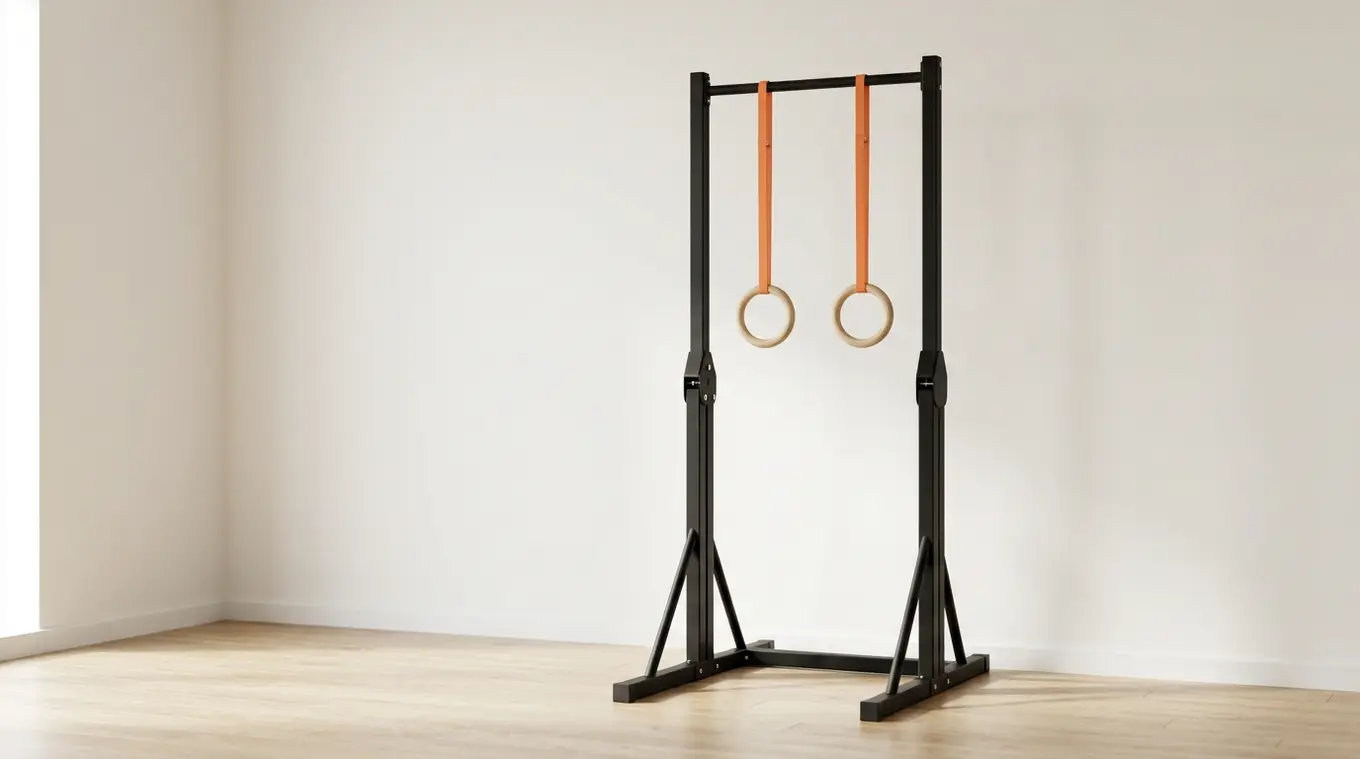
Personally, I only recommend portable freestanding options if you have already ruled out a wall mounted bar and a good doorway bar. They solve a real problem, but they are rarely the most efficient answer.
Best Outdoor Pull Up Bar: Built for Parks and Backyards
If you have a backyard, driveway edge, or access to a private outdoor training space, an outdoor pull up bar can be one of the best investments you make. Nothing beats the freedom of a full height static bar with proper clearance. For tall athletes, muscle up practice, and straight bar work, outdoor setups are hard to match.
The best outdoor bars are made from weather resistant steel with secure anchoring into the ground or concrete. Once installed, they generally outperform indoor bars for movement freedom. You can swing, kip, work explosive pulls, and attach rings with fewer limitations.
If that is the route you are considering, check our guide to the best outdoor pull up bar for calisthenics. It goes deeper into height, materials, and backyard installation considerations.
Outdoor bars are especially worthwhile if you are serious about muscle ups, front lever progressions, or longer term calisthenics skill work. They require more planning upfront, but they often become the centerpiece of a home setup.
What to Look for When Buying Pull Up Equipment
Choosing the right category is only step one. After that, a few details make a huge difference in how safe and enjoyable the setup actually feels.
Weight Capacity and Stability
Ignore flashy marketing and look at the real basics first. What is the listed weight capacity, and does the construction inspire confidence? For mounted bars, strong steel and solid hardware matter. For freestanding stations, base width and frame rigidity matter just as much.
If you are a heavier athlete, plan to use a dip belt, or want to train explosive reps, stability is non-negotiable. A bar might technically hold your bodyweight, but that does not mean it will feel good under force. I always prefer a setup that feels boring in the best possible way. No shifting, no surprises, no second guessing.
Grip Types and Bar Diameter
Grip style changes the training experience more than most people expect. A straight bar is simple and effective. A neutral grip pull up bar can feel more joint friendly. A wide grip pull up bar can help target the upper back differently, though not everyone needs to train very wide all the time.
Bar diameter matters too. If it is too thick, smaller hands may fatigue early. If it is too thin, it can feel harsher on the joints or less secure. For most people, a standard diameter is the sweet spot. Thick bars can be useful for grip strength, but they should be a deliberate choice, not an accident.
If grip is a weak point for you, liquid chalk or grips can help. We break that down more in our comparison of liquid chalk vs regular chalk.
Bar Height and Ceiling Clearance
Bar height is one of the most overlooked details when buying pull up equipment, especially for indoor setups. To start from a proper dead hang, you need the bar to sit high enough that your feet do not touch the floor with your arms fully extended. For most people, that means the bar should be comfortably above standing reach height. If it is too low, you will be forced to bend your knees on every rep, which becomes awkward quickly and limits your training options.
For taller athletes, this is a real constraint with doorway bars and many freestanding towers, which are fixed to standard door or frame heights. Always check the listed bar height against your own height before buying.
Clearance above the bar also matters. For standard pull ups and chin ups, a modest amount of headroom is enough. For muscle up training or explosive pulling work, you need significantly more space above the bar. In those cases, an outdoor setup or a ceiling mounted bar in a room with high ceilings tends to work best. If you are installing a wall mounted bar, set it at a height that allows a full dead hang and still leaves enough room above for the movements you plan to train.
Space Requirements and Installation
Before buying anything, measure your space carefully. That sounds obvious, but it is one of the most common mistakes. Think about bar width, depth from the wall, ceiling clearance, and room for your legs at the bottom.
For a pull up bar for home use, also think about who else uses the space. In a garage gym, a wall bar is easy. In a shared apartment hallway, maybe not. In a rental, a no drill pull up bar or portable station may be the only realistic choice.
Installation quality also matters as much as the product itself. A great bar installed badly becomes a bad bar very quickly.
Pull Up Equipment by Training Level: Beginner to Advanced
Your level changes what equipment is worth buying. Beginners often assume they need the most advanced setup right away, but that is rarely true.
If you are a beginner and cannot yet do a full rep, start simple. A doorway bar and resistance bands for pull ups are usually enough. Bands let you learn scapular control, top holds, and full range reps without needing an assisted pull up machine. In most home setups, bands are the better value than a large machine.
If you are intermediate and already doing multiple clean pull ups, a wall mounted multi grip bar becomes much more attractive. At that point, exercise variety and long term comfort matter more. You can start adding tempo work, weighted hangs, and different grips.
If you are advanced, think about clearance, loading, and specialization. Weighted pull ups, chest to bar reps, muscle up work, and ring transitions all benefit from a stronger setup. This is where outdoor bars, robust wall mounts, and high quality accessories make the biggest difference.
From coaching friends and training myself, I have noticed that the best progress usually comes from matching the setup to the current phase. Not from buying the most expensive option on day one.
Useful Add-Ons for Pull Up Training
The right add-ons can make your pull up setup much more effective, especially if the main bar itself is basic.
The first accessory I recommend most often is resistance bands for pull ups. They are simple, affordable, and useful for both beginners and experienced athletes. You can use them for assistance, warm ups, and extra pulling volume. If you want ideas beyond pull up assistance, our guide to exercises with resistance bands is worth a look.
Gymnastic rings are another strong addition if your bar or station can support them safely. They allow neutral wrist movement, rows, dips, support holds, and advanced progressions. A good bar plus rings often gives you more training variety than a bulky machine.
For advanced athletes, a dip belt or weighted vest makes sense once bodyweight pull ups are no longer challenging enough. In general, I prefer a dip belt for heavier loading and a vest for convenience. If you are choosing between them, read more on dip belt vs weight vest.
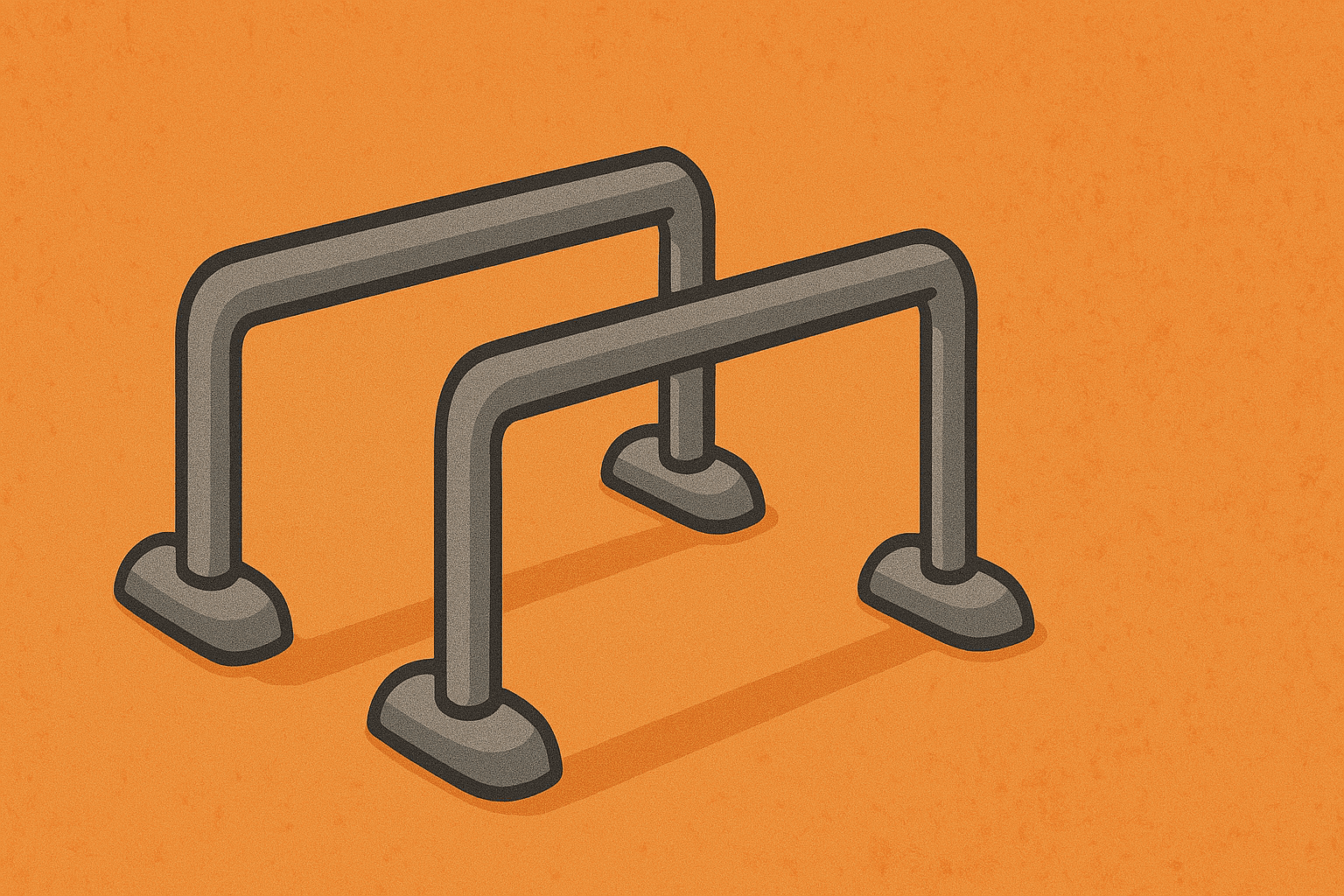
Other helpful extras include chalk, grip pads if you train high volume, and perhaps parallettes if you want to balance your pulling with pushing and core work. The key is to add tools that solve a real training problem, not just fill a shopping cart.
Our Verdict: Which Pull Up Equipment Should You Buy?
If you want the clearest answer, here it is. Most people should buy a wall mounted multi grip pull up bar if they can install one. It is the best all around option for home training because it is stable, space efficient, and useful for years. If you want a practical calisthenics focused recommendation, a Gornation pull up bar is one of the better brands to consider in that category.
If you rent, have limited space, or need something removable, get a solid doorway pull up bar. It is still the best pull up bar for small space training and the easiest low commitment option. If you have no safe doorway and cannot drill, then a well built freestanding station is your next best choice.
If you are training outdoors or want maximum freedom for advanced calisthenics, an outdoor static bar wins on movement quality.
My honest advice is to be realistic about your space and your actual habits. The best equipment for pull ups is not the one with the most features. It is the one you can use consistently, safely, and confidently three or four times every week.
And if you are still unsure, start smaller rather than overbuying. A good pull up bar plus a pair of bands can already take you a long way.
The best equipment for pull ups depends less on hype and more on fit. Fit for your home, fit for your goals, and fit for the way you actually train. A doorway bar is great for convenience, a wall mounted bar is the best long term choice for most people, and a freestanding station only makes sense when installation is not possible. If you want the safest bet, prioritize stability, grip comfort, and enough clearance to move well. Get those three things right, and your pull up training becomes much easier to stick with and improve over time.
Frequently Asked Questions
1. What is the best pull up bar for home use?
For most people, the best pull up bar for home use is a wall mounted multi grip bar. It offers better stability, more grip options, and more long term value than a basic doorway model. If you cannot drill into a wall, a quality doorway pull up bar is usually the best alternative.
2. Are doorway pull up bars safe?
Yes, doorway pull up bars can be safe if they fit your frame correctly and are used as intended. The main problems happen when people ignore doorframe compatibility, exceed the weight limit, or try dynamic movements on a bar meant only for strict pull ups and hangs.
3. Is a no drill pull up bar good enough for building strength?
Yes, a no drill pull up bar is good enough for building real pulling strength, especially for beginners and intermediate users. You can do strict pull ups, chin ups, dead hangs, and band assisted progressions. The biggest limitation is usually stability for explosive or advanced calisthenics movements.
4. Should I buy a power tower or a wall mounted pull up bar?
If you can install one, a wall mounted pull up bar is usually the better buy for pure pull up training because it is more space efficient and often more stable. A power tower makes more sense if you also want dips, knee raises, and a complete bodyweight station without drilling.
5. Do I need resistance bands or an assisted pull up machine?
For most home users, resistance bands are the better choice. They are cheaper, take up almost no space, and work well for assisted pull ups, warm ups, and accessory drills. An assisted pull up machine can be useful in a commercial gym, but it is rarely the best value for home training.