If you want to train pull ups at home but do not want a bulky setup taking over your room, a foldable pull up bar can make a lot of sense. I have trained on doorway bars, wall mounted bars, and freestanding folding stations over the years, and the biggest difference is not just convenience. It is whether the bar actually fits your space, your body, and your training style. In this guide, I will walk you through what a foldable pull up bar really is, the main types, what to look for before buying, and which options stand out for apartments, garage gyms, and serious calisthenics training.
What Is a Foldable Pull Up Bar and Why It Matters for Small Spaces
If you have ever looked around your apartment, spare room, or garage and thought, where exactly would a full size pull up station even go, you already understand the appeal. What is a foldable pull up bar? In simple terms, it is a pull up bar or pull up station designed to reduce its footprint when you are not using it. That can mean folding flat against a wall, folding its legs inward, or being compact enough to store in a closet or under a bed.
The foldable pull up bar meaning is really about convenience without giving up real training. A good model lets you do strict pull ups, chin ups, hanging leg raises, scapular work, and often extra exercises like rows, dips, or band movements. For people training calisthenics in the United States, where home workouts often happen in apartments, garages, basements, or multipurpose rooms, that space saving design matters a lot.
In my experience, the best foldable pull up bar is not automatically the strongest looking one. It is the one you will actually use consistently because it fits your life. If setup takes too long, if it blocks the room all day, or if it feels sketchy every rep, it quickly turns into expensive clutter.
Foldable vs. Regular Pull Up Bars: Key Differences
A regular pull up bar is usually fixed in place. Think of a solid wall mounted bar in a garage gym or a permanent rack attachment. These are often the most stable long term choices, but they are not always practical for smaller homes or rented spaces.
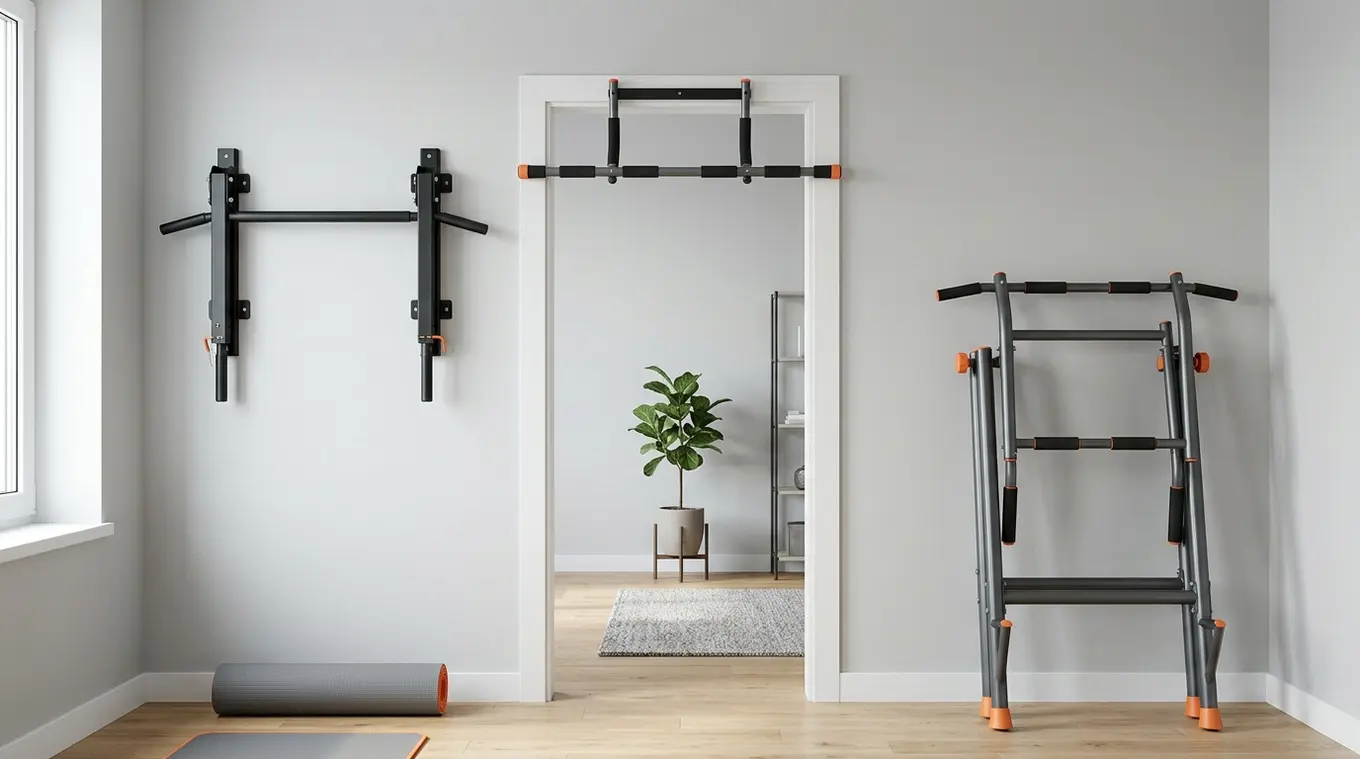
A foldable design changes that equation. Wall mounted folding bars can swing down when needed and fold flat after training. Freestanding foldable stations can open for your workout and collapse afterward. A door frame foldable pull up bar can often be removed and tucked away in seconds.
The tradeoff is simple. Permanent bars usually win on absolute rigidity. Foldable bars win on flexibility and storage. If your main goal is strict calisthenics training at home with minimal footprint, folding options are often the smarter buy. If your goal is heavy kipping, explosive bar muscle up practice, or a commercial style setup, a permanent installation may be the better route.
Who Should Consider a Foldable Pull Up Bar
A foldable pull up bar is ideal for a few specific groups. First, anyone living in an apartment or condo where floor space matters every day. Second, renters who need a rental friendly setup and want to avoid drilling if possible. Third, home gym users who want a best foldable pull up bar for home gym use without committing to a giant power tower.
It also makes sense for beginners. A lot of people assume they need a huge station to get serious results, but that is rarely true. If your goal is to build your first clean pull up, improve your hanging strength, or add some upper body pulling to your routine, a compact foldable option is often enough. If you are new to strict form, this guide on how to do a pull up with perfect form is a great place to start.
More advanced athletes can also benefit, especially if they value portability or train in shared spaces. Weighted pull ups, front lever basics, controlled leg raises, and ring work are all possible on the right model. The key is choosing a bar with the correct load rating, depth, and stability for your level.
Types of Foldable Pull Up Bars: Which Style Fits Your Space
When people search for the types of foldable pull up bars, they usually mean one question: which design will actually work in my home? That depends on your walls, ceiling height, doorway structure, storage needs, and whether you own or rent.
There are three main categories worth considering, plus one bonus category that is growing fast in popularity: foldable freestanding stations. Each has clear strengths and limitations.
Wall Mounted Foldable Pull Up Bars
A folding wall pull up bar mounts to studs or masonry and folds flat when not in use. For many serious home athletes, this is the sweet spot between stability and space efficiency. When mounted correctly, these bars feel far more solid than temporary doorway options and still keep your room usable after training.
If you are wondering how to mount a folding wall pull up bar, the basic process usually includes locating studs, measuring spacing carefully, drilling pilot holes, and securing the frame with appropriate hardware. On masonry, you need the correct anchors and a bit more care. This is not difficult for a handy person, but it does require precision. Poor installation is one of the main reasons people later question whether foldable pull up bars are safe.
Wall mounted foldable bars are best for strict pull ups, chin ups, dead hangs, and most calisthenics basics. Better models also offer enough forward depth for toes to stay clear of the wall during leg raises. Some include multiple grips, though many folding models keep things simpler with a straight bar design.
If you own your home or have permission to drill, this style is often the best balance for long term use. It is especially strong if you want the feel of a fixed station without a permanent obstacle sticking out into the room.
Ceiling Mounted Foldable Pull Up Bars
Ceiling mounted folding bars are less common, but they can be a smart solution when wall space is limited or when the geometry of the room makes overhead mounting easier. They usually attach to ceiling joists and either fold upward or sit compactly overhead.
These can work very well in garages, basements, and some home gyms with exposed beams or clear joist access. The main advantage is freedom around the bar. You often get better body clearance for movements like knees to elbows, toes to bar, and even some advanced drills. They can also leave wall space free for shelves, mirrors, or squat stands.
The downside is installation. How to install a foldable pull up bar on a ceiling depends heavily on joist orientation, ceiling height, and available hardware. For most people, ceiling installation is slightly more demanding than standard wall mounting. It is not the best first choice if you are renting or if your ceiling setup is unclear.
Still, for garage gyms, ceiling mounted folding bars deserve attention. If your space is narrow but tall, they can be one of the cleanest solutions.
Doorway and No-Drill Folding Options
The most common entry point is the doorway category. A doorway foldable pull up bar safe enough for regular use can be a great beginner choice, especially in apartments or dorm style living. These bars typically hook over the door frame, use leverage to stay in place, and can be removed after each session.
The big advantage is obvious. No drilling, low cost, fast setup, and easy storage. If you are searching for the best foldable pull up bar for home gym use in a small apartment, this is often the first option worth checking. It is also the simplest answer for renters.
But not every door frame foldable pull up bar is equal. Weak padding, poor fit, thin steel, and awkward grip angles can all make the experience worse. Many low quality models also put too much pressure on trim. So is a doorway foldable pull up bar safe? It can be, if the frame is compatible, the load rating is realistic, and you use it for controlled reps instead of swinging.
I usually recommend doorway models for strict pull ups, chin ups, scapular pulls, and hanging knee raises. I do not recommend them for dynamic kip style training or aggressive muscle up drills. If you want more detail on apartment friendly choices, this guide on pull up bars for renters is worth reading.
There is also a growing no-drill category that overlaps with portable freestanding stations. These do not rely on door trim or wall anchors at all. They fold away, but they are larger and more expensive than doorway bars. In return, they give you much more freedom.
What to Look For Before You Buy
If you are trying to figure out how to choose the best foldable pull up bar, the decision comes down to five practical things: stability, load capacity, usable dimensions, mounting needs, and how you actually train. Marketing language can make every bar sound perfect, but the real differences show up once you hang from it.
Weight Capacity and Build Quality
This should be your starting point. Ignore inflated claims and look for realistic construction details. Better bars typically use thicker steel, stronger welds, better hinge points, and more secure locking systems. If a brand lists a 400 pound capacity but gives no details about frame thickness, testing, or mounting conditions, take it with caution.
For heavier users, for weighted pull ups, or for advanced calisthenics, I would prioritize a tested wall mounted or freestanding station over a budget doorway option. Are foldable pull up bars safe for heavy users? Some are, absolutely. But only if the load rating is believable and the setup is correct.
The best rated foldable pull up bar options usually feel solid the moment you grip them. Minimal flex, no twisting, no rattling at the hinge, and no weird movement under bodyweight. That confidence matters more than a flashy finish.
One practical tip from experience: do not just compare your bodyweight to the listed capacity. If you weigh 220 pounds and want to do weighted pull ups with a 45 pound plate, hanging leg raises, or long dead hangs, build in margin. I like seeing at least a comfortable buffer above expected training load.
Grip Options and Bar Width
Grip is often overlooked until you start using the bar several times per week. Some bars have only a straight grip. Others offer angled, neutral, or multi grip handles. Neither is automatically better. A straight bar often feels more natural for classic pull ups and chin ups, while multi grip designs can reduce wrist strain and add exercise variety.
Bar width also matters. Too narrow and your shoulders feel cramped. Too wide and the setup becomes awkward in tight spaces. For most people, a moderate width with enough room for shoulder width and slightly wider than shoulder width pulling is ideal.
Diameter matters too. Standard bars around 28 to 32 millimeters tend to suit most users. Extra thick bars can help with grip training, but they are not always ideal if your hands are smaller or if you want higher rep pull up work. If grip is something you struggle with, adding chalk can help, and this comparison of liquid chalk vs block chalk for calisthenics gives good context.
For advanced trainees, a more open frame can also make it easier to use rings or bands. That is one reason I like versatile setups with clean geometry and enough clearance around the main bar.
Mounting Requirements and Rental Friendly Features
This is where a lot of buyers go wrong. They choose a bar based on reviews or price without checking whether their actual space supports it. Before buying, measure your doorway, your wall width, stud spacing, ceiling height, and floor clearance.
If you rent, you need to be honest about what is realistic. Some landlords are fine with wall anchors if repairs are made later. Others are not. In that case, a no-drill doorway bar or a foldable freestanding station is usually safer.
Also think about setup friction. How to install a foldable pull up bar is one thing, but how often you want to install, remove, unfold, or store it matters just as much. A bar can be technically compact but still annoying in real life. The best products remove that friction so training feels easy to start.
If your home setup is especially tight, you may also like our guide on best calisthenics equipment for small spaces.
How Much Should You Spend on a Foldable Pull Up Bar?
Price is one of the most practical questions before buying, and it is easier to answer than most product pages suggest. Foldable pull up bars fall into three general tiers, and knowing what each tier actually delivers makes the decision more straightforward.
At the budget end, most doorway bars and basic no-drill options sit in the lower price range. These are a reasonable entry point for beginners doing strict pull ups and chin ups at controlled intensity. Build quality tends to be thinner, grip options are limited, and listed load ratings should be treated conservatively. For someone just starting out in a small apartment, this tier can be a sensible place to begin.
In the mid range, you start finding wall mounted folding bars with better steel, stronger hinge mechanisms, and more usable clearance. These are the models worth considering if you plan to train consistently over months or years. You are paying for real stability rather than an impressive number printed on a box.
At the premium end, you find heavy-duty freestanding foldable stations and higher-end wall mounted designs. These make sense if you want a full training unit, plan to do weighted pull ups, or want a setup that handles dips, rows, and ring work in addition to pulling. The investment is higher, but so is the long-term value if the bar genuinely matches your training needs.
The general principle: do not overspend for features you will not use, and do not underspend on load capacity if you are heavier or plan to train at higher intensity. Matching the price tier to your actual needs almost always leads to a better outcome than picking the most or least expensive option available.
The Best Foldable Pull Up Bars: Our Top Picks
Below are the foldable options I would shortlist for most American buyers right now. I am including a mix of wall mounted, freestanding, and compact portable choices because the right answer depends heavily on your space. Rather than pretending there is one universal winner, it makes more sense to match the bar to the type of user.
Best Wall Mounted Foldable Pull Up Bar Overall
For most serious home training setups, a folding wall mounted model is the best all-around choice. The ideal version gives you reliable stud-mounted stability, enough wall clearance for hanging core work, and a folding arm system that sits flat when not in use.
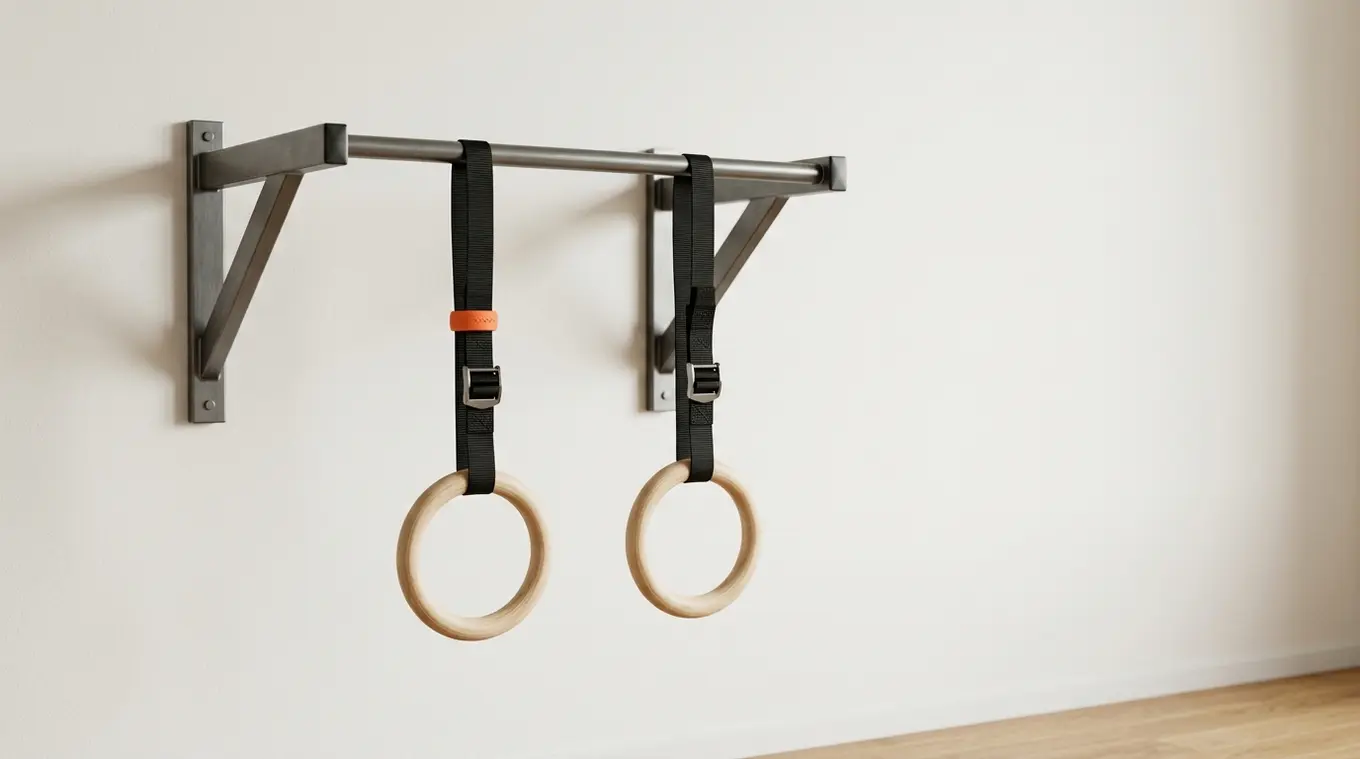
If your training is mostly strict pull ups, chin ups, scapular work, and controlled leg raises, this category is hard to beat. It is usually more stable than a doorway option and less intrusive than a full freestanding station. Among top foldable pull up bar brands, the better wall mounted designs tend to be the most balanced choice for long term use.
If you also want to build a more complete upper body setup around your pull up work, Gornation is worth looking at for accessories like rings, resistance bands, and parallettes. A folding wall bar paired with Gornation Wooden Rings can turn a simple pull up station into a much more versatile calisthenics corner without taking up much extra room.
Who this is best for: homeowners, garage gym users, and anyone who wants a compact but serious setup.
Best Heavy Duty Foldable Pull Up Bar
If you are heavier, stronger, or plan to train weighted pull ups, you need a bar that feels overbuilt. This usually means a heavy duty folding wall mount or a robust freestanding station with realistic load testing. The best heavy duty options have thicker steel, stronger hinge mechanisms, and very little sway during use.
One standout in the portable category is the BULLBAR 2.0 style of freestanding folding station. Based on the available specs, it is designed as a foldable pull up and dip station with no wall mounting, industrial steel construction, quick setup, and a compact folded size. The appeal here is obvious: no drilling, full body training potential, and a more stable experience than many doorway bars. It also adds dips, push ups, band work, and portability in one unit.
I would still frame it honestly. This type of product is larger and pricier than a simple folding doorway bar, and it is not the same as a permanently bolted commercial rack. But for users who want a high capacity freestanding option and have enough floor space during training, it is a very strong solution. It makes particular sense for those who do not want to mount anything into walls.
Who this is best for: heavier athletes, users doing weighted calisthenics, and people who want one foldable unit for more than just pull ups.
Best Compact and Portable Foldable Pull Up Bar
If pure portability matters most, look at compact doorway bars or lightweight foldable freestanding designs that store fast. This category is less about maximum training variation and more about getting consistent pull up practice into a small space.
The best compact option is one that you can set up in under a minute and remove without frustration. In real life, that convenience often matters more than having six grip positions you barely use. A compact setup is especially useful if you train in a bedroom, shared living room, or even want to take it between locations.
For travelers or people who move often, a portable setup can also pair well with simple accessories. A Gornation resistance band and a compact pull up bar are enough for a surprisingly complete upper body routine.
Who this is best for: renters, students, frequent movers, and anyone who values convenience above all.
Best Foldable Pull Up Bar for Small Apartments
For small apartments, I usually split recommendations into two camps. If you need the smallest possible footprint and do not want to drill, the best answer is often a doorway style bar that can be removed after each session. If you want a more premium no-drill option and can spare some temporary floor space while training, a foldable freestanding station may be worth the investment.
The reason is simple. Apartments are rarely limited by workout space alone. They are limited by noise, storage, wall restrictions, and shared use of the room. A giant setup that is technically excellent but impossible to live with is not a good buy.
For most apartment users, here is the ranking I would use. First, a quality doorway bar if your frame is compatible and your training is mostly strict reps. Second, a foldable freestanding station if you want more versatility and have a closet or wall storage area for it. Third, a wall mounted folding bar only if drilling is allowed and you know you will stay long enough to make it worth it.
If your goal is compact calisthenics rather than just pull ups, Gornation accessories again fit well here. Their rings, bands, and parallettes are easy to store and pair well with a foldable bar. That lets you train pulling, pushing, support holds, and mobility without turning your apartment into a permanent gym.
The main apartment mistake is buying too aggressively. You do not need a huge setup to get strong. You need a setup that you can use three to five times a week without annoying yourself or your living situation.
Best Foldable Pull Up Bar for Garage Gyms
Garage gyms open up better options because ceiling height, wall mounting, and dedicated training space are usually less restrictive. In that environment, the best foldable pull up bar for garage gym use is often a folding wall mounted or ceiling mounted bar with strong hardware and enough clearance for a wider range of movements.
This is where heavy duty models shine. If you are doing strict pull ups, chest to bar work, hanging core drills, ring rows, and eventually weighted calisthenics, you will appreciate the extra rigidity. A folding wall bar also keeps the garage functional for parking, storage, or other projects.
For users who do not want to mount anything, a freestanding foldable station can also work well in a garage because you are less constrained by room size. The tradeoff is footprint during use. If you have the room, the convenience is excellent. If not, wall or ceiling mounting remains the cleaner solution.
I would especially favor a mounted setup if you plan to expand your training over time. A garage gym gives you the freedom to add rings, dip belts, resistance bands, and other tools around the bar. If you later want weighted pull ups, pairing your setup with a Gornation dip belt makes a lot of sense because it is a natural next step once bodyweight reps become easy.
How We Tested and Compared These Bars
Any good pull up bar guide should explain the thinking behind the recommendations. My own approach is practical and biased toward real calisthenics use, not just product pages. I care about how a bar feels under repeated strict reps, how easy it is to live with in a home, and whether the design matches the buyer’s likely situation.
When comparing foldable options, I focus on construction quality, hinge or lock confidence, usable clearance, grip comfort, portability, and storage efficiency. I also pay close attention to what kind of training the bar is honestly suited for. Some products are excellent for strict pull ups and hanging work but not for dynamic calisthenics. That is not a flaw if the brand presents it clearly.
I also compare listed specs against what usually matters in practice. For example, a high weight rating sounds impressive, but if the setup depends on weak doorway leverage or unclear mounting instructions, that rating means less. On the other hand, a bar with simple geometry, good steel, and a realistic use case often performs better than expected.
My baseline is shaped by years of bodyweight training across home gyms, parks, and compact indoor spaces. Once you have trained on a few bad bars, you learn fast what actually matters: stability, trust, and enough room to move naturally.
Foldable Pull Up Bar Comparison Table
| Type | Best For | Main Strength | Main Limitation |
|---|---|---|---|
| Doorway foldable pull up bar | Renters and beginners | Low cost and no drilling | Limited for dynamic or heavy training |
| Wall mounted foldable pull up bar | Serious home calisthenics | Strong stability with compact storage | Requires drilling and proper mounting |
| Ceiling mounted foldable pull up bar | Garage gyms and tall spaces | Great body clearance | More demanding installation |
| Freestanding foldable station | No-drill full body training | Portable and versatile | Larger footprint and higher price |
If you are trying to choose fast, this table covers the main difference. For renters, the doorway path is usually the safest starting point. For homeowners serious about long term training, the folding wall mounted style is usually the strongest overall bet. For users who want no drilling but more functionality, freestanding foldable stations are the premium solution.
Common Mistakes When Choosing a Foldable Pull Up Bar
The first mistake is buying based on headline weight capacity alone. A big number does not guarantee a stable training experience. Always look at design, mounting method, and realistic use conditions.
The second mistake is ignoring space measurements. I have seen people buy bars that technically fit their room but not their actual movement. You need clearance for your head, knees, feet, and wall distance, not just enough room for the frame itself.
The third mistake is choosing the wrong type for your living situation. A renter buying a heavy wall mounted unit without permission usually creates unnecessary hassle. On the other side, an experienced athlete trying to do weighted pull ups on a weak doorway bar is asking too much from the equipment.
The fourth mistake is forgetting setup friction. If unfolding, removing, or storing the bar feels annoying every session, your consistency drops. A slightly simpler product that gets used often is better than a perfect product that feels inconvenient.
The fifth mistake is trying to make one bar do everything. A foldable pull up bar can cover a lot, but not every bar is ideal for every skill. Be honest about whether your focus is strict strength, portability, rental friendliness, or advanced training. That clarity makes buying much easier.
Frequently Asked Questions About Foldable Pull Up Bars
Are foldable pull up bars safe for heavy users?
Yes, some are. But safety depends on more than the listed weight rating. Heavy users should prioritize well built wall mounted or freestanding designs with realistic testing, strong hardware, and correct installation. A bargain doorway bar may be fine for light strict reps, but it is usually not the best fit for heavier athletes or weighted calisthenics.
Can renters install a foldable pull up bar without damage?
Yes, in many cases. The best rental friendly options are doorway bars and freestanding folding stations because they avoid permanent wall drilling. That said, even no-drill bars can mark trim if used carelessly or on weak frames. Always check compatibility, padding, and the condition of your doorway before trusting it.
What exercises can I do on a foldable pull up bar?
Most foldable pull up bars support pull ups, chin ups, dead hangs, scapular pulls, and hanging knee raises. Better setups can also handle toes to bar, rows, ring work, band exercises, and even dips if you choose a freestanding station. If you want ideas beyond the basics, see these best pull up bar exercises.
How do I know which foldable pull up bar style is right for me?
Start with your space and restrictions. If you rent and need no drilling, choose a doorway or freestanding model. If you own your place and want the best long term balance of stability and storage, choose a folding wall mounted bar. If you train in a garage with good ceiling access, a ceiling mounted option can work very well.
Are foldable pull up bars worth it compared with fixed bars?
For many home users, yes. A fixed bar is often more rigid, but a foldable one is easier to live with in small or shared spaces. If a foldable setup helps you train consistently without taking over the room, it is usually the better choice. In home calisthenics, convenience often drives results more than perfect equipment does.
Final Thoughts
The best foldable pull up bars are not all trying to solve the same problem. Some are made for renters who need a quick doorway setup. Others are built for homeowners who want a folding wall mounted station that feels serious without eating up space. And some, like freestanding folding stations, are meant for people who want no drilling and more exercise variety in one unit.
If you want the short version, choose based on your space first, then your training style second. For most people, that leads to a much better decision than chasing the most expensive or most hyped option. A pull up bar you trust and use consistently will always beat a more impressive one that does not fit your life.
If you are building a compact calisthenics setup around your bar, Gornation accessories are a smart addition because they add a lot of exercise variety without adding much clutter. Keep it simple, choose the right style, and you will have a setup that actually helps you get stronger.
FAQs
-
What is a foldable pull up bar?
A foldable pull up bar is a pull up setup designed to save space when you are not training. It may fold flat against a wall, collapse into a smaller freestanding frame, or be removed from a doorway and stored away. The main benefit is getting real upper body training without a permanent bulky setup.
-
Is a doorway foldable pull up bar safe for daily use?
It can be safe for daily use if the bar is well made, your doorway is compatible, and you stick to controlled movements. Doorway bars are usually best for strict pull ups, chin ups, and hangs. I would not use them for kipping reps, explosive muscle up practice, or aggressive swinging.
-
How do I choose the best foldable pull up bar for a small apartment?
Start by checking whether drilling is allowed and how much floor space you can realistically give up during workouts. For most apartments, a doorway model is the easiest option. If you want more versatility and no drilling, a foldable freestanding station can be a strong upgrade if you have storage space.
-
Can I do weighted pull ups on a foldable pull up bar?
Yes, but only on bars with enough real stability and load capacity for it. Weighted pull ups are better suited to heavy duty wall mounted or freestanding foldable stations than basic doorway bars. Always count your bodyweight plus added weight and leave a safety margin instead of pushing a bar to its maximum rating.
-
Which top foldable pull up bar brands are worth looking at?
The right brand depends on the style you need. For mounted bars, established home gym brands often offer the best value. For portable freestanding stations, more niche brands can stand out. I also recommend looking at Gornation for complementary calisthenics gear if you want to build a smarter and more complete small space setup.