If you want to do pull ups at home but you do not want to drill into walls or door frames, you are not the only one. A lot of people train in apartments, rental homes, or shared spaces where permanent installation is either not allowed or just not worth the hassle. The good news is that there are several solid no drill pull up bar options, and some are much better than others depending on your space, bodyweight, and training goals. In this guide, I will walk you through the main types, how they work, what to check before buying, and which options make the most sense for different situations.
What Is a No Drill Pull Up Bar and Who Actually Needs One
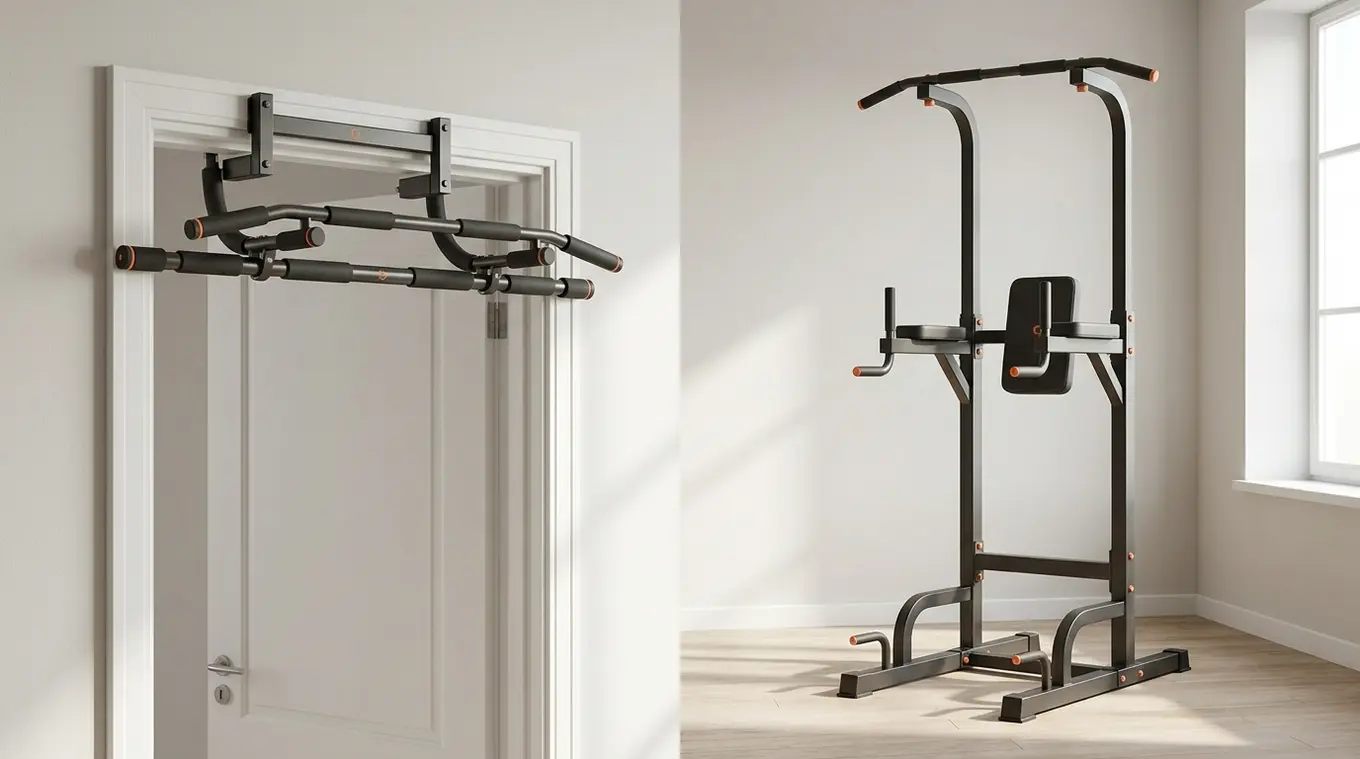
A no drill pull up bar is any pull up setup that lets you train without making permanent holes in your walls, ceiling, or door frame. For most people, that means a doorway bar that hooks over the frame, a tension style bar that presses into the sides of a doorway, or a freestanding station that stands on the floor.
These bars are especially useful if you are looking for a no drill pull up bar for apartment living, if you rent, or if you simply do not want to commit to a mounted setup. I have trained on several doorway bars over the years, especially during periods when I moved often, and the biggest lesson is simple: convenience is great, but fit and stability matter more than brand hype.
If you are a beginner working on your first reps, a home workout with doorway pull up bar can be more than enough. If you are already doing strict sets, weighted work, or explosive pull ups, your choice needs to be more careful. A no drill pull up bar can be excellent, but only when it matches the doorway and the way you train.
For many people, this is also the easiest entry point into upper body calisthenics. You can start with dead hangs, scapular pulls, assisted reps with bands, and chin ups before moving to full pull ups. If you are still building your base, you may also like our guide on how to do a pull up with perfect form.
The Main Types of No Drill Pull Up Bars
When people ask what options are there for no drill pull up bars, the answer usually comes down to three main categories. Each one feels different in use, and each has tradeoffs.
Over the Door Pull Up Bars (Tension and Lever Mount)
This is the most common type. It is also the first thing most people picture when they search for the best no drill pull up bar. There are two versions here: tension bars that sit inside the doorway and lever mount bars that hook over the top of the frame and press against the opposite side for leverage.
Lever mount doorway bars are usually the better choice for most users because they tend to feel more stable and allow more grip variations. They often include wide, neutral, and close grips, which is useful if you want to rotate between pull ups, chin ups, and neutral grip work. Tension bars are more compact and easier to leave in place, but many feel less confidence-inspiring under dynamic movement.
If your goal is basic pull up training in a small apartment, a lever mounted doorway model is often the sweet spot. That is why this category dominates searches around no drill pull up bar for renters and no drill pull up bar for apartment use.
Freestanding Pull Up Bar Stands
A freestanding pull up stand does not touch your walls or doorway at all. It sits on the ground like a pull up station. This is a strong option if your doors are not compatible, if you want more room for your legs, or if more than one person in the house uses the equipment.
The obvious benefit is freedom. You are not limited by trim depth or door width. Many freestanding units also include dip handles, knee raise stations, or push up handles. For calisthenics athletes who want a more complete setup, this can make a lot of sense.
The downside is footprint. Even foldable versions take up more room than a doorway bar. If you live in a smaller apartment, you need to be honest about whether you will actually keep it set up. I have seen plenty of people buy a large station with good intentions and then stop using it because it dominates the room.
Wall-Leaning and Power Tower Options
This group overlaps with freestanding equipment but deserves its own mention. Some wall leaning towers use their shape and weight distribution for support without needing hardware. Others are classic power towers with a wide base. These can feel more secure than a simple pull up stand and are often better if you also want dips, leg raises, and support holds.
If you like full body bodyweight training, this style can be practical. In some cases, it also pairs well with accessories from brands like Gornation. For example, if your pull up setup is limited, Gornation gymnastic rings can expand your training with rows, assisted dips, and mobility work, especially on a freestanding frame that allows secure hanging height.
How Tension and Lever Mounting Actually Work
Understanding how does a no drill doorway pull up bar work helps you avoid the most common buying mistakes. Many people look only at reviews and price, but the mounting style is what determines how secure the bar feels in your home.
Friction Fit vs Lever Mount: What Is the Difference
A friction fit bar, often called a tension bar, expands outward into the two vertical sides of the doorway. The bar stays in place because outward pressure creates friction. Some models include twist locks or safety locks. This type is compact and often easy to install, which is why it shows up in searches for how to install a no drill pull up bar.
A lever mount bar works differently. It hooks over the top of the doorway trim and uses your bodyweight to create a counterforce against pads placed on the opposite side of the frame. In plain English, when you hang from it, the geometry helps lock it into place. That is why many over the door bars feel more secure than basic tension bars.
In my experience, friction bars are fine for controlled hangs, chin ups, and lighter users when the fit is exact. Lever mount bars are usually better for most people because they spread force more effectively and offer more exercise variety.
Will It Damage Your Door Frame
It can, but it does not always. This depends on three things: the design of the bar, the condition of your door frame, and whether you install it correctly. Soft padding helps, but even padded supports can leave marks if the bar shifts under load or if the trim is decorative and fragile.
Doorway bars that hook over the frame usually press on specific contact points. If those points do not sit flat, the pressure becomes uneven. Tension bars can also dent or scuff the sides of a doorway if overtightened. So while a no drill pull up bar avoids holes, it is not automatically damage free.
If you rent, treat this seriously. Check the trim width, look for weak molding, and avoid dynamic reps until you are sure the bar is stable. A no drill pull up bar for renters should be chosen more conservatively than a bar for someone who owns the house and does not care about paint marks.
Key Things to Check Before You Buy
Before you order anything, slow down and measure your space. Most returns happen because people assume all doorway bars fit all doorways. They do not.
Door Frame Compatibility and Size Limits
This is the first thing to check. Look at doorway width, trim depth, wall thickness, and the shape of the molding. Some lever bars fit a wide range of openings. Others do not work well with crown molding, extra thick trim, or shallow top surfaces.
Tension bars also have strict width ranges, and their no drill pull up bar weight limit often drops when extended toward the maximum length. That detail gets missed a lot. Always read the manufacturer specs instead of trusting the product title alone.
If you are comparing a doorway vs freestanding pull up bar, this is often the deciding factor. A freestanding option solves compatibility issues, but a doorway bar wins on price and storage if your frame is suitable.
Weight Capacity and Stability
The listed weight capacity matters, but so does real world stability. A bar can technically hold your bodyweight and still feel shaky or uncomfortable. For strict pull ups, small movement is usually manageable. For kipping, explosive reps, or weighted work, it becomes a problem fast.
I usually tell people not to treat the published number as a challenge target. If you weigh 220 pounds, buying a bar rated at 220 pounds is not a smart move. You want margin for safety, momentum, and long term wear. This is especially important when looking at no drill pull up bar weight limit claims on cheaper doorway models.
If you plan to add external load later, it is worth thinking ahead now. And if you are already doing weighted calisthenics, you may be better served by a more robust freestanding station or a mounted option instead.
Portability and Storage
Not everyone wants a bar hanging in the doorway all day. Some lever mount models come off quickly, but they can be bulky. Tension bars are easier to leave in place and often let you still close the door. Freestanding towers are the hardest to hide, even when they are marketed as compact.
If you travel often or need to clear the room after each workout, portability matters more than people think. In that case, a basic doorway bar plus portable accessories can be a smart combo. For example, Gornation resistance bands are useful for assisted pull ups, rows, and warm ups, and they store easily with the bar. If you want ideas for that, this guide on exercises with resistance bands is a practical next read.
Best No Drill Pull Up Bar Options Reviewed
Below are three options that cover the needs of most people in the United States market. These are not the only good products, but they represent the main use cases well.
Best Overall: Iron Gym Total Upper Body Workout Bar
The Iron Gym style bar remains one of the most recognizable answers to the question of what options are there for no drill pull up bars. It is an over the door lever mount design that works for many standard doorways and gives you multiple grip positions for pull ups, chin ups, and neutral grip work.
What makes it a strong overall pick is balance. It is usually affordable, quick to set up, and good enough for most beginners and intermediates. It also comes off fast, which makes it a practical no drill pull up bar for apartment use. If your training is mainly strict reps, hanging work, and occasional push ups on the floor, this style gets the job done.
The tradeoff is that it is not the roomiest option for tall athletes, and cheaper versions can feel narrow or flimsy. Quality varies a lot across look alike products, so I would stick to established models rather than the absolute lowest priced listing.
Best for Heavy Users: Garren Fitness Maximiza
The Garren Fitness Maximiza is better for users who want a straight in doorway bar and prefer a cleaner setup with less bulk. It fits within the doorway rather than hooking over the top. That can make it easier to leave installed, and in many homes you can still close the door.
For heavier users, the appeal is the relatively solid feel when fitted correctly, especially compared with very cheap tension bars. That said, the exact safety of in doorway bars depends a lot on installation and on whether you are using any optional hardware the product may recommend. So while it is often discussed as a no drill option, you should still read the instructions carefully and be honest about your use case.
The limitation is height. Because the bar sits lower inside the frame, taller athletes usually need more knee bend. Grip variety is also limited compared with an over the door model. Still, if you want something compact and do not need wide handles, it is one of the more sensible choices.

Best Freestanding Option: Titan Fitness Power Tower
If your doorway is awkward, your bodyweight is on the higher side, or you want a setup that feels closer to a permanent station without using a drill, a power tower like the Titan Fitness model is worth serious consideration. This is the better answer for people who want dips, knee raises, and more training freedom in one piece of equipment.
The biggest strength is versatility. You are not relying on door trim, and the movement feels more natural for many users. It is also a better direction if you plan to progress into more varied pull up exercises with no drill bar limitations. On a stable tower, hanging knee raises, scapular work, and even some ring variations become easier to manage.
The obvious drawback is space. This is not the best pick for a tiny studio unless you know exactly where it will live. But if you want a permanent feeling setup without the drill, this is often the best path.
For athletes building a broader home setup, it can also make sense to combine a tower with Gornation accessories like rings or parallettes, depending on the frame design and floor space. If you are still choosing your core home gear, our guide to must have calisthenics equipment can help you prioritize.
No Drill Pull Up Bar Comparison Table
| Option | Type | Best For | Main Strength | Main Limitation |
|---|---|---|---|---|
| Iron Gym Total Upper Body Workout Bar | Over the door lever mount | Most beginners and intermediates | Good balance of price, grip options, and convenience | Not ideal for very tall users or highly explosive work |
| Garren Fitness Maximiza | In doorway straight bar | Smaller spaces and users wanting a compact setup | Simple design and easier to leave installed | Less height and fewer grip positions |
| Titan Fitness Power Tower | Freestanding station | Heavier users and full home training | Better stability and more exercise variety | Takes up much more space |
What Exercises Can You Do on a No Drill Pull Up Bar?
A common concern with no drill pull up bars is whether they are versatile enough for a proper training routine. For most users, the answer is yes, provided you choose the right type and do not push it beyond its design limits.
Most over the door and freestanding bars support a solid range of upper body and core exercises. Here is what most setups can handle well:
- Pull ups and chin ups – the primary exercises, targeting the back, biceps, and grip.
- Dead hangs and active hangs – useful for shoulder health, grip strength, and spinal decompression.
- Scapular pulls – a key foundation movement for beginners building toward their first full pull up.
- Hanging knee raises – core work that pairs well with pull up training, especially on freestanding towers that offer full leg clearance.
- Neutral grip pull ups – if your bar includes parallel handles, this variation can reduce stress on the wrists and elbows.
- Resistance band-assisted reps – useful for beginners working on their first reps, and a smart way to increase training volume without overloading the bar.
What most no drill doorway bars are not built for: muscle-up transitions, aggressive kipping, or weighted pull ups. For those movements, a freestanding tower or wall-mounted bar is the more appropriate choice.
Which Option Is Right for Your Situation
Choosing between the types of no drill pull up bars is really about matching the equipment to your home and training style.
If You Rent an Apartment
If you rent, a lever mount over the door bar is usually the best place to start. It avoids screws, stores fairly easily, and can work well if your doorway trim is solid and standard. For most renters, this is the most realistic no drill pull up bar for apartment living.
Just do not assume that no drill means no risk. Add protective padding only if it does not affect stability, inspect the contact points regularly, and avoid swinging reps. If your trim looks delicate or decorative, consider a freestanding bar instead.
If You Train at Home With Limited Space
For small spaces, doorway bars win. A straight in doorway bar is the least bulky, but an over the door lever mount gives more exercise options. The best choice depends on whether you value storage or versatility more.
If your plan is simple upper body work a few times per week, a compact model is enough. If you want a more complete calisthenics routine, pairing the bar with bands or rings may offer more value than upgrading immediately to a large station.
If You Want a Permanent-Feeling Setup Without the Drill
Go with a freestanding tower or stand. This is the closest thing to a dedicated training station without drilling into your home. It is better for consistency, better for heavier athletes, and usually better for anyone who dislikes the slight movement common with doorway bars.
In practice, this is the option I prefer for advanced home training if space allows. Doorway bars are excellent for convenience, but a solid freestanding setup simply removes a lot of mental friction. You step up and train. No checking trim, no reinstalling, no worrying whether the bar shifted after the last set.
Common Mistakes and Safety Tips for No Drill Bars
The biggest mistake is buying first and measuring second. The next biggest is assuming every doorway bar is safe for every kind of training. They are not.
Do not use a bar on weak, cracked, or decorative trim. Do not exceed the recommended width range. Do not jump onto the bar before testing it with partial load. And do not turn a basic doorway setup into a pseudo CrossFit station with kipping, violent leg swings, or weighted reps far beyond what it was made for.
When you first install a no drill doorway pull up bar, test it gradually. Pull down on it. Hang with some weight still on the floor. Then do a controlled dead hang. After that, move into slow reps. That simple progression catches problems early.
Also pay attention to hand comfort. Slippery grips lead to over squeezing and unnecessary forearm fatigue. If grip becomes a limiting factor, chalk or grip aids may help, but first make sure the bar diameter and covering feel right for your hands.
Finally, remember that pull up bars are not just for pull ups. Controlled hangs, scapular pulls, knee raises, and chin ups are all effective. If you are newer to training, that variety helps you progress safely instead of forcing max effort pull up attempts every session.
When a No Drill Bar Is Not the Right Choice
There are times when the right advice is not to buy a no drill pull up bar at all. If you are a heavier athlete near the claimed limit, if your doorway is unusual, if you want to do muscle up prep with aggressive transitions, or if you plan to train weighted pull ups seriously, you may outgrow this category quickly.
The same applies if your house has fragile trim or if you simply hate the idea of checking the setup before every workout. In those cases, a wall mounted bar, ceiling bar, outdoor station, or solid freestanding tower is usually a better long term answer.
I also would not recommend a no drill doorway option for highly explosive training. For strict strength work, most good models are fine. For dynamic movement, they are often the wrong tool. It is better to be honest about that from the start than to buy twice.
Final Recommendation: Which No Drill Pull Up Bar Should You Get
If you want the simplest answer, most people should start with a quality over the door lever mount model like the Iron Gym style bar. It offers the best mix of price, versatility, and convenience, and for many homes it is the best no drill pull up bar overall.
If you want a cleaner, more compact setup and your doorway dimensions suit it, the Garren Fitness Maximiza is a good alternative. If your priority is stability and a more complete training station, a freestanding option like the Titan Fitness Power Tower is the smarter investment.
My honest advice is this: buy based on your doorway, your bodyweight, and the way you actually train, not the way you hope to train six months from now. A no drill pull up bar can be excellent for strict pull ups, chin ups, hangs, and basic home workouts. But the right model is the one that feels secure enough that you will use it consistently.
If you are still deciding between compact and more advanced home setups, it is also worth comparing this guide with doorway specific and renter specific resources on the site. That extra ten minutes of research usually saves you from buying the wrong bar the first time.
No drill pull up bars absolutely have a place in home calisthenics, especially for renters, apartment dwellers, and anyone who wants a simple way to train pull ups without permanent installation. The best choice depends on your doorway, your available space, and how hard you plan to train. For most people, an over the door lever mount bar is the best starting point. If you need more stability or more exercise options, a freestanding tower is often the better move. Keep it practical, measure carefully, and choose the option you will actually use week after week.
Frequently Asked Questions
Are no drill pull up bars actually safe?
Yes, many are safe when used on a compatible doorway and installed exactly as instructed. The biggest issue is not the concept itself but poor fit, weak trim, or using the bar for movements it was not designed for. Always test the setup gradually before full reps.
Do no drill doorway pull up bars damage door frames?
They can leave marks, dents, or paint scuffs, especially if the frame is delicate or the bar shifts under load. A well designed bar with decent padding reduces the risk, but no drill does not always mean no damage. That matters even more if you are renting.
What is the best no drill pull up bar for renters?
For most renters, a quality over the door lever mount bar is the best balance of stability, affordability, and easy removal. It works well in standard doorways and usually stores more easily than a freestanding unit. Just make sure your trim shape and doorway width are compatible first.
Can you do more than pull ups on a no drill bar?
Yes. Depending on the design, you can do chin ups, dead hangs, scapular pulls, hanging knee raises, and sometimes push ups if the bar can be placed on the floor. Some people also combine the bar with resistance bands for assisted reps and extra back work.
When should I skip a no drill pull up bar and get something else?
If you are close to the weight limit, have an unusual door frame, want to train very explosively, or plan to do heavy weighted pull ups, a no drill doorway bar is often not the best long term option. In those cases, a freestanding tower or mounted bar usually makes more sense.