If you are working on handstands, you have probably wondered whether you actually need gear or if the floor and a wall are enough. That is a fair question. I have trained handstands in gyms, parks, and small home spaces, and the truth is that the right equipment can make practice more comfortable, more consistent, and often better for your wrists. In this guide, I will break down the best equipment for handstands, explain what each tool does, who it suits, and where it can make the biggest difference. By the end, you should know exactly what is worth buying and what you can skip for now.
Why the Right Equipment Makes a Difference for Handstand Training
Handstands look simple from the outside. You place your hands down, kick up, and balance. In practice, small details matter a lot. Your wrist angle, the texture of the surface, the amount of grip, and how stable the tool feels under load all affect your training. That is why the best equipment for handstands is not just about making drills look more advanced. Good handstand training equipment changes how your body experiences the movement.
For beginners, equipment often makes practice less intimidating. A better surface and a simple wall handstand setup at home can help you build confidence. For intermediate athletes, the right setup gives more room to refine line, shoulder elevation, and balance corrections. For advanced athletes, specialized tools such as blocks, canes, and boards create new training stimuli and help develop precision.
One thing I have noticed over the years is that most people do not quit handstands because they lack motivation. They quit because their wrists get sore, their setup feels awkward, or progress feels random. Wrist friendly handstand tools can help a lot here. They do not replace proper technique or smart programming, but they can reduce unnecessary discomfort and make it easier to train often enough to improve.
If you are new to the skill itself, it also helps to understand the technical basics before buying gear. This guide on how to learn a handstand is a good next step if you want to pair equipment advice with technique practice.
The Main Types of Handstand Equipment Explained
When people search for the best handstand equipment, they usually come across the same main categories. The useful ones are not endless. In reality, a few well chosen tools cover almost everything most athletes need.
Parallettes
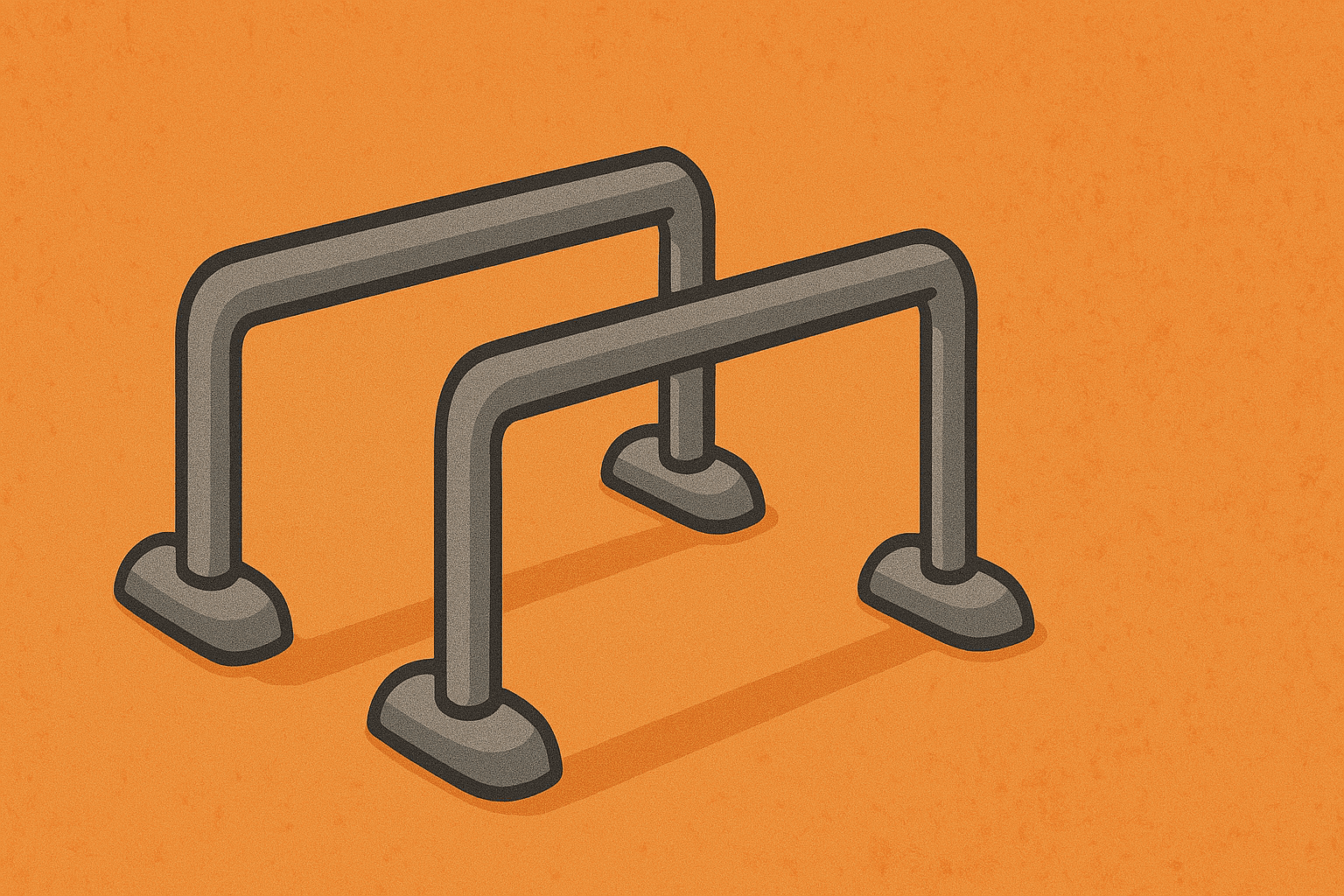
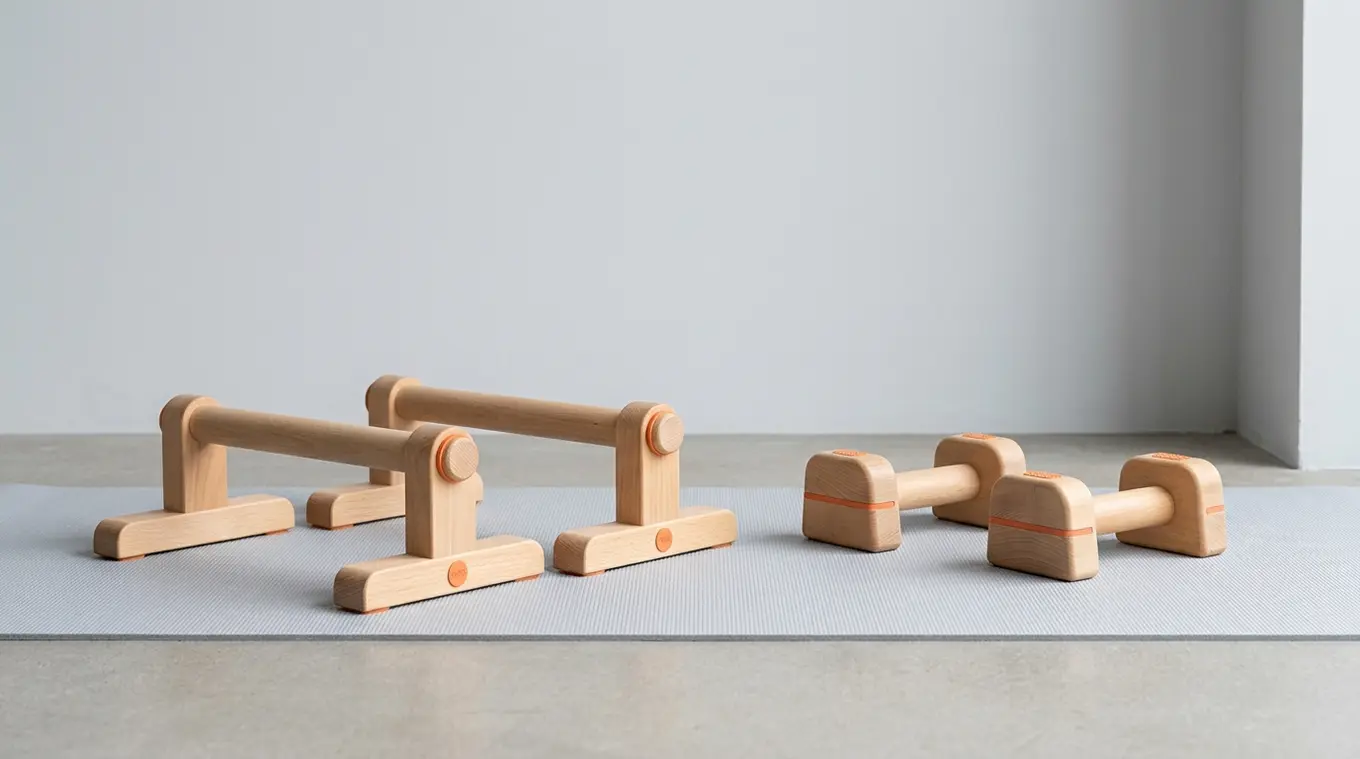
Parallettes are one of the most popular options for handstand training equipment, and for good reason. They elevate the hands, put the wrists in a more neutral position than the floor, and give a firm grip that many athletes find easier to use. They are also more versatile than most handstand specific tools because you can use them for push ups, L sits, tuck planche work, and handstand push up progressions.
If your main concern is wrist comfort, parallettes are often the first thing I recommend. They are among the best equipment to improve handstand balance for people who struggle on flat ground because the grip cue is clearer and the hand position feels more structured. They also suit small apartments because many low models store easily under a bed or in a closet.
Handstand Blocks and Canes
Blocks and canes are more specialized. Handstand blocks are compact supports that raise your hands slightly while keeping the setup closer to floor balance than parallettes do. They can help with balance drills, one arm handstand progressions, and wrist load variation. In the handstand blocks vs floor balance discussion, blocks usually win when you want a new balance stimulus without moving to a full elevated bar position.
Canes take that concept further. They raise the hands much higher and create a narrower balancing point. They are excellent for advanced control, line awareness, and one arm work, but they are not where most people should start. I like them for experienced athletes who already have solid floor and parallettes balance.
Handstand Boards and Balance Tools
Boards are less common, but they can be extremely useful. A handstand board gives you a consistent, hard training surface even when the ground underneath is soft. That matters more than many people expect. If you train outside on grass or on carpet at home, your fingers can sink in and make fine balance corrections harder. A board solves that.
There are also unstable surface tools marketed as the best equipment to improve handstand balance. These include wobble style boards and balance trainers. In my experience, they are only helpful after you already have a decent handstand. Before that, they often add chaos instead of useful feedback.
Best Equipment for Beginners Practicing Handstands
If you are just starting, keep this simple. You do not need a full gymnastics setup or a long list of products labeled as handstand equipment for sale. The best beginner setup is usually a wall, a clean section of floor, and one supportive tool if you need wrist relief or extra confidence.
For true beginners, I usually split the decision into two questions. First, do your wrists tolerate the floor well? Second, do you have a safe and consistent place to practice? If the answer to both is yes, you can start with no specialty gear. If either answer is no, a small equipment upgrade is worth it.
Wall Handstand Setup at Home
A good handstand setup at home starts with a plain wall and enough space to bail safely. You want around two arm lengths of free floor space, no slippery rugs, and no shelves or furniture nearby. I prefer using a wall that is not painted with a glossy finish, since that can make foot contact less predictable.
For most people, the wall is still the best beginner tool because it teaches line awareness and overhead confidence. I would rather see a beginner spend time on chest to wall holds than spend money too early on advanced gear. If you need extra structure, low parallettes can help you get into position more comfortably and build strength for longer holds.
What Surface to Train On
The floor matters more than people think. Hardwood, rubber gym flooring, or a firm mat usually works well. Deep carpet, soft grass, and unstable outdoor ground are much worse for consistent balance. This is where boards or blocks can help, especially if your practice space is limited. If you train in a small apartment or on softer flooring, compact wooden tools are some of the best handstand equipment for small spaces.
I would avoid very soft crash mats for regular handstand balance practice. They are fine for fear reduction in some drills, but they distort feedback through the hands. A firmer exercise mat can protect the area without ruining your feel for the floor.
Best Parallettes for Handstand Training
If you ask me which tool gives the most value for most athletes, I would say parallettes. They are practical, wrist friendly, easy to store, and useful beyond handstands. That is why they show up in almost every serious list of the best equipment for handstands.
For a premium recommendation, GORNATION parallettes are worth a close look. The brand has a strong reputation in calisthenics, and their wooden models fit what I personally look for in handstand wrist support equipment: solid grip, clean finish, and stable contact with the floor. If you want one piece of gear that can support handstands, L sits, push work, and general bodyweight strength, this is the category I would prioritize.
If you want a deeper comparison before choosing, this guide to the best parallettes for calisthenics can help you narrow down size and material.
Low vs. High Parallettes: Which One Do You Need?
Low parallettes are better for most handstand focused athletes. They keep you close to the floor, feel safer to bail from, and still reduce wrist extension compared with the ground. They are especially good as handstand equipment for beginners and handstand equipment for intermediate athletes.
High parallettes are more useful when you want to combine handstands with strength skills such as L sits, dips, or deeper handstand push up range of motion. They are more versatile for general calisthenics, but not always better for pure balance work. If your main goal is line practice and freestanding control, low models are usually enough.
In training, I have often used low bars for technical holds and high bars for strength days. That split works well because the skill demand stays specific while the loading options increase on strength sessions.
What to Look for When Buying Parallettes
Stability is first. If a bar wobbles, it is not worth your time. Grip width also matters. Too thick, and smaller hands struggle. Too thin, and long holds become uncomfortable. Wood is my preferred material for grip feel, especially when hands get slightly sweaty. Good anti slip feet are important too, particularly on hardwood floors.
Do not get distracted by inflated weight ratings alone. For handstands, what matters more is how rigid the bars feel under shifting balance. The best equipment for handstands should feel predictable, not just strong on paper. Compact dimensions also matter if you need handstand equipment for small spaces.
Handstand Blocks and Canes: When and Why to Use Them
Handstand blocks fill an interesting gap between floor practice and parallettes. They elevate the hands just enough to change your feedback without turning the handstand into a different skill. For many athletes, that makes them one of the most underrated tools available.
| Equipment | Best for | Main benefit | Best level |
|---|---|---|---|
| Low parallettes | All around handstand practice | Less wrist strain, stable grip, versatile use | Beginner to advanced |
| Handstand blocks | Precision and wrist variation | More refined hand feedback, compact setup | Intermediate to advanced |
| Handstand board | Soft or inconsistent surfaces | Creates a firm, repeatable training surface | Beginner to advanced |
| Canes | Advanced balance and one arm progressions | Narrow base builds high level control | Advanced |
One of the biggest benefits is load variation. If you train handstands often, small changes in wrist angle can help manage fatigue. That is why blocks are commonly mentioned as wrist friendly handstand tools. They are not a cure for poor mobility or overuse, but they can spread stress differently and make high frequency practice more manageable.
Another advantage is precision. Blocks can sharpen your awareness of palm pressure and balance adjustments. I have found them especially useful for line drills, shoulder shrugs in handstand, and controlled entries where I want a cleaner hand position than I get on some gym floors.
GORNATION Handstand Blocks are a strong option here. Their beech wood construction and non slip underside make sense for athletes who want a compact tool that feels stable and refined. Compared with generic yoga style blocks, proper wooden handstand blocks feel much more secure under load. They are also useful for related skills like L sits and deficit push ups, which adds value if you do more than handstands.
Canes are more advanced. They are excellent for balance education, but they demand much more control. The narrow contact point magnifies errors, which is great once your foundation is solid. If you are still learning to hold a stable wall handstand or kick up consistently, canes are probably too specialized right now.
So in the handstand blocks vs floor balance debate, my advice is simple. Use the floor to build your base. Add blocks when you want wrist variation, more precise hand feedback, or fresh balance stimulus. Save canes for later unless you already train advanced static work.
Handstand Boards and Unstable Surface Tools: For Advanced Progressions
Handstand boards solve a very specific problem. They create a hard, repeatable surface when your environment does not. If you practice outdoors on grass, at the beach, or inside on thick carpet, they can make a huge difference. This is not glamorous gear, but it is practical.

I have used boards most often in parks and temporary practice spaces. The difference in finger feedback is immediate. On soft ground, your fingertips sink and your corrections get delayed. On a board, the handstand feels much more honest. That is why boards deserve more attention in conversations about the best equipment to improve handstand balance.
Unstable tools are different. Wobble boards and similar products are often marketed as advanced balance solutions. They can be useful, but only in small doses and only after you already have real handstand control. Otherwise, you are practicing survival, not quality balance. If your current handstand is inconsistent, spend your money elsewhere first.
Setting Up a Home Handstand Practice Space
You do not need a garage gym to train well. Most people can build a very effective handstand setup at home in a spare corner of a bedroom, living room, or office. The key is not size. It is consistency, safety, and convenience.
Flooring and Mats
The best setup uses firm flooring with just enough protection to make daily practice comfortable. Rubber flooring works well. Hardwood can work too if your tools have reliable grip. A thin exercise mat can help define the practice area, but avoid anything too soft for your main balance work.
If sweaty hands are part of the problem, chalk can help maintain consistent grip. If you want to compare options, this article on liquid chalk vs block chalk is useful, especially if you train indoors and want less mess.
Minimal Gear Setup vs. Full Home Gym
A minimal setup can be excellent. For many readers, the best combination is a wall, decent flooring, and one tool such as low parallettes or handstand blocks. That already covers a lot. This is the smartest route if you want handstand equipment for small spaces or if you are testing how serious you are about the skill.
A fuller setup might include low parallettes, high parallettes, blocks, a firm mat, chalk, and maybe a board for outdoor use. That makes sense if handstands are a central part of your training week and you also practice press handstands or handstand push ups. But I would build toward that gradually, not all at once.
How to Protect Your Wrists When Training Handstands
Wrist discomfort is one of the most common reasons people slow down or stop handstand training. The right equipment helps, but a short warm-up routine before each session makes an even bigger difference. Spend two to three minutes on wrist circles, gentle flexion and extension, and some weight-bearing progressions on all fours before going inverted. This prepares the joints for load and reduces the sharp discomfort many people feel at the start of a session.
Beyond warm-up, the key is gradual loading. Handstands place significant stress on the wrists in extension, and tendons adapt more slowly than muscles. If you increase training volume too quickly, you are likely to feel it in your wrists first. Wrist wraps can offer light support during heavy sessions, but they do not fix poor wrist positioning or replace proper conditioning. If discomfort persists, switching to parallettes or blocks to reduce the extension angle is often more effective than wrapping and pushing through.
It is also worth tracking how your wrists feel across sessions. Mild fatigue after practice is normal. Sharp pain during holds, or pain that lingers the next day, is a signal to rest, reduce volume, or adjust your hand position. Most wrist issues in handstand training come from doing too much too soon, not from the skill itself.
Handstand Equipment for Press Handstands and Push Up Training
Not all handstand goals are the same. If your focus is press handstands, the equipment choice shifts a bit. Press work benefits from tools that allow better compression, more range of motion, and stronger pushing mechanics. In that case, low parallettes and blocks are usually the best choices.
Blocks can slightly elevate the hands and create a bit more room for the hips and feet to clear during press drills. Parallettes do even more here, especially for athletes with tighter hamstrings or limited compression strength. They also work well for negative presses and partial range handstand push up training.
For handstand push ups, high parallettes are often the most useful because they increase range of motion and keep the wrists in a more comfortable position. If your wrists feel beat up on the floor, this type of handstand wrist support equipment can make strength work far more sustainable.
There is also carryover to general pushing strength. If your handstands are part of a broader bodyweight routine, it helps to pair this with focused pushing practice. This guide on how to train push ups complements handstand strength work well.
Our Top Picks: Best Handstand Equipment by Category
Rather than pretending there is one perfect product for everyone, it makes more sense to choose by use case. Here is how I would break it down based on training level, versatility, and practical value.
Best Parallettes Overall
For most readers, quality wooden low or medium height parallettes are the best overall buy. They offer the best balance of wrist comfort, stability, versatility, and storage convenience. GORNATION parallettes stand out if you want a premium option from a calisthenics focused brand. They are especially strong for athletes who want one tool that supports handstand work, L sits, and push training without feeling like a compromise.
Best Budget Option
If you are shopping carefully, simple low wooden parallettes or basic handstand blocks are usually the smartest budget move. I would still prioritize stability and grip over the cheapest price. A budget product is only a good deal if it feels secure enough to use consistently. For beginners, even one reliable pair of low bars can be enough for months of progress.
Best for Advanced Athletes
Advanced athletes will usually get the most from handstand blocks and canes. Blocks are great for line precision, one arm preparation, and wrist load variation. Canes are best for those already comfortable balancing freestanding and looking for a more demanding tool. If that sounds like you, GORNATION Handstand Blocks are one of the more practical advanced additions because they still remain useful in general calisthenics training.
If you are comparing this article with other best handstand equipment roundups, that is the main difference in my view. I would rather recommend fewer tools that genuinely change training quality than add gimmicks just to make a longer list.
Which Handstand Equipment Is Right for You?
The right answer depends on your level, your wrists, your space, and your real goal. If you are a beginner, start with a wall and a good floor setup. Add low parallettes if you want more comfort or better versatility. If you already balance fairly well and want more refined control, handstand blocks are a smart next step. If you train outdoors or on soft surfaces, a board can be surprisingly useful. If you are advanced and working toward one arm handstands or performance style balancing, canes may be worth it.
My honest advice is to buy equipment to solve a specific problem, not just because it looks impressive. The best equipment for handstands is the tool that helps you train more consistently, with less discomfort, and with clearer feedback. For most people, that starts with parallettes. After that, blocks are the next most useful addition.
If you want a simple shortlist, here it is. Choose low parallettes for all around value, choose handstand blocks for precision and wrist variation, choose a board for inconsistent surfaces, and choose canes only when your basic handstand is already solid. That approach keeps your setup practical and keeps your money focused on tools that actually move your training forward.
You do not need a huge setup to improve your handstand, but the right gear can make a real difference. For most athletes, the best equipment for handstands is a stable pair of low parallettes, followed by quality handstand blocks if you want more precision and wrist friendly variation. A simple home setup with a wall, firm floor, and one reliable tool is often enough to train consistently and progress well. If you want premium calisthenics focused options, GORNATION is a brand worth considering, especially for parallettes and handstand blocks. Keep it simple, choose equipment based on your actual needs, and your practice will usually get better fast.
Frequently Asked Questions
Do beginners need handstand equipment?
No, beginners do not need special equipment to start. A wall and a firm floor are enough for basic practice. That said, low parallettes or handstand blocks can make training more comfortable if your wrists are sensitive or your home setup is not ideal.
Are parallettes better than the floor for handstand training?
Parallettes are not automatically better, but they are often more comfortable and more versatile. They reduce wrist extension, provide a clear gripping surface, and work well for handstand push ups, L sits, and press drills. For many people, they are the best first piece of handstand training equipment.
What are handstand blocks used for?
Handstand blocks are used to improve balance control, vary wrist loading, and create a more precise hand placement than some floors allow. They are especially helpful for athletes working on line drills, static holds, and more advanced progressions such as one arm handstand preparation.
What is the best handstand equipment for small spaces?
Low parallettes and compact wooden handstand blocks are usually the best options for small spaces. They are easy to store, quick to set up, and useful for more than one exercise. A simple wall setup plus one compact tool is enough for very effective home handstand practice.
Do wrist wraps replace wrist friendly handstand tools?
No, wrist wraps and tools do different jobs. Wrist wraps may offer a bit of support, but they do not change hand position the way parallettes or blocks do. If wrist angle is the issue, wrist friendly handstand tools usually make a bigger difference than wraps alone.