Trying to figure out which pull up bar actually makes sense for your backyard? That is a common question, especially if you want something sturdy enough for real training but do not want to waste money on a setup that shakes, rusts, or takes over the whole yard. I have trained on everything from simple outdoor bars to full calisthenics rigs, and the right choice always comes down to space, goals, and stability. In this guide, I will walk you through what matters most, the main types of backyard pull up bars, which setups are best for different people, and how to choose one you will still be happy with months from now.
Why a Backyard Pull Up Bar Is Worth the Investment
A good backyard pull up bar gives you one big advantage that is hard to beat: consistency. When the bar is only a few steps away, it becomes much easier to get in quick sets of pull ups, hangs, leg raises, or a full calisthenics routine on outdoor pull up bar equipment. You do not need to commute, wait for equipment, or plan your whole day around a gym session.
For most people, a backyard setup also becomes more useful over time. You might start with basic pull ups and chin ups, then add muscle up practice, weighted work, or even rings later on. That is why the best outdoor pull up bar for backyard use is usually not the cheapest option, but the one that still fits your training six months from now.
From experience, outdoor training also changes how often people practice skill work. Dead hangs, scapular pulls, and explosive pull ups feel much easier to sneak into your day when the setup is right outside. If your goal is upper body strength, grip, and body control, it is one of the simplest long-term investments you can make.
If you are still building your home setup, it also helps to look at a broader equipment overview like must have calisthenics equipment so you do not buy pieces that overlap too much.
What to Look for in an Outdoor Pull Up Bar
Not every outdoor bar is built for serious use. Some look solid in product photos but feel unstable when you kip, swing, or train with extra weight. If you want the best rated outdoor pull up bar, focus less on marketing and more on the construction details that affect real use.
Durability and Weather Resistance
If a bar lives outside, weather resistance matters a lot. Powder coated steel is usually the minimum I would recommend. Better yet, look for galvanized steel or stainless steel in key parts if you live in a humid area or near the coast. Rust starts small, but over time it affects grip feel, hardware, and the general lifespan of the station.
Good backyard pull up bar reviews often mention how the finish holds up after rain, summer heat, and winter temperature changes. That is worth paying attention to because outdoor gear takes more abuse than most people expect. Even a strong frame can become annoying if the coating chips fast or the bolts need constant replacement.
If you want more flexibility than a fixed steel rig, Gornation products can make sense as accessories around your main setup. Their rings, bands, and grips pair well with an outdoor station and let you expand your training without turning the backyard into a full commercial gym.
Weight Capacity and Stability
Weight capacity is not just about your bodyweight. It also includes dynamic force from pull ups, kipping, muscle up transitions, and weighted calisthenics. A 200-pound athlete doing explosive reps creates a lot more stress than the label might suggest. That is why I usually tell people to choose more capacity than they think they need.
Stability is just as important. A freestanding backyard pull up bar can work very well, but only if the base is wide enough and the frame is heavy or designed to be anchored. If you have ever used a lightweight stand that rocks on every rep, you know how quickly that kills confidence. When people ask, is a backyard pull up bar safe, my answer is yes if the frame, anchoring, and surface are all right. If not, it can feel sketchy very fast.
If your main concern is how to make a pull up bar stable outside, the best solutions are ground anchoring, concrete footings, or a heavier steel design with proper cross bracing. Sandbags can help on some freestanding models, but they are usually not the ideal long-term fix for hard training.
Height, Bar Diameter, and Mounting Options
The best backyard pull up bar should fit both your body and your training style. Height matters for full hang clearance and muscle up work. If your feet touch the ground at the bottom, the station becomes much less versatile. Taller users should pay extra attention here because many compact bars look bigger online than they feel in person.
Bar diameter also changes the training experience. A standard straight bar with a moderate diameter works best for most people because it is comfortable for pull ups, chin ups, and explosive reps. If the bar is too thick, beginners may struggle with grip. If it is too thin, it can feel harsh on the hands during volume work.
Mounting options matter too. Some people do best with a freestanding station, while others should go for wall mounted or ground anchored designs. There is no single answer, which is why understanding the types of backyard pull up bars helps before you buy.
The Best Backyard Pull Up Bars: Our Top Picks
There is no perfect model for everyone, so these picks are based on use case rather than hype. That is the most honest way to approach backyard pull up bar reviews.
Best Overall: Heavy Duty Freestanding Pull Up Bar
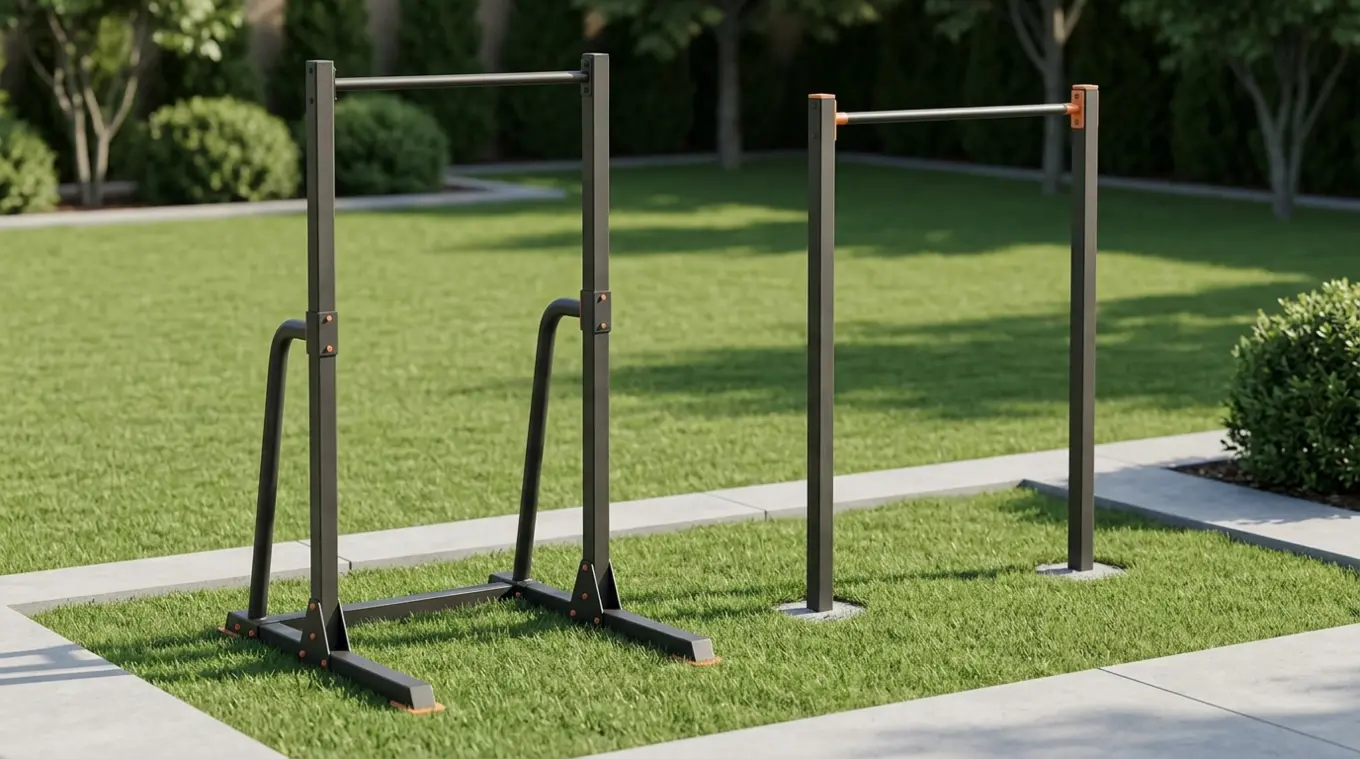
If you want the safest all-around recommendation for most backyards, a heavy duty freestanding pull up bar is usually the best choice. It gives you flexibility in placement, avoids wall drilling, and works well for pull ups, chin ups, hanging core work, and often muscle up progressions if the bar is high enough.
The key is choosing one that is actually heavy duty, not just labeled that way. Look for thick steel tubing, a wide footprint, cross support, and the option to anchor it. In practice, this type of setup works best for people who want a serious training station without permanently modifying a garage or exterior wall.
If you like to train with accessories, adding Gornation resistance bands or gymnastic rings to a solid freestanding bar can make the setup much more versatile. That is a practical upgrade if you want help with progressions or more variety in your sessions.
Best for Small Yards: Compact Outdoor Pull Up Station
For tighter spaces, a compact outdoor pull up station often makes more sense than a large multi-bar rig. You still get a dedicated place to train, but it is easier to fit into a side yard, patio edge, or smaller lawn area. This is often the best outdoor pull up bar for backyard use when space is the main limitation.
The tradeoff is that smaller stations may be less ideal for dynamic work or wide movement around the bar. Still, for strict pull ups, dead hangs, and leg raises, a compact setup can be excellent if built well. I have seen small yard stations outperform larger cheap frames simply because they were more solid and better positioned.
Best for Advanced Training: Multi Bar Calisthenics Setup
If your goal includes muscle ups, bar flow, front lever work, and training with a partner, a multi-bar calisthenics setup is hard to beat. This is the kind of station that feels closest to an outdoor calisthenics park. You get different bar heights, more movement options, and room to add rings or resistance bands.
This option is best for advanced users or highly committed beginners who know they will train outside for years. It costs more and takes more space, but it opens up far more backyard pull up bar workout ideas than a single bar ever will. If you are building a serious home setup, this is the direction I would lean.
For dedicated muscle up work, it also helps to study technique alongside equipment choice. A guide like how to do a muscle up can help you judge whether your chosen setup has the right height and clearance.
Freestanding vs. Wall Mounted vs. Ground Anchored: Which Is Best for Your Backyard?
This is where most buying decisions become clearer. A freestanding backyard pull up bar is best if you want flexibility and do not want to drill into a building. It is also the simplest choice for renters with outdoor space or anyone who may change the yard layout later.
Wall mounted bars can be great if you have a strong exterior wall, enough clearance, and no issue with permanent installation. They often feel very stable, but they depend heavily on correct mounting and wall quality. In my experience, many people underestimate how important the structure behind the wall really is.
| Type | Best for | Main advantage | Main drawback |
|---|---|---|---|
| Heavy duty freestanding pull up bar | Most backyards and general training | Flexible placement and easy setup | Can wobble if too light or not anchored |
| Compact outdoor pull up station | Small yards and basic pull work | Saves space while covering the essentials | Less ideal for dynamic work and muscle ups |
| Multi bar calisthenics setup | Advanced training and long-term use | Most versatile for skills, flow, and partner training | Costs more and needs more space |
| Wall mounted bar | Homes with a strong exterior wall | Very stable when installed correctly | Permanent installation and wall dependent |
| Ground anchored bar | Maximum stability and explosive training | Best option for muscle ups, kipping, and heavier athletes | Harder to install and move later |
Ground anchored bars are often the best option if your top priority is maximum stability. They are excellent for muscle ups, kipping, and heavier athletes. The downside is obvious: installation is more work, and moving the setup later is not easy. But if someone asks me for the most solid long-term outdoor solution, this is often my answer.
So which is best? For most people, freestanding is the easiest starting point, ground anchored is the best performance option, and wall mounted is ideal only when the wall and space are truly suitable.
How Much Should You Budget for a Backyard Pull Up Bar?
Price varies widely depending on build quality, frame type, and size. A compact freestanding bar sits at the lower end of the market, while heavy duty stations with thicker steel and wider bases cost noticeably more. Multi-bar calisthenics setups and ground-anchored rigs are generally the most expensive options.
The practical rule is to buy once and buy right. A cheap outdoor bar that wobbles or corrodes within a season costs more over time than a mid-range setup that lasts for years. If budget is a real constraint, a single well-built compact station from a reputable brand is a smarter choice than a large but poorly constructed multi-bar rig.
Ground anchoring and installation may add to the upfront cost, but they add long-term value in terms of safety and stability. When comparing options, think in terms of cost per year of usable training rather than sticker price alone. A bar you actually use consistently for several years is almost always better value than a cheaper one that gets abandoned after a few months.
Backyard Pull Up Bar Setup Ideas
You do not need a huge outdoor gym to train well. In fact, some of the best setups are simple and well thought out.
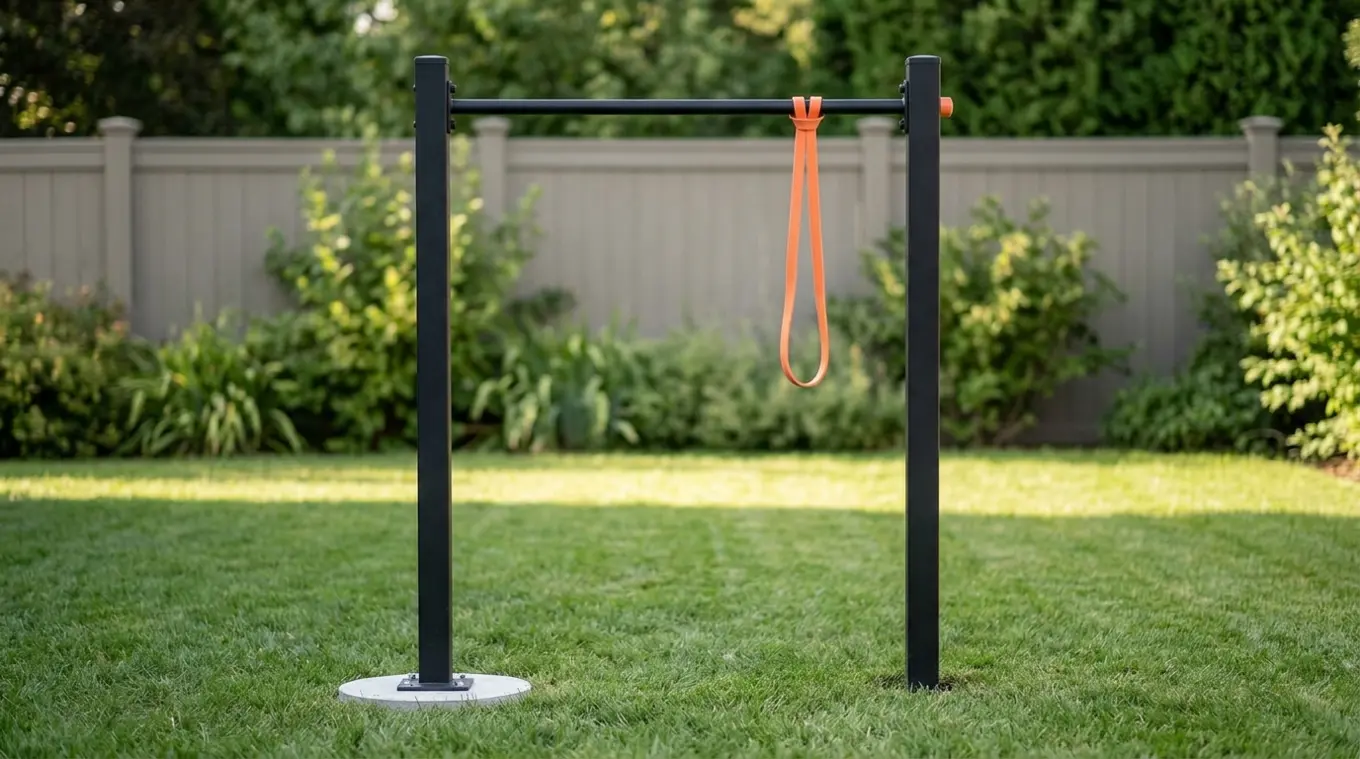
Minimalist Setup: Just a Pull Up Bar
A single outdoor bar can already cover pull ups, chin ups, scapular work, dead hangs, knee raises, toes to bar, and some beginner skill work. If you pair it with a set of Gornation bands, you can also do assisted pull ups, warm ups, and extra shoulder work without adding much clutter.
This kind of setup is ideal if you want something clean, affordable, and easy to maintain. It is also a good answer for people searching how to build a backyard pull up bar without turning the project into a giant backyard renovation. A simple bar done well beats an oversized station done poorly.
Full Backyard Calisthenics Station
If you have the space and the budget, a full station can include a pull up bar, dip bars, rings, a low bar for rows, and some soft ground surface like rubber tiles or mulch. That gives you enough options for full body sessions without needing much else.
This is also where DIY backyard pull up bar ideas become popular. Many people build a custom rack using treated posts and a steel bar set into concrete. That can work well if the measurements and anchoring are right, but it is only worth doing if you are confident in the build quality. A DIY setup should never feel like a test run every time you jump on it.
If your goal is a complete training corner, you can also get ideas from best outdoor calisthenics equipment to see what complements a pull up station without overcomplicating things.
Pull Up Bars That Also Support Dips and Muscle Ups
Versatility matters, especially if you want more than basic vertical pulling. Some outdoor bars are tall enough and stable enough for muscle ups, while others are not. If muscle ups are on your list, check for enough bar height, front clearance, and minimal frame wobble. A shaky bar makes transition practice frustrating fast.
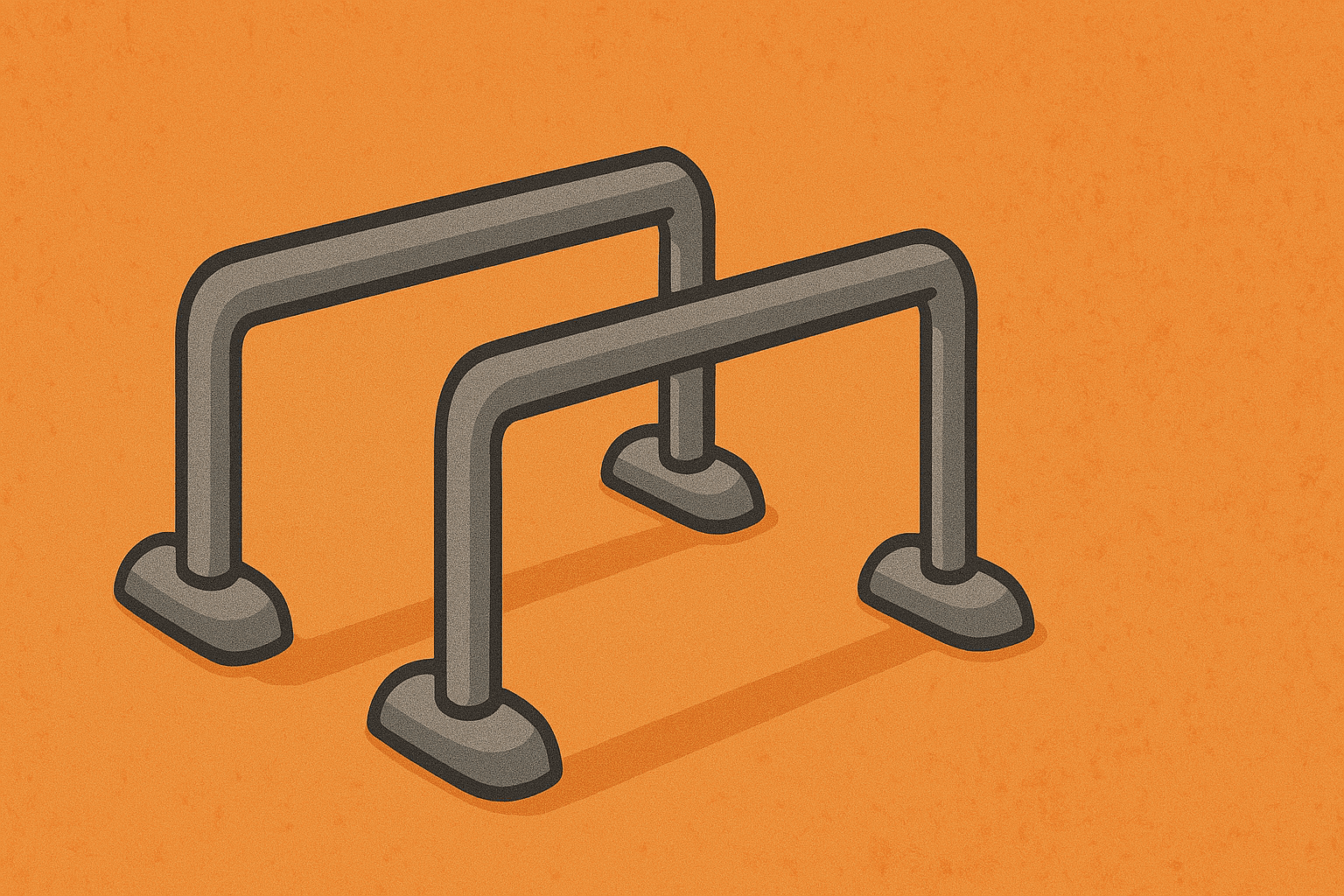
Dips are another useful factor. A standard pull up bar alone does not automatically cover them, but some stations include dip handles or can be combined with portable dip equipment. This is one reason I like practical accessories from brands like Gornation. Their rings, parallettes, and bands can expand what your outdoor setup can do without forcing you to buy an oversized rack.
If dips are a major priority, it is worth learning the movement properly as well. A guide like how to do a bodyweight dip helps you decide whether you need dedicated dip bars or just a pull up station with enough versatility.
In real use, the best backyard pull up bar for muscle ups and dips is usually a high, stable, anchored setup with enough surrounding space. If you only want strict pull ups and hangs, you can get away with a simpler model.
How to Keep Your Outdoor Pull Up Bar in Good Condition
Outdoor gear lasts much longer when you do a few basic things consistently. First, check bolts and connection points every few weeks, especially during the first months after installation. Metal settles, hardware loosens slightly, and catching that early keeps the station feeling solid.
Second, keep an eye on rust spots or chipped coating. Small touch ups are much easier than dealing with widespread corrosion later. Third, clean the bar itself. Dirt, sweat, and moisture change the grip more than people think. If you use chalk, that also builds up over time. For grip help outdoors, many athletes prefer liquid chalk because it is less messy. If you want to compare options, this article on liquid chalk vs block chalk is useful.
If winters are harsh where you live, consider a weather cover or at least regular drying after snow or rain. Also check the ground around the station. Soil shifts, mulch compresses, and pavers can become uneven. A bar that was level in spring may not feel the same by fall.
These little checks are also the best answer to people asking, is a backyard pull up bar safe over the long term. It is, as long as you treat it like real training equipment and not yard decoration.
Which Backyard Pull Up Bar Should You Choose?
If you want the short answer, here it is. Choose a heavy duty freestanding bar if you want the easiest balance of flexibility, stability, and ease of setup. Choose a compact station if your yard is small and your training is mostly strict pull work. Choose a ground anchored or multi-bar setup if you are serious about muscle ups, advanced calisthenics, and long-term outdoor training.
Personally, I think most people should avoid buying the cheapest model they can find. Outdoor equipment gets tested hard by both weather and movement, and a pull up bar that feels shaky is one of the fastest ways to train less. The best backyard pull up bar is the one that feels stable enough that you stop thinking about the equipment and just focus on your reps.
If you are building around long-term bodyweight progress, I would also consider a setup that works well with bands, rings, or weighted accessories later. That is where practical add-ons from Gornation can be a smart move. You do not need to buy everything at once, but choosing a bar that grows with your training usually saves money in the long run.
Frequently Asked Questions
Can I leave my pull up bar outside year round?
Yes, if it is built from weather resistant materials and installed properly. Powder coated or galvanized steel holds up much better than cheap painted metal. Even then, I recommend checking bolts, cleaning the bar, and watching for rust. Outdoor equipment can stay outside year round, but it needs occasional maintenance to stay safe and solid.
What weight capacity do I need for a backyard pull up bar?
As a general rule, choose more capacity than your bodyweight alone suggests. Dynamic reps, swinging, and weighted pull ups all increase force on the frame. For most adults, a high quality bar rated well above their bodyweight is the safer choice. Heavier athletes and advanced trainees should be especially careful here.
Is a DIY backyard pull up bar a good idea?
It can be, but only if you use strong materials, proper measurements, and solid anchoring. A DIY backyard pull up bar made with treated posts and concrete footings can be excellent. A rushed build with weak lumber or poor bar placement usually ends up unstable. If you are not confident in the build, a proven commercial option is safer.
How high should a backyard pull up bar be?
High enough that you can hang fully without your feet touching the ground. If you want to train muscle ups, you also need extra clearance above the bar. Taller users should be careful with compact stations because some are fine for strict pull ups but too low for more advanced training.
What can I train besides pull ups on an outdoor bar?
A lot more than most people expect. You can do chin ups, scapular pulls, dead hangs, leg raises, toes to bar, front lever progressions, and explosive pulling variations. With bands or rings, the setup becomes even more versatile. That is why a backyard pull up bar is often the foundation of a simple but effective outdoor gym.
What is the best type of backyard pull up bar for beginners?
For most beginners, a sturdy freestanding backyard pull up bar is the safest and most practical option. It is easier to install than a wall mounted model and usually gives enough space for pull ups, dead hangs, and band assisted work. The main thing is choosing one that feels stable from day one.
Can a backyard pull up bar handle weighted calisthenics?
Yes, but only if the frame is built for it. Weighted pull ups create much more force than bodyweight alone, especially if you train explosively. Check the real load rating, frame thickness, and anchoring method. If weighted training is part of your plan, it is worth choosing a stronger setup from the start.
How do I make a pull up bar stable outside?
The best ways are ground anchoring, concrete footings, or choosing a heavier steel frame with strong cross support. A level surface also matters more than people think. If a freestanding station rocks or shifts, that is usually a sign the base design or installation is not good enough for serious outdoor training.
Are wall mounted outdoor pull up bars better than freestanding ones?
Not always. A wall mounted bar can feel very solid, but only if the wall itself is strong and the installation is done correctly. Freestanding bars are better for flexibility and easier placement. In many backyards, a quality freestanding or ground anchored setup is the more practical choice overall.
What accessories work well with a backyard pull up bar?
Resistance bands, rings, liquid chalk, and a dip attachment are the most useful add-ons for most people. They expand your exercise options without taking up much extra space. If you want more variety in your sessions, practical accessories from brands like Gornation can turn a simple bar into a more complete calisthenics station.
If you want a straightforward recommendation, buy the most stable backyard pull up bar your space and budget allow. For most people, that means a heavy duty freestanding or ground anchored setup with enough height for full hangs and future progress. Focus on weather resistance, real stability, and whether the station fits how you actually train. That will matter far more than flashy extras. A good backyard bar can give you years of pull ups, muscle up practice, and full body calisthenics sessions right outside your door. Choose well once, and your training gets a lot easier to stick with.