Not everyone can install a pull up bar at home. Maybe you rent, your door frames feel sketchy, your ceiling is too low, or you just want something quieter and more flexible. I have run into all of those problems myself while training at home and while traveling, and the good news is that you still have solid options. In this guide, I will walk you through the best alternative for a pull up bar, from rings and suspension trainers to smart household setups and outdoor solutions. You will also see which exercises actually help you build real pulling strength when a bar is not available.
Why You Might Need a Pull Up Bar Alternative
A lot of people search for the best alternative for a pull up bar because the usual setup simply does not fit their space or situation. That is especially common in the US where many people train in apartments, shared homes, garages, or small home gyms. A pull up bar can be excellent, but it is not the only way to train your back, biceps, grip, and overall pulling strength.
From experience, the biggest mistake is assuming that if you do not have a bar, your pulling progress has to stop. It does not. In many cases, the right pull up bar alternatives are actually better for your current level, your budget, or the amount of space you have.
Renters, apartments, and no door frame situations
If you are renting, drilling into walls or ceilings is often off the table. Even doorway bars can be a problem if you have wide trim, weak molding, unusual frame shapes, or a landlord who does not want pressure marks on the paint. That is why pull up alternatives for small apartments have become so popular.
Another issue is noise. If you live upstairs, kipping, swinging, or dropping off a bar is not ideal. Quiet pull up alternatives for upstairs apartment setups matter more than people think. Rings, resistance bands, controlled rows, and dumbbell work usually create less noise and less stress on the building.
Some people also just do not have the right architecture for a bar. Open concept rooms, sliding doors, rounded trim, or fragile frames make standard options unreliable. In those cases, using a free standing pull up bar alternative or a completely different pulling setup is often smarter.
When a pull up bar just is not the right fit
There are also training reasons to skip a pull up bar for a while. If you cannot yet do one clean rep, working only on failed pull ups is frustrating and inefficient. A better approach is to build the pattern with rows, band work, and assisted pulling. This is usually the answer to the common question: what to do if you can’t do a pull up.
Another reason is versatility. A fixed bar is great for pull ups, chin ups, and hanging work, but not much else. Rings and suspension trainers open the door to rows, curls, face pulls, triceps extensions, support holds, and even core work. If you want one piece of gear that does more, the bar may not be your best first buy.
If you are still building your setup, it can help to look at a broader equipment overview like must have calisthenics equipment so you do not spend money on the wrong thing first.
The Best Equipment Based Pull Up Bar Alternatives
If you want something reliable, scalable, and closer to real pull up training, equipment based alternatives are your best bet. These are the options I would recommend first if your budget allows it.
Gymnastics rings: the most versatile option
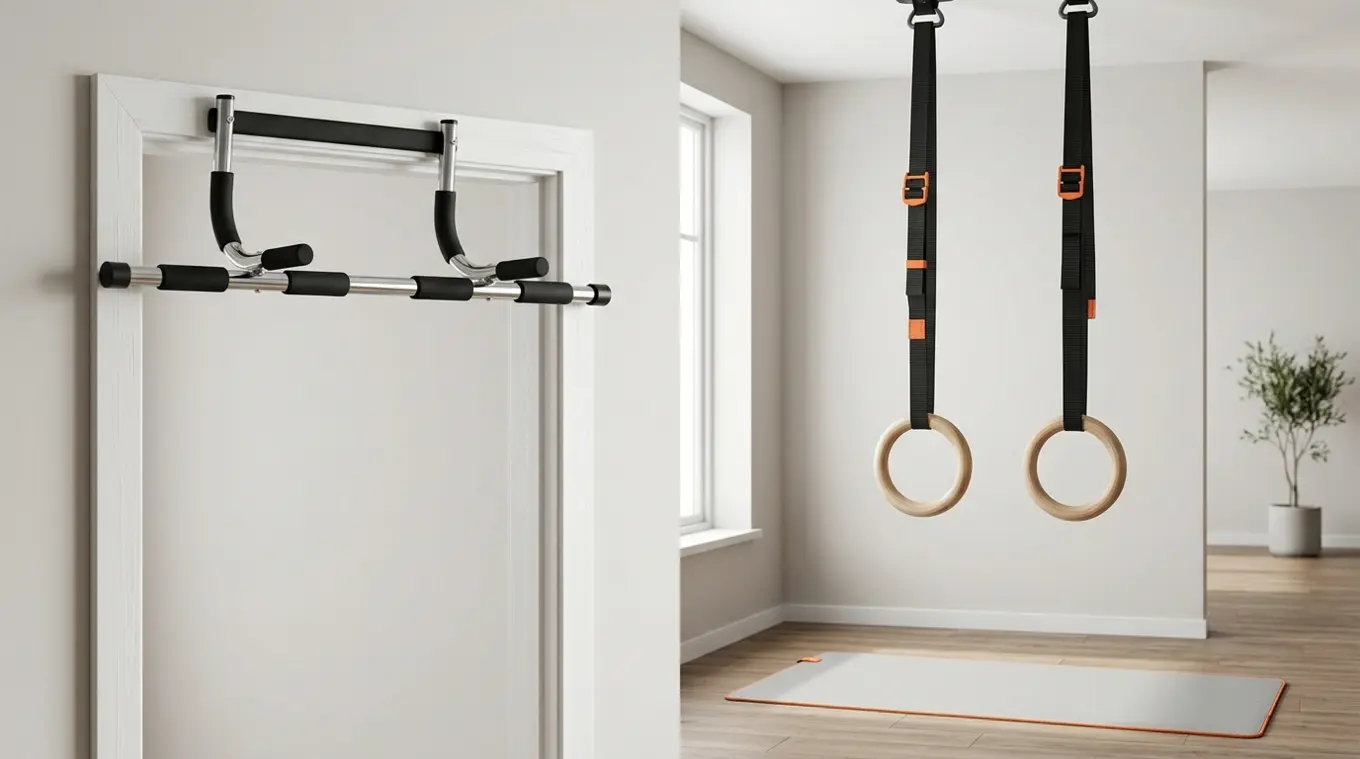
If you ask me for the single best alternative for a pull up bar, gymnastics rings are my first answer. They are portable, adjustable, and incredibly versatile. You can hang them from a beam, a sturdy tree branch, a rack, or an outdoor structure. With one setup, you can do ring rows, assisted pull ups, support holds, dips, push ups, and a lot more.
For most people, ring rows are the most useful starting point. They train the same major muscles as pull ups, especially the lats, upper back, rear shoulders, and biceps, but in a more manageable angle. You can make them easier by standing more upright or harder by lowering the rings and moving your body closer to horizontal.
What I personally like most about rings is that they grow with you. Beginners can use them for bodyweight rows and assisted work. More advanced athletes can use them for archer rows, false grip pulling, weighted rows, and explosive transitions. That makes them one of the few pull up bar alternatives that still stay relevant once you get stronger.
If you want a product recommendation from Gornation, their wooden rings are a very solid option. The straps are easy to adjust, the grip feels secure, and the build quality is good enough for long term use. If you want more detail, you can also check ring focused ideas here: best ring exercises for calisthenics.
Suspension trainers like TRX: accessible and adjustable
Suspension trainers work in a similar way to rings, but they are often a little easier for beginners because the handles are fixed and setup is simpler. If you train indoors and want something fast to mount to a door anchor, this can be a practical choice.
For rows, face pulls, and assisted single arm work, suspension trainers are excellent. They are especially good if your goal is general back strength, shoulder health, and a clean pull up progression without bar access. You can control the angle very precisely, which makes progression straightforward.
The downside is that suspension trainers are usually a bit less natural for more advanced pulling skill work than rings. You can still get strong with them, but if calisthenics is your main focus, rings usually have the edge long term.
Power towers and dip stations with pull up functionality
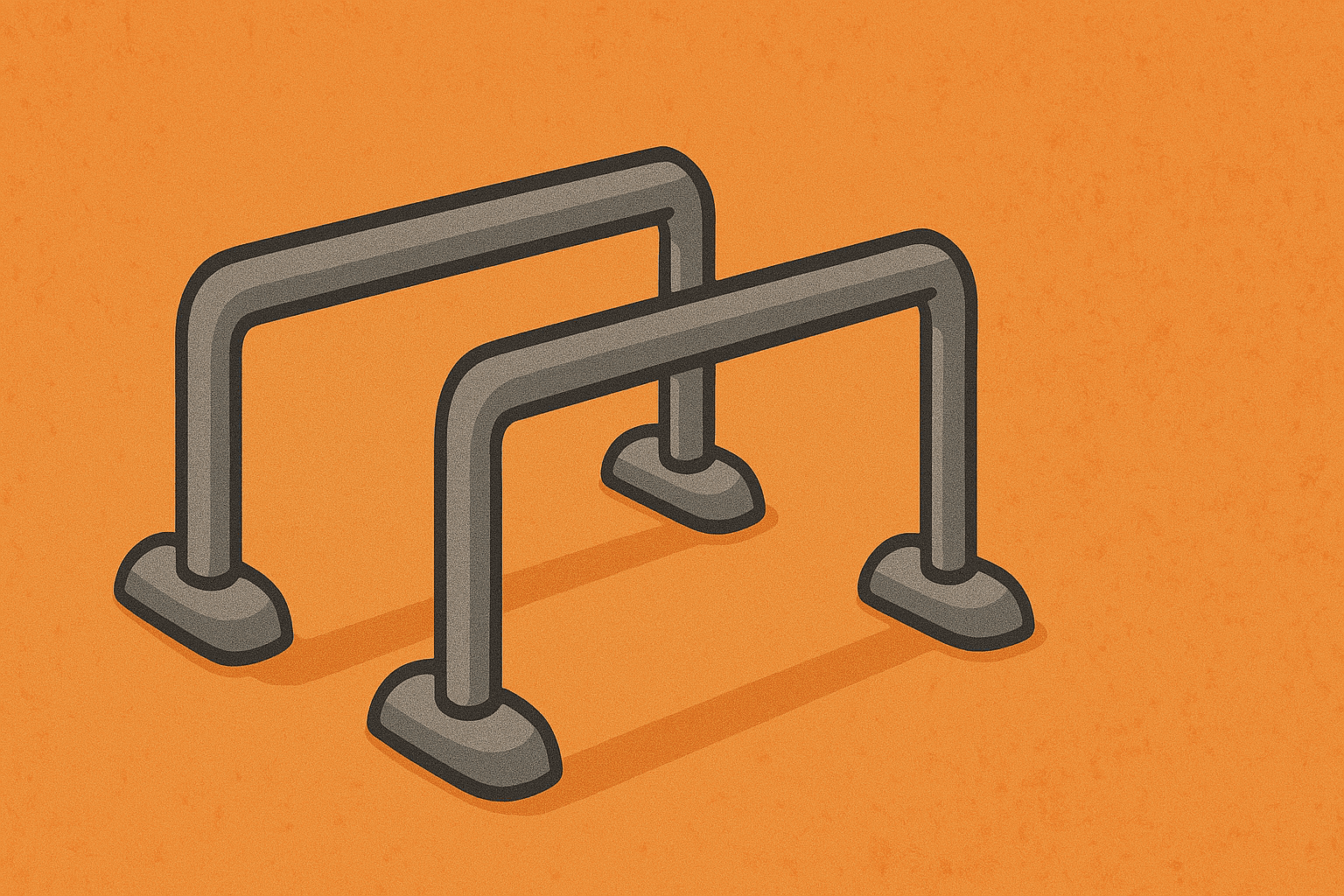
If you have floor space and want something more stable than a doorway setup, a power tower instead of pull up bar can make a lot of sense. A power tower gives you a dedicated pull up station without wall mounting, and many models also include dip handles and vertical knee raise support.
This is a good free standing pull up bar alternative for garages, home gyms, patios, and larger apartments with enough room. It is also useful if your walls and doors are not trustworthy. Stability matters though. Cheap towers can wobble, especially for taller athletes or anyone doing dynamic reps.
Some dip stations also include pull up functionality or can be paired with another unit. If your training includes dips, knee raises, and rows, a tower can be more useful than a basic bar. You can compare that style of setup with guides like best pull up station power tower for calisthenics.
When I advise friends on this, I usually keep it simple. If you have almost no space, go with rings. If you want the closest thing to a real station and have room, go with a power tower.
Household Objects You Can Actually Use Instead of a Pull Up Bar
If you do not want to buy equipment yet, there are still some workable options at home. These are not always perfect, and safety comes first, but they can be effective if you use common sense.
Sturdy tables and desks for bodyweight rows
One of the best no equipment methods is doing inverted rows under a table. This works surprisingly well if the table is heavy, stable, and not prone to sliding or tipping. In many beginner programs, this is one of the easiest ways to start building pulling strength.
If you have ever wondered how to do rows under a table, the basic idea is simple. Lie underneath the table, grab the edge with both hands, keep your body as straight as possible, and pull your chest toward the underside of the table. The more horizontal your body is, the harder it becomes.
That said, not every table is safe. Glass tops, folding legs, lightweight desks, and furniture with weak joints are obvious no-gos. Before you trust it with your bodyweight, test it hard. Push it, shake it, and make sure it does not shift.
Inverted rows under a table are not glamorous, but they work. I have used them in hotel rooms, temporary apartments, and even during moves when my actual equipment was packed away.
Staircase railings and banisters
Some stair railings can work for angled rows, towel rows, or grip work, but this is very case by case. The main question is not whether you can hold the railing. It is whether the railing can hold you while your weight moves. A lot of indoor railings are not built for that kind of load.
If the railing is thick metal and firmly anchored, you might be able to use it for controlled pulling variations. If there is any wobble at all, skip it. I would rather have you do strong band rows than gamble on a loose banister.
Other household setups that can hold your weight
Door based towel rows can work if the door is sturdy and closes away from you. The load should pull the door into the frame, not open it toward you. This can be a decent temporary solution for rows or assisted leaning pulls, but I would still class it as a backup option, not a long term main setup.
You can also use bed sheets or strong straps in some cases, but honestly, once you get to the point of improvising complex setups, a pair of rings usually becomes the safer and more practical buy. Household hacks are useful, but only when they stay simple and solid.
How to Do Pull Ups Without a Pull Up Bar Outdoors
Outdoor training is often the easiest answer if your home setup is limited. In many US neighborhoods, you can find parks, playgrounds, sports fields, or calisthenics areas within a short drive.
Tree branches, playgrounds, and park structures
A strong tree branch can work well for pull ups, ring setups, or towel based pulling. Playgrounds often have monkey bars, climbing frames, and overhead rails that are even better. Outdoor fitness parks are ideal because they are actually built for bodyweight training.
If you are using rings, outdoor structures become much more useful because you do not need the perfect bar height. You just need a safe anchor point. This is another reason rings are often the best alternative for a pull up bar. They adapt to the environment instead of forcing the environment to adapt to you.
For people training seriously in parks, it may also be worth looking at dedicated outdoor gear and park setups like best outdoor pull up bar calisthenics.
What to look for to stay safe
Check the surface first. Wet metal, splinters, rust, and unstable posts are obvious red flags. Test the structure before hanging your full bodyweight from it. If you are using a branch, inspect the thickness, health of the wood, and where it connects to the trunk. A branch that looks strong from below is not always strong enough at the base.
Also think about height and landing. You want enough clearance to move safely, but not so much that a slip becomes a hard fall. If the surface underneath is concrete, be more cautious. If you are doing explosive reps, muscle up progressions, or weighted work, stable purpose built bars are still the better choice.
| Alternative | Best for | Space needed | Main advantage | Main limitation |
|---|---|---|---|---|
| Gymnastics rings | Most people, long term progression, travel | Low | Versatile, portable, scalable | Needs a safe anchor point |
| Suspension trainer | Beginners, quick indoor setup | Low | Easy to adjust and use | Less versatile than rings for advanced calisthenics |
| Power tower | Home gyms, full pull up practice | High | Stable dedicated station | Takes up floor space |
| Table or desk rows | No equipment beginners | Low | Free and effective for rows | Only works if furniture is very sturdy |
| Resistance bands | Small apartments, quiet training, assistance work | Very low | Compact, quiet, useful for accessories | Not a full replacement for bodyweight pulling |
| Dumbbell rows | Back strength and muscle building | Low to medium | Easy to load progressively | Does not replicate pull up skill directly |
Pull Up Alternative Exercises: Train Your Back Without Any Bar
You do not always need a bar shaped object to train the same muscles. Some exercises replicate the pulling pattern directly, while others train the back and arm muscles in a different but still useful way.
Inverted rows and bodyweight rows
Inverted rows are one of the best pull up bar alternatives because they teach you to move your own body through space. That matters. A lot of machine work builds muscle, but bodyweight rows build coordination and tension in a way that transfers better to future pull ups.
Whether you do them on rings, a suspension trainer, a low bar, or under a table, the key is body position. Keep your core tight, ribs down, and avoid jutting your chin forward just to reach the top. Pull your elbows back and think about bringing your chest toward your hands.
If someone asks me what to do if you can’t do a pull up, bodyweight rows are almost always near the top of my list. They are scalable, joint friendly, and easy to progress over time.
Band pull aparts and face pulls with resistance bands
Resistance bands are not a perfect substitute for pull ups, but they are excellent support tools. Band pull aparts strengthen the upper back and rear delts. Face pulls help with shoulder balance, posture, and scapular control. Those qualities matter if you want healthier and stronger pulling mechanics later.
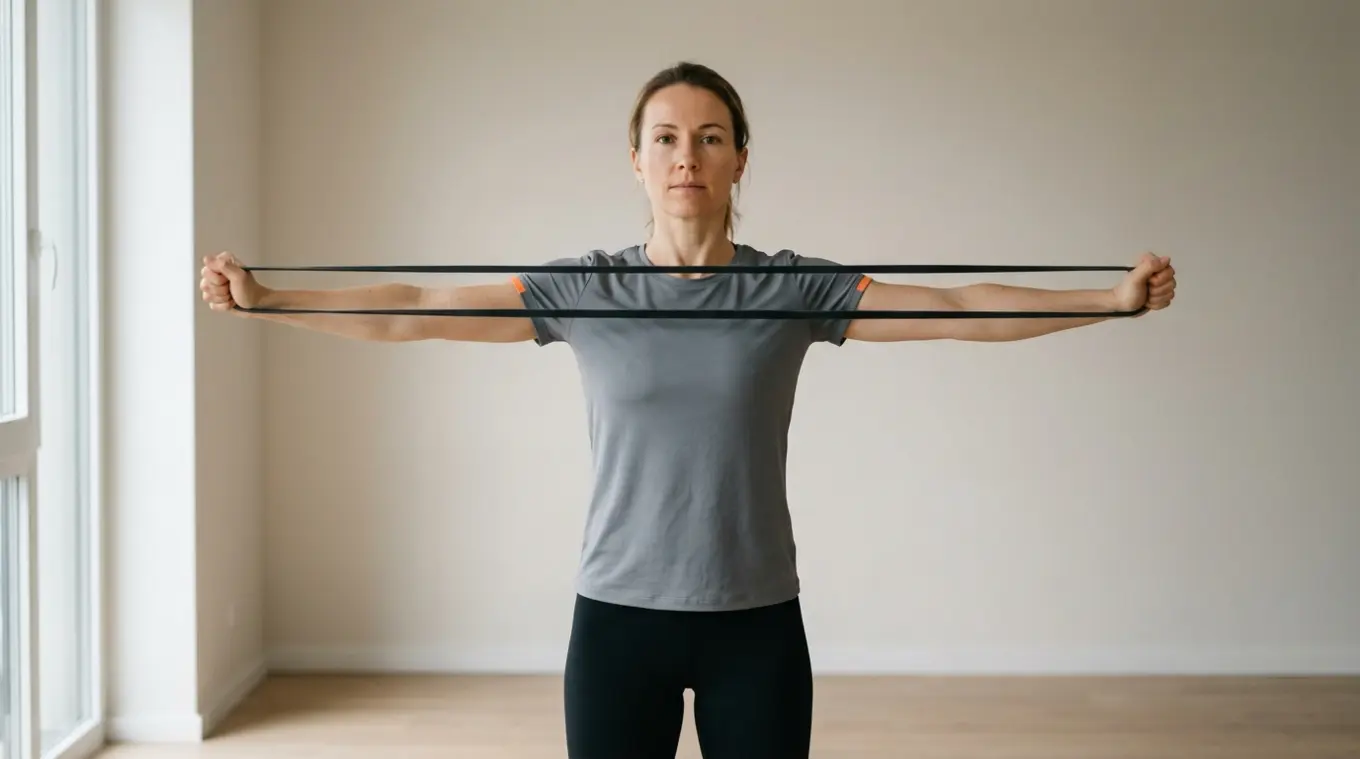
These are especially good quiet pull up alternatives for upstairs apartment living because they create almost no noise and require very little space. A band anchored in a door can also let you perform high rows, straight arm pulldown style movements, and assisted lat focused work.
If you want a simple upgrade here, Gornation resistance bands are a good recommendation. They are useful for assistance, mobility, and pulling accessories without taking up room. If you want more exercises in that category, this page is useful: exercises with resistance bands.
Dumbbell and resistance band rows for vertical pulling
Dumbbell alternatives to pull ups are underrated, especially for beginners. One arm dumbbell rows, chest supported rows, and even dumbbell pullovers can build your lats and upper back effectively when done with control. They do not copy the exact vertical path of a pull up, but they can absolutely make you stronger.
A common question is about lat pulldown vs pull ups. If you have gym access, lat pulldowns are one of the closest substitutes because they keep the movement in a vertical pulling pattern. They are easier to scale than pull ups and often better for building volume. Pull ups demand more body control and core tension, but pulldowns are still very useful.
At home, banded vertical pulls can be a practical stand in. Anchor a band high, kneel down, and pull the band toward your upper chest or collarbone while driving your elbows down. It is not identical to a pull up, but it teaches a similar elbow path and lat engagement.
In my own training, I have seen people make solid first pull up progress by combining rows, band pulldowns, and negatives once they finally get access to a bar. That is a very realistic pull up progression without bar access for part of the week.
Can You Actually Build a Strong Back Without Pull Ups?
Yes, absolutely. But there is an honest nuance here.
What pull ups train and how to replicate it
Pull ups train vertical pulling strength, scapular control, grip, core tension, and relative strength because you move your own bodyweight. To replicate that as closely as possible, you want a mix of exercises that covers the same pieces.
For lats and elbow drive, use rows, pulldowns, and banded vertical pulls. For body control, use inverted rows and ring work. For grip, use towel rows, hangs if possible, or ring support variations. For scapular function, face pulls and scapular pulls help.
No single exercise does everything. That is why the best pull up bar alternatives usually come in combinations rather than one magic movement.
Honest answer: what you gain and what you miss
You can build a very strong back without ever doing pull ups regularly. Plenty of lifters do. Rows, pulldowns, dumbbells, and rings can cover a lot. What you miss is the exact skill of pulling your full body vertically against gravity. That specific coordination and strength curve is unique.
So if your main goal is a bigger and stronger back, alternatives are enough. If your goal is to perform strict pull ups, muscle ups, or weighted pull ups, alternatives help a lot but should eventually lead back to bar specific practice when possible.
I think that is the most honest way to frame it. Alternatives are not fake progress. They are real progress. They just may not be the final step.
Best Pull Up Alternatives for Beginners vs. Advanced Athletes
The right choice depends heavily on your current level.
If you are just starting out
Beginners usually need exercises that are safe, easy to scale, and not too intimidating. The best starting points are ring rows, suspension trainer rows, table rows, band assisted pulling, and one arm dumbbell rows. These teach the right muscles to work together without forcing you into failed pull up attempts over and over.
If you cannot do a single rep yet, that is normal. What to do if you can’t do a pull up is not to keep yanking at a bar and hoping. Build strength in layers. Start with horizontal pulling, then add assistance, then negatives when you get bar access.
For many beginners in small spaces, rings and bands are the best combination. They are compact, relatively affordable, and useful for a lot more than just pull training.
If you are already strong but lack equipment
Advanced athletes need alternatives that still challenge them. That usually means low angle ring rows, feet elevated rows, weighted rows, slow tempo work, towel grip pulling, dumbbell rows with real load, or a power tower instead of pull up bar for full movement access.
If you already have a strong base, the biggest challenge is maintaining intensity. A very upright row on a loose strap will not cut it. You need harder leverage, unilateral work, extra load, slower eccentrics, or more demanding grip positions.
In that case, rings are still excellent because they can be progressed far beyond beginner level. A power tower or sturdy freestanding station also makes sense if your goal is to maintain skill and strength with fewer compromises.
How to Use These Alternatives to Work Toward Your First Pull Up
If your goal is eventually doing a full pull up, these alternatives are not just a workaround. They are the actual training path. Here is a simple progression that works well for most people starting from zero.
- Start with incline rows. The more upright your body angle, the easier the row. Begin here if fully horizontal rows feel too hard. Adjust the angle gradually as you get stronger.
- Build to horizontal rows. Once you can do 3 sets of 10 controlled rows at a low angle, you have built a real pulling base. This is the foundation that makes pull ups possible.
- Add banded pull ups or negatives. When you get access to any bar or overhead anchor, use a resistance band for assisted pull ups or focus on slow lowering from the top position. Both methods bridge the gap between rowing strength and vertical pulling skill.
- Practice dead hangs. Grip strength and shoulder stability matter more than most people expect. Hanging from a bar, ring, or any sturdy anchor for time builds the connective tissue and grip you will need for your first full rep.
The order is not rigid, but the principle is. Build horizontal pulling first, then transition to more vertical patterns. Most people who struggle with their first pull up skipped the row foundation entirely.
Which Alternative Is Best for Your Situation?
This is where most people really need help, because the best option on paper is not always the best option for your home, budget, or goals.
Quick comparison: equipment vs. no equipment
If you want the shortest answer, here it is. For most people, rings are the best equipment choice. They offer the best balance of cost, portability, progression, and exercise variety. A suspension trainer is close behind if ease of setup matters most. A power tower is best if you want a true station and have room for it.
If you want a no equipment route, sturdy table rows are usually the best place to start. After that, doorway rows, towel rows, and outdoor structures can fill the gap. Resistance bands are the best low space accessory because they expand your exercise options without making your room feel like a gym.
Recommendations based on space, budget, and goal
If you live in a small apartment, especially upstairs, go for rings or bands. They are quiet, compact, and ideal as pull up alternatives for small apartments. If your budget is tight, a resistance band set plus a safe row setup will go a long way. If your goal is a first pull up, prioritize rows and assisted vertical pulling. If your goal is back size and general strength, dumbbell work and band work can be enough for quite a while.
If you have more room and want the closest home replacement, a power tower instead of a pull up bar is often the most complete answer. If you train outdoors or travel a lot, rings are still hard to beat. I have recommended them to a lot of people because they solve so many problems at once.
My practical ranking looks like this for most readers. First, gymnastics rings. Second, suspension trainers. Third, a power tower if space allows. Fourth, sturdy bodyweight rows under a table or desk. Fifth, resistance bands and dumbbell alternatives to pull ups as support work.
If you are building a more complete home setup later, you can always compare with larger guides on compact training gear, but for this topic, you do not need much to make progress. You just need a setup that is safe and something you will actually use consistently.
Final Thoughts
If you do not have a pull up bar, you still have plenty of good options. The best alternative for a pull up bar for most people is a pair of gymnastics rings because they are versatile, portable, and effective for real pulling progress. If rings are not practical, suspension trainers, a stable power tower, table rows, resistance bands, and dumbbell work can all help.
The main thing is to match the option to your situation. Think about your space, your budget, your current strength, and how much noise or setup time you can tolerate. A safe setup that you use every week beats the perfect setup that sits unused. If you keep training your pulling pattern consistently, your back and pull up strength can improve even without a traditional bar.
FAQs
What is the best alternative for a pull up bar at home?
For most people, gymnastics rings are the best home alternative because they are affordable, easy to store, and useful for rows, assisted pull ups, and full upper body training. If you cannot hang rings, a suspension trainer or a sturdy power tower can also work well depending on your space.
Can I build pull up strength without doing actual pull ups?
Yes, you can build a lot of the required strength with ring rows, inverted rows, dumbbell rows, lat pulldowns, and resistance band work. These exercises strengthen the lats, upper back, and arms. To master actual pull ups later, you will still need some direct pull up practice when a bar becomes available.
Are inverted rows under a table actually effective?
Yes, they can be very effective for beginners and intermediate trainees if the table is sturdy enough. They train many of the same muscles as pull ups and help build body control. Just make sure the furniture is heavy, stable, and tested before using it for bodyweight rows.
What are the best pull up alternatives for small apartments?
The best options for small apartments are rings, suspension trainers, resistance bands, and controlled bodyweight rows. These take up little space and are often quieter than a mounted pull up bar. They are also ideal if you rent or do not want to damage walls, ceilings, or door frames.
Is a lat pulldown better than pull ups?
Not better in every way, but very useful. In the lat pulldown vs pull ups comparison, pulldowns are easier to scale and great for building vertical pulling strength. Pull ups demand more full body control and relative strength. If your goal is back development or first rep progress, lat pulldowns are an excellent substitute.