If you want to start calisthenics at home, one of the first questions is usually simple: do I actually need equipment, or can I just train with bodyweight alone? I have been through that same phase, and most people do not need a full home gym to make real progress. What they do need is a smart setup that covers the basics without wasting money or space. In this guide, I will show you what minimal calisthenics equipment really means, which one or two items make the biggest difference, what beginners should skip, and how to build a practical setup for an apartment, garage, or small room.
Do You Even Need Equipment for Calisthenics?
What You Can Do With Just Your Bodyweight
You can get surprisingly far with no equipment at all. Push-ups, squats, lunges, glute bridges, planks, hollow holds, wall walks, and floor core work can already build strength, coordination, and conditioning. For a true beginner, the cheapest way to start calisthenics is simply using the floor, a wall, and your own consistency.
That said, bodyweight-only training has a clear limitation. Pulling movements are hard to train without something to hang from or row under. In my experience, this is where many home trainees stall. They end up doing lots of pushing and core work, but their back, grip, and shoulder balance lag behind. If you want a balanced physique and long-term progress, at least one pulling tool matters.
If you want a deeper look at the equipment-free side of training, this guide on does calisthenics need equipment is worth reading after this one.
When Adding One or Two Pieces of Gear Makes a Real Difference
The first big jump in progress usually happens when you add one useful piece of gear instead of buying five random ones. A pull-up bar, resistance bands, or a pair of parallettes can turn a basic routine into a complete one. Suddenly you can train vertical pulling, band-assisted progressions, deeper push-ups, L-sits, hanging leg raises, and better shoulder work.
From what I have seen, the best minimal calisthenics equipment for home is gear that does three things well. It should expand exercise options, fit your space, and stay useful as you get stronger. That is why a minimalist calisthenics setup works better when it is built around versatility, not around trends.
What ‘Minimal’ Actually Means in a Calisthenics Context
Minimal does not mean incomplete. It means owning the fewest tools that still let you train your whole body properly. A good essential calisthenics equipment list is not the one with the most products. It is the one that removes obvious weak points without cluttering your room or draining your budget.
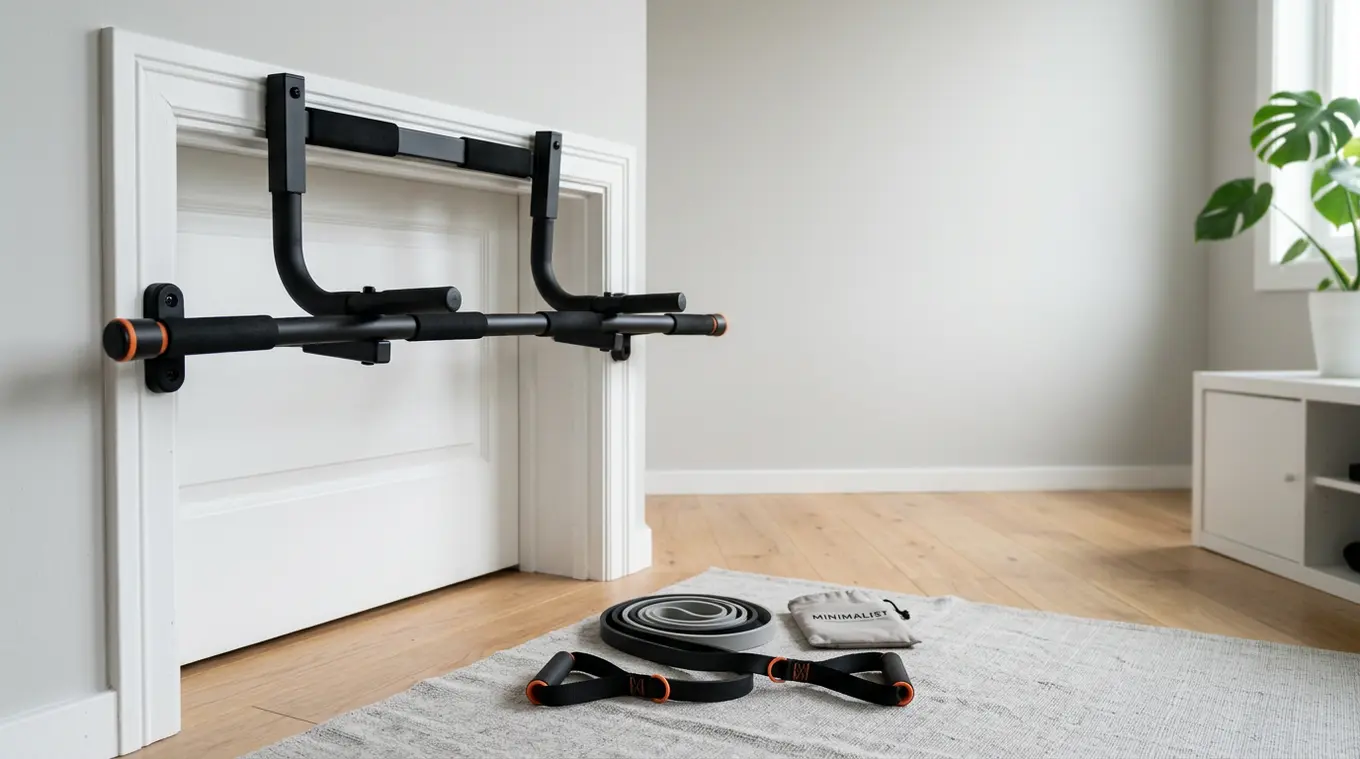
For most people, minimal calisthenics equipment means one main station for pulling, one optional tool for assistance or joint comfort, and enough floor space to move. In practical terms, that often looks like a doorway pull-up bar plus bands, or a pull-up bar plus low parallettes. If your budget is tighter, even one solid bar can be enough to start.
I like to think of minimal gear in layers. Layer one is what makes training possible. Layer two is what makes training smoother. Layer three is what makes training more advanced. Most beginners should stay at layer one and two for a while.
The Bare Minimum: The One Piece of Equipment Worth Buying First
Is a Pull-Up Bar Enough to Build a Complete Routine?
If I had to recommend only one purchase for most people, it would be a pull-up bar. It is the closest thing to the best basic calisthenics equipment because it unlocks the movement pattern you cannot easily train on the floor. Pull-ups, chin-ups, scapular pulls, dead hangs, knee raises, toes-to-bar variations, and even simple hanging for shoulder health all come from one setup.
Can a pull-up bar alone build a complete routine? Almost. You can pair it with floor push-ups, pike push-ups, bodyweight squats, split squats, lunges, calf raises, planks, and hollow work. That gives you a very solid full-body calisthenics workout with minimal equipment. The only area where a bar alone feels limited is lower body loading, but for most beginners, single-leg work covers that well at first.
For people looking for a renter-friendly option, a GORNATION doorway pull-up bar can make sense because it is designed specifically for bodyweight training and small home setups. If you go that route, focus more on fit and stability than on getting the cheapest bar you can find.
Best Situations to Start With Just a Bar and the Floor
A pull-up bar and the floor is ideal if you live in a small apartment, train around work, or do not want equipment all over your home. It is also great if your goal is general strength rather than advanced ring skills right away. I have recommended this exact setup to friends who wanted something effective without turning their living room into a gym.
It especially works well for people training before work or between tasks. A quick set of chin-ups, push-ups, and split squats is realistic. A giant setup with rings, dip bars, and a bench often sounds better than it works in real life. The simpler your setup, the more often you usually train.
If you want ideas once the bar is installed, this resource on best pull-up bar exercises can help expand your routine naturally.
A Simple Minimal Calisthenics Setup for Home or Small Spaces
What to Add After a Pull-Up Bar
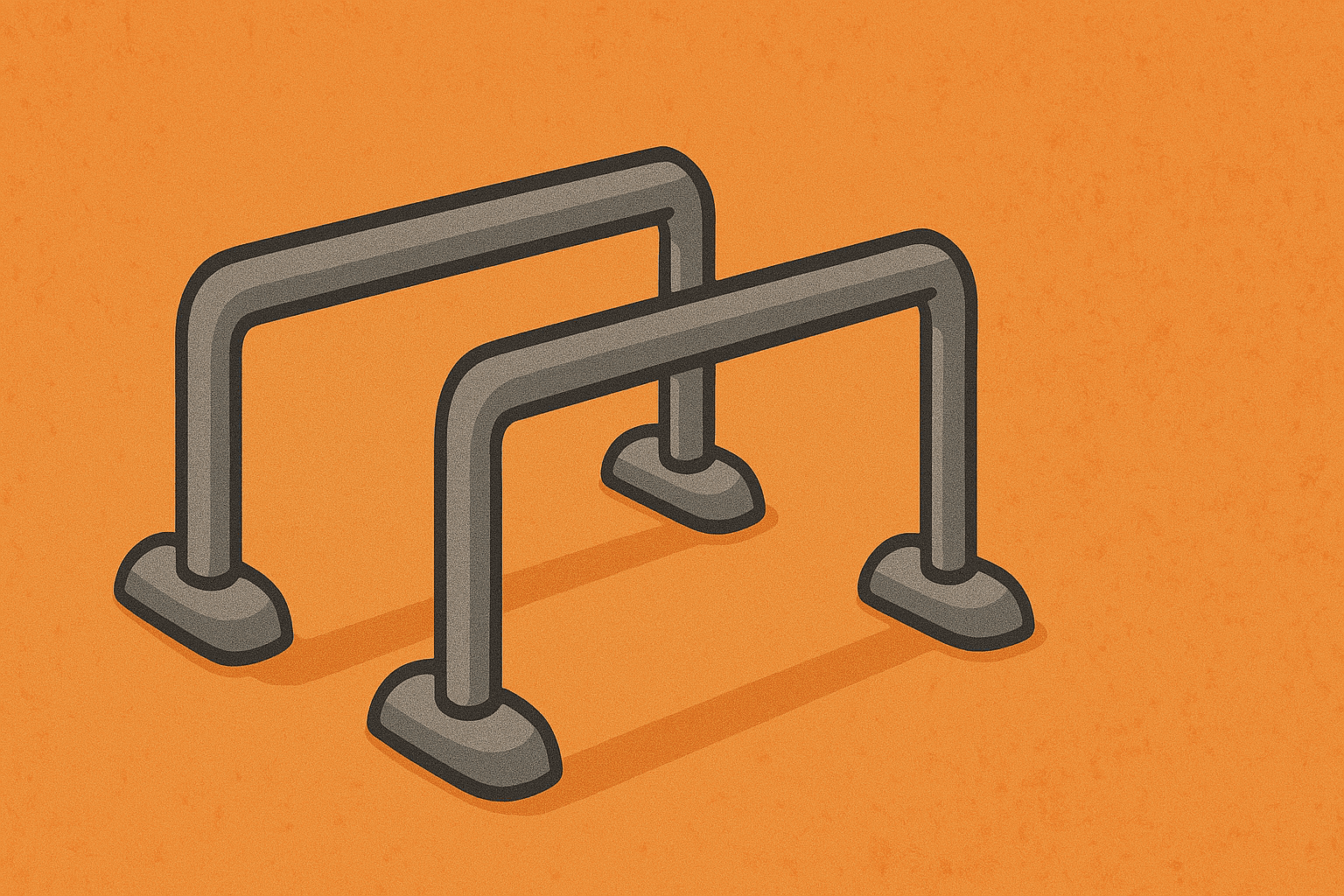
Once you have a pull-up bar, the next best addition for most people is a set of resistance bands or low parallettes. Which one is better depends on your needs. Bands are better if you need assistance for pull-ups, want warm-up options, or care about a budget-friendly setup. Parallettes are better if your wrists get sore on the floor, or if you want to train L-sits, elevated push-ups, and handstand progressions more comfortably.
If I were building a minimalist calisthenics setup for the average beginner, I would go with a pull-up bar first and resistance bands second. That combination gives you assisted pull-ups, rows, warm-ups, mobility drills, and extra leg work in almost no space. If your wrists are the main issue, then a GORNATION pair of wooden parallettes is a smart second buy. Wooden handles often feel better than cheap foam grips, especially when your hands get sweaty.
Setting Up in a Small Room, Balcony, or Garage
The best calisthenics equipment for small apartment training is equipment that stores quickly and does not need permanent floor space. That is why doorway bars, bands, and compact parallettes work so well. A balcony can handle bands, floor work, and low bar exercises if the surface is stable. A garage gives you more freedom, but you still do not need much to start.
For small rooms, think vertical and portable. Use a doorway bar, keep bands in a drawer, and slide parallettes under a desk or bed. A yoga mat is optional but useful if your floor is slippery. This is one reason the best minimal calisthenics equipment for home is usually compact gear rather than a large dip station or power tower.
If your main concern is fitting equipment into limited square footage, this guide on best calisthenics equipment for small spaces is a good next step.
Essential Gear for Beginners: What to Buy and What to Skip
Equipment for Beginners Who Want to Progress Fast
If you want the short version, here is the best order for most beginners. First, buy a pull-up bar. Second, add resistance bands. Third, consider parallettes if wrists, L-sits, or handstand work matter to you. That is already a strong essential calisthenics equipment list for steady progress.
Bands help beginners progress faster because they remove frustration. Instead of failing ten ugly pull-up reps, you can use assistance and get clean movement practice. That matters a lot. Good reps build strength and confidence faster than random grinding. In that sense, calisthenics equipment on a budget does not have to feel limiting. One good band set can replace a lot of useless purchases.
For product recommendations, GORNATION resistance bands are one of the more practical choices because they cover warm-ups, skill assistance, and general strength work in one small package. They also pair well with a bar if your first goal is your first pull-up or chin-up.
Gear That Looks Useful But Isn’t Worth It Early On
This is where many people waste money. Rings are excellent, but they are not always the best first purchase for true beginners. They need setup, a secure anchor, and more stability than many new trainees expect. If you are disciplined and already have a place to hang them, fine. Otherwise, a pull-up bar is usually the better first move.
Large dip stations and power towers can also be overkill early on, especially for apartment living. They can be great, but they are not minimal. The same goes for weight vests, wrist wraps, and skill-specific tools. These can help later, but they are not part of the best basic calisthenics equipment for someone still building consistency.
I usually tell people this: buy for the next six months of training, not the next six years. Minimal gear should earn its place by getting used several times every week.
Minimal Equipment Full-Body Workouts: What’s Actually Possible
Upper Body, Core, and Legs With Minimal Gear
A lot, actually. One of the biggest myths around minimal calisthenics equipment is that it only works for upper body training. In reality, you can train your full body well with very little gear if you choose exercises wisely.
| Equipment | Priority | Best for | Main benefit | Skip if |
|---|---|---|---|---|
| Pull-up bar | Buy first | Balanced full-body training | Adds pulling movements, hangs, and core work | You truly cannot install one safely |
| Resistance bands | Buy second | Beginners, assisted pull-ups, warm-ups | Makes progressions easier and adds mobility and leg work | You already have bands and do not need assistance |
| Low parallettes | Optional third | Wrist comfort, L-sits, deeper push-ups, handstands | Improves pressing comfort and expands skill work | You are on a tight budget and floor work feels fine |
For upper body, a pull-up bar gives you pull-ups, chin-ups, hangs, scapular pulls, and leg raises. The floor covers push-ups, pike push-ups, and shoulder taps. If you add parallettes, your pressing options improve with a deeper range of motion and a more neutral wrist position. That is why an upper body calisthenics workout built around a pull-up bar can stay effective for a long time.
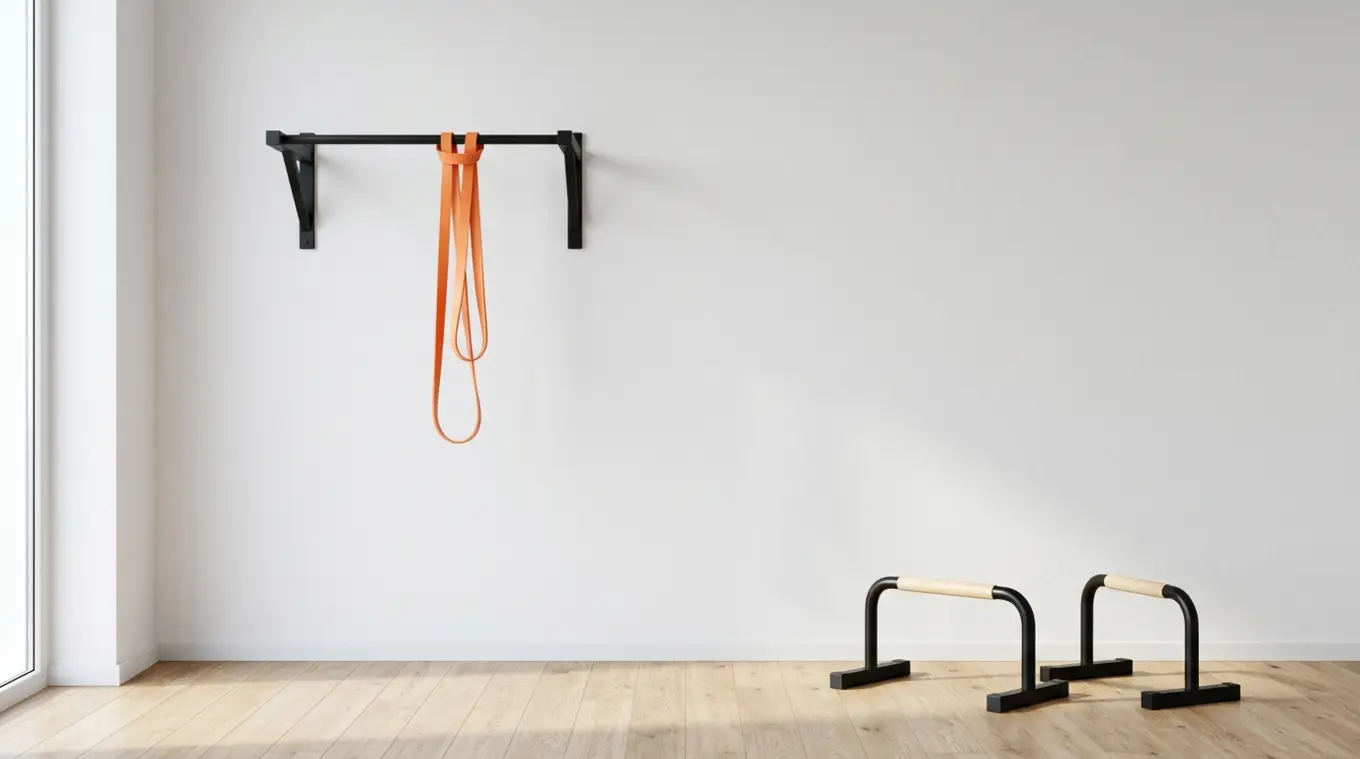
For core, hanging knee raises, L-sit work on parallettes, hollow body holds, side planks, and mountain climbers are enough for most people. For legs, bodyweight squats, reverse lunges, Bulgarian split squats, step-ups, single-leg Romanian deadlift patterns, and calf raises will carry you surprisingly far. If you need more challenge, resistance bands can add load without taking over your space.
How to Structure a Full-Body Routine Around One or Two Items
A simple full-body calisthenics workout with minimal equipment can be built around six patterns: vertical pull, horizontal or floor push, squat, hinge or posterior chain pattern, core flexion or anti-extension, and a mobility finisher. Here is a practical example.
Pull-ups or band-assisted pull-ups
Push-ups or parallette push-ups
Bulgarian split squats
Band good mornings or glute bridges
Hanging knee raises or L-sit holds
Shoulder mobility and band face pulls
That is enough for a complete session. When I help people simplify their training, this is usually where they are relieved. They realize they do not need twelve machines to make progress. They just need repeatable movements and gear they will actually use.
How to Keep Progressing With Minimal Equipment
One of the most common follow-up questions once someone has their pull-up bar and bands set up is: how do I keep getting stronger without buying more gear? The answer is progressive overload through means other than adding weight.
With minimal equipment, progression comes from adjusting how you use what you already have. Here are the most practical methods.
- Add reps or sets gradually. If you did three sets of five pull-ups this week, aim for three sets of six next week. Small weekly increases add up quickly.
- Move to harder exercise variations. Go from band-assisted pull-ups to unassisted pull-ups, then to archer pull-ups or slow negatives. Each variation demands more without requiring new gear.
- Slow down the tempo. A three-second lowering phase on pull-ups or push-ups significantly increases difficulty and time under tension.
- Reduce rest time. Shorter rest periods increase the demand on your conditioning and can make familiar workouts feel challenging again.
- Shift your leverage. Moving from incline push-ups to flat push-ups to decline push-ups, or from knee raises to straight leg raises on the bar, changes the difficulty without any new purchase.
This is why a minimal setup can stay effective well beyond the beginner phase. The equipment does not limit your progress. Your approach to it does.
Budget vs. Quality: How Much Should You Spend on Minimal Gear?
This is where being honest matters. Cheap gear is tempting, especially when you are just testing the waters. But the wrong cheap gear can be frustrating or unsafe. A shaky pull-up bar, slippery handles, weak welds, or poor band quality can undermine confidence fast. In some cases, they can damage your doorway or lead to falls.
So how much should you spend? Enough to get something stable, well-reviewed, and built for bodyweight training, but not so much that you overinvest before building the habit. For a doorway bar, avoid the absolute bottom of the market. For bands, choose a set with clear resistance levels. For parallettes, look for stable feet, decent handle thickness, and a finish that does not feel slick.
In my opinion, calisthenics equipment on a budget should focus on value, not on the lowest price. A good GORNATION pull-up bar, bands, or wooden parallettes may cost more upfront than generic options, but if they last and feel secure, they are usually the better deal.
A common question is: is a doorway pull-up bar safe? The answer is yes, if the bar fits your door frame, is installed correctly according to the instructions, and is used within its weight limit. Another important question is how to install a pull-up bar safely. Always check doorway dimensions, trim strength, locking points if included, and test the setup gradually before full bodyweight hangs or dynamic reps. I never recommend rushing that part.
Minimalist Calisthenics for Men vs. Women: Are There Any Differences?
Not in terms of what equipment is necessary. Men and women generally benefit from the same minimalist calisthenics setup. A pull-up bar, bands, and parallettes work for both. The difference is usually not the gear itself, but the starting point and exercise selection.
For example, many women starting out may use bands sooner for assisted pull-ups or choose parallettes earlier if they enjoy handstand work. Many men may focus first on pull-up numbers or weighted basics later on. But the actual best minimal calisthenics equipment for home does not change based on gender.
What does matter is hand size, wrist comfort, shoulder history, and height. Smaller hands may prefer a slightly thinner bar or comfortable wooden handles. Someone with sensitive wrists may benefit from low parallettes earlier. Someone taller may need to be more careful with doorway clearance and knee bend during hanging work.
In other words, choose gear based on your body and goals, not on generic labels. Good equipment should fit the athlete, not the marketing.
Frequently Asked Questions About Minimal Calisthenics Equipment
Two questions come up constantly in search results and in real conversations. First, what is the cheapest way to start calisthenics? The answer is bodyweight basics on the floor, then a doorway pull-up bar when you are ready to add pulling. Second, what is the best calisthenics equipment for small apartment living? Usually a doorway bar, bands, and compact parallettes.
Another common topic is rings versus bars. Rings are more versatile in theory, but bars are often more practical in real life. If your routine is already inconsistent, adding a setup barrier usually does not help. A bar is there, ready, and easy to use. Rings become a better option once you know you will actually hang them and train on them regularly.
People also ask whether accessories like liquid chalk matter in a minimal setup. Not at first, but it can help if sweaty hands are making pull-ups or handstands frustrating. If that is your situation, GORNATION liquid chalk is a reasonable small add-on later. It is not essential, but it is one of the few accessories that can noticeably improve grip without taking up space.
Our Recommendation: The Best Minimal Calisthenics Setup for Most People
If you want the simplest answer, here it is. The best minimal calisthenics equipment for most people is a solid doorway pull-up bar plus a set of resistance bands. That is the setup I would recommend to the average beginner training at home, in a spare room, or in a small apartment.
If your budget allows for one more item, add low wooden parallettes. That gives you a complete minimalist calisthenics setup for pulling, pushing, core training, mobility, and skill work. It stays compact, works in small spaces, and scales from beginner to intermediate very well.
If you want a practical shopping path, this is the order I would use. Start with a GORNATION doorway pull-up bar. Add GORNATION resistance bands for assisted reps, warm-ups, and lower body work. Then add GORNATION wooden parallettes if wrist comfort, L-sits, deeper push-ups, or handstand training matter to you. That is a clean, realistic, and effective essential calisthenics equipment list without clutter.
The big takeaway is simple. Minimal does not mean doing less. It means buying smarter. If your gear helps you train consistently, safely, and with enough exercise variety to cover the whole body, then you already have enough.
Conclusion
Most people do not need a full home gym to get strong with calisthenics. They need a setup that covers pulling, pushing, core work, and basic leg training without wasting money or space. For that reason, a pull-up bar is still the best first purchase, and resistance bands are the smartest second one for most beginners. Add parallettes later if you want more wrist comfort or skill-specific work.
If you keep your setup simple, you are more likely to use it. And in calisthenics, consistency beats having the biggest equipment collection every time. Start small, choose quality where it matters, and build only when your training actually demands it.
FAQs
What is the best minimal calisthenics equipment for beginners?
For most beginners, the best starting point is a doorway pull-up bar and a set of resistance bands. That combination lets you train pulling movements, assisted pull-up progressions, core work, and warm-ups while keeping costs and space use low. It is simple, realistic, and enough for solid progress.
Is a doorway pull-up bar safe for home workouts?
Yes, a doorway pull-up bar can be safe if it matches your door frame, is installed correctly, and is used within the manufacturer weight limit. Always test it carefully before full reps, especially if you are using a no-drill model. Poor fit and rushed setup are usually the real problem, not the concept itself.
Can you build muscle with minimal calisthenics equipment?
Yes, you can build muscle with minimal gear if you train with enough effort and progression. Pull-ups, push-ups, split squats, lunges, hanging leg raises, and band-assisted or resisted variations are enough for most beginners and intermediates. You do not need many tools, but you do need consistency and smart exercise selection.
Are rings better than a pull-up bar for a minimalist calisthenics setup?
Rings are more versatile on paper, but a pull-up bar is usually the better first purchase for most people. It is faster to use, easier to keep in your routine, and better suited to small home setups. Rings make more sense once you already have consistency and a reliable place to hang them.
What should I skip when buying calisthenics equipment on a budget?
If your budget is limited, skip large stations, weight vests, and skill-specific accessories early on. Many of these are useful later, but they are not essential at the beginning. Put your money into one stable pull-up bar, decent bands, and possibly parallettes if your wrists need them. That gives you far more value.