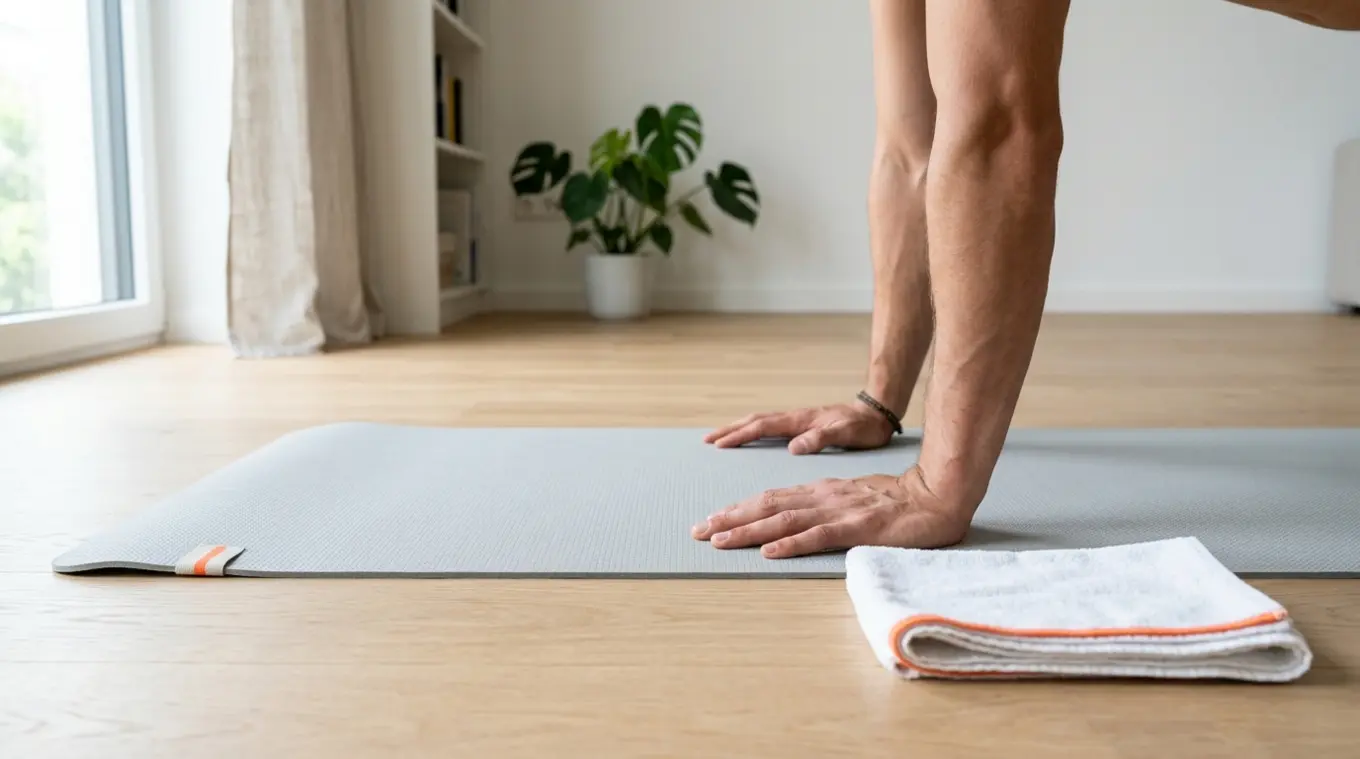
If you want to start training but do not own a pull up bar, rings, or any gym gear, you are not stuck. A lot of people ask can you do calisthenics without equipment, especially when they are training at home, in a small apartment, or on a tight budget. The short answer is yes. You can build coordination, strength, fitness, and body control with just your bodyweight. In this guide, I will explain what calisthenics without equipment really is, what a practical beginner calisthenics routine at home looks like, and when adding simple gear can make your progress easier.
Yes, You Can Do Calisthenics Without Any Equipment
Yes, you can absolutely do calisthenics without equipment. In fact, many people start that way. If your goal is to get fitter, move better, learn body control, and build a solid base of strength, bodyweight training alone can take you surprisingly far. When people ask what is calisthenics without equipment, I usually describe it as strength training that uses your body as the resistance. That includes movements like push ups, squats, lunges, glute bridges, planks, hollow holds, and burpees.
From experience, this is one of the best ways to begin because it forces you to learn positions, tension, and control before you start chasing harder skills. I have seen beginners make very good progress with a no equipment calisthenics routine simply by training consistently and improving technique week after week.
That said, there is one honest limitation. Upper body calisthenics without equipment is possible for pushing muscles, core, and legs, but pulling work is harder to train well without something to hang from or row on safely. So if you are asking is calisthenics without equipment enough to build muscle, the answer is yes to a point. It works well for beginners and for general fitness, but your back and biceps usually become the weak spot unless you eventually add a bar, rings, or another pulling option.
Who no equipment training works best for
This style of training is ideal if you are brand new, getting back into shape, traveling, or dealing with limited space. It also works well for people doing calisthenics in small apartment settings because most exercises need little floor space and no loud impact. A smart no equipment workout in a small space can still be challenging if you use slower reps, pauses, and harder variations.
What a No Equipment Calisthenics Workout Actually Looks Like
A good no equipment calisthenics routine does not need to be complicated. You want a few movement patterns in each workout: push, squat, hinge or posterior chain, core, and conditioning. For most beginners, two to four sessions per week is a good starting point.
Here is a simple beginner calisthenics routine at home.
Bodyweight squats for controlled leg strength
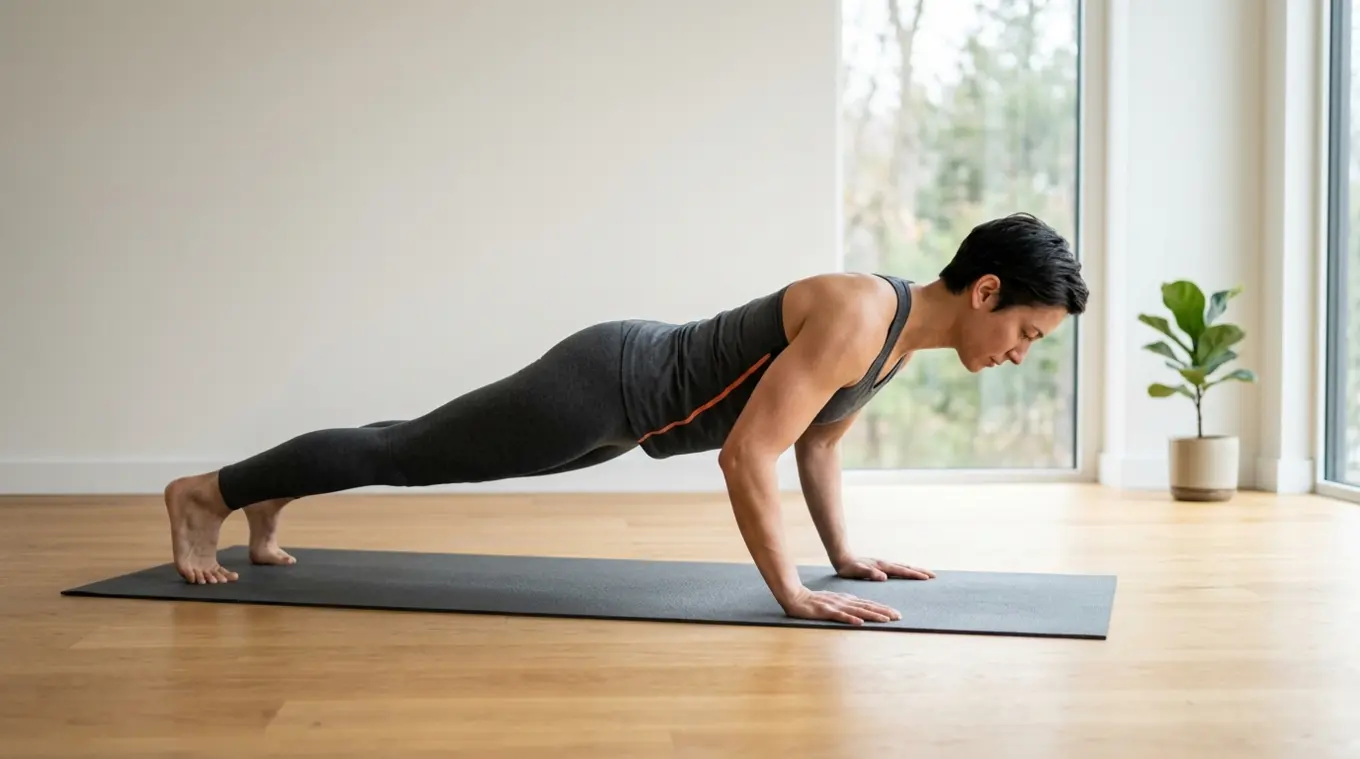
Push ups, using knee or incline versions if needed
Reverse lunges for balance and single leg control
Glute bridges for hips and hamstrings
Plank or hollow body hold for core tension
Burpees or mountain climbers for conditioning
| Movement pattern | Works well without equipment? | Examples | Main limitation |
|---|---|---|---|
| Push | Yes | Push ups, incline push ups, knee push ups | Can become too easy without harder variations |
| Legs | Yes | Squats, lunges, split squats, glute bridges | Need tempo or single leg progressions over time |
| Core | Yes | Planks, hollow holds, mountain climbers | Progression must be planned to avoid plateaus |
| Conditioning | Yes | Burpees, mountain climbers | High impact can be an issue in small spaces |
| Pull | Limited | Very few effective options without gear | Back and biceps are hard to train properly |
Do two to four rounds with clean reps and rest as needed. If you want help with movement quality, these guides on push up training and bodyweight squats are worth reading.
How to make bodyweight exercises harder
The biggest mistake I see is people doing the same easy reps for months. Progressive overload still matters, even without weights. You can make no equipment calisthenics exercises harder by slowing the lowering phase, pausing at the bottom, increasing range of motion, adding reps, shortening rest periods, or moving to harder variations. For example, regular squats can become split squats, and incline push ups can become floor push ups and then decline push ups.
Safety and injury prevention at home
Calisthenics safety at home matters more than people think. Use controlled reps, keep a neutral body position, and stop before technique falls apart. If a movement hurts in a sharp or unstable way, regress it. A short warm up helps a lot, especially for wrists, shoulders, and hips. If you want a simple starting point, this article on how to warm up for calisthenics training is useful. When people ask how to avoid injury doing calisthenics without equipment, my answer is usually simple: do less than your ego wants, move well, and build volume gradually.
How to structure your no equipment training week
Two to four sessions per week is a good range, but how you spread those sessions matters just as much as how many you do. A simple approach is to leave at least one rest day between full-body sessions. Training on Monday, Wednesday, and Friday works well for three days a week. For four days, something like Monday, Tuesday, Thursday, and Saturday can work if you keep the volume per session reasonable. Avoid training the same muscle groups on back-to-back days when you are still building your base. Some soreness early on is normal, but persistent fatigue is a sign to add more rest. As you get stronger, increase volume per session before adding extra training days.
When Equipment Does Start to Matter
You do not need equipment to start, but equipment can become very helpful once your base is in place. The main reason is pulling. It is difficult to build balanced upper body strength without pull ups, rows, or ring work. So if you eventually want a stronger back, better posture, or more complete development, a small amount of gear makes a meaningful difference.
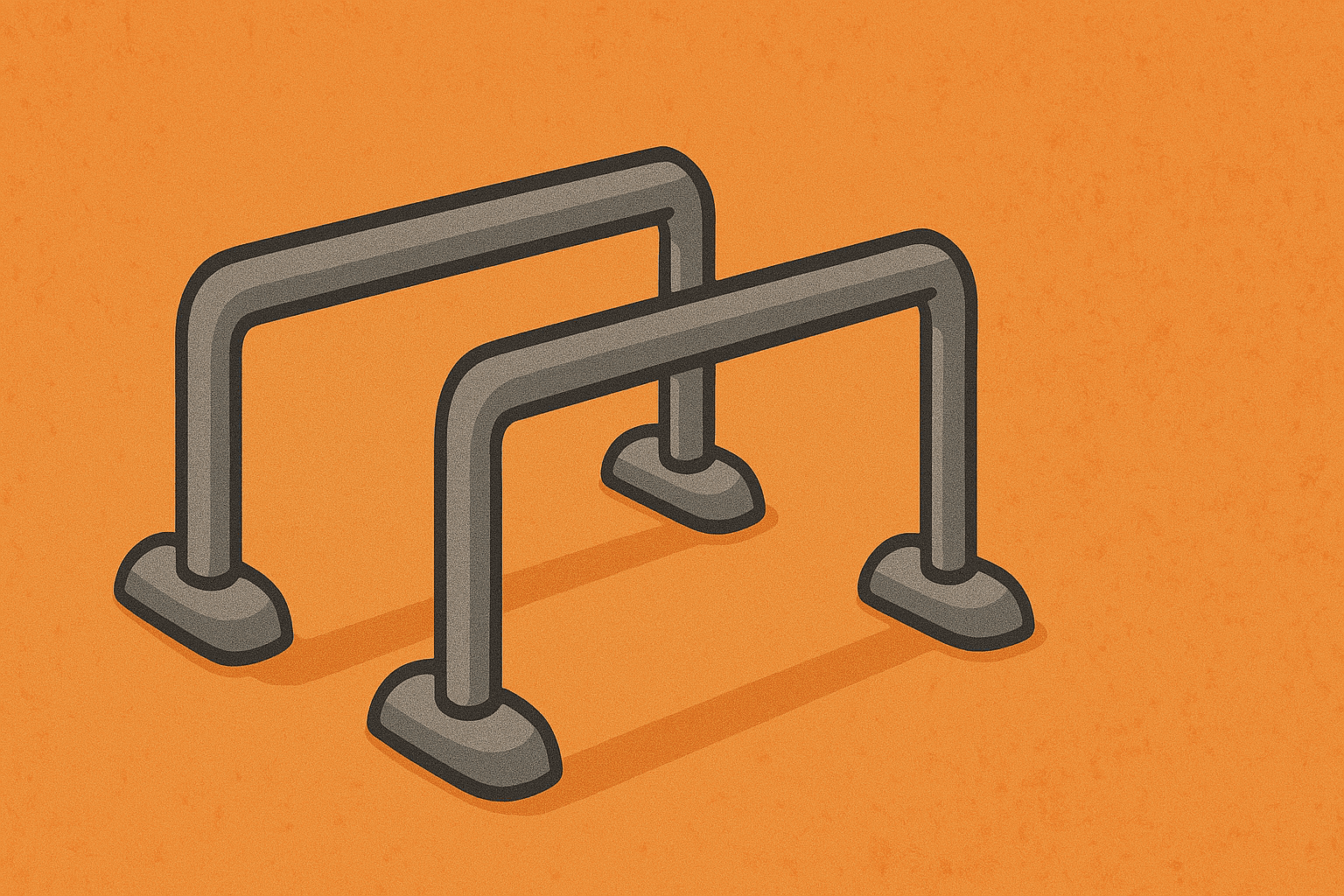
If I were advising a beginner who wants the most useful first upgrade, I would usually suggest a pull up bar or a pair of rings. Gornation rings are a versatile option because they work for rows, assisted dips, support holds, and more advanced exercises later on. If floor-based pushing bothers your wrists, Gornation parallettes can also be a solid choice for cleaner wrist positioning and better progression into L sits and handstand work.
If you want to keep your setup as compact as possible while still covering the essentials, this guide to minimal calisthenics equipment walks through the one or two items that make the biggest difference for home training.
This does not mean your bodyweight only phase was not effective. It means you have reached the point where equipment helps you keep progressing. If you are comparing options, this guide to must have calisthenics equipment can help you decide what is actually worth buying first.
So can you build strength with no equipment? Yes. Can you do calisthenics without equipment and still get results? Definitely. But if you want a more complete program over time, especially for upper body pulling, a little equipment becomes less of a luxury and more of a practical next step.
Conclusion
If you are waiting for the perfect setup before you start, do not. You can do calisthenics without equipment and still build a strong foundation, improve fitness, and learn how to control your body. For beginners, that is often more than enough. Just be honest about the limits. Legs, core, and pushing strength are easy to train at home, while pulling strength usually needs some gear later on. Start with the basics, stay consistent, and add simple equipment only when your progress truly calls for it.
Frequently Asked Questions
Can beginners really start calisthenics without equipment?
Yes, beginners can start very effectively with no gear at all. Bodyweight squats, push ups, lunges, planks, and glute bridges are enough to build coordination, baseline strength, and fitness. It is often the best way to learn proper control before adding harder skills or equipment.
Is calisthenics without equipment enough to build muscle?
It can build muscle, especially for beginners. You can develop your chest, shoulders, legs, and core with smart bodyweight training. The main limitation is pulling volume for the back and biceps. Over time, most people need a pull up bar or rings to keep building a balanced physique.
What are the best no equipment calisthenics exercises at home?
Some of the best choices are push ups, bodyweight squats, reverse lunges, glute bridges, planks, hollow holds, mountain climbers, and burpees. These cover most major movement patterns and work well in a no equipment calisthenics routine for small spaces and home training.
Can you do upper body calisthenics without equipment?
Yes, but mostly for pushing movements. Push ups and their variations train the chest, shoulders, and triceps well. Core work also supports upper body control. The hard part is pulling, since your back and biceps usually need a bar, rings, or another stable setup for rows and pull ups.
How do you avoid injury doing calisthenics without equipment?
Focus on controlled reps, good positioning, and gradual progress. Warm up your wrists, shoulders, hips, and ankles before training. Do not rush difficult variations too early. If a movement feels unstable or painful, step back to an easier version and build up again with better form.