If you do calisthenics regularly, you’ve probably had that moment where the first set feels stiff, awkward, or even a bit risky. A good warm up fixes that. It raises your temperature, prepares your joints, and switches on the muscles you actually need for the session, without tiring you out. In this article you’ll get a simple, repeatable warm up framework that works for beginners and intermediates, plus ready to use warm ups for push, pull, legs, skills, and full body days. I’ll also share the most common mistakes I see and how to adjust when time, weather, or equipment is limited.
What a calisthenics warm up should do (and what it should not)
The goal: ready, not exhausted
A warm up is successful when you feel loose, stable, and coordinated in your first working set. It should not feel like a mini workout. In calisthenics, joints take a big share of the load, especially wrists, shoulders, elbows, hips, and ankles. So your warm up has to do two jobs at once: raise your body temperature and prepare the specific joints and movement patterns you’re about to train.
In practice, I look for three outcomes before I start training hard: you can move through the needed range of motion without pinching, your scapulae and core feel “connected,” and the first few reps of the main movement look smooth instead of shaky.
The three phase framework that works for almost everyone
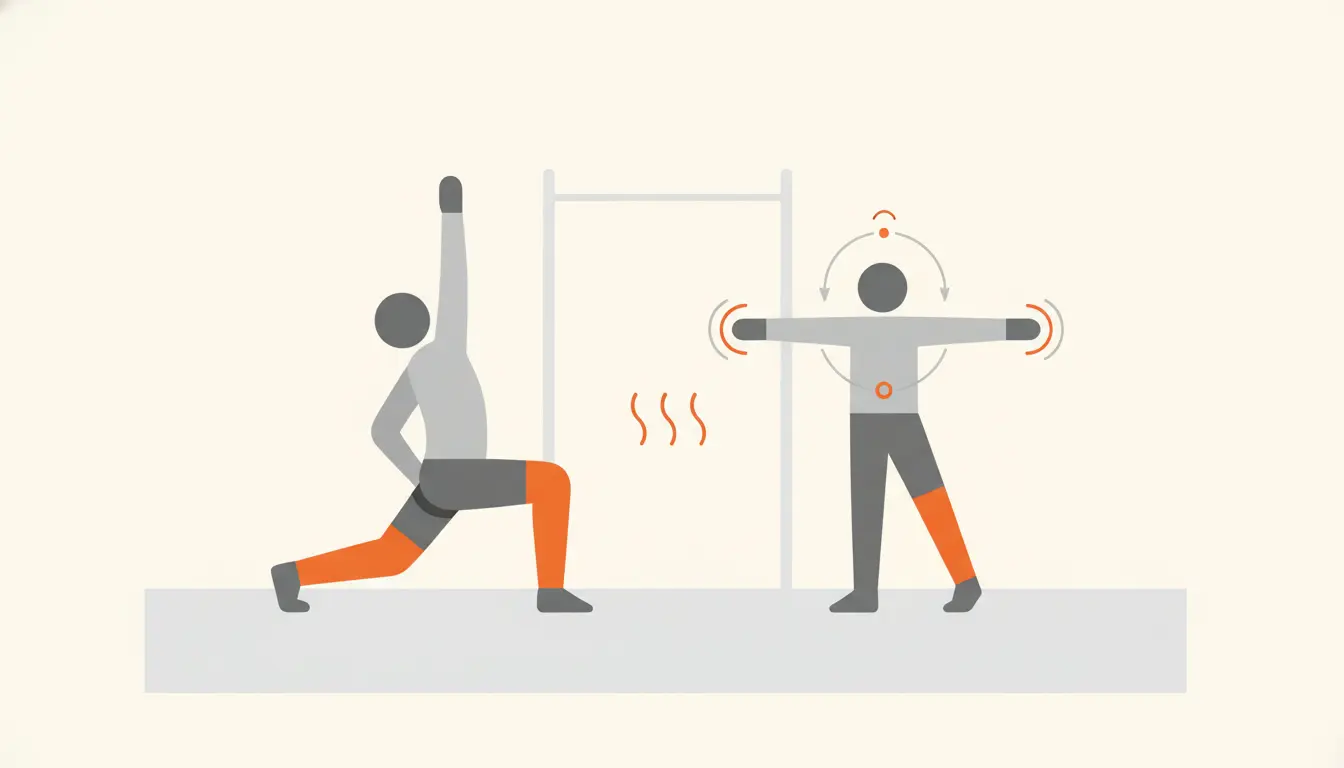
Most effective calisthenics warm ups follow the same order: systemic work first, then joint specific mobility, then movement specific activation. This keeps things efficient and reduces the two classic problems: starting cold or doing too much and arriving fatigued.
-
Systemic warm up (3 to 5 minutes): light cardio to increase heart rate and temperature.
-
Joint specific prep (4 to 6 minutes): dynamic mobility for the joints you’ll load.
-
Movement specific activation (3 to 5 minutes): easier variations of what you’ll train.
If you keep the intensity low to moderate and the reps crisp, 10 to 15 minutes is the sweet spot for most sessions. Much shorter and people tend to compensate. Much longer and you risk pre workout fatigue, especially on strength or skill days.
How long should you warm up for calisthenics?
The practical sweet spot: 10 to 15 minutes
For most calisthenics sessions, 10 to 15 minutes is ideal. It’s enough time to raise temperature, mobilize key joints, and practice the patterns you’ll use. In coaching, when someone warms up for less than about 8 minutes, I almost always see rushed first sets and little technical leaks: shoulders creeping up in push ups, elbows flaring in dips, hips shifting in squats. On the other hand, very long warm ups often turn into conditioning, and the main work suffers.
Adjusting time without losing the point
Use your session type to decide where to spend time:
-
Skill focused days (handstand, planche leans): longer joint prep for wrists and shoulders.
-
Strength focused days (weighted pull ups, dips): keep warm up short but specific, and ramp intensity gradually.
-
Leg days: don’t skip ankles and hips, even if you feel warm.
-
Cold weather: add 2 to 4 minutes of systemic work and keep layers on longer.
If you only have 5 minutes, do a compressed version: 2 minutes systemic, 2 minutes joints, 1 minute easy sets of the main movement. It’s not perfect, but it’s dramatically better than jumping straight into hard reps.
The biggest mistake: static stretching before training
Why I avoid it in warm ups
Static stretching, holding a long end range position, can feel good, but it often reduces force output and makes joints feel less “springy” right before you need strength and control. That’s the opposite of what you want for push ups, pull ups, dips, handstands, or jumps. I keep static stretches for the cool down or separate flexibility work.
What to do instead: dynamic range and control
Choose dynamic drills that take you through the range you’ll use, with control. Think joint circles, rocks, swings, and easy reps. The key is that every rep looks clean and you could stop at any point of the movement.
Phase 1: 3 to 5 minutes of light cardio (systemic warm up)
Pick one option and keep it easy
This part is simple: you want to breathe a bit faster and feel your body temperature rise, but you should still be able to talk. My go to options are basic and boring for a reason: they work anywhere.
-
Jumping jacks
-
Light jogging in place
-
High knees at an easy rhythm
-
Butt kicks
-
Mountain climbers at a light pace
If you train early mornings, this phase matters even more. It buys you better joint tolerance later, especially in the shoulders and wrists.
A note for strength days
On heavy strength days, don’t turn the warm up into conditioning. If you arrive sweaty and out of breath, you’ve already spent energy you could have used for quality sets. Keep it short and controlled.
Phase 2: joint specific preparation (the calisthenics joint checklist)
Shoulders and thoracic spine
Upper body calisthenics lives and dies by shoulder function. You need the shoulder to move, but also to stay stable under load. I like to prep the shoulders and upper back together, because they work as a unit.
Shoulder circles: 10 slow circles forward and 10 backward, arms straight, circles wide and controlled.
Cat cow: 8 to 10 reps to mobilize the upper spine and wake up scapular control.
Shoulder dislocates (with a band or stick): 8 to 12 smooth reps, wide grip first, then narrower if it stays pain free.
If you often feel your neck taking over in pushing, spend an extra minute here and focus on keeping shoulders away from ears.
Wrists and elbows
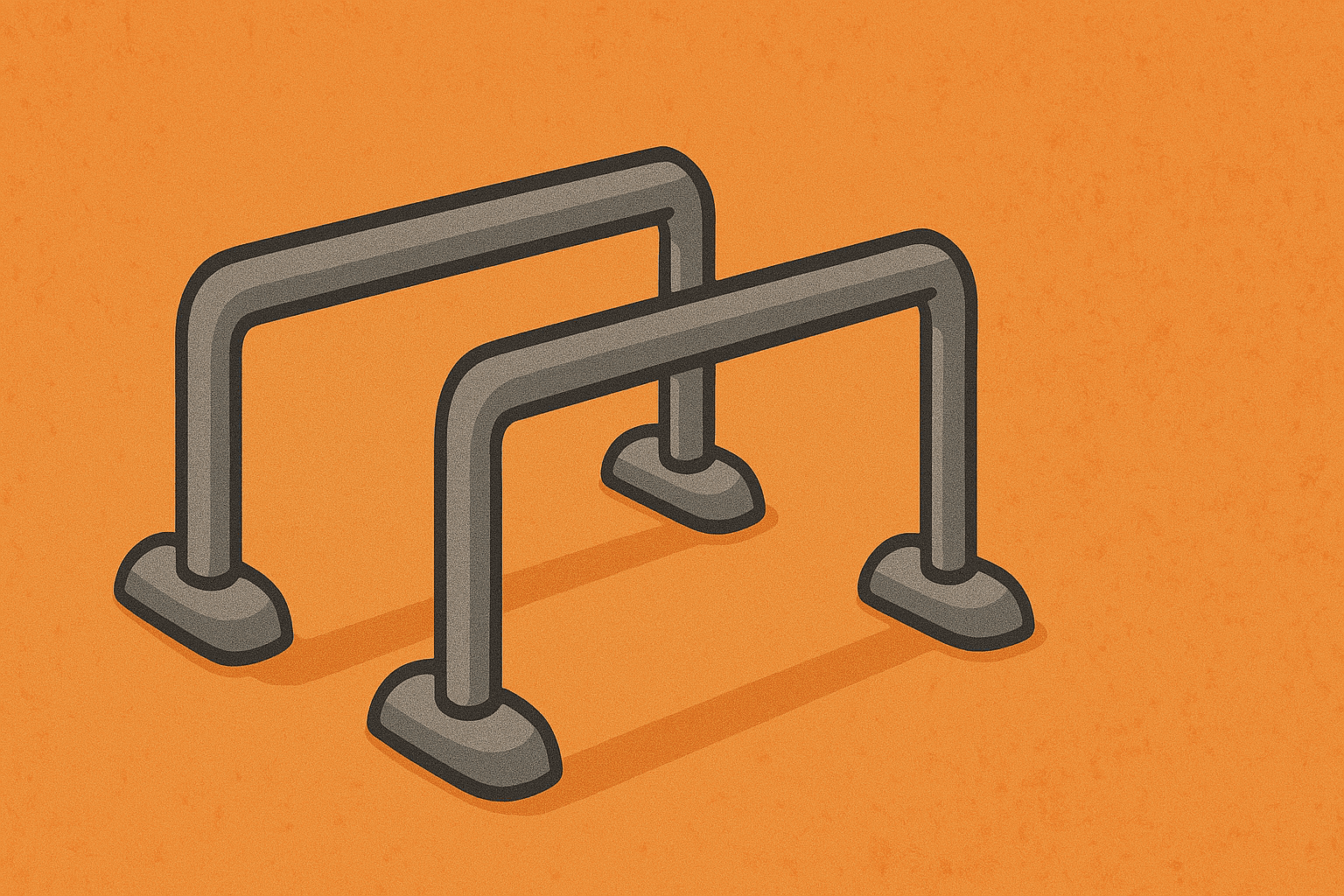
Wrist prep is non negotiable if you do push ups, dips on parallettes, handstands, or planche work. Wrists are small joints that get loaded hard, and they usually complain when people skip the basics.
Wrist rotations: 10 to 20 circles each direction.
Wrist rocks: 10 to 15 reps forward and back, gentle pressure, no sharp pain.
For elbows, I keep it simple: a few controlled arm bends and straightens and light scap work. If you train pulling, add a couple of easy hangs if you have a bar.
Scapula control: the underrated warm up piece
If I had to pick one “secret weapon” for cleaner reps, it’s scapula control. Most shoulder discomfort I see in calisthenics is not about weak muscles, it’s about poor coordination: shoulders shrugging, scapulae floating, ribs flaring. Two drills cover a lot:
Scapula push ups: 5 to 10 reps, elbows locked, protract and retract smoothly.
Scapula pulls: 5 to 10 reps from a hang or an assisted hang, depress and retract without bending the elbows.
These drills are also a great mini assessment. If they feel shaky, it’s a sign to keep the first working sets conservative.
Hips, ankles, and knees
For legs, the biggest performance limiter is often mobility where you need it: ankles for depth and knee tracking, hips for control in single leg work. This is especially true for pistol squat progressions.
Knee to wall (ankle rocks): 10 to 20 reps each side.
Deep squat hold: 30 to 60 seconds, using support if needed, chest up, breathe.
Fire hydrants: 5 to 10 reps each direction per side, slow and controlled.
When someone tells me their knees feel “weird” in squats, the fix is often more ankle prep and better glute activation, not pushing through.
Phase 3: movement specific activation (easy versions of your workout)
The rule I use: same pattern, easier load
Movement specific warm up is where your warm up becomes personalized. You pick easier versions of the exact patterns you will train. This is what makes the warm up feel like it “carries over” to performance.
-
If you train push ups, warm up with incline push ups.
-
If you train dips, warm up with bench dips or assisted dips.
-
If you train pull ups, warm up with scapula pulls and band assisted pull ups or bodyweight rows.
-
If you train pistol squats, warm up with assisted pistols and slow eccentrics.
Keep reps low enough that you finish each set feeling better than you started. Usually 5 to 10 reps is plenty.
A quick ramp up example
Let’s say you’re doing pull ups as your main lift. A simple ramp is: 1 to 2 easy sets of scapula pulls, then 1 set of assisted pull ups, then your first working set at a conservative rep target. This sequence makes your first heavy set feel like the third set, which is exactly what you want.
If you want to clean up your pull up technique, this guide on perfect pull-up form is worth a read. One good warm up plus better mechanics is a strong combination.
Warm up routines by workout type (copy and use)
Push day warm up (8 to 12 minutes)
This one prepares wrists, shoulders, scapula, and pressing pattern. Keep everything smooth and stop if you feel sharp wrist pain.
-
2 to 3 minutes light cardio
-
Wrist rotations 15 each way
-
Wrist rocks 10 to 15 reps
-
Shoulder circles 10 forward, 10 back
-
Cat cow 8 reps
-
Scapula push ups 2 sets of 6 to 10 reps
-
Incline push ups 1 to 2 sets of 5 to 10 reps
If dips are your main focus, add 1 easy set of dips with assistance or reduced range before your first working set.
Pull day warm up (10 to 15 minutes)
This one targets shoulders, scapula depression, and grip readiness. Keep hangs relaxed, not aggressive.
-
3 minutes light cardio
-
Shoulder dislocates 10 reps
-
Shoulder circles 10 each way
-
Cat cow 8 to 10 reps
-
Wrist rotations 10 to 20 each way
-
Scapula pulls 2 sets of 5 to 10 reps
-
Easy rows or band assisted pull ups 1 to 2 sets of 5 to 8 reps
If your elbows tend to get cranky on pulling days, keep your first working set one rep shy of what you think you can do. That small restraint usually pays off over weeks.
Leg day warm up (6 to 10 minutes)
This one is short but focused. It’s designed to improve depth and knee tracking without turning into a mobility class.
-
2 to 3 minutes light cardio
-
Knee to wall ankle rocks 12 to 20 each side
-
Deep squat hold 30 to 60 seconds
-
Glute bridge 2 sets of 15 to 30 second holds
-
Fire hydrants 6 to 10 reps each side
-
Easy squat pattern: bodyweight squats 1 set of 8 to 12 reps
If you’re going into jumps or sprints, add a few low amplitude pogo hops or quick skips at the end, but keep it brief.
Handstand or planche focused warm up (12 to 20 minutes)
Skill sessions load wrists and shoulders heavily and demand fine control, so I give them extra time. If there’s one day you should not rush, it’s this one.
-
3 to 5 minutes light cardio
-
Wrist rotations 20 each way
-
Wrist rocks 15 reps
-
Shoulder dislocates 10 to 12 reps
-
Cat cow 10 reps
-
Scapula push ups 2 sets of 8 reps
-
Wall handstand holds or pike holds 2 to 3 short sets (10 to 20 seconds)
-
Skill specific entries: 3 to 6 easy kick ups or planche leans, low effort
The main idea is to arrive at your first real attempts with wrists warm and shoulders stable, not pumped.
Full body warm up (10 to 15 minutes)
If your session includes a mix of push, pull, and legs, use this as a default template.
-
3 to 4 minutes light cardio
-
Shoulder circles 10 each way
-
Wrist rotations 15 each way
-
Cat cow 8 to 10 reps
-
Knee to wall 12 reps each side
-
Deep squat hold 30 seconds
-
Scapula push ups 6 to 10 reps
-
Scapula pulls 5 to 8 reps
-
Two easy sets of your first main movement
This routine is intentionally plain. It covers the big joints, then transitions you into the exact work you’ll do.
Common warm up mistakes (and how to fix them)
Rushing the joints that actually get hurt
The most common skip is wrists and scapula work because it looks “too easy.” Then people jump into dips or handstand practice and wonder why their wrists feel overloaded. Fix: spend a reliable 60 to 120 seconds on wrists and one scap drill every upper body day. Consistency beats fancy routines.
Doing random mobility that doesn’t match the session
Generic warm ups are better than nothing, but they often miss what you need. If your workout is pull ups and rows, you don’t need 5 minutes of hip openers before you’ve even hung from the bar. Fix: use the three phase structure and let the movement specific part reflect the session.
Warm up intensity too high
If your warm up feels like a circuit, you’ll start your main work already fatigued. This shows up as sloppy reps and early failure. Fix: reduce reps, slow the tempo, and rest briefly between drills if needed. The warm up should feel like you are building momentum, not chasing exhaustion.
Ignoring pain signals
There’s a difference between stiffness and sharp pain. Stiffness often improves with gentle movement. Sharp pain is a stop sign. Fix: scale the range, lighten the load, or choose a different drill. If a joint consistently hurts in warm up, treat it as useful feedback and adjust your training plan.
Minimal equipment that makes warm ups easier (optional)
One band is a great “warm up multiplier”
If you train at home or outdoors, a light resistance band is one of the few pieces of equipment that genuinely improves warm ups without complicating your bag. Band pull aparts, face pulls, and gentle external rotations can make shoulders feel more centered before pulling and pushing.
If you’re considering one, I’d keep it simple and pick a quality set like Gornation resistance bands. It’s not mandatory, but it’s a practical upgrade for shoulder friendly training. You can also see broader options in this overview of resistance bands for calisthenics.
Wrist wraps: helpful when volume is high
Wrist wraps are not a substitute for wrist mobility, but they can be useful when you do high volume push work, frequent handstand sessions, or you’re returning after a period of wrist sensitivity. I like them as a “seatbelt,” not as armor you rely on every day.
If you want a straightforward option, Gornation wrist wraps are worth considering. For more context on choosing the right type and fit, check this guide on the best wrist wraps for calisthenics.
How to personalize your warm up over time
Use your warm up as a daily readiness check
The best warm ups aren’t just preparation, they’re information. I pay attention to three things: wrist comfort in rocks, shoulder control in scapula reps, and ankle depth in knee to wall. If one of those is off, I scale the session slightly: lower intensity, fewer sets, or simpler variations. That’s not being cautious, it’s training smart.
A simple progression rule
Only add complexity when the basics feel effortless. For example, if shoulder dislocates feel smooth for weeks, you can narrow grip slightly. If scapula pulls are stable, you can add a longer pause in depression. This keeps your warm up improving your movement quality instead of becoming a fixed ritual you never outgrow.
When you’re training outside or traveling
Cold bars, uneven ground, and shorter sessions make warm ups more important. Add a bit more systemic work, keep joints warm between sets, and do one extra easy set before the first hard set. If you often train outdoors, this overview of outdoor calisthenics equipment can help you set up a simple routine without overpacking.
Veelgestelde vragen
How to warm up for calisthenics training if I only have 5 minutes?
Use a compressed warm up: 2 minutes of light cardio, 2 minutes of joint prep for the joints you’ll load most, then 1 minute of easy sets that match your main exercise. For example, before pull ups do shoulder circles, scapula pulls, then a short assisted set. It’s not perfect, but it reduces risk and improves first set quality.
How to warm up for calisthenics training without equipment?
You can do an effective warm up with bodyweight only: jumping jacks, joint circles, cat cow, wrist rocks, knee to wall, and then easy variations of your workout like incline push ups or bodyweight squats. The key is the order: systemic first, joints second, movements last. Keep reps smooth and avoid fatigue.
Should I do static stretching in a calisthenics warm up?
I don’t recommend static stretching before calisthenics strength or skill work. Long holds can reduce power and make joints feel less responsive. Instead, use dynamic mobility like rocks, circles, and controlled reps. Save static stretching for after training or separate flexibility sessions when you can relax and work on range without needing peak strength.
How to warm up for calisthenics training on a pull up day?
Prioritize shoulders, scapula control, and wrists. Start with 3 minutes of light cardio, then shoulder circles and dislocates, cat cow, wrist rotations, and 2 sets of scapula pulls. Finish with an easy set of rows or band assisted pull ups before your first working set. You should feel “connected” through the upper back.
Do I still need a warm up if it’s hot outside?
Yes. Warm weather helps body temperature, but it doesn’t automatically prepare your wrists, shoulders, and scapula mechanics. Calisthenics injuries often come from joints not being ready for load or from poor activation, not from being cold. Keep the warm up slightly shorter if you want, but still do joint specific prep and a few easy sets of the main movement.
If you remember one thing about how to warm up for calisthenics training, make it this: keep it structured and specific. Start with 3 to 5 minutes to raise your temperature, spend a few minutes on the joints you’re about to load, then finish with easier versions of your main exercises. Avoid static stretching before training, and don’t let the warm up turn into a workout. Done right, your first working set feels smoother, your technique stays cleaner, and your joints will thank you over the long run.