Wide pull ups look simple, but they punish sloppy form fast. The grip is wider, the leverage is worse, and suddenly your “normal pull-up strength” doesn’t translate. In this guide I’ll show you how to do wide pull-ups with clean technique, how wide is wide enough, and what to do if you can’t get your first rep yet. We’ll cover the main muscles involved, the most common mistakes I see, practical progressions you can use right away, and a couple of smart equipment options that actually help without turning it into a shopping list.
What a wide pull-up really is
A wide-grip pull-up is a pull-up done with an overhand grip that’s wider than shoulder width. The goal isn’t to go as wide as possible. The goal is to find a grip width that increases lat involvement while still letting your shoulders move smoothly and safely.
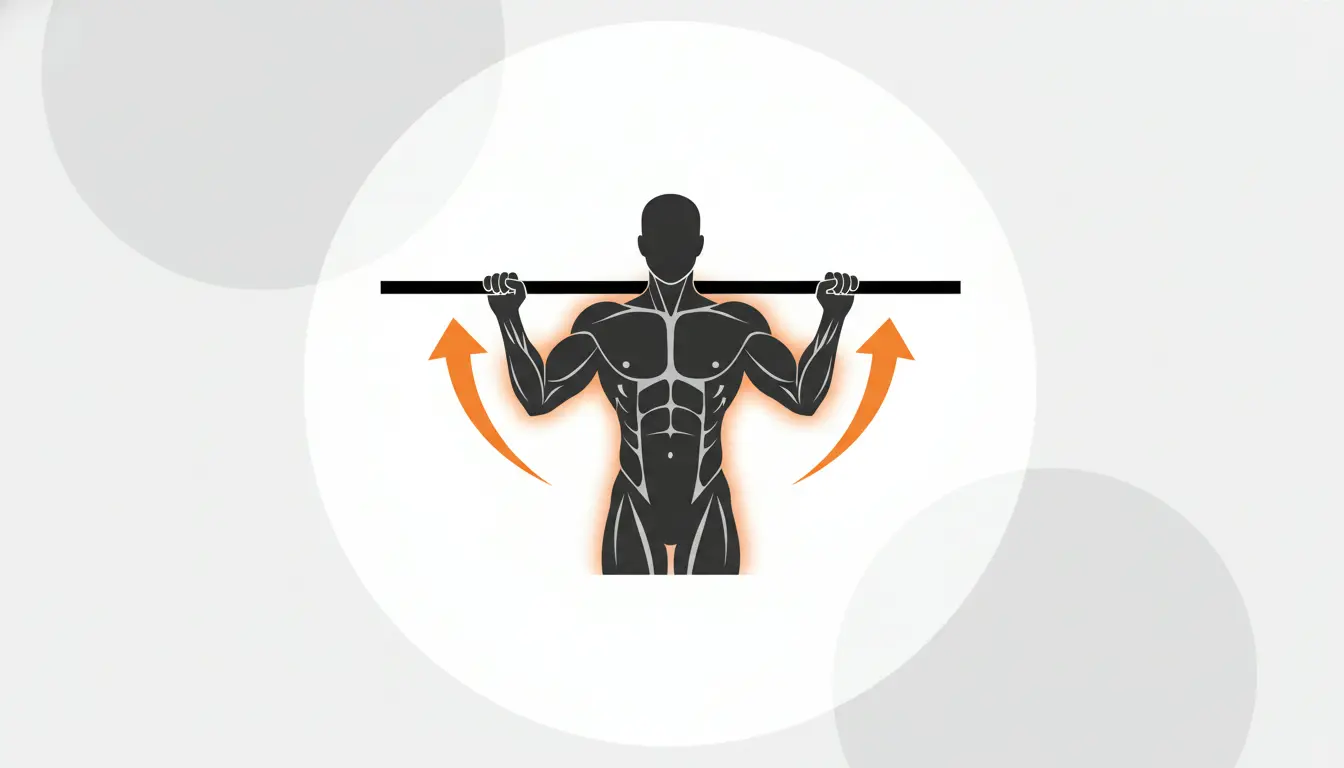
A useful checkpoint is the “Y” shape: at the bottom, your arms angle out roughly 30 to 45 degrees from your torso. If your elbows flare far past that, you’re usually too wide and the rep turns into a shoulder fight instead of a back pull.
Wide grip vs regular grip
Compared with a standard pull-up, a wide grip often feels harder because you lose some mechanical advantage. For many people that means fewer reps and slower progress. That’s normal.
- Wide grip: typically more lat-focused, harder at the top, stricter on shoulder control
- Shoulder-width: balanced back and arm work, often best for building total pull-up volume
- Close or neutral grip: often easier, more biceps-friendly, good for building baseline strength
Muscles worked (and what you should feel)
Wide pull-ups are mostly a back exercise, but you’ll only feel your back if your shoulders and ribs are in the right position.
Primary movers
Your lats are the main driver, pulling your upper arm down and back. Your biceps help by bending the elbow, but in a wide grip they usually can’t “save” a bad rep the way they sometimes can in a close grip.
Key support muscles
Your upper back muscles, especially the rhomboids, teres major, and rear delts, help control your shoulder blades. Your forearms keep your grip from opening up. Your core and glutes keep your body from swinging and leaking power.
What you should feel on good reps: strong tension along the sides of your back, a stable torso, and a smooth path where your elbows travel down rather than backward.
How to do wide pull-ups step by step
If you only change one thing today, make it this: stop thinking “chin over bar” and start thinking “elbows down and chest up.”
1) Setup and grip width
- Grab the bar with an overhand grip.
- Place your hands slightly wider than shoulder width. Think “comfortable wide,” not “max wide.”
- Wrap your thumb if you can. A full grip is usually more stable than a thumbless grip.
- Start from a dead hang with long arms, but keep your shoulders controlled, not shrugged to your ears.
2) Start the rep with your shoulders
Before you bend your elbows, pull your shoulder blades down and back like you’re sliding them into your back pockets. This is the difference between a back-driven pull-up and an arm-yank.
Then brace lightly: ribs down, abs tight, glutes squeezed. Your body should feel like one piece.
3) Pull: elbows down, chest to bar
Initiate the pull by driving your elbows down toward the floor. Your torso will naturally lean back a little. That’s fine as long as it’s controlled and not a swing.
A good target is to bring your upper chest toward the bar. You don’t need to slam into it. Just aim for a proud chest and a clean top position.
4) The top position
Pause briefly at the top with your shoulders still “packed” down. If your shoulders creep up or your elbows drift behind you, the rep usually turns into a shrug and a biceps curl.
5) Lower under control
Lower yourself back to a full hang in about 2 to 4 seconds. Controlled eccentrics build strength fast and keep your shoulders honest. Reset your position at the bottom and repeat.
Grip width: how wide should you go?
Most wide pull-up problems come from going too wide too soon. Super wide grips reduce your range of motion and place your shoulders in a less efficient position. That often leads to half reps, elbow irritation, or a feeling of “pinching” in the front of the shoulder.
A practical rule that works for most people
Start with hands about one palm-width outside shoulder width. From there, widen gradually only if you can keep these standards:
- Arms angle about 30 to 45 degrees from your torso at the bottom
- No shoulder shrug at the start or top
- Full control down to a dead hang without swinging
- Same rep quality on your last rep as your first
Body structure matters
People with long arms or narrow shoulders often find very wide grips disproportionately hard. That doesn’t mean wide pull-ups are “bad” for you. It just means your best wide grip might be less extreme than what you see online.
Common mistakes (and quick fixes)
Wide pull-ups are strict. Small technical errors get amplified, so it’s worth cleaning them up early.
Mistake 1: Pulling with the arms first
If your elbows bend before your shoulder blades move, your biceps take over and the rep stalls halfway. Fix: do a 1-second scapular pull before every rep. Shoulders down, then pull.
Mistake 2: Going too wide and cutting the range
Hands far outside your natural “Y” position usually forces half reps. Fix: narrow your grip until you can hit a full hang and a clear top position without shoulder discomfort.
Mistake 3: Swinging or kipping
Swinging makes the rep look easier but slows progress because you’re not training the hard parts. Fix: squeeze glutes, point toes slightly forward, and keep a quiet lower body. If you still swing, pause longer at the bottom.
Mistake 4: Shrugging at the top
A shrug at the top is often a sign you ran out of back strength. Fix: stop the set one rep earlier and build more volume with better quality.
Progressions if you can’t do a clean wide pull-up yet
If you’re at zero reps, you’re not alone. Wide pull-ups demand a lot of strength relative to bodyweight. The fastest path is to train the movement pattern while gradually removing assistance.
1) Start with a “less wide” pull-up
This is my honest recommendation for most beginners: build strong shoulder-width pull-ups first, then widen the grip over time. You’ll accumulate more quality reps and your elbows will usually thank you.
If you want a full pull-up form checklist, this guide is a good companion: how to do a pull-up with perfect form.
2) Band-assisted wide pull-ups
Bands make wide pull-ups doable while keeping the exact movement. They also help most at the bottom, which is where beginners struggle.
- Loop a band over the bar.
- Place one foot or knee in the band.
- Use the same shoulder setup and tempo as a strict rep.
- Over weeks, move to a thinner band or use the same band with less stretch.
If you’re choosing a first band set, I’d rather see you get a few controlled reps than grind ugly singles. Here’s a solid overview of options: best resistance bands for calisthenics.
3) Negative wide pull-ups (eccentrics)
Negatives are a simple, effective way to build strength fast.
- Step or jump to the top position
- Hold 1 second
- Lower for 5 to 8 seconds
- Reset fully at the bottom
Do 3 to 5 sets of 2 to 5 reps. Stop each rep if your shoulders lose position or you drop too fast.
4) Horizontal rows as a volume builder
Rows let you train the same pulling muscles with less load. Rings, a low bar, or a suspension trainer all work. Focus on the same idea: shoulders down and back, elbows drive down, torso stays tight.
Programming: sets, reps, and how often to train
Wide pull-ups respond best to consistent practice without grinding. Most people progress faster when they keep a rep or two “in the tank” and accumulate clean volume.
If your goal is strength
Use low reps with high quality and plenty of rest.
- 3 to 5 sets of 3 to 5 reps
- Rest 2 to 3 minutes
- Do them early in the workout
If your goal is building your first reps or more volume
Use assisted reps, slightly narrower grips, or mixed sets to keep form sharp.
- 2 to 4 sets of 6 to 12 reps (assisted if needed)
- Finish with 2 to 3 sets of slow negatives or rows
- Train 2 times per week, sometimes 3 if recovery is good
My simple “quality rule”
End the set when you can’t keep shoulders down and a controlled descent. More reps with worse form usually means slower progress and crankier elbows.
When and how to add weight
Weighted wide pull-ups are worth it if you already own strict reps. I’d wait until you can do at least 6 clean wide pull-ups before loading them heavily. Wide grip plus weight can irritate shoulders if you rush it.
Loading options that make sense
A dip belt is the cleanest way to add weight because it doesn’t change your center of mass much. If you want to compare setups, this article is helpful: dip belt vs weight vest.
Subtle equipment recommendation (only if it fits your training)
If you’re ready to load, a Gornation dip belt is a practical choice because it keeps plates hanging freely and doesn’t squeeze your torso. If you prefer a simpler setup for outdoor sessions, a Gornation weight vest can work too, but I’d keep the weight moderate for wide grip work and prioritize perfect reps.
Should you even train wide pull-ups?
Wide pull-ups can be a great tool, but they’re not mandatory. If your shoulders feel better on shoulder-width or neutral grips, you can still build an impressive back and strong pull-ups.
Who benefits most
- Intermediates who already have consistent strict pull-ups
- People who want extra lat emphasis and a different stimulus
- Athletes who can keep the shoulder blades controlled throughout
Who should be cautious
- Anyone who feels sharp shoulder pain with wide grips
- Beginners who can’t control the bottom position yet
- People who only achieve reps by swinging or shortening the range
My opinion: treat wide pull-ups like a specialization tool. Build your base on cleaner, more repeatable pull-up variations, then use wide grip for focused blocks.
Alternatives that carry over well
If you can’t access a pull-up bar, or if wide grip bothers your shoulders, you can still train the same pattern.
Good substitutes
- Lat pulldowns with a slightly wide grip and full control
- Ring pull-ups for a more natural shoulder path
- Inverted rows to build volume safely
- One-arm dumbbell rows to add strength and symmetry
The key is to keep the same intent: shoulders down and back, elbows drive down, and a controlled negative.
Veelgestelde vragen
How to do wide pull-ups if I can’t do a single rep yet?
Start with band-assisted wide pull-ups and slow negatives. Use a grip only slightly wider than shoulder width so you can keep your shoulders down and your body still. Train 2 times per week, aim for clean sets, and reduce band assistance gradually as your control improves.
Are wide pull-ups better than regular pull-ups?
Not automatically. Wide pull-ups can shift more emphasis toward the lats, but they’re often harder, so you may do fewer quality reps. For many people, regular pull-ups build more total volume and strength. I like using wide grip as a secondary variation, not the only pull-up you do.
Is a wider grip always harder for pull-ups?
Usually yes, but it depends on your build and strengths. Long arms, limited shoulder mobility, or weak scapular control can make wide pull-ups feel dramatically harder. The best approach is to widen your grip gradually and judge by rep quality, shoulder comfort, and progress over a few weeks.
How many sets and reps should I do for wide pull-ups?
For strength, use 3 to 5 sets of 3 to 5 strict reps with full rest. For building technique and volume, use 2 to 4 sets of 6 to 12 assisted reps, then add a couple sets of slow negatives. Stop sets before your shoulders shrug or you start swinging.
Do wide pull-ups build a wider back?
They can help because they strongly train the lats and teres major, which contribute to back width. But the “wider back” look mainly comes from consistent progressive training, enough weekly pulling volume, and staying strict with range of motion. Regular pull-ups and rows contribute just as much for most people.
To do wide pull-ups well, keep the grip only moderately wide, start every rep by pulling your shoulders down and back, and think elbows down instead of chin up. If you’re not there yet, band-assisted reps and slow negatives are the quickest, most reliable path. Keep your reps clean, build volume patiently, and widen the grip over time rather than forcing it on day one. That’s how wide pull-ups stop feeling like a struggle and start feeling like a strong, repeatable skill.