Ever tried to stay consistent with calisthenics when you do not have much space, do not want a full home gym, or need gear you can throw into a car or backpack? That is where portable equipment makes a real difference. The right setup lets you train pull ups, dips, push ups, rows, core work, and skill progressions almost anywhere without wasting money on bulky gear you will barely use. In this guide, I will walk you through what portable calisthenics equipment actually is, who it is for, what matters before buying, and which tools are worth your money if you train at home, outdoors, or while traveling.
What Is Portable Calisthenics Equipment?
If you are wondering what is portable calisthenics equipment, the short answer is simple. It is training gear that supports bodyweight workouts while being easy to move, store, and set up. Think of equipment like a portable pull up bar, foldable dip bars, gymnastic rings, resistance bands, and compact parallettes. These tools are made for people who want useful training options without committing to a permanent rack, wall mounted bar, or large machine.
In practice, portable gear sits in the sweet spot between training with nothing and building a full home gym. It gives you more exercise options, better progression, and often better comfort for wrists, grip, and joint control. I usually describe it as the most efficient way to get stronger with minimal clutter. For most people, it is also the smartest answer to the question of portable calisthenics equipment vs home gym. A full home gym gives more loading options, but portable calisthenics gear costs less, takes less room, and still covers a surprising amount of full body training.
Good portable equipment should be compact, stable, safe, and versatile. If it is too flimsy to trust or too annoying to carry, it is not really portable in a useful way.
Who Actually Needs Portable Calisthenics Gear?
Not everyone needs a big setup. In fact, most people make better progress with less gear than they think. The best portable calisthenics equipment is ideal for anyone who wants flexibility without sacrificing real training quality.
Training at Home in a Small Space
If you live in an apartment, rent a room, or just do not want your living space taken over by equipment, portable gear makes a lot of sense. A doorway pull up bar portable enough to remove after training, a pair of parallettes, and resistance bands can cover push, pull, legs, and core. That is already enough for many beginners and intermediates.
I have trained in small apartments before, and the biggest mistake I see is people buying equipment based on what looks impressive rather than what fits their room. A compact setup you use four times a week beats a huge station you avoid because it is always in the way. If your main goal is home training, this is exactly where portable calisthenics equipment for home workouts shines.
Traveling and Staying Consistent
Travel is where portable gear becomes even more valuable. You may not have access to a park bar, and hotel gyms are often too limited for proper calisthenics progressions. Bands and rings solve a lot of that problem. A solid portable calisthenics setup for travel can fit into a small bag and still let you train upper body, lower body, core, mobility, and assistance work.
From experience, gymnastic rings and resistance bands are the two tools I trust most when traveling. They are lightweight, easy to pack, and flexible enough for a complete session. If you can anchor rings safely, you can do rows, push ups, dips, support holds, and even advanced pulling progressions. Bands add warm ups, assistance, and extra resistance without much weight in your bag.
Outdoor and Street Workout Training
If you train at parks or outdoor spots, portable equipment helps fill the gaps. Bands help with warm ups and skill progressions. Rings can turn a basic bar into a more versatile station. Parallettes or push up handles create better wrist angles on rough ground. A little gear can make outdoor sessions more productive and more comfortable.
This is also where products from GORNATION stand out. Their workout rings, wooden parallettes, and resistance bands are clearly built with calisthenics use in mind rather than generic fitness use. That matters when grip, stability, and setup speed actually affect your session.
What to Look for Before You Buy
There is a lot of gear marketed as the best portable calisthenics equipment, but the useful choice depends on how you train. Before buying anything, look at portability, build quality, and exercise range.
Weight, Size, and Packability
Portable should mean more than “technically movable.” A piece of equipment may fold, but if it is heavy, awkward, and annoying to carry, you probably will not use it often. For travel, bands and rings are easiest. For home use, doorway bars and low parallettes are still practical. Portable pull up stands are much larger, so they only make sense if you want mobility around the house or yard rather than true travel convenience.
Ask yourself where the gear will live when you are not using it. Under a bed, inside a closet, in a trunk, or in a backpack? That answer should guide the purchase.
Build Quality and Load Capacity
This part matters more than people think. Cheap gear often feels fine in product photos, then starts wobbling, slipping, or wearing out quickly. That is especially risky with bars, rings, and dip equipment. I have seen low quality doorway bars damage frames and unstable dip stands ruin good sessions because they never feel trustworthy.
Always check the stated load capacity, materials, grip surface, locking system, and how stable the base or mount feels. With rings and straps, stitching and buckle quality matter. With bands, material quality matters because snapping bands are not just frustrating, they can be dangerous. GORNATION resistance bands are a solid recommendation here because they are made specifically for calisthenics assistance and progression rather than generic rehab use.
Versatility Across Exercises
The more exercises one item covers, the better the value. This is where the comparison of calisthenics equipment vs resistance bands only becomes useful. Bands are amazing, but bands alone are not enough for everyone. A good portable setup lets you pull, push, hang, support, and progress skills. Rings are excellent because they cover rows, push ups, dips, support holds, core work, and mobility. Parallettes are great for push focused work and handstand progressions. A pull up bar opens the door to vertical pulling and hanging movements.
If you want a broader overview of useful gear, you can also check must have calisthenics equipment.
Best Portable Pull-Up and Hanging Options
If your training includes pull ups, chin ups, hanging leg raises, toes to bar, or muscle up progressions, you need some kind of reliable hanging option. This category usually comes down to doorway bars or portable freestanding units.
Doorframe Pull-Up Bars
A doorway pull up bar portable enough for quick setup is one of the best purchases for home training. It gives you vertical pulling without needing permanent installation, which is especially useful if you rent. For many people, this is the most practical way to unlock real upper body calisthenics at home.
The main advantage is convenience. You can put it up, train, remove it, and store it. The downside is that not every doorway is compatible, and range of motion can be limited depending on the design. Some bars also feel more stable than others, so this is not a category where I would chase the cheapest possible option. If you want more detail, see best doorway pull up bar for calisthenics.
GORNATION has doorway pull up bar options that are worth a look if you want a calisthenics focused choice. Their bars are made with bodyweight training in mind, which is helpful if pull ups are a regular part of your week instead of a once in a while exercise.
Portable Pull-Up Stands and Frames
A freestanding stand is the better option if you cannot use a doorway, want more room for movement, or plan to train in a garage, yard, or larger room. A portable stand usually gives better clearance for pull ups and sometimes allows dips, rows, and accessories too. The tradeoff is obvious. It is bulkier, heavier, and less travel friendly.
For most people, I only recommend this if you have enough floor space and know you will use it consistently. It is more “movable home equipment” than true travel gear. Still, for serious home users, it can be one of the best portable calisthenics equipment choices because it expands what you can do safely.
Best Portable Dip and Push-Up Equipment
Push focused equipment is usually easier to make portable than pull focused gear. That is why dip bars, push up handles, and parallettes are so common in home and travel setups.
| Equipment | Best for | Portability | Main strengths | Best use case |
|---|---|---|---|---|
| Resistance bands | Beginners to advanced | Very high | Assistance, warm ups, mobility, added resistance | Travel, home, outdoor training |
| Gymnastic rings | Full body training | Very high | Rows, push ups, dips, core, skill progressions | Travel and outdoor sessions |
| Parallettes | Push work and handstands | High | Better wrist position, deeper push ups, L sits, planche leans | Home workouts and compact travel setups |
| Doorway pull up bar | Vertical pulling at home | Medium | Pull ups, chin ups, hanging leg raises | Small-space home training |
| Foldable dip bars | Dips and support strength | Medium | Dips, support holds, rows, L sits | Home use with some storage space |
Foldable Dip Bars
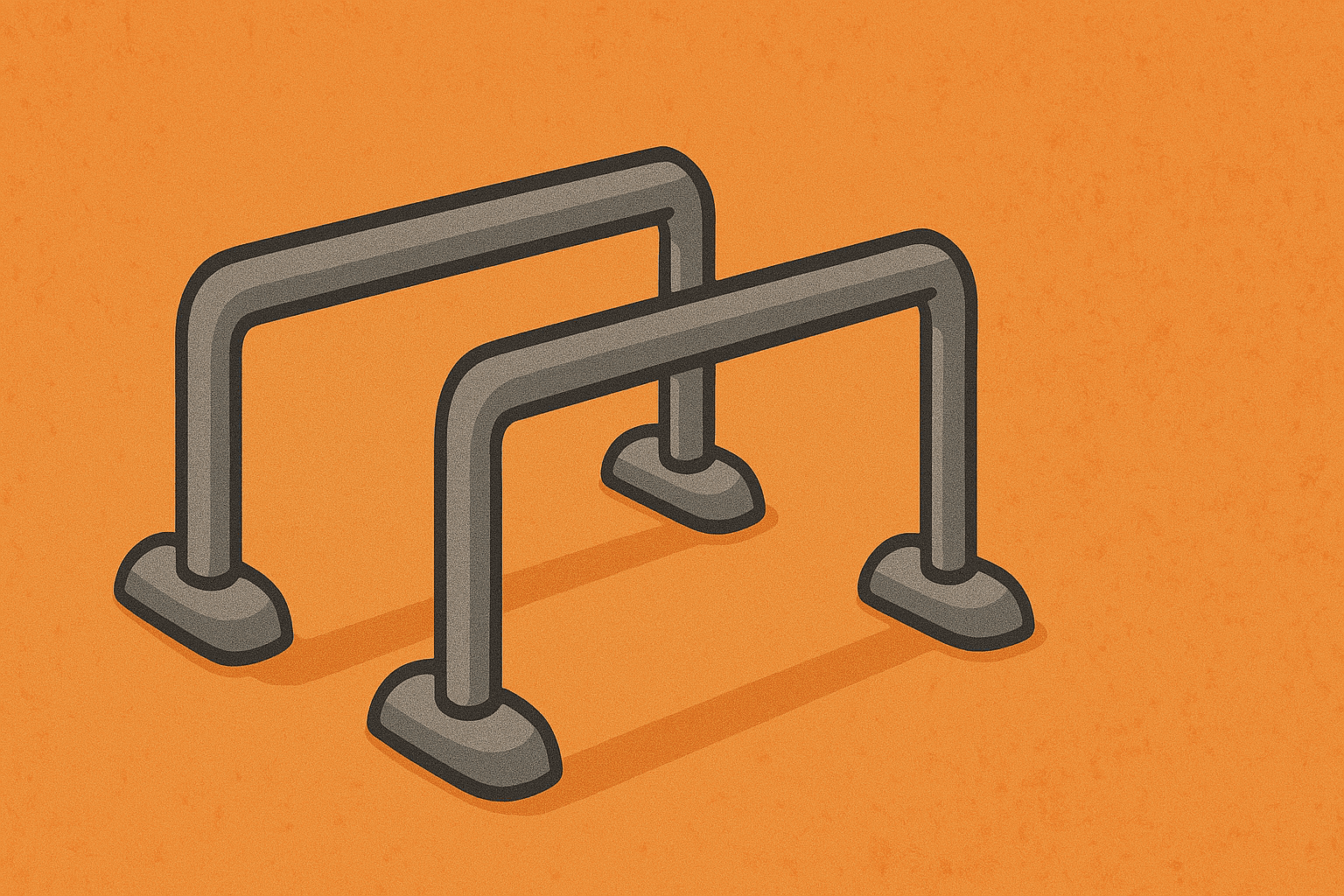
Foldable dip bars are useful if you want deeper dips, support holds, L sits, incline rows, and bodyweight strength work without installing anything. A good pair should feel stable enough for explosive reps and not slide around on the floor. The biggest issue is footprint. Even foldable dip bars take more space than rings or bands, so they are better for home use than for travel.
If dips are a main goal for you, these are worth it. If dips are just occasional accessory work, rings may be a more versatile alternative. For a dedicated product category guide, see best dip bars for calisthenics.
GORNATION Premium Dip Bars are a good fit for people who want solid home equipment that can still be moved and stored more easily than a full station. They are especially practical for weighted dips later on.
Push-Up Handles and Parallettes
For pure portability, this is one of my favorite categories. Push up handles and parallettes are small, useful, and beginner friendly. They improve wrist position, increase range of motion, and open the door to L sits, tuck holds, planche leans, and handstand work. If someone asks me for the best portable calisthenics equipment for beginners, parallettes are almost always on the shortlist.
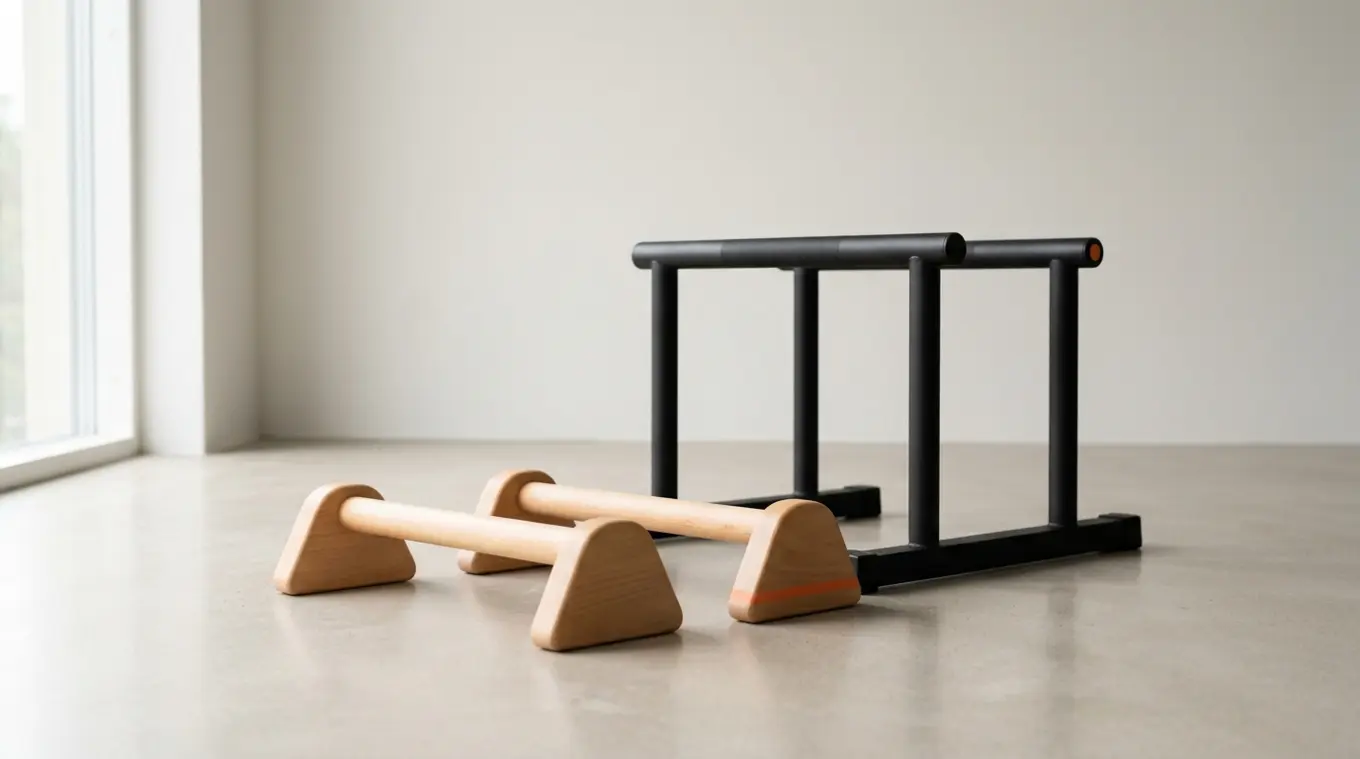
I personally like wooden parallettes because they feel better in the hands and usually offer a more natural grip. GORNATION Wooden Parallettes or their compact active style models are easy recommendations for home or travel use. They are especially useful if you are working on push ups and support strength. If handstands are one of your goals, you may also like this guide on learning how to do a handstand.
Best Compact Resistance and Suspension Tools
If I had to build a setup with the best portability to exercise variety ratio, I would start here. Resistance tools and suspension tools give you the most training options for the least space.
Resistance Bands for Calisthenics
Resistance bands are one of the smartest buys in calisthenics. They assist pull ups, dips, and muscle ups. They add resistance to push ups and squats. They work for warm ups, mobility, recovery, and isolation work. In other words, they are one of the few tools that stay useful from beginner to advanced level.
That is why a lot of experienced athletes still keep them in regular rotation. In my own training, bands are not just beginner gear. I use them for shoulder prep, front lever work, volume control, and to make sessions possible when I do not have access to heavier equipment. They are also central to a good calisthenics workout with portable equipment because they cover so many gaps.
GORNATION Premium Resistance Bands are a strong recommendation if you want reliable band tension and calisthenics specific use. For more exercise ideas, this guide on exercises with resistance bands is useful.
Gymnastic Rings and TRX-Style Straps
Gymnastic rings are probably the most powerful all around portable tool in bodyweight training. If someone told me I could only pack one item for calisthenics, rings would be very hard to beat. They scale from beginner rows and push ups all the way to dips, false grip work, muscle up progressions, and serious core training. They are also excellent for a full body workout with resistance bands and rings because the combination covers almost everything.
Rings do require a safe anchor and more control than fixed bars, so they are slightly less beginner friendly than a stable floor tool. But the versatility is unmatched. GORNATION Workout Rings are a natural fit if you want quality wooden rings and dependable straps for outdoor sessions, home setups, or travel.
TRX style straps are also portable and easy to use, but for calisthenics specific progressions I generally prefer rings. They allow a more natural wrist position and better carryover to dips, support holds, and muscle up related strength.
Best Portable Calisthenics Equipment by Use Case
The best setup depends on how you actually train. Rather than chasing one universal answer, it helps to build around your most common situation.
Best Setup for a Backpack or Travel Bag
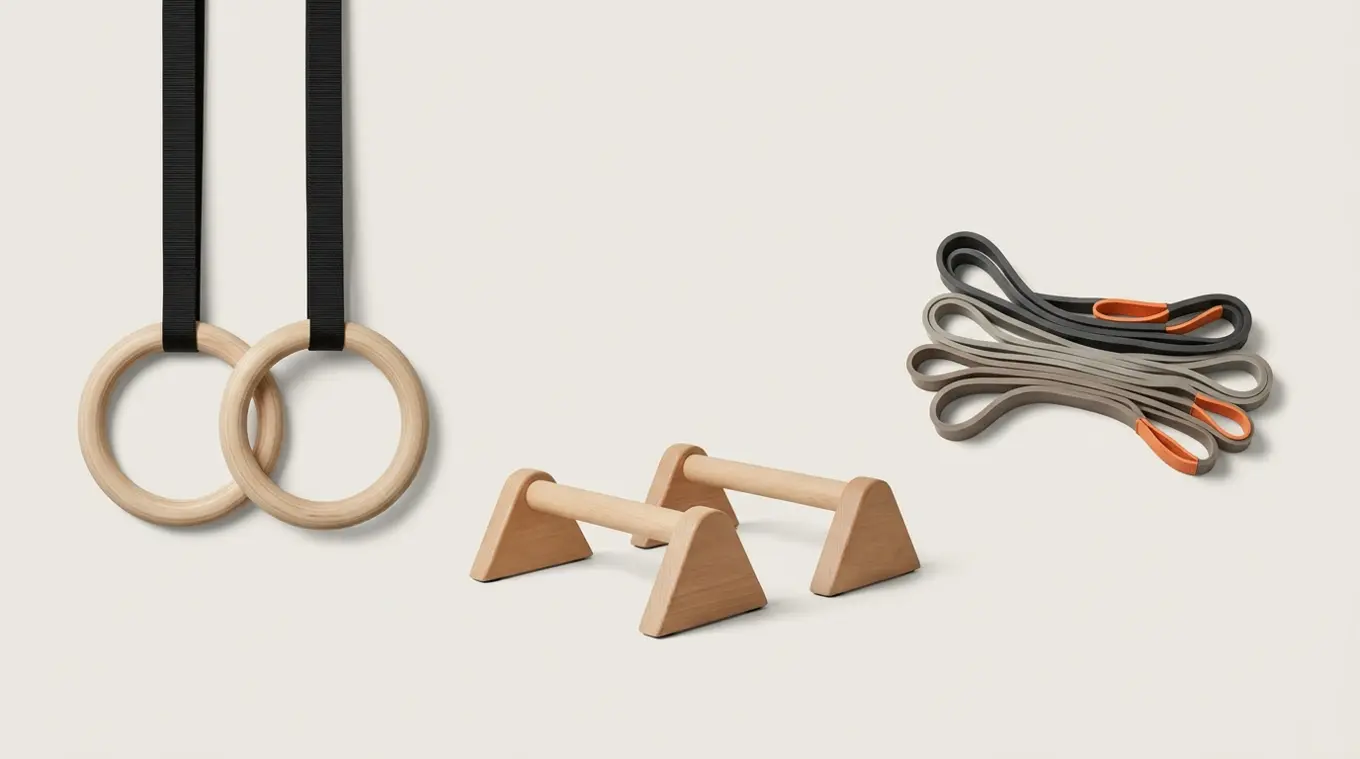
If you need true travel gear, keep it simple. My favorite combination is gymnastic rings, one or two resistance bands, and optionally compact parallettes if you have extra room. That setup gives you pulling, pushing, assistance, mobility, and core work in a very small package. It is realistic, effective, and easy to keep consistent with.
This is the kind of setup I would recommend to anyone searching for the best portable calisthenics equipment with travel in mind. It avoids unnecessary bulk while still letting you train hard. A travel session with rings and bands can include rows, push ups, assisted pull ups, triceps extensions, band squats, curls, face pulls, and core work without much compromise.
Best Minimalist Home Gym Setup
For home, I would usually go with a doorway pull up bar, resistance bands, and parallettes. If space allows, add foldable dip bars. This covers vertical pulling, horizontal pushing, support work, skill training, and lower body assistance. It is a very practical middle ground between no equipment and a full rack setup.
This approach also answers the common comparison of portable calisthenics equipment vs home gym. If your goals are pull ups, dips, push ups, handstands, core strength, and overall athleticism, a minimalist bodyweight setup can do more than enough for years.
What You Can Skip (And Why)
One of the easiest ways to waste money is buying too much too early. Not every portable tool is worth owning, especially in the beginning. In most cases, you can skip overly gimmicky ab tools, unstable push up gadgets, and very cheap no name bars or stands that look impressive but feel unsafe in real use.
You can also skip specialty items until you know you need them. A dip belt, weighted vest, chalk, or wrist wraps can be useful, but they are not the first things most people need in a portable setup. Start with the basics that unlock the most training. For most people that means some kind of hanging tool, some kind of push tool, and bands.
If you tend to buy based on price alone, be careful. In calisthenics, low quality gear often becomes expensive in the long run because it wears out fast or does not feel safe enough to use regularly. I would rather see someone buy fewer items from a reliable brand like GORNATION than a big pile of cheap gear that needs replacing in a few months.
How Much Should You Budget for Portable Calisthenics Equipment?
Budget is one of the first questions people have, and it is worth addressing directly. Portable calisthenics equipment is generally one of the most cost-effective ways to set up a real training environment. You do not need to spend a lot to get started.
The most affordable and high-value items are resistance bands and gymnastic rings. These cover a wide range of exercises and cost far less than any fixed installation or machine. A doorway pull up bar is also relatively low cost and still unlocks a large part of upper body training.
Parallettes sit in the middle range. Wooden options tend to cost more than plastic or basic steel models, but they usually offer better grip, feel, and durability over time. Foldable dip bars cost more than bands or rings but remain significantly cheaper than a full dip station or power rack.
Freestanding pull up stands and frames are the most expensive portable option and are not travel friendly, but they are still a fraction of the cost of a full multi-function home gym setup.
The key principle is to buy fewer items of better quality rather than a large amount of cheap gear. Low quality equipment that feels unsafe or wears out quickly ends up costing more in the long run. Starting with bands, rings, or a pull up bar from a reliable brand is usually the smartest investment for most people.
How to Choose the Right Portable Setup
People usually do not need a huge list of equipment. They need a setup that matches their space, level, and training style. If you are a beginner, start small and focus on tools that support consistent training. If you travel often, choose equipment that packs fast and works in many environments. If you train at home, make sure your gear is stable and easy to store. That is really the core of choosing the best portable calisthenics equipment.
My honest advice is this. If you are unsure where to start, get resistance bands and either rings or a doorway pull up bar. Add parallettes next if push work, handstands, or wrist comfort matter to you. That setup already covers a huge part of effective calisthenics training without turning your room into a gym.
Portable calisthenics gear works best when it helps you train more often, not when it simply adds more stuff to your collection. For most people, the smartest choices are resistance bands, gymnastic rings, a good doorway pull up bar, and compact parallettes. These tools are practical, space efficient, and versatile enough for real progress at home, outdoors, or on the road. If you want dependable options, GORNATION is one of the few brands I would confidently recommend for calisthenics specific use. Keep your setup simple, buy quality, and build around the exercises you actually want to improve.
Frequently Asked Questions
What is the best portable calisthenics equipment for beginners?
For most beginners, the best starting point is resistance bands, a doorway pull up bar, and parallettes or push up handles. That combination keeps the learning curve manageable while still covering the basics. You can train pull ups, push ups, rows, squats, support holds, and core work without taking up much space.
Can you build muscle with portable calisthenics equipment?
Yes, absolutely. Portable gear can be enough to build muscle if you train with good exercise selection, enough volume, and progressive overload. Rings, bands, dip bars, and pull up bars allow you to challenge the upper body and core very effectively. For many people, that is more than enough for years of progress.
Are gymnastic rings better than resistance bands?
They do different jobs, so it is better to think of them as complementary tools. Rings are better for compound pushing and pulling movements. Bands are better for assistance, warm ups, mobility, and adding adjustable resistance. If you can afford both, they make one of the best portable combinations for full body training.
Is a doorway pull up bar safe for renters?
It can be safe if the bar is high quality, installed correctly, and used on a compatible doorframe. Always check the manufacturer instructions, weight rating, and how the frame handles load. Cheap bars are usually where problems start, so it is worth paying for a model that feels stable and secure.
What is the best portable calisthenics setup for travel?
The most practical travel setup is usually gymnastic rings plus one or two resistance bands. That gives you a lot of exercise options without adding much weight or taking much space. If you still have room, compact parallettes are a nice extra for push work, L sits, and handstand practice.