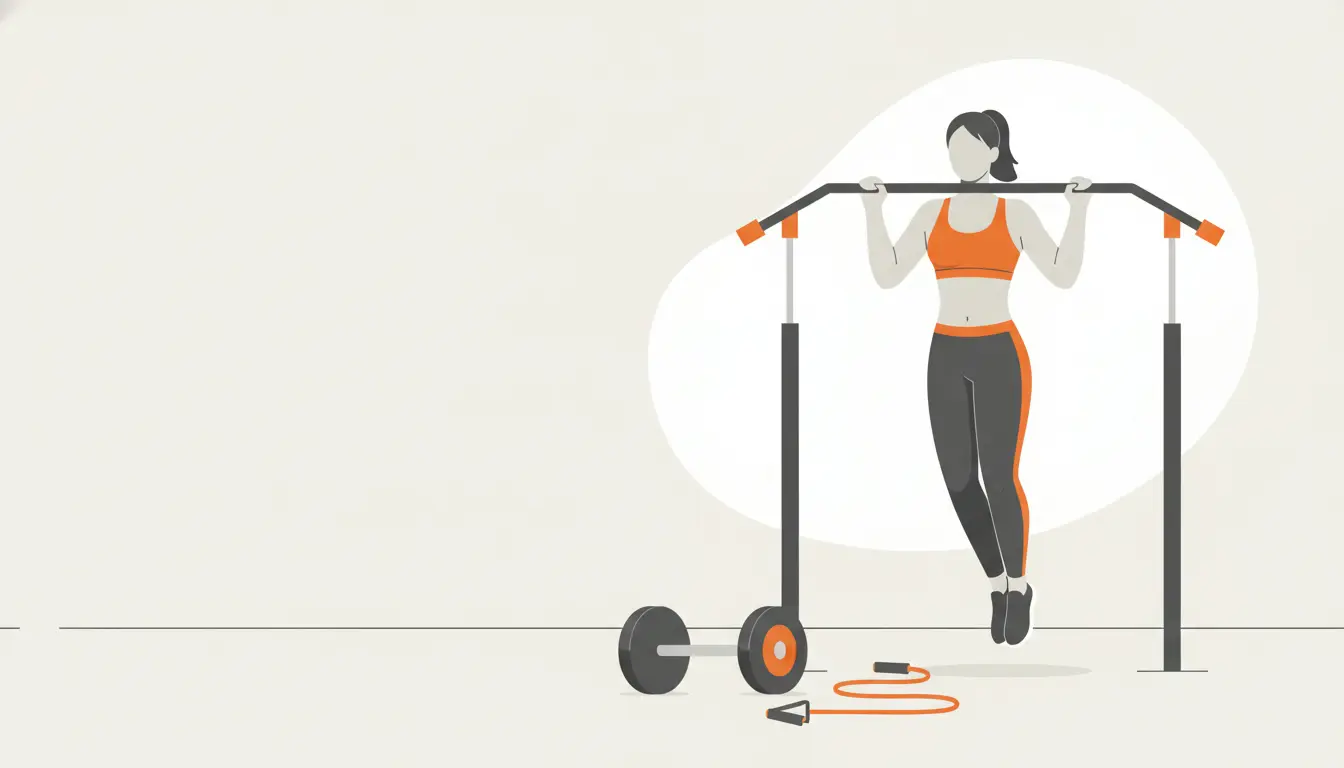
Calisthenics is one of the simplest ways to get stronger, leaner, and more confident without living in the gym. If you’ve ever thought pull ups or handstands were “not for you,” this style of training is exactly how you prove yourself wrong, step by step. In this guide, I’ll show you what matters most for calisthenics for women: the key benefits, the beginner friendly exercises that actually build results, smart progressions, and a practical 3 day plan you can repeat. You’ll also learn when equipment helps and what I’d personally keep it to.
What calisthenics for women really is (and what it is not)
The short definition
Calisthenics is strength training with your bodyweight. You use gravity, leverage, tempo, and range of motion as your “weights.” That means you can train almost anywhere, and you can scale most movements from very easy to very hard.
I like calisthenics because it rewards consistency. You don’t need perfect genetics or a complicated program. You need a handful of good movements and the patience to progress them.
Common myths that hold women back
Myth 1: “I’ll get bulky.” Most women won’t suddenly build large muscle from bodyweight training. What usually happens is a more defined, athletic look because you gain strength while improving posture and muscle tone.
Myth 2: “It’s only for advanced athletes.” The internet shows muscle ups and straight arm skills, but beginners spend most of their time on basics: squats, rows, push ups, planks, and assisted pulling.
Myth 3: “I need a gym.” A gym is nice, but not required. You can start with floor work, a sturdy table for rows, or a park bar. Equipment simply makes progress smoother.
Why calisthenics works so well for women
Lean strength you can actually use
Most calisthenics exercises train multiple muscles at once. That’s great for building functional strength that carries over to everyday life: lifting, carrying, climbing stairs, and feeling stable in your joints.
In practice, women often do well with slightly higher reps and controlled tempo. It’s not a rule, but it’s a useful starting point: clean reps, full range, and steady progress.
Joint friendly, scalable, and great for long term fitness
Because you’re not forced into machine paths, you can usually find angles that feel natural for your body. Done with good form, calisthenics builds strength in stabilizing muscles around shoulders, hips, knees, and ankles. That’s one reason I consider it a solid “forever training” approach.
Bone health, posture, and confidence
Weight bearing training supports bone density, which matters more and more over time. On top of that, calisthenics tends to improve posture because you train your back, core, and glutes regularly.
And yes, the mental side is real: getting your first strict push up or your first pull up is a confidence boost you don’t forget.
How to start: a simple framework that avoids overwhelm
Train full body 3 times per week
If you’re a beginner or early intermediate, three full body sessions per week is the sweet spot: enough practice to improve, enough recovery to feel good. Each session should include:
- Warm up (5 to 8 minutes)
- Two push exercises
- Two pull exercises
- Two leg exercises
- One to two core exercises
- Short cooldown (2 to 5 minutes)
This is simple, repeatable, and it keeps your training balanced. If you want a dedicated skill like a pull up or handstand, practice it right after your warm up while you’re fresh.
Use effort rules that actually work
Forget complicated percentages. Use this instead:
- Pick a variation where you can do 6 to 12 clean reps for strength and muscle
- Stop each set with 1 to 3 reps in reserve (you could do a couple more with good form)
- Add reps first, then add sets, then make the exercise harder
This keeps you progressing without grinding yourself into the floor.
Warm up like you mean it
Shoulders, wrists, and hips usually need a bit of preparation for calisthenics. Keep it short but intentional. If you want a clear routine, this guide is solid: how to warm up for calisthenics training.
The best beginner exercises for calisthenics for women
Push: incline push ups and knee push ups
Push ups train chest, shoulders, triceps, and core. The trick is choosing a version you can control. Start with incline push ups using a bench or table, then lower the incline over time.
What I look for in a good rep: straight body line, elbows around a 45 degree angle, and your chest leading the movement. If your hips sag, the set is done.
Pull: rows and assisted pull ups
Pulling is where many women feel “stuck,” mostly because daily life doesn’t train it much. That’s normal. Start with bodyweight rows (under a bar, rings, or a sturdy table) and add assisted pull ups when you can.
If pull ups are your main goal, don’t guess. Use a structured approach like this: how to do assisted pull ups.
Legs: squats, split squats, and lateral lunges
Bodyweight legs can be deceptively challenging if you use full range of motion and slow tempo. Squats and split squats build glutes and quads, while lateral lunges help with hip strength and balance.
If your squat depth is limited, don’t force it. Use a box or bench as a target, then gradually go deeper as your mobility improves.
Core: planks, hollow holds, and dead bugs
In calisthenics, core training is less about crunches and more about stiffness and control. Planks, hollow holds, and dead bugs teach you to keep your ribs down and your pelvis stable, which carries over to push ups, pull ups, and handstands.
If you want a form checklist, this is a useful reference: how to plank.
A beginner friendly 3 day workout plan (repeat weekly)
How to use this plan
Do this plan on non consecutive days, for example Monday, Wednesday, Friday. Rest 60 to 120 seconds between sets. If a rep range feels too easy, slow down the lowering phase to 3 seconds and pause for 1 second at the hardest point.
Progress rule: when you hit the top of the rep range for all sets with clean form, make the exercise slightly harder next week.
Day 1: Full body foundation
-
Warm up: 2 minutes easy cardio plus shoulder circles and hip openers
-
Incline push up: 3 sets of 6 to 12 reps
-
Bodyweight row (table, rings, or bar): 3 sets of 6 to 12 reps
-
Bodyweight squat: 3 sets of 8 to 15 reps
-
Reverse lunge: 2 sets of 8 to 12 reps per side
-
Plank: 3 sets of 20 to 40 seconds
-
Cooldown: light stretching for hips and chest, 2 to 4 minutes
Day 2: Upper body focus + core
-
Warm up: wrist prep plus scapular push ups, 5 minutes
-
Assisted pull up (band or low bar): 4 sets of 3 to 8 reps
-
Incline push up or knee push up: 4 sets of 5 to 10 reps
-
Row variation (different grip if possible): 3 sets of 6 to 12 reps
-
Hollow hold (tucked if needed): 4 sets of 10 to 25 seconds
-
Superman hold: 3 sets of 10 to 20 seconds
Day 3: Legs + conditioning
-
Warm up: 2 minutes brisk walk or step ups, then hip and ankle mobility
-
Split squat: 4 sets of 6 to 12 reps per side
-
Sumo squat: 3 sets of 8 to 15 reps
-
Lateral lunge: 3 sets of 6 to 10 reps per side
-
Short finisher: 6 rounds of 20 seconds fast bodyweight movement (high knees or jumping jacks) plus 40 seconds easy
-
Cooldown: calves, quads, glutes, 3 minutes
Progressions: how to level up without getting stuck
Push up progression that makes sense
The fastest way to improve is practicing frequently, but not to failure. I’d rather see you do four clean sets of incline push ups than one ugly set on the floor.
- Wall push up
- High incline push up (hands on table)
- Low incline push up (hands on bench)
- Knee push up (full range)
- Floor push up
If you want to increase volume safely, this guide is practical: how to increase your push up numbers.
Pull up progression for most women
Pull ups are mostly about two things: consistent pulling practice and building your back with easier variations. Be patient here, because the payoff is big.
- Scapular hangs and scapular pull ups
- Rows (different angles)
- Band assisted pull ups
- Slow negatives (jump up, lower 3 to 5 seconds)
- First strict pull up
If you’re curious about different pulling styles later, wide grip work can be useful, but build your base first. Here’s a solid breakdown for the future: how to do wide pull ups.
Lower body progression when bodyweight feels too easy
At some point, squats for 15 reps won’t feel challenging. Before you add weight, you can:
- Slow the lowering to 3 to 5 seconds
- Add a pause at the bottom
- Use single leg variations like split squats
- Increase range of motion (deeper, controlled reps)
This keeps the training joint friendly while still building strong legs and glutes.
Training around the menstrual cycle (practical, not complicated)
Use it as a dial, not a rule
You don’t need a perfect cycle based program, but it helps to notice patterns. Many women feel stronger and more motivated in the first half of the cycle and a bit more fatigued in the days before the period. If that’s you, treat it like a dial:
- Feeling great: add a set, add reps, or try a harder variation
- Feeling average: keep the plan as written
- Feeling run down: reduce sets by one and focus on perfect form and mobility
Consistency beats “pushing through” every time. The goal is to keep training sustainable.
Equipment: what actually helps (and what you can skip)
When equipment is worth it
You can do calisthenics with almost nothing, but two pieces of equipment make progress easier for most women: something to pull on and something to assist pulling. Pulling strength is often the limiting factor, and smart assistance keeps reps clean.
My two honest recommendations (both from Gornation)
Gornation resistance bands are genuinely useful for assisted pull ups, controlled negatives, and even for adding a bit of resistance to squats or presses. They’re also easy to store and travel with.
Gornation rings are my favorite upgrade for home training because they unlock rows, assisted pull ups, and more shoulder friendly pressing angles. Rings also scale well from beginner to advanced without needing a full gym setup.
What I would skip at the start
As a beginner, I would not rush into weight vests or complicated skill tools. If you can’t do clean reps of the basics yet, adding external load usually just hides technique problems. Earn the harder variation first.
Form cues that prevent the most common mistakes
Shoulders: control your shoulder blades
Most upper body issues come from “loose” shoulders. In push ups, keep your shoulders away from your ears and maintain a strong plank. In pulling, start reps by setting your shoulder blades before you bend your elbows. This alone makes training feel more stable and often reduces irritation.
Core: ribs down, glutes lightly on
If your lower back arches during planks or push ups, you’re leaking force. Think “ribs down” and a gentle glute squeeze. You should feel core tension, not back compression.
Legs: own your knee position
In squats and lunges, let the knees track in line with your toes. Don’t force them inward. If balance is tricky, slow down and shorten the range of motion until you can control it.
Veelgestelde vragen
Is calisthenics for women good for fat loss?
Yes, it can be, especially if you train full body consistently and keep rest times reasonable. Calisthenics builds muscle and improves conditioning, which supports higher daily energy use. Fat loss still depends largely on overall nutrition and habits, but calisthenics is a strong training base for it.
Will calisthenics make me bulky?
In most cases, no. For the majority of women, calisthenics for women leads to a leaner, more defined look because you’re building strength and muscle control without extreme loading. If you eat to maintain weight, you’ll usually see more tone and better posture rather than large muscle size.
How many days per week should I do calisthenics for women?
Three days per week is a great starting point for beginners and intermediates. It gives enough practice to progress in skills like push ups and pull ups while leaving room for recovery. If you want more, add light skill practice or mobility on off days instead of hard sessions.
What if I can’t do a pull up yet?
That’s normal. Start with rows, dead hangs, and band assisted pull ups. Focus on quality reps and slow negatives. Progress usually comes from consistent practice rather than “trying harder” once in a while. Track small wins like longer hangs, smoother reps, or a lighter band.
Can I do calisthenics at home without equipment?
Yes. You can build a solid base with squats, lunges, push up variations, planks, hollow holds, and glute bridges. The only thing that’s harder to replace at home is pulling. If you can add one tool later, a simple pulling setup or rings plus a door anchor can make training more complete.
If you want a training style that builds real strength, improves posture, and keeps you progressing without needing a fancy gym, calisthenics for women is a great bet. Stick to full body training three times per week, pick variations you can control, and level up one small step at a time. Prioritize pulling and core control early, because they make everything else feel easier. If you decide to add equipment, keep it simple: a way to assist pull ups and a way to do rows will give you the biggest return. Now pick your first week and start where you are.