If you want stronger legs without a gym membership, a calisthenics home leg workout is one of the most practical options out there. You can build real strength, better balance, and more athletic power with nothing but your bodyweight and a bit of space. In this guide I will walk you through the key principles that actually make home leg training work, the best exercises with clear form cues, and simple progressions for beginners and intermediates. You will also get two ready to use workouts you can repeat weekly, plus a short FAQ to clear up the most common sticking points.
Why a calisthenics home leg workout works so well
Legs respond to smart tension, not fancy machines
A lot of people assume you cannot train legs seriously at home because you cannot load them heavy like in the gym. In practice, legs grow and get stronger when you give them enough tension, a challenging range of motion, and consistent progression. Calisthenics does that by shifting more of your bodyweight onto one leg, adding pauses, slowing the lowering phase, and using controlled explosive work.
I like calisthenics leg training because it forces you to own positions that gym machines often “hide” from you. When you can sit into a clean squat, hold a stable split squat, and land softly from jumps, you are building strength that carries over to running, sports, and everyday life.
Three drivers of progress at home
When you train without external weights, you need a clear plan for making exercises harder. These are the three levers I use most often in a calisthenics home leg workout:
- Isolation: put most of your weight on one leg, like Bulgarian split squats and pistol squat progressions.
- Plyometrics: jumps and quick ground contact to build explosiveness and athletic conditioning.
- Slow eccentrics: controlled lowering for 3 to 5 seconds, which is brutally effective for strength and muscle.
If you keep these levers in mind, you will never “run out” of difficulty at home.
Warm up and setup: keep it simple, keep it consistent
A quick warm up you will actually do
Most leg sessions fail because people skip the warm up, feel stiff, and then their knees or hips take over. A warm up does not need to be long, but it should prepare your ankles, hips, and core to stabilize.
If you want a complete warm up template, this guide is solid and easy to follow: https://calisthenics-equipment.com/how-to-warm-up-for-calisthenics-training/.
Here is my no drama warm up flow for leg days at home:
60 seconds easy bodyweight squats, staying comfortable.
30 to 40 seconds per side of hip opener lunges, slow and controlled.
10 glute bridges with a 2 second squeeze at the top.
20 seconds of quick ankle bounces or calf raises.
Minimal home setup
You only need two “props” in most homes: a wall for wall sits and a chair or couch for Bulgarian split squats. If you have a sturdy step or box, it also helps for step downs or box jumps, but do not force jumps if your landing control is not there yet.
The best calisthenics leg exercises to do at home
Below are the exercises I keep coming back to because they deliver results with minimal space and minimal equipment. For each one, focus on the form cue and the common mistake. Fixing the mistake is often the fastest “progression” you can make.
1) Free squat (bodyweight squat)
The squat is the foundation. If your squat is inconsistent, everything built on top will feel shaky. Your goal is a stable foot, a controlled descent, and a strong stand up.
- Form cue: keep your whole foot down, then sit your hips back and down while your chest stays proud.
- Common mistake: knees collapsing inward or shifting weight onto the toes.
- Make it harder: add a 2 second pause at the bottom or slow down the lowering phase to 4 seconds.
For a deeper technique breakdown and progressions, this is worth reading once: https://calisthenics-equipment.com/how-to-train-bodyweight-squats/.
2) Bulgarian split squat
If I could pick just one leg exercise for home training, this would be it. It loads the quads and glutes hard, highlights left to right imbalances, and it scales forever with tempo and range.
- Form cue: stay tall, keep most weight on the front heel, and lower under control until the front thigh is near parallel.
- Common mistake: dropping the back knee fast and bouncing out of the bottom.
- Make it harder: add a 3 to 5 second lower, or add a 1 second pause near the bottom.
3) Walking lunge (or reverse lunge)
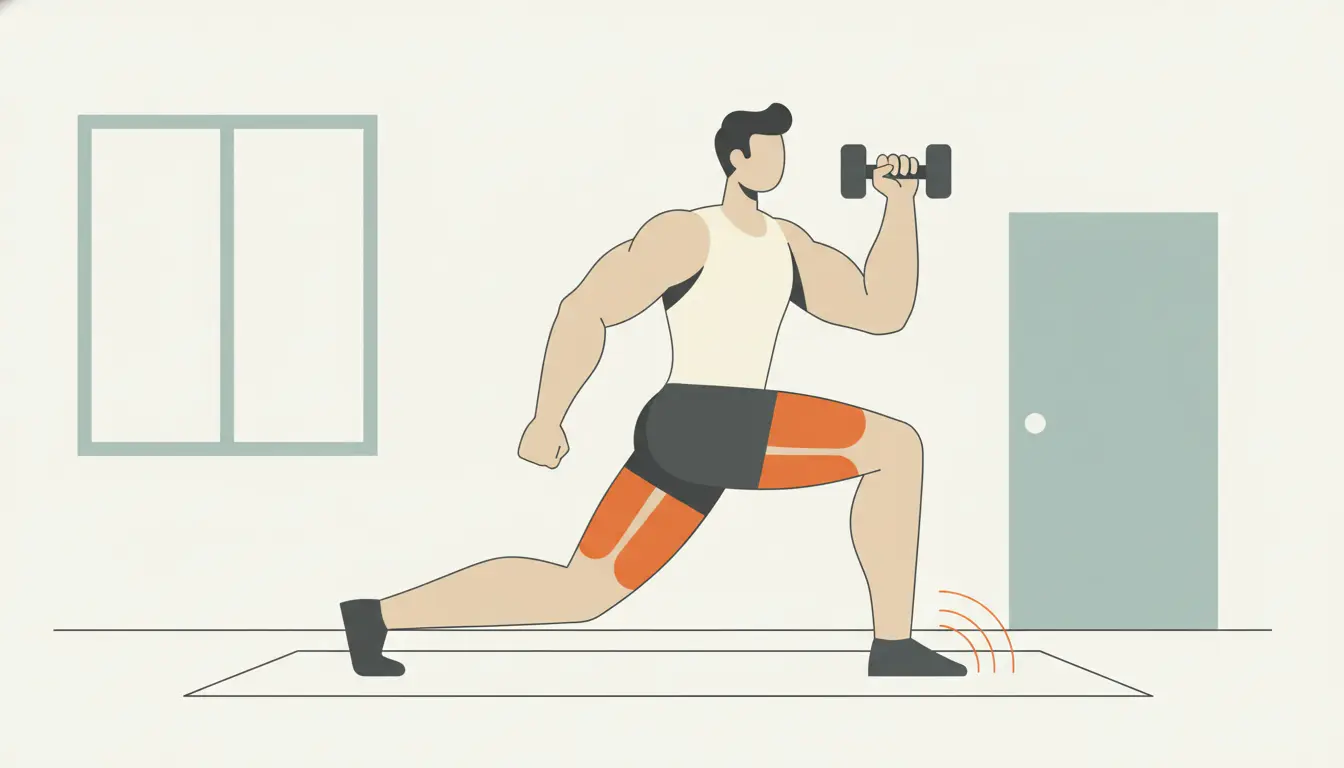
Lunges are the “real life” strength builder: stepping, controlling, stabilizing. If your knees feel sensitive, reverse lunges are often friendlier because the step back is easier to control.
- Form cue: step far enough so your front shin stays fairly vertical, then push the floor away to stand.
- Common mistake: leaning forward and turning it into a low back exercise.
- Make it harder: switch to walking lunges in a small hallway, or add a slow lower.
4) Cossack squat (side to side strength and mobility)
Cossack squats are underrated. They build strength in ranges most people ignore, and they improve control in the hips and adductors. Start conservative and earn depth over time.
- Form cue: keep the straight leg active with the heel down, sit into the bent leg, and keep your chest up.
- Common mistake: collapsing the arch of the working foot and twisting the knee inward.
- Make it easier: reduce depth and use a chair for light fingertip support.
5) Wall sit (strength endurance that transfers)
Wall sits are simple and honestly unpleasant in a good way. They build quad endurance and teach you to stay composed under fatigue. It is also an easy finisher when you do not want more impact.
- Form cue: thighs parallel to the floor, back flat on the wall, feet far enough out so knees stack over ankles.
- Common mistake: feet too close, which overloads the knees and makes the position unstable.
- Progression: add time in small steps, like 10 seconds per week.
6) Glute bridge (posterior chain support)
If your knees take over in squats and lunges, glute bridges help you “find” your hips again. Strong glutes also make single leg work steadier.
- Form cue: drive through the heels and squeeze the glutes hard at the top without over-arching your lower back.
- Common mistake: pushing through the toes and feeling it mostly in the lower back.
- Make it harder: switch to single leg glute bridges or elevate your feet on a chair.
7) Calf raise (often skipped, always needed)
Calves matter for jumping, running, and ankle stability. In calisthenics, they also support clean landings and better balance on single leg work.
- Form cue: go up smoothly, pause briefly at the top, then lower slowly to a stretch.
- Common mistake: bouncing fast reps with tiny range.
- Make it harder: do single leg calf raises holding onto a wall lightly for balance.
8) Jump squat (controlled power)
Plyometrics can be great, but only when you can land quietly and with control. If you land like a stamp, scale it down. Power is not just jumping high, it is also absorbing force well.
- Form cue: jump up, then land softly with knees tracking over toes and hips back.
- Common mistake: stiff leg landings with straight knees.
- Make it harder: add a small pause in the bottom before each jump to remove momentum.
9) Pistol squat progression (strength plus control)
Pistol squats are a great long term goal, but most people rush them and turn it into a knee heavy, wobbly grind. The smartest route is to earn it with progressions.
Box pistol: sit back onto a chair or box on one leg, stand up, repeat.
Assisted pistol: hold a door frame lightly and keep the movement smooth.
Full pistol: only when you can control the descent and keep the heel down.
My honest opinion: you do not need full pistols for big legs, but the progressions are excellent for building single leg strength and confidence.
Two complete calisthenics home leg workout plans
These sessions are designed for beginners and intermediates. Pick the one that matches your day. If you train legs twice per week, do Workout A then Workout B, with at least 48 hours between them.
Workout A: Strength and control (no jumping)
This is my default when you want stronger legs with low joint stress.
Free squat: 4 sets of 8 to 15 reps, 60 to 90 seconds rest.
Bulgarian split squat: 3 to 4 sets of 8 to 12 reps per side, 60 to 90 seconds rest.
Cossack squat: 3 sets of 6 to 10 reps per side, controlled tempo.
Glute bridge: 3 sets of 10 to 20 reps with a 2 second squeeze.
Calf raise: 3 sets of 12 to 25 reps, slow lowering.
Wall sit: 2 rounds of 45 to 90 seconds.
How to progress: once you hit the top of the rep range with clean form, add a slower lowering phase next week. Tempo is the easiest way to progress without equipment.
Workout B: Athletic legs (plyometrics plus unilateral work)
Use this when you want more power and conditioning. Keep the jumps crisp and stop the set when landings get noisy.
Jump squat: 3 to 4 sets of 6 to 10 reps, 60 to 90 seconds rest.
Walking lunge: 3 sets of 12 to 16 total steps, steady pace.
Reverse lunge to knee drive: 3 sets of 8 to 12 reps per side.
Single leg glute bridge: 3 sets of 8 to 12 reps per side.
Calf raise: 2 to 3 sets of 15 to 30 reps.
How to progress: increase jump height only if your landing stays soft. Otherwise, increase quality by shortening ground contact and keeping posture tall.
How often should you train legs at home?
Beginner schedule that actually works
Two leg sessions per week is enough for most people, especially if you also walk, run, or play sports. The key is consistency and keeping some reps “in the tank” so you can repeat quality sessions.
- 2x per week: best balance of recovery and progress for most beginners and intermediates.
- 3x per week: works if you keep one day lighter, with more mobility and wall sits, less jumping.
- 1x per week: better than nothing, but progress will be slower unless you are very active otherwise.
Simple weekly structure
Here is an easy plan that fits most weeks:
Day 1: Workout A (strength and control).
Day 3 or 4: Workout B (athletic legs).
Optional: one short mobility session with light Cossacks and easy squats.
Common form fixes that protect your knees and back
Knee tracking and foot pressure
Most issues in a calisthenics home leg workout come from unstable feet. If your arch collapses, the knee tends to cave inward. Think “tripod foot”: big toe, little toe, heel. Keep pressure on all three as you squat and lunge.
A quick self check: film one set from the front. If your knee dives inward, reduce depth, slow down, and rebuild control.
Own the lowering phase
If you only focus on standing up, you miss half the strength work. A controlled lowering phase builds muscle and teaches joint positions. I often prescribe a 3 second descent before increasing reps. It is simple, but it works.
Landing mechanics for jumps
For jump squats, prioritize quiet landings. Soft knees, hips back, chest stable. If you cannot land quietly, keep power work low volume and stick to strength work that day. No shame in that, it is smart training.
Equipment: what is worth it for home leg training?
You can get far with zero equipment. But two small items can add progression options without turning your home into a gym.
1) Resistance bands for hamstrings and glutes
Hamstrings are harder to isolate with pure bodyweight. A good set of loop bands helps you add leg curls, abductions, and extra tension in bridges. If you want one simple upgrade, I like the Gornation resistance bands because different strengths let you scale gradually instead of guessing.
2) Parallettes as a stable split squat setup
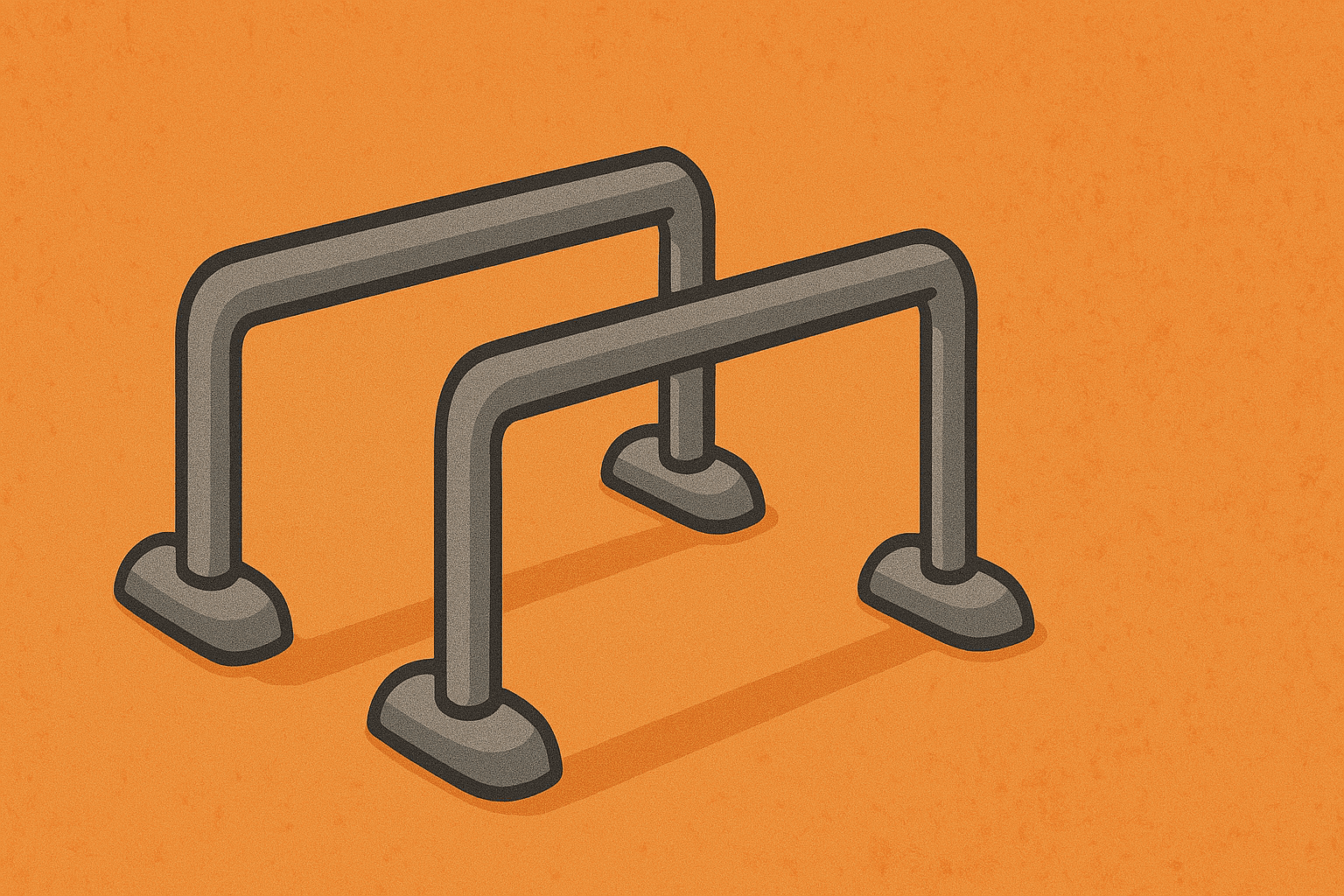
If your chair is too low or wobbly for Bulgarian split squats, parallettes can be a surprisingly clean solution. A stable pair with enough height gives you a consistent rear foot support and makes your setup quicker. The Gornation parallettes are a practical option if you want something sturdy and minimal.
That is all I would buy for leg focused calisthenics at home. Everything else is optional until you are truly limited by loading.
Veelgestelde vragen
Can a calisthenics home leg workout build muscle without weights?
Yes, as long as you create enough challenge. Use single leg work like Bulgarian split squats, add slow lowering phases, and train close to technical failure while keeping form clean. Muscle growth comes from tension and progression, not from dumbbells specifically. Most people simply do not make bodyweight leg work hard enough.
What are the best calisthenics leg exercises for beginners at home?
Start with free squats, reverse lunges, glute bridges, calf raises, and wall sits. These teach the basic patterns and let you control depth and tempo. Once those feel stable, add Bulgarian split squats and gentle jump squats. Beginners progress fastest by improving form, range of motion, and consistency.
How many times per week should I do a calisthenics home leg workout?
For most people, two sessions per week is the sweet spot. It gives you enough practice and stimulus while leaving room for recovery. If you want three sessions, keep one day lighter with fewer sets and no jumping. One session per week maintains strength but usually progresses slower.
Are jump squats and box jumps safe to do at home?
They can be, but only if you have space and can land softly with control. The biggest risk is rushing intensity and landing stiff legged. Start with low volume jump squats on a stable surface, stop sets when landings get noisy, and avoid high boxes unless you can step down safely and consistently.
Why do my knees hurt during lunges in a calisthenics home leg workout?
Often it is a technique or range issue rather than the exercise itself. Try reverse lunges, shorten the depth, and make sure your front foot stays flat with the knee tracking over the toes. Slow the lowering phase and keep your torso tall. If discomfort persists, reduce volume and focus on glute bridges and squats first.
A good calisthenics home leg workout is not about doing endless reps. It is about picking a few high value movements, training them with control, and progressing week by week through single leg work, tempo, and smart power training. If you keep your squat pattern clean, build strength with Bulgarian split squats and lunges, and finish with simple endurance like wall sits, your legs will get stronger even without weights. Start with two sessions per week, track your reps or tempos, and be patient. Home training rewards consistency more than intensity spikes.