Calisthenics looks simple from the outside: just you and gravity. But if you want steady progress, fewer annoying joint issues, and more options than the same push ups every week, a few pieces of equipment make a massive difference. In this guide I’ll show you the best calisthenics gym equipment based on what actually moves the needle for beginners and intermediates. We’ll separate essentials from upgrades, talk honestly about what’s overrated, and I’ll share how I’d build a smart setup for small spaces, tight budgets, or a fully equipped home gym.
What “best” really means in calisthenics equipment
Most people searching for the best calisthenics gym equipment are not looking for a shopping spree. They want a setup that helps them train the basics well, unlocks progressions, and doesn’t break or wobble when things get more intense.
So here’s my definition of “best”: equipment that is versatile, safe, and easy enough to use consistently. The gear that wins is the gear you’ll actually set up on a normal Tuesday.
My simple priority rule
If a piece of equipment improves one of these, it’s worth considering:
- Pulling options (most home setups lack this)
- Progressions (making hard moves easier and easy moves harder)
- Joint comfort (wrists, elbows, shoulders)
- Consistency (fast setup and low friction)
If it only adds variety but doesn’t improve training quality, it’s usually a “later” purchase.
The essential calisthenics gym equipment (covers 80% of training)
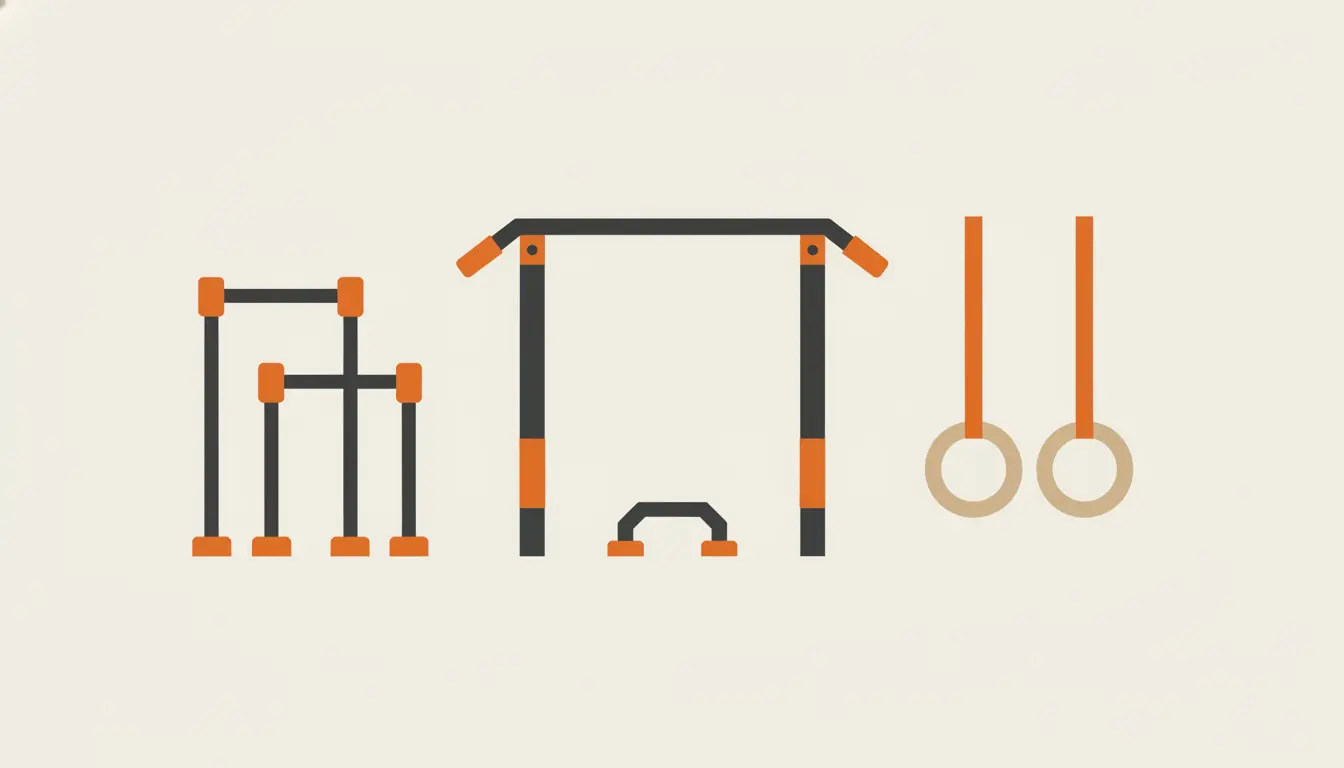
If you want one clear answer: a strong calisthenics setup starts with a place to pull, a place to push, and a way to scale difficulty. Everything else is optional until those are handled.
1) Pull up bar or pull up station
A pull up bar is the backbone of calisthenics because it unlocks the entire pulling side: pull ups, chin ups, hanging leg raises, scapula work, and the early steps toward front lever training. Without it, people often overtrain pushing and wonder why their shoulders feel off.
What I look for is simple: stability and enough clearance to hang comfortably. Doorway bars can work, but only if they fit your frame properly and you trust the mounting system. Wall mounted or freestanding stations are usually more confidence inspiring if you have space.
2) Dip bars or a dip station
Dip bars are one of the best “home gym multipliers” because they do more than dips. You can use them for incline push ups, support holds, L sit practice, assisted leg work, and some row variations if the setup allows.
The big advantage is that they let you build pressing strength in a clean way. For many beginners, dips on a stable station feel safer than awkward bench dips or unstable furniture setups.
3) Resistance bands (the cheapest progress tool that actually works)
If I had to pick the most useful low cost item, it’s resistance bands. They help beginners get their first pull ups and dips, and they help intermediates bridge gaps in skills like muscle ups and lever work.
Bands also shine for warm ups and shoulder prep. On weeks when your body feels a bit beaten up, bands let you keep training while dialing down stress without feeling like you “skipped” the session.
If you want a deeper library of band ideas, this page is worth bookmarking: https://calisthenics-equipment.com/exercises-with-resistance-bands/.
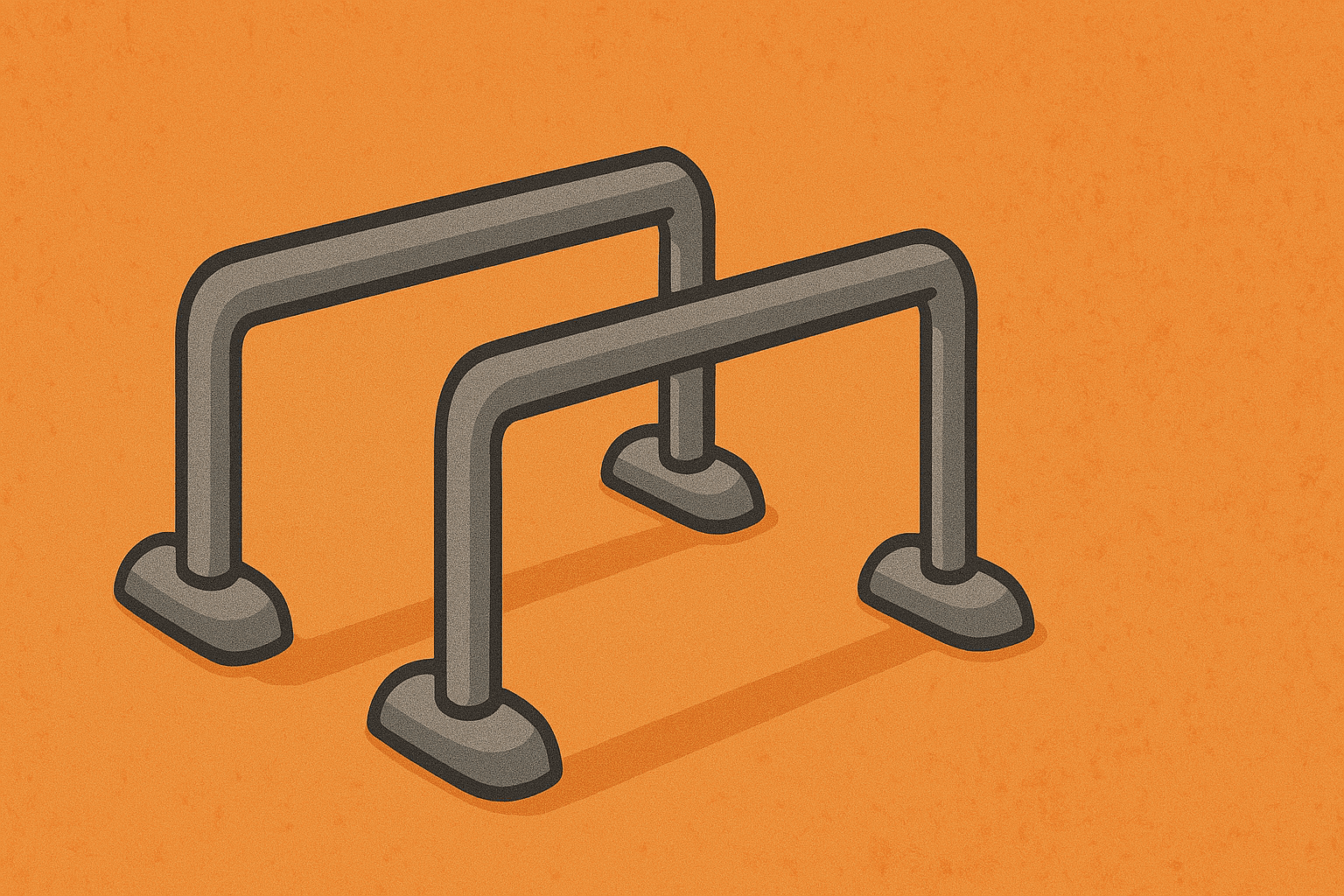
4) Parallettes or push up bars (for wrists and better range)
Parallettes are not mandatory, but they solve two common problems fast: wrist discomfort and shallow range of motion. With a neutral grip, most people can press longer and with better form. They also make L sits and planche leans easier to set up.
Even if you never plan to train advanced skills, parallettes make basic push ups more effective by giving you a deeper bottom position without forcing your wrists into a deep bend.
5) A simple mat (comfort and friction, not a “fluffy extra”)
A mat is not exciting, but it keeps training consistent. It makes mobility, core work, kneeling positions, and handstand practice less annoying. The main win is that it creates a dedicated training spot, which helps you actually start the session.
My two-piece “minimalist but powerful” recommendation
You can build a solid setup with many combinations, but if you want a minimalist kit that scales from beginner to advanced, two tools stand out.
Gymnastic rings (the most versatile tool, if you have an anchor)
Rings are basically a portable gym. You can train rows, push ups, dips, support holds, false grip work, and a lot of core variations. The instability is a blessing and a curse: it builds control, but it also humbles you.
My honest take: rings are amazing, but they’re only “best” if you have a reliable place to hang them and you’re willing to practice the basics patiently. If you want a practical starting point, use rings first for rows and push ups, then build toward dips and transitions later.
If you want a step by step approach, this guide makes ring training feel much less random: https://calisthenics-equipment.com/how-to-train-with-gymnastic-rings/.
Subtle gear note: if you’re choosing one ring set that won’t annoy you with slipping straps and rough edges, the GORNATION Wooden Gymnastic Rings are a safe bet. Good grip, solid straps, and they’re the kind of purchase you make once.
Resistance bands (the best partner to rings and bars)
Rings plus bands is a ridiculously effective combo. Bands let you scale pulling and pushing on rings without turning every set into a grind. They also help you increase weekly volume safely, which is usually what drives progress for beginners and intermediates.
If you want one set that feels durable and consistent in tension, I like the GORNATION Resistance Bands because they cover both assistance and resistance work without feeling like a disposable item.
Best calisthenics gym equipment by goal
Different goals change what “best” looks like. Here’s how I would prioritize equipment depending on what you want most.
If your main goal is more pull ups
To increase pull ups, you need frequent practice, smart scaling, and enough volume without destroying your elbows.
- Top priority: a stable pull up bar or station
- Second: resistance bands for assisted reps and extra volume
- Third: rings for rows and scapula control (optional but very helpful)
If your main goal is dips and pressing strength
Dips respond well to stable practice and clean ranges of motion. If your shoulders feel cranky, equipment choice matters even more.
- Top priority: dip bars or a dip station with zero wobble
- Second: parallettes for extra pressing volume with happier wrists
- Third: bands to assist full range dips while keeping form strict
If you want to tighten up your dip technique, this is a good practical reference: https://calisthenics-equipment.com/how-to-do-a-bodyweight-dip/.
If your main goal is core strength and skills like L sits
Core work in calisthenics is not just crunches. The best equipment helps you train tension, hip flexion strength, and shoulder stability.
- Top priority: parallettes or dip bars (for stable L sit practice)
- Second: a mat (for consistent core sessions and mobility)
- Third: rings (for harder progressions and controlled instability)
If L sits are on your list, follow a clear progression instead of forcing it: https://calisthenics-equipment.com/how-to-train-the-l-sit/.
If your main goal is muscle ups
Muscle ups are a mix of pulling power, transition control, and timing. The “best” equipment supports both strength and skill work.
- Top priority: a bar that allows explosive pulling without hitting the ceiling
- Second: resistance bands for transition drills and volume
- Third: rings if you want to build strong transitions and false grip capacity
For a beginner friendly roadmap, this guide is a solid start: https://calisthenics-equipment.com/how-to-do-a-muscle-up-beginner-friendly-guide/.
Beginner, intermediate, advanced: what to buy at each level
Buying equipment based on your current level saves money and frustration. The classic mistake is buying advanced tools before you have the strength base to use them well.
Beginner: build the base and remove friction
At the start you need equipment that makes training possible, not fancy. A beginner friendly setup should help you practice frequently and safely.
- Pull up bar (or a station)
- Resistance bands (to scale pull ups and dips)
- Dip bars (or a stable alternative for pressing)
- Mat (mobility and floor work)
- Parallettes (if wrists limit your training)
If you’re brand new and want structure, this beginner plan direction helps keep things simple: https://calisthenics-equipment.com/calisthenics-workout-for-beginners/.
Intermediate: add tools that unlock progressions
Once you have decent reps in pull ups and dips, equipment becomes about targeted progress. This is where rings, parallettes, and better loading options start paying off.
- Rings for variety and control
- Dip belt if you want straightforward strength progress
- Chalk if grip is limiting you
Advanced: specificity and progressive overload
Advanced athletes usually don’t need a huge list. They need the right pieces that hold up under intensity, especially when adding load or training explosive transitions.
At this stage, investing in stability and quality materials makes sense, because a shaky setup doesn’t just ruin performance, it raises risk when fatigue hits.
How to avoid wasting money on calisthenics equipment
I’ve seen the same cycle over and over: someone buys a pile of cheap gear, something bends or slips, motivation drops, and then they either quit or buy everything again properly. You don’t need premium everything, but you do need reliable basics.
Buy versatile first, niche later
Before you buy specialty items, ask: will I use this for at least three different movements each week? If not, it’s probably not your next purchase.
Stability is not optional
For pull up bars, dip stations, and parallettes, stability matters more than clever features. If it wobbles, you’ll subconsciously hold back. That means worse training and higher injury risk.
Watch for hidden “home gym taxes”
Some gear is cheap up front but expensive in practice:
- Doorway bars that damage frames or don’t fit properly
- Rings with rough edges or straps that slip
- Bands that degrade fast or feel inconsistent
- Dip bars that tip when you lean forward
That’s why I’d rather have fewer items that you trust than a room full of compromises.
Buying checklist: what to look for before you click “add to cart”
If you want the best calisthenics gym equipment for your situation, run through this quick checklist. It saves you from most bad purchases.
Space and setup time
If setup takes more than a couple of minutes, you’ll skip sessions eventually. Choose equipment that fits your daily life, not your ideal life.
Load rating and build quality
Check real load ratings, not vague “heavy duty” labels. Look for solid joints, good stitching on straps, and materials that won’t crack or splinter.
Grip comfort
Grip is a limiter for many people. Wood often feels better than cheap metal coatings, and a slightly thicker grip can be kinder on the wrists and forearms.
Adjustability
Adjustability matters most for dip bars and stations. If the width is wrong, shoulders complain. If the height is wrong, you avoid full range work.
Sample home gym setups (practical, not perfect)
Here are a few realistic setups that cover most needs without turning your home into a commercial gym.
Setup A: small space, beginner friendly
- Doorway or wall mounted pull up bar
- Resistance bands
- Mat
This setup is about consistency. You can do pull progressions, pushing on the floor, core, and mobility with almost no footprint.
Setup B: balanced strength for beginner to intermediate
- Pull up station
- Dip bars
- Parallettes
- Resistance bands
This is where training starts to feel “complete”: push, pull, core, and progressions without needing machines.
Setup C: minimalist traveler kit
- Gymnastic rings
- Resistance bands
If you travel or train outdoors, this combo is hard to beat. The only real requirement is finding a safe anchor point.
What’s optional or overrated for most people
I’m not against extra tools. I just want them to earn their place.
Weighted vests
They can be useful, but for many athletes they’re not the best first choice for overload. A vest is expensive, and the load distribution can be awkward for dips and pull ups. If your goal is pure strength progression, a dip belt often makes more sense later.
Handstand blocks
Great for handstand specific practice, but not essential for general calisthenics. Many people can get strong handstand fundamentals with a wall, a mat, and some patience. If handstands are your main goal, though, they become more relevant.
Ab wheels and small accessories
Ab wheels are effective, but only if your technique is good enough to avoid your lower back taking over. I like them as an upgrade, not as your first purchase.
Veelgestelde vragen
What is the best calisthenics gym equipment for beginners?
For most beginners, the best calisthenics gym equipment is a stable pull up bar or station, a set of resistance bands, and a dip station or dip bars. That trio covers pulling, pushing, and scalable progressions. Add a simple mat if you train at home for comfort and consistency.
Are gymnastic rings good “best calisthenics gym equipment” for beginners?
Rings can be great, but they’re not always the easiest start. They require a safe anchor, more stability, and more patience. If you already train consistently and can do controlled rows and push ups, rings are absolutely worth it. If not, start with a bar plus bands first.
Do I really need equipment for calisthenics, or can I train with nothing?
You can train a lot with no equipment, but progress is usually slower, especially for pulling strength. The moment you want pull ups, balanced shoulders, and long term progression, you’ll want at least one pulling option plus a way to scale difficulty, like resistance bands.
What equipment helps the most with pull ups if I can’t do one yet?
A pull up bar plus resistance bands is the most straightforward combo. Bands let you practice the full movement pattern with assistance, build volume safely, and gradually reduce support over time. If you can add ring rows as well, that often speeds things up without beating up your elbows.
Is a dip belt necessary for the best calisthenics gym equipment setup?
Not at the start. A dip belt becomes useful once you can do solid sets of pull ups and dips and want simple strength progression through added load. For beginners, the best investment is usually stability and scalable progressions first. Weighted tools come later when your form is consistent.
The best calisthenics gym equipment is not the biggest list. It’s the smallest set that lets you train push, pull, core, and progressions consistently. If you’re building from scratch, prioritize a stable pull up option, dip bars or a dip station, and resistance bands. From there, add parallettes or rings based on your goals and space. Keep it simple, buy for versatility, and choose equipment you trust enough to train hard on. That’s how you make progress month after month without wasting money.