If you type best calisthenics gym equipment into Google, you’ll find two extremes: people saying you need nothing, and people building a full home gym overnight. The truth is simpler. A few smart tools can unlock better pulling strength, safer pushing volume, and cleaner skill work without wasting money.
In this guide I’ll break down what’s actually worth buying, what’s optional, and how to choose based on your goals, space, and budget. I’ll also share the two pieces I think give the biggest return on investment for most athletes.
What “best” really means for calisthenics equipment
The “best” calisthenics gear is the gear that helps you train consistently. Not the fanciest thing on Instagram. When I help people build a setup, I look at three practical questions first: what do you want to get good at, where will you train, and what’s the simplest way to progress week to week?
Choose equipment by goal, not by hype
If your goal is your first pull up, you need a reliable way to hang and scale reps. If your goal is a muscle up, you need a setup that allows high quality pulling plus transitions. If your goal is handstand strength, you need pressing volume without your wrists screaming.
That’s why the same “top 5 list” won’t fit everyone. The categories below cover what most people mean by best calisthenics gym equipment, and how to pick the right version for you.
The non negotiables: safety and repeatability
Calisthenics looks minimal, but your equipment is still a safety system. A shaky pull up bar or slippery dip bars can turn a normal set into a risky one. I’m not saying you need premium everything, but you do need stable contact points, solid stitching or hardware, and predictable grip.
- Stability beats extra features every time
- Grip matters more than people think, especially when you sweat
- Load rating should comfortably exceed your bodyweight plus any future added weight
- Setup friction matters: if it’s annoying to set up, you’ll train less
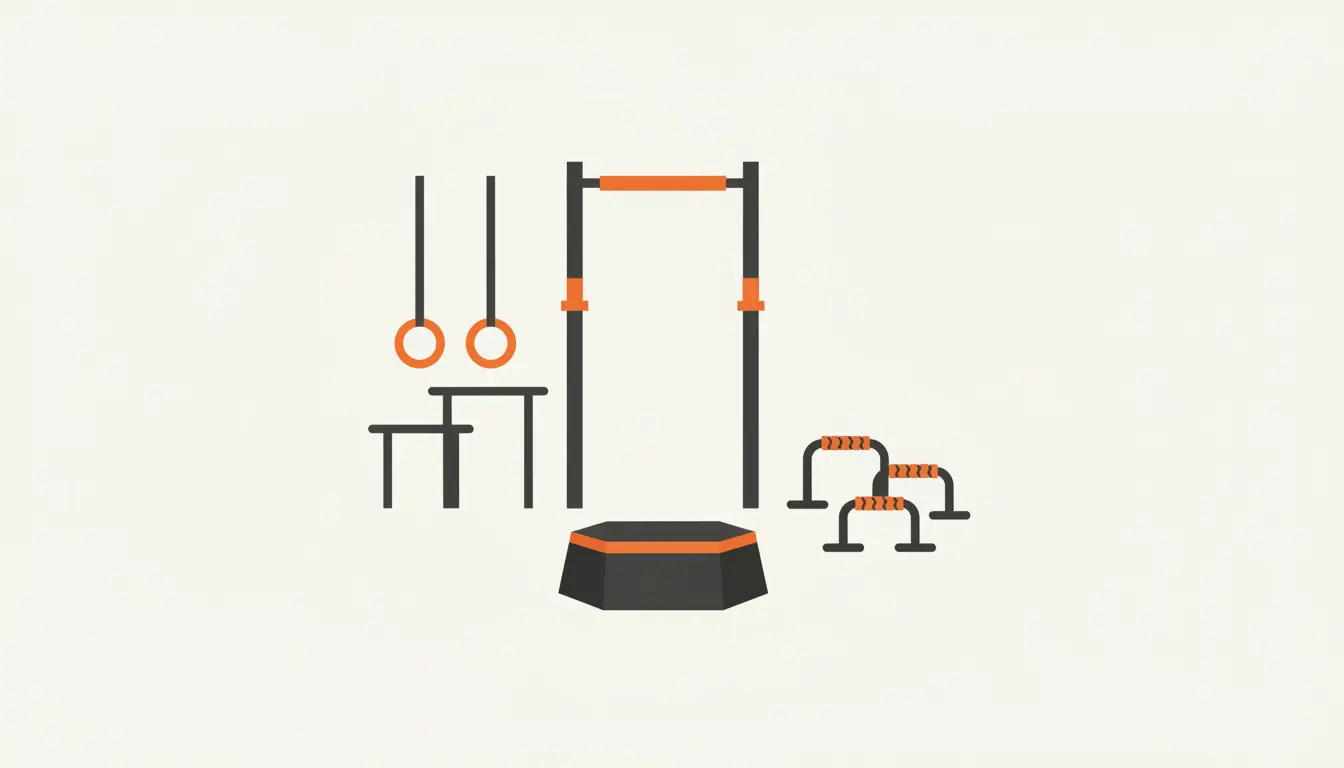
The essential calisthenics gym equipment (covers 90% of training)
If you want a minimal kit that still feels like a real gym, focus on tools that cover: pulling, pushing, core, and joint friendly volume. The goal is to get dozens of movements from a few items, not one item per exercise.
1) A pull up solution (bar, station, or rings)
For most people, pulling is the limiting factor. Push ups are easy to scale on the floor, but strict pull ups need an actual hanging point. If you train at home, your first “gym” purchase is usually a pull up bar or a station.
Here’s the quick way I think about it:
- Doorway bar: good for renters and small spaces, but can be limiting for dynamic work
- Wall or ceiling mounted bar: the most stable home option if you can drill
- Power tower: great if you have space, often includes dips
- Rings: incredibly versatile if you have an anchor point
If you want technique help for strict reps, this guide is worth bookmarking: how to do a pull up with perfect form.
2) Dip support (dip bars or a dip station)
Dips are the pull ups of pushing: simple, scalable, and brutally effective when done clean. A stable dip setup also gives you L sits, knee raises, support holds, and plenty of shoulder stability work.
What to look for:
- Enough height to dip without your feet dragging
- Non slip feet if you train on smooth floors
- Comfortable width that lets your shoulders track naturally
If dips are new to you, learn the basics before chasing depth: how to do a bodyweight dip.
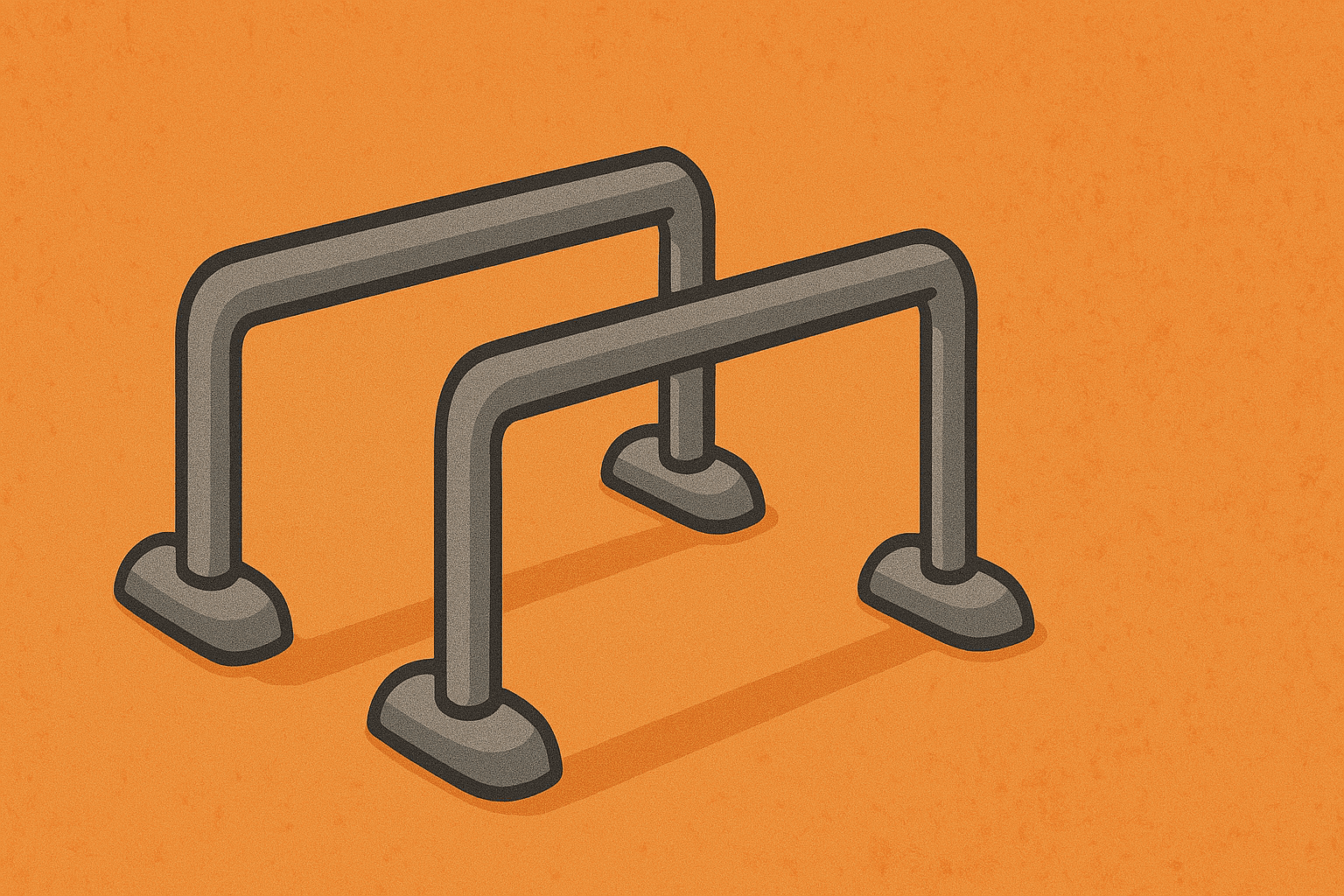
3) Parallettes (for wrists, range of motion, and skills)
I’m biased in a practical way here: parallettes save a lot of wrists. Floor push ups and planche leans can feel rough, especially when volume climbs. Low parallettes also improve range of motion, and they make handstand work feel more controlled because you have a consistent grip and a bit more clearance.
Parallettes are also a sneaky way to make basics harder without adding weight. A deeper push up on parallettes is often more challenging than people expect.
4) Resistance bands (progressions made easy)
If you buy only one “accessory”, make it bands. They help beginners get enough quality reps for pull ups and dips, and they help intermediates bridge the gap to harder skills. They’re also useful for warm ups, shoulder prep, and mobility.
The big value is that bands let you adjust difficulty without changing the exercise. You can keep practicing the same movement pattern while gradually needing less assistance.
- Band assisted pull ups and chin ups
- Band assisted dips or ring dips
- Face pulls and pull aparts for shoulder balance
- Light resistance on push ups or squats when you outgrow bodyweight
5) A decent mat (comfort and consistency)
A mat is not flashy, but it’s one of the easiest ways to remove friction from training. You’ll do more core work, more mobility, and more skill practice if the floor is comfortable and grippy. For handstands against a wall, a mat can also make sessions feel less stressful because you’re not worried about slipping.
My minimalist picks: 2 pieces I’d recommend most often
On calisthenics-equipment.com we try to stay honest and minimalist. If I could only recommend two pieces of equipment to most people, they’d be gymnastic rings and resistance bands. They’re portable, scalable, and they cover a ridiculous amount of training without needing much space.
Gornation Gymnastic Rings (why they earn a spot)
If you have any solid anchor point, rings can replace a lot of bulky equipment. You can do rows, pull ups, push ups, dips, support holds, transitions, and plenty of core work. I also like rings because they allow your hands to rotate naturally, which often feels nicer on the shoulders than fixed bars.
Rings are not magic, though. They demand more stability, so the first sessions can feel humbling. That’s normal. Start with rows and ring push ups, keep the rings lower, and focus on control.
Want a practical starting point? This guide lays out setups and progressions: how to train with gymnastic rings.
Gornation Resistance Bands (the best “progress knob”)
Bands are the easiest way to control load in calisthenics. For beginners, they turn “zero pull ups” into real sets with proper range of motion. For intermediates, they let you practice the same movement pattern with slightly less help each week. That’s exactly how you keep progress steady without guessing.
I also like bands for high quality warm ups. A few sets of light band pulls and shoulder rotations can make your pressing and pulling feel smoother right away.
Rings vs pull up bar: which one should you buy first?
This is one of the most common questions behind best calisthenics gym equipment. Here’s my take: a pull up bar wins on simplicity and stability, rings win on versatility.
Choose a pull up bar if you want “zero setup”
If you’re the kind of person who will train more when the equipment is always ready, a fixed bar is hard to beat. It’s also easier for explosive pulling and for people who get frustrated by instability early on.
Choose rings if you want the most exercises per euro
Rings can cover pulling and pushing in one tool. They’re also travel friendly. The trade off is that you need an anchor point and you need to respect the learning curve. If you’re patient, rings pay back fast.
How to avoid wasting money on calisthenics equipment
Most wasted money happens when people buy gear that doesn’t match their training reality. The product might be fine, but it doesn’t fit the space, the goal, or the habit.
Buy for your current routine, then expand
If you train three times per week for 30 minutes, a compact setup beats a huge one. Start with the items that remove your biggest bottleneck. For most people that’s pulling and scalable progressions.
Use a simple quality checklist
You don’t need to be an engineer to spot red flags. Before you buy, check for:
- Clear load rating and realistic usage examples
- Solid contact points like stable feet, thick straps, reliable buckles
- Grip you trust when your hands are sweaty
- Materials that make sense for your environment, especially if you train outdoors
- Storage that matches your home, so equipment doesn’t become clutter
Equipment by level: beginner, intermediate, advanced
Your level changes what “best” means. Beginners need tools that make basics doable. Intermediates need tools that make overload and skill practice consistent. Advanced athletes need stability and specificity.
Beginner setup: learn the basics fast
For beginners, I’d prioritize a pull up solution plus bands, and some way to push comfortably. A mat is a small but real quality of life upgrade. Parallettes are great if your wrists get cranky.
- Pull up bar or rings for hangs, rows, and pull up practice
- Resistance bands to scale reps and build volume safely
- Dip support or parallettes for pushing and support strength
- Mat for core and mobility
If you want a straightforward starting plan, this page fits well with a minimal setup: calisthenics workout for beginners.
Intermediate setup: progress without getting stuck
Once you can do clean reps, the challenge is adding difficulty without wrecking your joints. This is where rings and parallettes really shine. You can increase range of motion, add tempo, change leverage, or use bands for light resistance.
A simple example: ring rows with feet elevated, followed by band assisted archer pull ups. Same session, different intensity levels, both scalable.
Advanced setup: specificity and durability
Advanced training is less about “more gear” and more about better training conditions. You’ll care about stable anchors, consistent ring height markings, strong dip supports, and enough space to practice skills without compromising form.
If you’re chasing hard skills, equipment should help you repeat high quality attempts. For example, a stable setup for L sit practice can make a huge difference over months. If that’s your current focus, this guide is a solid reference: how to train the L sit.
Home gym vs outdoor training: what changes?
A lot of people mix home and park sessions. The “best” equipment choices change depending on whether you need portability or permanence.
Small apartment or renter friendly choices
In small spaces, choose gear that stores easily and sets up fast. Rings and bands are almost perfect here if you have a safe anchor point. Doorway bars can work too, but always verify fit and stability before doing anything dynamic.
Garage or dedicated room choices
If you can drill into walls or ceiling beams, a fixed pull up bar plus a dip station makes training feel effortless because it’s always ready. Add parallettes and a mat, and you’ve covered most of what people want from best calisthenics gym equipment without buying a full weight room.
Outdoor and travel choices
Outdoors, portability wins. Rings and bands fit in a backpack and can turn a tree branch or park bar into a full session. The main rule is to be picky with anchors and surfaces. If something feels sketchy, it probably is.
Three example equipment kits (simple and realistic)
These are not “perfect” kits, just practical combinations that cover the most training without going overboard.
Budget kit: essentials only
- Doorway pull up bar or access to a park bar
- Resistance bands (a few strengths)
- Basic mat
Minimalist all rounder: the sweet spot
- Gymnastic rings
- Resistance bands
- Low parallettes
- Mat
Home focused kit: stable pushing and pulling
- Wall mounted pull up bar or power tower
- Dip station or dip bars
- Parallettes
- Resistance bands
- Mat
Veelgestelde vragen
What is the best calisthenics gym equipment for beginners?
The best calisthenics gym equipment for beginners is whatever makes the basics doable and repeatable: a pull up solution plus resistance bands is the fastest way to build pulling strength with good form. Add a mat for comfort and either dip support or parallettes for pushing volume that feels joint friendly.
Are gymnastic rings better than a pull up bar?
Rings are more versatile because you can train pulling, pushing, and core with one tool. A pull up bar is simpler and more stable, which can be better for explosive pulling and for people who want zero setup. If you have a solid anchor point, rings are usually the best value.
Do I need a dip station for calisthenics?
You don’t strictly need a dip station, but it’s one of the best ways to progress pushing strength. Dips, support holds, and L sit work are easier to load and track on stable bars. If your goal includes muscle ups or strong pressing, some form of dip support is definitely worth it.
What equipment helps most with calisthenics skill progressions?
Resistance bands are the simplest tool for skill progressions because they let you practice the same movement pattern with adjustable assistance. Rings also help because you can scale angles and leverage for rows, dips, and transition drills. Combine them and you can progress without constantly changing exercises.
How much should I spend on the best calisthenics gym equipment?
Spend enough to get stable, safe contact points and avoid constant replacements. A budget setup can work if the bar is secure and the bands are decent. If you train often, investing a bit more in high quality rings or durable bands usually pays off through better grip, smoother training, and fewer annoyances.
The best calisthenics gym equipment isn’t a long shopping list. It’s a small set of tools that removes your bottlenecks: something to pull from, something stable to push on, and a way to scale difficulty. If you want the most training options with the least clutter, I keep coming back to a simple combo: gymnastic rings plus resistance bands, then build from there based on your goals.
Start minimal, train consistently, and let your progress tell you what to add next.