If you want to train pull ups at home, this is usually the first real decision you run into. Do you get a doorway bar because it is simple and renter friendly, or do you install a wall mounted bar and build a more serious setup? I have trained on both over the years, and each one makes sense in a different situation. In this guide, I will break down stability, price, installation, space, safety, and training options so you can choose the one that actually fits your home, budget, and goals in the US market.
The Short Answer: Which Pull Up Bar Is Right for You?
If you want the short version of the doorway pull up bar vs wall mounted pull up bar debate, here it is. A doorway bar is usually the better pick if you rent, want a low cost option, need something easy to remove, or are just getting started with bodyweight training. A wall mounted pull up bar is usually the better choice if you train regularly, care about maximum stability, want more freedom of movement, or plan to add weighted work.
For most beginners, a good doorway bar is enough to build real pulling strength. For more advanced athletes, a heavy duty wall mounted pull up bar gives you a better long term setup. If you already know you want to progress into weighted pull ups, toes to bar, or more explosive work, wall mounted usually wins.
If you are still building your home setup, our guide on must have calisthenics equipment can help you prioritize what matters most.
What Is a Doorway Pull Up Bar?
A doorway pull up bar is a compact bar designed to fit on or inside a door frame. In the US, these are one of the most common choices for home workouts because they are affordable, easy to buy online, and usually simple to set up in apartments or smaller homes.
How It Attaches to Your Door Frame
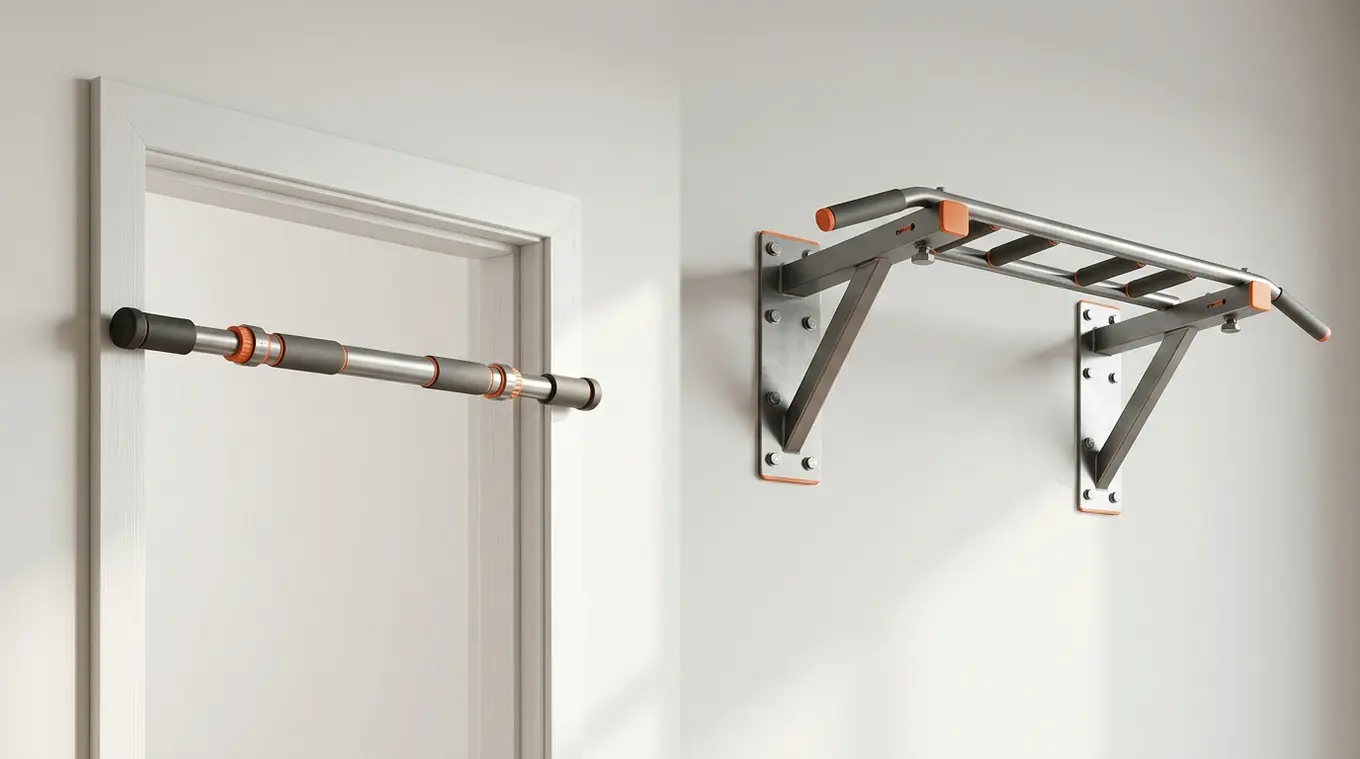
There are two main styles. One sits inside the doorway and uses pressure or expansion to stay in place. The other hooks over the top of the door frame and uses leverage to hold itself. When people ask how to install a doorway pull up bar, the answer depends on the style. Pressure bars twist into place inside the frame, while over the door models rest on the trim and brace against the other side of the frame.
In my experience, over the door designs tend to feel better for most people because they offer more grip positions and are usually easier to remove after a workout. That said, they only work if your door frame shape and trim are compatible.
Who Typically Uses One
Doorway bars are a practical fit for beginners, renters, students, and anyone looking for the best pull up bar for apartment living. They also make sense if you need the best pull up bar for small space situations, since you can often take the bar down in seconds and store it away.
They are especially useful for straightforward workouts like pull ups, chin ups, dead hangs, and some knee raise variations. If your goal is simple upper body strength without drilling into walls, a doorway option is often enough.
What Is a Wall Mounted Pull Up Bar?
A wall mounted pull up bar is a fixed bar that bolts directly into a wall. It usually extends farther away from the wall than a doorway model and is built to handle more load. This is the style many serious home gym users prefer because it feels more like a commercial setup.
How It Gets Installed
When people search how to install a wall mounted pull up bar, the important part is not the bar itself but the wall. You need a structurally suitable surface, proper hardware, and enough clearance around the bar. In most US homes, that often means mounting into solid studs, concrete, or another strong structural base. Drywall alone is not enough.
This install takes more effort than a doorway bar, and I always recommend following the manufacturer instructions closely. If you are not confident with tools or wall structure, it is worth asking a contractor or experienced friend to help.
Who It’s Built For
A wall mounted bar is built for people who train often and want a more permanent station. It is ideal for intermediate and advanced calisthenics athletes, heavier users, and anyone planning to add load with a dip belt or weight vest. It is also a better option if you care a lot about pull up bar range of motion and movement freedom.
If you want a complete home training setup rather than a quick solution, GORNATION gear is worth a look. Their equipment line is clearly built for people who train consistently and want reliable performance rather than a temporary fix.
Stability and Weight Capacity: A Real Difference
This is where the difference between a door pull up bar vs wall mounted pull up bar becomes very clear. A doorway bar can be solid for basic training, but it still depends on the door frame design, the fit, and how well it is placed. Even good models usually have more movement than a fixed bar.
A wall mounted bar is usually the best sturdy pull up bar option if installed correctly. It tends to support a much higher load, feels more secure at the top and bottom of each rep, and gives you more confidence when training hard. That matters more than people think. Even a small amount of wobble changes how comfortable pull ups feel, especially for taller athletes or anyone working on strict form.
Are doorway pull up bars safe? They can be, if you choose the right style, respect the weight limit, and check the fit before every session. But they are less forgiving. Are wall mounted pull up bars safe? Yes, generally much safer for demanding sessions, provided the bar is mounted correctly into a suitable wall.
From personal experience, the gap becomes obvious once you start doing more than a few casual sets. Weighted reps, explosive reps, and hard eccentric work feel much better on a wall mounted setup.
Space, Installation, and Damage to Your Home
For many people, this is the category that decides everything. The best pull up bar is not just about training quality. It also has to work with your living situation.
What Doorway Bars Do to Your Door Frame
Doorway bars are popular because they usually do not require drilling, but that does not mean they are risk free. Over time, they can leave marks on the trim, compress parts of the frame, or create scuffs where the pads rest. Pressure mounted bars can be even more sensitive because they rely on force against the frame.
If you rent, this matters. A doorway bar is still often the best pull up bar for apartment users, but you should check compatibility carefully and use padding exactly as intended. A poor fit is where most problems start.
What Wall Mounting Actually Requires
Wall mounting requires more commitment. You need tools, accurate measuring, good hardware, enough wall clearance, and confidence that the wall can handle the force. Once installed, you also have a permanent fixture in your space. In a garage or basement, that is usually fine. In a small bedroom or shared apartment, maybe not.
How Much Overhead Clearance Do You Need?
One practical question that is easy to overlook is how much space you actually need above the bar. With a doorway bar, the bar sits at or near the top of your door frame. If you are tall, you may need to bend your knees throughout the movement to keep your feet off the floor, which limits your full hanging range of motion.
With a wall mounted bar, you choose the mounting height yourself, which gives you more flexibility. As a general guide, you want the bar high enough that you can hang fully extended without your feet touching the ground, and with enough clearance above to avoid hitting your head on the ceiling. This is worth measuring carefully before you commit to a location, especially in a basement or any room with a lower ceiling. It is much easier to check this before you buy than to discover the problem after installation.
| Factor | Doorway pull up bar | Wall mounted pull up bar |
|---|---|---|
| Best for | Renters, beginners, small spaces | Serious trainees, home gyms, long term setups |
| Installation | No drill or minimal setup | Requires drilling and solid wall support |
| Stability | Good for basic training, but less secure | Much more stable when installed correctly |
| Weight capacity | Usually lower | Usually higher |
| Space impact | Easy to remove and store | Permanent fixture |
| Training options | Best for strict pull ups, hangs, basic work | Better for weighted, explosive, and advanced movements |
| Home impact | May mark or compress door frame | Requires permanent wall mounting |
| Price | Lower upfront cost | Higher cost, sometimes plus installation |
That said, a wall mounted bar does not interfere with doorways and can actually be a cleaner long term choice if you have the right location. If you want more home friendly ideas, our guide on best calisthenics equipment for small spaces is worth checking.
Price Comparison: What You Pay and What You Get
Doorway bars usually cost less up front. That is one of their biggest advantages. If you are testing whether home calisthenics is something you will stick with, it is hard to argue against a lower entry price. For many people, that alone makes the choice easier.
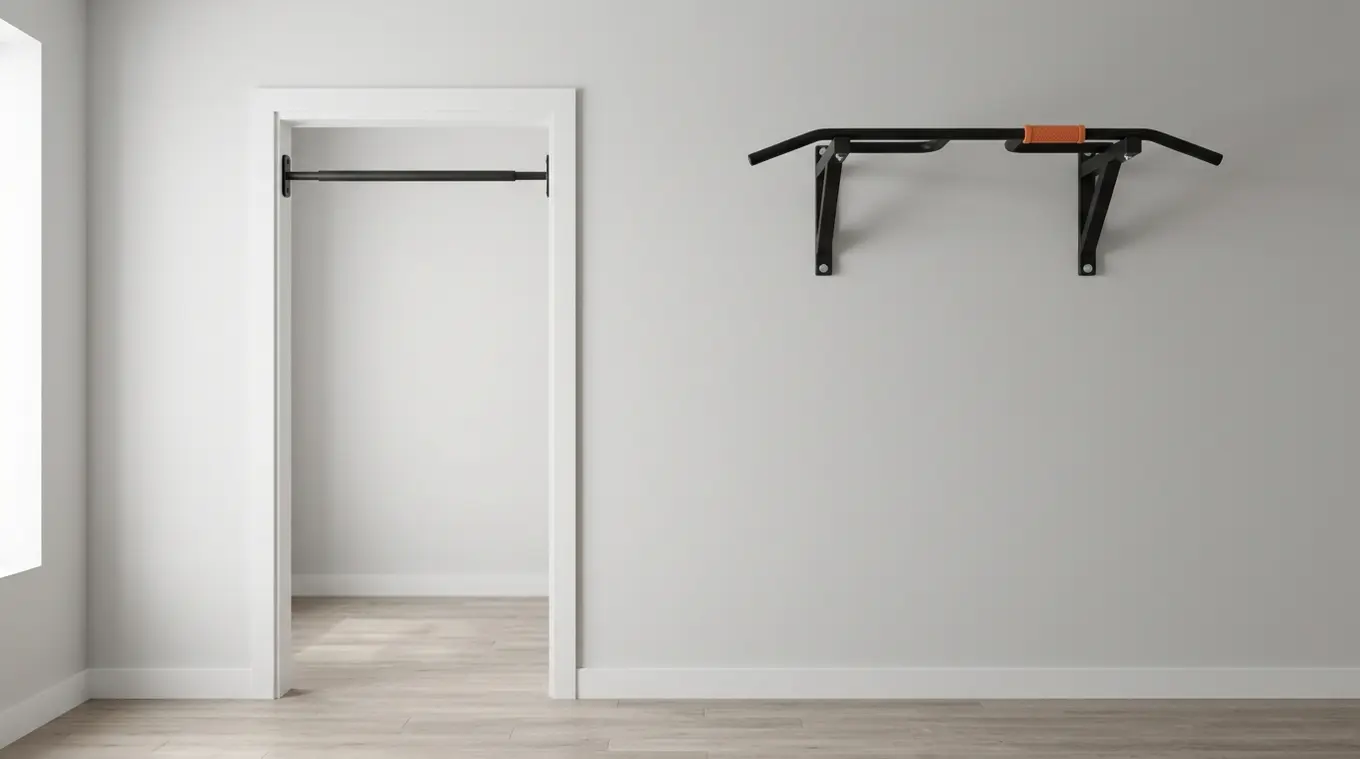
Wall mounted bars cost more, and installation may add to the total if you need extra tools or help. But you are also paying for more stability, higher weight capacity, and a better training experience over time. In that sense, the value is often better for committed athletes.
I usually look at it this way. If you train once or twice a week and just want simple pull ups, a doorway bar gives you enough for the money. If you train seriously and want equipment that still makes sense a year from now, the wall mounted route is often the smarter buy.
If you are comparing brands and trying to keep costs reasonable, it can also help to check whether there is a current deal on the GORNATION discount code page.
Which Pull Up Bar Supports Better Training?
Both options can build strength. The difference is how far they let you go. This is where range of motion, clearance, and exercise variety start to matter more.
Exercises You Can Do with a Doorway Bar
A doorway bar works well for standard pull ups, chin ups, neutral grip pull ups if the model allows it, scapular pulls, dead hangs, and controlled knee raises. For many beginners, that is enough to make real progress for months. If your main goal is getting your first rep or improving pulling volume, a doorway setup can absolutely work.
It is also useful if you are following a simple progression plan like the one in our guide on how to do a pull up with perfect form. Strict reps and form practice are possible on both styles.
The limits usually show up when you are tall, want to hang fully extended, or need room for more dynamic movement. The pull up bar range of motion is often reduced by the door frame and your body position.
Exercises That Need a Wall Mounted Bar
A wall mounted bar is better for full hanging leg raises, toes to bar, windshield wipers, weighted pull ups, archer pull ups, and more explosive variations. If you are wondering can you do kipping pull ups on a wall mounted bar, the answer is sometimes yes if the bar is installed correctly, the wall is suitable, and the manufacturer allows for dynamic use. Still, I would be careful with kipping in small indoor spaces because wall clearance and swing room matter.
For strict calisthenics and weighted training, wall mounted bars are simply more capable. If you plan to use accessories like a GORNATION dip belt or weight vest, a fixed setup makes a lot more sense. That combination is especially useful for people progressing into weighted calisthenics.
When to Choose a Doorway Pull Up Bar
Choose a doorway bar if you rent, have limited space, want a lower cost option, or need something you can remove quickly. It is also the right move if you are just starting and do not yet know how much you will use it. For many people in apartments, a no drill setup is the only practical answer.
A doorway bar is also a smart choice if your training is simple and controlled. If you mainly want to practice strict pull ups, hangs, and basic upper body work a few times per week, you do not necessarily need a wall mounted unit.
Just be honest about the tradeoffs. It is not the sturdiest option available, and it is not ideal for explosive training or heavier athletes pushing the upper end of the load range.
When to Choose a Wall Mounted Pull Up Bar
Choose a wall mounted bar if you want the most stable setup, train several times per week, or already know this is a long term part of your routine. It is the better fit for garages, dedicated workout rooms, and home gyms where installation is not a problem.
It is also the clear winner if you are heavier, stronger, or aiming for advanced progressions. A heavy duty wall mounted pull up bar gives you more confidence under load and more room to move naturally. That becomes even more important once you start doing weighted sets, higher volume training, or advanced core work.
If someone asks me what I would choose for serious home calisthenics, I would almost always say wall mounted first, provided the home setup allows it.
Our Recommendation: The Bottom Line
In the doorway pull up bar vs wall mounted pull up bar comparison, there is no universal winner. The right choice depends on how you train and where you live. If you need convenience, portability, and renter friendly setup, a doorway bar is the better option. If you want maximum stability, better range of motion, and long term training value, a wall mounted bar is the better investment.
My honest advice is simple. Buy for the way you will actually train, not the way you imagine you might train one day. If you are a beginner in an apartment, start with a quality doorway bar and use it consistently. If you already know you are committed and have a suitable wall, skip the compromise and go straight to a wall mounted setup.
And if you want equipment from a brand that clearly understands calisthenics, GORNATION is a solid place to start, especially for athletes who care about durable gear and progression over time.
So, doorway pull up bar vs wall mounted pull up bar comes down to one main question: do you want convenience or the best training experience? Doorway bars are affordable, practical, and great for renters or beginners. Wall mounted bars take more effort and money, but they usually feel better, hold more weight, and support more advanced training. If your space and wall allow it, wall mounted is the stronger long term choice. If you need something simple and flexible, a doorway bar still gets the job done well. Pick the one that fits your home and your training habits, and you will be much happier with the result.
Frequently Asked Questions
Are doorway pull up bars safe for everyday use?
Yes, doorway pull up bars can be safe for everyday use if they fit your door frame correctly, are installed as instructed, and stay within the stated weight limit. The main risk comes from poor compatibility or rushed setup. I always recommend checking the bar before each session, especially with removable models.
Are wall mounted pull up bars safer than doorway bars?
In most cases, yes. Wall mounted pull up bars are usually safer and more stable than doorway bars when they are installed properly into a suitable wall. They handle heavier loads and more demanding training better. The key is proper installation, because even a strong bar is only as safe as the wall and hardware holding it.
What is the best pull up bar for an apartment?
For most apartment users, a doorway pull up bar is the best option because it is easier to install, remove, and use without making permanent changes. It is especially useful in rental situations. A wall mounted bar can still work in an apartment, but only if the building allows it and the wall is suitable.
Can you do kipping pull ups on a wall mounted bar?
Sometimes, yes, but it depends on the bar design, wall strength, available clearance, and the manufacturer’s use guidelines. A properly installed wall mounted bar is much better suited for dynamic movement than a doorway bar. Still, in most home setups, strict pull ups are the safer and more practical choice indoors.
Which option is better for weighted pull ups?
A wall mounted pull up bar is usually the better choice for weighted pull ups. It offers more stability, a higher weight capacity, and better confidence under load. If you plan to use a dip belt or weight vest regularly, a sturdy wall mounted setup is the option I would recommend over a doorway model.