If you want to add dips, rows, L sits, and static holds to your training, it is normal to get stuck on one simple question: should you buy dip bars or a dip station? I have seen a lot of home gym setups over the years, and this is one of the most common equipment decisions for calisthenics athletes. The good news is that both can work very well, but they fit different spaces, budgets, and goals. In this guide, I will break down what a dip station is, what are dip bars, how they compare in stability, portability, exercises, and price, so you can choose with confidence.
What Are Dip Bars and What Is a Dip Station?
Dip Bars: Simple, Portable, Minimalist
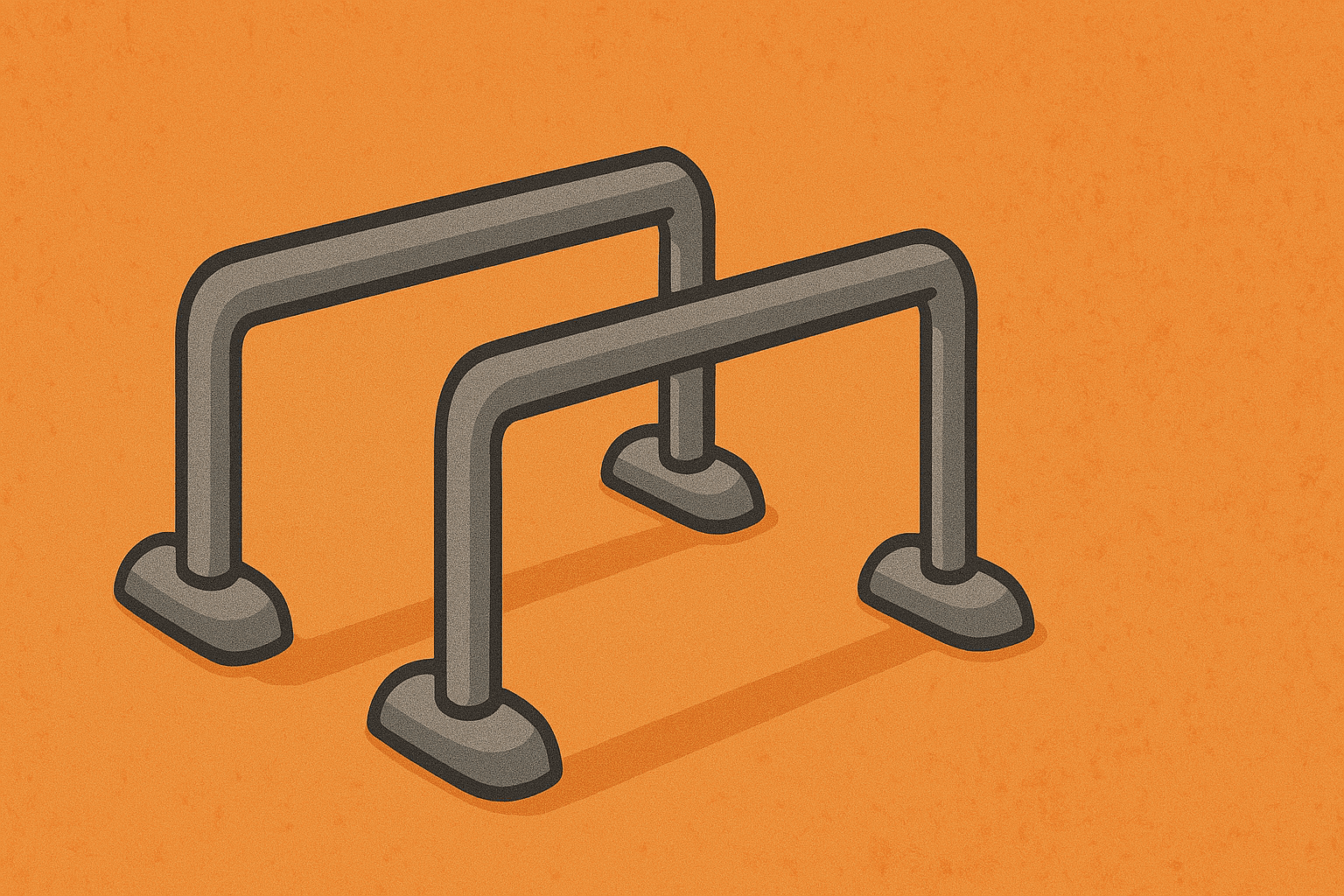
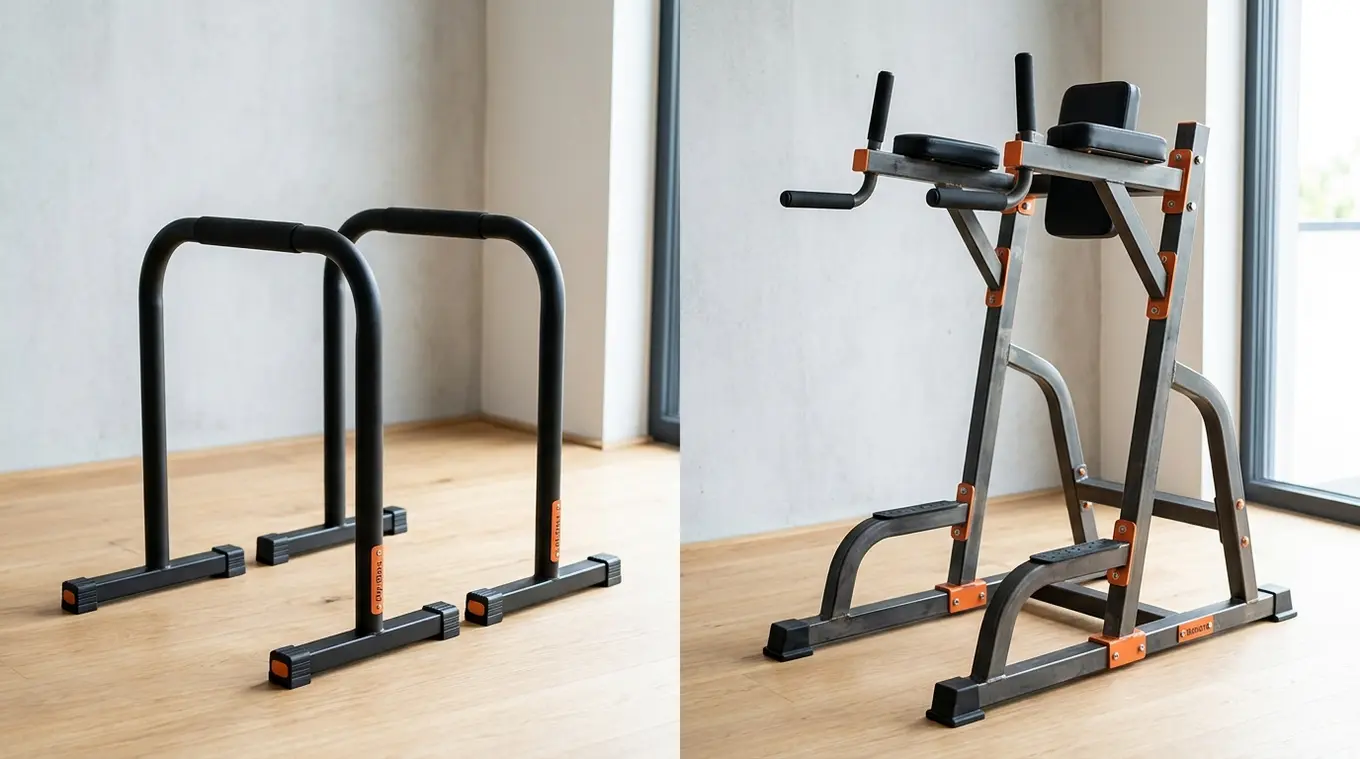
Let’s start with the basics. If you are asking what are dip bars, the short answer is this: dip bars are usually two separate parallel bars that sit on the floor and let you train bodyweight pushing and core movements. Some models connect in the middle, while others stay fully independent. Their biggest strength is simplicity. You can move them around, change their spacing, and store them much more easily than larger stations.
In practice, dip bars are a very popular choice for calisthenics because they give you the essentials without forcing you to dedicate a big area of your home gym. Good bars are stable enough for dips, rows, knee raises, L sits, tuck planche work, and even handstand drills. If you want a portable setup, something like the GORNATION Premium Dip Bars makes a lot of sense because they are built for flexible use and have a very high stated weight limit.
Dip Station: Full Frame, Fixed, Feature Rich
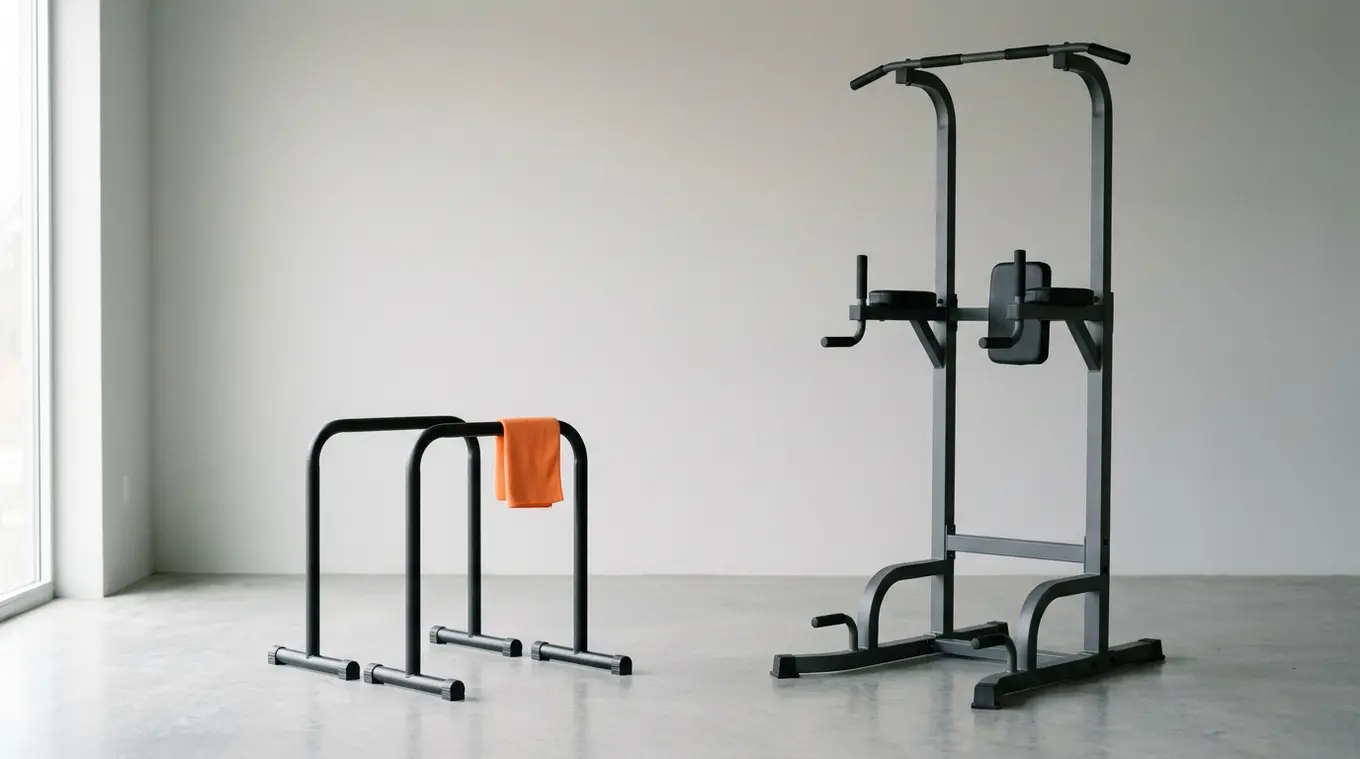
So, what is a dip station? A dip station is a larger freestanding structure with fixed bars connected by a frame. In many cases, people also use the term for a section of a power tower or pull up station that includes dip handles. Compared with standalone bars, a dip station feels more like a permanent piece of equipment.
The advantage is obvious. You usually get a more unified structure and often more exercise options in one setup. The downside is also obvious. It is bulkier, harder to move, and usually takes over part of a room. For athletes building a serious home gym, that can be fine. For apartment training, it is often the deciding drawback.
The Key Structural Differences Between Dip Bars and a Dip Station
Base Design and Footprint
The biggest difference in dip bars vs dip station for home gym use is the base design. Dip bars typically use two separate feet or frames. That means you can place them exactly where you want and adjust the width to your body and exercise style. This is useful if you have broad shoulders, want a narrower triceps dip setup, or like using the bars for rows and static work.
A dip station usually has one connected frame. That design can improve the overall feel of the unit, but it also creates a larger footprint. If floor space matters, dip bars usually win without much debate. I have trained in small rooms where standalone bars were easy to tuck away after a session, while a full station would have been in the way every day.
Height, Adjustability, and Build
Height matters more than many beginners expect. Lower dip bars can work for rows, support holds, and L sits, but taller bars often allow a better range of motion for dips and more freedom for straight leg core work. A dip station may give you a fixed height, while dip bars can sometimes offer a more versatile setup depending on the model.
Build quality is where you should pay close attention to dip bars weight limit and dip station weight capacity. Cheap products often look fine in photos but feel shaky under real training load, especially if you plan to do weighted dips. Stronger steel, quality welds, grippy handles, and non slip feet matter a lot more than fancy marketing claims. This is one reason I tend to recommend established calisthenics brands. GORNATION, for example, offers dip bars with a very high load rating that makes them suitable not just for beginners, but also for heavier athletes and weighted calisthenics.
Stability: Which One Wobbles Less?
If you are wondering are dip stations safer than dip bars, the answer is not automatically yes. Stability depends more on design quality, floor surface, and how you use the equipment than on the category alone.
A well made dip station often feels stable because the whole frame is connected. For strict dips and support holds, that can feel reassuring, especially for beginners. But not every station is stable. Some cheaper models wobble side to side because they use thin tubing and lightweight construction.
Dip bars can be extremely stable too, especially if they have wide feet, solid rubber contact points, and enough weight in the frame. In my experience, high quality standalone bars often feel better than low end dip stations. So when people ask are dip bars safe, my answer is yes, if you buy a good pair and use them on an appropriate surface. Hardwood, rubber flooring, or concrete usually works better than thick carpet.
If maximum stability is your top priority and you do not need portability, a fixed setup can still have the edge. But for most people, quality matters more than the label dip bars or dip station.
How to Set Up Dip Bars Safely
Once you have chosen your dip bars, a correct setup makes a real difference in both safety and performance. Start with the surface. Hardwood floors, rubber mats, and concrete give the best grip and stability. Avoid thick carpet, which can cause the feet to sink unevenly and create instability under load.
Set the bar width so your hands sit roughly at shoulder width or slightly wider. This allows a natural shoulder position during dips and reduces strain on the joints. If your bars are fully independent, adjust each side before your first set and do a firm shake test before adding your full bodyweight.
For rows and L sit work, lower bar height is often more practical. For dips with a full range of motion, taller bars let your legs hang freely without touching the floor. If your model offers height adjustment, take a few minutes to experiment and find what works best for your body and the movements you are training.
Portability and Space: Dip Bars Win Here
This is the easiest section to judge. If you need something for an apartment, garage, spare room, or flexible indoor outdoor training, dip bars are the clear winner. They are easier to move, easier to store, and easier to fit into a small home gym. That is why many athletes searching are dip bars or dip station better for calisthenics at home end up choosing bars.
A dip station can still make sense if you have a dedicated training room and want one larger piece that stays in place all year. But if space is limited, a full station often feels like too much equipment for one movement pattern.
If portability matters a lot to you, it is worth looking at equipment guides like best portable calisthenics equipment to compare how dip bars fit into a minimalist setup.
What Exercises Can You Do on Each?
Dip Bars: Core Calisthenics Movements
When people ask about exercises you can do on dip bars, they are usually surprised by how much is possible. The basics include dips, support holds, knee raises, leg raises, L sits, tuck sits, and inverted rows. With enough bar height and stability, you can also practice planche leans, handstand entries, and static holds.
For many calisthenics athletes, that already covers a lot of valuable training. I have personally used dip bars for high volume dips, strict rows, and core work for years, and they are one of the best tools for building pushing strength without overcomplicating your setup. If you want more movement ideas, this guide on dip bar exercises is a helpful next step.
| Criteria | Dip Bars | Dip Station |
|---|---|---|
| Footprint | Small, easy to store | Larger, takes up fixed space |
| Portability | High, easy to move | Low, designed to stay in place |
| Stability | Very good with quality models | Often stable, but depends on frame quality |
| Exercises | Dips, rows, L sits, holds, core work | Comparable, sometimes extra options with power tower models |
| Adjustability | Often flexible width and placement | Usually fixed width and height |
| Price | Usually more affordable | Usually more expensive |
| Best for | Small home gyms, calisthenics, flexible training | Fixed home gym setups, all-in-one feel |
Dip bars also work well for progression. Beginners can start with support holds and bent knee raises. Intermediate athletes can build toward full dips and L sits. Advanced athletes can load dips with a belt, work on tuck planche positions, or combine bars with a weighted calisthenics setup.
Dip Station: More Versatility, More Bulk
Now let’s talk about exercises you can do on a dip station. A dip station can handle almost everything dip bars can do, including dips, knee raises, leg raises, support holds, and rows. Depending on the model, you may also have more room for front dips, bodyweight rows at different angles, and some static work.
If the station is part of a larger power tower, the exercise list grows even more because you may also get pull ups, vertical knee raises, push up handles, or back support pads. That added versatility is useful if you want one machine that covers several basics. The tradeoff is that you are buying a larger and often more expensive piece of equipment.
For pure calisthenics, I usually tell people to think about whether they truly need the extra frame. If your focus is dips, rows, core work, and static strength, dip bars often give you everything important in a more efficient format. If your setup needs to do a little of everything, a station becomes more attractive.
If handstand training is part of your plan, dip bars can also be useful alongside wall drills. This guide on learning how to do a handstand can help you build that skill safely.
Who Should Choose Dip Bars and Who Should Go with a Dip Station?
Choose dip bars if you want flexibility, smaller footprint, easier storage, and a cleaner calisthenics focused setup. They are especially good for apartment dwellers, minimalist home gyms, and athletes who like to train both indoors and outdoors. They are also a strong choice if you care about rows, L sits, and static holds as much as you care about dips.
Choose a dip station if you want a more fixed setup, have enough space, and prefer the feel of a connected frame. It can be a good fit for beginners who want a stable dedicated place to practice support work, or for anyone building a more complete home gym with several stations.
If you ask me for the simplest advice, this is it: most calisthenics athletes do better with good dip bars than with a bulky station. A quality product like the GORNATION Premium Dip Bars is especially appealing if you want serious weight capacity, portability, and enough versatility to grow with your level.
Price Comparison: What Do You Get for Your Money?
In a realistic dip bars vs dip station price comparison, dip bars are usually the better value. You pay less in material and shipping costs because the product is smaller, and you still get access to the main exercises most people actually use. That is why the answer to are dip stations more expensive than dip bars is usually yes.
Budget dip bars can be affordable, but the cheapest options are often where safety problems show up. Thin steel, poor welds, and slippery feet are not worth the savings. Mid range and premium dip bars usually offer the best balance of cost and durability, especially if you plan to use them for years.
Dip stations cost more because they use more material and come with a larger frame. In return, you may get a more fixed structure or extra exercise options. But if your main question is value for money, dip bars often come out ahead because they cover the essentials without forcing you to pay for bulk you may not need.
If you are comparing brands and setups, products from GORNATION stand out because they are designed specifically for calisthenics rather than generic home fitness. That usually shows up in better dimensions, better grip, and more realistic use cases for bodyweight athletes.
Verdict: Dip Bars or Dip Station — Our Recommendation
For most people, I recommend dip bars. They are more space efficient, easier to move, usually cheaper, and still versatile enough for serious calisthenics training. If your goal is a practical home setup for dips, rows, L sits, static holds, and even weighted work later on, dip bars are hard to beat.
A dip station still has its place. If you have plenty of room, want a fixed structure, and prefer an all in one feel, it can be a solid choice. But for the average athlete training at home, standalone bars are usually the smarter buy.
If you want a reliable option that balances portability, stability, and long term progression, I would look closely at GORNATION dip bars first. They fit the needs of most calisthenics athletes better than a bulky station, especially if you want equipment that will still make sense as you get stronger.
When you compare dip bars vs dip station honestly, the right choice usually comes down to space, training style, and budget. Dip bars are the better pick for most home calisthenics athletes because they are compact, versatile, and easier on the wallet while still supporting serious progress. A dip station makes more sense if you want a larger fixed setup and have room to spare. If you want my practical advice, invest in the best dip bars for calisthenics first, learn the basics well, and only move to a full station if your setup and goals truly demand it.
Frequently Asked Questions
Are dip bars or dip station better for calisthenics?
For most calisthenics athletes, dip bars are the better choice because they are portable, space efficient, and versatile enough for dips, rows, L sits, and static holds. A dip station can still be great if you want a fixed setup, but dip bars usually fit home training better.
Are dip stations safer than dip bars?
Not always. Safety depends more on build quality, floor surface, and correct use than on the equipment category. A cheap dip station can wobble more than premium dip bars. If the bars have solid steel construction, wide feet, and good grip, they can be very safe for regular calisthenics training.
What exercises can you do on dip bars?
You can do dips, support holds, inverted rows, knee raises, leg raises, L sits, tuck sits, and planche leans on dip bars. Some athletes also use them for handstand drills and weighted dips. They are more versatile than many beginners expect, especially for upper body and core focused training.
What exercises can you do on a dip station?
A dip station can handle dips, support holds, knee raises, leg raises, rows, and some static strength movements. If it is part of a larger power tower, you may also get pull up and vertical knee raise options. That extra versatility is useful, but it comes with a bigger footprint.
Are dip stations more expensive than dip bars?
In most cases, yes. Dip stations usually cost more because they use more material and take up more space. Good dip bars often give better value if your main goal is calisthenics. You can get the key exercises and solid long term progression without paying for a large frame you may not need.