You start adding weight to your pull ups or dips, and the same question keeps coming up: should you get a dip belt or a weighted vest? That is a common crossroads, especially once bodyweight training stops feeling challenging enough. Both tools can help you build strength, muscle, and better control, but they do it in very different ways. In this guide, I will break down the real differences, where each one shines, and which option makes more sense for your goals. If you want a clear answer without the usual hype, you are in the right place.
What Is a Dip Belt and What Is a Weighted Vest?
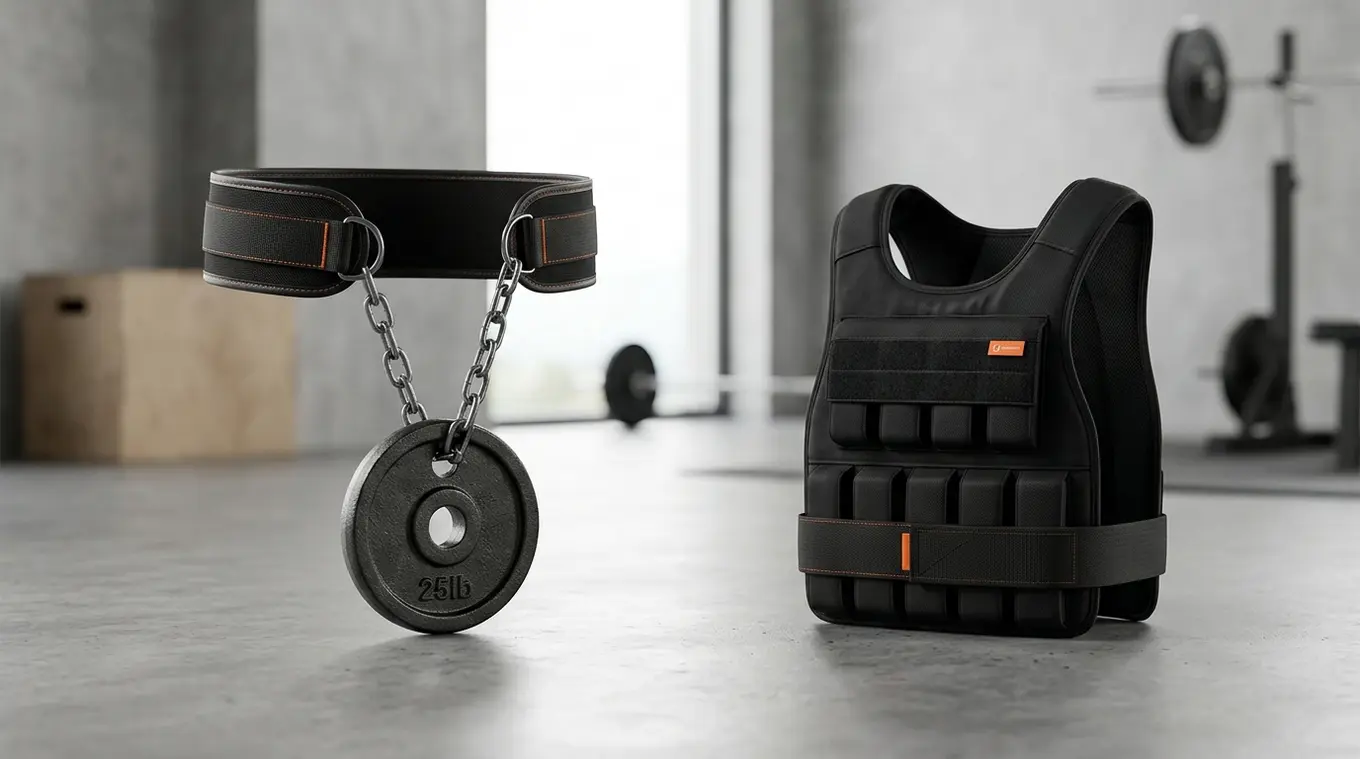
If you are comparing a dip belt vs weighted vest, it helps to start with the basics. Both are tools for adding resistance to bodyweight training, but they change your workout in very different ways. One hangs weight from your waist. The other spreads weight across your torso. That difference affects comfort, movement, loading potential, and exercise selection.
How a dip belt works
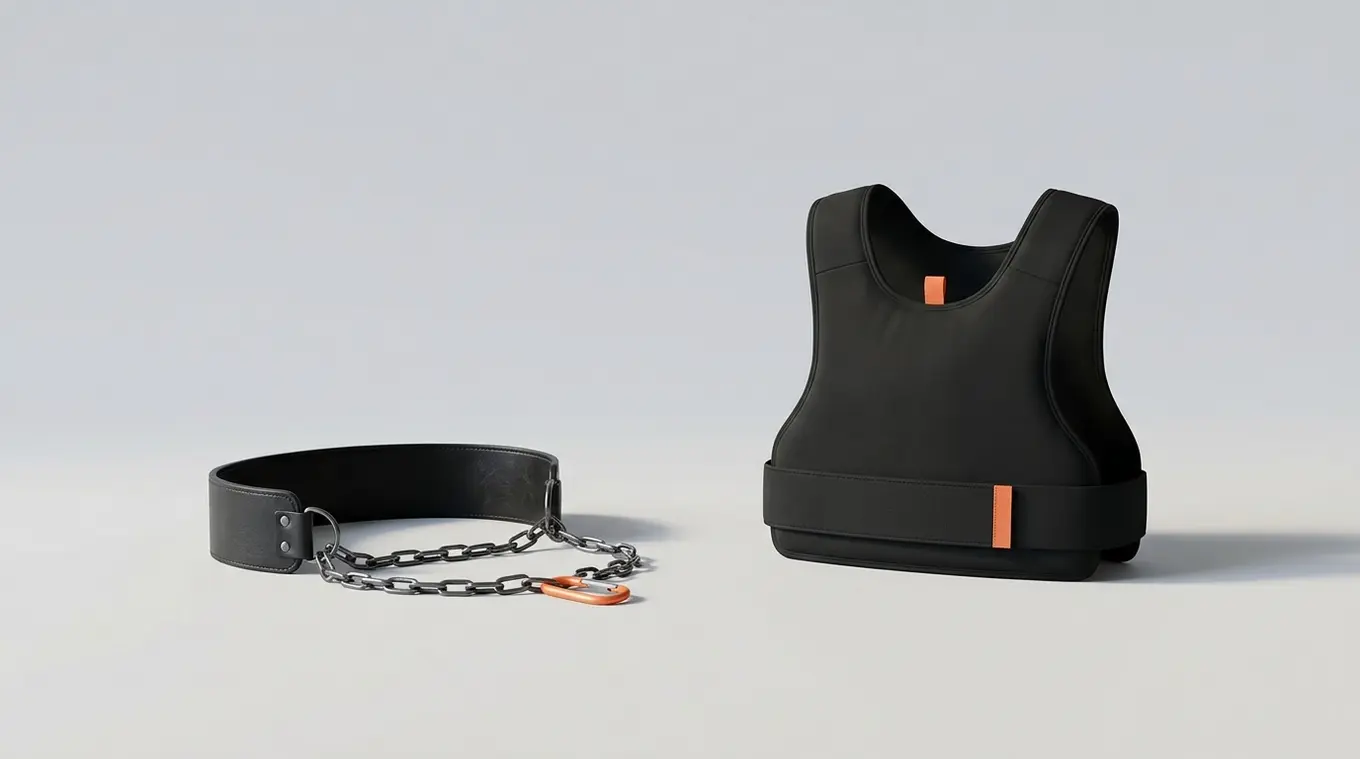
What is a dip belt? A dip belt is a belt worn around your hips or waist with a chain or strap that holds weight plates, kettlebells, or dumbbells below your body. It is mostly used for pull ups, chin ups, dips, and sometimes muscle ups. Because the load hangs underneath you, your torso stays relatively free, and your shoulders can move naturally.
In practice, this is one of the best tools for serious weighted calisthenics. I have used dip belts for years for pull ups and dips, and once the basics are solid, it is usually the easiest way to apply progressive overload without changing the movement too much. If you want a reliable option, a Gornation dip belt is worth looking at, especially if your focus is strength progression and streetlifting-style training. If you want to go deeper on design choice, this guide on rope or chain for dip belt is useful.
How a weighted vest works
A weighted vest is worn on your upper body like a close-fitting vest with built-in or removable weight. Instead of the load hanging below you, the resistance sits around your chest, back, and torso. That makes it feel more integrated into your body and often more convenient for general workouts.
Weighted vests work well for push ups, squats, lunges, step ups, walking, runs, jumps, and higher rep calisthenics sessions. They can also be used for pull ups and dips, but the experience is different. On some movements, especially explosive ones, the bulk on your torso can get in the way a bit. Still, for general conditioning, hypertrophy work, and full body training, a vest is hard to beat. If that is your direction, a Gornation weighted vest is a sensible option because it fits the kind of practical calisthenics training most people actually do.
The Core Difference Between a Dip Belt and Weighted Vest
The core difference between a dip belt and weighted vest is where the load sits and how that changes the exercise. A dip belt keeps the weight low and hanging, while a weighted vest keeps the load attached to your torso. That one detail affects almost everything.
In a dip belt vs weighted vest for strength comparison, the dip belt usually wins for upper body pulling and dipping strength because it lets you add a lot of weight with less restriction. In a dip belt vs weighted vest for hypertrophy comparison, the answer is more mixed. Both can help build muscle, but the better tool depends on the movement pattern and the rep range you are using.
If your main goal is getting stronger at weighted pull ups, weighted dips, or chin ups, the dip belt is usually more specific and easier to progress. If your goal is making lots of exercises harder without changing equipment all session long, the weighted vest is often more practical.
That is why this is not really about which tool is universally better. It is about which one fits your training better.
Load Distribution and Max Weight: Which Can You Load Heavier?
This is where the difference becomes very clear. A dip belt can usually be loaded much heavier than a weighted vest. Most weighted vests top out at a moderate load. That is fine for many athletes, but strong calisthenics athletes often outgrow a vest quickly for pull ups and dips.
With a dip belt, you are limited more by your strength, available plates, and the quality of the belt than by the concept itself. That makes it the better option for heavy progressive overload. In a dip belt vs weighted vest for pull ups comparison, this matters a lot. Many people can outgrow a vest on pull ups long before they stop progressing with a belt.
Load distribution also changes how the exercise feels. A weighted vest spreads the stress around the torso, which some people find more comfortable for walking, squats, and push ups. A dip belt concentrates load lower, which often feels more stable on vertical pulling and dipping patterns. The hanging load can even help some athletes find a smoother groove in dips and pull ups because the center of mass stays lower.
As for dip belt vs weighted vest lower back strain, this depends on form and the amount of weight used. A poorly fitted vest can compress your torso and make breathing or posture feel awkward. A very heavy dip belt can pull on the hips and lower back if you swing, rush reps, or lose core tension. In my experience, lower back issues are usually more about bad loading choices and sloppy movement than about the tool itself.
Freedom of Movement and Comfort During Training
Comfort matters more than people think. If a tool annoys you every session, you will use it less. In a dip belt vs weighted vest comfort comparison, there is no one-size-fits-all answer. It depends on the exercise and the amount of weight.
Mobility with a dip belt
A dip belt leaves your chest, shoulders, and upper back mostly free. That is a big advantage for pull ups, chin ups, and dips. Your scapula can move naturally, and you do not have a bulky vest pressing against your torso. This is one reason many athletes prefer a dip belt vs weighted vest for dips and heavy pulling work.
The downside is that the hanging weight can swing if you move too fast or perform explosive reps without control. For strict strength work, this is usually manageable. For circuits, conditioning, or anything that involves running or jumping, it becomes less convenient.
There is also a setup factor. You need plates, you need a place to attach them, and between sets it is less simple than just wearing a vest. In a home gym with limited weights, this can matter.
Mobility with a weighted vest
A weighted vest feels more natural for moving around because the load stays attached to your body. For walking lunges, squats, push ups, step ups, and conditioning work, that is a major plus. You can keep training without the weight swinging between your legs or hitting equipment.
That said, a vest can feel restrictive when the load gets heavier. On pull ups, some vests slightly alter your line of pull. On dips, especially deep dips, bulk around the chest can feel awkward. On muscle ups, the extra material on the torso often gets in the way more than people expect.
So in a dip belt vs weighted vest comfort debate, the vest usually feels better for mixed training and movement based sessions, while the belt often feels better for heavy upper body strength work.
Which Is Better for Pull-Ups and Dips?
For most people, the dip belt is better for pull ups and dips. That is the short answer. If you want the longer answer, it comes down to specificity, loading potential, and movement quality.
In a dip belt vs weighted vest for pull ups comparison, a dip belt usually allows cleaner mechanics and much heavier progression. Your torso stays less restricted, and the hanging load does not crowd the top position. For strict weighted pull ups, that is a big advantage. If you are still working on bodyweight reps, first dial in your technique with a guide like how to do a pull up with perfect form.
In a dip belt vs weighted vest for dips comparison, the same pattern holds true. A belt lets you add weight without putting bulk across the chest and shoulders. Deep dips tend to feel more natural with a belt, especially once the load gets challenging. If you are still building your base, this article on how to do a bodyweight dip can help.
| Category | Dip belt | Weighted vest |
|---|---|---|
| Best for | Heavy pull ups, chin ups, dips, strength progression | General fitness, full body training, conditioning |
| Max loading potential | Usually much higher | Usually moderate |
| Freedom of movement | Very good for upper body pulling and dipping, but weight can swing | Better for moving around, circuits, walking, and lower body work |
| Versatility | More limited | More versatile across many exercises |
| Comfort | Less torso restriction, but setup is less convenient | Convenient and integrated, but can feel bulky |
| Beginner friendliness | Better if focused on weighted pull ups and dips | Better for general training once basics are solid |
| Best choice if you can buy only one | Choose this for serious weighted calisthenics strength | Choose this for broader training variety |
Can you use a weighted vest for pull ups and dips? Absolutely. And for moderate loading, it can work well. But if your plan is to get very strong at those movements, the dip belt is usually the smarter long term buy. This is why, when people ask me dip belt vs weighted vest which should I buy for upper body strength, I usually point them toward the dip belt first.
Versatility: What Exercises Can You Do With Each?
Versatility is where the weighted vest fights back. If your training includes more than just pull ups and dips, this category matters.
What you can do with a dip belt
A dip belt is best known for pull ups, chin ups, dips, and muscle ups. You can also use it for neutral grip pull ups, ring dips, and some creative lower body work like belt squats if your setup allows it. But in reality, most people buy a dip belt for upper body strength.
That focus is not a weakness if your goal is weighted calisthenics performance. It is actually one of the reasons the tool works so well. It does not try to do everything. It does a few things very well. If your main training identity is streetlifting or strength based calisthenics, that is exactly what you want.
What you can do with a weighted vest
A weighted vest can be used for push ups, rows, squats, split squats, walking lunges, stair work, step ups, planks, burpees, hikes, and even daily walks. It also works well for handstand holds, though you need to be careful adding load to inverted work. If body control is part of your training, this handstand guide may help: learn how to do a handstand.
That broad use makes the vest appealing for general fitness and home workouts. It is also great if you want to make easier movements more challenging without changing your training style too much. In a dip belt vs weighted vest for hypertrophy comparison, the vest can be a strong option because it makes volume work and accessory training simple.
So if you want one piece of gear for a wide range of movements, the weighted vest is more versatile. If you want the strongest tool for heavy pull ups and dips, the dip belt is still ahead.
Dip Belt vs Weighted Vest for Beginners
Beginners often ask which is safer and easier to start with. The honest answer is that beginners usually do not need either right away. If you cannot yet do solid bodyweight pull ups, dips, push ups, and squats with control, adding resistance too soon is rarely the best next step.
Once you have a good base, a weighted vest is often the more beginner friendly option for general training. It is simple to use, less intimidating, and works across many exercises. For someone doing home workouts with push ups, squats, lunges, and rows, a vest can be a practical first piece of weighted calisthenics equipment.
For beginners focused specifically on weighted pull ups and dips, a dip belt can still be a great choice, but only if the basics are already strong. In that case, it may actually save money long term because you are less likely to outgrow it quickly.
As for dip belt vs weighted vest safety and dip belt vs weighted vest injury risk, both are safe when used well and risky when used badly. Problems usually come from ego loading, poor range of motion, and skipping progression. Start light, stay strict, and do not add weight to compensate for poor form.
Pros and Cons: Quick Overview
Here is the practical summary.
-
Dip belt pros: better for heavy loading, excellent for pull ups and dips, less torso restriction, usually more affordable, easy to progress with standard plates.
-
Dip belt cons: less versatile, requires plates or kettlebells, can swing during dynamic movement, not ideal for conditioning sessions.
-
Weighted vest pros: more versatile, great for full body training, easy for circuits and conditioning, comfortable for walking and lower body work, simple to use at home.
-
Weighted vest cons: usually lower max load, can feel bulky, may interfere with pull ups, dips, and muscle ups, often more expensive for the loading you get.
In a best dip belt vs best weighted vest comparison, the better product is not automatically the better buy. The right choice depends on your actual training goals, not just product quality.
Price and Value: What to Consider Before You Buy
Price is often part of the decision, and it is worth thinking about before you commit. Dip belts are generally one of the more affordable pieces of weighted calisthenics equipment. The design is simple, and a quality belt typically costs less than a comparable adjustable weighted vest. Because the loading potential is high, you are also less likely to outgrow it quickly, which makes it solid long-term value if your training centres on pull ups and dips.
Weighted vests vary more in price. Basic fixed-weight options tend to be affordable, while adjustable, higher-quality models often cost more. When you factor in the typically lower maximum weight capacity, the cost relative to the usable resistance can work out higher than with a dip belt.
If budget is a deciding factor and your main goal is weighted upper body strength, a dip belt is often the better first investment. If you want flexibility across a wide range of exercises and are willing to pay more for that versatility, a quality weighted vest can still be worth it. Either way, prioritize build quality and fit over price alone, since a poorly made belt or vest will limit your training sooner than a well-made one.
Which One Should You Choose? Our Recommendation
If your main goal is to get stronger at pull ups, chin ups, and dips, buy a dip belt. That is my clear recommendation. In a dip belt vs weighted vest for strength decision, the dip belt is usually the better tool. It loads heavier, keeps your movement more natural for these lifts, and gives you more room to progress over time. For that use case, a Gornation dip belt is an easy recommendation because it is built for the exact kind of training serious calisthenics athletes do.
If your main goal is more general fitness, full body sessions, conditioning, and adding resistance to lots of movements, buy a weighted vest. In a dip belt vs weighted vest which should I buy question for mixed training, the vest often makes more sense. It is easier to throw on and use for push ups, squats, lunges, walks, and higher volume work. A Gornation weighted vest fits well here if you want a clean option for home or outdoor workouts.
If you are deciding between the two and can only buy one, I would use this simple rule. Choose a dip belt if your progress is measured by weighted pull ups and dips. Choose a weighted vest if your progress is measured across many different bodyweight exercises.
And if you are deep into calisthenics and train often, there is a good chance you will eventually want both. That is what I have found in practice. The dip belt handles the heavy upper body work. The weighted vest fills the gap for volume, conditioning, and full body training. Used together, they complement each other really well.
So when people ask me for the final answer on dip belt vs weighted vest, I keep it simple. For serious weighted calisthenics strength, start with the dip belt. For broader training variety, start with the vest.
Conclusion
The dip belt vs weighted vest debate becomes much easier once you look at your real goal. A dip belt is usually the better choice for heavy pull ups, dips, and long term strength progression. A weighted vest is usually the better choice for all-around training, conditioning, and making more exercises harder without much setup. Neither tool is automatically better in every situation. If you want the most direct path to stronger weighted calisthenics, go with a dip belt. If you want versatility first, go with a weighted vest. Choose the one that matches how you actually train, not just what sounds good on paper.
Frequently Asked Questions
Is a dip belt better than a weighted vest for building strength?
For pull ups, chin ups, and dips, yes, a dip belt is usually better for strength. It allows heavier loading and often feels more natural on upper body movements. A weighted vest still builds strength, but most athletes outgrow it faster on these exercises.
Is a weighted vest better for hypertrophy?
A weighted vest can be great for hypertrophy if you do a lot of higher rep push ups, squats, lunges, and accessory work. It makes volume training easy. For upper body hypertrophy on heavy dips and pull ups, though, a dip belt can still be the stronger option.
Which is safer, a dip belt or a weighted vest?
Both can be safe when used with good form and reasonable progression. Injury risk usually comes from adding too much weight too soon or using poor technique. A dip belt needs control to avoid swinging, while a weighted vest needs a good fit so it does not affect posture or movement.
Should beginners buy a dip belt or a weighted vest first?
Most beginners are better off building a strong bodyweight base first. After that, a weighted vest is often the easier first purchase for general training. If a beginner already has solid pull ups and dips and wants to focus on weighted strength, a dip belt can make more sense.
Can I use a weighted vest for pull ups and dips instead of a dip belt?
Yes, you can, especially for moderate resistance and home workouts. But if your focus is heavy weighted pull ups or heavy weighted dips, a dip belt is usually more comfortable and easier to progress with. That is why many athletes eventually switch to a belt for serious strength work.