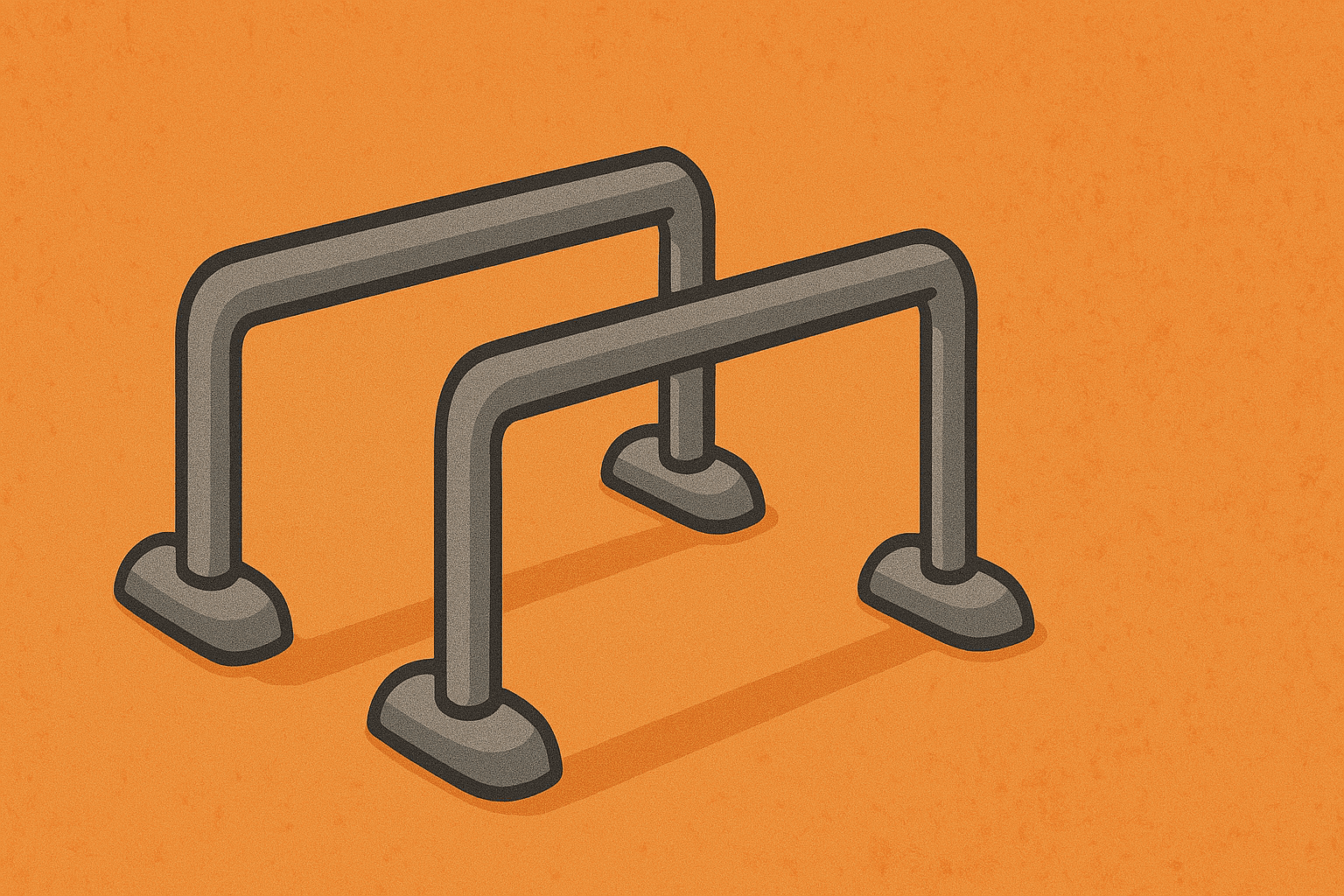
Dip bars have a long-standing place in calisthenics and bodyweight training. They’re simple yet powerful tools that work for almost everyone, from beginners to serious lifters. With just a dip bar, you can train your chest, shoulders, triceps, back, and core, all with one piece of equipment.
What makes dip bars special is their versatility. You can use them for classic dips, knee raises, leg lifts, and even advanced exercises like L-sits or muscle-up progressions. People love dip bars not only for building visible upper-body strength and muscle but also for the way they challenge stability and support healthy joints.
Dip bar training is popular because it fits various fitness goals—gaining muscle, boosting endurance, or increasing joint stability. Whether you’re setting up at home or heading to a local park, dip bars are a top pick for efficient, effective upper-body workouts.
Why Train with Dip Bars?
Dip bars do more than make workouts more convenient. They’re a science-backed way to work the muscles you care about, build real-world strength, and promote better movement. Let’s look at why dip bars have earned their spot in home gyms, parks, and fitness routines across the world.
Major Muscle Groups Targeted
When you use dip bars, you train several upper-body muscles at once. You’re not just working one area; you’re firing up multiple muscle groups in every rep. Here’s what gets activated:
- Chest (Pectoralis major): Deep engagement, especially when you lean forward.
- Triceps: One of the main muscles responsible for pushing you up.
- Shoulders (Anterior deltoids): Stabilize and press throughout the movement.
- Core: Stays tight for stability, especially in moves like L-sits or leg raises.
Dip bar movements are naturally compound, which means you get more work done in less time. This helps maximize strength development with minimal equipment.
Compound Calisthenics exercises
Dip bar exercises are compound calisthenics. This means you move more than one joint at a time and train several muscles in one go. Studies using tools like 3D motion capture and electromyography (EMG) show that bar dips increase overall upper-body activation. Muscle engagement is not only greater in the chest and triceps, but stabilizers come alive too.
Key findings from current research:
- EMG studies show high muscle activity in the chest, triceps, and front shoulders during dips.
- Varying grip and form can shift the focus or increase complexity for different goals.
In simple terms, science proves that dip bars help you build more muscle and recruit more support muscles than many isolated exercises.
Benefits for Strength, Muscle Growth, Flexibility, and Functional Fitness
- Strength: Pushing your own bodyweight builds pressing power quickly. As you get stronger, you can add weight with a belt or vest.
- Muscle Growth: Multiple muscle groups fire off together, which is ideal for promoting hypertrophy (muscle growth).
- Flexibility and Mobility: Using dip bars requires moving your joints through a wider range of motion. This improves shoulder and chest flexibility when done with proper form.
- Functional Fitness: Dips teach your body how to control itself in space, building the kind of strength you use in daily life. These movements develop coordination, joint stability, and core control.
- Joint Stability: Keeping your body balanced on parallel bars improves shoulder and elbow stability, which is important for injury prevention and long-term health.
Here’s why this matters: You don’t just look stronger, you move and feel stronger, too.
Current Trends and Insights
Dip bars are on the rise in home gyms, parks, and professional training programs. Here’s what’s driving their growth:
- Portability: Many dip bars are lightweight and don’t take up much space, so you can train anywhere.
- Customization: Adjustable dip bars and new designs let people of all shapes and sizes use them safely.
- Progression Options: From assisted dips to weighted versions, anyone can tailor difficulty for their level.
- Real-World Relevance: Trainers are using updated biomechanical research to teach safer, more effective dip variations.
According to recent research, focusing on proper form prevents shoulder and elbow pain and maximizes gains. Following updated guidelines helps you get the most from every rep.
Dip bar training checks all the boxes: muscle gain, better movement, and convenient workouts no matter your experience level.
Essential Dip Bar Exercises for Every Level
Dip bars can unlock a world of strength for anyone, no matter your starting point. The right approach depends on your current fitness level, body awareness, and confidence on the bars. Below, you’ll find practical exercises grouped by beginner, intermediate, and advanced skill sets so you can build smart, avoid plateaus, and make steady progress.
Beginner Friendly: Assisted Dips, Inclined Push-Ups, Static Holds
For those new to dip bars, it’s best to start with movements that build foundational strength and teach solid body alignment.
- Assisted Dips
- Stand between the bars, gripping with palms facing in.
- Use a partner, resistance band, or your feet on the ground to support part of your weight.
- Lower with slow control until your arms reach a 90-degree angle.
- Press back up to the start.
- Modification tip: The more help you give yourself (by keeping more weight on your feet or the band), the easier the move becomes.
- Inclined Push-Ups
- Place your hands on the bars, feet on the floor behind.
- Keep your body in a straight line (head to heels).
- Lower your chest toward the bars, pause, then push back up.
- Progression tip: Step feet farther from the bars to make push-ups harder as you gain strength.
- Static Holds
- Grip the bars and press up so your arms are locked.
- Keep shoulders down and body tall, holding this position for as long as you can.
- Safety cue: Avoid shrugging up or letting your lower back sink. Focus on a “long neck” and tight core.
Beginners should focus on smooth control, alignment, and breathing. As you gain strength, increase time under tension or try harder progressions when ready.
Intermediate Builders: Standard Parallel Dips, Knee Raises, Inverted Rows
Once you’re comfortable supporting your bodyweight, it’s time to challenge your strength, stability, and coordination.
- Standard Parallel Dips
- Start at the top with arms straight and feet off the ground.
- Lower until elbows are about 90 degrees, keeping elbows close to your body.
- Drive up through your palms until arms lock out at the top.
- Key technique: Lean slightly forward to target your chest, or keep torso upright to hit more triceps.
- Knee Raises
- Support yourself at the top of the bars.
- With a tight core, slowly raise knees toward your chest.
- Lower them with control.
- Muscle target: Strengthens abs and hip flexors, fires up stabilizer muscles in shoulders.
- Inverted Rows
- Position yourself under the bars with heels on the floor and hands gripping the bars.
- Body should be in a straight line, facing up.
- Pull your chest to the bars, squeeze shoulder blades at the top, and lower back down.
- Scalability: Bend your knees for an easier version or keep legs straight to make it harder.
These intermediate movements enhance muscle activation, shoulder stability, and total upper-body control. Try 2–4 sets of 6–12 reps, resting as needed.
Advanced Challenges: L-Sits and Weighted Dips
Ready for more intensity and core demand? Advanced dip bar variations boost power, muscle definition, and control.
- L-Sits
- Press yourself up between the bars until arms are straight.
- Tighten your core and lift legs in front, parallel to the ground, forming an “L” shape.
- Hold for as long as possible, keeping knees locked and back straight.
- Progression strategy: Start with one knee bent or legs lower, then work toward the full L-sit as you get stronger.
- Weighted Dips
- Use a dip belt, backpack, or weighted vest.
- Perform standard dips with added load, focusing on strict form rather than max reps.
- Only add weight if you can do at least 8–10 bodyweight dips with confidence.
- Caution: Avoid bouncing or rushing the bottom of the movement. Quality beats quantity.
Advanced exercises demand more from your core, grip, and mental focus. Train with intention, keep your shoulders healthy, and progress only when your body is ready.
Whether you’re just starting out or pushing past plateaus, dip bar exercises let you meet your body where it’s at. Use these progressions to challenge yourself safely and build upper-body strength that stands out.
Mastering Technique: How to Perform Dip Bar Exercises Safely
Getting the most from every dip bar workout starts with learning safe, effective technique. Whether you’re new to the bars or have been repping dips for years, clean form keeps your joints healthy and helps you build strength where it counts. Below, you’ll find the must-know basics on warm-up routines, setting up your bars, hand placement, body alignment, and common mistakes to skip.
Warming Up the Right Way
Your joints and muscles need time to prep before big, compound moves like dips. A smart warm-up routine gets your blood flowing, boosts range of motion, and primes your nervous system for action.
Try this quick routine before hitting the bars:
- Arm circles (forward and backward), 30 seconds each
- Shoulder dislocates with a band or stick, 1 minute
- Scapular push-ups (get your shoulder blades moving), 10-15 reps
- Wrist stretches (palm up and down), 30 seconds each
- Light cardio: Jumping jacks or brisk walking, 2-3 minutes
These steps wake up your shoulders, elbows, wrists, and core. Spend a few extra minutes on any tight areas.
Setting Up Your Equipment
Safe training starts with stable gear. Use dip bars that sit level on the floor and don’t rock side to side. For home units, check the connections before every use.
- Make sure the bars are spaced just a bit wider than your shoulders.
- Adjustable bars are best, allowing you to find a grip width that matches your frame.
- If using portable or park bars, push down hard on each before mounting to check stability.
- The bars should support your full weight (and any added weight you might use later).
A wobbly setup can throw off your balance, forcing your muscles to overcompensate and raising injury risk.
Finding the Optimal Hand Placement
Your hands set the stage for every rep. Grip width influences muscle focus and shoulder comfort:
- Shoulder-width to slightly wider works for most people. Too wide or too narrow puts extra stress on your joints.
- For more chest, lean slightly forward and let your elbows flare gently.
- To focus your triceps, stay upright and keep elbows tucked in by your body.
- Use a neutral grip (palms facing each other) for best joint alignment and control.
Keep your wrists straight, and avoid excessive bending that can cause pain over time.
Perfecting Range of Motion and Body Alignment
Controlled, steady movement tops any fast or sloppy rep. Here’s what solid form looks like:
- Start at the top, arms straight, shoulders set down and back (not shrugged).
- Cross your ankles and bend your knees slightly to help balance.
- Lower yourself until elbows reach about 90 degrees—forearms parallel to the floor.
- Avoid dipping too deep, as this strains the shoulder joints without adding benefit.
- Push back up by driving through your palms, straightening your arms.
Always move in a slow, steady rhythm. Use your core to stop any swinging.
Breathing for Power and Stability
Proper breathing helps power your reps and keep your core stable.
- Inhale on the way down (lowering phase).
- Exhale as you push up (lifting phase).
Holding your breath for too long can spike blood pressure or make you dizzy, so keep your breaths steady and in sync with your movement.
Common Mistakes to Avoid
Cutting corners with dip bar technique is a shortcut to aches and slow progress. Here are the slip-ups to watch for:
- Rushing reps: Speed sacrifices control and loads your joints.
- Going too low: Dropping past shoulder level increases injury risk.
- Flaring elbows too wide: This strains the shoulders and reduces strength gains.
- Shrugging shoulders upward: Keep them down and away from your ears.
- Using momentum or swinging: This cheats your muscles and eats into results.
- Ignoring pain: Sharp discomfort is a warning sign. Stop and reassess your form.
Paying attention to these basics, drawn from trusted industry resources and current real-world gym safety tips, means you’ll get stronger, feel better, and train with confidence every time you approach the dip bars. Stay tuned for technique cues as you move into more advanced progressions.
Building Effective Dip Bar Workout Routines
Dip bars can anchor your workout plan, whether your main goal is building pure strength, muscle size, or relentless endurance. The real secret of effective routines is not just picking a few moves and chasing fatigue, but using structure: match exercise selection, volume, and frequency to your unique target. Here’s how you can turn a dip bar into your personal training partner, maximize your results, and keep your progress moving forward.
Sample Routine for Strength
If your main focus is getting stronger, you want lots of rest, low reps, and controlled tempo. Strength workouts challenge the nervous system and ask your body to push heavy loads, typically with fewer total reps.
Sample Strength-Driven Session:
- Warm-Up: 5 minutes (light cardio, shoulder mobility, wrist preps)
- Parallel Bar Dips: 4–5 sets of 3–6 reps (add weight if you can complete 6 reps with solid form)
- Inverted Rows: 4 sets of 5–8 reps
- L-Sit Holds: 3 sets of 10–20 second holds
- Rest: 2–3 minutes between sets
Key points:
- Focus on strict form and deep muscle engagement every rep.
- Progress by adding reps, sets, or a small amount of weight each week.
Sample Routine for Hypertrophy (Muscle Growth)
For muscle size, aim for moderate rep ranges, shorter rest breaks, and a focus on muscle tension. The goal is to really “feel” the target muscle working and chase a pump without sacrificing form.
Sample Muscle-Building Session:
- Warm-Up: 3–5 minutes mobility
- Standard Dips: 3–4 sets of 8–12 reps
- Dip Bar Push-Ups: 3 sets of 10–15 reps
- Knee Raises: 3 sets of 12–15 reps
- Parallel Bar Support Holds: 3 sets, hold as long as possible (target 20–40 seconds)
- Rest: 60–90 seconds between sets
Key points:
- Control each lowering phase to maximize tension (3-second descent recommended).
- Only add weight when you can hit the top rep range.
- Drop sets or slow negatives can boost challenge for the last set.
Sample Routine for Endurance
Want to go the distance? High-rep, low-rest routines help your shoulders, arms, and core keep firing long after they’d normally tap out. These routines work well if your goal is muscular stamina or if you want to prepare for tough circuits.
Endurance-Focused Session:
- Warm-Up: 3 minutes, dynamic movements
- Bodyweight Dips: 3–4 sets of 15–25 reps
- Inclined Push-Ups on Bars: 3 sets of 20+ reps
- Leg Raises: 3 sets of 15–20 reps
- Fast Isometric Hold (top or bottom position): 3 sets of 20–30 seconds
- Rest: 45–60 seconds between sets
Key points:
- Stay strict on form as fatigue builds—speed is not the goal.
- Stop just shy of failure so you keep your joints healthy.
Programming Frequency and Recovery
How often should you hit the dip bars? The sweet spot for most people is 2–3 sessions per week. Rest at least one full day between sessions to let your muscles, joints, and nervous system recover and grow. More advanced athletes sometimes use split routines, pairing push (dips, push-ups) and pull (rows, pull-ups) days to increase training frequency.
Tips for Better Recovery:
- Always warm up and cool down, especially if training heavy or high-rep.
- Prioritize sleep, hydration, and a balanced diet to optimize repair.
- Watch for nagging joint pain and take a lighter week (“deload”) every few months.
Integrating Dip Bars with Other Calisthenics Movements
Dip bar training works best when you mix it up with a few key calisthenics staples. Pair push moves on the bars with pulling motions and leg exercises to balance your body and prevent overuse.
Simple Integration Ideas:
- Superset dips with pull-ups or inverted rows for full upper-body coverage.
- Add squats or lunges between sets for total-body flow.
- Use core moves (planks, hanging leg raises) at the end for stability gains.
When you blend dip bar routines with a few pull and leg exercises, you build a body that’s not just strong at one move, but balanced, athletic, and ready for anything. Pick a plan that suits your goal, train consistently, and enjoy watching your progress climb.
Conclusion
Dip bar training brings impressive results for strength, muscle gain, and flexibility, all with one simple piece of equipment. With regular practice, these exercises help you build a rock-solid upper body, steady your core, and boost joint health.
Sticking to good form keeps you safe and lets you add intensity over time, whether you’re after more muscle or just want to feel stronger day to day. The best progress comes from showing up often, adjusting the challenge, and enjoying each win along the way.
Have a favorite dip bar move or want tips on getting started? Drop a comment below or share your story—your feedback helps everyone train smarter. Thanks for reading!