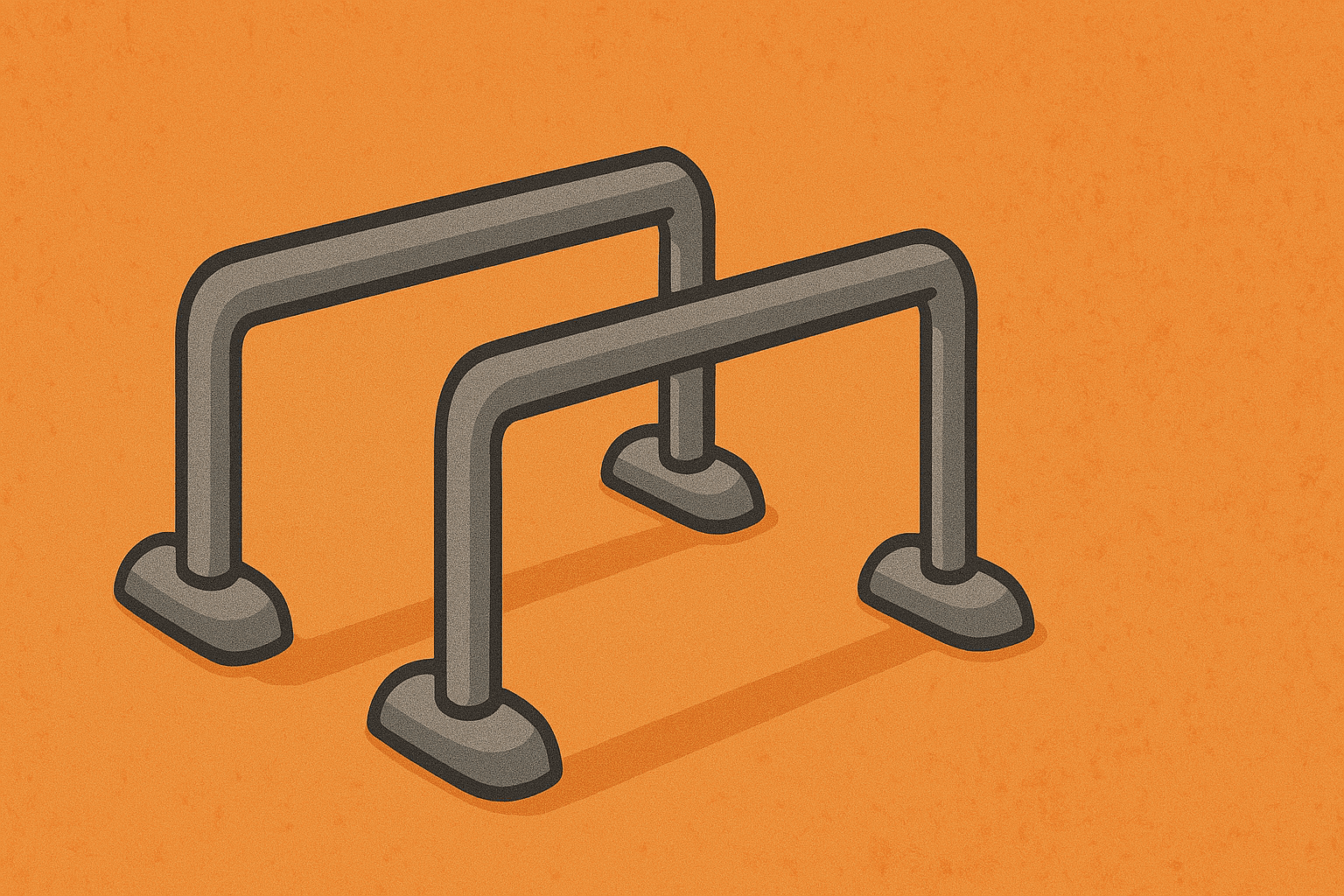
If you want more strength, balance, and protection for your wrists in your training, parallettes just make sense. These handy bars raise you off the floor for bodyweight moves, giving your joints a neutral position and letting you train deeper, safer, and smarter. In calisthenics, they’re a go-to tool for pushing your muscles to new limits and learning advanced skills without wrecking your wrists.
Using parallettes, you can unlock fuller push-ups, powerful L-sits, and even planche progressions—all with more control and less discomfort. They’re perfect if you’re searching for ways to challenge your body and upgrade your routine. If you’re new to this gear or looking for the right set, check out the best parallettes for calisthenics training to get started with confidence.
Why Use Parallettes for Calisthenics Training?
Parallettes are more than just gym props—they’re powerful tools for building better movement, safer joints, and total control over your bodyweight workouts. Adding parallettes to your calisthenics practice can transform how you train by opening up deeper ranges of motion, protecting your wrists, and letting you try skills on your own terms.
Technical Advantages that Make a Difference
What sets parallettes apart from training right on the floor? The magic is in their design and the results they deliver.
- Neutral Grip: Parallettes put your wrists and hands in a strong, neutral position instead of the turned-out stress you get from floor push-ups or L-sits. This grip allows you to push harder, hold longer, and avoid common aches.
- Deeper Range of Motion: The elevated bars let you train with a greater range, which means muscles are challenged in new ways. Moves like push-ups, dips, and tuck planches become more effective because you can go lower and gain strength through a fuller arc.
- Stability for Progressions: Trying advanced holds like planches or handstand push-ups? The steady base of parallettes makes working through progressions less intimidating and more controlled.
- Portability: Many parallettes, especially metal and wooden models, are easy to stash in your bag and set up anywhere. This freedom makes it simple to keep your workouts consistent—whether you’re at home or traveling.
Safety and Wrist Health
For anyone who’s struggled with sore wrists, parallettes are a game changer. The bars encourage a straight wrist position, reducing the force and strain that can lead to injury. If you’ve avoided exercises like push-ups, dips, or L-sits due to discomfort, parallettes let you get back to building strength without fear.
Some models, such as the Metal Parallettes for Calisthenics, support loads up to 500 kg per pair, offering serious safety and confidence even for demanding skills.
Versatility for All Levels
Not just for the advanced, parallettes help beginners and experts alike. You can start with simple elevated planks, then move on to more complex holds or pressing moves as you build strength. They’re useful for anyone looking to:
- Build shoulder and core stability
- Progress safely through harder skills
- Mix up their workout routine for more muscle and less risk
Choosing the right set of parallettes matters too. For a breakdown of top options depending on your level and goals, check out the best parallettes for calisthenics training before adding them to your setup.
Foundational Parallette Exercises for Beginners
Getting started with parallettes isn’t about showing off. It’s about building reliable strength and coordination from the ground up. Parallettes support better movement patterns, so you can learn control, develop your core, and master balance as you train. Here’s how you can build a rock-solid base with the most essential beginner exercises.
Perfect Parallette Push-Ups: Variations, Form Tips, and Why They Work
Parallette push-ups are the bread and butter of beginner workouts on these bars. You raise your hands off the floor, which lets you dip your chest below your wrists for a fuller stretch and muscle activation. That extra range brings your chest, shoulders, and triceps to life, while the bars protect your wrists from awkward angles.
For best results, keep these tips in mind:
- Wrist Alignment: Grip the bar firmly with wrists stacked under your shoulders. This keeps tension off your joints and helps distribute force evenly.
- Full Range of Motion: Lower yourself so your chest drops just below the top of the parallettes. Pause at the bottom for more muscle engagement.
- Shoulder Position: Keep your shoulders slightly down and back, not shrugged up. This protects your shoulders and helps push with power.
Looking to mix things up? Try these beginner-friendly variations:
- Knee Parallette Push-Ups: Drop to your knees to make the move easier as you build strength and control.
- Incline Push-Ups: Prop one end of the parallettes on an elevated surface to reduce the load even further.
- Archer Push-Ups: Shift weight to one side with each rep to add extra challenge once you’re comfortable.
The best part: parallettes let you progress at your own pace and stay consistent without wrecking your wrists. Investing in a quality set like the Premium Parallettes by Gornation makes a big difference for comfort and support, especially for beginners.
L-Sit Holds and Progressions: Core and Hip Flexor Strength for Liftoff
The L-sit is a classic parallette move that teaches you how to control your entire body using just your core and arms. Holding your legs out parallel to the floor fires up your abs and hip flexors, while demanding strong shoulders and steady breathing.
If you’re new to L-sits, don’t worry. Progress step-by-step:
- Tucked Support Hold: Start by simply holding yourself up with knees bent and feet on the floor.
- Tuck L-Sit: Lift feet off the ground but keep knees tucked to reduce the lever.
- One-Leg L-Sit: Extend one leg out at a time while holding the other bent.
- Full L-Sit: Both legs straight out in front, toes pointed for max tension.
To build strength for longer holds, practice short isometric sets. Focus on squeezing your thighs together, bracing your core, and keeping shoulders down. Isometric holds like the L-sit quickly reveal weak links and teach you to lock in your form.
Add intensity gradually—timing each hold for just a few seconds more every session helps. Want extra challenge as you advance? Introducing resistance with gear from the best ankle weights for calisthenics training can push your core and hip flexors even further without changing the move.
Every time you return to these basics, you’ll find new ways to grow stronger and more balanced. Stay patient, and each small improvement will add up fast.
Intermediate and Advanced Parallette Exercises
Once you’ve locked down basic moves on parallettes, you can step up to skills that test your true strength and balance. Intermediate and advanced exercises give you a whole new set of challenges. With each step, you build incredible body control, sharper focus, and push past plateaus. Many will take weeks or even months to master, but the work pays off with every gain in strength and confidence. Here’s how to approach these top-tier exercises—and how to break them down into pieces you can handle.
Planche Leans and Progressions: Stepwise Guidance for Building Planche Strength
Planche leans are the start of every planche journey. On parallettes, the neutral wrist position makes them more accessible and less painful for your joints. The trick is to learn the lean, control it, and then slowly increase your hold time and body angle.
Here’s a simple progression:
- Planche Lean
Start with straight arms and shoulders over your wrists. Lean forward so your shoulders are ahead of your hands, keeping elbows locked and core tight. Hold for 10-20 seconds. - Tuck Planche
As you get stronger, bring your knees up and tuck them close to your chest. Keep shoulders protracted (spread apart), hips level, and hands gripping hard. - Advanced Tuck and Straddle Planche
Move from a tucked position to opening your knees out (straddle) or extending one leg at a time. - Full Planche
With patience, you’ll progress to lifting your hips, straightening your legs, and holding your body parallel to the floor.
Key Cues and Safety Checks:
- Keep your scapula (shoulder blades) pushed outward at all times.
- Avoid sagging hips; keep your plank strong.
- Always warm up your wrists and shoulders.
- Rest when you feel joint or tendon discomfort.
This skill rewards you with powerful shoulders, insane core strength, and total-body balance. Add it to your routine gradually as you master easier holds.
Handstands and Balance Drills: From Wall-Supported to Free Standing
Handstand work on parallettes brings a new level of wrist comfort and elevates your balance. If you’re used to kicking up against a wall, parallettes give you more control and let you build strength through wrist-friendly form.
Progression Tips:
- Wall-Supported Parallette Handstand:
Place parallettes a foot away from the wall. Kick up with controlled momentum, gripping the bars hard. Feel how your wrists and forearms naturally adjust. - Wall Pull-Aways:
Once you’re steady, start shifting your feet off the wall for a second or two, catching your balance above the bars. Repeat this “floating” move, increasing your balance time each session. - Free-Standing Parallette Handstand:
Move away from the wall when you can hold yourself steady for several seconds. Focus on keeping your shoulders pushed up, ribs in, and legs together.
Handstand Drills:
- Toe taps (lightly tap the wall behind you)
- Shoulder shrugs (shrug shoulders toward ears)
- Lateral hand walks (move hands along the bars for stability)
Learning this skill opens the door to advanced flows and shapes. Plus, the balance and body awareness you build transfer to every other calisthenics move.
Advanced Push-Up Variations: Archer, Deficit, and Pseudo Planche Push-Ups
If standard push-ups start feeling routine, parallettes are the springboard to a stronger, more dynamic upper body. By raising your hands off the ground, you boost the range of motion and demand more from your stabilizers.
Top Variations:
- Archer Push-Ups:
On parallettes, shift most of your bodyweight to one side, extending the opposite arm out. Your body forms a bow shape (like an archer), hammering your chest and triceps. - Deficit Push-Ups:
Lower your chest well below your wrists for a deep stretch and full range. This targets your pecs, delts, and triceps harder. - Pseudo Planche Push-Ups:
Turn your hands outward and lean shoulders toward your hands as you press up. Keep your elbows tucked and core tight, simulating the planche position.
These push-up variations become even more effective with the added stability challenge of parallettes. Pseudo planche push-ups, in particular, prime you for harder planche progressions by loading your shoulders and core in a similar pattern.
Ready for even more skill building? Add some variety to your workouts with top pull-up bar exercises, which pair perfectly with your parallette training for a full upper-body upgrade.
Consistent practice on parallettes turns basic strength into real mastery, unlocking a world of calisthenics moves most people only dream of.
Building Full-Body Strength with Parallettes
Parallettes are often seen as upper body tools, but they can play a starring role in building strength from your head to your toes. With the right moves, parallettes become a compact, all-in-one gym that hits your legs, core, and even back. Training with parallettes for full-body strength means using gravity, leverage, and your bodyweight to challenge muscles that often get ignored with standard calisthenics.
Lower Body and Core Moves: Assisted Pistol Squats and Parallette Leg Raises Explained
You might not think of parallettes as leg day calisthenics equipment, but with a little creativity, you’ll turn them into lower body powerhouses. Here’s how:
Assisted Pistol Squats:
These work your quads, glutes, and even your core for stability. Grasp the parallettes for support as you drop into a one-legged squat. The bars let you maintain balance and control your depth—perfect if you’re working up to a full pistol squat or helping with flexibility issues.
- For beginners: Use both hands on the bars and only squat halfway. Keep your non-working leg’s heel close to the floor for extra balance.
- Intermediate: Lower your body deeper, relying less on your arms for help.
- Advanced: Try a slow descent and only touch the bars at the bottom, then press up with minimal aid.
Parallette Leg Raises:
Leg raises on parallettes light up your abs and hip flexors, building midsection strength and stability. Unlike classic floor raises, the elevation removes pressure from your lower back and lets your legs travel further.
- Tucked leg raises: Start with knees bent, drawing them towards your chest while propped up on the bars.
- Straight leg raises: Extend both legs and lift until they’re at least parallel with the ground.
- Weighted leg raises: Add a small ankle weight or pause at the top to increase the challenge.
Bonus Core Work:
Use parallettes for mountain climbers, elevated planks, or even knee tucks. These moves work deep into your core and shoulder stabilizers, building strength that boosts all your lifts.
Adapt for Your Level:
Not everyone has the same starting point, so use the bars for as much or as little help as you need. Lower the range, adjust your hand grip, or add reps as you progress. For extra ideas on gear and setups that make these moves easier and safer—especially for outdoor or dynamic routines—see the options in the best outdoor calisthenics equipment guide.
Why It Matters:
Training your legs and core on parallettes creates a balanced body ready for anything—handstands, sprints, or advanced calisthenics holds. When every muscle works together, you get more power where it counts, less risk of injury, and gains that carry over to any sport or activity.
Structuring Effective Parallette Workouts
Effective parallette training does more than just test your muscles. It reshapes how you move, builds bulletproof joints, and drives raw strength from the basics up. The best results come from smart structure, not guesswork. Set up your training plan so you gradually build from simple holds and presses to advanced power moves. This section covers how to keep making gains, monitor your skills, and use routines that fit your current level.
Progressive Overload and Skill Tracking: Discuss methods to track progress, add difficulty, and move from basics to advanced skills.
Making real progress with parallettes means focusing on one thing: continuous improvement. It’s not about random workouts or doing more reps forever. Instead, it’s about applying progressive overload and tracking your gains week by week.
Here’s how you can dial in your progress with confidence:
- Log Every Session:
Keep a simple workout log or app handy. Track sets, reps, hold times, and any new moves you try. This makes it easy to see when you truly master a skill or need to stay at a level longer to stay safe. - Increase Difficulty in Small Steps:
Never skip steps—you’ll get better and safer results by adding challenge bit by bit. Try these proven tactics:- Add reps or seconds to holds each session
- Slow down the movement (eccentric reps)
- Reduce rest time between sets
- Change leverage: move from knees to toes, from tuck to straddle, or raise your feet/hands
- Cycle Skills Over the Week:
Rotate pressing, core, and balance-focused moves so you attack each area without burning out. This approach helps you recover faster while still training often. - Integrate Joint Support:
As you move to advanced progressions, your wrists and elbows take more load. Using gear like Performance Wrist Wraps for Calisthenics can help you stay pain-free as you push forward. - Test, Adjust, and Celebrate:
Every couple of weeks, re-test key skills (like your max L-sit hold or planche lean angle). Mark new PRs (personal records) and reward yourself. This keeps the spark alive and shows just how far you’ve come.
Sample Routine Structure by Level
Set up your week for steady progress by choosing the right volume and exercise mix.
Beginner Routine (2–3x per week):
- Parallette push-ups: 3 sets of 8–12 reps
- Tuck L-sit holds: 3 sets of 10–15 seconds
- Elevated planks or support holds: 2 sets of 20 seconds
- Assisted pistol squats: 2 sets of 6–8 reps each leg
- Optional: dips (feet assisted) for more pressing
Intermediate Routine (3x per week):
- Archer or deficit push-ups: 3 sets of 8–10 reps
- Tuck planche leans: 3 sets of 15–20 seconds
- Full L-sit or one-leg L-sit: 3 sets of 10–20 seconds
- Parallette leg raises: 2 sets of 10–12 reps
- Wall-supported handstand holds: 3 sets of 10–20 seconds
Advanced Routine (4–5x per week, split style):
- Pseudo planche push-ups: 4 sets of 6–8 reps
- Advanced tuck or straddle planche holds: 4 sets RIR2-3
- Free-standing handstands or handstand push-ups: 4 sets to technical failure
- Weighted leg raises or explosive variations: 3 sets of 8–10 reps
Mix sessions so you hit strength, skill, and mobility. Don’t be afraid to swap one session for extra recovery when needed.
Weekly Split Example:
- Day 1: Push/press (push-ups, planche leans)
- Day 2: Core/legs (L-sits, leg raises, pistols)
- Day 3: Balance/integrated (handstands, advanced flows)
- Day 4: Pull work (pair with parallettes and a pull-up bar)
For upper body pulling, pairing parallettes with a good Pull-Up Station can round out your weekly routine, fire up more muscles, and build the top-to-bottom strength calisthenics demands.
Through consistent tracking, smart progression, and the right accessories, every small gain builds a stronger, more skilled body—no guesswork, just results.
Conclusion
Parallettes prove you can get more out of every rep, no matter your level. Their versatility lets you build real strength, improve control, and train joints in a safer, smarter way. Whether it’s mastering L-sits, pushing your planche, or adding leg day moves, there’s always a new challenge to explore.
Feel free to try different variations and set-ups to keep your workouts fresh and rewarding. For those interested in wood-based options and more specific recommendations, including grip and stability details, the Top Wooden Parallettes for Calisthenics page breaks it all down.
Experiment, track your progress, and keep learning new moves. Your next breakthrough is just a set away. Thanks for reading—share your favorite parallette exercise or personal tip in the comments to help others level up their calisthenics game.