If you want to train pull ups at home but do not want to drill into your wall or door frame, you are definitely not the only one. A lot of people want something simple, renter friendly, and easy to remove when the workout is done. The problem is that not every pull up bar without screws feels equally safe or fits every doorway the same way. In this guide, I will walk you through how these bars work, what to check before buying, which models stand out, and how to install one the right way so you can train with more confidence.
Why Choose a Pull Up Bar Without Screws?
A no drill bar is usually the first thing people look at when they want a practical home setup. It is affordable, fast to install, and does not ask you to commit to permanent hardware. For apartments, dorms, shared homes, and anyone who simply does not want to make holes in a wall, the best pull up bar without screws can be a very smart solution.
I have used both doorway leverage bars and straight tension styles over the years. For beginners and intermediate users, the convenience is hard to beat. You can get a solid pulling session in, take the bar down, and keep the room usable. That matters more than people think, especially if your training space is also your bedroom, office, or hallway.
Who Benefits Most From a No Drill Pull Up Bar
A pull up bar without screws makes the most sense for renters, students, and anyone who wants a portable setup. It is also a good option if you are still figuring out whether you will train consistently enough to justify a bigger investment. If your goal is pull ups, chin ups, dead hangs, knee raises, and some basic upper body work, a good doorway bar is often enough to get started.
It is also a useful choice for calisthenics athletes who already train elsewhere but want extra volume at home. I know plenty of people who train at the park or gym and still keep a doorway bar for quick sets during the week. That kind of easy access can make a real difference in progress.
The Trade Off: Convenience vs. Stability
The main reason people hesitate is stability. That is fair. A screwless bar is usually less confidence inspiring than a properly mounted wall unit or a freestanding station. The safest pull up bar without screws is still working within the limits of your doorway, your bodyweight, and the product design.
That does not mean these bars are bad. It just means you need realistic expectations. If you are doing strict pull ups and controlled hangs, a good model can work very well. If you are planning explosive muscle up drills, kipping, or heavy weighted calisthenics, you should probably look at a sturdier alternative. If that is your long term direction, a stronger setup like a wall mounted bar or a freestanding station will make more sense.
If you are also building out a simple home setup, our guide on must have calisthenics equipment can help you decide what is actually worth buying first.
How No Screw Pull Up Bars Actually Work
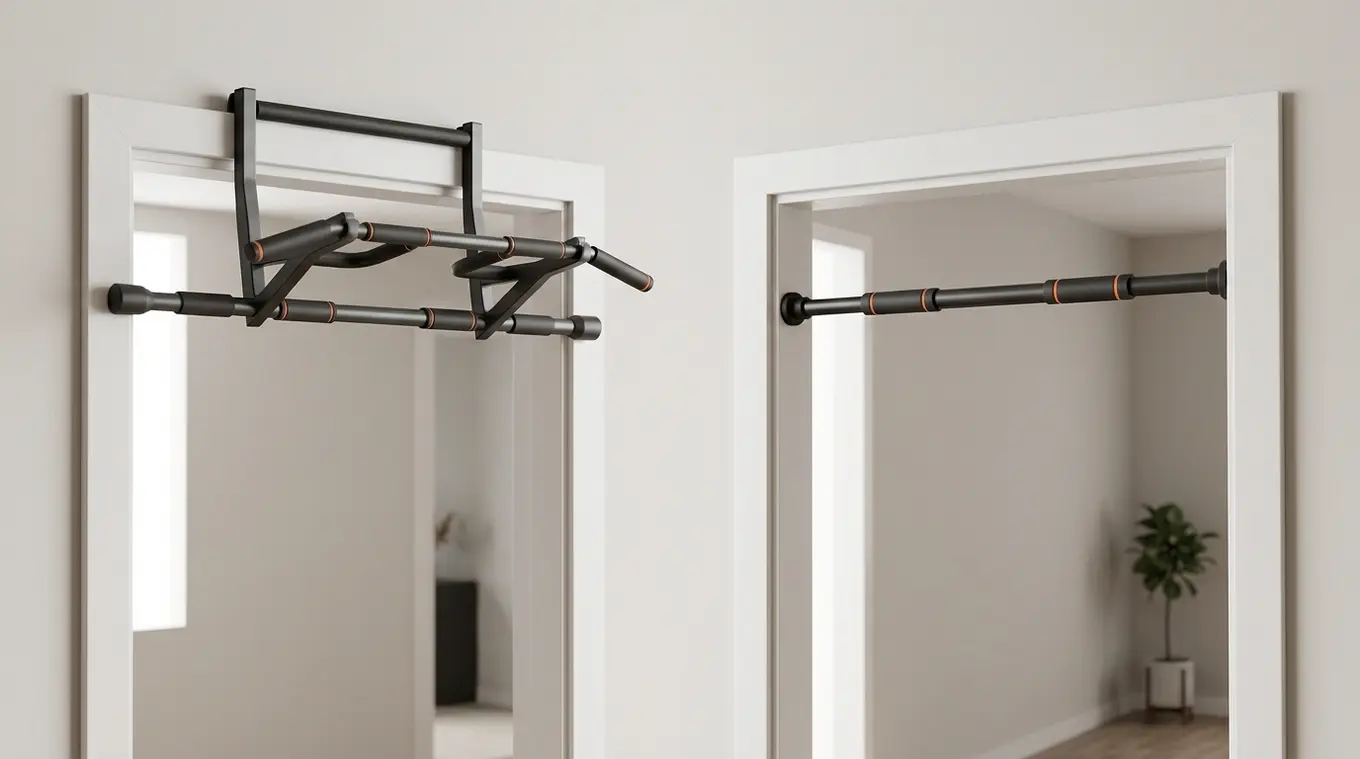
Not every no screw model works the same way. That is one reason buyers get confused. Some hook over the top of the door frame and use leverage. Others press outward inside the frame with tension. Both can work, but they behave differently in daily use.
Doorframe Leverage Mounting Explained
This is the classic over the door style. The bar hooks over the top trim or molding and uses your bodyweight to create downward force against contact points. In simple terms, when you hang from it, the bar locks itself into place through leverage.
These are often the most stable pull up bar no screws option for strict bodyweight training because they spread force across multiple points. They also tend to offer more grip options, including wide, neutral, and chin up grips. That is one reason many people consider them the best doorway pull up bar style for general home use.
The downside is fit. Decorative trim, extra thick walls, or unusual molding can create problems. So if you are asking does a pull up bar fit my doorway, this is the first style where detailed measuring really matters.
Tension and Pressure Based Systems
A tension pull up bar sits inside the doorway and expands outward until the end caps press tightly into the frame. Some versions add mechanical locks or level indicators. Others rely mainly on twisting pressure. A pressure mounted pull up bar can be compact, clean looking, and easy to leave in place.
When they fit correctly, they can feel surprisingly solid for dead hangs, chin ups, and controlled reps. But this is also the category where setup mistakes happen most often. If the frame surface is slick, weak, or uneven, the bar can shift. In my experience, tension bars reward careful installation more than leverage bars do. I would never rush the setup, even if the box says it takes one minute.
If you want to learn proper pulling technique once your bar is up, this guide on how to do a pull up with perfect form is worth reading.
What to Look for Before You Buy
The difference between a great experience and a frustrating one usually comes down to fit and expectations. Before buying the best no screw pull up bar for your home, focus on a few practical points.
Door Frame Compatibility and Size Limits
The first question should always be door frame width for pull up bar compatibility. Measure the inside width carefully, then compare it with the brand’s stated range. Many tension bars fit roughly standard US doorways, but not all. Over the door bars also need enough trim and enough clearance above the door frame.
Look at width, depth, and trim shape. Some bars are fine on flat trim but not on rounded molding. Some need a certain top ledge thickness to anchor properly. If you are wondering does a pull up bar fit my doorway, do not guess. Measure the inside width, the outer trim width, and the wall depth around the door.
This matters even more in older US homes where door frames can vary a lot. I have seen one bar fit perfectly in a hallway doorway and feel terrible in the bedroom doorway just because the trim was slightly different.
Weight Capacity and Build Quality
Ignore inflated marketing claims until you check the actual construction. A bar that says 440 pounds may still feel less stable than a bar rated lower but built better. Look for steel tubing, solid welds, dense foam or quality grip covering, and secure end mechanisms.
For heavier users, I would put more emphasis on real world rigidity than the number on the box. The most stable pull up bar no screws is the one that fits your door correctly and does not flex excessively under your bodyweight. If you are above average bodyweight or plan to add load later, be extra conservative.
If you are already doing weighted calisthenics, I would honestly avoid most screwless bars for serious loading. They are better for bodyweight basics and skill practice than for heavy progression work.
Grip Options and Comfort
Grip comfort matters more than people expect. Thin bars can feel harsh on the hands. Slippery foam can rotate or wear down. Multi grip bars give you more variation, which is useful for shoulder comfort and for targeting different positions. Neutral grip is often friendlier if straight pronated pull ups bother your elbows or shoulders.
Personally, I prefer a bar with at least one comfortable shoulder width grip and one slightly wider option. That covers most sessions. If a bar gives you too many awkward grip angles, it can look impressive but feel less natural in use.
If grip comfort is a big deal for you, a small accessory can help too. A good chalk setup improves control, especially during longer hangs. Our comparison of liquid chalk vs block chalk for calisthenics explains which one makes more sense indoors.
Best Pull Up Bars Without Screws: Our Top Picks
Below are the models I would look at first for the US market. These picks focus on usability, doorway compatibility, stability for controlled reps, and overall value. I am not treating every user the same, because a compact apartment setup and a heavy user setup are not the same buying decision.
Best Overall: Iron Gym Total Upper Body Workout Bar
The Iron Gym style design remains one of the easiest recommendations because it is simple, familiar, and widely available. It hooks over the doorway, uses leverage well, and usually offers enough grip variety for pull ups, chin ups, and neutral grip work. For many people, this is still the best pull up bar without screws because it balances price, ease of setup, and dependable stability.
What I like is that it usually feels straightforward right away. There is less guesswork than with some tension bars. If your trim and door dimensions match the product requirements, you can get training quickly. It also tends to work well for push ups from the floor if you want more versatility.
The limitation is that taller users may still feel cramped, and unusual molding can create a poor fit. But for average height users in standard US doorways, it is often the safest first choice.
Best for Heavy Users: Garren Fitness Maximiza Pull Up Bar
The Garren Fitness Maximiza is a classic in door tension style option. It is compact, adjustable, and especially appealing if you want something that stays in the doorway without a bulky over the door frame. For heavier users, this can be a reasonable pick if you install it correctly and if your door frame is solid and within the right size range.
What I appreciate about this style is the simplicity. There are no large side handles taking up space, and you can often still use the doorway normally. It is one of the better answers for people asking how to install pull up bar without screws in a tight space.
That said, this kind of bar requires more caution. I would recommend it to heavier users only if they are doing controlled reps and they are disciplined with setup checks. I would not recommend bouncing reps or aggressive kipping here.
Best Budget Option: ProSource Multi Grip Doorway Pull Up Bar
If you want a basic doorway leverage bar without spending much, the ProSource Multi Grip model can be a practical starting point. It gives you several grip choices and usually costs less than more premium looking alternatives. For beginners who want to test consistency before investing more, that is useful.
The main thing to understand is that budget bars can vary a lot in finish quality and padding. In this price range, I would inspect all contact points carefully and test the bar progressively before full bodyweight reps. Start with a partial hang, then a dead hang, then your first full set.
For strict pull ups, chin ups, and hanging knee raises, this type of bar can absolutely do the job. Just keep expectations realistic on long term durability compared with sturdier designs.
Best for Small Spaces: Sportout Portable Pull Up Bar
For people living in small apartments or wanting a travel friendly option, the Sportout Portable Pull Up Bar is worth considering. A compact tension style can be easier to store, easier to move, and less visually intrusive than a large over the door frame unit.
This is the kind of bar that makes sense if you want convenience first and you mainly plan to do simple pulling work. In a small room, that matters a lot. I have trained in tight spaces before, and the gear you actually leave accessible is usually the gear you use most.
Still, portable bars are not automatically the best for everyone. If you are new and nervous about stability, a larger leverage style may feel more reassuring. Choose based on confidence and fit, not just on how compact the product looks online.
If you want a premium training accessory from a calisthenics focused brand, Gornation is more relevant for items like rings, parallettes, bands, and grips than for this exact product category. For example, if you want to support pull up progress with assistance work, Gornation resistance bands are a smart add on for negatives, assisted reps, and warm ups.
Side by Side Comparison Table
| Product | Type | Best For | Main Strength | Main Limitation |
|---|---|---|---|---|
| Iron Gym Total Upper Body Workout Bar | Over the door leverage bar | Most home users | Balanced stability and value | Needs compatible trim and space |
| Garren Fitness Maximiza Pull Up Bar | Tension style in door bar | Heavier users with solid frames | Compact and space efficient | Requires careful installation |
| ProSource Multi Grip Doorway Pull Up Bar | Over the door leverage bar | Budget buyers | Low cost and decent versatility | Less premium finish and padding |
| Sportout Portable Pull Up Bar | Portable tension style bar | Small spaces and travel | Easy to store | Less confidence inspiring for some users |
If you want the short version, the Iron Gym style is still the best doorway pull up bar for most people. The Garren type works well when compact size matters more. The budget and portable choices are good if your priorities are cost or storage.
How to Install a No Screw Pull Up Bar Safely
A lot of bad reviews come from bad setup. The bar gets blamed, but the real issue is often rushed installation, poor measurements, or using the wrong doorway. If you are serious about safety, spend five extra minutes here.
Step by Step Setup for Doorframe Bars
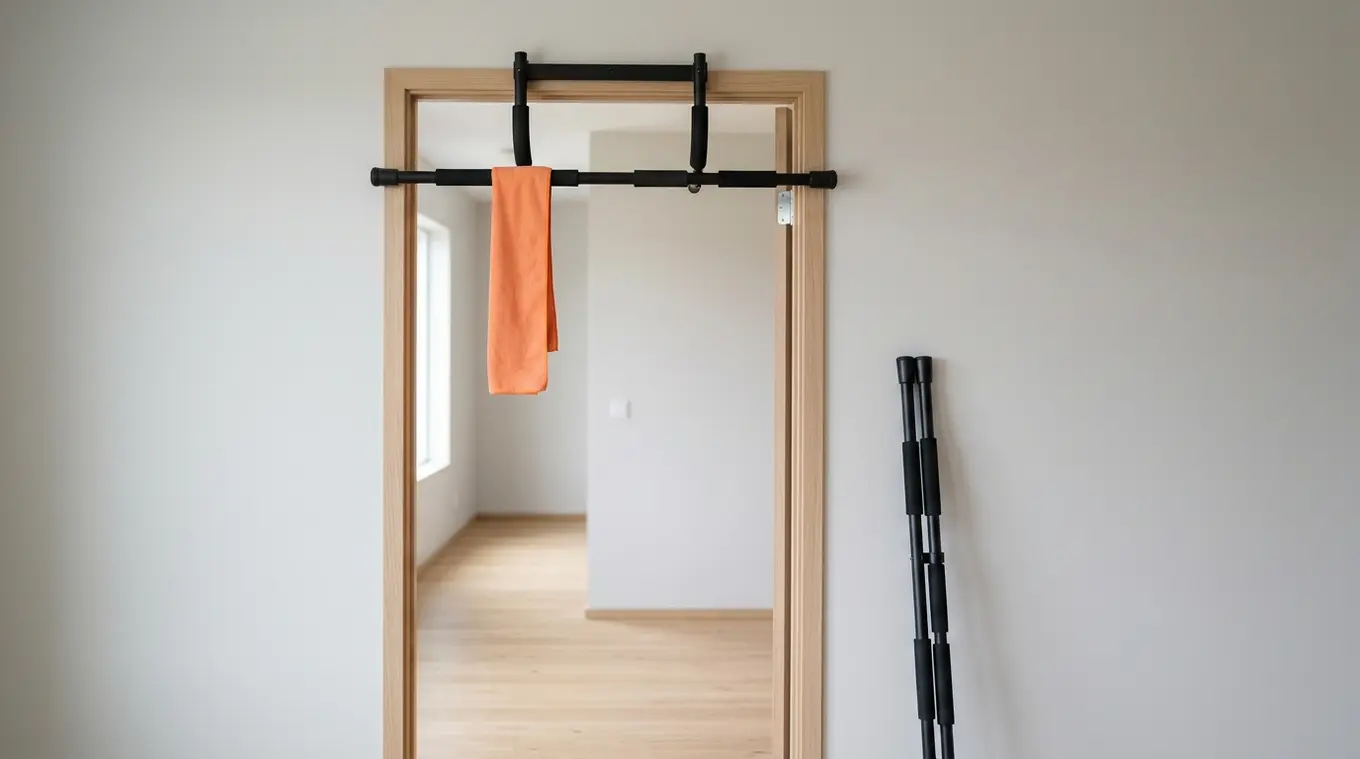
For an over the door leverage bar, first confirm the doorway matches the stated dimensions. Check the trim, wall depth, and width. Assemble the bar fully and make sure all bolts are tight. Place it over the top of the frame so the support surfaces sit exactly where the manufacturer intended. Before hanging fully, pull down gently to see whether the contact points stay flush.
For a tension pull up bar, measure the opening, then expand the bar evenly on both sides. If the model has a level meter or lock, use it. Press the bar into place according to the instructions, then test it in stages. Start with downward pressure from your hands. Then put some bodyweight into it with your feet still on the floor. Then do a short hang. Only after that should you start full reps.
If you are specifically wondering how to set up a tension pull up bar, the biggest mistake is assuming tighter is always better. Too little tension can slip, but too much can damage the frame or create uneven pressure. Follow the manufacturer’s range and locking process closely.
Common Mistakes That Lead to Falls
The first mistake is ignoring doorway compatibility. If the fit is wrong, no amount of optimism will make it safe. The second is skipping progressive testing. The third is doing dynamic reps on a setup that was only ever suitable for controlled reps.
Another common issue is failing to recheck the bar regularly. Foam compresses, bars settle, and door frames are not perfectly consistent over time. I always tell people to treat a doorway bar like any other training tool. Inspect it often. A thirty-second check before a set is worth it.
If you want extra support work around your pulling sessions, using resistance bands can help you build volume without forcing ugly reps. This guide on exercises with resistance bands gives useful ideas.
How to Make a No-Screw Pull-Up Bar Feel More Stable
If your bar feels slightly wobbly, a few simple adjustments usually make a meaningful difference. First, make sure all contact points are sitting flush and evenly against the surface. Even a small gap or tilt can cause the bar to shift under load. For over the door bars, verify that the support arms are level and that you are gripping centered rather than pulling at an angle.
For tension bars, check that both sides are expanded equally. If one side grips more than the other, the bar can rotate or shift sideways. Some users place a thin strip of rubber shelf liner between the bar caps and the door frame to improve grip without adding bulk. Just make sure the material is thin and firm enough that it does not reduce load stability.
Finally, pull straight down rather than pulling your body at an angle. Angled pulls introduce lateral force, which any no screw bar handles less well than a mounted unit. Keeping your movement controlled and vertical reduces stress on the contact points and makes the bar feel noticeably more solid over time.
Will a No Screw Pull Up Bar Damage Your Door Frame?
This is one of the biggest concerns, and honestly, it is a fair one. Yes, a pull up bar without screws can leave marks, pressure spots, or small dents. Whether that happens depends on the design, your doorway material, your bodyweight, and how carefully you install and use the bar.
How to Minimize Wear and Marks
Choose a bar with decent padding at the contact points and make sure those pads sit evenly. Clean the surfaces before installation so dirt does not grind into the trim. Remove and reposition the bar if you see uneven pressure or twisting. Controlled reps also help because swinging increases force on the contact areas.
In my experience, most minor marks come from bars being slightly off center or from users jumping into the first rep. If you step into position and keep your movement clean, wear is usually much lower.
When You Should Use Padding or Caps
If your trim is painted wood, softer trim, or slightly uneven, a little extra protection can help. Thin protective padding or replacement caps can reduce scuffs, but do not use anything so soft or slippery that it makes the bar less secure. Stability always comes first.
If you are renting, inspect the frame after the first few sessions rather than waiting a month. Small adjustments early can prevent bigger pressure marks later.
Exercises You Can Do on a Screwless Pull Up Bar
A good screwless bar is more useful than many beginners expect. It is not only for standard pull ups. You can build strength, grip, and core control with a surprisingly simple setup.
Pull Ups, Chin Ups, and Neutral Grip Variations
The obvious choices are pull ups, chin ups, and neutral grip reps. These cover lats, upper back, biceps, grip, and scapular control. If you are still building strength, start with dead hangs, scapular pulls, and slow negatives. Those are excellent for earning your first full rep.
Different grips also let you manage joint comfort. Chin ups often feel easier for beginners, while neutral grip tends to be friendly on elbows and shoulders. Wide grips can be useful, but I would not force them if your bar makes the position awkward.
If you want more exercise ideas, our guide to best pull up bar exercises covers solid progressions.
Core and Hanging Exercises
Hanging knee raises, bent leg raises, and timed hangs are all great options. You can also do L sit progressions if the bar gives enough room and you have the control for it. Hanging work is one of the easiest ways to add core training without needing more equipment.
For more serious core practice, pairing your bar with a set of bands or parallettes can help a lot. If L sit training is one of your goals, Gornation parallettes are a strong recommendation because they are reliable, simple, and useful far beyond one exercise category.
Alternatives If a Door Frame Bar Does Not Work for You
Sometimes the honest answer is that your doorway is just not a good match. That is not a failure. It just means you should choose a setup that actually fits your home and training style.
Freestanding Pull Up Bars
A freestanding pull up station or power tower is the easiest next step if you have floor space. It gives you more confidence, more exercise variety, and usually more room for knee clearance. This is often the better route for taller athletes, heavier users, or anyone planning higher volume training.
Freestanding bars also make more sense if you want dips, leg raises, or support holds in one station. They cost more and take up space, but for some people they are the most practical long term answer.
Wall Mounted Bars When Drilling Is an Option
If drilling is possible, a wall mounted bar is usually the strongest home option short of a full rack. You get better long term stability, more confidence for harder sets, and fewer limits on movement quality. For serious calisthenics progression, this is often where people end up after outgrowing doorway bars.
That is especially true if muscle ups, weighted pull ups, or advanced hanging work are goals. A doorway model is great for access and convenience, but a mounted bar is better for pushing performance.
Final Verdict: Which No Screw Pull Up Bar Should You Get?
If you want the safest and most balanced choice for most homes, the Iron Gym Total Upper Body Workout Bar is still my top recommendation. It is the best pull up bar without screws for most people because it is simple, widely trusted, and generally more confidence inspiring than many compact tension designs.
If space is your biggest concern and you want something smaller that stays inside the frame, the Garren Fitness Maximiza makes more sense, as long as you are careful with setup. If budget is the main factor, the ProSource Multi Grip Doorway Pull Up Bar is a reasonable entry point. If portability matters most, the Sportout Portable Pull Up Bar is worth a look.
My practical advice is simple. Buy based on doorway fit first, stability second, and fancy features third. The best no screw pull up bar is not the one with the biggest claim on the box. It is the one that fits your door correctly, supports your current training, and feels secure every time you hang from it.
If you are building a more complete home calisthenics setup, Gornation is a brand I would seriously consider for complementary tools like resistance bands, rings, and parallettes. Those products pair well with a doorway bar and help you get more out of your training without needing a full home gym.
A pull up bar without screws can be a great choice if you want to train at home without drilling into walls or door frames. The key is choosing the right type for your doorway, installing it carefully, and staying realistic about what this setup is best for. For strict pull ups, chin ups, hangs, and basic core work, a good no drill bar is often more than enough. If you want the simplest recommendation, go with a stable over the door model. If your space is tighter, a well installed tension pull up bar can still work well.
Frequently Asked Questions
Are no screw pull up bars actually safe?
Yes, they can be safe when the bar matches your doorway dimensions, the frame is solid, and the installation is done correctly. Most problems come from poor fit, rushed setup, or using the bar for swinging and dynamic reps it was never designed to handle.
Does a pull up bar fit my doorway if I have older trim?
Maybe, but older homes often have less standard trim and doorway depth. Measure the inside width, outer trim width, and wall depth before buying. Over the door leverage bars are usually more sensitive to unusual molding than straight tension bars.
Will a pull up bar without screws damage my door frame?
It can leave light marks, pressure spots, or small dents, especially if the contact points are uneven or the bar shifts during use. You can reduce this by choosing a well padded model, checking alignment often, and avoiding jumping or swinging into reps.
What is the difference between a pressure mounted pull up bar and an over the door bar?
A pressure mounted pull up bar pushes outward inside the frame using tension, while an over the door bar hooks over the top of the frame and uses leverage. Tension bars are more compact, while leverage bars often feel more stable and usually offer more grip positions.
Can I do more than pull ups on a doorway bar?
Yes. Most people can also do chin ups, neutral grip reps, dead hangs, scapular pulls, and hanging knee raises. Some over the door models can also be used on the floor for push ups. Just make sure the bar is designed for that use before trying it.