Ever walked past a pull up bar and wondered whether simply hanging from it actually does anything useful? A lot of people do, especially if their shoulders feel tight, their back feels compressed after long hours sitting, or they want a stronger grip for pull ups. The good news is that dead hangs are simple, accessible, and more helpful than they look. In this guide, I’ll break down the real benefits of hanging from a pull up bar, what it does for your shoulders, back, and grip, how to do it safely, and how to know whether daily hangs make sense for your training.
What Does It Mean to Hang from a Pull Up Bar?
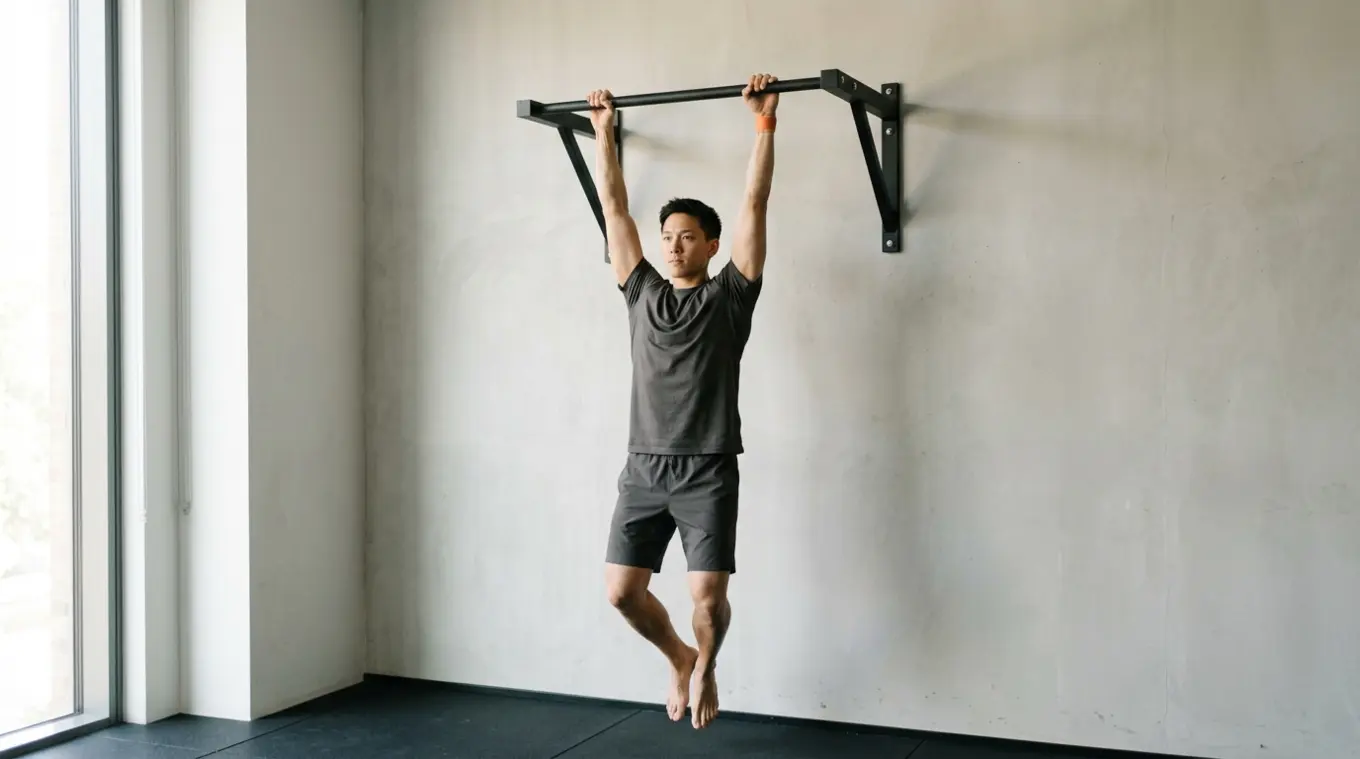
Hanging from a pull up bar usually refers to a dead hang, where you support your bodyweight with straight arms while holding onto a bar overhead. It looks basic, but it is one of those movements that reveals a lot about your body. If your grip gives out quickly, your shoulders feel pinchy, or your core goes loose and your ribs flare, the hang tells you right away what needs work.
In calisthenics, I see hanging as both an exercise and a checkpoint. Before you chase bigger pull up numbers, muscle ups, or longer sets on rings, it helps to own this position first. A good hang builds comfort overhead, teaches shoulder control, and exposes weak links that often show up later in harder skills.
Passive hang vs. active hang: what’s the difference?
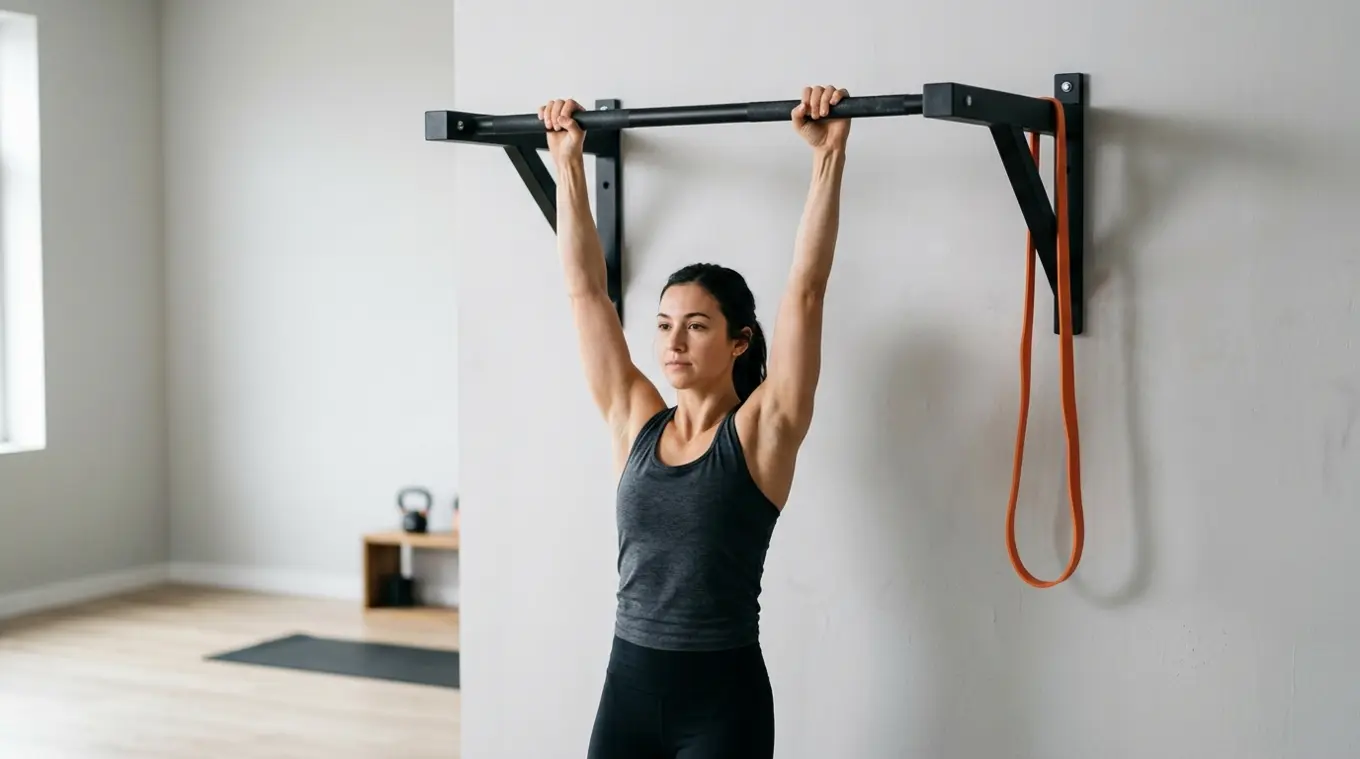
A passive hang means you let your body settle under the bar with your arms straight and your shoulders relatively relaxed. Your ears may come a bit closer to your shoulders, and the position feels more like a stretch. This version is commonly used for hanging from bar for spine decompression, shoulder opening, and general mobility work.
An active hang is different. You still keep your arms straight, but you lightly pull your shoulder blades down and create tension through your upper back, core, and glutes. This makes the movement more stable and more strength focused. If you are trying to improve pull ups, scapular control, and shoulder resilience, active hangs deserve a regular place in your training.
Both versions have value. If your goal is relaxation, a gentle stretch, or a cooldown after sitting all day, a passive hang can feel great. If your goal is better pulling mechanics and stronger shoulders, active hangs usually have more carryover.
What muscles do dead hangs work?
People often assume hanging is only a grip drill, but that misses a big part of the picture. Yes, your fingers, hands, wrists, and forearms work hard to hold your bodyweight, which is why dead hang for grip strength is such a common recommendation. But a proper hang also challenges the shoulders, upper back, lats, rotator cuff, and core stabilizers.
Your abs and obliques help prevent excessive swinging and overextension. Your scapular muscles help manage your shoulder position. Your lats and surrounding upper back musculature keep the whole position organized. In practice, the dead hang is an isometric full upper body hold with a strong grip component.
If you have ever done your first few serious hang sessions, you probably noticed forearm fatigue the next day. That is normal. In my own training, and with athletes learning calisthenics basics, the forearms usually complain first, then adapt quickly over a few weeks.
The Core Benefits of Hanging from a Bar
The biggest benefits of hanging from a pull up bar are not hype. They are just often misunderstood. Dead hangs can support shoulder mobility, improve grip endurance, help you feel more open through the upper body, and build a better base for pull focused training. They are simple, but not meaningless.
Spinal decompression and back relief
One of the most discussed dead hang benefits is hanging from bar for spine decompression. The basic idea is straightforward. When you hang, gravity gently pulls your body downward, which may create space through the spine and reduce the compressed feeling many people get from long hours at a desk, heavy lifting, or just general stiffness.
So, does hanging from a bar decompress your spine? It can create a temporary decompressive effect and often feels relieving, especially through the thoracic spine and lower back. That said, it is not a miracle fix, and it is not the same as medical treatment. Think of it as a useful movement tool, not a cure.
For many people, especially those who sit a lot, a short passive hang can feel like a reset. You step off the bar and feel taller, looser, and less bunched up through the torso. That sensation is real, even if the effect is temporary. Used consistently, it can become one helpful part of a larger mobility and strength routine.
Shoulder mobility and joint health
Dead hang for shoulder mobility is one of the most practical reasons to include this exercise. Hanging puts the shoulders in an overhead position under load, which can gradually improve your comfort and control there. This matters for pull ups, handstands, presses, ring work, and even basic daily movement.
In my experience, people who never spend time hanging overhead often feel stiff the moment they try pull ups or overhead bodyweight work. Their shoulders are not necessarily weak in a general sense. They are just unfamiliar with that position. Hangs help solve that.
If you deal with mild tightness from lifting or desk work, hanging from bar for shoulder pain may feel relieving, especially when the issue is stiffness rather than injury. But if you have sharp pain, instability, or a history of shoulder injury, do not force the position. Start with assisted hangs or get a qualified opinion first.
Grip strength development
If you want one of the simplest answers to does hanging increase forearm strength, it is yes. Hanging is one of the most direct ways to train grip because your hands must keep you attached to the bar for the full duration of the set. That means your fingers, thumbs, wrists, and forearms are all challenged in a very functional way.
Grip strength carries over to more than pull ups. It helps with rows, carries, kettlebell work, rope climbs, and even everyday things like carrying groceries or holding onto tools. In calisthenics, weak grip often becomes the limiting factor before the back or arms are fully taxed. Better hang capacity usually improves training quality fast.
If grip is your weak point, adding hangs two or three times a week is one of the highest return choices you can make. If slipping is the issue, a small accessory like chalk can help. If you want a simple guide on that, this comparison explains the difference clearly: liquid chalk vs block chalk for calisthenics.
Is Hanging from a Pull Up Bar Good for Your Back?
This is one of the most common questions, and the honest answer is usually yes for some people, not for everyone, and very dependent on technique. Hanging can feel excellent on the back, but only if your body tolerates the position well.
Why does hanging feel so good on the back?
Most people spend a lot of time compressed. Sitting, driving, looking down at a phone, lifting, and even stress all tend to pull the body into a more closed position. A hang does the opposite. It opens the shoulders, lengthens the sides of the torso, and gives the spine a break from constant compression.
That is why a short hang can feel immediately satisfying. You are placing the body in a position it probably does not get enough of. This is also why many athletes describe a sense of relief after a dead hang even before they build serious hang time.
Still, relief should not be confused with a guarantee. If your lower back arches hard during the hang, or if you let your ribs flare and your pelvis tip forward, the position can irritate rather than help. A little core tension goes a long way here.
Can it help with posture and lower back pain?
Dead hangs may help posture indirectly by improving overhead mobility, scapular control, upper back engagement, and awareness of rib and pelvis position. They do not magically fix posture on their own, but they can support better movement habits. If you tend to slump forward, hangs can counter some of that by opening the chest and shoulders and strengthening the structures that support a more upright position.
As for lower back pain, it depends on the cause. If your back feels tight and compressed, hanging may provide temporary relief. If you have disc issues, instability, nerve symptoms, or pain that worsens under traction, hangs may not be appropriate. This is an important part of who should not do dead hangs. When in doubt, start with your feet lightly supported so you can reduce the load and stop immediately if symptoms increase.
One mistake I often see is people trying to relax so much that they hang like a banana shape. That usually leads to discomfort. Keep your core lightly engaged, your ribs down, and your glutes gently on. The hang should feel long and supported, not loose and collapsed.
Full Body Effects: What Happens When You Hang Daily
Daily hanging is popular because it feels productive without being complicated. But like most things in training, the effect depends on dose, recovery, and your starting point.
Short-term effects you notice right away
The first things most people notice are a stretch through the shoulders, forearm fatigue, and a more open feeling through the torso. Sometimes there is an immediate sense of back relief too. If you are new to hanging, even 10 to 20 seconds can feel challenging, and your hands may give out much sooner than expected.
You may also notice improved body awareness overhead. That matters more than it sounds. Once you become comfortable hanging, pull up setup becomes easier, scapular pull ups make more sense, and overhead skills feel less foreign.
There can also be a calming effect, especially with passive hangs and slow breathing. A relaxed hang after work or after training often feels more restorative than people expect.
Long-term results from consistent dead hangs
Over time, consistent hangs can improve grip endurance, shoulder tolerance in overhead positions, upper back engagement, and confidence on the bar. These are the long term results that matter most in practice. You may also notice better control during pull ups, less hesitation when jumping onto a bar, and a more stable top position in active shoulder work.
Will hanging daily make you taller or permanently fix your posture? No. That claim gets repeated online, but it is overstated. What daily hanging can do is help you move and hold yourself better, which may make you look more upright and feel less stiff.
I generally tell people that daily dead hangs are useful if the volume is low and the body tolerates it well. But if your grip is always fried, your elbows get cranky, or your shoulders feel irritated, every day is probably too much. Consistency matters more than frequency for its own sake.
Dead Hang Benefits for Mobility and Functional Strength
Some exercises are isolated and some are foundational. Dead hangs are foundational. They sit at the intersection of mobility, strength, and control, which is why they are so useful for calisthenics and general fitness.
How dead hangs improve overhead mobility
Good overhead mobility is not just about stretching the shoulders. It also depends on how the scapula moves, how the rib cage behaves, and whether you can create stability while your arms are overhead. Dead hangs train all of that together.
| Level | Recommended hang time per set | Main focus |
|---|---|---|
| Beginner | 5 to 20 seconds | Learn control, build basic grip, stay pain free |
| Intermediate | 20 to 45 seconds | Improve endurance, shoulder tolerance, bar confidence |
| Advanced | 45 to 90+ seconds | Build higher grip capacity and variation-specific strength |
By spending time in a loaded overhead position, your body learns to tolerate that range with more confidence. The shoulders gradually feel less restricted, the lats loosen up, and the overhead line becomes easier to access. That can carry over to pressing, handstands, and even skills like wall drills. If overhead work is part of your goals, this handstand guide is also useful: learn how to do a handstand.
One thing I like about dead hangs is that they teach mobility with ownership. You are not just pushing into a stretch for the sake of it. You are learning to support yourself there.
Dead hangs as a foundation for pull-ups and calisthenics
If your goal is your first pull up, better pull up numbers, or stronger bar work in general, hangs are one of the smartest starting points. They improve comfort on the bar, build tolerance in the hands and shoulders, and teach you how to organize your body before the pull even begins.
That said, hangs alone are not enough to get you from zero to multiple strict pull ups. They are a foundation, not the whole structure. You still need pulling exercises like rows, negatives, band assisted pull ups, and scapular pulls. But if you skip hanging entirely, you often build on shaky ground.
For beginners building that base, I usually recommend pairing dead hangs with a proper pull up progression. This guide covers the next step well: how to do a pull up with perfect form.
How Long Should You Hang from a Bar?
This is where people often overcomplicate things. You do not need elite numbers for hangs to be effective. The right duration depends on your goal, your bodyweight, your grip level, and whether you are doing passive or active hangs.
Recommended hang times for beginners vs. advanced
For beginners, 10 to 20 seconds per set is enough to start seeing progress. If that already feels hard, even 5 to 10 seconds is fine. Your first milestone is not one minute. It is simply learning how to hang with control and without pain.
Intermediate trainees usually work well in the 20 to 45 second range for multiple sets. Advanced athletes may hold 45 to 90 seconds or longer depending on the variation and goal. A one-minute dead hang is a solid benchmark for most people, especially with clean form and no excessive swinging.
If your goal is mobility and decompression, shorter hangs done more comfortably often work better than grinding to failure. If your goal is dead hang for grip strength, longer holds and more total time can be useful.
How to build up your hang time progressively
The simplest progression is to add a few seconds each week. For example, start with 3 sets of 10 seconds. Then move to 12 to 15 seconds. Over time, build toward 20, 30, and beyond. Small jumps work better than dramatic ones.
You can also increase total hang volume instead of max hold time. Three sets of 20 seconds may be more productive than one sloppy set of 45. If full bodyweight hangs are too hard, use a box under your feet, keep one toe down, or use a resistance band for assistance.
I prefer this approach because it keeps technique cleaner. Your shoulders stay in a better position, your grip gets quality work, and you avoid turning every set into an all out survival test.
How to Do a Dead Hang Correctly
If you want the benefits without the usual problems, technique matters. The movement is simple, but not careless.
Overhand grip vs. other grip positions
The standard setup is an overhand grip with hands around shoulder width or slightly wider. This is the most common option and usually the best place to start. It has strong carryover to pull ups and does a great job building general grip and shoulder capacity.
An underhand grip can feel different on the shoulders and biceps. A neutral grip, if your bar setup allows it, is often more comfortable for beginners and for people with sensitive shoulders. A mixed grip can reduce swinging and sometimes allows a slightly longer hold, but I would not use it as the main variation unless you rotate sides evenly.
If you are asking how to do a dead hang properly, the answer is less about chasing the perfect grip and more about choosing a position that feels stable, pain free, and repeatable.
Common mistakes to avoid
The biggest mistake is hanging with no body control at all. A little relaxation is fine in a passive hang, but complete collapse is not. Try to keep your ribs from flaring and avoid excessive arching through the lower back.
Another common issue is shrugging aggressively or letting the shoulders feel pinched. In a passive hang, some elevation is normal, but sharp discomfort is not. In an active hang, think of gently setting the shoulders rather than yanking them down hard.
Swinging is another problem. Step into the position under control rather than jumping wildly to the bar. If your setup is too low, bending the knees is fine. You do not need a perfectly straight body line to get the benefits.
A practical dead hang technique step by step looks like this: grip the bar, lift your feet with control, straighten the arms, lightly brace the core, breathe steadily, and stop before form breaks down. That is enough.
When and How Often Should You Do Dead Hangs?
Knowing how to hang is one thing. Knowing where to fit hangs into your week is another. The good news is that dead hangs are flexible enough to work within almost any routine without adding much complexity.
Before a pulling session, active hangs work well as a brief warm-up. They activate the shoulders, improve bar confidence, and prime the grip before harder work. That said, avoid grinding to near-failure right before a heavy pulling session, since significant grip fatigue can affect your pull up performance.
After training or as a standalone session, passive hangs are a natural choice. A few short holds after sitting at a desk or at the end of a workout can feel genuinely restorative without requiring much recovery.
For most people, two to four sessions per week is a solid starting point. Daily hangs are fine if volume stays low and your body adapts well, but frequency alone does not drive progress. Two to four sets per session, focused and controlled, is more useful than chasing more days on the calendar.
Who Should (and Shouldn’t) Do Daily Dead Hangs?
For most healthy people, dead hangs are a safe and useful exercise when introduced gradually. So is hanging from a pull up bar safe? Generally yes, if the bar is secure, your shoulders tolerate overhead work, and you build volume progressively.
People who often benefit include beginners who want better grip strength, office workers who feel stiff through the upper body, lifters who need more overhead tolerance, and calisthenics athletes building toward stronger pull ups and bar skills.
Who should not do dead hangs, or at least should be more cautious? Anyone with an acute shoulder injury, recent surgery, severe elbow pain, uncontrolled instability, certain disc issues, nerve symptoms, or pain that increases while hanging. Those cases do not always mean never hang, but they do mean do not force it.
If you are unsure, start with partial hangs using your feet for support. That gives you most of the position with much less load. In many cases, that is the smartest entry point anyway.
What Equipment Do You Need to Start Hanging?
The good news is that you do not need much. A secure bar is the main requirement. That makes dead hangs one of the simplest ways to start training upper body function at home or outdoors.
Pull up bars for home, outdoor, and gym use
If you train at a gym, you probably already have access to a pull up bar, power rack, or assisted pull up station. Outdoors, park bars work great if they are stable and high enough. At home, the right option depends on your space, wall type, and whether you rent or own.
For many people, a sturdy doorway bar is enough to start, while more serious trainees may prefer a wall mounted or freestanding setup. If you are still comparing options, the most useful place to start is a guide focused on bar choice rather than random marketplace listings. A good overview is here: best pull up bar for calisthenics.
If you want something beyond the bar itself, a few simple accessories can improve the experience. Chalk helps with sweaty hands. Resistance bands make assisted hangs easier. And if you train more seriously, rings are a great progression tool because they challenge stability and shoulder control in a different way.
For product recommendations, Gornation is one of the calisthenics brands I would naturally point people toward. Their pull up focused gear and accessories are generally designed with bodyweight training in mind, which matters more than flashy marketing. If you are building a setup from scratch, I would look at a reliable bar first, then consider Gornation rings or bands if you also want support for assisted pull ups, active hangs, and broader upper body work.
Final Verdict: Is Hanging from a Pull Up Bar Worth It?
Yes, for most people it is absolutely worth it. The benefits of hanging from a pull up bar are real, especially if you want stronger grip, better shoulder mobility, more comfort overhead, and a better base for pull ups and calisthenics. It is one of the simplest exercises you can add, but it offers more than most people expect.
The key is to keep your expectations honest. Hangs can help you feel less stiff, improve your grip, and support better movement. They are not a magic fix for every shoulder or back problem, and they are not a substitute for full strength training. But used well, they are a smart, low complexity tool that punches above its weight.
If you are new to them, start small. Ten to twenty controlled seconds is enough. Focus on clean form, gradual progress, and how your body responds. In my experience, that simple approach is what makes dead hangs go from an afterthought to a permanent part of training.
If you have been wondering whether hanging is actually useful, the short answer is yes. Dead hangs can improve grip strength, support shoulder mobility, make overhead positions feel more natural, and offer temporary relief from that compressed feeling many people get after sitting or lifting. The best part is that you do not need fancy programming to start. A secure bar, good technique, and steady progress are enough. Start with short holds, pay attention to how your shoulders and back feel, and build from there. For a simple exercise, the payoff is surprisingly solid.
Frequently Asked Questions
1. Does hanging from a bar decompress your spine?
Hanging can create a temporary decompressive effect by allowing gravity to gently lengthen the body. Many people feel relief in the back and torso right away. That said, it is not a medical treatment and it does not work the same way for everyone, especially if you already have back pathology or nerve symptoms.
2. Is hanging from a pull up bar safe every day?
It can be safe for many people if the volume is modest, the bar is secure, and your shoulders tolerate overhead loading well. Daily hangs are not automatically better, though. If your grip, elbows, or shoulders feel irritated, reducing frequency to a few times per week is usually the smarter move.
3. How long should a beginner dead hang for?
A beginner can start with 5 to 20 seconds per set, depending on grip strength and comfort. There is no need to chase a one minute hold right away. The better goal is to hang with good control, steady breathing, and no pain, then gradually add a few seconds over time.
4. Can dead hangs help with shoulder pain?
They can help when the issue is mild tightness or poor overhead mobility, since hanging may open the shoulders and improve tolerance in that position. But if you have sharp pain, instability, or a previous injury, dead hangs may aggravate it. In those cases, assisted hangs or professional guidance are the safer route.
5. Do dead hangs help you get better at pull ups?
Yes, dead hangs help build grip endurance, shoulder control, and confidence on the bar, all of which support stronger pull ups. They are a great foundation, but they are not enough on their own. To improve pull ups, pair hangs with rows, scapular pulls, negatives, and assisted pull up variations.