Trying to train seriously in an apartment can feel like a puzzle. You want to get stronger, improve your pull ups, dips, or handstands, but you also do not want to drill into walls, annoy your neighbors, or fill your living room with bulky gear. The good news is that you can build a very effective apartment calisthenics setup with just a few smart tools. In this guide, I will walk you through what actually works in small spaces, what is worth buying, what usually wastes money, and which pieces of gear I would recommend first if you want practical results at home.
Can You Really Build a Calisthenics Setup in an Apartment?
Yes, absolutely. In fact, some of the best calisthenics equipment for apartments is also the most effective gear for long term progress. You do not need a full rack, a bench, or a machine based home gym. Most people will get much more value from a compact setup built around a pull up bar, rings, bands, and a pair of parallettes.
I have trained in commercial gyms, parks, garages, and small apartments, and the apartment phase taught me the most about choosing equipment well. Limited space forces you to think clearly. You stop buying random gear and start focusing on tools that give you more exercises, more progression options, and less hassle.
If your goal is to build strength, learn skills, and stay consistent, an apartment calisthenics setup can work extremely well. You just need gear that is compact, quiet, stable, and renter friendly.
That is why bodyweight training fits apartment living so well. You can train pull ups, rows, push ups, dips, handstand work, core, mobility, and even lower body progressions without turning your place into a full gym. If you are still deciding what belongs in a minimalist setup, this guide on must have calisthenics equipment is a useful next read.
What to Look for Before Buying Apartment Calisthenics Equipment
Before you buy anything, think about how the equipment will fit your room, your building, and your current training level. A product can be great in general and still be a bad choice for your apartment.
Space: how much do you actually need?
Most people overestimate how much space they need and underestimate how much clearance matters. You do not need a whole room, but you do need enough usable space for your body to move safely. For floor work like push ups, L sits, and parallette drills, a yoga mat sized area is enough. For rings, you need a secure anchor and enough room so your feet and straps are not constantly hitting furniture.
A doorway bar is usually the easiest place to start because it uses vertical space you already have. Mini parallettes for home are also a great fit because they can slide under a couch or bed. Rings are slightly trickier indoors, but if you have a sturdy beam, a pull up bar, or access to an outdoor area nearby, they become one of the most versatile tools you can own.
When people ask me how to build a home gym in a small apartment, I tell them to start with equipment that stores flat, hangs up, or fits in a closet. That one filter removes most bad purchases immediately.
Noise and impact: staying on good terms with your neighbors
Noise matters more than most people think. The issue is not just volume. It is impact. A quiet push up session is rarely a problem, but repeated jumping, dropping equipment, or dragging metal across the floor can create more noise than you realize. That is why quiet calisthenics exercises for upstairs apartment living are usually the smartest option.
Resistance bands, controlled ring rows, slow negatives, static holds, and parallette work are all effective and low impact. Jump rope can work too, but only if you have the right floor, enough ceiling height, and a tolerance from the people living below you. In many apartments, rope work is better outdoors.
A simple mat helps with grip and comfort, but it also reduces small sounds from shifting feet or moving gear. If you live upstairs, avoid hard landings and focus more on tempo, pauses, and strict form. You can make a workout harder without making it louder.
Renter-friendly gear: no drilling, no damage
If you rent, this point matters a lot. The best apartment gear should leave little to no trace when you move out. That usually means a pull up bar without drilling, resistance bands, rings you can hang from an existing structure, and portable bars or parallettes that sit on the floor.
Doorway bars are one of the most popular options for a reason, but not all of them are equally good. Some are stable and easy to remove. Others leave marks, feel sketchy under load, or do not fit well on modern trim. If you want a deeper comparison, this guide on pull up bars for renters can help you narrow it down.
As a rule, if a piece of gear requires permanent installation, only buy it if your lease allows it and you are sure you will stay long enough to justify the effort. For most apartment athletes, portable options make more sense.
The Essential Calisthenics Equipment List for Small Apartments
If I had to build a complete apartment setup from scratch, I would keep it simple. The best calisthenics equipment for apartments is usually the gear that gives you the most training variety for the least space. Four items stand out.
Pull-up bar: the single most important piece
If your apartment can accommodate one safely, a doorway pull up bar is the best place to start. It opens the door to pull ups, chin ups, scap pulls, hanging knee raises, and band assisted pulling work. It can also act as an anchor point for bands and, in some cases, light ring setups.
The best doorway pull up bar for apartments should be stable, easy to set up, and compatible with your frame dimensions. It should also spread pressure well so it does not damage the trim. This is one area where buying the cheapest option often backfires. I have seen budget bars wobble, shift, and mark up the frame far more than better made models.
GORNATION makes doorway options designed for bodyweight training, and that matters. Their Doorway Pull Up Bar Uni is a practical choice if you want something made with calisthenics in mind rather than a generic fitness bar. If your doorway dimensions fit, it is one of the cleaner renter friendly choices to consider.
If you are not sure whether a doorway model or a wall mounted bar makes more sense in your situation, read doorway vs wall mounted pull up bar before buying.
Gymnastic rings: one tool, endless exercises
Rings are probably the most versatile item in any minimalist setup. With gymnastic rings in apartment training, you can do rows, push ups, dips, support holds, curls, triceps extensions, core work, and advanced progressions later on. If I could only keep two tools in a small apartment, rings and bands would be high on the list.
The reason rings are so useful is simple. They scale with you. Beginners can start with ring rows and inclined push ups. Intermediate athletes can move into dips, false grip work, and tougher core training. Stronger athletes can build toward muscle up transitions, front lever variations, and weighted ring work when space allows.
For home use, I prefer wooden rings with clear strap markings and secure buckles. They feel better in the hands than cheap plastic models, especially during longer sets. If you want the best calisthenics rings for home, GORNATION Workout Rings are worth a look because the quality is consistent and the straps are designed well for repeated setup.
One honest note though: rings are amazing, but only if you have a safe anchor. If your apartment has no suitable hanging point and no nearby park, buy a pull up bar and bands first.
Resistance bands: perfect for beginners and warm-ups
A good calisthenics resistance bands set is one of the smartest purchases for apartment training. Bands are quiet, cheap compared to larger equipment, easy to store, and useful for almost every level. Beginners can use them for assisted pull ups and assisted dips. Intermediate athletes can use them for warm ups, mobility work, extra volume, and skill progressions.
I use bands in almost every training phase because they solve several problems at once. They help bridge the gap between can almost do it and can do it cleanly. They are also excellent for shoulder prep, elbow friendly pressing, and adding resistance without adding impact.
If you are looking for the best resistance bands for home workouts, prioritize layered construction, clear resistance options, and decent durability. Cheap bands tend to wear out faster and feel inconsistent. GORNATION Premium Resistance Bands are a solid recommendation here, especially if you want a set that covers assisted pull ups, mobility, and general strength work in one package.
If you want more exercise ideas, this article on exercises with resistance bands pairs well with a beginner apartment setup.
Parallettes: for handstands, dips, and L-sits
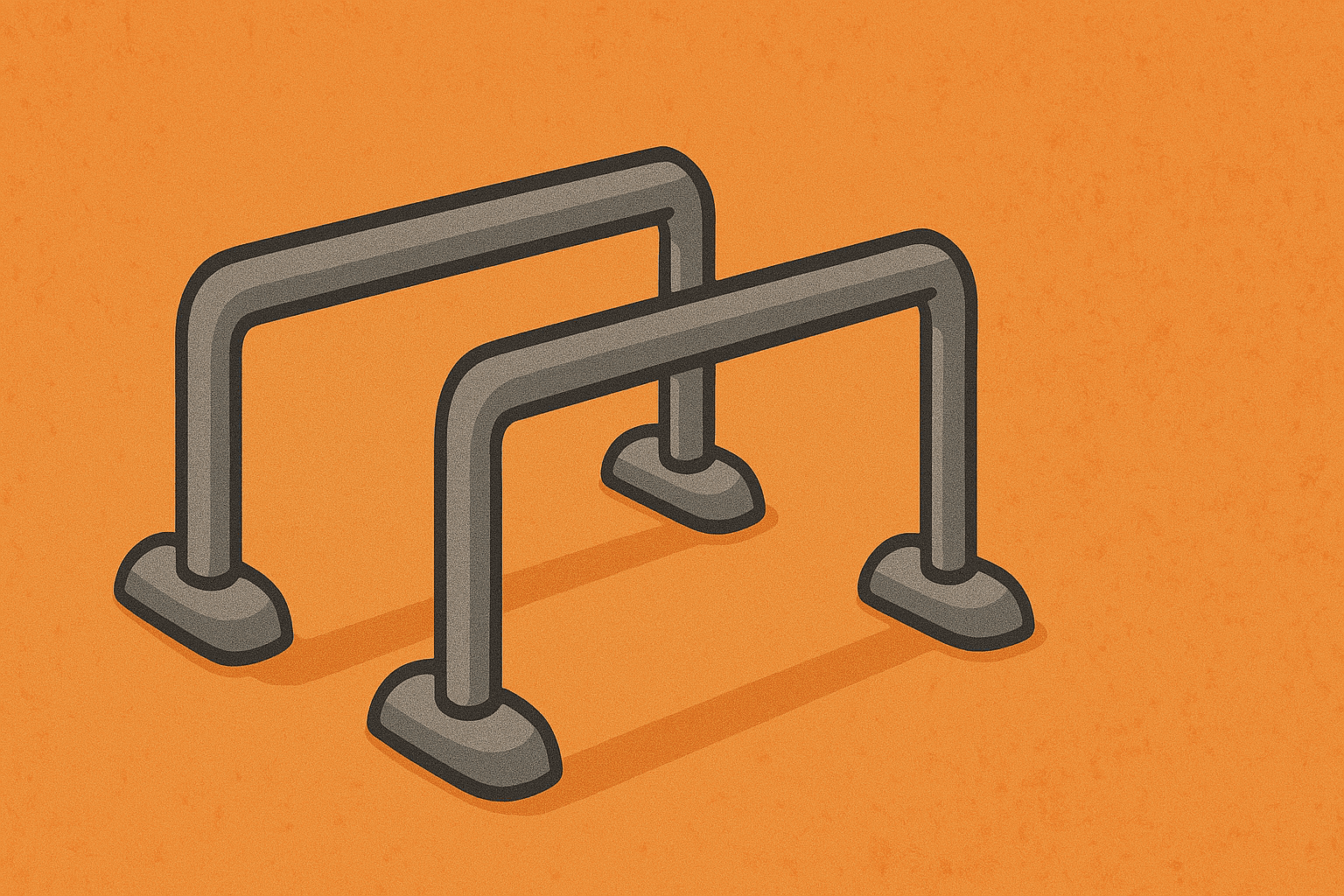
Parallettes make a small apartment more training friendly very quickly. They improve wrist comfort, increase range of motion in push ups, and give you a stable base for L sits, tuck work, and handstand practice. If your floor is not ideal for flat palm loading, parallettes are often the difference between training consistently and skipping pushing work because your wrists hate it.
For apartment use, I usually recommend mini parallettes for home over large freestanding bars. They are easier to store, easier to move, and versatile enough for most people. If your focus is handstands, planche basics, push ups, and core, low or medium height bars are more practical than oversized equipment.
GORNATION has several parallette options, and their Premium Parallettes Active or Wooden Parallettes make sense for small spaces because they are compact and purpose built. If you also want to improve your L sit or handstand practice, those bars fit naturally into that goal. For technique support, these guides on how to train the L sit and learn how to do a handstand are useful follow ups.
Nice-to-Have Gear That Won’t Take Over Your Living Room
Once you have the essentials covered, there are a few extra items that can improve your training without making your apartment feel crowded.
Jump rope for cardio without a treadmill
A jump rope is cheap, portable, and effective. It is one of the simplest ways to add conditioning to an apartment calisthenics setup. That said, it is not always the best indoor option. Ceiling height, floor type, and neighbor tolerance matter a lot. If you live on the ground floor or can train outside, rope sessions are great. If you live upstairs with thin floors, keep rope work short, light, or outdoors.
For apartment cardio indoors, shadow boxing, mountain climbers, low impact step work, and band circuits are often better choices. A jump rope is a nice bonus, not a must have.
Ab wheel and foam roller: small but effective
An ab wheel is one of the smallest and most effective core tools you can buy. It trains anti extension strength, shoulder control, and full body tension. It also stores easily in a drawer or basket. GORNATION offers an Ab Roller that fits well into a compact setup if you want a dedicated core piece.
A foam roller is less about strength and more about recovery, mobility, and making your training feel better over time. I would not buy it before the essentials, but it is useful if your back, lats, or hips get tight from lots of pulling and pressing in a small training area.
Best Calisthenics Equipment for Apartments: Our Top Picks
This is the section most people are really looking for, so let me keep it straightforward. These picks are based on apartment suitability, versatility, storage, and real usefulness for calisthenics rather than general fitness hype.
Best doorframe pull-up bar
A strong pick here is a well built no drill doorway bar with good frame compatibility and stable contact points. For a calisthenics focused option, the GORNATION Doorway Pull Up Bar Uni stands out because it is made for bodyweight training, not just casual use. It is a good fit if you want a pull up bar without drilling and you care about cleaner construction than many generic marketplace bars.
If budget is your first concern, there are cheaper doorway bars out there, but they often trade away comfort, finish quality, or long term stability. For something you will hang from regularly, I would rather buy once and trust it.
Best gymnastic rings for home use
The best gymnastic rings for home use are wooden rings with reliable straps and easy adjustment. GORNATION Workout Rings are a strong option because they feel secure, travel well, and work for rows, push ups, dips, support holds, and skill progressions. If you can hang them safely, they offer more exercise variety than almost any other single tool.
| Equipment | Why it works in apartments | Best for | Possible drawback |
|---|---|---|---|
| Doorway pull-up bar | Uses vertical space, stores easily, no bulky footprint | Pull ups, chin ups, hanging core work | Must fit your doorframe and stay stable |
| Gymnastic rings | Extremely versatile and compact | Rows, push ups, dips, core, skill progressions | You need a safe anchor point |
| Resistance bands | Quiet, cheap, easy to store, beginner friendly | Assistance, warm ups, mobility, extra resistance | Less useful as a main strength tool on their own |
| Mini parallettes | Compact, renter friendly, easy to slide under furniture | Push ups, L-sits, handstand basics, wrist-friendly pressing | Limited for deeper dip variations |
This is one of the few products I recommend to both beginners and advanced athletes without much hesitation. The exercises change with your level, but the rings stay useful the whole way.
Best parallettes for small spaces
For small apartments, compact wooden or metal bars are the smartest choice. The best mini parallettes for home should feel stable without being bulky. GORNATION Wooden Parallettes and Premium Parallettes Active are both solid options depending on your preferred grip and style.
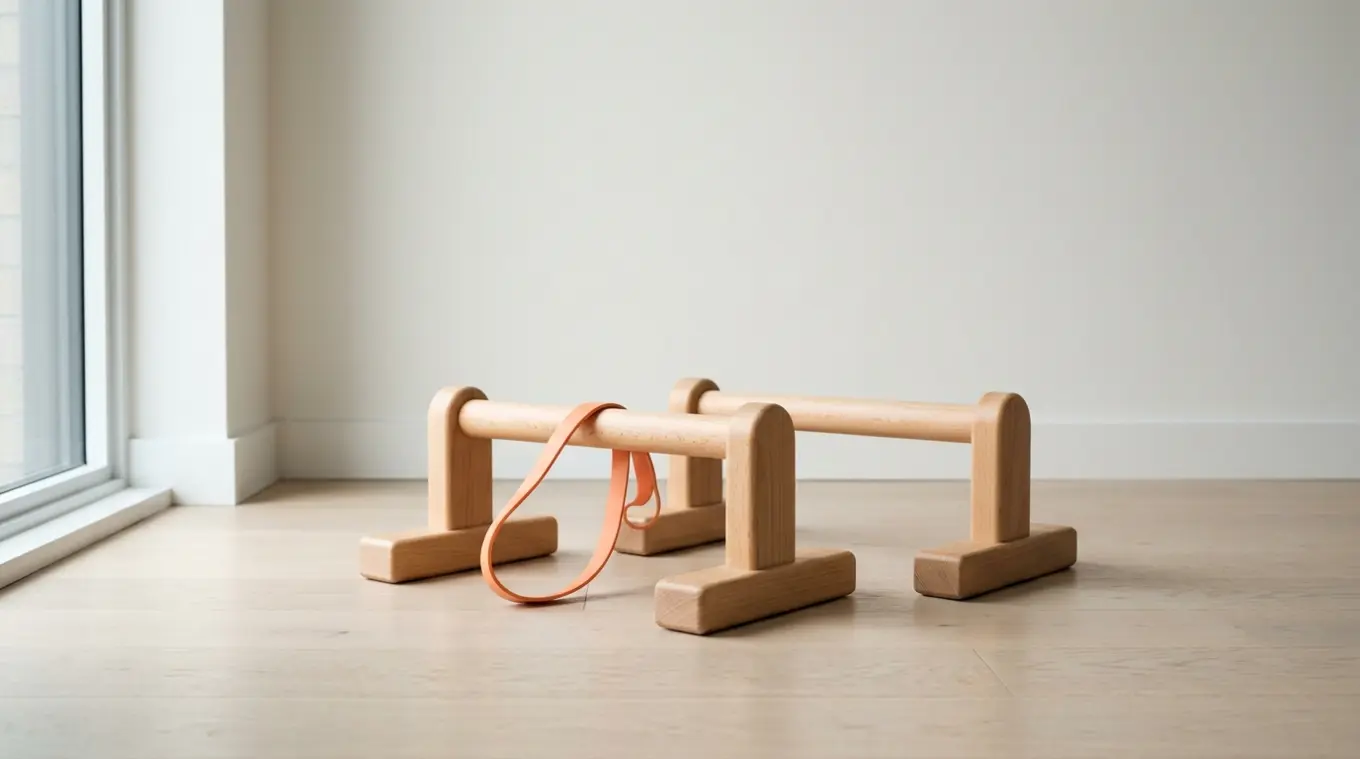
If your main focus is wrist comfort, push up variations, L sits, and handstand basics, compact bars are enough. Only consider larger bars if you specifically want deeper dip work and you have the floor space for them.
Best resistance bands for beginners
The best resistance bands for home workouts are the ones you will actually use weekly. A quality calisthenics resistance bands set with multiple resistance levels gives beginners room to grow and helps intermediate athletes warm up properly. GORNATION Premium Resistance Bands are a practical recommendation because the resistance range covers assistance, activation, mobility, and added load work.
If you are brand new, start with a lighter and a medium band rather than only buying the thickest one. Most beginners need help building quality movement, not just maximum assistance.
How Much Does an Apartment Calisthenics Setup Cost?
One of the most common questions from people setting up a home training space is how much they actually need to spend. The good news is that a functional apartment calisthenics setup is one of the more affordable home gym options available. You do not need a bench, a barbell, or a cable machine to train effectively, and the compact tools that work best in apartments are generally much more budget friendly than larger gym equipment.
As a rough guide, think in three tiers:
- Starter setup: A doorway pull up bar and a resistance band set. This gets you pulling, assisted progressions, and basic mobility work at a low entry cost.
- Core setup: Adding mini parallettes to the above. This opens up push work, L sits, and wrist-friendly pressing without much extra spending.
- Full setup: Adding gymnastic rings to the core setup. This is the point where your apartment gym becomes genuinely versatile for almost all calisthenics goals.
Spending more on fewer, better quality pieces is nearly always smarter than buying several cheap items. A reliable doorway bar and a solid set of rings will outlast and outperform a drawer full of budget accessories. If you are working within a tight budget, start with the pull up bar and bands, and add parallettes or rings when you can.
How to Set Up Your Apartment Calisthenics Space
You do not need a dedicated gym room. You just need a repeatable setup that is easy to use and easy to put away. That is the real secret to training consistently in a small apartment.
Making the most of limited floor space
Pick one area of your apartment that can stay mostly clear for ten to fifteen minutes at a time. For many people, that is the living room between the couch and TV stand, a bedroom corner, or a hallway with enough shoulder room. Measure height as well as width, especially if you want to practice overhead work or use a doorway bar.
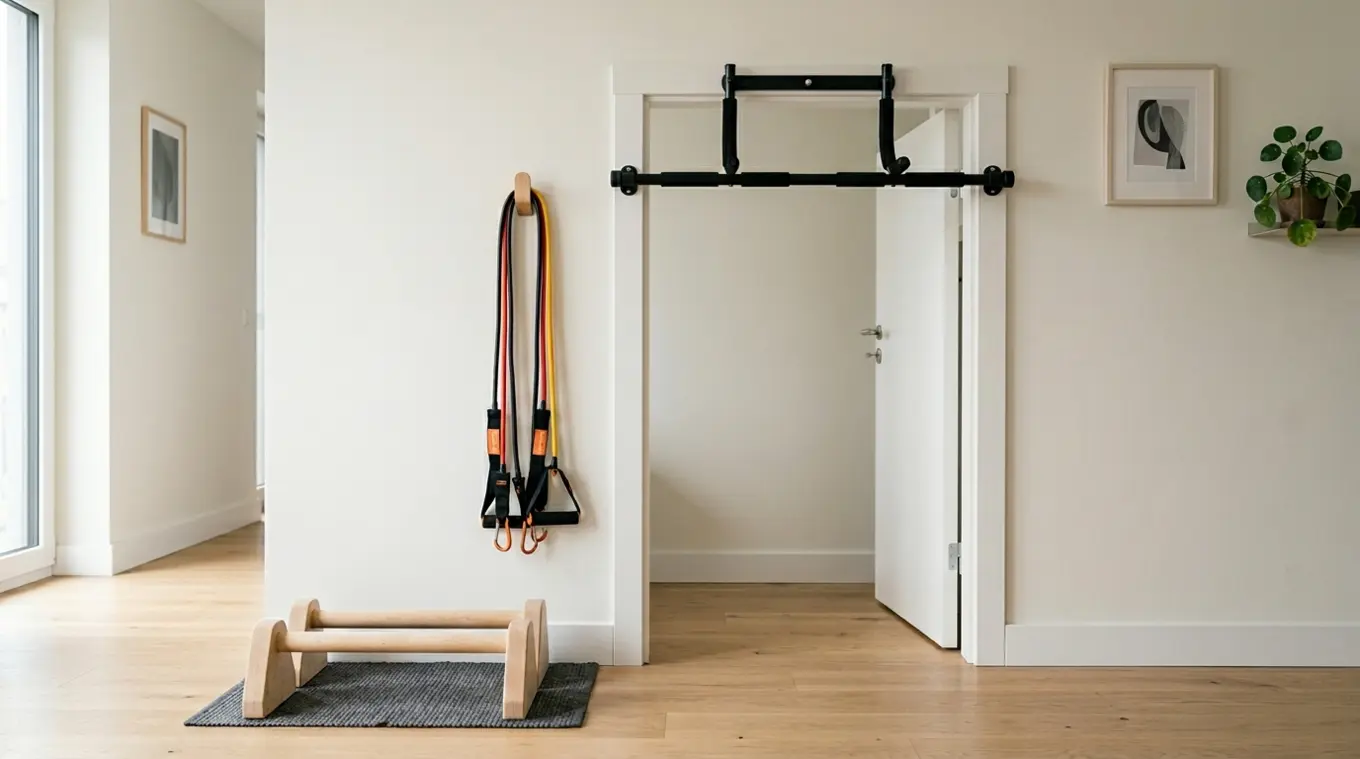
Keep your essentials close together. Bands in a basket, parallettes under the couch, rings in a closet, and your mat rolled by the wall. The easier it is to start, the more likely you are to train. In my experience, the biggest obstacle in apartment training is rarely lack of space. It is friction. If setup takes too long, motivation disappears fast.
Also think in terms of exercise zones. Your doorway bar is for pulling and hanging work. Your mat area is for push ups, core, and mobility. Your parallettes add pressing and skill work. Organizing it mentally like that makes a small room feel more usable.
Storage tips so your gear doesn’t take over
The best apartment setup is one that disappears when you are done. That matters more than people expect. Gear that stays scattered around the room becomes annoying, and annoying gear gets used less.
Use vertical storage where possible. Hang bands and rings inside a closet. Slide mini parallettes for home under furniture. Keep smaller items like liquid chalk, wraps, or an ab wheel in one bin instead of letting them spread across the room. If you use chalk indoors, liquid chalk is usually the cleaner option for apartments because it creates less mess than blocks.
If you eventually want more pressing equipment, be careful with large freestanding bars. The best dip bars for apartment use should still be easy to move and store. If they dominate the room, they stop being practical for most renters.
A Simple Full-Body Calisthenics Routine for Your Apartment
Here is a simple full body session you can do with a doorway bar, bands, and parallettes or rings. It works well for most people training three times per week.
Start with five minutes of shoulder circles, band pull aparts, scapular pull ups, and a few easy squats. Then move into your main work.
-
Pull ups or band assisted pull ups for 4 sets of 5 to 8 reps
-
Push ups on floor or parallettes for 4 sets of 8 to 15 reps
-
Ring rows or band rows for 3 sets of 8 to 12 reps
-
Split squats or bodyweight squats for 3 sets of 10 to 15 reps per side
-
L sit tuck hold on parallettes for 4 rounds of 10 to 20 seconds
-
Band face pulls or external rotations for 2 to 3 light sets
If you want a quieter version for upstairs apartment living, slow the lowering phase on every rep and avoid jumping between exercises. That keeps intensity high without adding impact.
For more movement ideas, you can build sessions around pull up bar drills, ring basics, and parallette core work. The goal is not to make it fancy. The goal is to make it repeatable.
Apartment Calisthenics for Beginners vs. Intermediate Athletes
Your ideal gear depends partly on where you are now. Beginners and intermediate athletes do not need exactly the same setup.
Start here if you’re a beginner
If you are just getting started, keep the setup small and forgiving. A doorway pull up bar, resistance bands, and mini parallettes for home are enough for months of progress. That combination lets you train the basics safely while improving strength and control.
Beginners usually benefit most from assistance and simplicity. Bands help with pull ups and dips. Parallettes reduce wrist stress. A pull up bar gives you a clear upper body goal to work toward. You do not need weighted gear, large dip stations, or specialized accessories yet.
Focus on consistent movement quality first. Full range push ups, band assisted pull ups, rows, squats, planks, and supported core holds will take you far. If you cannot yet do clean pull ups, that is normal. Bands and rows are exactly how many people get there.
Level up your setup when you’re ready
Once you can do solid basics with control, rings become an excellent upgrade. They add instability, variety, and progression options without adding much bulk. This is also the stage where some people consider weighted calisthenics tools like a dip belt or weight vest, but in an apartment I would still stay selective.
If you have enough room and a reason to use them, the best dip bars for apartment training can be useful. But they should solve a real training need, not just look impressive. A lot of intermediate athletes buy big bars too early when rings or parallettes would cover most of the same ground in less space.
My advice is simple. Upgrade only when your current equipment limits your training. Not when social media makes you feel under equipped.
What You Don’t Need (And What Wastes Your Money)
This part matters just as much as the recommendations. A lot of apartment athletes waste money because they buy gear that sounds useful instead of gear that actually gets used.
You probably do not need a huge power tower unless you have an unusually large apartment and no doorway option. You probably do not need oversized dip bars if your current goal is just to build your first ten push ups and one clean pull up. You probably do not need a treadmill if your main focus is calisthenics strength.
Be careful with ultra cheap products too. I have seen low quality bands snap early, unstable bars shift under load, and flimsy parallettes wobble enough to ruin confidence during training. Cheap gear can cost more in the long run because you replace it, work around it, or stop trusting it.
Another common waste is buying too many accessories before covering the basics. Chalk, wraps, grips, weighted vests, mobility tools, and extra handles can all be useful later. But they should come after the core setup is in place. For most people, the best calisthenics equipment for apartments is still just a few reliable pieces used consistently.
If you are tempted by a very cheap bundle, ask yourself one question: will I still use this six months from now? If the answer is unclear, skip it.
Final Recommendations
Apartment training works best when you stay focused on compact, quiet, and flexible equipment. A good apartment calisthenics setup does not need to be expensive or complicated. In most cases, a doorway bar, rings or bands, and a pair of compact parallettes will cover almost everything you need to build strength at home.
If you are starting out and want to keep things simple, the priority order looks like this: buy the essentials first, make sure each piece fits your space, and choose quality over random cheap gear. A pull up bar without drilling, a solid calisthenics resistance bands set, and compact parallettes will do more for your progress than a room full of gimmicks. If you have a safe anchor point, add rings next. If you want brand recommendations that are built with calisthenics in mind, GORNATION is a practical place to start for bars, rings, bands, and parallettes.
The biggest win is not owning more gear. It is having equipment you trust enough to use every week. That is how real progress happens in a small apartment.
Final Thoughts
The best calisthenics equipment for apartments is simple, compact, and genuinely useful. For most people, that means starting with a doorway pull up bar, resistance bands, and compact parallettes, then adding rings if the setup allows it. This gives you enough variety for pull work, push work, core training, mobility, and skill practice without turning your apartment into a crowded gym. Keep your setup quiet, renter friendly, and easy to store. If your gear fits your space and your level, you will train more consistently, and that matters far more than owning a lot of equipment.
FAQs
Can you really build muscle with calisthenics equipment in a small apartment?
Yes, you can. A smart apartment setup with a doorway pull up bar, resistance bands, rings, and parallettes is enough to build strength and muscle when you train with good form and progressive overload. You do not need bulky machines. Consistent pulling, pushing, core work, and unilateral leg training go a long way.
What is the best doorway pull up bar for apartments?
The best doorway pull up bar for apartments is one that fits your frame securely, does not require drilling, and feels stable under your bodyweight. Look for strong contact points, clear weight capacity, and good compatibility with modern door trim. Calisthenics focused options like GORNATION models are often a better fit than generic bars.
Are gymnastic rings practical for apartment training?
They are practical if you have a safe anchor point. Gymnastic rings in apartment training are excellent for rows, push ups, dips, and core work, but they only make sense if you can hang them securely. If your apartment has no suitable anchor indoors or nearby outside, start with a pull up bar and resistance bands first.
What are the quietest calisthenics exercises for an upstairs apartment?
The quietest options are controlled push ups, slow pull up variations, ring rows, band work, planks, L sits, and split squats with soft foot placement. Quiet calisthenics exercises for upstairs apartment living should focus on tempo and control rather than jumping or explosive reps. You can still get a hard workout without making much noise.
What equipment should a beginner buy first for an apartment calisthenics setup?
Beginners should start with a pull up bar without drilling, a resistance band set, and mini parallettes for home. That combination covers the basics, supports progression, and stores easily in a small space. It is better to master a few useful tools than buy too much equipment too early and end up not using it.