You start adding reps to dips or pull ups, and at some point bodyweight alone stops feeling like enough. That is usually when people ask the same thing: how do you actually use a dip belt without it feeling awkward or unsafe? If that sounds familiar, you are in the right place. In this guide, I will walk you through what a dip belt is, how to wear a dip belt correctly, how much weight to use on a dip belt, and which dip belt exercises are worth your time. I will also cover common mistakes, safety tips, and when buying a good belt actually makes sense.
What Is a Dip Belt and What Does It Do?
If you are wondering what is a dip belt, the simple answer is that it is a belt made to hang extra weight from your waist during bodyweight exercises. The usual setup includes a padded belt, a chain or strap, and a carabiner. You wrap the belt around your waist, thread the chain through a weight plate, and secure it so the load hangs between your legs.
The dip belt meaning is straightforward. It gives you a practical way to make dips, pull ups, and chin ups harder once bodyweight is no longer enough. In my experience, this is one of the best tools for progressing upper body calisthenics strength without changing the basic movement pattern too much.
How a Dip Belt Works
A dip belt works by adding external load while keeping your hands free and your torso relatively natural. Instead of squeezing a dumbbell between your feet or wearing a bulky vest, the weight hangs from the hips. That usually feels more balanced for weighted dips and weighted pull ups once you get used to it.
Most people use Olympic plates, but kettlebells and dumbbells can work too if the setup is stable. The key is to keep the weight centered and high enough that it does not hit the floor during the rep.
Dip Belt vs Weight Belt: What’s the Difference?
This is where a lot of beginners get confused. A dip belt is not the same as a lifting belt or powerlifting belt. A lifting belt is meant to support your core during squats, deadlifts, and presses. A dip belt is designed to suspend weight from the waist.
If you want a deeper comparison, take a look at dip belt vs weighted vest. In short, a dip belt is usually the better choice for heavy dips and pull ups, while a vest can feel better for movements like push ups, step ups, or longer conditioning sessions.
Who Should Use a Dip Belt?
A dip belt is best for intermediate and advanced trainees who can already do solid bodyweight reps with clean form. As a rough guideline, if you can do at least 10 to 12 strict dips or 8 to 10 strict pull ups, adding weight can be a smart next step.
It is especially useful for people training calisthenics strength, streetlifting, or weighted calisthenics. If your goal is to improve max strength, build stronger triceps, chest, lats, and upper back, or prepare for advanced skills that benefit from a stronger pull and press, a dip belt can help a lot.
For beginners, I would not rush it. First build stable bodyweight technique. If you still need help on the basics, guides like how to do a bodyweight dip and how to do a pull up with perfect form are more useful than loading up too early.
How to Use a Dip Belt Step by Step
If you want the short version of how to use a dip belt step by step, here it is: place the belt around your waist, load the chain through the plate, clip it securely, check the height, and start with a light weight. But the details matter if you want the setup to feel good and stay safe.
Place the padded part of the belt around your lower back.
Position the chain or strap ends at the front of your body.
Feed the chain through one side, then through the weight plate.
Pull the chain until the plate hangs between your thighs, not too low.
Clip the carabiner securely and double check that it is fully closed.
Step onto the dip bars or pull up station carefully and let the weight settle before the first rep.
That is the basic process for how to wear a dip belt. The belt should sit around the waist and upper hips, not high on your stomach and not so low that it slips down. Once loaded, it will settle slightly lower, which is normal.
| Exercise | How useful a dip belt is | Best use case |
|---|---|---|
| Weighted dips | Excellent | Building pressing strength in chest, shoulders, and triceps |
| Pull ups | Excellent | Adding overload for upper back and lat strength |
| Chin ups | Excellent | Progressing vertical pulling with extra biceps involvement |
| Belt squats | Good | Lower body training when you do not have a squat rack |
| Standing calf raises | Good | Simple extra loading for calves |
| Split squats | Moderate | Useful in creative gym or home gym setups |
How to Attach the Weight Correctly
The cleanest option is usually a standard weight plate. Run the chain through the center hole, remove slack, then reconnect the carabiner. The weight should hang high enough that it does not touch the floor at the bottom position. If the chain is too long, the plate may drag, which reduces tension and throws off your balance.
When people ask me how much weight to use on a dip belt, I usually suggest starting lighter than you think. For most first sessions, 10 to 25 pounds is enough. You need time to learn the new balance and movement path. Even strong athletes often feel a little awkward the first few sets.
If you want a reliable product recommendation, a well padded option from Gornation is worth considering. Their dip belt is known for solid comfort, good build quality, and a stable chain setup, which matters more than flashy branding when the load starts getting heavy. If you want more options, see best dip belt for calisthenics.
Common Mistakes to Avoid
The biggest mistake is going too heavy too soon. People often have the strength in their muscles, but not yet the coordination for a hanging load. This changes how your body stabilizes during dips and pull ups.
Another common issue is wearing the belt too high. That usually causes it to slide around once the chain is loaded. Too low is not good either because the weight can swing excessively and interfere with your reps.
Also watch your chain length. If the plate touches the floor, bench, or dip station frame, your set becomes inconsistent. And never skip the carabiner check. One of the most important dip belt safety tips is to make sure the chain is fully clipped before every set.
So, is using a dip belt safe? Yes, if you use the right weight, secure the setup properly, and control the reps. It becomes risky when people rush heavy loads with sloppy form.
Which Exercises Can You Do With a Dip Belt?
When people think about dip belt exercises, weighted dips are usually the first thing that comes to mind. That makes sense because the belt was practically made for them. But there are more exercises you can do with a dip belt than most people realize.
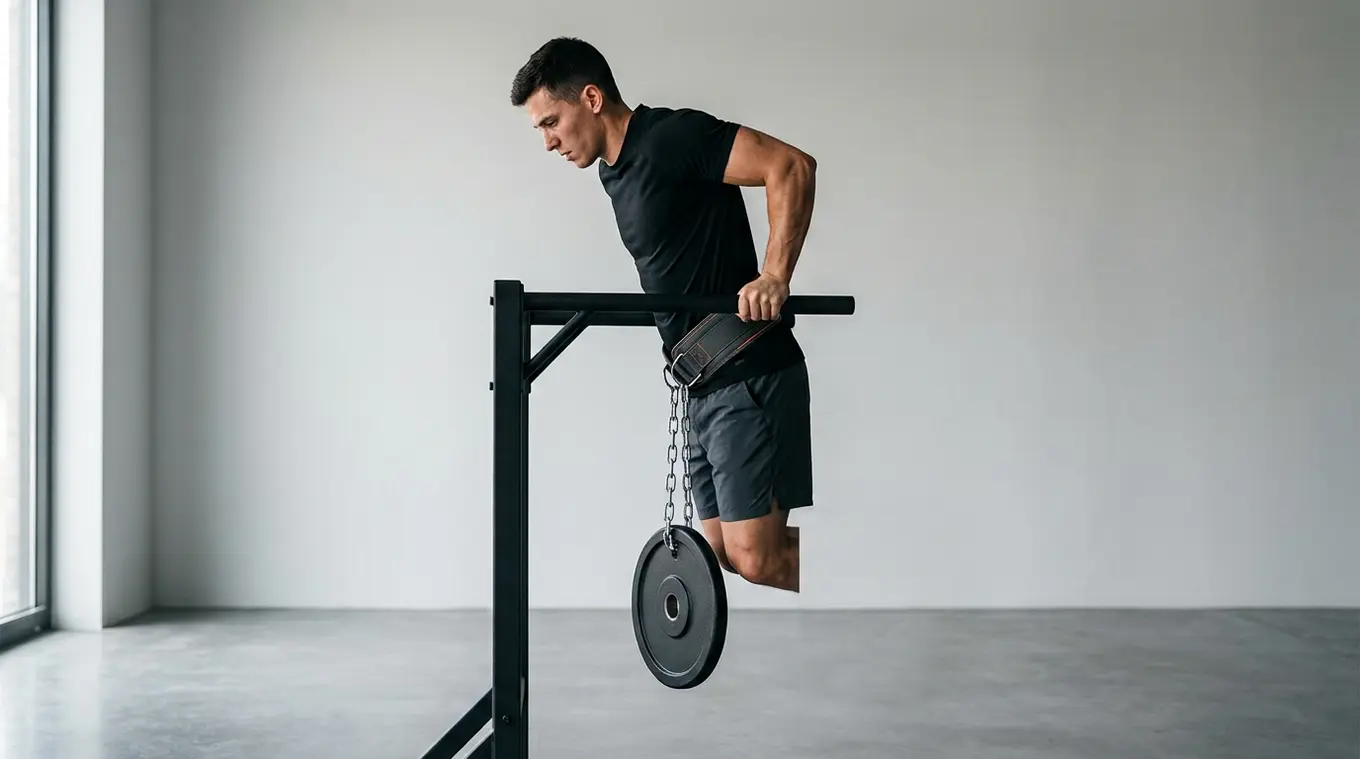
The most common choices are weighted dips, pull ups, and chin ups. These are the bread and butter for upper body strength. If your goal is to build strength through weighted dips, use the belt for low rep strength work one or two times per week and gradually add small increases in load once your reps stay clean.
You can also use a dip belt for belt squats, standing calf raises, and some creative gym setups for split squats. In a home gym, this can be a surprisingly useful workaround when you do not have a full squat rack. If that sounds relevant, our guide on how to train weighted squats gives more ideas for lower body loading.
From personal use, I think the dip belt shines most on weighted pull ups and dips. For lower body work, it can help, but the setup is usually less convenient unless you have the right platform or station.
How to Progress with a Dip Belt Over Time
Once you are comfortable with the setup and your form is consistent, the next question is how to keep making progress. The answer is straightforward: treat it like any other strength exercise and let your rep quality decide when to add weight.
A simple approach that works well:
Choose a rep range. For strength, 3 to 6 reps per set is a solid target. For more volume, 6 to 10 reps works well.
Once you can complete all sets at the top of your rep range with clean form, add a small amount of weight in the next session. For most people, 5 to 10 pounds is a sensible jump.
If your reps drop significantly or your form breaks down, hold the same weight and focus on quality before moving up.
For weighted dips and pull ups, small and consistent increases beat large jumps. Your muscles may be ready for more load before your joints and stabilizers are. Tracking your sessions, even just noting weight, sets, and reps, makes it much easier to spot real progress and avoid stalling.
Is a Dip Belt Necessary? Our Honest Take
No, a dip belt is not necessary for everyone. If you are still building your first clean dips and pull ups, you do not need one yet. You can make great progress with bodyweight alone, slower eccentrics, pauses, and better programming.
But once bodyweight sets become easy, a dip belt becomes one of the smartest upgrades you can make. It is simple, compact, and more practical than a weighted vest for heavy pulling and dipping. If your training includes progressive overload, a dip belt is one of the easiest ways to keep moving forward.
If you are trying to decide on the best dip belt, focus less on hype and more on comfort, chain strength, stitching, and padding. That is really how to choose a dip belt. A good model should feel secure, not dig into your hips too much, and hold up over time. For most people, a quality nylon belt is the sweet spot. Leather can work, but it is often less comfortable and not always worth the extra cost.
My honest advice is this: buy one when your bodyweight strength is already solid and you know you will actually use it. If that is where you are now, a good Gornation dip belt is a practical pick for weighted calisthenics without overcomplicating your setup.
Conclusion
Learning how to use a dip belt is not complicated, but doing it correctly makes a big difference. Keep the belt around your waist and upper hips, secure the chain carefully, start with a light load, and focus on controlled reps. That approach will help you build strength safely in dips, pull ups, and other weighted bodyweight movements.
If you are past the beginner stage and want a clean way to add progressive overload, a dip belt is absolutely worth considering. It is one of the most useful tools for serious calisthenics and streetlifting training.
Frequently Asked Questions
How much weight should a beginner use on a dip belt?
Most beginners should start with 10 to 25 pounds. The goal is not to prove how strong you are on day one. It is to get used to the hanging load, keep your form clean, and build confidence with the setup before increasing the weight.
Can you use a dip belt for pull ups and chin ups?
Yes, absolutely. A dip belt works very well for weighted pull ups and chin ups. In fact, many people use it more for pulling than for dips because it allows precise loading without changing the movement too much compared with bodyweight reps.
Is a dip belt better than a weighted vest?
For heavy dips and pull ups, a dip belt is usually better because the load is easier to increase and feels more natural for strength work. A weighted vest can still be useful for general bodyweight training, but it often becomes bulky once the weight gets high.
Can I use a regular lifting belt as a dip belt?
Not in the standard way. A regular lifting belt is made for bracing, not for hanging plates. Some people create a homemade setup with a chain, but it is less convenient and not always safe. A proper dip belt is the more comfortable and reliable option.
How do I know if my dip belt chain is the right length?
The chain is the right length when the weight hangs freely between your legs without touching the floor or the station. It should not swing excessively, and it should not restrict your range of motion. A little adjustment usually makes a big difference in comfort.