If you have ever looked at pull up bars online and thought they all seem similar, you are not alone. One says no drill, another says heavy duty, and a third looks perfect until you realize it will not fit your doorway or training space. That is usually where people get stuck. In this guide, I will walk you through what is a pull up bar, the main types of pull up bars, what to look for in a pull up bar, and which setup makes the most sense for your goals, budget, and home. By the end, you should know exactly which bar is worth buying and which ones to skip.
Why Choosing the Right Pull Up Bar Matters
A pull up bar looks simple, but the right choice can make a huge difference in how often you train, how safely you train, and how fast you improve. A bad bar usually creates friction. It may feel unstable, sit too low, hurt your hands, damage your doorway, or simply not fit the way you train. A good bar does the opposite. It makes training easy to start, easy to repeat, and reliable enough that you trust it every session.
When people ask me what is a pull up bar, I usually give a practical answer. It is one of the most efficient upper body training tools you can own. With one piece of equipment, you can train pull ups, chin ups, dead hangs, knee raises, leg raises, scapular pulls, and in some setups even muscle up progressions. If you add resistance bands, rings, or a dip belt later on, the bar becomes even more useful.
That is why this is not just about buying any bar. It is about buying one that matches your bodyweight, your room, your ceiling height, your training level, and your future goals. If you only want to get your first rep at home, a compact doorway solution may be enough. If you are already doing weighted pull ups or explosive chest to bar reps, you will probably want something permanently mounted and more rigid.
In my experience, most regrets come from buying too quickly. People focus on price first and only later think about clearance, bar diameter, grip options, or pull up bar weight capacity. That usually leads to replacing the bar within a few months. It is better to think one step ahead. Choose a setup you can grow into, not just one you can use this week.
Another reason this choice matters is consistency. A bar that is always ready to use gets used more often. That sounds obvious, but it matters a lot. A removable bar that you dread setting up may stay in a closet. A wall mounted bar in your garage may become part of your routine five days a week. Convenience is often the hidden factor behind progress.
So before comparing models, think in terms of use case. Are you training in a small apartment, a garage gym, a shared home, or outdoors in your backyard? Do you want strict pull ups, comfortable neutral grip work, or enough space for advanced calisthenics? Those questions will narrow the field quickly and save you from buying the wrong thing.
The Main Types of Pull Up Bars Explained
The easiest way to choose is to start with the main categories. Each type solves a different problem. Some are best for renters, some for heavy athletes, some for small rooms, and some for serious long term training. Once you understand the differences, the buying decision becomes much clearer.
Doorway Pull Up Bars (Tension Mounted & Over the Door)
Doorway bars are usually the first option people consider, especially for home training. They are affordable, compact, and easy to access. But not all doorway bars are the same, and this is where many buyers get confused.
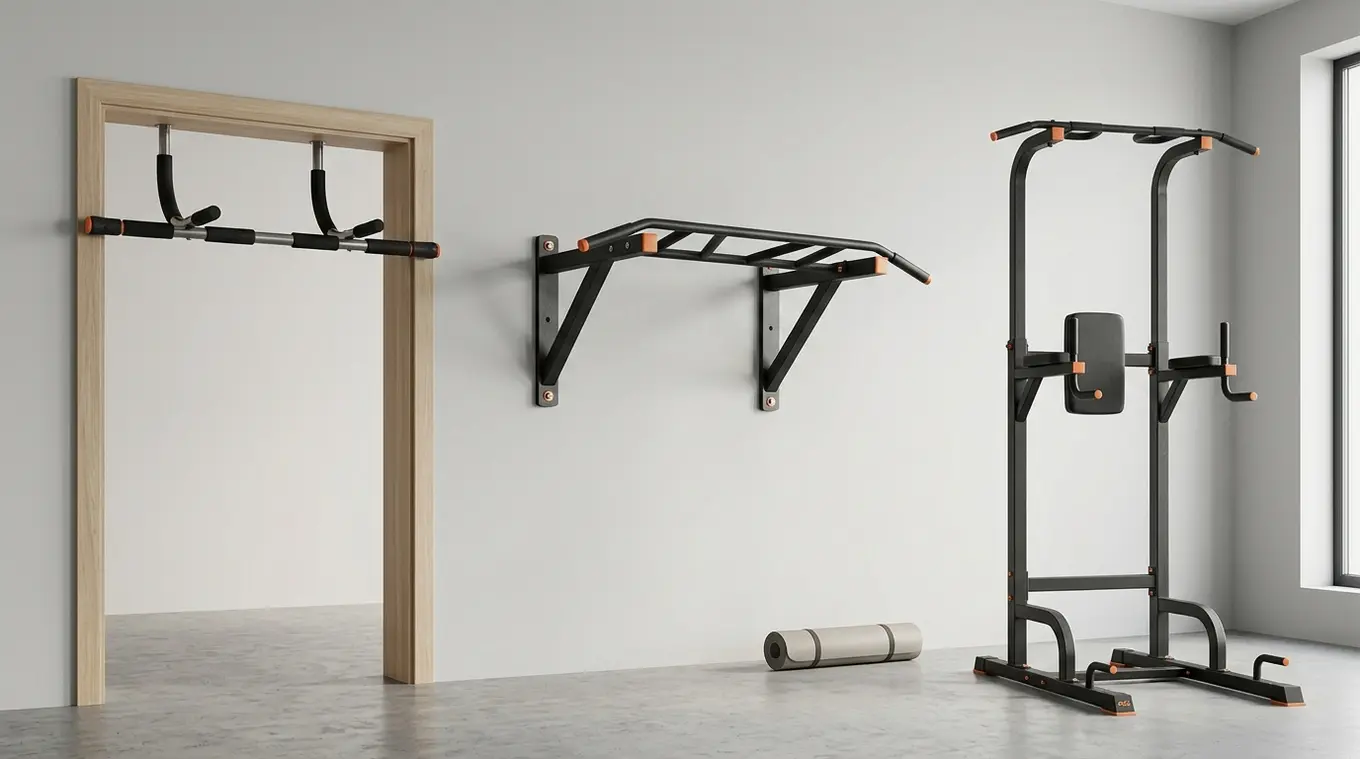
There are two common styles. The first is the over the door design. This hooks over the top of the door frame and uses leverage to stay in place. These are popular because they need little or no permanent installation. The second is the tension mounted or extendable style that twists outward inside the door frame until it presses firmly against both sides.
If you are wondering how to install a doorway pull up bar, the answer depends on which style you choose. Over the door models usually require checking the frame dimensions, placing protective contact points correctly, and making sure the trim is strong enough. Tension bars require careful tightening, even pressure, and regular checks before use. Some also include safety brackets, which I strongly prefer if the bar will be used often.
For beginners and renters, doorway bars are often the best starting point. They are practical and usually the best pull up bar for beginners if the goal is simply to start doing hangs, assisted reps, negatives, and basic chin ups. A model like the Gornation Hook It is appealing here because it is quick to mount and remove, which makes it suitable for apartments and shared spaces. If you want an adjustable option, the Gornation Extend It fits the use case of a compact tension style bar well.
That said, doorway bars have limits. They are usually less stable than wall mounted options, often have less overhead clearance, and may not be ideal for dynamic reps. Some people also assume every doorway in the United States will work with every product, which is not true. Always measure the width, check the trim depth, and confirm the load rating before you buy.
If you live in a tighter space, you may also want to read a guide focused on a small apartment calisthenics setup. That can help you think beyond the bar itself and plan your training area more realistically.
My short take is this. Doorway bars are great when convenience and minimal installation matter most. Just do not expect them to behave like a commercial gym rig. If your expectations match the category, they can be a very smart purchase.
Wall Mounted and Ceiling Mounted Pull Up Bars
If you want more strength, more confidence, and more room to progress, wall mounted and ceiling mounted bars are usually the next step up. This is the category I recommend most often to people who know they will train consistently for months or years, not just a few weeks.
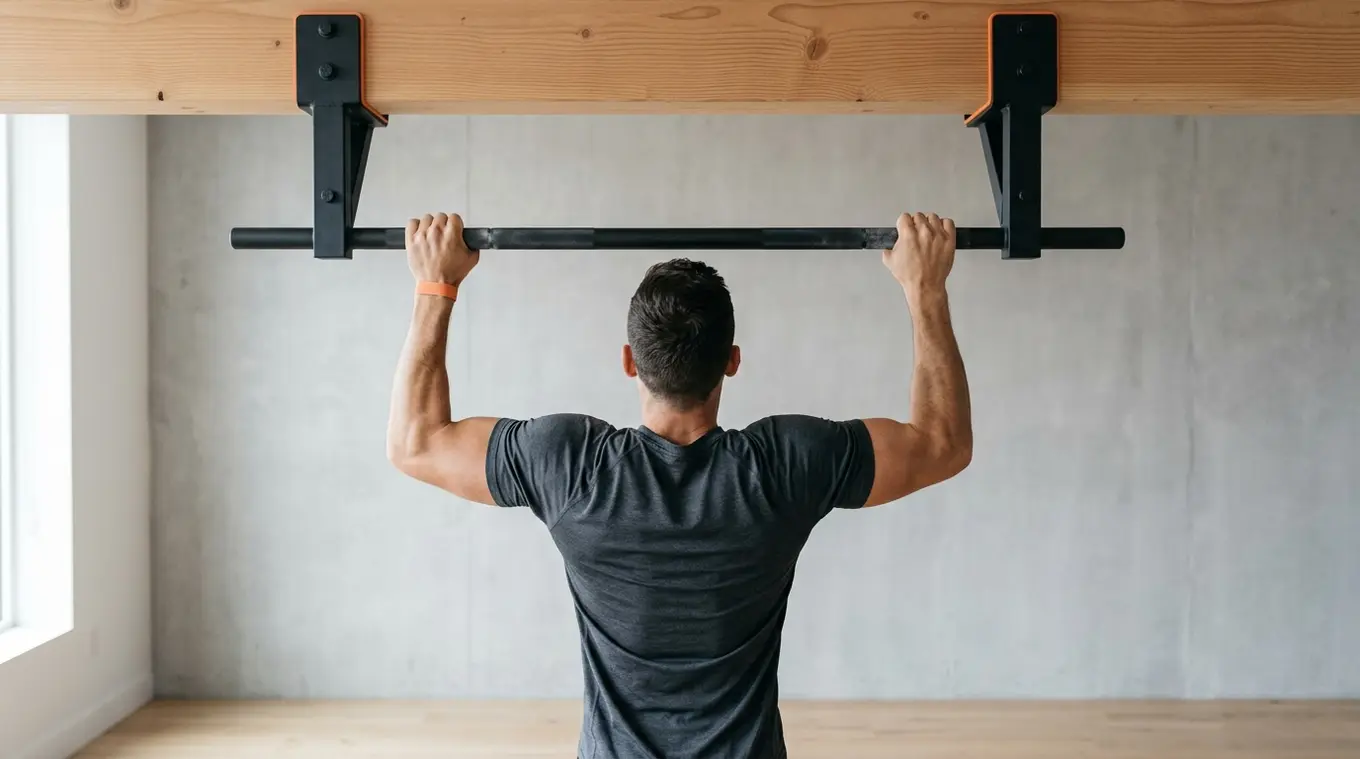
A wall mounted bar attaches directly to studs, masonry, or another strong structure. A ceiling mounted bar anchors into joists overhead. Both options are far more stable than most doorway bars when installed correctly. They also tend to have better pull up bar weight capacity, more clearance for full range of motion, and a stronger feel during sets.
How much weight can a pull up bar hold in this category? That depends on the bar, the hardware, and the structure it is attached to. Many quality steel models list capacities of 400 to 700 pounds or more, but those numbers only matter if the installation is solid. A great bar installed into weak drywall backing is not safe. The structure matters as much as the product.
When people ask how to install a pull up bar safely, this is where the answer becomes serious. You need to locate studs or joists accurately, use the correct anchors or lag bolts, follow the spacing instructions, and avoid guessing. In some cases, especially with concrete or brick, it makes sense to use a professional installer. That is not overkill. It is common sense.
I also pay attention to hardware quality. On better bars, you will often see higher grade fasteners, and in some cases it is worth upgrading to 304 stainless steel hardware for pull up bar installations if the setup is in a humid garage or outdoors. Rust resistance matters more than people think, especially in climates with heat, moisture, or seasonal swings.
In the Gornation lineup, this is where the Multi Pull Up Bar, Uni Pull Up Bar, Medium Wall Bar, and Large Wall Bar make sense depending on your goals. The Uni Pull Up Bar is a simple, straightforward choice if you mainly want strict straight bar work. The Multi Pull Up Bar adds more variety and is often the better choice if you plan to do pronated, supinated, and neutral grip training. The Large Wall Bar is the one I would lean toward for advanced athletes who want more clearance for muscle up work or bigger movement patterns.
Ceiling bars are excellent in garages and basements where wall space is limited but overhead structure is strong. Wall bars are usually easier to access and often feel more natural in a home gym room. Between the two, I would not say one is always better. It depends on your layout.
If you already know you are comparing fixed setups, this deeper comparison of doorway vs wall mounted pull up bars is worth checking after this guide.
Free Standing Pull Up Bars and Power Racks
Free standing pull up bars are ideal for people who do not want to drill into walls or ceilings but still want a more complete training station. This category includes standalone pull up stations, power towers, and power racks with integrated bars.
The biggest advantage is versatility. With one setup, you may be able to do pull ups, chin ups, knee raises, dips, rows, and in some cases attach rings or bands. If you are trying to build a complete home gym, this can be a much better long term solution than a basic bar alone.
The tradeoff is footprint. Even the most compact station takes meaningful floor space, which makes this a tougher fit as a pull up bar for small apartments. If you have a garage, spare room, or basement, that changes things. In those settings, a station can be one of the best investments you make because it opens up so many training options.
I usually divide this group into two subgroups. The first is the simple freestanding pull up station. This is focused mostly on upper body bodyweight work. The second is the power rack with a pull up bar, which is better if you also train with barbells and want one structure to support everything.
The Gornation Premium Pull Up Station fits the athlete who wants an all in one solution without permanent mounting. This is a strong choice for people who care about versatility and stability, and it makes even more sense if you also want dips and core work from the same piece of equipment.
One practical tip from experience: always check the width and height of freestanding units against your room dimensions. On paper, a station can look compact. In reality, the usable space around it matters just as much. You need enough room to grip comfortably, swing your legs slightly, and step in and out without feeling boxed in.
Outdoor Pull Up Bars
Outdoor bars are often overlooked, but they are excellent if you have a yard, patio, outdoor gym area, or access to a weather protected space. They also make sense for athletes who love street workout style training and want full freedom of movement.
The main advantage of an outdoor pull up bar is space. You usually get better clearance, more freedom for dynamic reps, and a more natural setup for muscle ups, front lever work, and skill practice. If your training style is more advanced or explosive, outdoor setups can feel much less restrictive than indoor bars.
The catch is weather resistance. This is where material choice matters. Steel is usually the better option for strength and rigidity, but the finish and hardware become critical outdoors. Powder coating helps, and stainless hardware is a smart move. If you compare steel vs aluminum pull up bar construction, steel usually wins for stability and load handling, while aluminum may be lighter and more corrosion resistant but can feel less solid depending on the design. For most serious pull up bars, steel remains the standard for a reason.
If you train outdoors year round, inspect the bar regularly for rust, loose bolts, and surface wear. I have seen outdoor setups stay excellent for years when maintained properly, and I have also seen cheap bars deteriorate fast after one wet season.
For people building a backyard or park style setup, a dedicated guide to the best outdoor pull up bars can help narrow the options further.
Straight Bar vs Multi Grip Pull Up Bar: Which Should You Choose?
This is one of the most important decisions, especially if you are choosing a fixed wall or ceiling setup. A straight bar is simple. A multi grip bar gives you more hand positions. Neither is automatically better. It depends on how you train.
A straight bar is usually best for purists, skill focused athletes, and anyone who wants the most direct carryover to classic pull ups, chin ups, chest to bar reps, and bar based calisthenics skills. It is simple, durable, and often gives more freedom to slide your grip width exactly where you want it. If you do a lot of strict reps and care about consistency, this can be ideal.
A multi grip pull up bar adds neutral, angled, close, and often wide positions. That makes it easier to vary stimulus, reduce repetitive stress, and find a more comfortable setup if straight pronated pull ups bother your wrists, elbows, or shoulders. For general home gym use, this extra variety is a big plus.
From personal experience, a straight bar teaches discipline and transfers well if your main goal is getting stronger at pull ups themselves. A multi grip bar keeps training fresher and often feels friendlier on the joints during higher volume weeks. If I had to recommend one bar for the average home user, I would usually lean multi grip because it solves more problems for more people.
That is also why the Gornation Multi Pull Up Bar stands out for intermediate and advanced users. It gives more flexibility as your training evolves. If you know you only want basic strict pull ups and a clean, compact setup, the Gornation Uni Pull Up Bar is still an excellent choice.
One more detail that people miss is bar diameter and surface finish. A perfectly shaped multi grip bar can still feel bad if the handles are too thick, too slick, or placed awkwardly. That is why I always tell people not to judge only by the number of grips. Comfortable grip spacing matters more than flashy design.
The Most Important Factors to Consider
Once you know the type of bar you want, the next step is evaluating quality. This is where a real pull up bar buying guide should help, because many product pages emphasize marketing language instead of the factors that actually matter during training.
Weight Capacity and Build Quality
Let us start with the question almost everyone asks: how much weight can a pull up bar hold? The listed capacity should always be treated as a combination of product quality and correct installation. A doorway bar rated for 300 pounds may still feel less secure than a mounted bar rated for 500 pounds, especially during faster reps or longer hangs.
For most adults doing standard pull ups, a well made bar with a healthy margin above your bodyweight is the smart move. If you weigh 190 pounds and plan to add a 45 pound plate later, you do not want to buy the absolute minimum rating. Build in room for progression.
Look for solid steel construction, clean welds, decent hardware, and realistic engineering. In general, steel is preferred over aluminum in this category because rigidity matters. The steel vs aluminum pull up bar debate sounds interesting, but in practical training terms, most people will be better served by steel. It is stronger, more common, and usually more confidence inspiring.
Watch out for bars that rely too heavily on foam grips to look comfortable. Foam is not always bad, but it can hide mediocre grip quality and wear out over time. A durable powder coated or knurled metal surface usually lasts longer. For outdoor or humid spaces, paying attention to rust resistant coatings and 304 stainless steel hardware for pull up bar installations is a good long term move.
One simple rule I use is this: if the product page is vague about materials, mounting points, and capacity testing, I become cautious immediately. Good bars are usually clear about those basics.
Bar Diameter and Grip Surface
Bar diameter is one of those details that looks minor on a product page but has a noticeable effect during training. Most standard pull up bars are built around 28 millimeters in diameter, which is close to an Olympic barbell and comfortable for the majority of hand sizes. Some bars go thicker, around 32 to 40 millimeters or more, which increases grip and forearm demand but may feel harder to hold for beginners or people with smaller hands.
The grip surface matters just as much as the diameter. Knurled metal provides reliable traction without needing chalk or gloves and holds up well over time. Smooth metal can work but tends to become slippery when your hands sweat. Foam grips feel soft initially but compress and wear out with regular use, and they can hide poor underlying bar quality. For long term training, a well-finished metal surface with light to moderate texture is usually the most durable and practical option.
If you are not sure where to start, a 28mm bar with a textured or lightly knurled finish is a reliable default for most people. If developing grip strength is a specific goal, a thicker bar diameter is worth considering intentionally. But for general home training, the standard diameter works well for the vast majority of users.
Stability and Mounting Method
Stability affects not just safety, but how enjoyable the bar feels. A little movement can ruin confidence fast, especially for beginners. You should not have to wonder whether the bar will shift during your set.
That is why the mounting method matters so much. Over the door and tension bars are convenient, but they generally move more than fixed bars. Wall mounted and ceiling mounted models feel more secure when installed correctly. Freestanding stations can also be stable, but only if the base design is solid and the footprint suits the movement.
| Type pull up bar | Best for | Installation | Stability | Space needed | Main limitation |
|---|---|---|---|---|---|
| Doorway | Beginners, renters, small apartments | Low | Moderate | Low | Less clearance and less suited for dynamic reps |
| Wall mounted | Consistent home training, progression, weighted pull ups | High | High | Moderate | Requires drilling and solid structure |
| Ceiling mounted | Garages, basements, limited wall space | High | High | Moderate | Needs strong overhead joists and careful placement |
| Free standing / station | Full bodyweight setup without mounting | Low to moderate | Moderate to high | High | Takes up significant floor space |
| Outdoor | Advanced calisthenics, dynamic training, backyard setups | Moderate to high | High | High | Must resist weather and needs regular maintenance |
How to install a pull up bar safely depends on the setup, but the principle is the same every time. Follow the structure, not just the instructions. Drywall is not structure. Decorative trim is not structure. Weak doorframes are not structure. You want studs, joists, masonry, or a strong purpose built frame.
If you are installing a doorway bar, make sure you understand exactly how to install a doorway pull up bar and what contact points carry the force. If the doorway itself feels questionable, do not gamble on it. For mounted bars, take your time measuring. If you are uncertain, ask for help. Good installation is part of the product choice, not a separate issue.
In practice, this is also where many premium options justify the price. Better bars often come with cleaner mounting geometry, stronger brackets, and a more confidence inspiring feel under load.
Space, Dimensions and Where You Train
A great bar that does not fit your room is still the wrong bar. This sounds basic, but it gets ignored all the time. Before buying, measure width, depth, ceiling height, doorway trim, and the free space around the training area.
If you are searching for a pull up bar for small apartments, compactness matters more than maximum versatility. A simple over the door bar or slim mounted profile may be the better answer than a large station that dominates the room. If you have a garage or basement, you can think bigger and prioritize clearance and rigidity instead.
Also think about body position at the bottom and top of the rep. Can you hang without bending your knees too much? Can you pull your chest toward the bar without hitting the wall or ceiling? Do you want enough room to use rings or bands later?
As a rough reference, many people do well when the bar sits about 8 to 12 inches above their overhead reach, though that can vary based on the room and movement style. The more advanced your goals, the more valuable extra clearance becomes.
If your setup is tight, there is also value in reading a guide focused on the best pull up bars for small spaces. It can help you avoid buying something that looks good online but feels cramped in real life.
Pull Up Bars for Beginners vs Advanced Athletes
One mistake I see often is athletes buying for the level they wish they were at rather than the level they are actually at. Ambition is good, but equipment should support progress, not make training harder to start.
If you are a beginner, your main priorities are accessibility, comfort, and consistency. The best pull up bar for beginners is usually one that is easy to use frequently. That often means a doorway bar, a basic wall mounted bar, or a station that also allows easier regression work. If the setup lets you practice dead hangs, scapular pulls, band assisted reps, and negatives several times a week, it is doing its job.
Beginners also tend to benefit from pairing a bar with resistance bands. If you need help with progression, this guide on using resistance bands for pull ups is a practical next step.
For an advanced athlete, the priorities shift. Stability under high force, enough room for advanced movements, better grip variety, and higher load tolerance become more important. If you can already do sets of clean pull ups and plan to move into weighted calisthenics, your equipment needs to handle that future. That is where stronger mounted bars and stations become worth the investment.
Personally, when I started, I cared most about simply having a bar available every day. Later, once weighted pull ups and skill work became a bigger part of training, I noticed how much more enjoyable a rigid setup felt. The difference is noticeable as soon as reps get heavier or more explosive. So while beginners do not need the biggest bar on the market, advanced users really should not stay on a flimsy beginner setup for too long.
If you are somewhere in the middle, think about your next twelve months. If you expect steady progress and regular training, it may be smarter to skip the cheapest entry option and buy a bar you can grow with.
Home, Gym or Outdoor: Matching the Bar to Your Setup
There is no universal best pull up bar. There is only the best match for your environment. Home users, gym owners, and outdoor athletes all need different things.
Best Pull Up Bar Options for Home Training
For home training, the biggest variables are room size, whether you rent or own, and how permanent you want the setup to be. If you rent or want something removable, doorway bars make the most sense. If you own the home and train seriously, mounted bars usually offer much better long term value.
For very limited space, I would look first at a clean doorway setup like the Gornation Hook It or an adjustable option like the Extend It. These are especially useful if your main goal is quick sessions without dedicating an entire room to training. They are also practical as a pull up bar for small apartments.
If you have a garage, basement, or sturdy wall, a mounted bar is the sweet spot for most people. This is where a bar like the Gornation Multi Pull Up Bar or Uni Pull Up Bar becomes much more attractive. You get better training quality, more confidence, and often a better ceiling for progression.
If you are turning part of your home into a broader bodyweight gym, then a freestanding station like the Gornation Premium Pull Up Station can make sense. It costs more and takes more space, but it adds a lot more exercise variety too.
The right home option comes down to this question: do you want the easiest setup to live with, or the best setup to train on? Sometimes those are the same. Often they are not.
Gym Setup: Commercial vs Residential Pull Up Bars
Commercial and residential bars overlap, but they are not exactly the same. In a gym setting, the bar needs to handle more users, more abuse, and often less careful treatment. That means thicker materials, stronger finishes, and mounting that can survive years of repeated use.
Residential pull up bars can still be excellent, but they are usually built with a narrower use case in mind. If one or two people are training on the bar at home, that is a very different demand profile from a busy training facility.
If you are buying for a private garage gym, I would still prioritize a bar that feels closer to commercial quality if your budget allows it. The difference in daily feel is worth it. Better welds, stronger brackets, more secure mounting, and smart grip spacing all matter more over time than flashy design details.
For a true commercial space, I would be stricter about maximum load, hardware quality, and simplicity. In shared settings, simple strong bars often outperform complex ones because they are easier to maintain and harder to misuse.
Chin Up Bar vs Pull Up Bar: Is There a Real Difference?
In most cases, no. The terms are often used interchangeably. A chin up bar and a pull up bar are usually the same piece of equipment. The difference is more about the exercise than the bar itself.
A pull up usually refers to a pronated grip, with your palms facing away from you. A chin up usually refers to a supinated grip, with your palms facing toward you. The same straight bar can be used for both. A multi grip bar may also offer neutral grip options, which many people find more comfortable.
That said, some bars are marketed as chin up bars because they are compact, doorway based, or aimed at general home users rather than more advanced calisthenics training. But functionally, if the bar is strong enough and positioned well, it can usually be used for either movement.
So if you are comparing products and wondering whether a chin up bar vs pull up bar distinction matters, focus on the actual design. Grip positions, stability, bar diameter, mounting type, and clearance matter. The name on the product page matters much less.
Pull Up Bar vs Pull Up Station: What Do You Actually Need?
This decision really comes down to simplicity versus versatility. A pull up bar is usually smaller, cheaper, and easier to fit into a room. A pull up station gives you more exercise options and often better stability, but it asks for more space and budget.
If your only real goal is pull ups, chin ups, and a few hanging core drills, a bar is enough. Most people do not need a massive station to get strong. In fact, a simple bar often leads to more actual use because it is less intimidating and easier to place at home.
If you want dips, leg raises, rows, band work, maybe ring attachments, and a more complete home setup, then a station starts to make more sense. This is especially true if you do not want to drill into the building or if you are trying to create one central piece of equipment for bodyweight training.
In practical terms, I usually recommend a standard bar first unless you know you want broader home gym capability. A station is excellent, but only if the footprint and price fit your situation. The Gornation Premium Pull Up Station is the kind of option I would only suggest to someone who knows they will use the extra versatility regularly. Otherwise, a good wall mounted bar is often the better value.
Common Mistakes When Buying a Pull Up Bar
The biggest mistake is buying based on photos alone. Pull up bars are one of those products where the details matter far more than the marketing images. A sleek product can still be noisy, cramped, unstable, or annoying to use.
Another common mistake is ignoring dimensions. People assume a doorway bar will fit any standard doorway, or that a wall mounted bar will leave enough space for their knees and chest. Measure first. Always.
A third mistake is underestimating future progress. Someone buys a bar that barely covers their current bodyweight, then a few months later they want to train weighted pull ups. Now they need a second bar. If you think there is a good chance you will progress fast, buy with margin.
Some buyers also focus too much on comfort features like thick foam handles and not enough on structure. Foam does not fix poor design. Stability, steel quality, spacing, and mounting matter more.
Another issue is poor installation. People search how to install a pull up bar safely only after the product arrives. That is backwards. Installation demands should influence the product choice itself. If you cannot mount a wall bar correctly, that bar is not the right bar for you right now.
Finally, many people buy more complexity than they need. If you only want to get your first pull up, you may not need an oversized station or advanced muscle up clearance. Start with the setup that suits your actual training, not the training montage in your head.
Our Recommendation: Which Pull Up Bar Should You Buy?
If you want the shortest possible answer to how to choose a pull up bar, here it is: match the bar to your space first, your training level second, and your future goals third.
If you live in an apartment, rent your place, or want a simple no fuss starting option, go with a doorway bar. A product like the Gornation Hook It makes sense if you want quick installation and removal. If you prefer an adjustable style inside the frame, the Gornation Extend It is the more flexible choice.
If you own your training space and want the best mix of long term value, stability, and progression potential, choose a mounted bar. For most people, this is the sweet spot. The Gornation Multi Pull Up Bar is the one I would recommend most often because it covers more training styles and gives room to grow. If you prefer a simpler straight bar approach, the Gornation Uni Pull Up Bar is a strong alternative.
If you are advanced, heavier, or working toward weighted pull ups and skill work, look for more clearance and more structural confidence. That is where something like the Gornation Large Wall Bar becomes the better pick over smaller or more compact designs.
If you want one complete setup without mounting and have enough room, then a station is worth considering. The Gornation Premium Pull Up Station is the better fit for athletes building a true home bodyweight gym and wanting more than just pull ups.
So what should you actually buy? For most readers, I would narrow it down this way. Doorway bar for convenience. Wall mounted multi grip bar for the best all around home training experience. Pull up station only if you know you need the extra versatility.
That is really the heart of this pull up bar buying guide. Do not chase the most extreme product. Buy the bar you will trust, use often, and still appreciate six months from now.
Final Thoughts
Choosing the right pull up bar is less about finding the most impressive model and more about finding the one that fits your real training setup. If you train in a small home or apartment, a doorway option is often enough to get started. If you want a more stable and long term solution, a wall mounted or ceiling mounted bar is usually the better investment. And if you want maximum versatility without mounting, a pull up station can make sense.
The key is to think about space, stability, pull up bar weight capacity, installation, and your training level before you buy. If you do that, you will avoid the most common mistakes and end up with a bar that actually helps you train consistently. In most cases, that matters far more than fancy features.
Frequently Asked Questions
1. What is the best pull up bar for beginners?
For most beginners, the best pull up bar is one that feels easy to use consistently at home. A doorway bar is often the simplest starting point because it is affordable, compact, and beginner friendly. If you have a solid wall and want more stability, a basic wall mounted bar can be an even better long term choice.
2. How much weight can a pull up bar hold safely?
That depends on the type of bar, the materials, and especially the installation. Some doorway bars are rated around 200 to 300 pounds, while quality wall mounted bars may handle 400 to 700 pounds or more. Always check the official rating and remember that proper mounting matters just as much as the number listed.
3. How do I install a doorway pull up bar safely?
First, confirm that your doorway dimensions match the product requirements. For over the door models, make sure the frame trim is strong enough and the contact points are positioned correctly. For tension bars, tighten evenly and use any included safety brackets if available. Before every session, check that the bar has not shifted or loosened.
4. Should I choose a straight bar or a multi grip pull up bar?
A straight bar is great if you want classic pull ups, chin ups, and a simple setup with clean movement. A multi grip pull up bar is better if you want more training variety and more comfortable hand positions. For most home users, multi grip bars are the more versatile option, especially for long term use.
5. Is a pull up station better than a regular pull up bar?
Not always. A regular pull up bar is usually enough if you mainly want pull ups, chin ups, and hanging core exercises. A pull up station is better if you also want dips, leg raises, and more all in one versatility. The right choice depends on your available space, budget, and how many exercises you want from one setup.