If you want to get stronger at home, this is one of the first real equipment decisions you will run into. Should you buy gymnastic rings, a pull up bar, or both? I have trained with both for years, and the truth is they do not just feel different. They teach your body different things. A pull up bar gives you a fixed setup that is easy to progress, while rings add freedom, instability, and more exercise options. In this guide, I will break down the real differences, who each tool suits best, and how to choose the one that fits your goals, space, and training level.
What’s the Real Difference Between Gymnastic Rings and a Pull Up Bar?
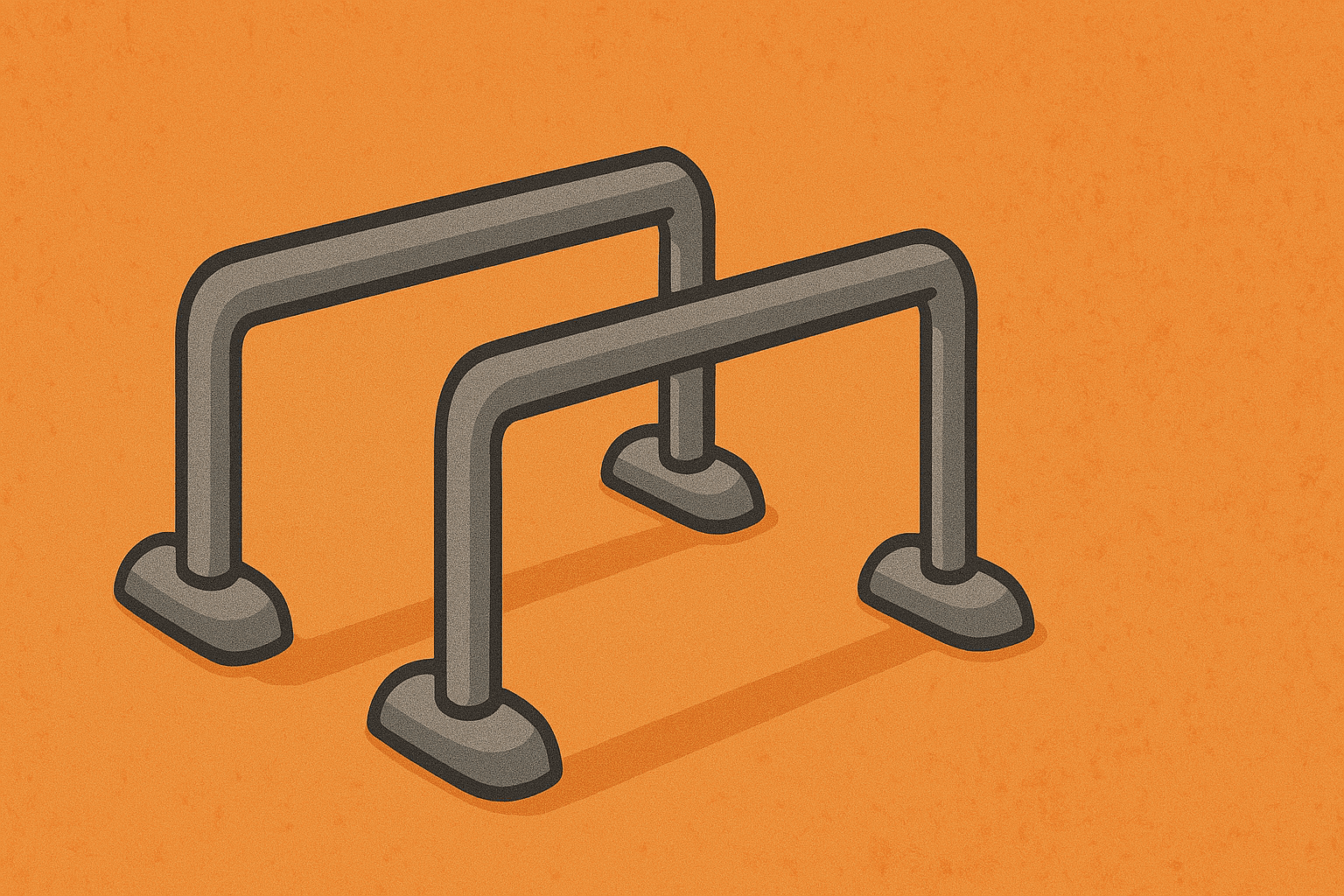
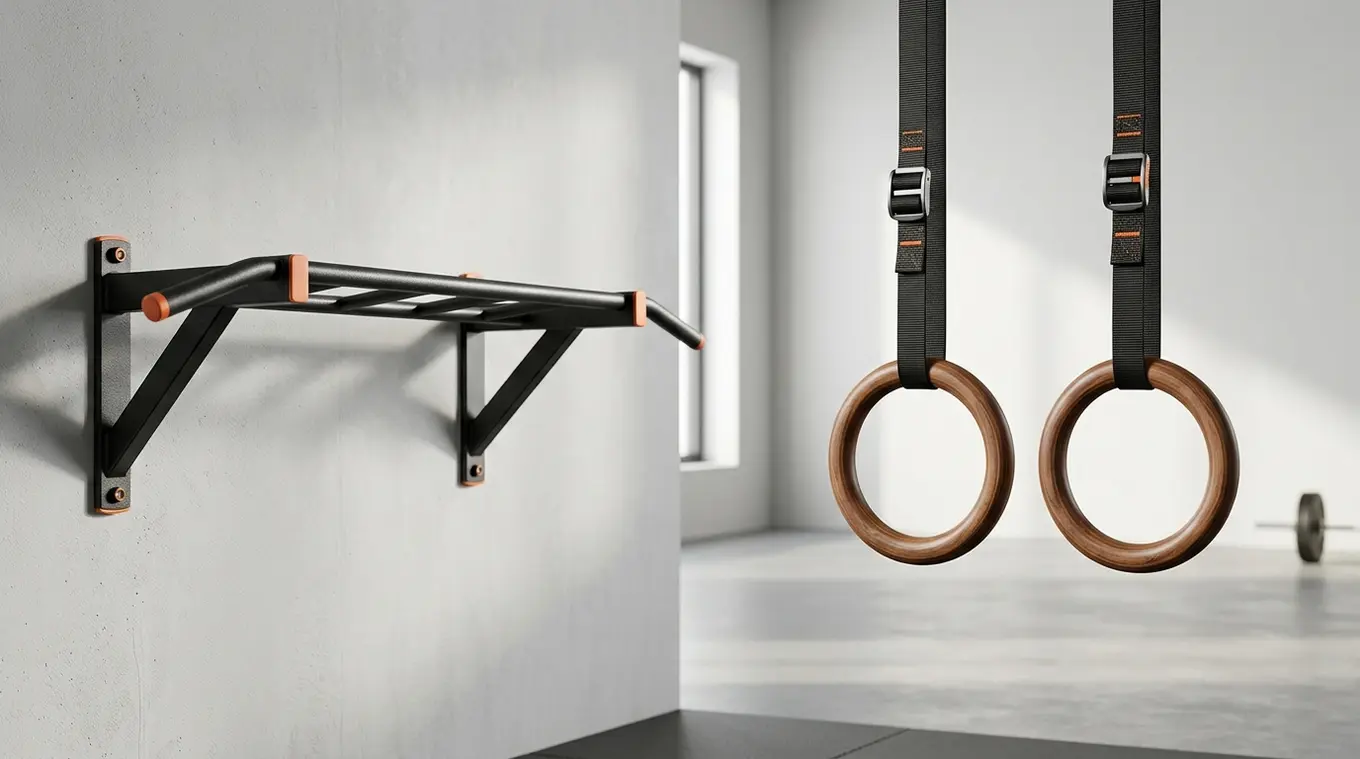
The simplest way to understand gymnastic rings vs pull up bar is this: a pull up bar is fixed, and rings move. That one difference changes almost everything about the training experience.
On a pull up bar, your hands stay in one position. The bar does not rotate, drift, or swing. That makes every rep easier to repeat. If your goal is clean progression in pull ups, chin ups, hanging leg raises, or weighted work, a bar is usually the more direct tool.
Gymnastic rings give your hands and shoulders more freedom. The straps move, the handles rotate, and your body has to organize itself during every rep. That often makes rings feel more athletic and more demanding, especially for the shoulders, core, and smaller stabilizing muscles.
When people compare pull up bar vs gymnastic rings, they often ask which is better. In practice, the better question is what kind of training effect you want. The bar rewards repeatability. Rings reward control and adaptability.
There is also a big difference in exercise variety. If you are wondering what exercises can you do on gymnastic rings vs pull up bar, rings clearly win. You can do rows, ring push ups, dips, support holds, face pulls, rollouts, curls, triceps extensions, and plenty of progressions for skills. A pull up bar is still excellent, but it is more limited unless you add other equipment. If you want ideas, a guide on best ring exercises for calisthenics or best pull up bar exercises can help you see that difference quickly.
Stability: Fixed Bar vs Unstable Rings
Why Instability Changes Everything
Stability is the biggest factor in rings vs pull up bar for strength. On a fixed bar, you can focus most of your effort on pulling hard. On rings, some of that effort has to go into controlling the movement itself.
That means a bar usually lets you produce more force with less interference. It is easier to standardize your reps, easier to track progress, and easier to add weight over time. This is one reason why many athletes use a bar as their main strength benchmark.
Rings are different. The instability is not just there to make things harder for the sake of it. It forces better awareness of shoulder position, grip control, and full body tension. I have seen this firsthand in my own training. When I spend a few weeks focused on rings, my regular pull ups often feel more solid afterward, even if my total reps on rings are lower.
Which Is Better for Muscle Activation?
Rings usually create more total muscle involvement because your body has to stabilize constantly. You will often feel more work in your forearms, core, rear shoulders, and smaller upper back muscles. That does not automatically mean better muscle growth, though.
For rings vs pull up bar for muscle growth, the answer depends on what limits the set. If instability makes you stop before your target muscles are pushed hard enough, a bar may be better for hypertrophy. If you can control the rings well, they can be excellent for building muscle through longer ranges and more varied angles.
So if your main goal is to build your back and biceps as efficiently as possible, the pull up bar often has the edge. If you also want shoulder control and more complete upper body training, rings become very appealing.
Are Ring Pull Ups Harder Than Bar Pull Ups?
Yes, for most people, ring pull ups feel harder at first. If you are asking are rings harder than pull up bar, the honest answer is usually yes, especially for beginners.
That extra difficulty does not always come from pure pulling strength. It often comes from coordination. The rings move independently, so each arm has to stabilize. Your core has to prevent swinging. Your shoulders have to stay organized through the whole rep. This is why someone who can do solid bar pull ups may still struggle with a smaller number of ring pull ups.
That said, rings can also feel better on the joints for some people because your hands are free to rotate naturally. This matters when people ask are gymnastic rings bad for shoulders or are pull ups on a bar bad for shoulders. Neither tool is automatically bad. The issue is usually poor control, too much volume too soon, or a setup that does not match your body.
In my experience, rings often feel friendlier on cranky shoulders, but only when the athlete has enough control to avoid hanging passively into unstable positions. A fixed bar can be perfectly fine too, especially with sensible grip choices and good technique. If your shoulders tend to get irritated, build volume gradually and keep your reps smooth instead of chasing sloppy fatigue.
Gymnastic Rings vs Pull Up Bar: Which Builds More Upper Body Strength?
If your definition of upper body strength is maximum pulling power, the pull up bar is usually the better primary tool. It is easier to load with weight, easier to repeat the same pattern, and easier to measure week to week. For weighted calisthenics, that matters a lot.
If your definition includes control, joint stability, and strength through more movement freedom, rings can offer more. They build a kind of athletic strength that transfers well to other calisthenics skills.
Back Training: Rings vs Bar
For back training, both work well, but they emphasize different things. A bar is great for strict pull ups, chin ups, neutral grip variations if the setup allows it, and heavy overload. Rings let you move more naturally and often get a stronger squeeze through the upper back because you can rotate the hands during the pull.
| Factor | Gymnastic rings | Pull up bar |
|---|---|---|
| Stability | Unstable and freely moving | Fixed and repeatable |
| Best for | Versatility, control, full upper body training | Pull up strength, weighted work, simple progression |
| Exercise variety | Very high | Moderate |
| Difficulty | Usually harder at first | Usually easier to learn |
| Joint feel | Often more natural on shoulders | Depends more on grip and setup |
| Beginners | Great for scalable rows and push work | Great for learning strict pull ups |
| Home gym fit | Portable, compact, needs anchor point | Convenient, needs suitable mounting or doorway |
When people search rings vs pull up bar for strength, I usually recommend this simple framework. Use the bar if your main goal is to get stronger in pull ups fast. Use rings if you want broader pulling development with more shoulder and scapular control.
If you train weighted pull ups, a solid bar is still hard to beat. Pair it with a good belt, and progression becomes straightforward. If that is your direction, this guide on rope or chain for dip belt can help with setup decisions.
What About Ring Rows vs Bar Rows?
This is where rings really shine. Ring rows are one of the best beginner-friendly and joint-friendly pulling exercises you can do. You can adjust the angle easily, rotate the hands naturally, and build scapular control without the full challenge of vertical pulling.
Bar rows are useful too, but they are not as accessible in many home setups. If you only have one piece of equipment and want maximum pulling variation, rings usually provide more value here.
Which Is Better for Beginners?
For rings vs pull up bar for beginners, I usually give a slightly nuanced answer. A pull up bar is simpler to understand and easier to use for tracking progress. Rings are more versatile and can actually be more beginner-friendly for some exercises, especially rows and push ups.
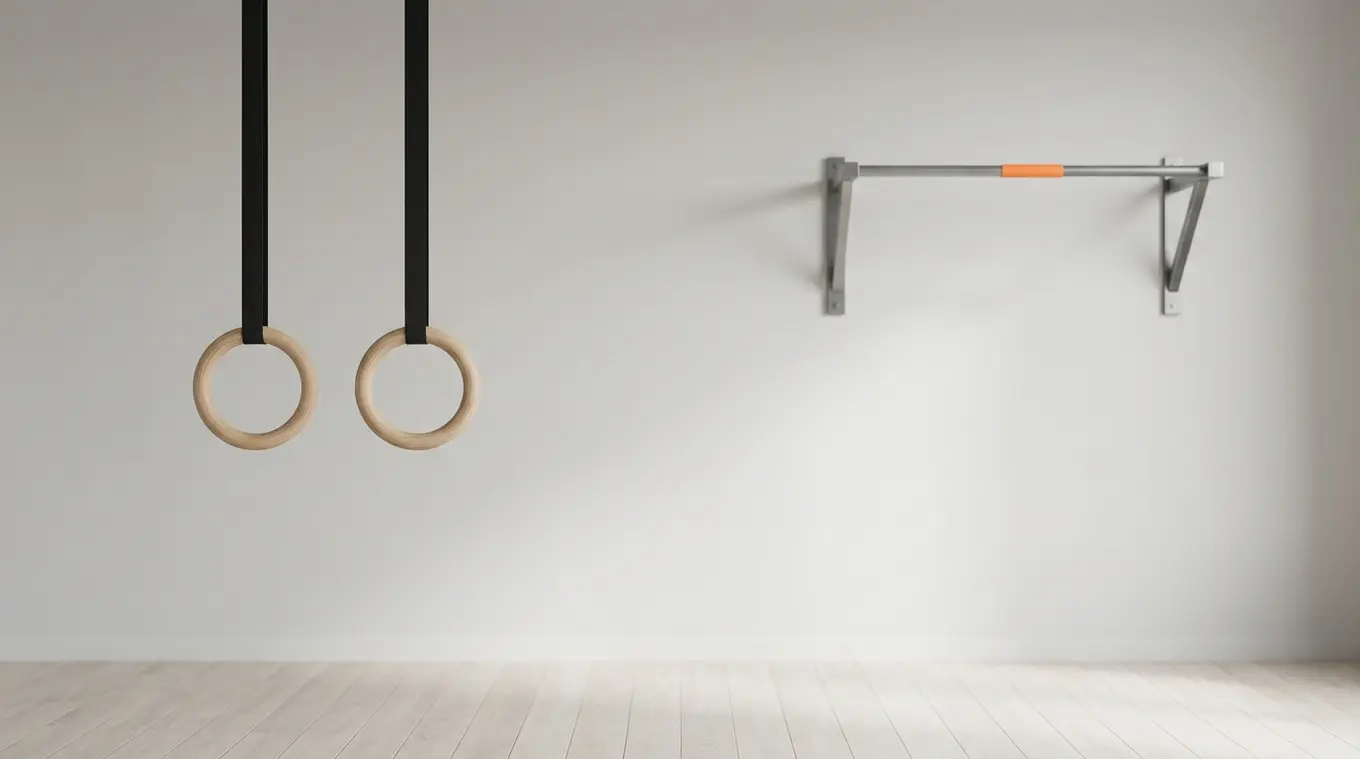
If a beginner wants to learn strict pull ups with the least complexity, a bar is the better starting point. If a beginner wants one tool that supports both pushing and pulling progressions, rings may be the smarter buy.
I would not say one is always better. It depends on what a beginner cannot do yet. If they have zero pull ups, rings offer easier scaling through rows and assisted variations. If they already have basic pulling strength and want clear progression, a bar feels more straightforward.
For most true beginners training at home, I often lean toward rings because they cover more ground for the money. But that only works if they are willing to learn control and set them up properly.
Home Gym Setup: Do You Need Both or Just One?
For gymnastic rings vs pull up bar for home gym decisions, space matters almost as much as training goals. In a garage or backyard, having both is ideal. A stable bar handles heavy basics. Rings add versatility and joint-friendly variation.
In an apartment, the answer changes. Pull up bar vs rings for apartment use depends on ceiling height, doorframe options, and whether you can mount anything safely. Rings are portable and easy to pack away, but they still need a secure anchor point. A doorway pull up bar can be more convenient for quick daily sets. If you are dealing with limited space, this guide on best calisthenics equipment for small spaces is worth a look.
If you want a simple recommendation, buy one tool based on your main goal. Choose a pull up bar if you care most about pull up strength and convenience. Choose rings if you want exercise variety and better value from one compact setup.
As for product recommendations, Gornation rings are worth mentioning here. They are reliable, comfortable in the hand, and well suited for home or outdoor training. If you want one piece of gear that can grow with you from rows to dips to advanced pulling work, a solid pair of Gornation wooden rings makes a lot of sense. If your setup supports a bar better, a sturdy pull up station from a trusted brand is still the more practical option for pure pulling strength.
How Much Do Gymnastic Rings and a Pull Up Bar Cost?
Price is often a deciding factor when choosing between these two options. A basic pair of wooden gymnastic rings typically costs between $20 and $60 depending on brand and quality. A doorway pull up bar sits in a similar range, usually between $20 and $50.
Where the difference becomes clear is at the higher end. A freestanding pull up station or a wall-mounted bar with a secure anchor can cost anywhere from $80 to several hundred dollars. Rings, by contrast, stay affordable regardless of how advanced your training gets.
From a value-per-exercise perspective, rings often come out ahead. One set of rings can cover pull up variations, dips, rows, push ups, and more. If budget is limited and you want maximum training options from a single purchase, rings tend to offer more per dollar. A pull up bar makes more financial sense when you specifically want a dedicated, always-ready setup for pull up training with minimal setup time.
Our Verdict: When to Choose Rings, When to Stick With the Bar
So what is the final answer on gymnastic rings vs pull up bar?
Choose a pull up bar if you want the simplest path to stronger pull ups, easier progressive overload, and a setup that is fast to use. It is the better tool for standardized strength work, especially if weighted pull ups are one of your goals.
Choose gymnastic rings if you want more exercise variety, more natural joint movement, and a tool that can train far more than just vertical pulling. Rings are especially well suited if you want a compact home gym solution or you enjoy training that feels more athletic and skill-based.
If you can afford both and have the space, that is honestly the best setup for most people. Use the bar for heavy pulling. Use rings for assistance work, rows, support strength, push exercises, and shoulder-friendly variation.
If you can only buy one, be honest about what will keep you training consistently. That is the real tiebreaker. The best equipment is not the one that looks most impressive online. It is the one you will actually use every week, with good form, for months at a time.
When comparing gymnastic rings vs pull up bar, there is no universal winner. The pull up bar is better for simple, measurable strength progress. Rings are better for versatility, movement freedom, and all-around upper body development. If you are a beginner, your decision should come down to your space, your goals, and which setup feels realistic to use often. If you want the shortest answer, get a bar for focused pull up strength and get rings for the most training options per dollar. If your budget allows it, combining both gives you the strongest and most complete calisthenics setup.
Frequently Asked Questions
Are gymnastic rings better than a pull up bar for building muscle?
They can be, but not always. Rings create more instability and involve more supporting muscles, while a pull up bar makes it easier to overload the main pulling muscles. For pure back and biceps growth, a bar is often simpler. For full upper body development, rings offer more variety.
Are ring pull ups safer for shoulders than bar pull ups?
For many people, yes, because rings let the hands rotate naturally and allow the shoulders to find a more comfortable path. Still, that does not make them automatically safer. Poor control or too much volume can irritate the shoulders on rings too. Good technique matters more than the tool alone.
What exercises can you do on gymnastic rings vs pull up bar?
A pull up bar is best for pull ups, chin ups, hangs, leg raises, and weighted variations. Rings can do all of that in some form, plus rows, push ups, dips, support holds, curls, triceps extensions, face pulls, and more. Rings usually win on exercise variety.
Should beginners start with rings or a pull up bar?
Beginners who want a simple path to their first strict pull ups often do well with a bar. Beginners who want one versatile tool for rows, push ups, and scalable pulling progressions often do well with rings. It depends on whether simplicity or versatility matters more in your setup.
Do I need both rings and a pull up bar for a home gym?
No, but having both is a great setup if your budget and space allow it. A pull up bar is excellent for heavy, repeatable pulling work. Rings add more movement options and often feel better on the joints. If you can only choose one, match it to your main goal and space.