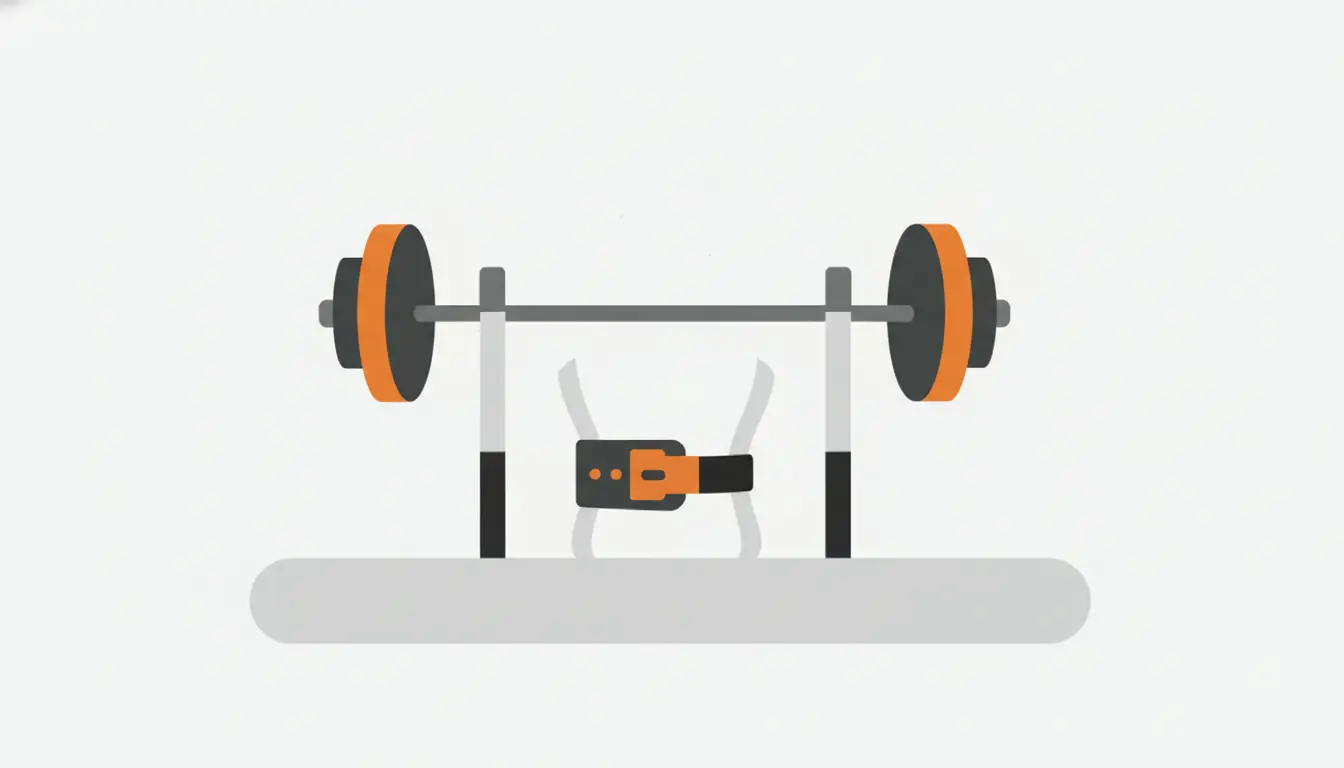
If your squat numbers are climbing, a good belt can feel like flipping a switch: your brace gets more solid, your torso stays quieter, and heavy reps feel more “locked in.” But the best weightbelt for squats depends on how you train. A stiff 10mm leather belt shines for heavy low bar and powerlifting style squats, while a nylon belt can be the smarter pick if you also do Olympic lifts or higher rep training. In this guide, I’ll break down belt types, ideal specs, fit and tightness, and a short list of standout options so you can buy once and train confidently.
What a weightbelt actually does for your squat
A belt is not a magic back saver and it is not a substitute for technique. What it does well is give your midsection something solid to brace into. When you breathe and push your abs out against the belt, you can create more intra abdominal pressure. That pressure helps your torso stay more stable under load, especially near maximal attempts.
In practice, that usually means three things during squats: you keep your spine position more consistent, you feel more confident unracking and descending, and you can often handle heavy sets with cleaner reps. The belt does not make weak cores strong, but it can help you express the strength you already have when the bar gets serious.
- More stable brace when loads are heavy
- More consistent torso angle out of the hole
- Better confidence on near max sets
- Less “wobble” when fatigue hits
Do you even need a belt for squats?
When a belt is worth it
If you regularly squat heavy, a belt is a practical tool. The clearest use case is training at roughly 80 percent of your max and above, or during top sets and peaking phases. I also like belts for people who squat heavy but have long training weeks, because anything that improves repeatability and control can help you manage fatigue.
Belts also make sense if you compete in powerlifting, or if you do streetlifting style leg work alongside weighted calisthenics. In that mix, you are often chasing heavy, low rep strength and a belt fits naturally.
When I would skip it
If you are still learning a consistent squat pattern, put your effort into bracing and positioning first. Beginners often tighten a belt and then stop learning how to create tension without it. Also, if your training is mostly high rep squats, conditioning circuits, or Olympic lifting with lots of movement, a very rigid leather belt can feel like wearing a car bumper.
As a simple rule, earn the belt by owning your brace without one, then use the belt to push heavy work, not to replace fundamentals.
Types of weightbelts for squats
Prong leather belts
A single prong leather belt is the classic choice. For squats, it is hard to beat because it is stable, simple, and durable. The downside is adjustment: holes are often spaced one inch apart, which sometimes leaves you between “too tight” and “not tight enough.” You can still make it work by choosing the right size and by wearing it at a consistent height on your torso.
If you want one belt that will last for years, and your focus is heavy squats and pulls, a quality 10mm prong belt is usually the safest bet.
Lever belts
Lever belts are about consistent tightness. Once set up, you can lock in the same fit every time, which is amazing for heavy squats. The trade off is that changing tightness is annoying: you often need tools and a few minutes. They are also bulkier, so they are less fun for movements where you need to bend a lot at the hips or move quickly between exercises.
If your squat sessions look like warm up, work up, heavy sets, done, lever belts make a lot of sense.
Nylon belts
Nylon belts are more flexible and easier to micro adjust. For squat training that includes higher reps, tempo work, front squats, or a mix with Olympic lifts, nylon can feel better on the body. The limitation is rigidity: for true max attempts, most nylon belts will not feel as “rock solid” as a thick leather belt.
If you train CrossFit style sessions or simply hate the break in period of leather, nylon is certainly the trying worth option.
The key specs for the best weightbelt for squats
Thickness: 7mm vs 10mm vs 13mm
For most people, 10mm is the sweet spot for squats. It is rigid enough to brace hard against, but not so brutal that it digs into you every set. A 7mm belt can be more comfortable and versatile, but if squats are your priority, you may outgrow the support. A 13mm belt is maximum stiffness and is mostly for advanced powerlifters who want that uncompromising wall around their midsection.
- 7mm for versatility and comfort
- 10mm for the best balance for heavy squats
- 13mm for elite level rigidity and max effort focus
Width: why 4 inches is common
A 4 inch belt is the standard because it gives a big bracing surface. For back squats, it is usually ideal. The issue is torso length. If you have a shorter torso, a full 4 inch belt can pinch your ribs or hips at the bottom. In that case, a 3 inch belt or a tapered belt can be more comfortable without sacrificing too much support.
Shape: straight vs tapered
Straight belts are great for pure bracing in squats. Tapered belts can be more comfortable if you squat deep, front squat often, or do Olympic lifts, because there is less material in the front where your hips close.
Closure: lever, single prong, double prong, Velcro
For squats, the closure is mostly about repeatability. Lever is the king of repeatable tightness. Single prong is reliable and simple. Double prong can feel secure but is slower to put on. Velcro is fast and adjustable, best when you need to tighten and loosen frequently.
Fit and tightness: how to wear a belt for squats
Where it should sit
Place the belt around your midsection, not low on the hips like a fashion belt. You want it where you can brace into it: usually around the navel area, sometimes slightly higher for front squats, and sometimes slightly lower for low bar squats. The right spot is the one that lets you breathe and brace hard without the belt folding or smashing your ribs.
How tight is “tight enough”
I like a simple check: once the belt is on, you should be able to slide one finger between your belly and the belt without forcing it. Then take a deep breath and push your abs into the belt. You should feel strong pressure, but you should still be able to complete a full breath cycle before your rep.
- Put the belt on and stand tall
- Set it to a snug fit, not maximal
- Inhale, brace, push abs out into the belt
- If you cannot breathe, loosen one notch or slightly change height
Break in and care tips for leather belts
Leather belts often feel stiff at first. That is normal and, for heavy squats, it is part of what you want. A simple way to speed up break in is gently rolling the belt and wearing it for warm ups. Do not soak it or abuse it. Store it flat or loosely rolled, and keep Velcro belts closed in your bag so the hooks do not pick up lint.
My practical picks: best belt styles for different squat goals
I am not going to pretend there is one perfect belt for everyone. The best weightbelt for squats depends on whether you want maximum rigidity, comfort, or quick adjustments. Here are the options that make the most sense based on common training styles, using what we can observe from specs, construction, and how these belts are generally rated in recent roundups.
Best overall for heavy squats: 10mm leather prong belt
If you are buying one belt mainly for squats, a 10mm, 4 inch leather single prong belt is the most balanced choice. It is stable, durable, and easy to live with. The main limitation is the one inch hole spacing you see on many models, so sizing matters. If you land between holes often, consider a belt design that offers smaller increments, or accept that you will have “training tight” and “max tight” settings.
Best for pure powerlifting squat days: 10 to 13mm lever belt
When your training is heavy singles, doubles, and triples, lever belts shine. The consistent lock in fit makes bracing feel repeatable, which matters when you are trying to keep technique identical rep to rep. The downside is adjustability. If you like to change belt tightness between warm ups and top sets, a lever can feel inconvenient.
Best for mixed training: nylon belt with quick adjustment
If your squat work lives inside broader sessions, think supersets, accessory circuits, or mixing squats with Olympic style lifts, nylon is often the calmer choice. It is easier to tighten and loosen fast, and it tends to be more comfortable during longer sessions. Just be realistic: for true max effort squats, most nylon belts will feel less supportive than thick leather.
- Choose leather if your priority is maximal stability
- Choose nylon if your priority is mobility and fast transitions
- Choose tapered if you want deep squat comfort
How a squat belt fits into calisthenics and streetlifting
On calisthenics-equipment.com, most readers are not only barbell lifters. If you do weighted dips, weighted pull ups, and then add squats for leg strength, you will notice something: the belt is useful, but your limiting factor is often how well you can create whole body tension.
That is why I like pairing belt use with simple bracing practice on bodyweight movements, too. If you want to build your setup for weighted calisthenics, have a look at best weighted calisthenics equipment for ideas on building a minimal but effective kit.
One more practical note: heavy squats can fatigue your grip and elbows if you also do lots of pulling work. If your joints get cranky during higher volume phases, elbow sleeves can be a reasonable comfort tool. This guide can help you pick a good pair: best elbow sleeves for calisthenics and streetlifting.
Two subtle gear suggestions from Gornation
I am keeping this part minimal on purpose. For squats, the belt is the main purchase decision and you can choose from many solid options. But for calisthenics athletes who combine squats with heavy weighted dips and pull ups, two small items from Gornation can be worth considering if they fit your training.
Gornation wrist wraps for heavy bracing days
On days where you squat heavy and then do bar work like dips, a stable wrist position can make the whole session feel smoother. If you want wraps that are built for calisthenics and streetlifting style training, check the overview here: best wrist wraps for calisthenics.
Gornation accessories for a cleaner training setup
If you are building a small gym bag that covers both barbell strength and calisthenics, it helps to keep accessories simple and durable. This list of best calisthenics accessories is a good starting point for essentials without going overboard.
Common mistakes when buying a squat belt
Buying too thick too soon
A 13mm belt can be great, but it is not automatically better. Many lifters buy maximum thickness, then hate the comfort and stop using it. For most squatters, 10mm is plenty.
Choosing the wrong size based on pants size
Measure your waist around the area where you will wear the belt, usually around the navel. Belt sizing charts vary a lot. Pants size is not a reliable shortcut.
Wearing it on every set
If you belt up for every warm up and every back off set, you lose a lot of bracing practice. I prefer using the belt for top sets and specific heavy work, then doing some beltless volume to keep your trunk strength honest.
Chasing tightness instead of technique
Cranking the belt to the last hole and then barely being able to breathe is not the goal. You want a strong brace, good breathing, and a stable torso. A belt supports that, it should not restrict it.
Veelgestelde vragen
What is the best weightbelt for squats for most lifters?
For most lifters, the best weightbelt for squats is a 10mm, 4 inch leather belt with a single prong buckle. It offers strong support, lasts for years, and is simple to use. Lever belts can feel even more consistent, but they are less convenient to adjust between sets.
How tight should the best weightbelt for squats be?
The best weightbelt for squats should feel snug, but it should not block breathing. A practical check is being able to slide one finger between your belly and the belt. Then inhale, brace, and push your abs into the belt. You want firm pressure and control, not discomfort.
Is a lever belt better than a prong belt for squats?
A lever belt can be better for squats if you want the same tightness every set and you mainly train heavy. A prong belt is often better if you need more flexibility in fit, share a belt, or want easier adjustments. Both work well when the size and thickness are right.
Can beginners use the best weightbelt for squats?
Beginners can use a belt, but it is smarter to first learn bracing and clean squat mechanics without one. If a coach suggests adding a belt for heavy work, a nylon belt can be a gentle starting point. Use it for top sets, not as a crutch for every rep.
Which belt width is best if a 4 inch belt digs into my ribs?
If a 4 inch belt pinches at the bottom of the squat, try a 3 inch belt or a tapered design. This is common for shorter torsos or very deep squats. You still get strong bracing support, but with less material pressing into ribs and hips, which makes consistent technique easier.
The best weightbelt for squats is the one that matches your training reality. If heavy back squats are your main goal, a 10mm leather belt is the most reliable all around pick. Go lever if you want maximum rigidity and repeatable tightness for powerlifting style sessions. Choose nylon if you need comfort, quick adjustments, and more freedom for mixed training. Whatever you buy, prioritize correct sizing, a snug but breathable fit, and solid bracing habits. Do that, and your belt becomes a smart tool, not a dependency.