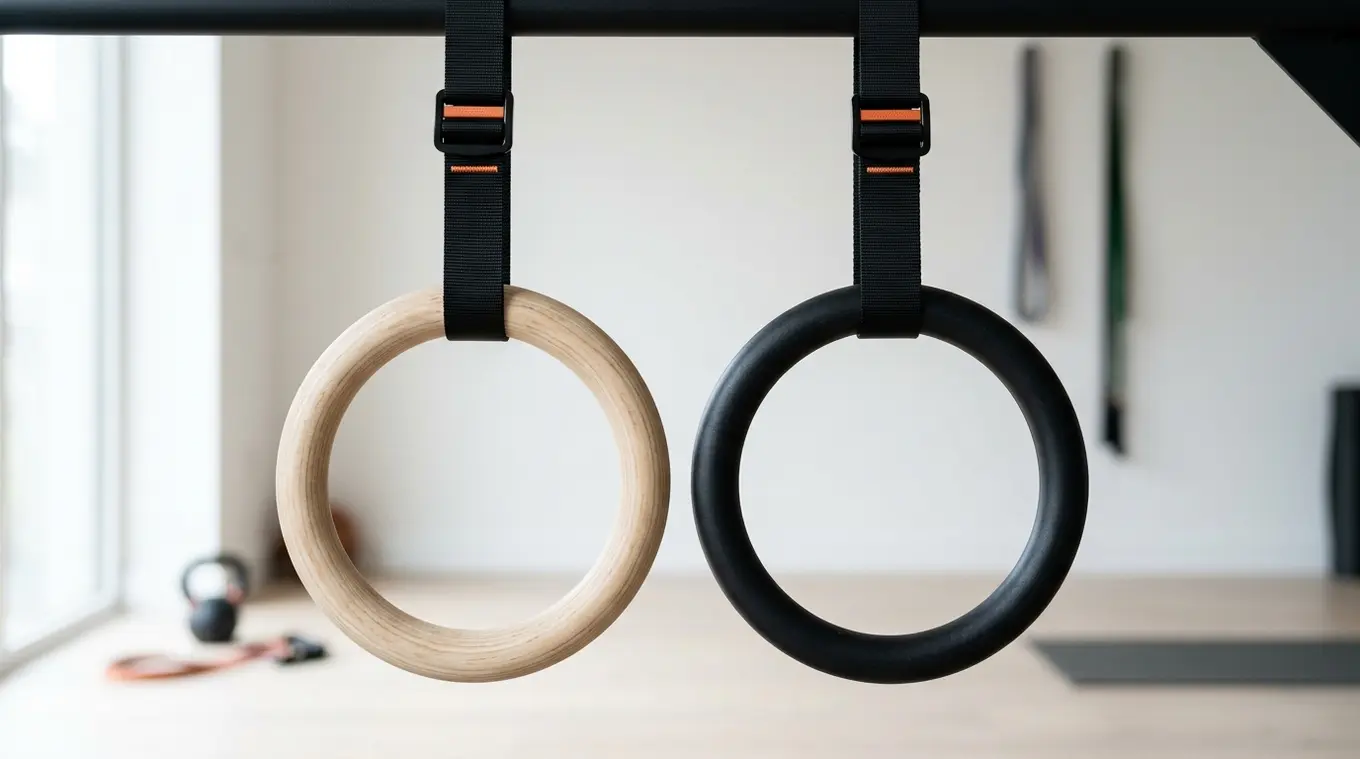
If you are about to buy rings and keep wondering whether wooden gym rings or plastic rings are the smarter choice, you are not overthinking it. The material really does change how the rings feel in your hands, how stable they seem during reps, and how comfortable they are for longer sessions. I have trained on both, indoors and outside, and the difference becomes obvious once you start doing rows, dips, pull-ups, and especially false grip work. In this guide, I will break down grip, comfort, durability, price, and who each option makes sense for so you can choose with confidence.
What’s the Actual Difference Between Wooden and Plastic Gym Rings?
At a basic level, both wooden gym rings and plastic gym rings let you train the same movements. You can do rows, push-ups, dips, pull-ups, L-sits, support holds, and muscle-up progressions on either one. The real difference is how the surface behaves in your hands and how that affects training quality over time.
Wooden rings usually have a slightly textured surface that feels drier and more natural. That is why many athletes describe them as the best grip gymnastic rings for regular strength and skill work. Plastic gym rings tend to feel smoother. Some are decent, but cheaper models often get slippery faster, especially once your hands sweat.
There is also a small difference in feel during setup. Wooden rings often feel a bit more premium and solid in the straps. Plastic ones are usually chosen for convenience, lower cost, and better resistance to bad weather. So if you are comparing indoor performance against weatherproof gym rings for outdoor use, material matters more than many brands admit.
Grip, Feel, and Performance: Wood vs Plastic in Training
If your main goal is better training quality, grip is where this comparison becomes very clear. In my experience, wooden rings grip better from the first session. They feel more secure for controlled reps and technical work, especially when you move from simple ring rows to deeper dips and transitions.
How grip affects your reps and skill progression
Grip changes more than comfort. It changes confidence. When the rings feel secure, you pull harder, hold support positions longer, and spend less energy worrying about your hands slipping. That matters for beginners learning their first ring push-ups and body rows, but it matters even more for advanced athletes working on false grip pulls, ring muscle-ups, and weighted work.
For that reason, wooden gym rings are usually the better choice for anyone searching for the best gym rings for advanced athletes. They also make sense for many newer athletes because they help build trust in the movement. If you want to explore drills after buying rings, this guide on best ring exercises for calisthenics is a useful next step.
Comfort during longer sets and skin wear
A common question is, do wooden rings hurt less? Usually, yes. The surface tends to feel kinder on the hands and wrists, particularly during false grip work. Plastic rings can create more friction in an awkward way, which may lead to hand pain or hot spots when sessions get longer.
That does not mean wood is magically soft. Rings are still rings, and your skin has to adapt. But wooden rings grip in a more predictable way, so they often feel less harsh. If sweaty hands are part of the problem, pairing rings with chalk helps a lot. If you are deciding between chalk types, this comparison on liquid chalk vs block chalk for calisthenics can help.
Durability, Maintenance, and Long-Term Use
Plastic rings have one clear advantage. They handle bad weather better. If you plan to leave your rings outside, plastic is the safer pick because it is closer to true weatherproof gym rings. Rain, humidity, and strong temperature swings are harder on wood over time, even when the rings are well made.
That said, most people do not leave rings outside full time. If you train in a garage, home gym, park, or from a pull-up bar and store your equipment after use, wooden rings last a long time. I have seen good wooden gym rings stay solid for years with very basic care. Just keep them dry, avoid soaking conditions, and store them indoors when possible.
For outdoor gym rings, my usual advice is simple. If you train outside often but bring your setup back inside after sessions, wood is still a great option. If the rings will live outdoors permanently, plastic becomes more practical.
How to care for wooden gym rings
Wooden rings need slightly more attention than plastic, but the routine is simple. After each session, wipe the rings down if they are damp from sweat and let them air dry before storing. Moisture is the main factor that shortens the lifespan of wood over time.
If the surface starts to feel rough or develops small splinters, light sanding with fine-grit sandpaper quickly restores a smooth finish. Some athletes occasionally apply a thin coat of linseed oil or a similar wood treatment to prevent the surface from drying out, especially in dry climates. Always let the rings dry fully before training again.
With this basic routine, a good pair of wooden rings can last for years without any meaningful drop in performance or grip quality.
| Factor | Wooden gym rings | Plastic gym rings |
|---|---|---|
| Grip | Usually better, drier, and more secure | Usually smoother and can get slippery faster |
| Comfort | Often kinder on hands during longer sets and false grip work | Can feel harsher and create more awkward friction |
| Training performance | Better for skill work, dips, pull-ups, and advanced progressions | Fine for basic training but less ideal for demanding work |
| Outdoor durability | Best when stored indoors after use | Better for permanent or frequent outdoor exposure |
| Maintenance | Needs to stay reasonably dry | Lower maintenance in changing weather |
| Price | Often slightly more expensive, but the gap is usually small | Usually a bit cheaper |
| Best for | Most beginners, home gym users, and serious ring training | Budget buyers and long-term outdoor setups |
Price and Value: Are Wooden Rings Worth the Extra Cost?
Years ago, wooden rings were often seen as the premium option with a much higher price. That gap has become smaller. In the current market, the difference between decent plastic gym rings and decent wooden gym rings is often not dramatic. Because of that, the value question is less about price alone and more about how you train.
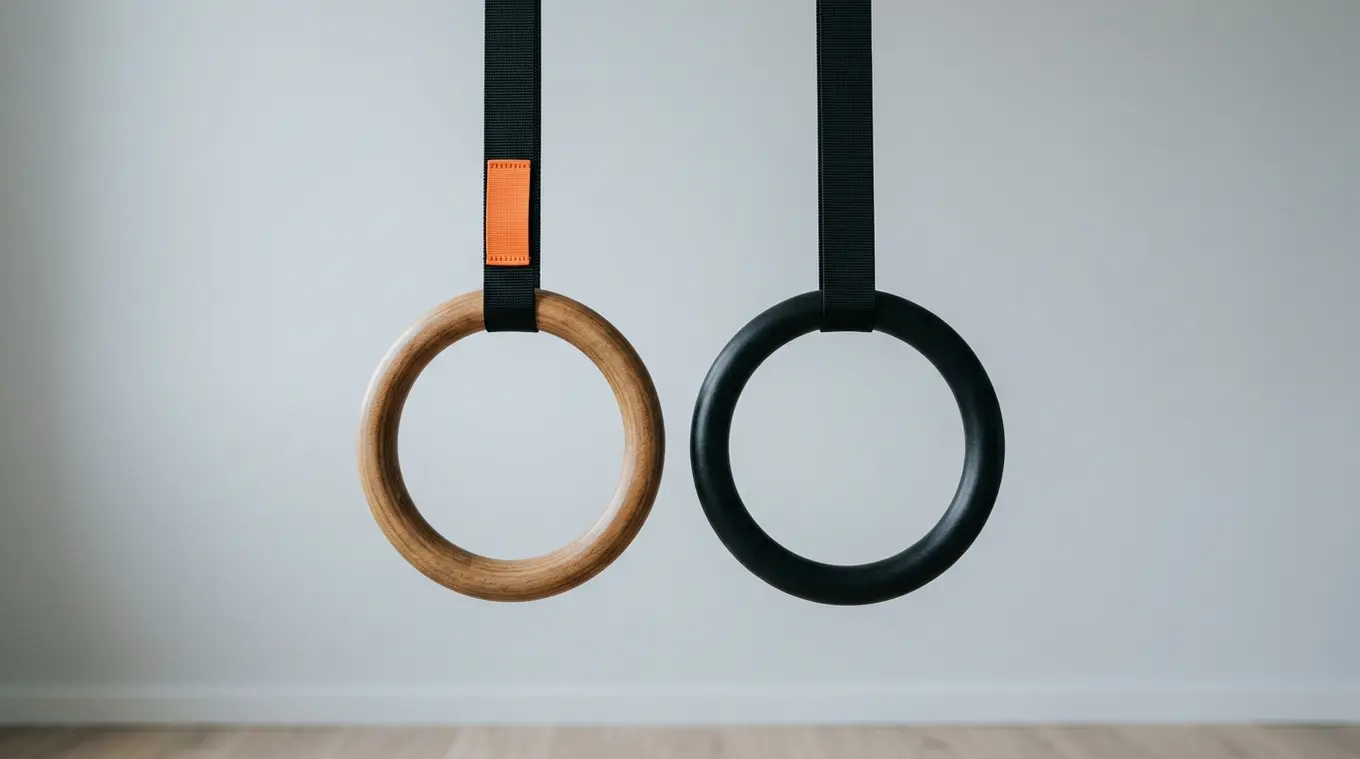
If wooden rings cost a little more but give you better grip, better comfort, and better confidence, they are usually worth it. Especially if you plan to use rings as a core part of your training instead of an occasional accessory. This is why I generally recommend wood over plastic for most home gym users.
If you want a reliable product recommendation, Gornation wooden rings are a strong option. They suit most athletes well, feel secure in the hands, and make sense whether you are practicing support holds, dips, or first muscle-up progressions. For people building a compact setup, you can also browse this guide on must have calisthenics equipment to see where rings fit best.
Who Should Choose Wood And Who Can Stick With Plastic?
If you want the best gym rings for beginners, wood is still my first recommendation for most people. Beginners benefit from better grip and a more comfortable surface because it reduces friction-related frustration while learning basics. Safer feeling equipment leads to better consistency, and consistency matters more than chasing the cheapest option.
Wood is also the better pick for athletes focused on ring stability, false grip work, strict pull-ups, dips, muscle-up progressions, and weighted calisthenics. If performance is the priority, wooden rings are usually the right answer.
Plastic rings make sense in a narrower set of cases. They are fine if your budget is very tight, if your training is mostly basic pushing and rows, or if you specifically need rings that can stay outdoors in changing weather. In that sense, plastic is not bad. It is just more limited once your training becomes more demanding.
Our Recommendation: The Best Ring Material for Your Training
If you want the short answer, choose wooden gym rings unless you have a clear reason to buy plastic. That is the honest advice I would give a friend. Wooden rings offer better grip, better comfort, and usually better overall training quality. For most people, that outweighs the small extra cost.
Choose plastic gym rings only if outdoor durability is your top concern and you need true low-maintenance outdoor gym rings. Otherwise, wood is the better all-around option for beginners, intermediates, and advanced athletes alike.
My recommendation for most buyers is a solid pair of Gornation wooden rings with dependable straps. You get a better feel from day one, and that matters every single session. When your hands trust the rings, your training usually improves faster too.
When comparing wooden gym rings vs plastic rings, the better choice for most athletes is wood. You get more grip, less slipping when your hands sweat, and a surface that usually feels better during false grip work and longer sets. Plastic still has a place for permanent outdoor setups or very budget-focused buyers, but it is rarely the best all-around option. If you want rings that feel secure, support skill progress, and stay enjoyable to train on, wooden gym rings are the way to go.
Frequently Asked Questions
Are wooden gym rings better than plastic rings for beginners?
Yes, in most cases. Wooden rings usually provide a more secure grip and a more comfortable surface, which helps beginners learn rows, push-ups, support holds, and dips with more confidence. Even though they can cost slightly more, they often make the learning process smoother and more enjoyable.
Do wooden rings hurt less than plastic rings?
For many people, yes. Wooden rings often feel less harsh on the skin, especially during false grip work or longer sessions. They are not painless, but they usually create less awkward friction than smooth plastic rings, which can help reduce hand discomfort and skin irritation over time.
Are plastic rings better for outdoor training?
Plastic rings are usually better if they will stay outside regularly. They handle moisture, rain, and changing temperatures better than wood. If you train outdoors but store your rings inside after each session, wooden rings can still work very well and often offer better grip during actual training.
Do wooden rings need chalk?
Not always, but chalk can still help. One reason people like wooden gym rings is that they naturally feel grippier than plastic. Still, if your hands sweat a lot or you train in humid conditions, chalk can improve control and comfort, especially during pull-ups, dips, and false grip practice.
What are the safest gymnastic rings to buy?
The safest gymnastic rings are not just about material. You also need strong straps, secure buckles, and reliable build quality. Wood is often the better surface for grip and comfort, while plastic can be useful outdoors. For most people, a well-made pair of wooden rings from a trusted brand is the safest overall choice.