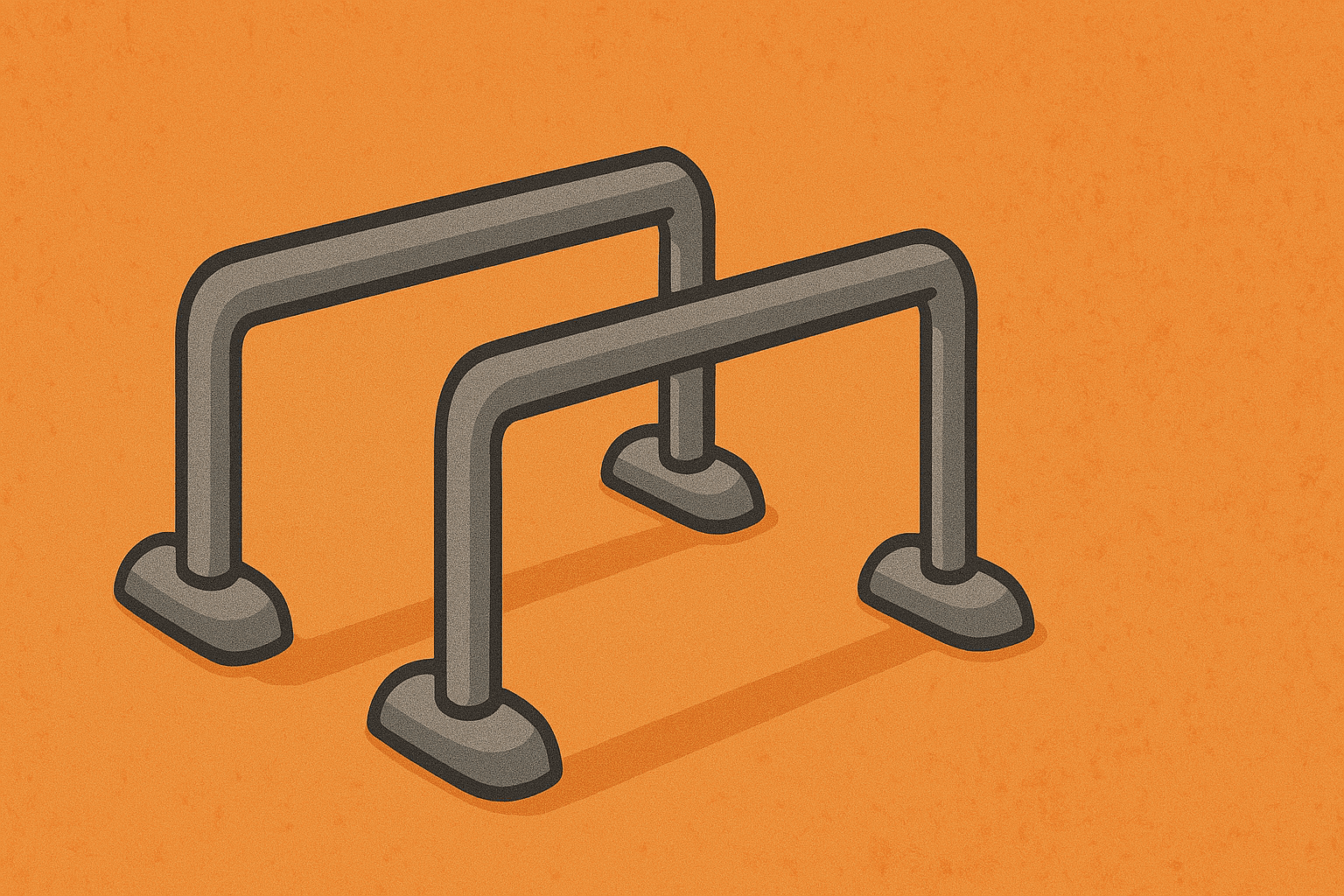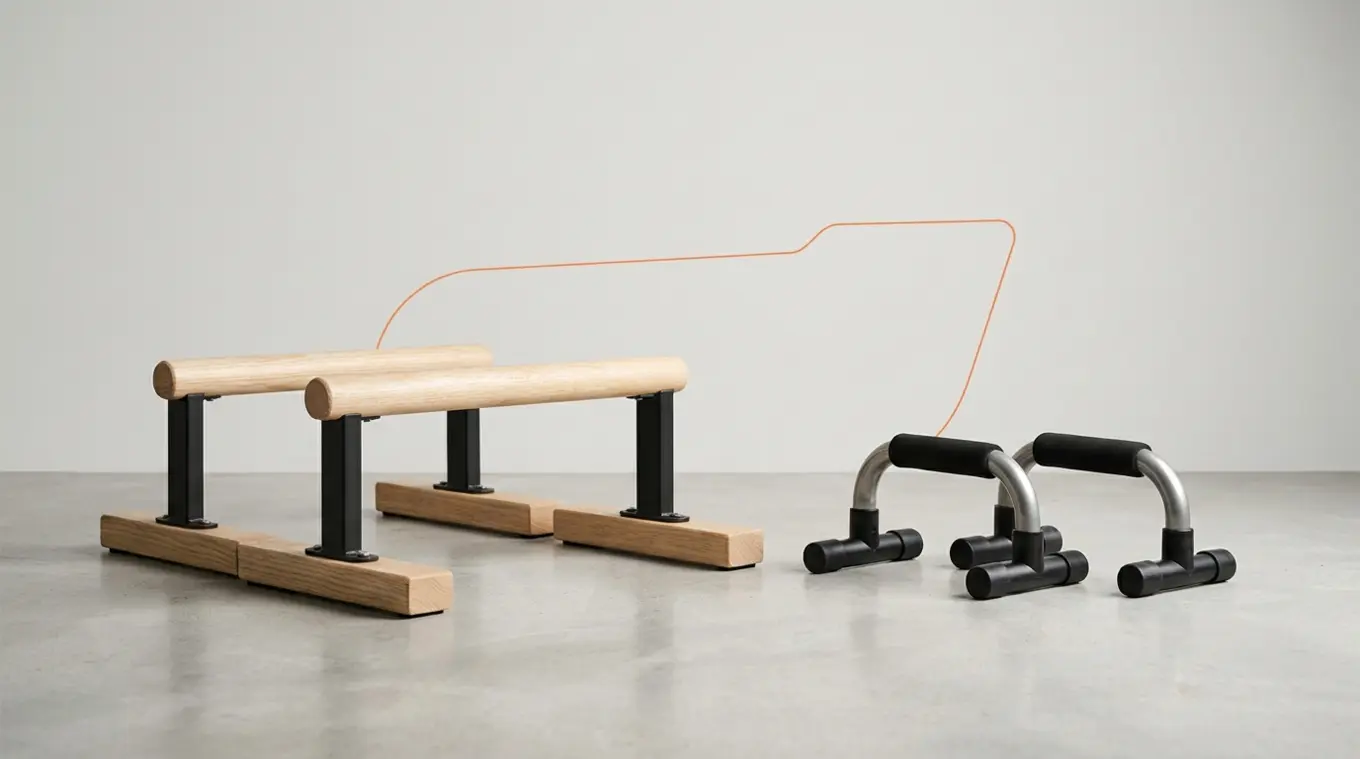
If you want better push ups but are not sure whether to buy parallettes or push up bars, you are not the only one. On the surface, they look similar, and both can make push ups feel better on the wrists. But once you start training seriously, the differences matter more than most people expect. In this guide, I will break down what each tool does well, where each one falls short, and which option makes the most sense for your goals, budget, and training space. That way, you can choose with confidence instead of guessing.
What Are Parallettes and Push Up Bars?
Push up bars are compact handles that lift your hands slightly off the floor during push ups. Most are made for one main job, making push ups more comfortable and giving you a deeper range of motion. They are often the more affordable choice and work well as compact home gym equipment or small space workout equipment.
Parallettes are short parallel bars designed for a wider range of bodyweight exercises. Depending on the height, you can use low parallettes for push up work, L sits, tuck holds, and handstand basics, while high parallettes open the door to deeper dips, transitions, and more advanced calisthenics practice. In a true parallettes vs push up bars comparison, versatility is where parallettes usually pull ahead.
Key Differences at a Glance
The simplest way to look at parallettes vs push-up bars is this. Push up bars are mostly best for push-ups, while parallettes are usually best for calisthenics as a whole. Push up bars win on price, portability, and simplicity. Parallettes win on exercise variety, stability, and long term progression.
From my own training, the biggest real world difference is stability under load. A basic set of push up bars feels fine for strict reps, but once you start doing slow negatives, pseudo planche push ups, or support holds, solid parallettes feel more planted. That extra confidence matters, especially if you train at home without much room for mistakes.
What Can You Actually Do With Each One?
With push up bars, your main menu is still push up focused. You can do standard push ups, neutral grip push ups, deep push ups, close grip variations, and tempo work. If you deal with wrist pain that push ups often cause, they can be a very practical fix because they allow more wrist friendly push-ups with a neutral hand position. For beginners who mainly want more reps or better chest and triceps training, that may be enough. If that is your goal, this guide on how to train push ups is worth reading too.
Parallettes can do all of that, but they also go much further. You can train L sits, tuck planche progressions, pike compressions, handstand drills, support holds, mountain climbers, and depending on height, even dips. If you are interested in skills, low parallettes are especially useful because they create hand clearance and reduce wrist extension. That is one reason many athletes prefer them for handstand work. If that is part of your goal, you can also check this guide on learning the handstand.
There is also a quality difference in how each tool feels over time. The best push up bars can be great for straightforward sessions, but the best parallettes usually feel like a more complete training tool. If you want to compare strong options, see these guides on best parallettes and best push up bars.
| Criteria | Push Up Bars | Parallettes |
|---|---|---|
| Best for | Push ups, wrist comfort, simple strength work | Calisthenics, skill work, long term progression |
| Exercise variety | Limited | High |
| Portability | Excellent | Good |
| Price | Usually cheaper | Usually more expensive |
| Stability under load | Decent for basic reps | Usually better |
| Small space use | Best if space is extremely limited | Still compact, with more versatility |
| Beginner value | Great for simple push up goals | Better if you want room to progress |
How Much Do Parallettes and Push Up Bars Cost?
Price is often a deciding factor in this comparison. Push up bars are generally one of the more affordable pieces of home gym equipment, making them easy to try without much financial risk. Parallettes cost more, but the range varies widely depending on material, build quality, and height. Basic plastic parallettes can sit closer to the push up bar price range, while well-built steel or wooden parallettes from calisthenics-focused brands cost noticeably more. If budget is tight, push up bars are the lower-risk entry point. If you are willing to invest a little more, a solid pair of low parallettes will likely give you better long-term value per session.
Which One Should You Choose?
If your only goal is to improve push ups, reduce wrist discomfort, and keep costs low, push up bars are the sensible pick. They are beginner friendly, easy to store, and ideal if you want small space workout equipment that comes out for ten minutes and goes back in a drawer.
If you want one tool that grows with your training, parallettes are the better investment. That is especially true if you care about calisthenics skills, core strength, static holds, and long term progression. In most parallettes vs push up bars decisions, I recommend thinking less about what you can do today and more about what you want to train six months from now.
For people who train several times per week, I usually lean toward low parallettes first. They are still compact home gym equipment, but they unlock more exercises than standard push up bars. If you are advanced and want deeper support work or dip variations, high parallettes may make more sense.
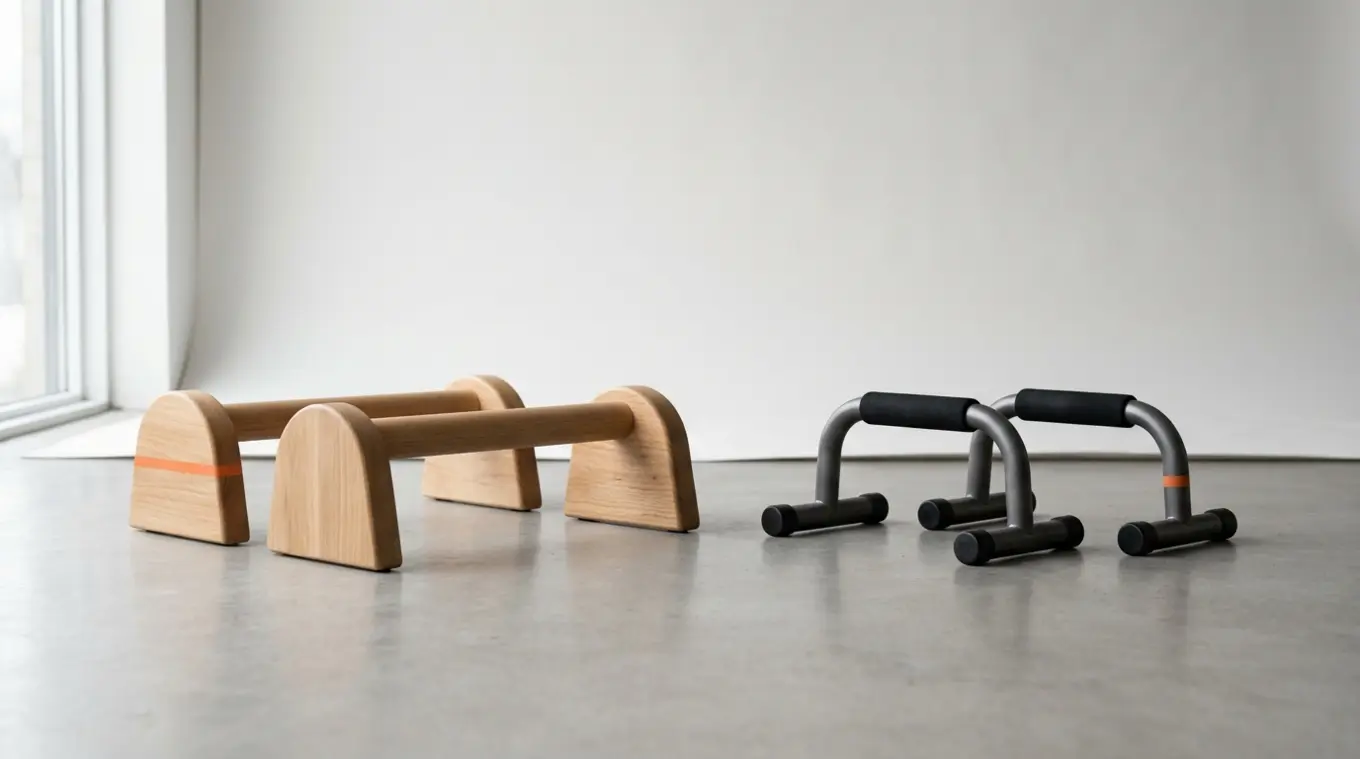
Brand quality matters too. If you want dependable equipment from a calisthenics focused brand, Gornation parallettes are a strong option because they are built for actual skill work, not just casual fitness use. That makes them a better fit for anyone searching for the best for calisthenics rather than just the best for push-ups.
Our Recommendation
If a friend asked me which one to buy, I would keep it simple. Buy push up bars if you want a cheap, portable tool mainly for push ups and wrist comfort. Buy parallettes if you want more exercise variety, more stability, and better long term value.
For most readers, parallettes are the smarter purchase. They replace push up bars well enough, but push up bars do not fully replace parallettes. That is the key takeaway in this parallettes vs push up bars comparison. A good set of low parallettes, especially from a reliable brand like Gornation, gives you room to improve beyond basic pressing. If you are still building your setup, this guide to must have calisthenics equipment can help you choose the next pieces wisely.
When you compare parallettes vs push up bars, both tools can improve your training, but they are not equal in versatility. Push up bars are simple, budget friendly, and great for wrist friendly push-ups. Parallettes do that too, while also opening the door to L sits, handstands, support work, and more serious calisthenics progress. If you want the most value from one piece of equipment, parallettes are usually the better buy. If you only care about push ups, push up bars are still a solid choice.
Frequently Asked Questions
Can push up bars replace parallettes?
Push up bars can replace parallettes for basic push up variations, but not for full calisthenics training. They usually lack the stability and versatility needed for L sits, support holds, handstand drills, and other skill work. If you want one tool for broader progress, parallettes are the better fit.
Are parallettes better than push up bars for beginners?
It depends on the beginner. If someone only wants to make push ups more comfortable, push up bars are simple and affordable. If they want to explore calisthenics and build skills over time, low parallettes are often the smarter starting point because they offer more room to progress.
Which option is better for wrist pain during push ups?
Both can help with wrist pain because they keep the hands in a more neutral position than floor push ups. In practice, both allow more wrist friendly push-ups. The difference is that parallettes can also support other wrist sensitive exercises beyond regular push up training.
Are high parallettes or low parallettes better?
Low parallettes are better for most people because they work well for push ups, L sits, and beginner handstand drills while staying compact and easy to store. High parallettes are more useful if you specifically want deeper dips, advanced support work, or a setup that feels closer to dip bars.
What is the best choice for a small apartment gym?
If space is extremely limited and you only want a push up tool, push up bars are the most compact option. If you want compact home gym equipment that still gives you more training variety, low parallettes are usually the better choice. They take a little more room but offer much more value.