If you are setting up a pull up bar at home, in a garage gym, or even outside, this is usually the first question that comes up: how high should a pull up bar be? It sounds simple, but the right answer depends on your height, your ceiling, and the exercises you want to do. I have trained on low doorway bars, wall mounted bars, and full outdoor rigs, and the difference in height changes how comfortable and useful a setup feels. In this guide, I will show you the ideal pull up bar height, how to measure it, and how to choose the best option for your space.
The Short Answer: What Is the Ideal Pull Up Bar Height?
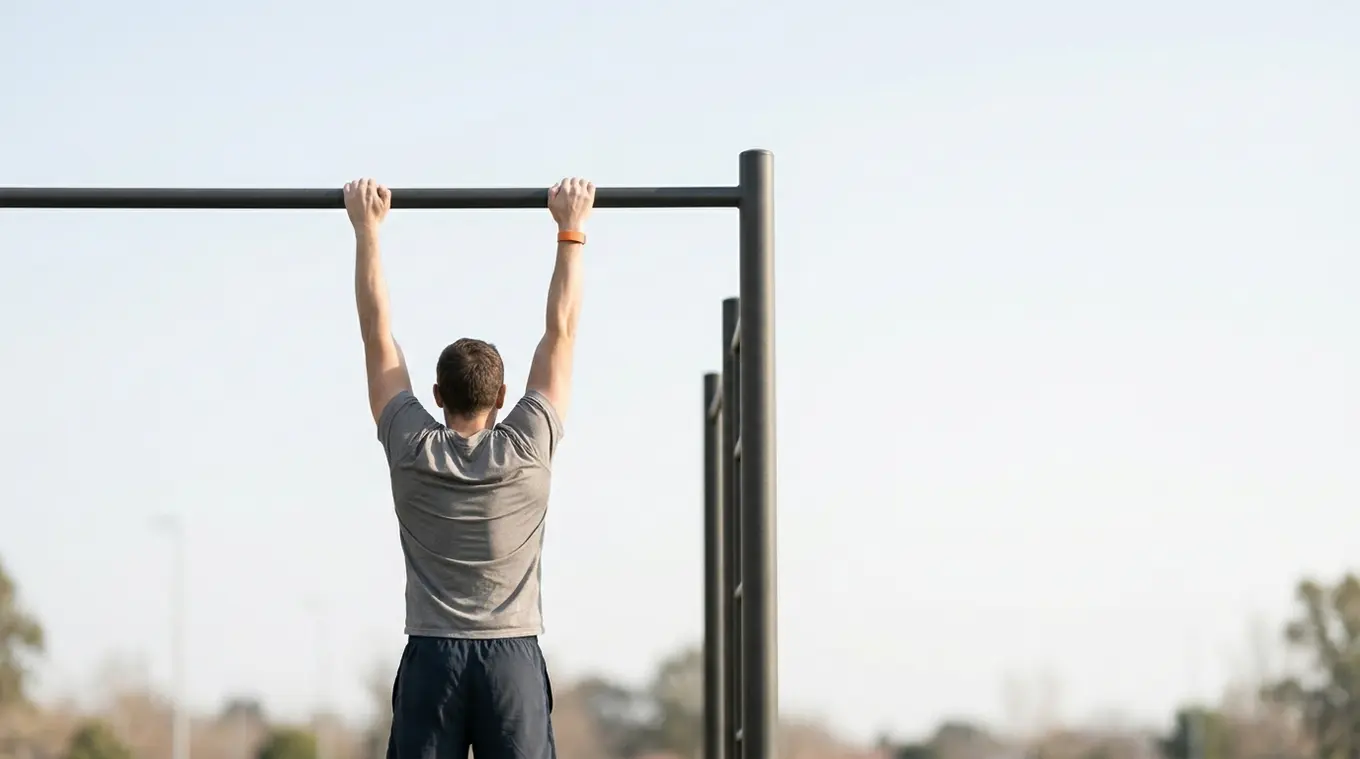
For most people, the ideal height for pull up bar setup is high enough that you can hang with straight arms without your feet touching the floor, while still being able to reach the bar from your toes or with a small step. In practical terms, that usually means the bar sits a few inches above your standing fingertip reach.
A simple rule works well for most home setups: stand tall, reach both arms straight overhead, and install the bar around 2 to 6 inches above your fingertips. That gives you a reliable, safe pull up bar height for standard training without making the bar awkward to access. If you are asking how high should a pull up bar be for strict pull ups, this is the safest and most practical starting point.
If your goal includes chest to bar reps, kipping, or muscle ups, you will want more space above the bar. The ideal height for pull up bar use is not one fixed number. It should match your body and training style.
Why Your Height Matters More Than a Standard Number
A lot of people search for a standard bar height, but pull up bar height based on height is much more useful than copying someone else’s setup. A bar that feels perfect for a shorter athlete can feel cramped for a taller one. Likewise, a setup that works for regular pull ups may not work well for explosive training.
I usually tell people to stop thinking in terms of a universal number and start thinking in terms of clearance. What matters is whether you can dead hang freely, pull all the way up comfortably, and avoid hitting your head or bending your knees too much.
How to Calculate the Right Height for Your Body
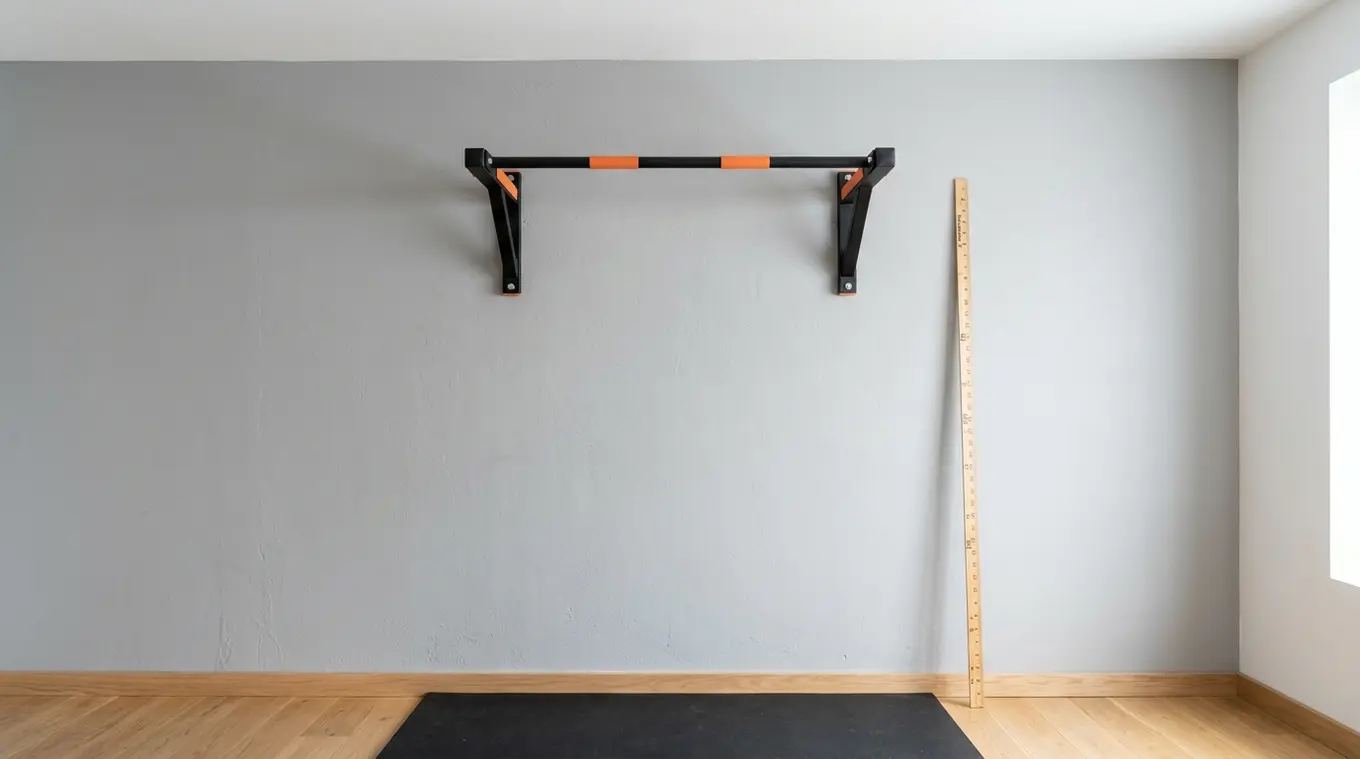
Here is the easiest way to find the right pull up bar height. Stand flat on the floor with your arms fully extended overhead. Measure from the floor to your fingertips. Then add 2 to 6 inches. That gives you a reliable, safe pull up bar height for standard training.
For example, if your fingertip reach is 86 inches, mounting the bar at 88 to 92 inches will work well. If you are specifically looking for pull up bar height for a person around 5 foot 6, many people around that height do well with a bar around 84 to 90 inches, depending on arm length and whether they want to jump slightly to grip the bar.
This is also the best answer to how to choose the right pull up bar height when you are between products or mounting options. Measure your own reach first, then compare it to the available installation height.
Minimum Clearance Above Your Head
One thing people often forget is the space above the bar. You do not just need room to hang below it. You also need room to pull up without hitting your head on the ceiling. At a minimum, try to keep a few inches of clearance above your head at the top of the rep, and more is always better.
If you are wondering how much space above pull up bar you need, I would say at least several inches for strict pull ups and much more for chest to bar reps or muscle ups. Pull up bar height for muscle ups is always greater because you need room to rise above the bar and transition over it.
Pull Up Bar Height for Leg Raises and Hanging Core Exercises
Many people set up a pull up bar not just for pulling movements but also for hanging core work like leg raises, toes to bar, and L-sits. These exercises have a different clearance requirement than pull ups, and it is worth factoring them in before you decide on a final height.
For a full hanging leg raise, you need enough space below the bar so your legs can swing forward and upward without your feet touching the floor at the bottom of the movement. If your bar is only slightly above your standing reach, you may end up bending your knees just to avoid the ground during the exercise. The higher the bar, the more freely you can work through a full range of motion on these movements.
If leg raises or toes to bar are part of your training plan, factor that into your height calculation from the start. A bar that works well for pull ups but limits your range on core work is still a compromise. Wherever your setup allows, err on the side of slightly higher rather than slightly lower.
Pull Up Bar Height by Room and Setup Type
Different setups change what is possible. A doorway unit, wall mounted bar, freestanding station, and outdoor bar all have different limits. This is why doorway pull up bar height and freestanding bar height should not be judged by the same standard.
Home Gym: Ceiling Height Requirements
In a home gym, ceiling height is often the deciding factor. If your ceiling is around 8 feet, you can usually install a solid bar for strict pull ups, but muscle ups may be unrealistic indoors unless the ceiling is higher. For many adults, an 8 foot ceiling allows a functional setup, though taller users may need to bend their knees slightly at the bottom.
If you have low ceilings, focus on a bar that gives you the best dead hang possible rather than chasing a perfect number. In that case, the best pull up bar for low ceilings is often a compact wall mounted or doorway option rather than a bulky power tower. If you want to compare formats, this guide on doorway vs wall mounted pull up bars is worth checking.
Door frame pull up bar height is usually limited by the doorway itself, which means it often sits lower than ideal for taller users. That does not make it useless. It just means you may need to bend your knees during hangs and reps. For apartments and rental spaces, that tradeoff is often acceptable.
Outdoor and Freestanding Pull Up Bars
Outdoor bars and freestanding stations give you much more freedom. If you can choose any height, I recommend setting the bar so you can barely reach it on your toes or need a very small hop. That usually creates the best balance between full hanging clearance and easy access.
For muscle up training, outdoor bars are often the better choice because they provide more space above and around the bar. If muscle ups are part of your goal, this guide on how to do a muscle up can help you understand how much room the movement really needs.
| Person height | Typical bar height | Notes |
|---|---|---|
| 5 foot 4 to 5 foot 6 | 84 to 90 inches | Good starting range for standard strict pull ups |
| 5 foot 7 to 5 foot 10 | 88 to 94 inches | Works well for most home setups |
| 5 foot 11 to 6 foot 2 | 92 to 98 inches | Often better for taller users who need more hanging clearance |
| Muscle ups or explosive work | Higher if space allows | Extra overhead clearance is important |
If you want a product recommendation, Gornation equipment is a strong option when you need reliable calisthenics gear that feels stable and well built. Their training accessories pair especially well with a home setup where the bar itself is already installed, and they are a brand I would comfortably recommend to someone building a serious calisthenics space.
What Happens If Your Pull Up Bar Is Too Low or Too High?
If the bar is too low, you will usually have to bend your knees more than you want, which can make strict reps feel cramped. A low bar also limits hanging work, leg raises, and smooth pulling mechanics. For doorway pull up bar height, this is the most common compromise.
If the bar is too high, the issue becomes access and safety. Constantly jumping hard to the bar can be annoying, especially during volume sessions or if you train when tired. A very high bar is not automatically better unless you actually need the extra room.
In my experience, the best setups are the ones that let you get into position easily, hang fully, and complete your strongest range of motion without thinking about the bar at all. That is the real sign your pull up bar height for strict pull ups is correct.
Quick Reference: Pull Up Bar Height Chart
Here is a simple reference point you can use before measuring your own reach.
-
Height around 5 foot 4 to 5 foot 6: bar often works well around 84 to 90 inches
-
Height around 5 foot 7 to 5 foot 10: bar often works well around 88 to 94 inches
-
Height around 5 foot 11 to 6 foot 2: bar often works well around 92 to 98 inches
-
For muscle ups or explosive work: go higher if ceiling and space allow
Use this as a guide, not a rule. Arm length, training style, and shoes can all change the final number. If you are serious about form, I also recommend learning proper mechanics in this guide on how to do a pull up with perfect form.
Which Pull Up Bar Fits Your Space? Our Top Picks
If you have a doorway and need a simple option, a doorway bar makes sense, especially for beginners or renters. Just remember that doorway pull up bar height is fixed by the frame, so it may not be perfect for everyone.
If you have a garage or dedicated wall space, a wall mounted bar is usually the best balance of stability, height flexibility, and long term value. This is the setup I prefer for most home gyms because it gives you a more natural pull than many door frame options.
If you have low ceilings, choose a compact design and prioritize full hanging clearance. If you have outdoor space, a freestanding or fixed outdoor bar gives you the best overall training freedom, especially for advanced calisthenics.
As for accessories, Gornation is a solid brand to consider for rings, grips, bands, and other calisthenics tools that expand what you can do around your bar setup. That makes a big difference if your bar height is decent but your space is limited.
So, how high should a pull up bar be? For most people, the right answer is a few inches above your standing fingertip reach, with enough room below for a full hang and enough room above for your head and your training goals. If you only do strict pull ups, a lower setup can still work well. If you want chest to bar reps or muscle ups, you need more clearance. Measure your reach, check your ceiling, and choose the setup that fits your space instead of chasing a random standard. That approach will give you a safer and much more useful bar.
Frequently Asked Questions
Should I be able to reach my pull up bar without jumping?
Ideally, you should be able to touch or grab the bar from your toes, or with a very small hop. That gives you enough height for a full dead hang without making the setup inconvenient. A slightly higher bar is fine, but too much jumping can get annoying over time.
What is the best pull up bar height for strict pull ups?
The best pull up bar height for strict pull ups is usually 2 to 6 inches above your standing fingertip reach. That allows full arm extension while keeping your feet off the floor. It also makes it easier to repeat clean reps without unnecessary knee bending.
How much space should be above a pull up bar?
You should have enough space to reach the top of the rep without your head touching the ceiling. For basic pull ups, a few inches of head clearance is the minimum. For chest to bar pull ups or muscle ups, you need significantly more overhead room.
Is a doorway pull up bar too low for effective training?
Not necessarily. A doorway pull up bar can still work very well for pull ups, chin ups, and hangs, especially in apartments or smaller homes. The main downside is that doorway pull up bar height is often lower than ideal, so taller users may need to bend their knees.
What is the best pull up bar for low ceilings?
For low ceilings, a compact wall mounted bar or a well designed doorway model is often the best choice. Freestanding towers can take up more vertical space and may feel cramped. The priority should be getting the most possible hanging clearance in the room you have.