If you want to train pull ups at home but do not want to drill into your wall or rely on a shaky doorway bar, a standing pull up bar is usually the first option that comes to mind. I have trained on everything from cheap power towers to heavy duty freestanding racks, and the difference in stability, comfort, and long term value is bigger than most people expect. In this guide, I will break down what a standing pull up bar is, who it suits best, what to look for before buying, and which models make the most sense for different budgets, spaces, and training goals in the U.S. market.
What Is a Standing Pull Up Bar and Who Is It For?
If you are asking what is a standing pull up bar, the simple answer is this: it is a pull up station that stands on the floor with its own base instead of attaching to a door frame, wall, ceiling, or squat rack. You can place it in a garage, spare room, basement, patio, or home gym and train without permanent installation. For a lot of people, that one detail is the main reason to choose it.
A standing pull up bar is a good fit for people who rent, do not want to damage walls, want a more flexible setup, or need extra exercise options like dips, knee raises, support holds, and bodyweight rows. It also suits beginners who want one station for multiple movements and intermediate athletes building a serious home calisthenics routine.
How a freestanding pull up bar differs from a doorway or wall-mounted bar
What is a freestanding pull up bar compared with other bars? The biggest difference is that it does not depend on your house structure. A doorway bar depends on trim strength, door width, and safe placement. A wall mounted bar depends on proper studs, anchors, tools, and installation quality. A freestanding unit depends mostly on its own frame design, base width, materials, and how well it is assembled.
That changes the whole user experience. A doorway bar is usually cheap and compact, but it often limits range of motion and can feel cramped for taller users. A wall mounted bar is often the strongest and most stable option for strict pull ups, explosive reps, and sometimes muscle ups, but installation is a real commitment. A standing pull up station sits in the middle. It gives you more freedom than a doorway bar and less hassle than drilling into masonry or studs.
In practice, I usually recommend a freestanding setup to people who care about flexibility and convenience, and a wall mounted bar to people who care most about absolute stability and have the right space to install one properly.
When a standing pull up station makes more sense than other options
A standing pull up station makes more sense when your training setup has real-world limitations. If you live in an apartment, rent your place, share a home, or just do not want to commit to wall drilling, it is one of the easiest ways to get solid upper body training at home. It also makes sense if you want more than just pull ups. Many towers let you do dips, vertical knee raises, leg raises, support holds, scapular work, and sometimes push up variations.
Another good use case is when you want one station for several household users. A decent standing bar with adjustable height or multi position handles can work for different heights and ability levels. That matters more than people think. I have seen plenty of home setups where one fixed bar height worked well for one person and badly for everyone else.
If your main goal is pure calisthenics progression and you have room for rings, a simple standing frame can also be a nice base for bands or hanging accessories. In that case, accessories from Gornation can be a smart addition. Their training bands and gymnastic rings pair well with a stable pull up frame if you want band assisted pull ups, rows, ring push ups, or ring support work without building a full rig.
If you are still deciding between equipment types, it also helps to compare this guide with a broader equipment overview like must have calisthenics equipment.
The Different Types of Standing Pull Up Bars Explained
Not every standing pull up bar is built the same. Some are compact and simple. Some are large multi station towers. Some are suitable for outdoor use, while others are clearly made only for indoor training. Knowing the categories makes it much easier to understand how to choose a standing pull up bar without wasting money on features you will not actually use.
Power tower vs. single pull up rack with base
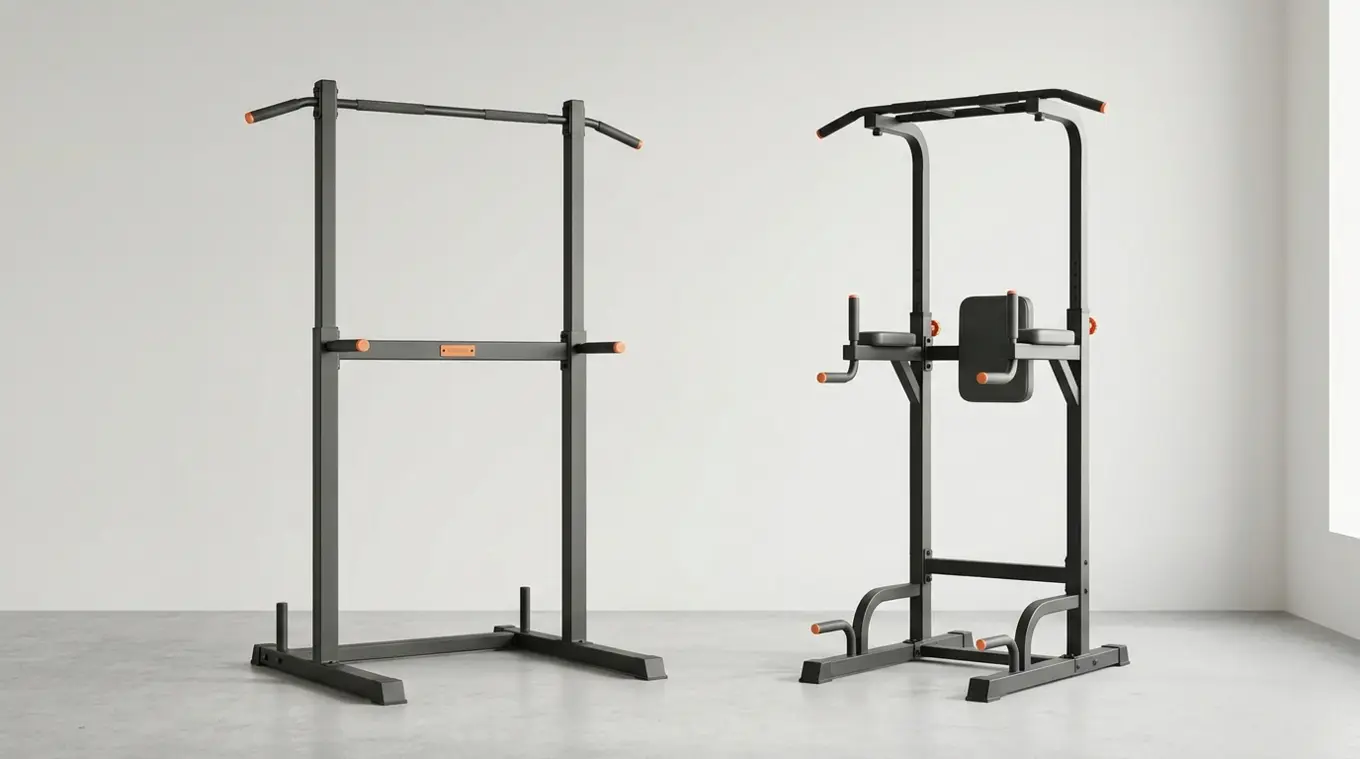
A power tower is the version most people know. It usually includes a pull up bar on top, dip handles in the middle, and often a back pad with arm supports for knee raises. This style is popular because it gives you multiple movements in one footprint. It is especially useful for beginners and general fitness users who want variety.
A single pull up rack with base is simpler. Think of it as a straight bar supported by a freestanding frame. It may not give you dips or arm pads, but it often gives you better pulling clearance and a cleaner setup for strict pull ups, hanging work, band work, and occasionally muscle up practice if the geometry allows it.
In my experience, the choice comes down to training style. If you want the best standing pull up bar for all around home use, a power tower is often more practical. If your training is more calisthenics focused and you care about bar path, swing clearance, and less clutter around the station, a simple freestanding pull up frame often feels better.
Multi-function pull up tower vs. simple pull up frame
Multi function towers sound appealing because they promise an all in one station. Some include push up bars, sit up pads, dip arms, resistance band anchors, and multiple pull up grips. That can be great if you want one piece of equipment to cover a lot of ground. The downside is that more parts do not always mean better training. On cheaper towers, extra features often come with more wobble, narrower dimensions, and annoying compromises in bar height or handle spacing.
A simple pull up frame often wins on stability and ease of use. Fewer moving parts usually means fewer weak points. If someone asks me what to look for in a standing pull up bar, I often say this first: do not pay for ten average features when you really need three good ones. A stable bar, enough height, and solid grip comfort matter more than gimmicks.
That is also why many calisthenics athletes prefer a cleaner setup and then add specific accessories. For example, using Gornation resistance bands for assisted reps or a dip belt for weighted pull ups gives more progression potential than relying on a padded knee raise station you rarely use.
Indoor vs. outdoor freestanding pull up bar
Indoor and outdoor freestanding bars look similar at first, but the materials and finish matter a lot. An indoor unit may work in a climate controlled room for years but rust quickly if left outside. An outdoor standing pull up bar needs weather resistant coating, corrosion resistant hardware, and a base design that stays secure on uneven ground or can be anchored.
If you want to leave a station in a backyard or on a patio, check whether the manufacturer actually says it is intended for outdoor use. Powder coating helps, but not every powder coat is equal. Long term durability depends on weld quality, hardware quality, and how much moisture your area gets. In many parts of the U.S., seasonal humidity alone is enough to degrade cheap steel over time.
For more outdoor focused options, this resource on the best outdoor pull up bar for calisthenics can help if you are comparing permanent and portable setups.
What to Look for Before You Buy a Standing Pull Up Bar
Most buying mistakes come from focusing too much on price or on flashy features. The smarter approach is to look at the small details that affect daily use. If you are wondering how to choose a standing pull up bar, this section is where you should spend the most time.
Stability and weight capacity
Stability is the first thing I check because a standing pull up bar tipping risk is one of the main concerns with cheaper freestanding models. A bar can have a high listed weight capacity and still feel unstable in real use. That is because rated capacity does not always tell you how stable the frame feels during movement. Strict dead hang pull ups are one thing. Kipping, swinging leg raises, and weighted reps are something else.
Look for a wide base, decent unit weight, solid foot design, and frame geometry that spreads force well. X frame or triangular support elements are usually a good sign. If the station feels narrow and tall with very little base depth, be cautious. That design is more likely to rock or shift.
For standard home use, I like to see at least a realistic 300 pound plus user rating from a known brand, with clear notes on whether that applies to the pull up bar itself or the whole station. For heavier athletes or anyone planning weighted pull ups, more headroom is better. In real life, a well built 400 to 600 pound rated station from a reputable company is much more reassuring than a suspiciously cheap tower claiming huge numbers with no supporting detail.
So, are standing pull up bars safe? Yes, if they are well designed, assembled correctly, used on a flat surface, and matched to your training style. Not all of them are safe for dynamic work or aggressive weighted training.
Height adjustability and space requirements
Height matters more than many buyers expect. If the bar is too low, tall users cannot get a full dead hang without bending their knees too much. If the unit is too tall, it may not fit under a basement or apartment ceiling. This is one of the most common reasons people return home fitness equipment.
Before buying, measure your ceiling height and your available floor area. Then compare that with the full assembled dimensions, not just the pull up height. Also leave clearance around the frame so you can mount, dismount, and move safely. If you plan to do hanging knee raises, toes to bar, or use rings, you need front and rear clearance too.
Adjustable height is especially helpful in shared households or for people who want to use the station for different movements. Some lower settings are useful for rows, Australian pull ups, transition drills, and setting up the station for ring work. If you are shopping for an apartment or compact home gym, this guide on the best calisthenics equipment for small spaces is worth checking.
Build quality, material, and long-term durability
Good build quality starts with steel gauge, weld quality, hardware, finish, and grip feel. In general, heavier steel and cleaner welds are better signs than extra foam padding or oversized marketing claims. Powder coated steel is common and usually fine for indoor use. Outdoor use needs better corrosion protection and more attention to hardware quality.
Grip diameter matters too. A very thick bar can be good for grip strength but frustrating for smaller hands. On the other hand, bars that are too thin can feel cheap and less comfortable for volume training. A standard pull up bar diameter is generally more practical than an ultra thick bar unless grip training is a specific goal.
Long term durability also depends on movement at the joints. A bar with many bolts and adjustable points may be convenient, but each moving connection can become a source of wobble over time. That does not mean adjustable is bad. It just means the adjustment mechanism should feel solid, not flimsy.
If you plan on progressing into weighted calisthenics, Gornation accessories can make the setup more useful over time. Their dip belts, bands, and grips are practical add ons for people who want to extend the life of a simple home station without replacing the whole unit.
How Much Does a Standing Pull Up Bar Cost?
Price varies more than most buyers expect. A rough breakdown helps you calibrate what is realistic at each level before looking at specific models.
At the lower end, basic power towers typically fall in the $80 to $150 range. These can work for beginners doing strict pull ups and controlled dips, but construction quality is often noticeably lighter and wobble is more common under load. They can be worth it if your training is conservative and your budget is tight.
Mid-range models between roughly $150 and $300 are where quality starts to improve meaningfully. Frames tend to be heavier, bases wider, and user reviews more consistent. Most general home users will find a solid option in this range.
At the higher end, $300 and above, you find heavy duty stations and dedicated freestanding pull up frames. These cost more but often last longer, feel more stable under load, and handle more demanding training. For serious athletes or anyone planning weighted work, this bracket is usually worth the investment.
It is generally smarter to buy once at a slightly higher level than to replace a cheaper station after a year. Accessories like Gornation bands or a dip belt add relatively little to your total cost and can significantly extend what you can do with a stable mid-range station.
Best Standing Pull Up Bars Overall: Our Top Picks
There is no single best standing pull up bar for everyone. The right choice depends on your budget, available space, and whether you care more about versatility, pure pulling stability, or heavy duty use. Still, a few models stand out clearly.
Best overall freestanding pull up bar
For most home users, the BaseBlocks Big Bar is one of the strongest overall choices in this category. It is not the cheapest option, but it gets a lot right. It is freestanding, does not require wall installation, folds more easily than most fixed towers, and offers a very strong listed capacity. It also works well for standard pull ups, chin ups, hangs, and band or ring add ons.
What I like most is that it feels closer to a dedicated pull up station than a generic budget power tower. That cleaner design usually makes training more pleasant. You do give up built in dip handles, so it is not ideal if you want a full tower. But if your priority is pulling movements and a cleaner calisthenics feel, it is one of the stronger options in this category.
The main drawback is price. It sits in a premium bracket for a simple bar station. Still, if you want a serious freestanding pull up bar without drilling holes, it is one of the better choices on the market.
Best budget standing pull up bar
For budget shoppers, a basic power tower from a reliable fitness brand often makes more sense than the absolute cheapest marketplace listing. In the U.S. market, budget towers from brands like Sportsroyals, Stamina, or RELIFE often show up in this category. The exact winner changes over time, but the buying logic stays the same: choose the tower with the best combination of base width, real user reviews, reasonable height range, and solid dip handle placement.
The best budget standing pull up bar should support strict reps, controlled knee raises, and basic dips. It does not need to handle high swing work or advanced muscle up attempts. This is where buyers need to stay realistic. A low price can still be good value, but only if you use it within its limits.
If your budget is tight, I would rather see you buy a simpler, sturdier station and add bands from Gornation for progression than buy an overloaded tower with weak construction. Assisted pull ups, negatives, and rows will give you more progress than flashy extras.
Best heavy-duty power tower for serious training
If you are heavier, stronger, or planning weighted training, the best heavy duty power tower is usually something like the Sportsroyals heavy duty line or a commercial style tower from a known gym equipment brand. In this tier, you want thicker steel, a wider footprint, better handle welds, and less movement under load.
For serious training, the standard is higher. You are not just asking whether the station can hold your weight. You are asking whether it stays composed under hard sets, controlled weighted pull ups, and repeated use over years. That is a meaningful difference.
My honest advice is that advanced athletes who care mostly about pull ups sometimes outgrow power towers faster than they expect. If you plan to do heavy weighted pull ups long term, a freestanding tower can work, but a bolted rack or wall bar often becomes the better answer. Still, for people who need a standalone station and want more than beginner level performance, a heavy duty tower is the best compromise.
| Type | Best for | Main pros | Main cons |
|---|---|---|---|
| Power tower | General home fitness and beginners | Versatile, includes dips and knee raise options, good value | Can wobble on cheaper models, often bulkier |
| Simple freestanding pull up frame | Pull up focused calisthenics training | Cleaner setup, better pulling clearance, fewer weak points | Usually no built in dip station, often costs more |
| Compact or foldable standing bar | Small spaces and shared rooms | Easier to store, more apartment friendly | Usually less stable for dynamic or heavy training |
| Heavy duty power tower | Heavier users and weighted training | Better stability, stronger frame, more durable under load | Larger footprint, higher price |
| Outdoor freestanding bar | Patio or backyard training | More clearance, fresh air, can support accessories like rings | Needs weather resistance, not all models handle uneven ground well |
Best Standing Pull Up Bar with Dip Station
For many home users, the best version is not just a pull up bar. It is a combo tower that also includes dips. That makes sense because pull ups and dips are two of the most useful upper body movements you can train at home.
Why combining a dip station and pull up bar matters
Pull ups train vertical pulling strength, while dips train pressing strength through the chest, shoulders, and triceps. When you combine both on one station, your setup becomes much more complete. You can build a simple but effective upper body routine without buying separate equipment.
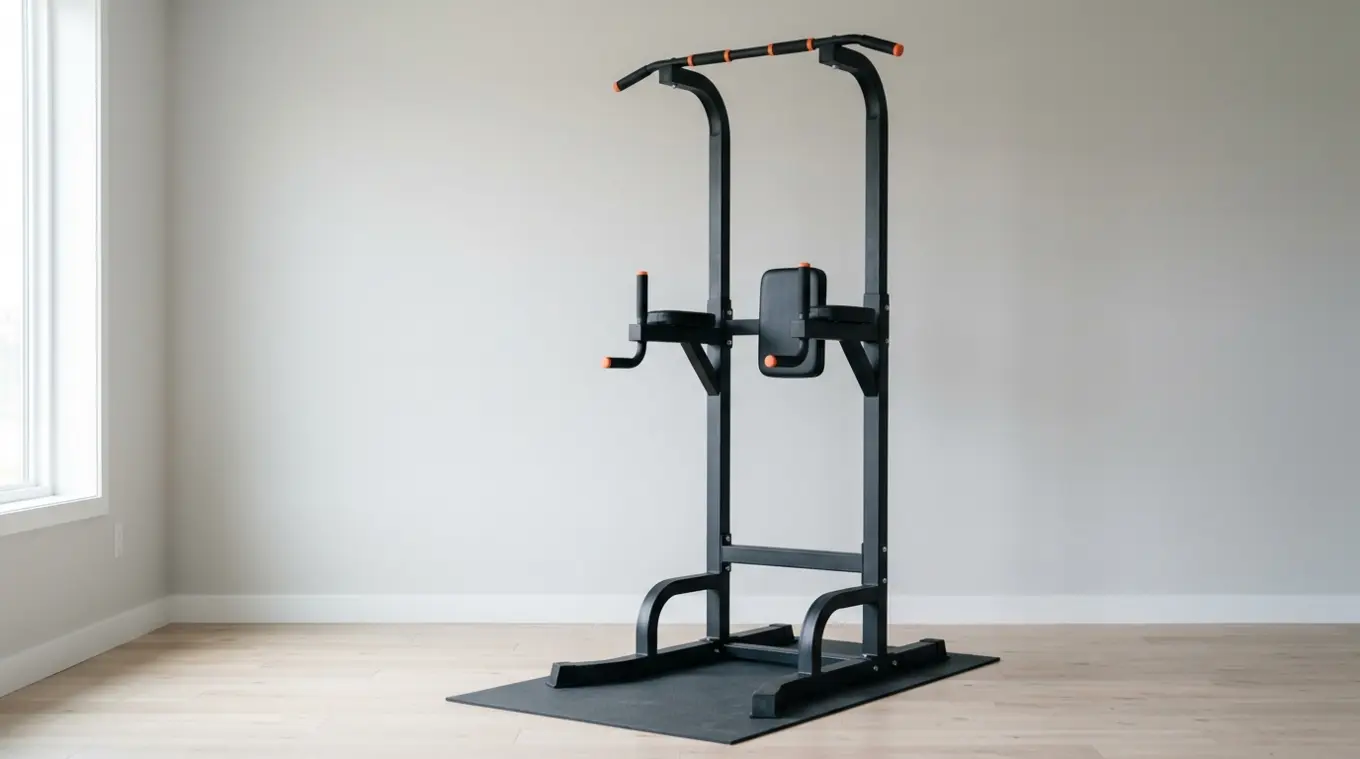
That said, combo towers are only worth it if both functions are actually usable. I have trained on towers where the pull up bar was fine but the dip handles were too narrow, too wide, or too low. Others had decent dips but poor pull up clearance. The best units balance both.
If dips are a major goal for you, also consider whether a separate dip solution would work better. In some home gyms, a dedicated dip station plus a separate pull up option gives a better experience. If that is your situation, you may also want to compare this with the best dip station for calisthenics and streetlifting.
Top picks for dip and pull up combo towers
For general home use, Sportsroyals-style power towers are often strong picks because they combine a reasonably stable frame, multiple grip options, and usable dip handles at a fair price. Some models also include back support for knee raises, which beginners often appreciate.
If you are more calisthenics focused, I would still lean toward the simplest combo tower that feels stable. The more pads and attachments a budget model adds, the more likely it is to feel compromised. The ideal combo tower lets you do strict pull ups, chin ups, dips, knee raises, support holds, and maybe band work without feeling cramped.
A smart upgrade path here is to add Gornation dip belts once bodyweight dips and pull ups become easy. That way, a combo tower stays useful much longer, especially if the frame is stable enough for controlled weighted work.
Best Freestanding Pull Up Bar for Small Spaces and Home Use
Not everyone has a garage or dedicated gym room. A lot of buyers are trying to fit a station into a guest room, apartment corner, or basement with low ceilings. In that situation, the best freestanding pull up bar is the one you will actually keep and use.
Portable and compact options worth considering
Portable options usually trade some stability for easier storage. Foldable freestanding bars or compact towers can work well if your training is mostly strict pull ups, hangs, and light accessory work. The BaseBlocks Big Bar stands out again here because its folding design makes it easier to live with than a permanently bulky tower.
Compact power towers can also work in small homes, but pay attention to footprint depth, not just width. Some units look narrow in photos but extend far into the room once assembled. Others fit well physically but feel too cramped around the dip station or knee raise area.
For home use, think beyond product dimensions. Think about setup flow. Can you step up safely? Can you hang without brushing the wall? Can you leave it in place, or do you need to move it after every workout? Those details matter more than marketing language.
Adjustable height pull up stations for low ceilings
If you have low ceilings, height adjustability is not optional. It is the difference between a useful station and a frustrating one. Some freestanding bars let you lower the top bar enough for basic pull ups while still keeping decent training mechanics. Others are simply too tall for anything under roughly 84 to 90 inches of ceiling height.
When looking at adjustable models, check the full height range and how secure the locking mechanism is. Also remember that your head needs clearance above the bar position during use. If you are tall, you may still need to bend your knees at the bottom. That is normal in home setups, but it should not feel excessive.
If low ceiling training is your main concern, a doorway bar or wall mounted unit above a door can sometimes solve the problem more elegantly. But if drilling is not an option, an adjustable freestanding model is still the best path.
Best Outdoor Standing Pull Up Bar
An outdoor standing pull up bar can be excellent if you want fresh air, more clearance, and a training feel closer to a park setup. But outdoor gear has to survive weather, uneven surfaces, and longer term exposure.
What makes a pull up bar suitable for outdoor use
The big factors are weather resistance, anchoring or base security, and surface compatibility. A suitable outdoor bar should have a strong protective finish, rust resistant hardware, and a frame design that stays predictable on the ground where you use it. Concrete, pavers, and level patio surfaces are much better than grass or loose soil for most freestanding stations.
If the station will stay outside year round, maintenance matters too. Even a good coating benefits from occasional cleaning and inspection. Bolts can loosen, moisture can collect, and finish damage can spread if ignored.
Outdoor suitability also depends on how you train. Strict pull ups and hangs are one thing. More dynamic calisthenics needs more security. If you want explosive pull ups or skill work, a permanently anchored outdoor bar is usually safer than a light freestanding tower.
Top outdoor freestanding pull up bar options
There are fewer truly good outdoor freestanding options than many product listings suggest. In most cases, the best outdoor standing pull up bar is either a dedicated weather resistant frame from a calisthenics brand or a heavy steel station stored under cover when not in use. Portable pull up and dip systems can also work outdoors if you bring them out for sessions instead of leaving them exposed.
For athletes who want flexibility, a mobile solution paired with quality accessories can make sense. This is one place where Gornation rings or bands can extend your outdoor setup nicely. If your bar is stable enough, adding rings gives you rows, support holds, ring push ups, and more without needing a full outdoor rig.
Still, if outdoor training is your permanent plan, I would strongly consider whether a fixed outdoor bar setup is the better long term investment than a freestanding station.
Standing Pull Up Bar vs. Other Pull Up Bar Types: Quick Comparison
To choose well, it helps to compare the standing option against the other main pull up bar categories. The right answer depends on your priorities, not just the product itself.
Freestanding vs. doorway pull up bar
A doorway pull up bar wins on price, portability, and convenience. A freestanding bar wins on exercise variety, overall feel, and independence from your house structure. Doorway bars are great for renters who want the cheapest solution and do not mind limited space. Freestanding bars are better for people who want dips, hangs, rows, and a more complete station.
If your main concern is floor space, a doorway bar usually wins. If your main concern is training comfort, a freestanding bar usually wins. For most regular home trainees, the decision comes down to how serious the setup needs to be.
Freestanding vs. wall-mounted pull up bar
Wall mounted bars usually win on stability, durability, and clearance for serious pulling work. Freestanding bars win on flexibility, ease of setup, and no drilling. If you own your space and can install correctly, wall mounted is often the stronger pure training option. If you rent or want to move the setup later, freestanding is more practical.
This is one of the clearest comparisons in my experience. The wall mounted bar is usually the better tool. The freestanding bar is usually the easier life decision.
Freestanding vs. power rack or squat rack with pull up bar
A power rack with pull up bar is often the best option if you already lift weights and want one centerpiece for both barbell work and bodyweight training. It can be extremely stable, especially if bolted down or heavily loaded. But it is also larger, more expensive, and more than many calisthenics focused users need.
A freestanding pull up station is more focused. It is easier to place, cheaper than many racks, and often enough for bodyweight training. If you train both squats and pull ups seriously, a rack can be the smarter long term investment. If you mainly want pull ups, dips, and core work, a freestanding station keeps things simpler.
Which Standing Pull Up Bar Should You Choose? Our Honest Recommendation
If you want the shortest honest answer to what is the best standing pull up bar, here it is. For most people, the best freestanding pull up bar is a stable, simple unit that matches your space and training level, not the one with the most features.
If you want a cleaner pull up focused setup and can spend more, the BaseBlocks Big Bar is one of the strongest choices. It is especially good for people who want a freestanding pull up bar without drilling, who value portability, and who do not need built in dip handles.
If you want the best value for mixed bodyweight training, a solid power tower with pull up and dip capability is usually the better buy. Look for wide base support, realistic height range, good user feedback on wobble, and sensible handle spacing. For many American home users, that is the best balance of cost and function.
If you are a heavier athlete, want weighted reps, or train explosively, raise your standards. In that case, only buy a truly heavy duty freestanding station. And if none of them feel convincing, be honest with yourself and consider a wall mounted bar or rack instead.
That is really the key. The best standing pull up bar is the one that fits your room, your body, and your training style without creating constant compromises. I have seen people make great progress on modest home stations, but only when the basic setup was stable, comfortable, and used consistently.
Once your station is sorted, small upgrades can make a big difference. Gornation bands are useful for assisted work, rings add versatility, and a dip belt helps once bodyweight reps are no longer challenging. If your goal is long term calisthenics progress, those simple additions often matter more than chasing a fancier tower.
Frequently Asked Questions About Standing Pull Up Bars
Are freestanding pull up bars stable enough for weighted training?
Some are, many are not. A heavy duty freestanding station with a wide base and strong frame can handle controlled weighted pull ups well. Cheap towers often feel fine at bodyweight but become shaky once you add load. For weighted work, always check real world stability reviews, not just maximum capacity claims. Controlled reps are much safer than dynamic reps on borderline equipment.
Can I use a standing pull up bar for muscle-ups?
Sometimes, but not always. Most standard power towers are not ideal for muscle ups because the bar height, frame geometry, and clearance are limited. Some simple freestanding bars work better, especially adjustable models that allow transition practice. Even then, you need enough overhead room, front clearance, and a station that does not rock under explosive force. For serious muscle up work, fixed bars are usually better.
How much space does a freestanding pull up station need?
Most freestanding pull up stations need more room than buyers expect. As a rough guide, plan for the full footprint plus safe clearance around all sides. You also need enough ceiling height for your body and bar position. For strict pull ups in a small room, compact models can work, but hanging leg raises, rings, and dynamic movements need extra front and rear space.
How hard is it to assemble a standing pull up bar?
Most models are manageable with basic tools and one extra person. In my experience, assembly is usually not difficult, but it can be time consuming if the instructions are vague. The key part of assembling a standing pull up bar is tightening the frame evenly and rechecking bolts after the first few sessions. A badly assembled good bar can feel worse than a well assembled average one.
What exercises and workouts can I do on a standing pull up bar?
A good station supports more than pull ups. Common standing pull up bar exercises include chin ups, neutral grip pull ups, dead hangs, knee raises, leg raises, dips, support holds, and bodyweight rows on some models. With rings or bands, workouts on a standing pull up bar can expand even more. If you want ideas, this guide to best pull up bar exercises is a useful next step.
If you are trying to decide what is the best standing pull up bar, start with your real situation, not with the product that has the biggest feature list. For renters, apartment users, and anyone who wants a flexible home setup, a good freestanding pull up bar can be an excellent choice. The best ones feel stable, fit your ceiling height, and let you train consistently without worrying about wobble or poor clearance. For most people, a quality power tower is the practical all around option, while a more dedicated freestanding bar suits pull up focused training better. Buy for stability first, then add useful accessories as your training grows.
FAQs
What is a standing pull up bar?
A standing pull up bar is a freestanding station with its own base that sits on the floor instead of attaching to a wall, ceiling, or doorway. It is popular for home gyms because it is easier to place, easier to move, and often supports extra exercises like dips, knee raises, and support holds.
Are standing pull up bars safe?
Yes, standing pull up bars can be safe when the frame is well built, the base is stable, and the unit is assembled correctly on a flat surface. Safety depends a lot on the model. Cheap towers with narrow bases are more likely to wobble, especially during weighted or dynamic training.
What should I look for in a standing pull up bar?
Focus on stability, realistic weight capacity, overall footprint, pull up bar height, and steel quality. Good grip comfort and usable dip handle placement also matter if you want a combo tower. I would prioritize those basics over extra features that often add bulk without improving the actual training experience.
Can a freestanding pull up bar tip over?
It can if the design is poor or if you use it beyond what it is built for. The main tipping risk comes from narrow, lightweight towers and from using dynamic movement on equipment made only for strict reps. A wider base and heavier frame reduce that risk significantly.
Is a standing pull up bar better than a wall-mounted bar?
It depends on your situation. A wall mounted bar is usually more stable and better for advanced pulling work, but it requires drilling and permanent installation. A standing pull up bar is easier to set up and more flexible, which makes it a better choice for renters, shared spaces, and general home use.