If you do calisthenics long enough, you learn a simple truth: your grip often fails before your back, lats, or core does. Slippery bars, sweaty hands, and weak fingers can turn pull ups, muscle ups, and ring work into a frustrating struggle. In this guide, I’ll walk you through the best equipment for grip training calisthenics, starting with the basics that give the biggest return and moving into more specialized tools when you actually need them. You’ll get clear buying priorities, practical ways to use each tool, and a few honest opinions on what is worth skipping.
What “grip strength” really means in calisthenics
When people say “I need better grip,” they often mean different things. In calisthenics, grip is not just squeezing hard. It is your ability to hold, control, and transfer force through your hands while your body moves.
That matters because many calisthenics skills are essentially grip tests with extra steps. A clean muscle up needs you to keep control during the transition. Ring dips demand wrist stability while the rings wobble. Dead hangs punish your skin and your endurance at the same time.
The 4 grip qualities that show up on bars and rings
- Support grip: holding your body on a bar or rings (dead hangs, pull ups, front lever).
- Crush grip: squeezing something in your palm (hand grippers, towel squeezes).
- Pinch grip: holding something between fingers and thumb (plate pinches, some ring variations).
- Finger and wrist control: small adjustments that keep you from slipping (especially on rings, handstands, and dynamic moves).
Good equipment does one of two things: it improves friction so you can train the movement you came for, or it overloads a specific grip quality so you get stronger.
Tier 1: The “don’t overthink it” essentials
If you are building a home setup or you train outdoors, you do not need a drawer full of gadgets. You need a couple of basics that directly solve the biggest problems: sweat, skin, and consistent practice.
Chalk: the fastest upgrade for almost everyone
Chalk is boring, and that is exactly why it is so good. It is the simplest way to reduce sweat and increase friction on bars, rings, and even parallettes. If you only buy one thing for grip, I would start here because it immediately improves training quality without changing your technique.
There are two main options: block chalk and liquid chalk. Block chalk is cheap and easy to reapply. Liquid chalk is cleaner in a backpack and tends to last longer per application, which helps when you are doing longer sets like EMOM pull ups or ring complexes.
If you want a deeper comparison, this page breaks it down clearly: liquid chalk vs block chalk for calisthenics.
Grip tape: a small hack for inconsistent bars
Outdoor bars can be unpredictable. Some are glossy, some are rusty, and some are so thick that your fingers barely wrap around. A roll of grip tape gives you a way to standardize your surface, especially if you train on the same setup often.
- Use it sparingly on the bar section you actually grab.
- Avoid building big ridges that chew your skin.
- Replace it once it gets smooth, not once it gets disgusting.
I like tape most for beginners who are still learning consistent hand placement. It reduces the “random slip” factor so you can focus on form.
A reliable pull up bar or station: the silent grip builder
This one is obvious, but it is worth saying: if your bar is shaky, too thin, or placed somewhere annoying, you will not hang enough to build grip. A stable bar increases the amount of quality time under tension you accumulate each week, which is the real driver of grip endurance for calisthenics basics.
If you train at home, choose a setup that makes it easy to do short sets throughout the week. Five minutes of hangs, scap pulls, and slow negatives done consistently beats a single heroic session once a week.
Tier 2: Best “value additions” for calisthenics specific grip
Once the basics are handled, the most useful gear is the kind that improves both grip and skill at the same time. In calisthenics, that usually means unstable implements and positions that force your hands and wrists to work smarter.
Gymnastic rings: the most complete grip tool (and skill builder)
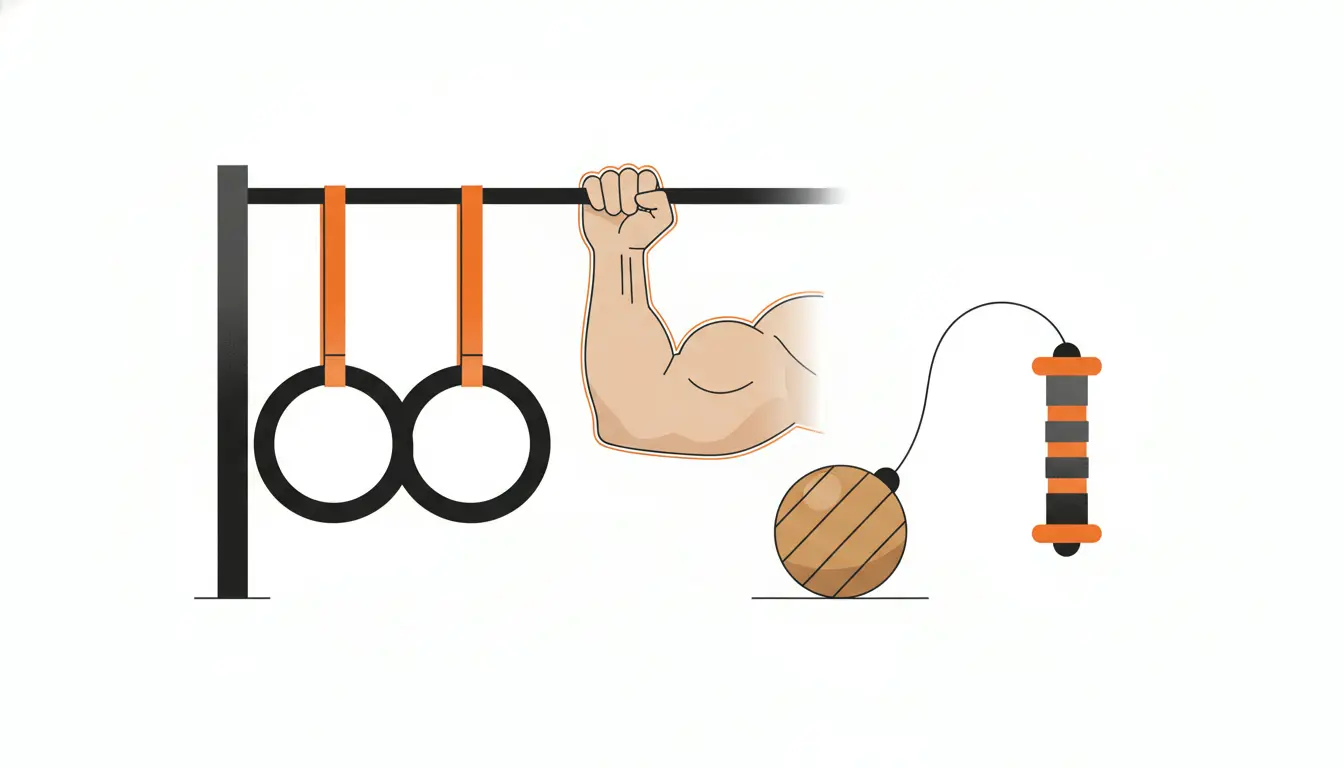
Rings are, in my opinion, the best all around investment if you want calisthenics progress and stronger grip with one piece of equipment. They challenge your hands in a way a fixed bar cannot. Because the rings move, you constantly adjust finger pressure, wrist angle, and shoulder position. That is real grip, not just squeezing.
Rings also scale beautifully. You can start with ring rows and assisted ring dips, then move into false grip work, ring muscle up transitions, and long support holds. Your grip gets better because you practice holding under changing angles, not because you did 1,000 reps of a toy gripper.
For a solid training approach, this guide is a good companion: how to train with gymnastic rings.
Subtle recommendation: if you want a dependable set that holds up outdoors and still feels good in the hands, the Gornation rings are a safe pick. I like them because consistent strap markings and reliable buckles make it easier to keep ring height the same, which matters more than people think for skill practice.
Parallettes: underrated for wrist and hand control
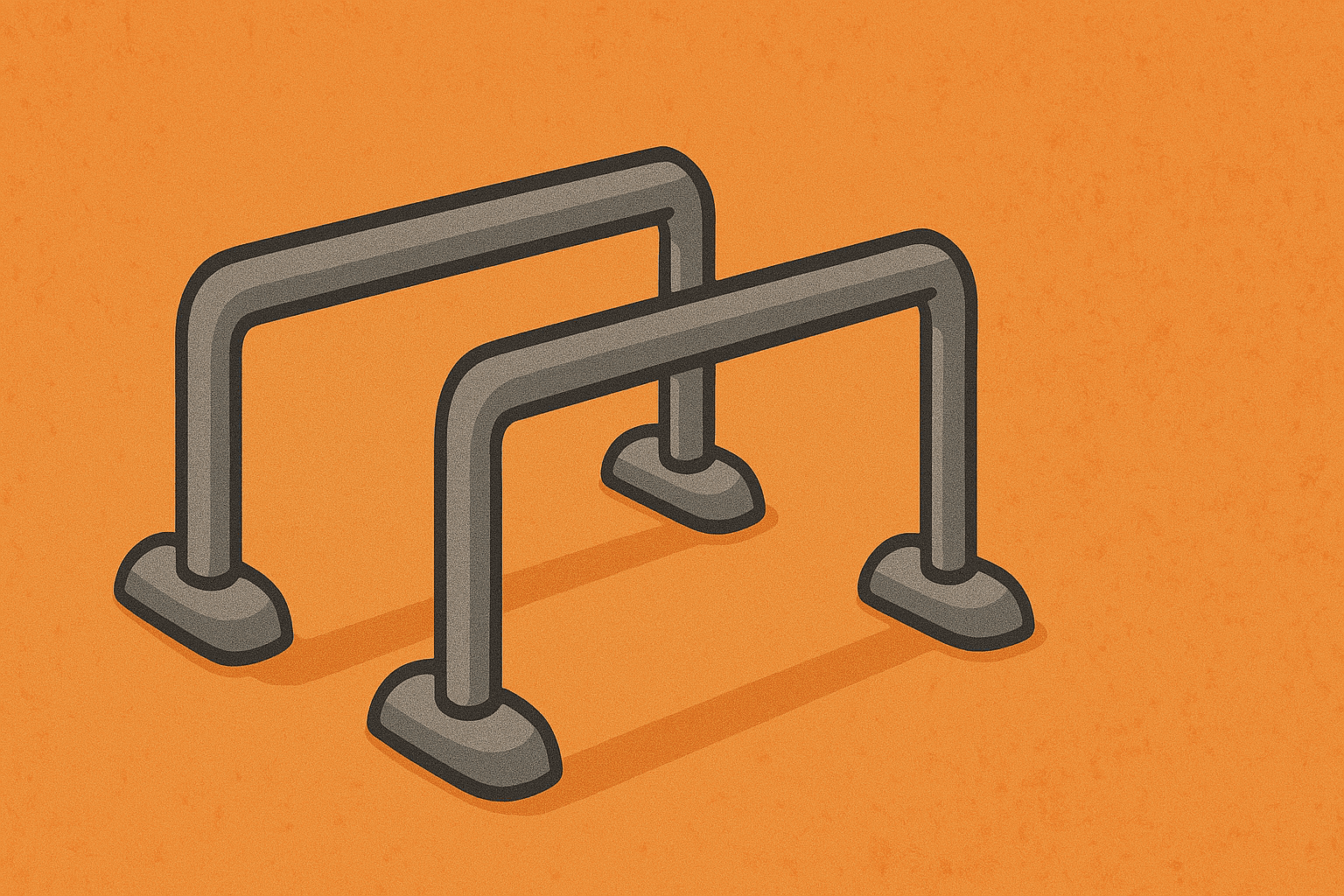
Parallettes are not a classic “grip tool,” but they build hand strength in a way that transfers to handstands, L sits, and planche lean progressions. They also give your wrists a neutral position, which lets you accumulate more volume without your hands feeling beat up.
If your goal is grip for static strength skills, parallettes help you learn to create full body tension while your hands stay planted. That carries over when you go back to bars and rings because your wrist positioning and forearm engagement improve.
If you are working on L sit strength, this guide ties it together nicely: how to train the L sit.
Resistance bands: more grip work with less joint stress
Bands are a practical way to train pulling volume without always hitting failure. That matters for grip because grip endurance improves with repeated submaximal holds. With bands, you can do cleaner reps and longer sets, which is often the missing ingredient for beginners stuck at low pull up numbers.
- Band assisted pull ups for higher total reps.
- Band face pulls and straight arm pulldowns for elbow friendly volume.
- Band rows on rings for controlled grip time.
To keep things simple, think of bands as a way to “buy” more practice without your grip and elbows getting angry.
Tier 3: Specialized grip tools (useful, but only when you have a reason)
This is where a lot of people waste money. Specialized tools can be great, but only if you know what problem you are solving. The best equipment for grip training calisthenics depends on your weak link.
Hand grippers: great for crush grip, not a full solution
Grippers are popular because progress is easy to measure. The downside is that grippers train mostly crush grip. In calisthenics, you more often fail at support grip endurance, skin tolerance, or wrist control. So I see grippers as an accessory, not a foundation.
Grippers make the most sense if:
- you want stronger hands for weighted calisthenics or streetlifting holds
- you feel your hand strength is clearly behind your pulling strength
- you do other sports that reward crush grip (climbing, grappling)
If you go this route, I recommend keeping the volume low and consistent. A few hard sets, a few times per week, beats daily max attempts that irritate tendons.
Finger specific trainers: niche, but helpful for ring control
Tools that let you load individual fingers can be useful when your grip “opens up” on rings or when you struggle to keep a secure false grip. They are not mandatory, but they can address a very real weakness: some fingers doing all the work while others coast.
I would only prioritize finger specific work after you already do regular hangs and ring support holds. Otherwise, it is easy to get strong in a pattern that does not show up in your main training.
Forearm and wrist tools: the missing link for durability
Forearm training often gets treated like rehab, but it is also performance work. Strong wrists and forearms help you maintain better hand position when you fatigue. They can also make high volume pulling feel smoother.
If you have ever dealt with cranky elbows, slow controlled wrist and forearm work can be a smart addition. I am not giving medical advice here, but I am saying this: many calisthenics athletes ignore the smaller tissues until something hurts, and then they wish they had done basic maintenance earlier.
Thick grip adapters and fat bars: useful if you also lift
Thick grips change the game because you cannot “cheat” the bar with your fingers. Your forearms light up quickly. If you already do barbell rows, deadlifts, or dumbbell work, thick grip adapters are an efficient way to overload grip without adding more exercises.
For pure calisthenics, they are optional. I would not buy thick grips before rings, chalk, and a stable bar. But if you are a hybrid athlete, they are absolutely worth considering.
My two favorite gear recommendations (kept simple)
I try to keep recommendations minimal because grip improves more from smart training than from buying things. If you want two pieces of gear that make sense for most people, here is my honest shortlist.
1) Gornation rings for calisthenics specific grip strength
Rings train grip while you build real skills. They force you to control instability, build wrist strength, and develop endurance that carries over to bars. If you want the best “one purchase” for the best equipment for grip training calisthenics, rings are it.
2) Gornation liquid chalk for consistent holds
Chalk is the cheapest performance boost, and liquid chalk is the most convenient option for many people training in parks or small gyms. It helps you keep your focus on technique instead of worrying about sweaty hands mid set.
How to use grip equipment in a calisthenics focused way
Equipment is only helpful if it fits into a simple plan. Here is what I’ve seen work best with beginners and intermediates: combine movement practice with small amounts of direct grip work.
Step 1: Make your main training more “grip honest”
Before adding extra tools, fix the obvious stuff.
- Use chalk early, not only when you start slipping.
- Standardize your grip width and hand placement.
- Control the eccentric on pull ups and rows to build endurance.
- Do at least one weekly session on rings if you have them.
This alone tends to improve grip quickly because you stop avoiding the hard parts.
Step 2: Add 6 to 10 minutes of dedicated grip work, 2 to 4 times per week
Short finishers are enough. The goal is frequent practice, not destruction.
Option A: Bar focused
- Dead hang: 3 sets of 20 to 45 seconds
- Active hang or scap pulls: 2 sets of 6 to 10 reps
- Towel hang or towel pull up holds: 2 sets of 10 to 20 seconds
Option B: Rings focused
- Ring support hold: 4 sets of 10 to 25 seconds
- False grip hang (assisted if needed): 3 sets of 10 to 20 seconds
- Ring rows with slow lowering: 2 sets of 6 to 10 reps
Pick one option and run it for 4 to 6 weeks before changing anything. Grip adapts well to consistency.
Step 3: Progress with one variable at a time
Grip training can irritate elbows and wrists if you rush it. Keep progression boring.
- Add 5 seconds per set before adding sets.
- Add one extra set before adding harder variations.
- Switch to a harder grip only when your current version feels stable.
If your joints complain, reduce intensity and keep frequency. Most of the benefit comes from regular exposure, not from max efforts.
Common problems and quick fixes
Most grip issues in calisthenics fall into a few patterns. Fixing them is usually easier than people think.
My hands get sweaty and I slip on the bar
Use chalk consistently. Also look at your warm up: if you start your session already overheated, your grip will be worse. A calmer ramp up and a quick towel between sets can make a big difference.
My skin tears before my grip gives out
This is a skin management problem, not a strength problem. File calluses lightly, keep your grip position consistent, and avoid “death gripping” every rep. Chalk helps, but too much chalk can also create friction hotspots. Moderate use is usually best.
My forearms burn instantly on rings
That is normal at first. Rings demand constant micro adjustments. Start with shorter sets and more rest, then build total time. Ring support holds are a great entry point because they teach you to stack wrist and shoulder position without rushing.
I can do pull ups, but I can’t hold a false grip
False grip is partly strength and partly technique. Start with assisted false grip hangs, then add short sets of false grip ring rows. If your wrists are not used to the position, keep the exposure frequent but short so it becomes comfortable.
I bought a grip tool, but it doesn’t help my calisthenics
This happens when the tool targets a grip quality you do not actually fail at. If you fail at long support holds, grippers will not magically fix it. Match the tool to the problem: rings and hangs for support grip, finger work for finger weakness, thick grips for hybrid lifting, and chalk for friction.
DIY and budget options (that genuinely work)
You can build a lot of effective grip training with simple items. I like these options because they teach you to focus on the training effect, not the brand.
Towel variations
- Throw a towel over a pull up bar for towel hangs.
- Use two towels for towel pull ups with a neutral wrist.
- Wrap a towel around rings to make the grip thicker and softer on skin.
Bucket or bag carries
Farmer carry style work is excellent for grip endurance. A bucket with sand or a heavy shopping bag works fine. Keep posture tall, shoulders down, and walk for short intervals.
Homemade fat grips
If you want thick grip work without buying adapters, you can wrap a bar with layers of tape or use foam pipe insulation. It is not perfect, but it is good enough to test whether thick grip training actually benefits you before spending money.
Veelgestelde vragen
What is the best equipment for grip training calisthenics if I’m a beginner?
Start with chalk and a consistent place to hang, plus a simple plan of dead hangs and controlled pull up negatives. If you can add one versatile piece of equipment, gymnastic rings are hard to beat because they build grip while also teaching real calisthenics control and stability.
Do hand grippers help with pull ups and muscle ups?
They can help, but mostly by improving crush grip. Pull ups and muscle ups usually fail from support grip endurance, skin tolerance, or poor wrist and shoulder positioning. If you use grippers, keep them as a small accessory and prioritize hangs, ring support holds, and quality pulling volume.
Liquid chalk vs block chalk for calisthenics: which one should I buy?
Liquid chalk is cleaner and tends to last longer per application, which is great for outdoor training or small gyms. Block chalk is cheaper and easy to reapply between sets. If your main issue is sweaty hands mid set, liquid chalk is often the more convenient solution.
Are gymnastic rings really grip training equipment?
Yes, because rings force constant adjustments in your fingers and wrists while you hold your bodyweight. That trains grip endurance and control in a way that transfers directly to calisthenics skills. Rings also scale from beginner rows to advanced false grip work, so they grow with you.
How often should I do grip training in calisthenics?
Two to four short sessions per week works well for most people. Think 6 to 10 minutes after your main workout: hangs, support holds, or towel variations. Progress slowly by adding a few seconds at a time. If elbows or wrists feel irritated, reduce intensity and keep the practice consistent.
The best equipment for grip training calisthenics is the gear that removes friction problems first, then strengthens the exact grip quality you actually lack. For most athletes, chalk and consistent hanging practice deliver the fastest wins. After that, gymnastic rings are the smartest upgrade because they build grip strength and calisthenics skill at the same time. Specialized tools like grippers, thick grips, and finger trainers can help, but only when you use them to target a clear weak link. Keep it simple, train it consistently, and your grip will stop being the thing that holds you back.