Your hands learn fast. The surface you train on changes how every rep feels, how long you can hold, and how confident you stay when your palms get sweaty. That’s why wood calisthenics equipment keeps showing up in home gyms, garages, and backyard setups.
In this guide, you’ll learn what wood gear really is, which types are worth buying first (parallettes, pull-up options, rings), and how to pick pieces that are safe and built to last. You’ll also see where wood matters most (where your skin makes contact), and where it matters less (mounting, anchors, and stability).
People usually switch to wood for three simple reasons: it feels better to grip, it slips less when you sweat, and it looks like it belongs at home instead of in a warehouse. It’s a strong fit if you train indoors, practice skill work like handstands and ring support holds, or you just want equipment you’ll actually enjoy using.
The most popular types of wood calisthenics equipment (and what you can do with each)
Wood shows up in calisthenics gear in two ways: full wooden tools (like all-wood parallettes) and wooden contact points (like wooden grips on a metal pull-up bar). The second category often gives you most of the comfort without changing your setup.
Wood matters most when your hands stay planted for time. Think support holds, hangs, L-sits, slow negatives, and skill drills where tiny slips mess with your position. On fast reps, you’ll still notice it, but the big payoff is in long sets and static work.
A quick way to choose your first piece is to match it to your bottleneck:
- If your wrists complain during push work, start with parallettes.
- If your grip gives out first on pulling days, look at a pull-up solution with wood where you hold.
- If you want the most exercise variety in the smallest package, rings are hard to beat.
Once you know what you’ll use weekly, buying gets a lot easier.
Wood parallettes for push work, handstands, and wrist comfort
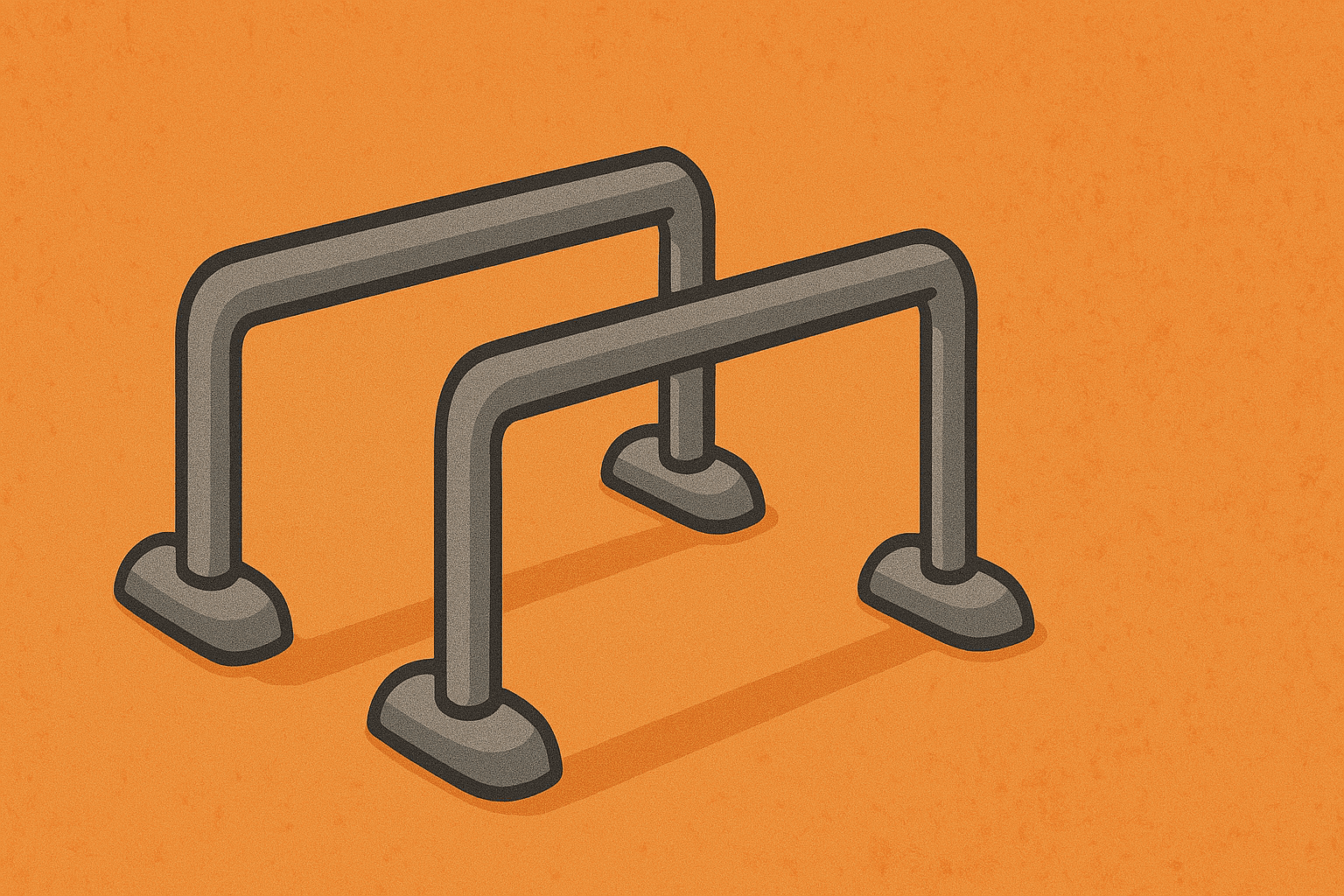
Wood parallettes change pushing training in a way you can feel right away. Instead of bending your wrists hard on the floor, you get a neutral grip, like holding two sturdy handles. That often means less wrist stress, cleaner positions, and longer sessions without that sharp “pinch” feeling in the joint.
They also help when your hands sweat. A good wood handle tends to stay predictably grippy, while some smooth metal bars start to feel slick at the worst time, right when you’re holding a shaky handstand.
You can use parallettes for basics and skills: push-ups (deep range), L-sits, tuck holds, planche leans, handstand holds, and later handstand push-up progressions. They’re also great for training on a cold floor, since wood doesn’t have that “cold doorknob” feel.
Sizing is simpler than it sounds. Low parallettes (around 3 to 5 inches high) keep you close to the floor for safer balance work. Medium to high options (often 10 to 14 inches) give more clearance for deeper reps and leg room on L-sits. Handle thickness matters too. A thicker handle can spread pressure across your palm, but it should still feel natural to wrap your fingers around.
Stability is the quiet dealbreaker. Wide bases and rubber feet keep the bars from creeping across the floor. If you want a deeper buying breakdown, use this guide to Top wooden parallettes for calisthenics.
Wood pull-up bars and wooden grips for stronger holds
When people say “wood pull-up bar,” they can mean two different setups. One is a fully wooden bar. The other, more common option is a metal bar with wooden grips or wooden add-ons where your hands go. From a training feel standpoint, both can work, because your skin only cares about the contact point.
Wood can feel less harsh during higher volume. On long sets of pull-ups or chin-ups, metal sometimes creates hot spots, especially if the bar is thin or aggressively knurled. Wood usually feels smoother without feeling slippery, which helps you hang longer and keep your shoulders set.
This is where the exercise list stays classic but powerful: pull-ups, chin-ups, dead hangs, scapular pulls, slow negatives, and toes-to-bar. If you train for strength skills, those longer hangs also support front lever work and stronger false-grip prep on rings.
Material matters less than mounting. A badly installed bar is dangerous no matter what it’s made of. You want a clear load rating, solid hardware, and a setup that doesn’t shift. If you’re putting wood in a sweaty environment, you also want it sealed so it resists moisture and grime. Unsealed wood can get rough over time, and rough turns into torn skin.
Wood gymnastic rings for smooth transitions and reliable grip
Wooden rings are the standard for a reason. They grip well, feel comfortable in support, and stay usable even when your hands aren’t dry. Rings also move, so any slip feels bigger than it does on a fixed bar. Wood helps you trust the hold.
With rings, you can scale almost everything. Beginners can start with ring rows, incline ring push-ups, and gentle support holds. As you get stronger, you’ll add deeper push-ups, dips (when your shoulders are ready), muscle-up progressions, and controlled transitions. Rings are also sneaky-good for core work, because they demand tension from your hands all the way through your trunk.
For sizing, most calisthenics athletes do well with Olympic style rings. That usually means about a 1.1-inch thickness (close to 28 mm) and about a 7-inch outside diameter (close to 18 cm). Thicker rings (around 1.25 inches) can be fine, but they tax your grip more and can feel harder to control if your hands are smaller.
Strap length matters for home setups. Around 15 feet per strap gives you more options on beams and high anchor points. More important than any spec is the anchor itself. Rings don’t forgive weak mounting. If you want help picking a reliable set, use this guide to Top wooden gymnastic rings for calisthenics.
Wood vs metal or plastic: the real pros and cons you should know
Wood feels great, but it isn’t magic. Think of it like good shoes. The right pair makes training better, but you still need the right size and you still need to take care of them.
The biggest benefit of wood is the feel in your hands. The biggest risk is what happens when wood lives in the wrong conditions, like constant damp air or direct sun and rain. If you train in a covered garage or indoors, wood is usually easy to live with. If your gear sits outside all year, you’ll need to be more picky.
This section will keep it honest so you don’t buy something pretty that turns into a splintery headache.
Advantages: grip, comfort, and a calmer feel on your joints
Wood often feels “locked in” even without chalk. It absorbs a bit of moisture, which helps when your palms sweat. That matters on long support holds on rings, slow negatives on a pull-up setup, or pressing work on parallettes where your hand angle can’t shift.
Comfort is the other big win. Wood tends to be kinder on your skin during high volume. On rings, that can mean fewer pinch points and less friction burn during transitions. On parallettes, it can mean a steadier hand position, which helps you stack your shoulders and keep your elbows locked without constantly re-gripping.
Temperature is underrated too. Metal can get cold fast in winter, and hot in direct sun. Wood stays closer to neutral, which makes outdoor sessions more pleasant and indoor sessions more consistent.
Finish matters. A slightly textured, well-sanded handle usually beats a glossy finish. Glossy looks nice on a shelf, but it can feel slick when you sweat. Good wood gear also looks at home. If your setup is in a living space, wood can feel more like a piece of furniture than a hunk of hardware.
Disadvantages: moisture, splinters, and the need for basic upkeep
Wood has enemies: water, extreme heat, and neglect. If it stays wet, it can swell, crack, or warp. If it bakes in direct sun, finishes can break down faster and the surface can dry out. Neither issue is hard to manage, but you can’t ignore them.
The biggest quality risk is splintering. Cheap builds sometimes skip proper sanding, leave rough edges, or use low-grade pieces that chip. That’s more than annoying. It’s a real safety issue when your full bodyweight is supported by your grip.
Hardware matters too. On parallettes, loose screws or weak joints lead to wobble. On rings, poor straps or rough stitching can chew up your hands and reduce trust. On pull-up setups, the mount matters more than the bar surface. If the anchor is weak, it doesn’t matter how nice the grip feels.
If you plan to train outdoors, you’ll want gear that can handle the environment, or you’ll need to store it inside when you’re done. For a broader look at what holds up outside, use this guide to Best outdoor calisthenics gear.
How to choose safe, long-lasting wood equipment before you buy
Buying wood gear is mostly about avoiding the obvious traps. You’re looking for solid material, clean finishing, and stable design. If those three are handled, wood equipment can last for years and feel better over time as it “breaks in.”
When your equipment arrives, inspect it like you’d inspect a climbing hold. If you wouldn’t trust it above the floor, don’t train hard on it yet. Run your hands along every contact point, check hardware tightness, and test it gently before you commit your full weight to a new setup.
Your floor matters too. A great pair of parallettes can still slide on dusty tile. Rings can still twist if straps aren’t set cleanly. Most injuries happen during setup mistakes, not during strong reps.
What good wood and good finishing look like
In plain terms, hardwoods usually hold up better than softwoods for handles. Hardwoods tend to resist dents and stay smooth longer, which matters when your grip depends on surface quality. You don’t need to memorize wood species to buy well, but you should pay attention to how the surface feels.
Good finishing looks boring, and that’s a compliment. You want smooth sanding, rounded edges, and an even finish that doesn’t feel sticky. If a handle feels sharp, flaky, or overly glossy, treat that as a red flag. Your hands should be able to slide into position without catching, but once you squeeze, it should feel secure.
Check for cracks at joints and ends. On parallettes, look where the handle meets the base. On wooden rings, look for clean seams and consistent thickness. On straps, inspect stitching and make sure there are no sharp edges on buckles that could rub the webbing.
If something feels rough, don’t “push through it.” Light sanding and proper sealing can help, but you shouldn’t have to fix brand-new gear to make it safe.
Stability, load ratings, and setup basics that prevent injuries
Start with load ratings and stability, then worry about style. A strong-looking piece that wobbles is a bad deal. For parallettes, a wider base and non-slip feet matter more than fancy shaping. Put them on a level surface, press down and rock them lightly, and check if one foot lifts.
For pull-up bars, mounting is the whole story. Follow the install instructions, mount into studs or a properly rated frame, and re-check hardware after the first few sessions. The bar shouldn’t shift when you hang and gently move side to side.
For rings, your anchor point needs to be stronger than you think. Use rated anchors, strong beams, or a trustworthy bar. Keep straps flat (not twisted), set both rings to the same height, and leave enough clearance around you. You don’t want your feet or head clipping a wall mid-rep.
A simple safe test routine works every time: start with gentle hangs or supports, add small shifts, then do full sets. That one minute of patience can save you months of shoulder or wrist irritation.
Conclusion
Wood calisthenics equipment makes training feel better when it’s well made and used in the right setup. For most people, the easiest starting path is wooden rings or wooden parallettes, then you add a pull-up solution that fits your space.
Pick one piece, set it up safely, and use it often. Consistency beats collecting gear. When your hands trust the surface, you’ll hold longer, move cleaner, and build strength that carries into every skill you want next.