Trying to pick between calisthenics vs CrossFit can feel like choosing between two different languages of fitness. One is built around bodyweight strength, control, and skill, the other mixes weights, cardio, and gymnastics in workouts that often feel like a test.
You don’t need hype to decide. You need a clear picture of what you’ll do each week, what results tend to come fastest, what costs time and money, and what your joints will tolerate.
This guide keeps it fair. You’ll see where calisthenics and CrossFit truly differ, where they overlap, and how to choose based on your goals, schedule, budget, and injury history.
What you actually do in calisthenics and in CrossFit
Both styles can get you strong and fit, but the day-to-day training feels different.
In calisthenics, you usually train in blocks. You practice a few key movements, rest enough to keep your form crisp, then repeat. Your sessions often look “quiet” from the outside, but they’re focused. You might spend 10 minutes just improving one piece of a handstand line, then do strength work like pull-ups and dips.
In CrossFit, training is usually built around a class. You warm up together, work on a lift or skill, then hit a workout that has a clear finish line. Time, rounds, reps, and pacing matter a lot. You’re not only trying to do movements well, you’re also trying to do them under fatigue.
Both can be scaled. In calisthenics you scale by changing leverage, range of motion, or assistance. In CrossFit you scale by adjusting load, reps, movement choice, or intensity. The big difference is the structure: calisthenics is often self-paced practice, CrossFit is often coached group training with a clock running.
Calisthenics basics: bodyweight strength, control, and skills
A typical calisthenics week usually revolves around push, pull, legs, and core, with skill practice layered in. You might train 3 to 5 days, depending on recovery and how intense your sessions are.
Most strength work is built on progressions. If you can’t do a strict pull-up yet, you start with rows, negatives, band assistance, or shorter ranges. If you can do pull-ups easily, you add reps, slow tempo, harder variations (like archer pull-ups), or extra load later on.
Skill work is the “craft” side of calisthenics. Handstands, levers, planche progressions, and muscle-up technique reward patience. You rest longer between skill sets because quality matters more than sweat.
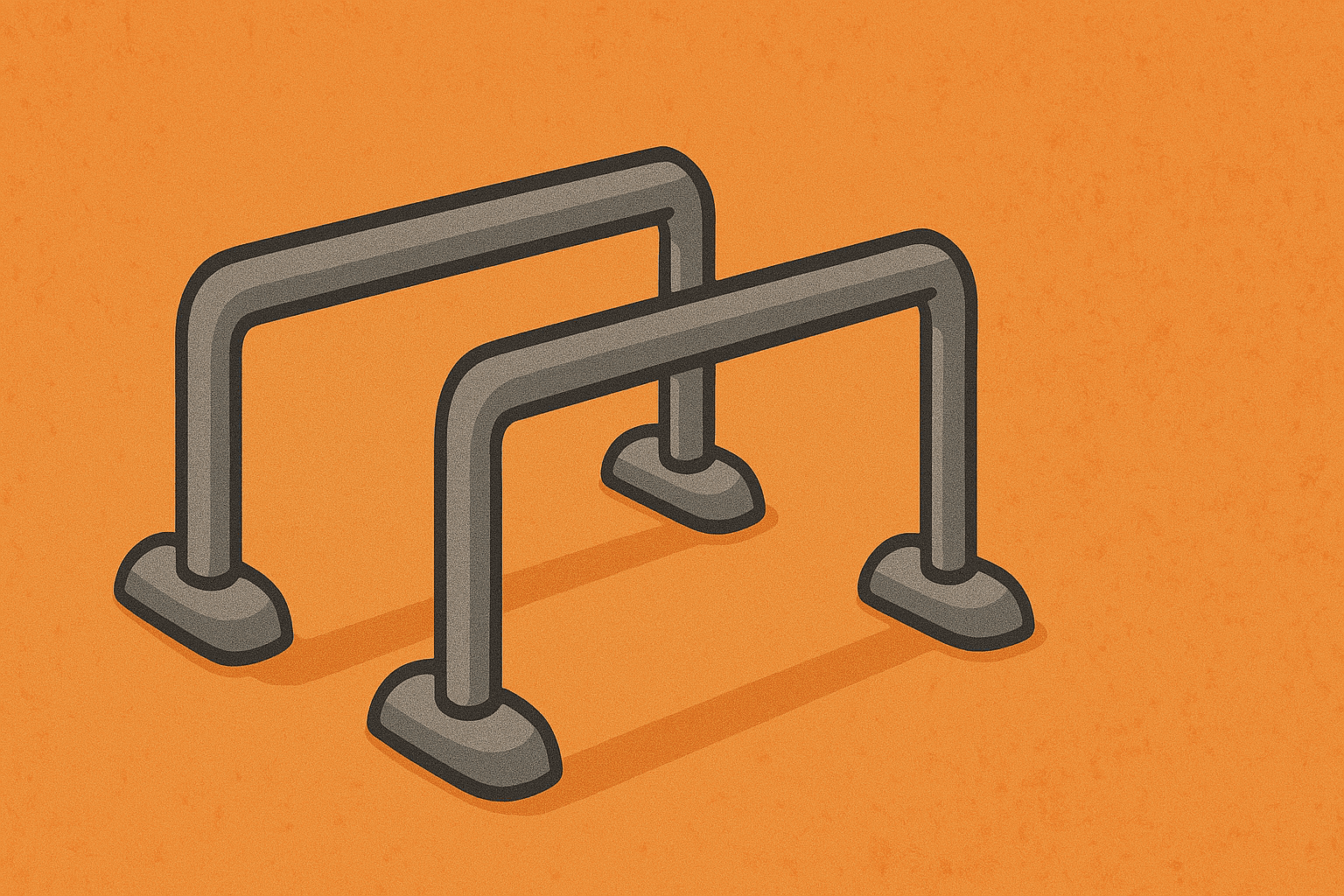
Simple gear can help a lot, even if calisthenics is mostly bodyweight. A pull-up bar, rings, and parallettes give you more exercise options and cleaner progressions. If you want ideas for setup and tools, you can use this Best parallettes for calisthenics guide to see what different styles are best for.
CrossFit basics: varied workouts, barbell lifts, and conditioning
A typical CrossFit class often follows a steady rhythm. You warm up, then spend time on a lift or skill, then do a conditioning workout that’s written on the board. The session usually fits into about an hour, which is part of the appeal.
The movements can range from basic to technical. You’ll likely see squats, deadlifts, presses, kettlebell swings, lunges, burpees, and pull-ups. Many gyms also use rowing, biking, and running to drive conditioning.
Intensity is a feature, not a side effect. A workout might ask you to keep moving with short breaks, or to finish “for time,” or to complete as many rounds as you can in a set window. That pressure can be motivating, but it also means your form is being tested when you’re tired.
Coaching is a big part of the value here. You’re not just doing random exercises, you’re learning lifts and pacing in a structured environment. When it’s done well, you gain skill, strength, and conditioning at the same time. When it’s rushed, you can feel beat up fast.
Big differences that matter most for results
This is where calisthenics vs CrossFit becomes less about what looks cool, and more about what actually moves the needle for you.
Calisthenics tends to reward consistency and clean reps. Your progress is often obvious in video: better lines, stronger holds, smoother transitions, more strict reps. You can train hard without always feeling crushed, because you can keep volume high while controlling intensity.
CrossFit tends to reward intensity and output. Your progress shows up in numbers and benchmarks: faster times, heavier lifts, more reps in the same window. That feedback loop can be addictive in a good way, but it also asks more from recovery.
You also track progress differently. Calisthenics often uses progressions and rep quality as the scoreboard. CrossFit often uses load, time, and rounds. Neither approach is “better,” but one might fit your brain more.
Strength and muscle: steady progressions vs heavier loading
Calisthenics builds strength through leverage, range of motion, and tension. A push-up can turn into a feet-elevated push-up, then a ring push-up, then a dip, then a deeper dip, then a weighted dip. That path can build impressive upper-body strength without needing a full weight room.
CrossFit usually pushes strength with external load sooner. Barbell work makes it straightforward: add 5 lb, get stronger, repeat. That direct loading can be great if your main goal is getting strong on classic lifts.
For muscle, both can work. You can build a lot of size with calisthenics if you train close to failure, get enough weekly volume, and eat to support it. CrossFit can also build muscle, especially in newer lifters, but high conditioning can make recovery and calorie intake harder.
If you like bodyweight training but want clear overload, it helps to add weight in a controlled way. This Best weighted calisthenics gear guide gives you a simple idea of what people use when pull-ups and dips stop feeling heavy.
Cardio and conditioning: how hard, how often, and why it feels different
CrossFit conditioning often hits like a thunderstorm. Short bursts, high effort, and a lot of full-body fatigue. You’re not just breathing hard, your grip, legs, and midline all get taxed at once. If you want to feel “in shape” fast, this style can deliver quickly.
Calisthenics conditioning depends on how you program. If you spend most of your session practicing skills with long rest, you might not get much cardio benefit. If you run circuits of push-ups, pull-ups, squats, and core with short rest, you can get brutally fit without equipment.
The difference is choice. In CrossFit, conditioning is often the main event. In calisthenics, conditioning is optional, and many people treat it like a separate goal from skills and strength.
Skills and movement quality: control, mobility, and technique demands
Calisthenics skills demand control and patience. Handstands teach you to stack your joints and breathe while upside down. Levers teach you full-body tension. Even basic movements like dips and pull-ups get judged by range of motion and clean reps if you train seriously.
CrossFit skills often come from technical lifting and gymnastics done under fatigue. Olympic-style lifts require timing and coordination. Gymnastics movements like kipping pull-ups or handstand work can show up when you’re already gassed.
In both styles, rushing progress is where problems start. If you chase harder variations before you own the basics, you can end up with cranky shoulders, elbows, wrists, hips, or low back. Good coaching helps in CrossFit. In calisthenics, filming your reps and sticking to progressions helps just as much.
Equipment, cost, and where you can train
Calisthenics can be extremely simple. You can train at home with floor space, or outdoors on bars. A few tools make it easier, but you’re not paying for a room full of machines. That makes it a strong option if your budget is tight or your schedule changes week to week.
CrossFit usually costs more because you’re paying for coaching, a facility, and equipment. You also have to commute, follow class times, and work within the day’s program. For many people, that structure is worth it because it removes decision fatigue.
If you like training outside or you want a weather-proof setup that lasts, it helps to know what gear holds up. This Best outdoor calisthenics equipment guide can help you think through an outdoor-friendly setup without overbuying.
Where calisthenics and CrossFit overlap more than you think
From the outside, calisthenics can look like slow skill practice, and CrossFit can look like pure sweat. In real life, they share more DNA than people admit.
Both can build serious athleticism if you train the basics hard. Both can humble you quickly. Both can improve your confidence because you’re solving physical problems, not just burning calories.
They also both reward showing up. You don’t need perfect programming to improve. You need a plan you’ll repeat, and a way to make it slightly harder over time.
Both build real-world strength using big movement patterns
Even though the exercises look different, you’ll still train the same core patterns.
You push, whether it’s push-ups and dips, or presses and push-ups in workouts. You pull, whether it’s strict pull-ups and rows, or pull-ups mixed into conditioning. You squat and hinge, whether it’s bodyweight squats and lunges, or barbell squats and deadlifts.
You also learn bracing, which is the underrated skill that protects your back and makes every rep stronger. In calisthenics, bracing shows up in hollow holds, L-sits, and tight pull-ups. In CrossFit, bracing shows up in squats, deadlifts, and anything heavy for reps.
If your training has these patterns and you progress them, you’ll get stronger in a way that carries over to daily life.
Both can be scaled for beginners and still challenge advanced athletes
If you’re new, scaling is how you earn results without wrecking your joints.
In calisthenics, you might start with incline push-ups, band-assisted pull-ups, ring rows, and controlled negatives. You can also reduce range of motion while you build strength, then increase it over time.
In CrossFit, you might use lighter weights, simpler movements, fewer reps, or longer rest. A good coach will push you, but also protect you from trying to match advanced athletes on day one.
Smart scaling isn’t “cheating.” It’s how you build capacity. The goal is to leave each session feeling trained, not trashed, so you can come back and do it again.
How to choose the right one for your goals and lifestyle
The best choice is the one you can sustain. Your program doesn’t need to be perfect, it needs to fit your life.
Start with your main goal. If you want visible skills and body control, calisthenics has a clear edge. If you want a mix of strength and conditioning with coaching and a plan written for you, CrossFit is hard to beat.
Then look at your schedule. If you can’t reliably make class times, calisthenics is easier to keep consistent. If you struggle to train alone, a group class can be the difference between “I’ll go tomorrow” and actually going today.
Also think about recovery. If you’re already stressed, sleeping poorly, or working long hours, intense workouts done for time can hit you harder than you expect. That doesn’t mean you can’t do CrossFit, it means you may need more rest days and better scaling.
If you have old injuries, be honest about what flares them up. Wrists and elbows can get irritated in calisthenics if you rush volume or skills. Shoulders and low back can get irritated in CrossFit if technique breaks down under fatigue. In both cases, slower progress usually wins.
A simple test that works: try each style for 2 to 4 weeks. Track three things after every session, your energy later that day, your soreness 24 hours later, and your motivation to train again.
Choose calisthenics if you want skills, freedom, and simple training you can do anywhere
Calisthenics fits you well if you enjoy practice. You’ll repeat movements, polish technique, and take small wins seriously. That could mean holding a clean handstand for 5 more seconds, or finally getting your first strict pull-up.
You’ll also like calisthenics if you want training freedom. You can train at home, outdoors, or while traveling, and your workouts don’t depend on a full gym. You can keep it minimal, or build a small setup over time.
A few accessories can make training smoother and easier on your joints, especially if you’re working on bar and ring volume. This Top calisthenics accessories roundup is a useful starting point if you want to support grip, comfort, and warm-ups without buying random stuff.
Choose CrossFit if you want coaching, variety, and workouts with a group
CrossFit fits you well if you like structure. You show up, you get coached, you do the work, and you go home. You don’t have to design a plan or wonder if you’re doing enough.
You’ll also like it if variety keeps you interested. The mix of lifting, conditioning, and gymnastics can make each week feel fresh. You can build strength and stamina at the same time, which is a big draw if you get bored doing only one thing.
Group training also changes your effort. Friendly pressure can pull more out of you than solo training ever will. The key is finding a gym that coaches well and respects scaling, so intensity doesn’t turn into sloppy reps.
Conclusion
When you compare calisthenics vs CrossFit, you’re mostly choosing between skill-focused bodyweight training and mixed workouts that combine lifting, conditioning, and gymnastics under a clock. Both can build strength, muscle, fitness, and confidence, as long as you train with patience and recover well.
Give yourself a short trial, 2 to 4 weeks for each, then judge by results you can feel: better movement, steady progress, and a body that doesn’t ache all the time. You don’t need a perfect answer, you need a sustainable one.