What is calisthenics? Calisthenics is a form of exercise that uses your own body weight to build strength, flexibility, and control. You don’t need special equipment or a gym membership to get started, which is a big reason more people are giving it a try.
With social media showing off calisthenics routines everywhere, its popularity has exploded. People like how it makes fitness simple, affordable, and easy to fit into a busy schedule. This post will break down why calisthenics works, what makes it stand out, and how you can use it to get stronger anywhere, anytime.
Defining Calisthenics
Calisthenics is all about harnessing the power of your own body. Unlike exercises that rely on dumbbells or fancy machines, calisthenics keeps things simple but effective. It’s the art of using your body weight as resistance. You can train almost anywhere: at home, in the park, or even in your living room. This method lets people build more than just muscle. It also sharpens balance, boosts coordination, and sets a strong foundation for every type of movement.
Origins and History of Calisthenics
Calisthenics reaches back thousands of years. Ancient cultures like the Greeks and Romans believed that a strong body builds a sharp mind and spirit. Greek warriors and athletes trained with push-ups, squats, and pull-ups, laying the groundwork for today’s bodyweight exercises. Even military training in early societies focused on these natural movements.
In the 1800s, calisthenics made its way into school curriculums and military programs worldwide. At that time, group exercise was seen as a way to build teamwork and discipline, not just strength. By the early 20th century, gym classes in schools often centered around calisthenic routines.
Fast forward to today, calisthenics is back in the spotlight. Thanks to fitness communities online, viral videos, and street workout parks, more people are recognizing its practical benefits. It has evolved, borrowing from many cultures and incorporating new styles, but the core idea remains the same. Train using what you already have: your own body.
Key Principles of Calisthenics
The principles behind calisthenics are what set it apart from other fitness styles like weightlifting or gym-based programs. Here’s what guides every movement in calisthenics:
- Bodyweight Foundation: Every exercise, from push-ups to handstands, uses your own body for resistance. This makes the workouts easily adjustable for beginners or advanced athletes.
- Functional Movements: Movements mimic real-life actions like lifting, jumping, or climbing. This builds a strong, balanced body that’s useful in everyday life.
- Natural Physical Development: Calisthenics encourages a full range of motion and natural joint movement. Rather than isolating single muscles with machines, you work muscle groups together, unlocking better control and mobility.
- Minimal Equipment: All you need is your body, some space, and maybe a pull-up bar. No expensive gym memberships required.
- Progression Over Time: You can start with basics like squats and push-ups and progress to advanced moves, such as muscle-ups or planches, as you gain strength and skill.
Compared to lifting weights in a gym, calisthenics puts less stress on joints and tends to have a lower risk of injury when done with proper form. It’s simple, scalable, and designed to fit around everyday life. With consistency, it opens a path to build power, flexibility, and total-body control. One movement at a time.
Benefits of Calisthenics
Calisthenics does more than just help you knock out a few push-ups. It’s a way to build real-world strength, stay flexible, and protect your body as you move through life. No matter your age or fitness level, the perks go way beyond what you see on social media. Here’s how calisthenics stacks up when it comes to real, everyday benefits.
Physical Health Benefits
Calisthenics works every part of your body, not just your arms or chest. These movements help you build a foundation that supports all the things you want to do, whether that’s lifting groceries, playing with your kids, or crushing a weekend hike.
- Strength: Exercises like push-ups, pull-ups, and squats use your body weight to build lean muscle. Over time, you’ll notice greater muscle tone and strength across your whole body.
- Endurance: Repeating bodyweight exercises builds stamina, both in your muscles and your heart. You’ll find yourself less tired whether you’re climbing stairs or going for a jog.
- Flexibility and Mobility: Calisthenics routines include moves that stretch and strengthen. This keeps your joints loose, your muscles long, and your body moving the way it should.
- Injury Prevention: Because you’re working multiple muscle groups together, your body learns to stabilize itself. This lowers your risk for strains, sprains, and other common workout injuries.
Calisthenics isn’t just about looking strong. It helps you feel strong and stay active for life.
Accessibility and Convenience
Staying active shouldn’t feel like a chore or cost an arm and a leg. Calisthenics keeps fitness simple and within reach for everyone.
- Equipment-Free: All you need is a bit of space and your own body. No fancy machines or expensive weights required.
- Cost-Effective: You can get a full-body workout in your living room, backyard, or even a park. That means no gym fees, no commute, and fewer excuses.
- Any Fitness Level: Calisthenics meets you where you are. Beginners can start with wall push-ups and knee squats. Those who are experienced can tackle one-arm push-ups, handstands, or advanced holds.
- Fits Any Schedule: You can slot in a session before work, during lunch, or whenever you have a few spare minutes. No need to block out hours for a gym trip.
If you want fitness that adapts to your life, calisthenics is about as flexible as it gets.
Mental and Lifestyle Advantages
Exercise isn’t just about building muscle. Calisthenics supports your mind and everyday life, too.
- Better Mental Health: Physical movement helps manage stress, improve mood, and boost your energy. You’ll notice a lighter mind after you move your body.
- Staying Motivated: Calisthenics offers endless room for progress. Nailing your first push-up on your toes or mastering a pull-up gives real, rewarding wins that keep you coming back for more.
- Sustainability: Because you don’t need much equipment or time, calisthenics is easy to stick with all year long. That means it’s not just another fitness phase—it’s something you can keep doing for life.
When a workout leaves you feeling both strong and clear-headed, it’s easier to make movement a daily habit. Calisthenics checks every box, building not just a better body, but a better way of living.
Core Calisthenics Exercises
Every calisthenics journey starts with learning a handful of pure bodyweight moves. These essential exercises build strength in your arms, back, chest, core, and legs. With just your body, you can train nearly every muscle group through different movement patterns. Here’s what you need to know about the core exercises and the next-level skills that make calisthenics both challenging and rewarding.
Push, Pull, and Core Movements
Calisthenics training uses basic push, pull, and core moves as its building blocks. These exercises get your entire body working together. Each one targets several muscles at once, helping you grow stronger and more stable over time.
Some of the most important exercises include:
- Push-Ups: Classic push-ups work the chest, shoulders, and triceps. They come in many varieties, like:
- Incline push-ups (hands on a bench or wall) for beginners
- Standard push-ups for most
- Decline or diamond push-ups for more challenge
Push-ups also fire up your core and back, making them a full-body favorite.
- Pull-Ups: Hanging from a bar and pulling your chin over is tough but effective. Pull-ups target your back, biceps, and grip. Can’t do a full pull-up yet? Try negative reps (lowering slowly) or band-assisted pull-ups to build up.
- Dips: Dips hit your triceps, shoulders, and chest. You can do them between parallel bars or even off a sturdy chair. For less intensity, keep your feet on the ground.
- Planks: The plank is a core crusher. It forces your abs, lower back, and glutes to hold tight, teaching your body to stay solid. Progress by increasing hold times, shifting to side planks, or adding shoulder taps.
- Squats: Your lower body powerhouse. Bodyweight squats strengthen quads, hamstrings, glutes, and hips. Start with regular squats, then try jump squats or one-leg (pistol) squats as you get stronger.
Scalable Progressions:
Every move above can be tweaked for any level. Beginners often start with assisted movements or less range of motion. As strength grows, you can:
- Add reps or sets
- Slow down the pace for better muscle control
- Advance to single-arm or single-leg versions
- Perform explosive or plyometric variations (like clapping push-ups)
This natural progression keeps things interesting and makes sure you’re always working safely at your own pace.
Advanced Calisthenics Skills
Once you’ve nailed the basics, calisthenics opens the door to skills that challenge your mind and muscles. These goals push you to new levels of strength, balance, and control.
Popular advanced moves include:
- Muscle-Ups: A step above the pull-up, muscle-ups combine a pull-up and dip in one motion so you move from hanging under a bar to pressing above it. They hit your upper body like nothing else.
- Handstands: Balancing upside down tests your shoulders, arms, and core. Start against a wall, then work toward freestanding handstands as your confidence grows.
- Levers (Front and Back): Hanging from a bar, you hold your body straight out in front (front lever) or behind (back lever). These are extreme core and back exercises that demand serious body control.
These skills take time to master, but they add excitement to your workouts and show how much you’ve gained from the basics. Mastering them isn’t just about flexing. It’s proof of total-body strength and balance built step by step.
With a mix of push, pull, core, and advanced moves, calisthenics gives you everything you need to train smart, get strong, and keep progressing.
How to Get Started with Calisthenics
Starting calisthenics is less complicated than you might think. All you need is a small space, some motivation, and a plan you can stick to. Here’s how to kick things off with confidence and avoid common roadblocks along the way.
Building a Beginner Routine: Sample Template, Warm-Ups, and What to Expect
Setting up your first calisthenics routine doesn’t have to be a guessing game. Here’s what helps most beginners stick with it and see steady gains:
Start with a Warm-Up:
A good warm-up gets your blood flowing and wakes up your muscles. Try the following for 5-7 minutes:
- Jumping jacks or high knees
- Arm circles and shoulder rolls
- Bodyweight lunges
- Gentle torso twists
- Wrist and ankle rolls
Beginner Routine Template:
Keeping it simple will set you up for wins in the first few months. Repeat this routine three times a week:
- Push-Ups – 3 sets of 5-8 reps
(If regular push-ups are too hard, start on your knees or with hands on a bench.) - Bodyweight Squats – 3 sets of 10 reps
- Planks – 3 sets of 20-30 seconds
- Pull-Ups or Rows – 2-3 sets of 2-5 reps
(Use an assisted band or do inverted rows under a sturdy table if no pull-up bar is available.) - Chair Dips – 2 sets of 5-8 reps
Rest about 60 seconds between sets. Track your reps so you can see your progress over time.
What to Expect in the First Few Months:
- Most will struggle with pull-ups at first. That’s normal. Do easier versions or negatives (lower slowly) and you’ll build up within weeks.
- The first few sessions may leave your muscles sore. That’s your body getting used to new movements.
- Progress comes with patience. Celebrate small wins, like one extra rep, a longer plank, or your first unassisted push-up.
Focus on consistency, not perfection. Even short, simple workouts add up fast when you do them regularly.
Common Mistakes and How to Avoid Them
Nearly every beginner runs into a few bumps. Knowing them early can save you pain, frustration, or injury.
Frequent Pitfalls:
- Trying to do too much too soon (overtraining)
- Using poor form just to get more reps
- Skipping warm-ups and cool-downs
- Comparing your progress to others
- Setting unrealistic goals
- Giving up too soon when progress stalls
How to Stay Healthy and Motivated:
- Prioritize Form: Focus on quality, not just the number of reps. Proper form keeps your joints safe and muscles working as they should.
- Pace Yourself: Start with the basics. Only increase reps or difficulty when you feel ready and the exercises feel easier. Avoid daily intense workouts when your body is still adjusting.
- Rest and Recover: Your muscles need rest to grow. Leave at least one day between hard sessions focused on the same muscle groups.
- Track Your Progress: Write down reps, sets, and which exercises you did. Seeing visual progress, even slow, keeps motivation up.
- Warm Up and Cool Down: Never skip these. Warming up prevents injury. Cooling down (a few minutes of gentle stretching) helps with soreness.
- Set Realistic Goals: Instead of aiming for a one-arm push-up next month, target adding two extra reps, holding a plank 10 seconds longer, or nailing your first pull-up.
- Find Community: Whether online or in person, sharing progress and setbacks helps you stay committed and learn from others.
Stay patient and keep showing up. Progress isn’t always quick, but it’s always possible.
Calisthenics Equipment: What You Need (and Don’t Need) to Train
You don’t need a gym full of weights to get strong with calisthenics, but some helpful gear can make your training smoother, safer, and even more fun. Most people start with nothing but open floor space. As you get stronger or want to try new moves, a few pieces of equipment can help you train harder and explore new exercises. Let’s go over what’s helpful, what you can skip, and how a little gear can take your results to the next level.
Portable Pull-Up Bars
A pull-up bar is the single best investment for calisthenics. You can install one in a doorway at home or take a portable option to the park. Pull-ups, chin-ups, and hanging core work all build upper body and grip strength fast. If you’re new, resistance bands can help you train easier pull-up variations until you get stronger.
- Easy to set up at home or outside
- Lets you practice core moves like leg raises
- Opens up dozens of upper-body progressions
For more options, check out our guide to the best calisthenics pull-up bars.
Parallel Bars and Dip Stations
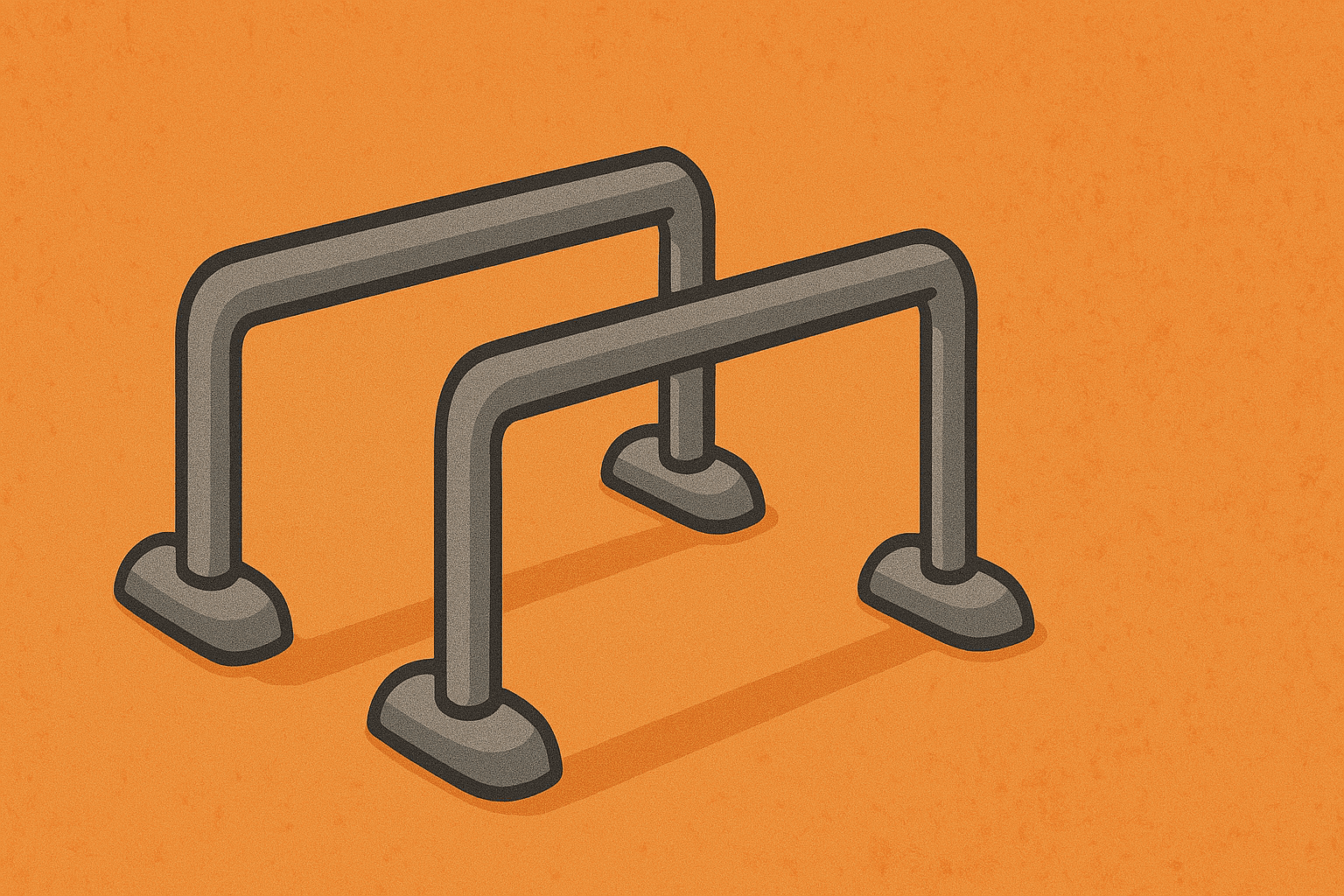
Parallel bars (sometimes called dip bars or parallettes) make bodyweight dips possible even if you don’t have a park nearby. These sturdy bars also let you train L-sits, planche progressions, and deep push-up variations. Portable sets store easily at home and are great for full-body workouts.
- Support dips, L-sits, planche drills, deep push-ups, and more
- Sturdy enough for explosive moves or static holds
- Perfect for small spaces or outdoor training
Want the best options for home and travel? See our list of top-rated dip and parallel bars for calisthenics.
Gymnastic Rings
Rings turn any park or pull-up bar into a mini gym. They add an extra balance challenge to classic moves, so your muscles work harder with every rep. Start simple with ring rows or ring dips, then work up to muscle-ups and advanced holds. They pack small, so you can use them anywhere.
- Add intensity to push-ups, dips, and rows
- Forced stability grows shoulder and core strength
- Adjustable to different heights and exercises
Ready to try ring training? Check out our picks for best calisthenics rings.
Resistance Bands
Resistance bands are a budget-friendly tool that help with pull-ups and other tough moves. They take off some of your bodyweight so you can practice better form and build strength over time. Bands are also great for adding resistance to squats or rows, stretching, and warming up.
- Support pull-ups as you build strength
- Add resistance to common moves
- Lightweight and easy to store or travel with
For more details on which bands to get, see our complete guide to calisthenics resistance bands.
Minimal Gear, Maximum Results
Start with the basics: your body and a safe space to move. As you grow more confident, simple equipment lets you expand your workouts, add variety, and break through fitness plateaus. The right gear isn’t about adding clutter. It’s about unlocking freedom to train anywhere, anytime, and keep your workouts fresh.
If you catch the calisthenics bug, these tools can turn any room or patch of grass into your own gym.
Conclusion
Calisthenics strips fitness down to what matters most—your body, your movement, and your own progress. It’s simple to start, easy to adapt, and fits into even the busiest life. You can build muscle, improve balance, and boost your mood without spending much or relying on a gym.
If you’re looking for a healthy, flexible way to get stronger, calisthenics checks all the right boxes. Give it a shot and see how far your body can take you with nothing but practice and consistency. Thanks for reading. Share your own calisthenics story or questions below, and let’s support each other on the journey!