Skin the cat looks like a party trick, but it’s one of the most useful calisthenics skills for building shoulder mobility, core control, and straight arm strength. In this guide, I’ll show you how to train skin the cat safely and efficiently, even if you’re not a gymnast and your shoulders feel tight. You’ll get a clear technique breakdown, beginner to intermediate progressions, the most common mistakes that make it feel sketchy, and a simple weekly plan you can actually follow. If you want a move that carries over to back lever work and healthier shoulders, this is worth the time.
What “skin the cat” is and why it’s worth training
The movement in plain English
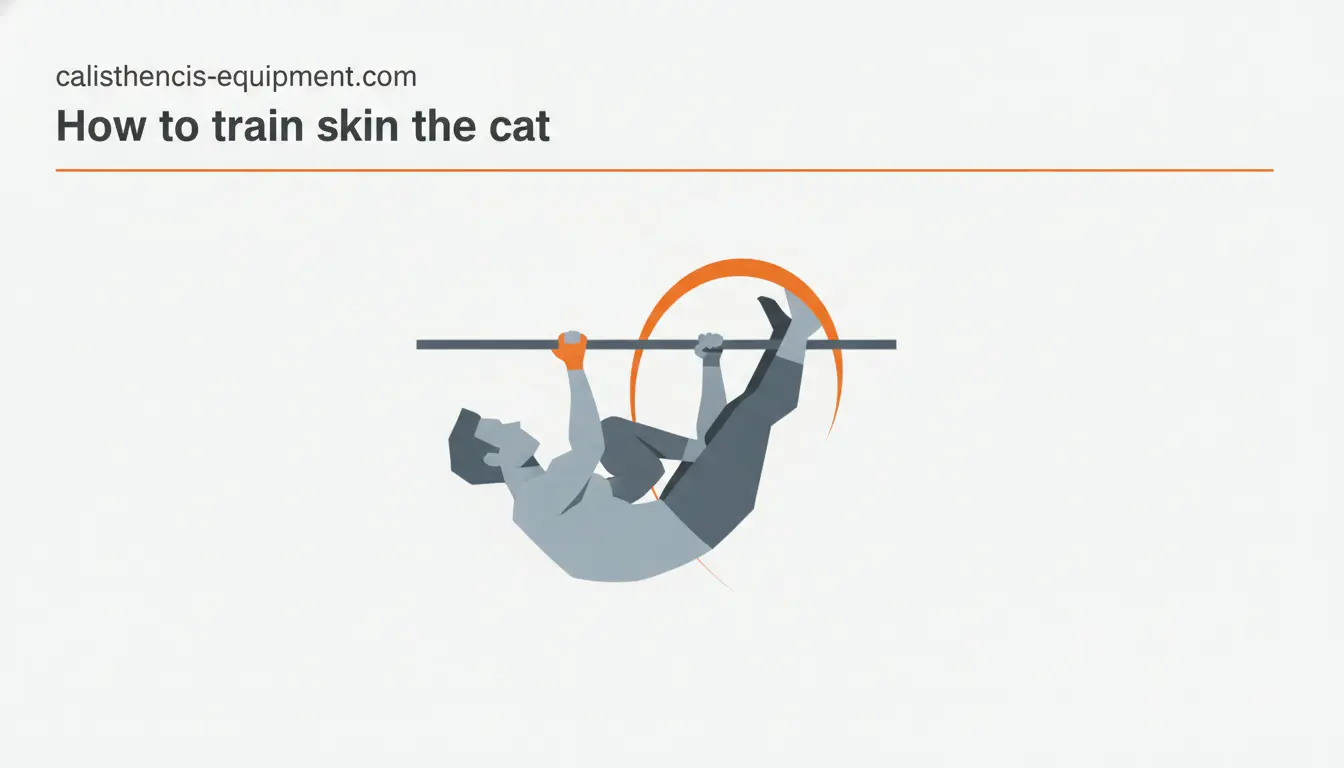
Skin the cat is a controlled rotation from a dead hang into an inverted hang where your shoulders open up behind you. Most people end up in a position that looks like a German hang, then reverse the motion back to hanging. On rings it feels smoother because your hands can rotate naturally; on a bar it demands more wrist and shoulder comfort.
I like skin the cat because it teaches you to own a range most athletes never train. If you only do pull ups and dips, you get strong in a narrow window. Skin the cat expands that window, which usually means better tolerance when you start training skills like back lever.
Main benefits (without the hype)
- Shoulder extension strength in a long range you rarely get elsewhere
- Core tension and body control while rotating under load
- Better preparation for German hang and back lever progressions
- A very efficient upper body warm up when kept easy and controlled
Safety first: who should scale it and what “pain” is not allowed
When to pause or regress
Skin the cat can be shoulder friendly when trained progressively, but it can also punish you if you drop into the bottom position without control. If you feel sharp pain in the front of the shoulder, pinching, numbness, or a “slipping” sensation, stop and regress. A deep stretch sensation is normal; pain is not.
If you’re new to calisthenics, I’d also avoid forcing full range on day one. The goal is to build control and confidence, not to reach the deepest German hang possible.
Prerequisites I personally consider non negotiable
- Comfortable dead hang for 20 to 30 seconds
- Solid scapular control: you can do 8 to 10 scap pull ups
- At least a few clean pull ups or strong assisted pull ups
- Shoulders feel warm and mobile after a basic warm up
Equipment: rings vs pull up bar (and my honest pick)
Rings are usually the better learning tool
If you can choose, learn skin the cat on gymnastic rings. Rings rotate, so your elbows and wrists can find a comfortable angle while your shoulders open. You can also set them low and lightly assist with your feet, which makes progress faster and safer.
For a practical overview of setups and options, see best rings for calisthenics.
Bar training is fine, but expect less forgiveness
A pull up bar works, but you’ll feel the bottom position more strongly, especially with a fixed overhand grip. If your wrists hate it, switch to rings or use a neutral grip station. Also make sure the bar is high enough that your head does not touch the floor when you rotate.
Two subtle gear tips that genuinely help
If grip is the limiting factor, a small amount of chalk can be enough. If you want a clean, consistent option, Gornation Liquid Chalk is a solid choice because it dries fast and reduces slipping without making a mess.
If you train outside or on rough bars and your hands tear easily, Gornation grips can make higher volume practice more realistic. I wouldn’t use gloves as a shortcut for weak grip, but I do think hand protection can help you stay consistent. If you’re comparing options, this overview can help: best calisthenics gloves.
How to do skin the cat with good form
Step by step technique cues
- Start in an active hang: arms straight, ribs down, glutes lightly tight. Think shoulders down and slightly back, not shrugged.
- Tuck the knees toward your chest. Keep the motion smooth, not a wild swing.
- Roll back through your arms: let your hips travel up as your knees pass between your arms. Keep your elbows straight.
- Enter the bottom position under control: your body rotates until your legs point down and your shoulders open. Stop where you still feel in control.
- Reverse the same path: pull your hips back up, keep the tuck, then return to a stable hang.
The biggest technical difference between a “good rep” and a risky rep is speed. Slow reps build strength and mobility. Fast reps just dump your bodyweight into your shoulders.
Breathing and tempo
Use calm breathing and a consistent tempo. I like a 2 to 3 second descent, a brief pause in the bottom position if it’s comfortable, then a 2 to 3 second return. If you can’t control the descent, you’re not ready for that depth yet.
Beginner to intermediate progressions (the fastest route that still respects your shoulders)
Level 1: build the hang and tuck strength
If skin the cat feels impossible, it’s usually because the tuck is weak or you can’t keep your shoulders active. Train these first.
- Active hang holds: 3 sets of 15 to 30 seconds
- Knee raises (strict, no swing): 3 sets of 6 to 10
- Tuck holds on rings or bar: 3 sets of 10 to 20 seconds
Level 2: assisted skin the cat on low rings
This is my favorite learning step. Set rings low enough that your toes can touch the floor or a box. You still rotate, but you can unload the shoulders whenever you need. Aim to keep your arms straight and your movement quiet.
Goal: 3 sets of 3 to 5 controlled reps with light foot assistance. Once the assistance becomes “optional,” you’re close.
Level 3: tuck skin the cat (unassisted)
Tuck skin the cat is the real bridge to the full version. Keeping knees tucked shortens your body and reduces torque on the shoulders. Don’t rush to straight legs. In my experience, people who skip this step either stall or irritate a shoulder.
Goal: 3 to 5 sets of 2 to 5 reps with a smooth descent and return.
Level 4: full skin the cat (straighter legs, more range)
Only straighten the legs if you can keep the same control you had in the tuck. Straight legs increase leverage a lot. A good compromise is a “half tuck” where knees are slightly bent but you keep your body longer than the tuck.
- Start with 2 to 4 reps per set
- Stop the bottom position slightly higher than your max stretch at first
- Add range gradually over weeks, not in one session
Common mistakes that make skin the cat feel scary
Bending the elbows to “muscle through”
Skin the cat is a straight arm skill. When you bend your elbows, you change the load and usually end up yanking into the bottom position. If you can’t keep arms straight, regress to assisted reps.
Dropping too deep too soon
The bottom position is where progress happens, but also where people get reckless. I’d rather see you do a shallow, controlled range than chase the deepest German hang you can survive. Earn depth by owning the return.
Using momentum instead of control
Swinging feels like it helps, until it doesn’t. Momentum makes the bottom position unpredictable and increases stress on the shoulders. Start from a dead stop, tuck smoothly, and keep your body tight.
How to program skin the cat into your week
Simple plan for beginners and intermediates
Two to three sessions per week is enough. More is not better if your shoulders stay sore for days. Treat it like skill practice, not like a burnout finisher.
- Warm up (5 to 8 minutes): shoulder circles, scap pull ups, easy hangs
- Skill work (10 minutes): 3 to 5 sets of your current progression
- Accessory (optional): rows or pull ups, plus light core work
If you want your pulling base to improve alongside this skill, use clean pull ups as a staple. This guide is a good refresher on form: how to do a pull up with perfect form.
Rep and hold targets that usually work
- For reps: 3 to 5 sets of 2 to 5 clean reps
- For bottom position comfort: 2 to 4 sets of 10 to 20 second German hang holds, only in a pain free range
- Rest: 60 to 120 seconds between sets
Carryover: what skin the cat improves and what it doesn’t
Great carryover to back lever prep
If your long term goal is back lever, skin the cat is one of the most direct stepping stones because it strengthens your shoulders in extension and teaches you to stay tight with straight arms. It won’t magically give you a back lever, but it makes the transition less intimidating.
Not a replacement for basic strength
Skin the cat won’t replace pull ups, rows, or dips. Think of it as a skill that plugs a mobility and straight arm strength gap. In practice, the best results come when you keep training the basics and use skin the cat as focused technique work.
Veelgestelde vragen
How to train skin the cat if I can’t do a full pull up yet?
You can still train it, but start with low rings and assistance. Focus on active hangs, strict knee raises, and assisted tuck rotations with your feet on the floor or a box. Keep every rep slow. As your pulling strength improves, reduce the assistance until you can do tuck skin the cat unassisted.
Is skin the cat bad for your shoulders?
It can be, if you drop into the bottom position or force range you don’t control. Trained progressively, it’s often the opposite: it builds tolerance in shoulder extension. Stay in a pain free range, keep arms straight, and prioritize a controlled return. Sharp pain or pinching is a clear signal to regress.
Should I learn skin the cat on rings or on a pull up bar?
Most people learn faster on rings because the handles rotate and the height is adjustable, so you can assist with your feet. A pull up bar works too, but it demands more wrist comfort and gives less freedom to find your best shoulder position. If you’re unsure, start on rings.
How many reps and sets should I do to improve skin the cat?
For skill progress, 3 to 5 sets of 2 to 5 controlled reps is plenty, two to three times per week. If you’re also doing German hang holds, keep them short and comfortable, like 10 to 20 seconds. Quality beats volume. If your shoulders stay achy, do less, not more.
What’s the difference between German hang and skin the cat?
German hang is the bottom position, usually held as a stretch or strength hold. Skin the cat is the full rotation into and out of that position. If you can’t control the rotation yet, train assisted skin the cat plus short German hang holds. Owning the return is the key step.
If you want to know how to train skin the cat without beating up your shoulders, keep it simple: use rings if you can, move slowly, and earn range over time. Start with active hangs and tuck control, progress through assisted reps, then build solid tuck skin the cat before you chase straight legs. In my experience, this skill rewards patience more than almost anything else in calisthenics. Do a little, do it clean, and your shoulders and pulling skills will thank you.