Getting stuck at the same pull up number is frustrating, especially when you feel like you train hard. The good news is that pull ups usually don’t plateau because you “lack talent” but because your plan is missing one key piece: the right mix of practice, volume, and strength work without grinding to failure every time. In this guide, I’ll show you the simplest ways to add reps fast, how to fix the usual technique leaks, and how to choose a method that fits your current level. You’ll also get a clear 6 week plan you can start this week.
Start with the one thing that actually matters: a clean baseline
Before changing anything, you need a number you can trust. Most people overestimate their max because their reps get shorter, they bounce at the bottom, or they turn it into a half kipping pull up without noticing. That matters because all the progression methods in this article depend on your true max.
How to test your max pull ups (without turning it into a circus)
Warm up, then do one all out set with strict form. I like to keep it simple: full hang at the bottom, no swinging, chin clearly over the bar. Stop when the next rep would be a grind or your range gets smaller. Record the number and also write down how the last two reps looked. If they were ugly, your “training max” should be one rep lower.
- Warm up with 2 to 3 easy sets of 2 to 5 reps or assisted reps.
- Rest 2 to 3 minutes.
- Do 1 strict max set and stop one rep before you lose control.
- Use that number for programming in the next sections.
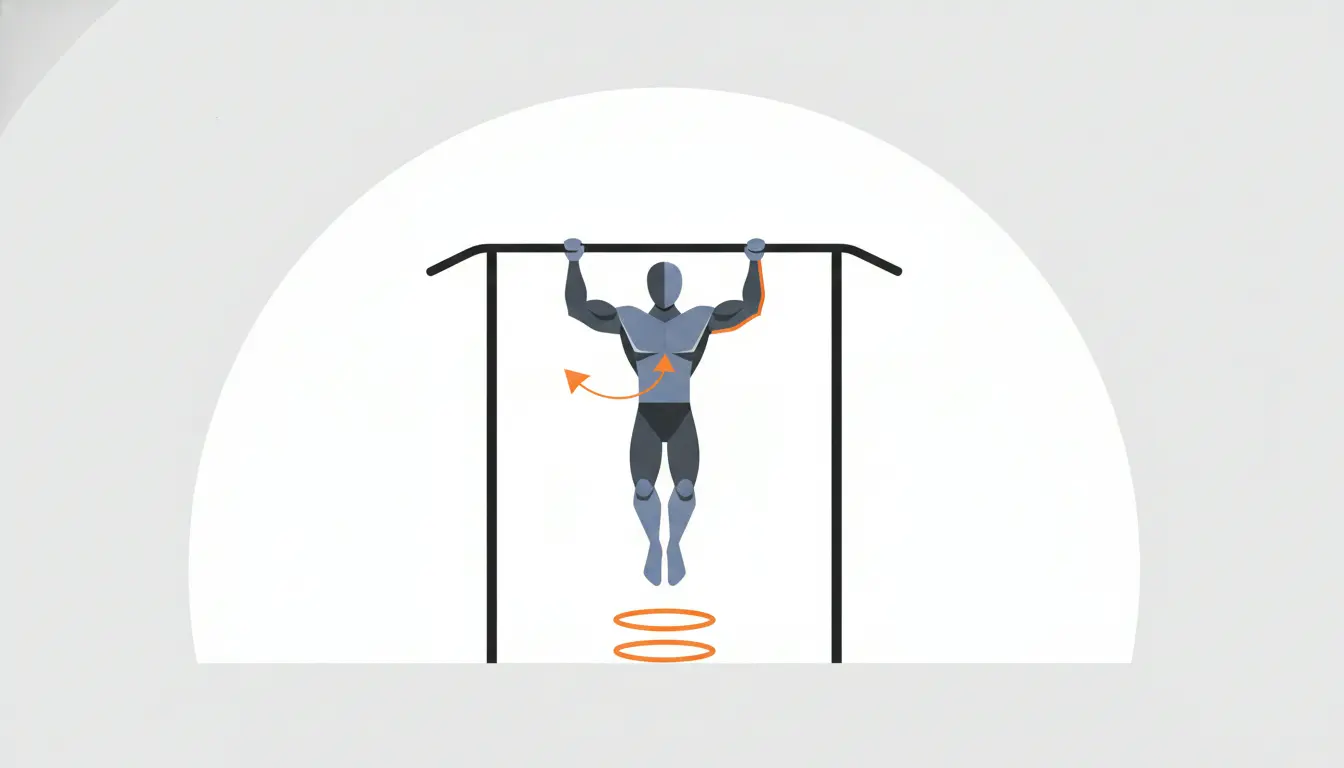
What good pull up form looks like (quick checklist)
If your form is inconsistent, your progress will be inconsistent. The goal is repeatable reps you can build volume with.
- Start in a dead hang with straight arms.
- Set your shoulders by pulling them slightly down and back.
- Keep ribs down and a light core brace.
- Pull elbows toward your ribs, not behind your back.
- Finish with chin over the bar, then control the descent.
If you want a deeper breakdown with visuals, this page is a good reference: how to do a pull up with perfect form.
Why most people don’t increase pull up numbers
In my opinion, the biggest mistake is treating pull ups like a test every workout. You max out, you hit failure, your elbows and shoulders feel cooked, and you start dreading the bar. That approach builds fatigue faster than skill and strength.
Three common bottlenecks (and how to spot yours)
Most plateaus come from one of these. Knowing which one you have saves months of random training.
- Strength bottleneck: you can’t do many reps, but you also struggle with low reps and slow reps.
- Endurance bottleneck: you can do solid singles and triples, but sets fall apart after rep 5 to 8.
- Technique and tension bottleneck: you feel it mostly in arms, you swing, or you lose position at the bottom.
The mindset shift that makes progress easier
Train pull ups like practice, not like punishment. Most of your work should feel like “I could do 1 or 2 more.” That leaves you fresh enough to accumulate quality reps week after week. It also keeps your nervous system calm, which matters more than people think. If you’re always anxious about failing, you tend to rush the reps and leak energy.
The fastest ways to increase pull up numbers
You don’t need 12 fancy variations. You need one main method that matches your level, plus a small amount of accessory work that addresses your weak link. Below are the methods I’ve seen work best for beginners and intermediates.
Method 1: Grease the Groove (high frequency, low fatigue)
If you have a bar at home, this is hard to beat. You do small sets throughout the day, never close to failure. It teaches your body to make pull ups feel normal. For a lot of people, it’s the first time they get consistent weekly volume without soreness.
How to do it: take about 40 to 60% of your max and do that for multiple sets during the day, 3 to 5 days per week. Keep every rep clean. If your max is 8, do sets of 3 to 4. If your max is 3, do singles.
- Do 4 to 8 mini sets across the day.
- Rest at least 60 to 90 minutes between sets.
- Stop each set while you still feel snappy.
- After 3 to 4 weeks, retest your max.
Method 2: Pyramid and ladder training (volume without chaos)
Ladders are a simple way to rack up a lot of reps while keeping quality. You climb up close to your limit, then come back down. The magic is that your total volume gets high, but no single set crushes you.
Example: if your max is 6, go 1, 2, 3, 4, 5, then 4, 3, 2, 1. That’s 25 good reps. Rest longer on the bigger sets, shorter on the small ones. If your max is 12, you can do the same ladder but only go up to 10 to stay submax.
Method 3: Low rep high volume sets (density work)
This method is boring in the best way. You pick a tiny number of reps and repeat it for many sets with short, consistent rest. It builds work capacity fast and keeps form tight because you never have to “save” a rep.
Protocol: use about 20% of your max for 15 to 20 sets. If your max is 10, use 2 reps. If your max is 5, use 1 rep or 2 reps depending on how clean they are. Rest 30 to 60 seconds. Stop if your rep speed clearly drops.
Method 4: Weighted pull ups (make bodyweight feel lighter)
Once you can do around 8 to 10 strict pull ups, adding a little weight is worth considering. Not because it’s hardcore, but because it raises your ceiling. Higher max strength tends to make your normal reps feel easier, which helps you push your max set higher later.
Keep it simple: 3 to 6 sets of 1 to 5 reps, full rest, perfect form. Pair it with one volume method in the same week, not on the same day at first.
If you want to go this route, a dip belt is the most straightforward option. I’m not a fan of improvised setups that swing around. The Gornation Dip Belt is a sensible choice because it’s stable and made for weighted calisthenics. If you want a full comparison, this overview is useful: best weighted calisthenics equipment.
Technique tweaks that usually add 1 to 3 reps quickly
Strength matters, but pull ups are also a skill. Small fixes often turn “almost reps” into real reps. The best part is that these changes don’t require more effort, just better execution.
Use your back, not just your arms
A cue I use a lot is: think of your hands as hooks and drive your elbows down. If your biceps are on fire but your back feels asleep, you’re probably initiating the pull with your arms. Start each rep by setting the shoulders, then pull.
Own the bottom position
Many people lose reps because the bottom gets sloppy. If you rush through the dead hang, you never fully reset tension. I like a brief pause at the bottom on most training reps. Not a long hang, just enough to feel control and alignment.
Stop swinging before it starts
Swinging is often a core and rib position issue, not a “you are weak” issue. Keep ribs down, squeeze glutes lightly, and keep your legs slightly in front of you. If you still swing, reduce the rep target and rebuild clean volume.
Assistance work that actually carries over
Accessories are helpful when they fix a specific limit. They’re a waste when they replace pull up practice. I’d rather see you do fewer exercises, done consistently, than a long list you never repeat.
Grip: dead hangs and smarter friction
If your hands give out before your back does, you’re leaking reps. Dead hangs are the simplest fix. Do 2 to 4 sets after training, staying well short of pain in elbows or shoulders. Mix normal hangs with towel hangs if you’re advanced, but keep it controlled.
If sweat is the issue, consider liquid chalk. It’s not magic, but it can make your grip more consistent, especially on outdoor bars. The Gornation Liquid Chalk is a practical option: clean, portable, and it dries fast. Use it sparingly so you don’t rely on it for basic grip development.
Back strength: rows that teach scapular control
Inverted rows, ring rows, and one arm dumbbell rows all help, but the key is doing them with a squeeze between the shoulder blades. If your pull ups stall halfway, rows often help because they build that mid back “locking” strength.
Core: anti swing stability
You don’t need complicated core work. Side planks and hollow holds transfer well because they teach you to keep position while hanging. If you swing on rep 6 every time, it’s often because you lose your brace as you fatigue.
A simple 6 week plan to increase pull up numbers
This is the structure I like for most beginners and intermediates: one heavier day, one volume day, and one technique or density day. It’s enough stimulus to progress without turning your elbows into glass. Rest at least one day between sessions.
Pick your level
Use the version that matches your current strict max. If you are between levels, choose the easier one for the first two weeks. It will feel “too easy” at first, and that’s exactly why it works.
Level A: max 0 to 4 pull ups
Your goal is to build the pattern and strength without missing reps. Use assistance and negatives, but keep them controlled.
- Session 1: assisted pull ups 6 sets of 3 to 5, then inverted rows 3 sets of 6 to 10.
- Session 2: ladder of assisted pull ups 1 to 5 and back down, then dead hangs 3 sets.
- Session 3: negatives 5 sets of 2 with a 3 to 6 second lower, then side planks 3 sets.
Progress rule: add 1 rep to a couple of sets each week, or use slightly less assistance. Retest at the end of week 6.
Level B: max 5 to 9 pull ups
This is where volume pays off fast. You can build a bigger “rep tank” without needing heavy weight yet.
- Session 1 (volume ladder): go up to 80 to 90% of max and back down. Rest as needed.
- Session 2 (density): 15 to 20 sets at 20% of max, 30 to 60 seconds rest.
- Session 3 (practice): 8 to 12 sets of 2 to 3 reps, full control, stop far from failure.
Progress rule: first increase total reps, then reduce rest slightly. If you feel beat up, keep the volume but make the reps easier.
Level C: max 10+ pull ups
At this point, your next jump often comes from raising strength and keeping endurance. I like a blend of weighted work and ladders.
- Session 1 (weighted): 5 to 6 sets of 2 to 4 reps, full rest, crisp reps.
- Session 2 (ladder): go up to 9 or 10 and back down, or jump by 2 if you’re strong.
- Session 3 (density): 12 to 16 sets of 3 to 5 reps, moderate rest.
Progress rule: add small weight only when all sets are clean. Do not chase a PR every week. Your elbows will thank you.
How to recover so your pull up numbers keep climbing
Recovery is not just sleep and protein. It’s also how you manage intensity. If every session is a war, your joints get irritated and your reps stall. I’d rather see you train more often at lower effort than train rarely at maximum effort.
A simple rule: keep 1 to 2 reps in reserve most of the time
Save true max effort for testing weeks. Training close to failure has a place, but it’s not the default. Most high rep pull up gains come from repeating solid reps and stacking volume over time.
Respect your elbows and shoulders
If you feel sharp pain, stop and adjust. Usually the fix is reducing total volume for a week, using a slightly narrower grip, and adding more controlled eccentrics instead of grinding ugly reps. Also watch your daily pulling volume if you climb, row, or do lots of biceps work.
Common mistakes that keep your max stuck
I see the same patterns over and over. Fixing them is often the quickest path to increasing pull up numbers.
- Training to failure every session and then wondering why progress slows.
- Doing random workouts without a clear weekly plan.
- Changing grip and technique every set so nothing becomes efficient.
- Ignoring grip and core, then blaming “weak lats.”
- Only doing pull ups and never building rowing strength.
Veelgestelde vragen
How to increase you pull-up numbers if I can’t do a single pull up yet?
Start with assisted pull ups, slow negatives, and inverted rows. Train them two to three times per week and keep every rep controlled. Add dead hangs for grip. Your first strict rep usually appears when you’ve built enough pulling strength and you can hold tension at the bottom.
How often should I train if my goal is “How to increase you pull-up numbers” fast?
For most people, three focused sessions per week works well. If you recover easily and have a bar at home, you can add a grease the groove approach on two extra days with very easy sets. The key is staying away from failure so you can keep frequency high.
Should I do pull ups to failure to increase my max?
Not as your main strategy. Occasional hard sets can help you learn to push, but most progress comes from high quality volume where you stop with one or two reps left. That keeps form consistent, reduces joint irritation, and lets you train again sooner.
Do resistance bands help, or do they “cheat” the pull up?
Bands are useful when they let you practice clean full range reps. They are not cheating if you use them to build skill and volume, then gradually use less assistance. Choose a band that makes reps smooth, not one that launches you to the top and changes the movement.
When should I start weighted pull ups to increase pull up numbers?
Usually when you can do about 8 to 10 strict reps with consistent form. Before that, you’ll often get faster gains by improving technique and building volume. Once you are ready, keep weighted sets low rep and clean, and still do one endurance focused session weekly.
If you want to increase your pull up numbers, stop treating every session like a test and start treating it like practice. Get a clean baseline, pick one main method such as grease the groove, ladders, or density sets, and build weekly volume while staying just shy of failure. Add a small amount of assistance work for grip, rows, and core so your form holds up when fatigue hits. Give it six consistent weeks, retest, and adjust based on what actually limited you. Most people are closer to a big jump than they think.