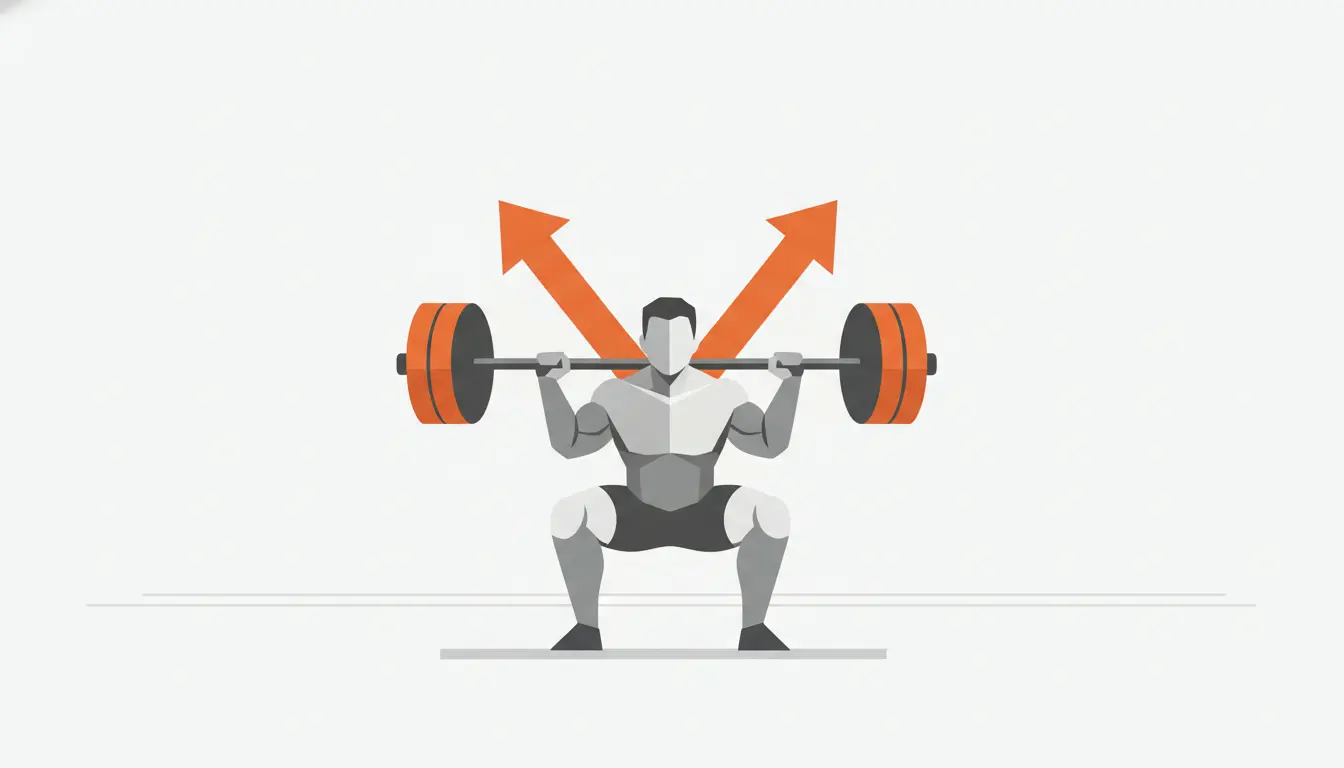
Weighted squats are one of those exercises that look simple until you start adding load and suddenly every small form issue shows up. In this guide, I’ll walk you through how to train weighted squats in a clean, step by step way: first earning solid bodyweight mechanics, then choosing the right squat variation, and finally progressing weight without grinding your joints. You’ll also get practical cues for bracing, depth, and foot pressure, plus a quick warm up routine and the most common mistakes I see in both gyms and calisthenics streetlifting setups.
Why weighted squats are worth training
Strength that carries over to calisthenics
Even if your main sport is calisthenics, weighted squats pay off. Strong legs and hips help with jumping, sprinting, stable landings, and even upper body moves because your body learns to create **full body tension**. A solid squat pattern also teaches you how to brace under load, which transfers nicely to heavy dips, weighted pull ups, and loaded carries.
Muscles trained without overcomplicating it
Weighted squats mainly hit your **quads**, **glutes**, and **adductors**, with your hamstrings and core working hard to stabilize. The “secret” is that the squat is a whole body lift: if your upper back collapses or you lose your brace, your legs cannot express their strength. That’s why good technique often adds kilos faster than chasing intensity.
A quick reality check on depth and knees
A lot of people fear depth because they think it is bad for the knees. In practice, most knee irritation I see comes from sloppy control, poor foot pressure, or loading too fast, not from squatting to a sensible depth. Aim for at least **parallel** if your mobility allows it and you can keep your posture. If depth forces your lower back to tuck hard or your heels to lift, you have a progression problem, not a willpower problem.
Earn the right to add weight
Bodyweight standards before loading
If you want a clean path to weighted squats, start by mastering the bodyweight version. My simple standard is: you can do multiple sets of 12 to 20 reps with consistent depth, stable feet, and no ugly knee collapse. When that is true, adding load becomes a strength problem, not a movement problem.
Key bodyweight cues that matter later under a bar:
- Feet stay flat with pressure on **heel**, **big toe**, and **little toe**.
- Knees track in the same direction as your toes.
- Torso stays controlled with a neutral head position.
- Hips and knees bend together, with the hips initiating the descent slightly.
Choose your first weighted variation (my preferred order)
Not everyone should start with a barbell back squat. I like a simple progression that keeps technique honest:
- Goblet squat: easiest to learn, teaches upright posture.
- Front loaded squat with dumbbells or kettlebell: increases core demand.
- Barbell back squat: great long term tool, but higher technique cost.
- Single leg options later: split squats, step ups, pistol progressions.
If you train mostly calisthenics and you do not have a rack, goblet and front loaded options still build serious legs. You can get very far before a barbell becomes mandatory.
Set expectations: the first month should feel “too easy”
In my opinion, the biggest mistake with weighted squats is loading them like an ego lift. Your first few weeks should look almost boring: crisp reps, consistent tempo, and leaving 1 to 3 reps in reserve. This builds a repeatable pattern you can progress for months, not a highlight reel that wrecks your knees and back.
Warm up for weighted squats (fast, practical, repeatable)
The 10 minute warm up I actually like
You do not need a complicated warm up, but you do need one that prepares ankles, hips, and your brace. Here is a simple template that works for most people:
- 5 minutes light cardio: rower, bike, or brisk walk.
- 2 minutes ankle rocks and deep squat holds (comfortable range).
- 2 minutes hip openers: hip circles, glute bridges.
- 1 minute core prep: short plank variations focused on breathing.
Then do specific warm up sets of the squat itself: start with bodyweight, then an empty bar, then add small jumps. Treat warm up sets as technique practice, not as a chore.
Mobility: fix the limiter, not everything
Most “bad squat mobility” is really one limiter. Common ones are **ankle dorsiflexion** and tight hip flexors from sitting all day. Instead of stretching everything, identify what breaks your form first. Heels lifting usually points to ankles. Butt wink that appears early often points to hips and hamstrings. Address the main issue for a few minutes each session and you will improve faster than doing random flexibility routines.
How to train weighted squats with proper technique
Step 1: stance, feet, and gaze
Start with feet about shoulder width, then adjust slightly wider or narrower based on your build. Turn toes out about 5 to 20 degrees. Pick a spot straight ahead and keep your head neutral. Looking up tends to crank your neck. Looking down often collapses your chest. Neutral is boring, and boring is strong.
Step 2: create full body tension before you descend
This is where squats become safe and powerful. Before you move, build tension on purpose:
- Screw your feet into the floor so your arches feel active.
- Brace your core with a deep **360 degree breath** into your waist.
- Keep ribs stacked over pelvis, not flared up.
- Set your upper back tight so the load does not fold you.
If you only take one thing from this guide, make it this: a strong squat is mostly a strong brace. When the brace goes, everything else goes with it.
Step 3: the descent (controlled, not slow motion)
Initiate by sending the hips slightly back while the knees bend. Descend under control, keeping your whole foot connected to the floor. Let your knees travel forward as needed to keep balance. For most bodies, perfectly vertical shins are not realistic and are not required.
Depth target:
- Baseline: hip crease around knee level (parallel).
- Deeper: only if you can keep foot pressure and a neutral spine.
- Higher: acceptable temporarily if it keeps reps consistent while you build mobility.
Step 4: the ascent (drive up as one unit)
Drive the floor away and stand up with your hips and shoulders rising together. Think about pushing your knees out in the same direction as your toes, without overdoing it. Keep pressure on midfoot and heel while still keeping the ball of your foot down. At the top, squeeze glutes lightly and reset your breath for the next rep.
Bar placement basics (if you use a barbell)
Place the bar on muscle, not on bone. A high bar position sits on the traps. A low bar position sits a bit lower on the rear delts and upper back. Both can work, but they feel different. If your shoulders hate low bar, do not force it. Choose the option that lets you keep a strong upper back and repeat good reps.
Grip: go as narrow as you comfortably can, because it helps create a tighter upper back. Many lifters do better with a thumbless grip to keep wrists neutral, but comfort and control matter most.
Safety: how to fail a squat without doing something stupid
Use safeties and set them correctly
If you squat with a barbell in a rack, set the safety pins so you can reach depth and still bail out without getting pinned. Test it with an empty bar first. This is non negotiable when training close to failure. If a rack does not have adjustable safeties, I personally avoid heavy sets there.
How to bail on a back squat
If you get stuck, do not try to twist your way out. Stay braced, sit the load onto the safeties by descending slightly, then let the bar settle on the pins. Step forward and out. Practice this with a light load once so it feels normal. Confidence under the bar is a performance tool.
Common mistakes and quick fixes
Heels lifting and weight shifting to the toes
This usually comes from poor ankle mobility, stance that is too narrow, or chasing depth you do not own yet. Widen your stance slightly, turn toes out a bit more, and think “tripod foot.” If you still pop onto the toes, use a box squat for a few weeks to relearn sitting back while keeping the whole foot down.
Knees collapsing inward
Knee valgus is common when you rush the ascent or lose foot tension. Focus on keeping pressure through the outer edge of the foot while still keeping the big toe down. A light cue like “knees track over toes” works better than aggressively forcing them out.
Not hitting depth or cutting reps short
Most people simply stop early because it feels strong. Record yourself from the side. If you are consistently high, use a box or a target to standardize depth. Consistency beats guessing, especially when you start adding weight.
Good morning squat (hips shoot up first)
If your hips rise faster than your chest, you are turning the squat into a hinge. Often the fix is simpler than people think: reduce load, brace harder, and keep your upper back tight. Front loaded squats and paused squats can also teach you to stay stacked.
Looking up or craning the neck
It is a classic gym cue that needs to die. Keep the neck neutral and eyes forward. Your spine works as a unit. When you crank one end, the rest usually compensates.
Progression: how to add weight without stalling
Pick a rep range that matches your goal
For most beginners and intermediates, I like 3 to 5 sets of 5 to 10 reps. It is heavy enough to build strength and high enough volume to practice form. Very low rep maxing has its place, but it is a poor teacher when your technique is still developing.
Progress rules that keep you honest
Here are progression rules I use with athletes because they are hard to mess up:
- If all sets hit the top of the rep range with clean form, add a small amount of weight next session.
- If form breaks, keep weight the same and improve the reps first.
- If you miss reps two sessions in a row, reduce the load by 5 to 10% and rebuild.
- Keep 1 to 3 reps in reserve on most sets, save true grinders for rare tests.
This approach is not flashy, but it works. It also fits calisthenics focused training, where recovery is needed for skills and upper body work.
How often to squat each week
Two sessions per week is enough for solid progress for most people. Three can work if you manage intensity. If you also train hard weighted dips and pull ups, I would rather see two quality squat days than three sloppy ones.
A simple week could look like this:
- Day A: heavier squats plus a hinge accessory.
- Day B: lighter squats with pauses or tempo plus single leg work.
- Optional: short mobility work on off days.
Squat variations that actually help
Box squat for depth and control
Box squats are underrated for learning consistency. Set a box or bench so you reach roughly parallel when you sit. Control the descent, lightly touch, keep tension, then stand up without rocking forward. If you plop onto the box, it is too heavy or you are losing tension.
Goblet squat for posture and bracing
Goblet squats are one of the best teachers of an upright torso. Hold the weight close to your chest, keep elbows pointed down, and keep your ribs stacked. When someone tells me their back squat feels awkward, I often bring them back to goblets for a short block to rebuild mechanics.
Front squat for strong quads and a cleaner pattern
Front squats demand a better brace and punish sloppy posture. They are also a great option when low back fatigue is limiting your back squat. Mobility can be a barrier, so start light and treat it as technique work.
Pistol squat progressions for calisthenics athletes
Single leg squats expose imbalances fast. You do not need to jump straight into full pistols. Use assisted pistols, box pistols, or counterbalance holds. They build control and ankle mobility, and they are a good accessory when you cannot add more barbell volume.
If you want more lower body ideas that fit bodyweight training, this guide pairs well with how to train bodyweight squats.
Equipment notes from a calisthenics perspective
What matters most: stability and repeatability
For weighted squats, the best “equipment” is a stable setup: a rack with safeties, a bar you can control, and shoes that let you keep full foot pressure. I am not a fan of making the squat complicated with gadgets. If something helps you repeat good reps safely, it is useful. If it only makes the lift feel heavier without improving form, skip it.
Two subtle gear picks I actually like
If you train squats alongside weighted calisthenics, two pieces of gear are genuinely practical and not overkill:
- GORNATION Wrist Wraps: useful if front rack positions or heavier bar work irritate your wrists. They do not replace mobility, but they can make training more comfortable while you improve it.
- GORNATION Weight Vest: a simple way to load goblet style squats, split squats, step ups, and even pistols when you train outside or do not have a barbell setup.
If you are building a broader setup for strength work, see best weighted calisthenics equipment for options that integrate well with squat training.
Programming examples (beginner to intermediate)
Beginner two day plan (8 to 12 weeks)
This is simple on purpose. Focus on perfect reps and steady progress.
- Day 1: goblet squat 4 x 8 to 12, Romanian deadlift 3 x 8 to 10, calf raises 3 x 12.
- Day 2: box squat 4 x 6 to 10, split squat 3 x 8 each side, plank 3 x 30 to 45 seconds.
Progress by adding reps first, then small weight jumps. Keep the last reps challenging but clean.
Intermediate two day plan (when technique is consistent)
- Day 1: back squat 5 x 5, paused squat 3 x 3 to 5, hamstring accessory 3 x 8 to 12.
- Day 2: front squat 4 x 6, step ups 3 x 8 each side, back extensions or hip hinge 3 x 10.
On weeks where your calisthenics volume is high, reduce squat accessories first. Keep the main squat work quality and recoverable.
Veelgestelde vragen
How to train weighted squats if I cannot reach parallel yet?
Start with a box squat or a goblet squat to a target that you can hit with clean posture. Train that depth consistently, then lower the target slowly over weeks. Forcing depth usually leads to heel lift or lower back rounding. I would rather see a controlled partial squat than a messy deep one.
How many times per week should I do weighted squats?
For most people, two sessions per week is the sweet spot for strength and technique without wrecking recovery. Three can work if one day is lighter and focused on tempo or pauses. If you also train hard weighted dips and pull ups, keep squat frequency modest so you can recover well.
Should I use high bar or low bar for weighted squats?
Both are valid. High bar usually feels more upright and quad focused. Low bar often allows heavier loading but demands more shoulder comfort and upper back tightness. Choose the one where you can keep a strong brace and repeat consistent reps. Switching styles occasionally is fine, but avoid changing every week.
Is the Smith machine good for learning weighted squats?
It can be useful for building confidence and leg strength, but it fixes the bar path, which can feel awkward if your body wants a slightly different groove. If you are new, I prefer goblet squats and free bar variations first because they teach balance and bracing. Use the Smith as a tool, not as a crutch.
How do I know when to add weight in weighted squats?
Add weight when you can hit your target sets and reps with stable feet, consistent depth, and a brace that does not collapse. If your last reps turn into knee cave, heel lift, or a good morning pattern, keep the load and clean it up first. Slow progress that you can repeat is the fastest progress long term.
Weighted squats work best when you treat them like a skill you practice, not a test you survive. Nail your bodyweight pattern, warm up with intention, and focus on **bracing**, **foot pressure**, and consistent depth before you chase heavier numbers. Use variations like goblet and box squats to fix weak links, record your sets to stay honest, and progress in small steps. If you do that, you will build strong legs and a stronger training base for calisthenics without turning every squat day into a battle.