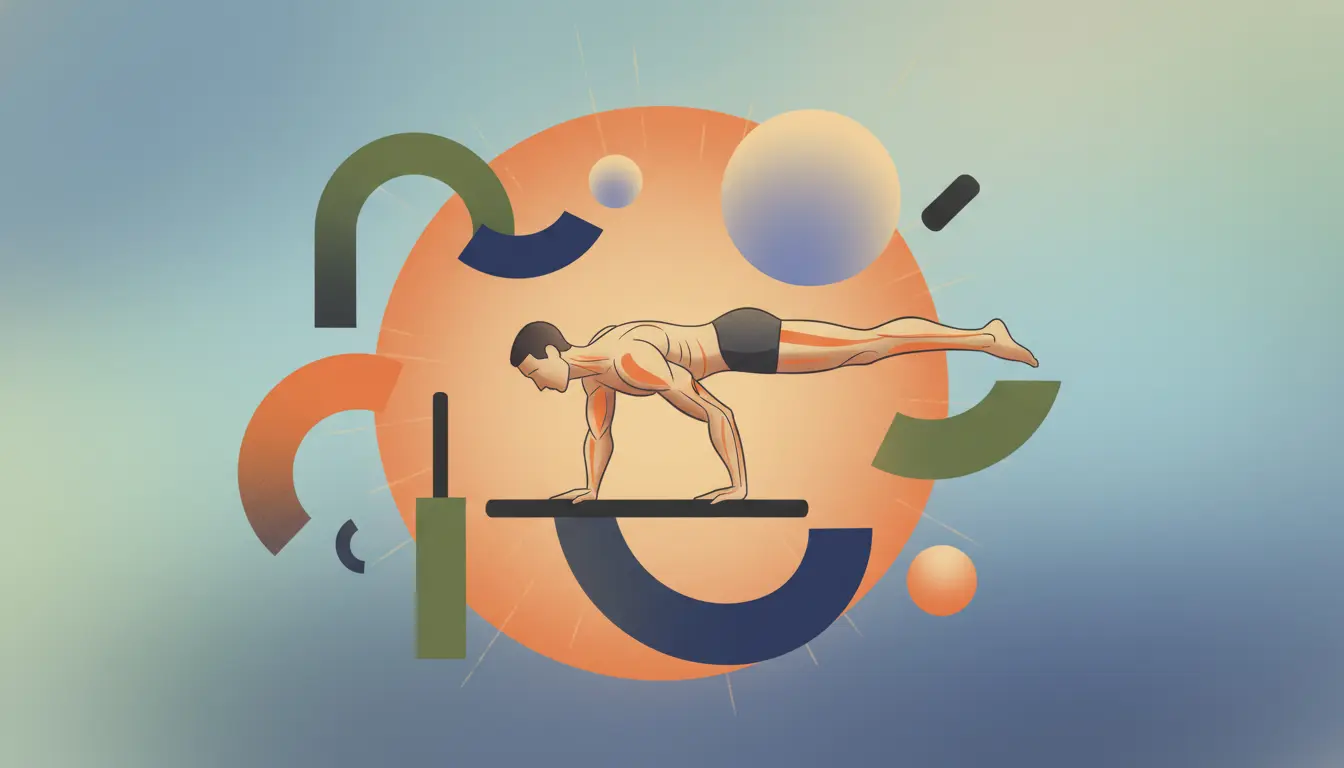
The planche looks simple: you lean forward, lift your feet, and freeze. In real life it’s a demanding straight arm skill that tests your wrists, shoulders, and core way more than most people expect. The good news is you can train it without fancy setups if you follow a clear progression and stop chasing ego holds.
In this guide I’ll show you the positioning cues that actually matter, the beginner to intermediate progressions, and two sample sessions you can repeat week after week. I’ll also share the most common mistakes I see and how to avoid getting stuck or beat up.
What the planche really demands
Straight arm strength is the bottleneck
Most calisthenics pushing is bent arm: push ups, dips, handstand push ups. The planche is different. Your elbows are locked, and you have to create tension through the whole chain while the lever works against you. That means your connective tissue needs time to adapt. If you rush, your wrists or elbows will usually complain before your muscles do.
Body shape beats raw effort
I’ve seen strong athletes “try harder” and still go nowhere because their position leaks force. The planche is mostly about putting your shoulders in the right place and keeping them there. When the position is right, even a small hold feels controlled instead of chaotic.
Expect it to feel oddly exhausting
Planche work can fry your nervous system fast, especially early on. Even short holds can leave you feeling drained, which is a sign to keep the sessions crisp. I prefer stopping with clean reps in the tank over grinding ugly attempts that teach bad habits.
Are you ready to start planche training?
A simple readiness checklist
You do not need perfect prerequisites, but you should have enough baseline control that planche drills don’t instantly become a joint stress test. Here’s what I like to see before you push volume:
Comfortable push up plank for 30 seconds without collapsing into the shoulders
Basic scapular control (you can protract and retract in a plank)
Wrists that tolerate bodyweight leaning without sharp pain
Some overhead strength work in your week (pike push ups or handstand progressions)
If you’re not there yet, start anyway but stay at very low intensity: gentle leans, short sets, lots of rest, and more wrist prep than you think you need.
When planche should not be your main focus
If you’re currently dealing with an injury, major fatigue from other training, or you’re still building basic pushing strength, it’s smarter to park planche as a “light skill” once a week. You’ll progress faster long term by getting generally stronger and returning with healthier joints.
Non negotiable technique cues
Hand position and wrist comfort
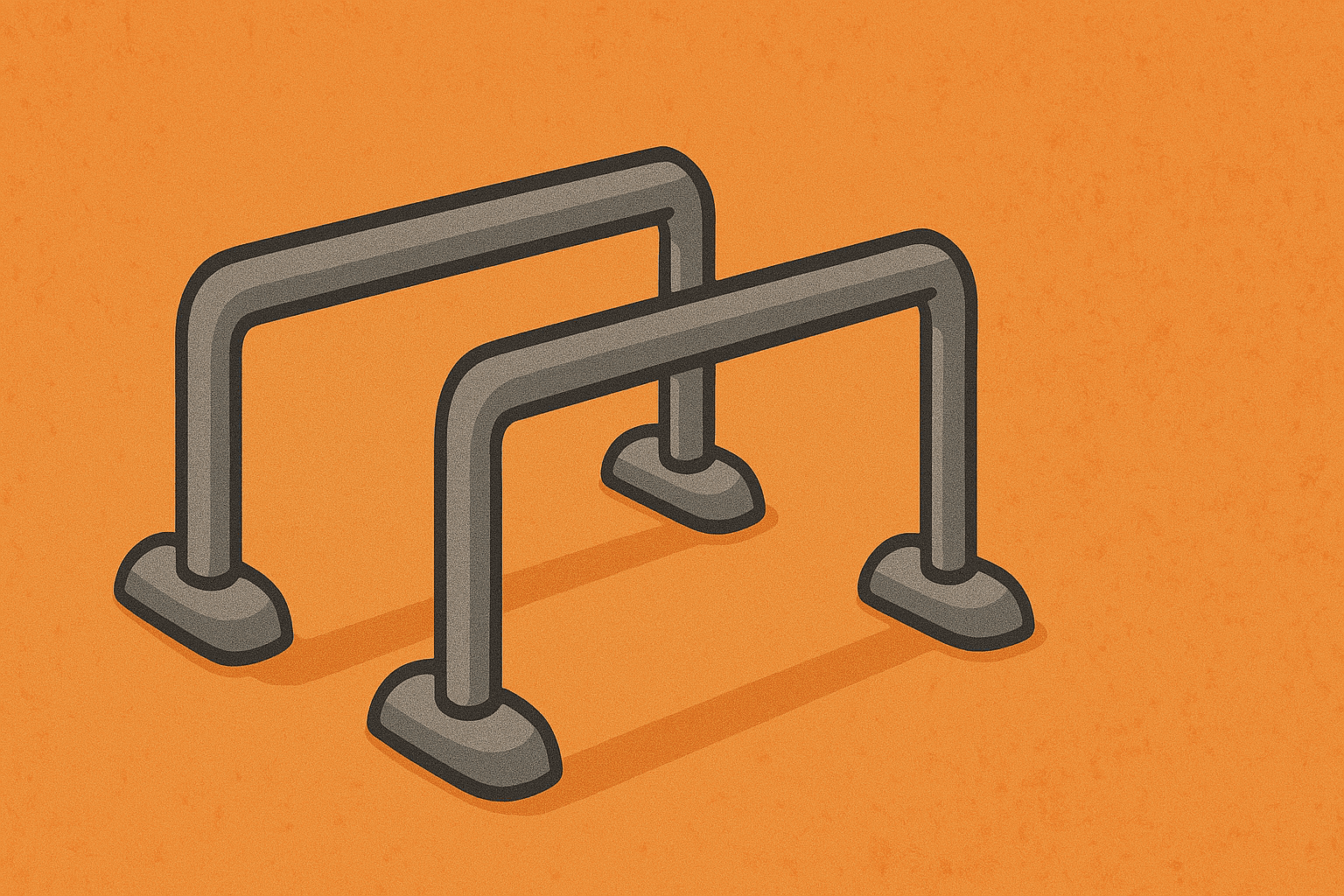
Start with fingers forward. If your wrists feel jammed, angle the hands slightly out. Keep the whole hand active, especially the fingertips, so you can control the lean instead of dumping pressure into the heel of the palm. If wrists are the limiting factor, parallettes are an easy workaround because they reduce wrist extension.
If you want a deeper dive on supportive gear, I like this overview of wrist support options: best wrist wraps for calisthenics.
Elbow pits forward and locked arms
Turn your elbows so the elbow pits face forward. Then lock the arms and keep them locked. The lock is not passive. Think of “pushing the floor away” the whole time. This is where many people lose the position: they lock out, relax, then the shoulders collapse.
Shoulders down and protracted
Two actions at once: push your shoulder blades forward around your ribcage and keep the shoulders depressed. In plain English: don’t shrug, and don’t let the chest sink. This combo is your anti flop system. If it’s missing, the planche becomes a fight instead of a skill.
Lean first, then lift
Beginners try to lift the feet without earning the lean. I prefer the opposite: lean until your shoulders clearly move in front of your wrists, then lightly unweight the feet. That sequence keeps it honest and teaches you the actual planche line.
Progressions from beginner to intermediate
Step 1: Planche leans (your main builder)
If you only do one thing, do leans. They build the shoulder angle without forcing you to “float” before you’re ready.
Basic planche lean: from a strong plank, lean until it’s challenging but controllable.
Straddle planche lean: legs wide on the floor to make the lever slightly friendlier.
Raised planche lean: feet elevated, same lean, more load on the shoulders.
Raised lean with bent legs: bring the box closer so you can bend knees and keep quality.
Progress rule I like: when you can do 5 sets of 20 seconds with clean form and full control, you earn the next level.
Step 2: Frog stand and crane variations
These teach you what it feels like to shift weight forward while keeping balance. Don’t treat them as “cute yoga poses”. Done well, they build confidence and time under tension.
Frog stand: knees supported on the upper arms, feet lifted.
Crane with raised feet: feet start on a box, less balance demand.
Full crane: feet off, knees stay supported on arms.
One knee floats: alternate sides, stay patient.
A practical milestone: a steady frog stand for around 45 seconds tells me you can start taking tuck planche attempts more seriously.
Step 3: Tuck planche (floating crane)
This is the first real checkpoint. Aim to build accumulated hold time instead of hunting one max hold. For most people, sets of 6 to 12 seconds are the sweet spot: long enough to learn, short enough to keep form.
Technique note: keep the knees tight to the chest, point the toes lightly, and keep the lean. If your hips drift back over your hands, you’re not doing a planche, you’re doing a compact crow hold.
Step 4: Advanced tuck and open tuck
Advanced tuck means the knees move away from the chest so the hips open. Open tuck is similar, often with knees slightly apart. Both increase the lever and expose weak spots in shoulder position. Don’t progress here until the tuck feels boring and repeatable.
Step 5: Straddle planche pathway
Once tuck is solid, you don’t need a perfectly linear path. Pick two drills, run them for three weeks, then reassess. My favorites for the jump from tuck toward straddle are:
Straddle open tuck holds: start in tuck, open knees outward, hold.
Tuck push backs: from tuck, push knees back toward open tuck, then return.
Single leg extensions: extend one leg back while keeping the other tucked.
Tuck to straddle attempts: brief, controlled explorations, not max efforts.
The goal is not variety for its own sake. Two focused drills, repeated consistently, beat ten random drills done once each.
How often to train and how to structure sessions
The frequency I recommend for most people
For beginners and intermediates, 2 sessions per week is the safest and most productive starting point. It gives you enough exposure to learn the shapes and enough recovery for wrists, elbows, and shoulders. Spread them 3 to 4 days apart.
If you recover well and your joints feel great, you can add a third lighter session later, but only if your quality stays high.
Two types of sessions: volume and intensity
I like one session built around more total time in easier holds, and one session built around short, crisp holds at a harder progression.
Volume day: about 60 seconds total hold time across sets.
Intensity day: about 30 seconds total hold time across sets, but at a harder level.
This keeps progress moving without grinding the same tired tissues every workout.
Warm up and prehab that actually helps
Wrist prep in 5 minutes
Wrist prep should be boring and consistent. I treat it like brushing your teeth: do it every time, don’t overthink it.
Gentle wrist circles and open close hands for 60 seconds.
Quadruped rocks: hands flat, lean forward and back for 10 to 15 reps.
Hands turned slightly out, repeat 10 reps.
Fingertip support rocks, very light, 8 to 10 reps.
Sharp pain is a stop sign. Mild discomfort that fades as you warm up can be normal, but don’t push through escalating pain.
Shoulder and scapula activation
If your shoulders feel unstable in leans, add:
Scapular push ups: 2 sets of 8 to 12 reps, slow.
Hollow body hold: 2 sets of 15 to 25 seconds.
Pike hold with protraction: 2 sets of 15 seconds.
These are simple, but they clean up your planche line fast.
Two sample planche workouts you can repeat
Workout A: beginner planche session (leans plus first floats)
This session is for the stage where you’re building leans and starting frog stand or early tuck attempts.
Warm up: wrist prep plus 2 sets scapular push ups.
Main: planche lean variation, 5 sets of 10 to 20 seconds, 2 to 3 minutes rest.
Skill: frog stand or crane, accumulate 45 to 60 seconds total.
Supplement: pseudo planche push ups, 3 sets of 3 to 6 controlled reps.
Core finisher: hollow hold, 2 sets of 20 seconds.
Keep it clean. If set three becomes a fight, stop at four sets and come back stronger next week.
Workout B: intermediate tuck focused session (accumulated holds plus dynamics)
This session is for when you can already float a tuck planche and you want to build it into something solid.
Warm up: wrist prep plus 2 progressive planche leans (short then medium).
Bodyweight tuck planche: accumulate 60 seconds total (for example 6 x 10 seconds).
Harder tuck variation: advanced tuck or open tuck, accumulate 30 seconds total (for example 10 x 3 seconds).
Dynamic supplement: tuck planche push up negatives or pseudo planche push ups, 3 sets of 3 to 5 reps.
Pulling balance: front lever tuck hold, 3 sets of 10 to 15 seconds.
I like pairing planche work with some front lever work because it keeps your shoulders feeling “complete” instead of only hammered from pushing.
Progress tracking that keeps you honest
Use accumulated time, not max holds
Write down every set duration. If your total time goes up over 3 to 4 weeks while form stays sharp, you are progressing. If you only test max holds, you’ll have random good days and think nothing is working.
Simple progression rules
Add 5 seconds total per week to your accumulated time.
Or keep time the same and reduce rest slightly.
Or move to a harder variation for very short holds, then drop back.
Pick one lever at a time. Changing everything at once is why people get stuck.
Equipment: what helps, what I skip
Parallettes are the most useful upgrade
If your wrists are sensitive, parallettes are a practical solution. They reduce wrist extension and often make positioning clearer. If you want to compare options, this guide is a good starting point: best parallettes for calisthenics.
If I were choosing one piece from Gornation for planche focused training, I’d go with Gornation parallettes. They’re a clean, logical tool for making more sessions possible without turning wrist comfort into the limiting factor.
My take on resistance bands
Bands can help, but they can also hide weak positions. If you use them, keep the assistance light and consistent so you can actually measure progress. I’d rather see someone build a bulletproof tuck planche, then explore open tuck and advanced tuck, instead of “banding” into a shaky straddle that never transfers to the floor.
Adding load: the smart way to break a plateau
Once your tuck planche is consistent, adding a small external load can be a surprisingly effective way to make the basics harder without jumping progressions. In practice, that means a weight vest or ankle weights. I prefer a vest because it keeps the load stable and doesn’t mess with leg position.
If you want one weighted option from Gornation, a Gornation weight vest is a solid pick for controlled overload. Keep the weight modest and treat it like seasoning, not the main course.
Common mistakes that stall progress
Moving up too soon
The fastest way to slow down is to chase the next progression before the current one is stable. If your tuck is a 3 second survival hold, advanced tuck is not your next step. Make the tuck clean, repeatable, and boring first.
Training to failure
Planche is not a “one more rep” lift. When your form breaks, you’re just practicing the wrong pattern under high joint stress. I stop the set as soon as the shoulders shrug or the elbows soften.
Ignoring pulling and overhead work
Planche specialization works better when your overall strength keeps moving. Keep some overhead pushing and pulling in your week. It keeps shoulders happier and tends to improve your planche line indirectly.
Letting wrists dictate your technique
If your wrists hurt, you’ll subconsciously change hand pressure and lean angle, and your planche practice becomes inconsistent. Use parallettes, reduce intensity, and rebuild. Consistency beats heroic sessions.
Veelgestelde vragen
How to train the planche if my wrists hurt?
Start by reducing wrist extension and total load. Use parallettes or fists for some drills, shorten holds, and add 5 minutes of wrist prep every session. Avoid pushing into sharp pain. Most people can keep training by scaling the lean angle and staying strict with form rather than forcing full intensity.
How often should I practice: how to train the planche without overtraining?
For most beginners and intermediates, two focused sessions per week is enough. Place them 3 to 4 days apart, keep holds submaximal, and stop before technique breaks. If you add a third day, make it lighter and treat it like technique practice, not a test.
How to train the planche faster: should I use bands?
Bands can help you feel harder shapes, but they can also let you cheat positioning. If you use them, keep assistance light and consistent, and still prioritize strong leans and a solid tuck planche. In my opinion, building the basics usually transfers better than heavily banded progressions.
How long does it take when learning how to train the planche?
It depends on bodyweight, leverage, and consistency. Getting a reliable tuck planche can take a few months for some people and longer for others. Straddle and full planche often take much longer. The most reliable approach is steady weekly progress in accumulated hold time and cleaner positions.
How to train the planche alongside other calisthenics skills?
Keep planche sessions short and place them early in a workout when you are fresh. Pair them with pulling work like front lever progressions and maintain some overhead pushing. If fatigue is high, reduce planche volume rather than dropping the rest of your training. Consistency across months matters more than one big week.
To me, the planche is a long game built on three habits: clean positioning, patient progressions, and enough recovery to keep your wrists and shoulders happy. Start with leans, earn a strong tuck planche through accumulated time, then explore open tuck and straddle pathways with short, controlled holds.
If you train twice per week, track your totals, and stay strict about form, you’ll avoid most of the classic setbacks. It’s slow, but it’s straightforward. And when your feet finally float with control, it feels earned.