If you want to train like the military, you have probably asked yourself a simple question: what gear do you actually need, and what is just extra stuff that looks tough but adds little value? That is a fair question. Military style calisthenics workouts are usually built around repeatable basics like pull ups, push ups, dips, running, core work, and loaded bodyweight training. In this guide, I will walk you through the best military calisthenics equipment, explain what matters for real training, and help you choose gear that fits your space, level, and budget without wasting money.
What Is Military Calisthenics and Why Does the Equipment Matter?
How military calisthenics differs from regular bodyweight training
If you are wondering what is military calisthenics training, think of it as bodyweight training with a performance focus. The goal is not just to learn flashy skills. It is to build work capacity, durability, upper body strength, core control, and the ability to repeat solid reps under fatigue. That usually means high quality pull ups, strict push ups, dips, hanging core work, running, and sometimes loaded work with a vest or pack.
Compared with regular bodyweight training, military calisthenics is often less about advanced static skills and more about repeatable standards. In practice, that makes equipment choice important. A shaky dip station or weak pull up bar can ruin training quality fast. Good gear gives you consistency, safer reps, and a clearer path to progress.
Who benefits from training this way
This style works well for anyone preparing for Army PT, Marine Corps PFT style tests, police or fire academy fitness standards, tactical fitness, or simply wanting a no-nonsense way to get stronger. I also recommend it to people who like training at home and want a setup that covers the basics without turning their garage into a full gym.
If your goals are practical strength, better pull up numbers, stronger pressing endurance, and improved conditioning, military style calisthenics workouts are a smart choice.
The Core Equipment Used in Military Style Calisthenics
Pull up bars: the foundation of military PT
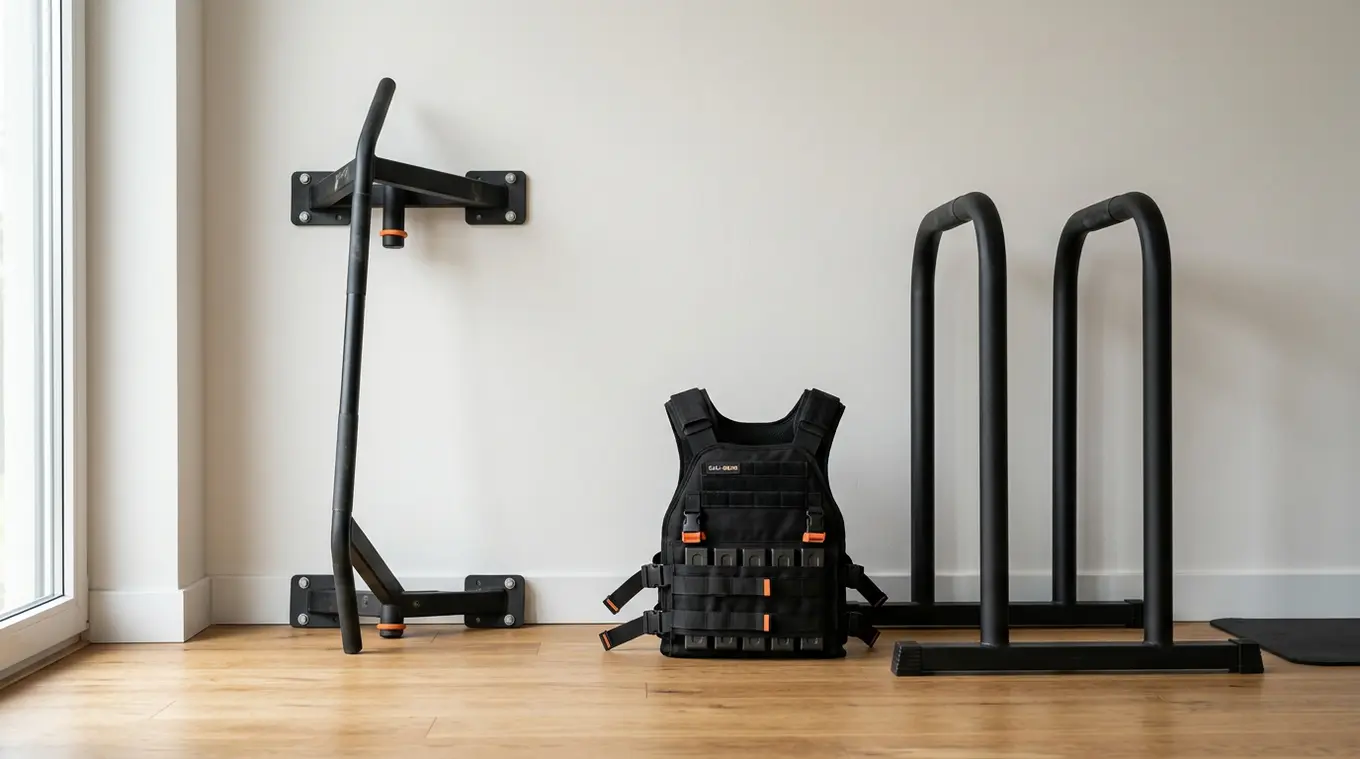
A pull up bar is the first item on any serious essential calisthenics equipment list. For military oriented training, it is non-negotiable. Pull ups, chin ups, hanging knee raises, toes to bar, dead hangs, and scapular work all start here. If you are looking for the best calisthenics equipment for pull ups, start with the most stable bar your space allows.
Wall mounted and ceiling mounted bars are usually best for heavy users and explosive reps. A doorway bar can still work well, especially in apartments, but many people rightly ask, is a doorway pull up bar safe for heavy users? My honest answer is that it depends on the bar design, door frame strength, and your bodyweight. For higher volume military prep, I would choose wall mounted if possible. If you need help comparing options, this guide on doorway vs wall mounted pull up bars is useful.
For a premium option, GORNATION pull up gear and portable setups are worth a look if you want a cleaner build and dependable grip. I would rather see someone buy one solid bar once than replace a cheap one twice.
Parallel bars and dip stations
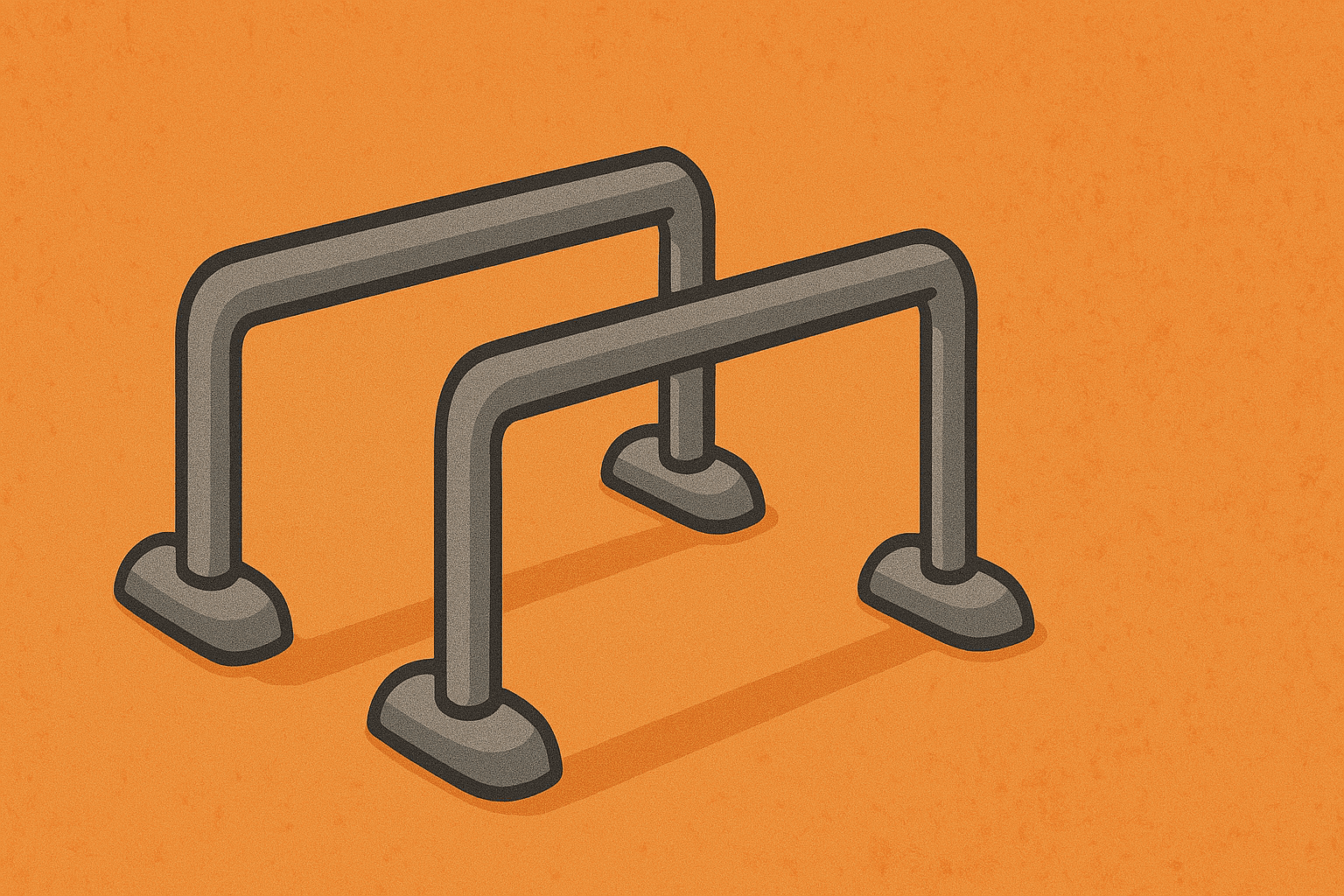
After a pull up bar, dip bars are usually the most useful purchase. They give you dips, support holds, knee raises, rows, elevated push ups, and a lot of scalable strength work. If you want to know how to use dip bars for military calisthenics, keep it simple: use them for volume dips, support holds, bodyweight rows, and push up variations with extra range of motion.
For home training, I generally prefer independent dip bars over one fixed station because they are easier to store and give you more setup freedom. Stability still comes first. If the bars wobble, your shoulders and wrists pay for it. A strong set of GORNATION dip bars or parallettes can be a smart buy here, especially if you want something that feels stable enough for both basics and harder progressions later on.
Gymnastics rings for functional strength
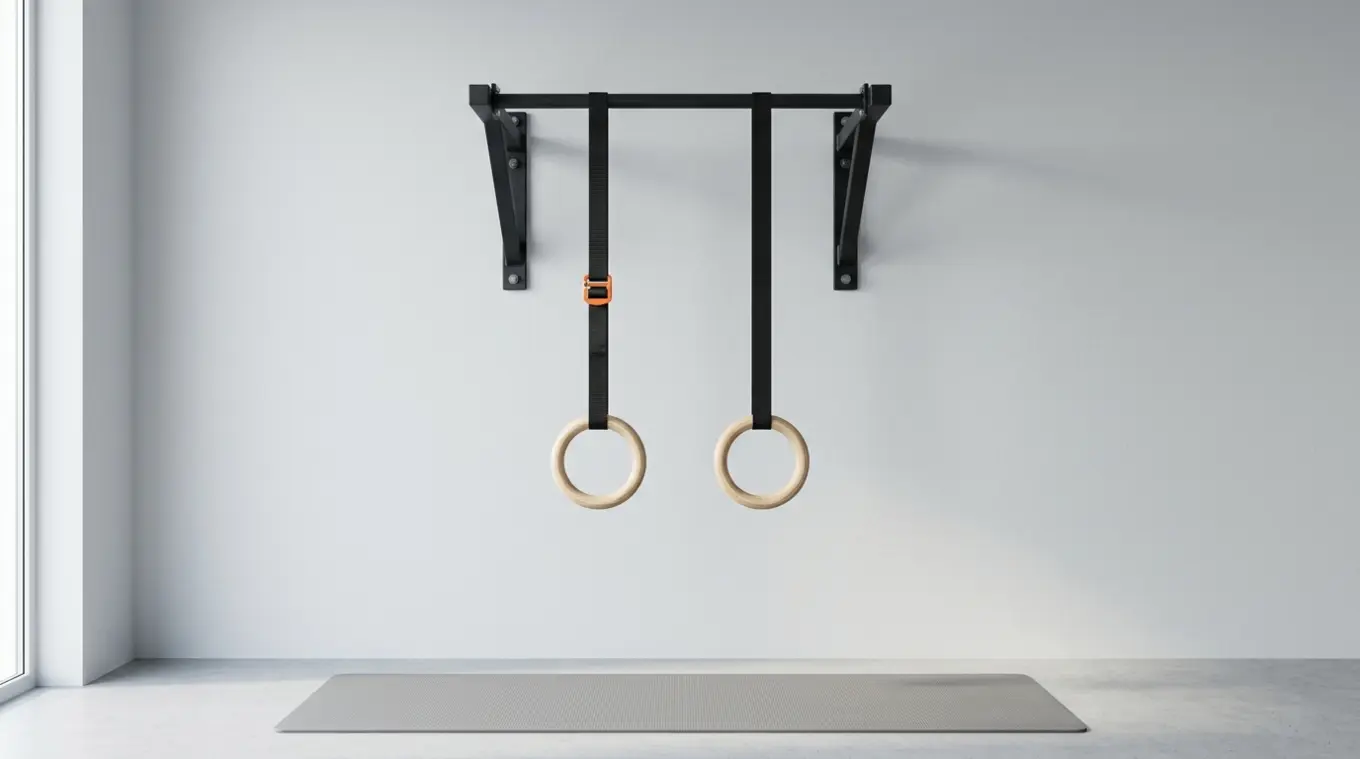
Rings are one of the most powerful tools in calisthenics, but I try to be realistic about them. They are amazing for rows, push ups, dips, support holds, and shoulder stability. They also travel well, which makes them ideal for outdoor sessions or anyone who moves often. That said, beginners sometimes underestimate the setup time and instability.
If you are asking how to use gymnastic rings for beginners, start with ring rows, incline ring push ups, support holds with feet assisted, and controlled eccentric dips only when you have enough shoulder control. Rings reward patience. In my experience, they build honest strength fast, but only if you respect the learning curve.
If you want a dependable option, GORNATION wooden rings are a strong recommendation because the grip feels good, the straps are easy to adjust, and they are suitable for both first time users and advanced athletes.
Weighted Calisthenics Gear for Advanced Military Conditioning
Weight vests: simulating load-bearing training
A weight vest is one of the best upgrades once your bodyweight basics are solid. It makes push ups, pull ups, squats, step ups, and circuit work more demanding without changing movement patterns too much. For military style training, this matters because loaded movement is often part of the bigger picture.
Weight vests are especially useful for push up volume, circuit work, and conditioning sessions where you want to simulate load-bearing work. They are less ideal for max strength pulling compared with a dip belt, but for all-around military conditioning they are practical. If you want more detail, you can also compare dip belt vs weight vest before buying.
Dip belts for progressive overload
If your main goal is getting stronger in pull ups and dips, a dip belt is usually the better tool. It allows cleaner loading and progressive overload, which matters once sets of ten to fifteen bodyweight reps stop being challenging. This is where many people move from general calisthenics into advanced military conditioning.
A good belt should feel secure, not dig into your hips, and hang weight in a way that does not swing too much. In my own training, I have found dip belts more useful than vests for strict weighted pull ups and dips because the loading is more precise. If you want the strongest setup for upper body progression, this is a better buy than most accessories.
GORNATION has solid weighted calisthenics options here too, and if you want more guidance, a focused review on the best dip belt for calisthenics can help narrow it down.
Ground Based Equipment for Full Body Military Workouts
Push up handles and parallettes
When people ask for the best calisthenics equipment for push ups, I usually mention push up handles or low parallettes before anything else. They reduce wrist extension, improve grip, and let you train deeper reps. That is useful for high volume push up work, pike push ups, L sits, and handstand prep.
Low parallettes are especially good if you train on hard floors at home. They make sessions more comfortable and often help you keep better form late in a workout. If handstand work is part of your training, this handstand guide can help: learn how to do a handstand.
Ab wheels and core sliders
Military style calisthenics is not only push ups and pull ups. Strong trunk control matters for everything, especially running economy, hanging work, and loaded training. An ab wheel is one of the simplest ways to build that. It trains anti-extension strength hard, and it does not take much space.
Core sliders are another simple option if you train on smooth floors. They are useful for mountain climbers, body saws, hamstring curls, and plank variations. Neither tool is flashy, but both are effective when used consistently.
Best Equipment for Training Outdoors vs. at Home
Portable gear for outdoor military style sessions
If you train in parks, on base, or while traveling, portability matters. The best portable setup is usually rings, resistance bands, liquid chalk, and maybe a weight vest if you can carry it. Bands are especially useful for warm ups, assistance work, and joint prep. They are also one of the best calisthenics equipment for beginners because they scale difficult movements.
Portable rings deserve a special mention because they turn almost any sturdy anchor point into a training station. That is hard to beat if you want a flexible outdoor setup.
Home setup on a budget
For a basic home setup, I would keep it simple: one sturdy pull up bar, one set of resistance bands, and either dip bars or low parallettes. That covers almost everything most people need. If money is tight, avoid random gadgets. Spend on the few tools you will actually use every week.
| Equipment | Best for | Level | Main advantage |
|---|---|---|---|
| Pull up bar | Pull ups, hangs, core work | Beginner to advanced | Foundation for military PT basics |
| Dip bars | Dips, rows, support holds, push up variations | Beginner to advanced | Versatile upper body strength tool |
| Gymnastics rings | Rows, push ups, dips, shoulder stability | Intermediate to advanced | Portable and highly versatile |
| Resistance bands | Assistance work, warm ups, mobility | Beginner to advanced | Affordable and great for scaling movements |
| Weight vest | Conditioning, push ups, loaded circuits | Intermediate to advanced | Adds military specific load without changing movement patterns much |
| Dip belt | Weighted pull ups and dips | Advanced | Best for precise progressive overload |
| Push up handles or parallettes | Push ups, L sits, wrist friendly floor work | Beginner to advanced | Improves comfort and range of motion |
| Ab wheel or sliders | Core strength and trunk control | Beginner to advanced | Simple tools with strong carryover |
For many readers, the smartest path is building in layers. Start with a bar and bands. Add dip bars next. Then add rings, a vest, or a dip belt once your training shows you a real need.
What to Look for When Choosing Military Calisthenics Equipment
Stability and build quality
The first thing I check is stability. If a bar shifts, a ring buckle slips, or dip bars rock side to side, I do not care how cheap it was. It is not worth it. Military style work often includes higher reps and fatigue, and that is when bad gear shows its weaknesses.
Good equipment should feel boring in the best way possible. It should disappear into the session and let you focus on effort and form. This is also a big part of how to avoid injury with calisthenics equipment. Choose secure hardware, dependable grips, and designs that match your floor space and body size.
Weight capacity and durability
Always check load ratings, especially if you are heavier, tall, or planning weighted calisthenics. A piece of equipment that is fine for light rows may not be fine for weighted pull ups or explosive reps. Durable materials and a realistic weight capacity are more important than fancy marketing.
Wooden handles often feel better in the hands than cheap foam grips, while steel frames generally hold up better over time. If you train often, durability is not a bonus. It is part of safety.
Equipment Matched to Military Fitness Tests and Goals
Gear for Army PT and Marine Corps PFT preparation
If you are preparing for Army PT or the Marine Corps PFT, the priorities are clear. You need equipment that improves pull ups or plank strength, supports high rep push up training, and helps with durable shoulders and core endurance. A pull up bar, push up handles, bands, and a vest cover most of that.
For push up performance, use handles or parallettes to build extra range and shoulder comfort, then test regularly on the floor because that is where performance standards happen. For pull ups, strict full range reps matter more than fancy variations. Focus on clean volume and use bands if needed to bridge gaps in strength.
What special forces candidates actually train with
Special operations candidates typically keep training simple. They use pull up bars, running, rucks, push up work, dips, sandbags, vests, and plenty of core training. The lesson there is useful: you do not need a huge setup. You need durable basics you can repeat under fatigue.
That is why the best military calisthenics equipment is usually not the most complicated. It is the gear that lets you train hard, often, and safely.
How to Structure a Basic Military Calisthenics Workout with Your Equipment
Knowing which equipment to buy is only half the answer. A practical military calisthenics session typically follows a simple format: a short warm-up using bands or light bodyweight movements, a primary strength block built around pull up and push up volume, and a conditioning finisher. With a pull up bar, dip bars, and resistance bands, you already have everything needed for a complete session.
A straightforward example: start with band pull-aparts and scapular hangs to prepare the shoulders, then work through sets of pull ups and dips as your main strength block, follow up with push up volume using handles or on the floor, and finish with hanging leg raises or ab wheel work for core endurance. If you have a weight vest, adding it during the push up or circuit portion increases the conditioning demand without significantly changing movement patterns.
The key principle is the same as military training itself: keep the structure repeatable, prioritize quality reps, and gradually increase volume before adding load.
Beginner vs. Advanced: Which Equipment Fits Your Level?
For beginners, I recommend a pull up bar, resistance bands, and either dip bars or push up handles. That is enough to build your first strong base. It is also enough to answer most beginner questions around best calisthenics equipment for beginners without making training feel complicated.
For advanced athletes, the list shifts toward weighted tools and specialization. A dip belt, weight vest, rings, higher quality parallettes, and maybe grip accessories become more valuable. These are better choices for people chasing heavier pull ups, deeper ring strength, or more demanding military style calisthenics workouts.
If I had to simplify it, beginners need access and safety. Advanced athletes need loading and precision.
Our Top Picks: Best Military Calisthenics Equipment Right Now
If I were building a smart setup today for the American market, these would be my top categories.
For pull ups, a wall mounted bar is the best long term choice. For limited space, a quality doorway bar can still do the job if it fits your home correctly.
For pushing work, independent dip bars are hard to beat because they support dips, rows, holds, and push up variations.
For versatility, wooden gym rings are one of the best buys in all of calisthenics. If you only want one portable tool beyond a pull up bar, rings are probably it.
For progression, a dip belt is the strongest pick for upper body strength, while a weight vest is more practical for mixed military conditioning.
For floor work, low parallettes or push up handles are a smart addition, especially if your wrists get irritated on flat ground.
Brand wise, GORNATION deserves consideration for rings, parallettes, and other core tools because their gear is generally well thought out for real calisthenics use, not just casual fitness marketing.
Final Verdict: Build Your Military Calisthenics Setup the Right Way
If you want my honest advice, do not overcomplicate this. The best military calisthenics setup starts with a stable pull up bar, a good set of bands, and either dip bars or parallettes. That already gives you enough for pull ups, push ups, dips, rows, core work, and progressive training at home or outdoors.
From there, add rings if you want more versatility, a dip belt if strength is the goal, and a weight vest if you want more conditioning carryover. Buy fewer items, but buy better ones. That approach saves money, keeps you safer, and gives you a setup you will actually use for years.
If you still feel stuck, think about your main goal first. Test prep, home strength, outdoor training, or advanced weighted work all point to slightly different gear. Match the equipment to the job, and your progress becomes a lot more straightforward.
Military calisthenics is simple on paper, but the right equipment makes a big difference in how well you can train and recover. For most people, the winning formula is not a giant home gym. It is a pull up bar, dip bars or parallettes, resistance bands, and later a dip belt or weight vest. If you choose stable, durable gear and build around your actual goals, you will get far more out of your training than by chasing every trend. Keep it practical, train consistently, and let the basics do the heavy lifting.
Frequently Asked Questions
What is military calisthenics training?
Military calisthenics training is bodyweight focused conditioning built around practical strength, muscular endurance, core stability, and repeatable performance. It usually includes push ups, pull ups, dips, running, planks, hanging leg raises, and sometimes loaded work with a vest or pack. The focus is function and consistency, not just advanced skills.
What is the best military calisthenics equipment for beginners?
The best place to start is a sturdy pull up bar, a set of resistance bands, and either dip bars or push up handles. That setup covers pulling, pushing, assistance work, and core training without making things complicated. It is affordable, space efficient, and enough for most beginner military style calisthenics workouts.
Is a doorway pull up bar safe for heavy users?
A doorway pull up bar can be safe for heavy users if the bar is well made, installed correctly, and used on a strong compatible door frame. The problem is that not every doorway or bar is equal. If you are heavier or want to do explosive reps, a wall mounted bar is usually the safer long term option.
How do you avoid injury with calisthenics equipment?
Start by choosing stable equipment with realistic weight ratings and secure hardware. Then use full control on reps, warm up your shoulders and wrists, and do not jump into advanced ring or weighted work too early. Most equipment related injuries come from poor setup, bad quality gear, or trying to progress faster than your joints can handle.
Should I buy rings, a dip belt, or a weight vest first?
It depends on your goal. Buy rings first if you want the most versatility for travel and full body training. Buy a dip belt first if you are already strong in pull ups and dips and want progressive overload. Buy a weight vest first if your focus is military style conditioning, push up circuits, and loaded bodyweight sessions.