If you are trying to learn a handstand at home, you have probably asked yourself a simple question: do I actually need equipment, or do I just need more practice? That is a fair question, because handstands can look very minimal from the outside. In reality, the right handstand equipment can make training safer, more comfortable, and a lot more consistent. In this guide, I will walk you through what is worth buying, what is optional, and what usually just wastes money. You will also see which tools help beginners most and which ones make sense once your balance and strength improve.
What Equipment Do You Actually Need for Handstand Training?
The short answer is this: you do not need a huge setup to get good at handstands. Most people can build a very effective home handstand setup with just one main tool and one or two small accessories. In my experience, the biggest mistake beginners make is buying too much gear before they know what problem they are trying to solve.
For pure handstand progress, the most useful pieces are usually parallettes for handstands, a mat, and some form of wrist-friendly handstand equipment such as wrist wraps or supports. If you train against a wall, a solid wall handstand setup matters more than fancy gadgets. If you already have solid wall holds and kick ups, then tools like balance boards, handstand blocks, and canes can help refine control and line awareness.
A good rule is to match equipment to your current bottleneck. If your wrists hurt, solve wrist comfort first. If you are scared of falling, add a mat. If the floor position feels cramped, use parallettes or handstand blocks. If your issue is balance and body alignment, then a balance trainer may help. That is how I would approach the best calisthenics handstand equipment for real progress instead of random shopping.
If you are still building the basics, this guide on how to do a handstand is a useful next step alongside choosing gear.
Handstand Blocks and Parallettes: The Foundation of Your Setup
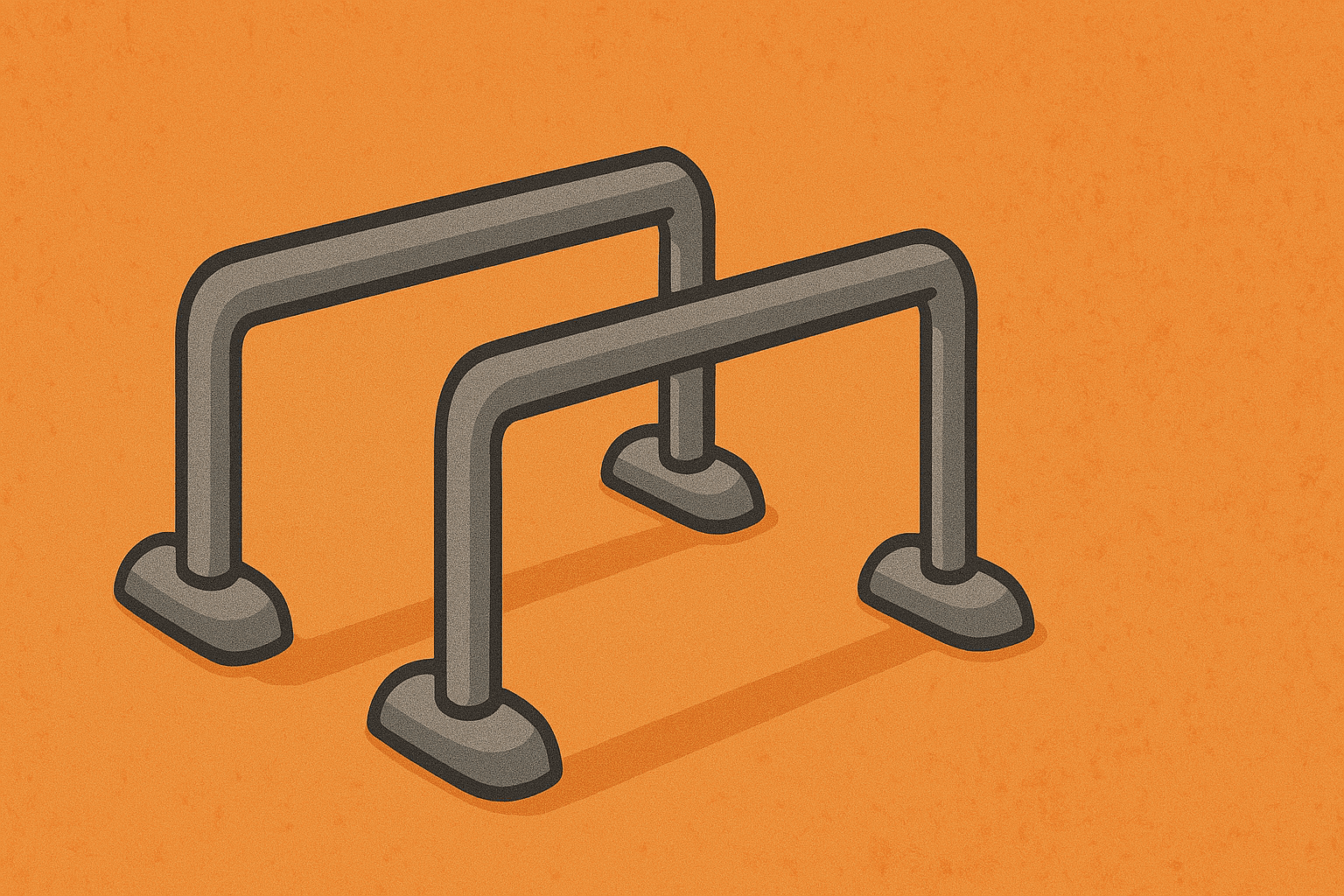
If I had to recommend one category of handstand progression equipment for most people, it would be parallettes. They are simple, portable, and genuinely useful from beginner level all the way to advanced presses and handstand push up work. They also reduce wrist extension compared with flat floor work, which is a big deal if your joints get irritated easily.
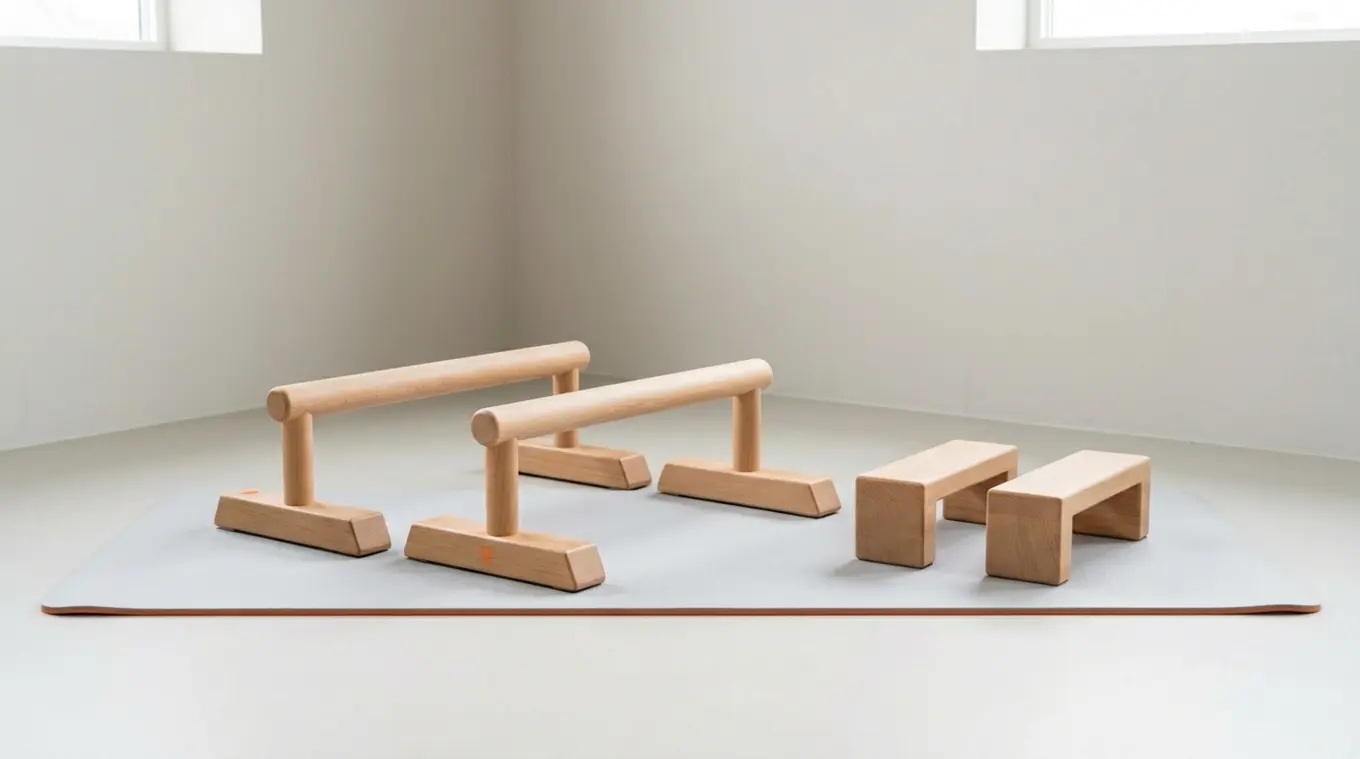
Handstand blocks do something similar but in a smaller format. They raise your hands slightly, improve grip, and can make stacking the shoulders feel cleaner. For some athletes, blocks feel more natural than full parallettes because they keep the hands closer to a floor based handstand pattern. Still, if you only buy one, I would usually choose low or medium parallettes over blocks because they are more versatile.
GORNATION makes several parallette options that fit handstand practice well. Their wooden models are especially good if you want solid grip and a natural feel in the hands. For most home users, that is a smart recommendation because stable wooden parallettes tend to feel more confidence inspiring than very cheap plastic options.
Wood vs. Metal Parallettes: Which One Should You Choose?
Wood usually feels better for hand balancing. It has a warmer, less slippery grip, and many athletes simply feel more connected to the surface. That matters in longer holds where sweaty hands can become a problem. This is one reason wooden GORNATION parallettes are worth a look if handstand work is one of your main priorities.
Metal parallettes can be great too, especially if you want maximum durability or you train outdoors often. But some metal bars feel harsher on the hands, and grip quality depends a lot on the coating and diameter. For a dedicated handstand setup, I generally lean toward wood unless you know you prefer metal.
If you want a more detailed breakdown, this comparison of wooden parallettes is helpful when deciding between materials.
Best Parallettes for Beginners vs. Experienced Athletes
For beginners, low to medium height parallettes are usually best. They are stable, less intimidating, and perfect for wall holds, shoulder taps, pike push ups, and L sits. They also work well as beginner handstand equipment because they can be used for more than one skill, which gives you better value for money.
Experienced athletes often prefer a slightly more specific setup. Some want taller parallettes for deeper pressing drills and handstand push up range. Others prefer lower bars with a thicker grip because they feel more stable during balance work. In my own training, I tend to come back to low wooden parallettes most often because they are the easiest to use frequently. That matters more than having the most advanced design sitting in the corner.
Handstand Balance Boards and Freestanding Trainers
This category gets a lot of attention online, but it is also where people overspend. Balance boards and freestanding trainers can be useful, but they are not essential for everyone. If you cannot hold a clean chest to wall handstand yet, these tools are probably not your best first purchase.
Where they do help is in making balance more repeatable. They can give you a narrower target, teach fingertip pressure, and help you understand where your weight needs to sit over the hands. That makes them more relevant for athletes who already have some control and want to sharpen it.
What a Balance Board Actually Trains
A handstand balance board mainly trains weight shifting, pressure awareness, and your ability to react without panicking. It does not magically build a freestanding handstand, but it can improve the small corrections that keep you balanced. Think of it as a feedback tool rather than a shortcut.
In practice, balance boards are best for short sets where you focus on body line and controlled corrections. They are less useful if your shoulders are still too weak to support quality volume. Strength first, precision second. That order saves a lot of frustration.
Best Freestanding Handstand Trainers Reviewed
Freestanding trainers come in a few forms, from simple handstand blocks mounted on a base to full trainer frames. The best ones are stable, wide enough to feel safe, and not overly tall. A shaky trainer defeats the whole purpose. If you are looking at one, check the base width, material quality, and whether the grips feel comfortable for repeated attempts.
For most readers, I would only recommend this kind of handstand equipment after you already own parallettes and a mat. It is interesting, but it is rarely the highest value purchase in a home handstand setup.
Handstand Mats: Do You Need One and Which Type Works Best?
Yes, for most home athletes, a mat is worth it. Not because handstands need a soft landing like tumbling, but because a mat improves consistency. It gives you a defined training area, better comfort on hard floors, and more confidence when practicing entries and exits.
The best handstand mat is not always the thickest one. If a mat is too soft, your hands sink and balancing becomes less realistic. For handstand practice, I prefer a firm exercise mat or a quality cork or rubber training mat with enough grip to stop hand sliding. This is especially helpful if you train in a garage, basement, or on hardwood.
GORNATION mats are a good example of a practical option here. Their home gym mats and movement focused surfaces make sense if you want something that also works for mobility, floor drills, and warm ups. If you train outdoors, a smaller pad can be enough for wrists, knees, and hand placement. In my experience, that kind of flexible use is much more valuable than buying an ultra specialized mat that only works for one thing.
Handstand Canes: The Underrated Training Tool
Handstand canes are one of the most underrated tools in hand balancing, but they are also one of the most specialized. They raise the hands significantly and place balance on small blocks or handles, which demands more precision through the shoulders, fingers, and core. For circus style hand balancing or advanced line work, they are excellent.
For the average calisthenics athlete, though, canes are not where I would start. They are best once you already have a stable freestanding handstand and want a new challenge or a different training stimulus. They can improve shoulder elevation, balance awareness, and pressing strength, but only if your foundations are already there.
| Equipment | Best for | Level | Priority |
|---|---|---|---|
| Parallettes | Wrist comfort, handstand practice, multi-use strength work | Beginner to advanced | High |
| Firm mat | Comfort, confidence, defined practice area | Beginner to advanced | High |
| Resistance bands | Warm ups, shoulder activation, mobility | Beginner to advanced | Medium |
| Wrist wraps/supports | Reducing wrist strain during higher volume training | Beginner to advanced | Medium |
| Handstand blocks | Grip, slight elevation, cleaner shoulder stacking | Beginner to intermediate | Medium |
| Balance board/freestanding trainer | Balance refinement and pressure awareness | Intermediate to advanced | Low |
| Handstand canes | Advanced balance precision and pressing strength | Advanced | Low |
So yes, handstand canes belong in a conversation about the best calisthenics handstand equipment, but for most people they sit in the advanced category, not the essential one.
Wall Bars and Pull Up Bars for Handstand Practice at Home
Wall bars and pull up bars are not handstand tools in the narrow sense, but they can be very useful in a best handstand equipment for home gym discussion. Wall bars help with shoulder mobility, line drills, compression work, and controlled kick up practice. Pull up bars support hanging core work and shoulder strength that carries over to handstands.
A simple wall handstand setup can also be built around an open wall and enough floor space, but wall bars give you more options. You can do chest openers, lat stretches, tuck compression drills, and supported balance work. That matters because limited shoulder mobility is one of the main things that blocks clean overhead stacking.
If you already plan to buy a pull up bar, choose a sturdy model. Ceiling mounted or wall mounted options are usually better than flimsy doorway bars for long term use. If you want help comparing formats, this article on doorway vs wall mounted pull up bars is worth reading.
Resistance Bands and Wrist Supports: Small Gear, Real Impact
These are the small items that make a bigger difference than people expect. Resistance bands are useful for wrist warm ups, shoulder activation, overhead mobility, and assisted drills. They are not direct handstand tools in the same way parallettes are, but they are excellent support pieces in a complete handstand progression equipment setup.
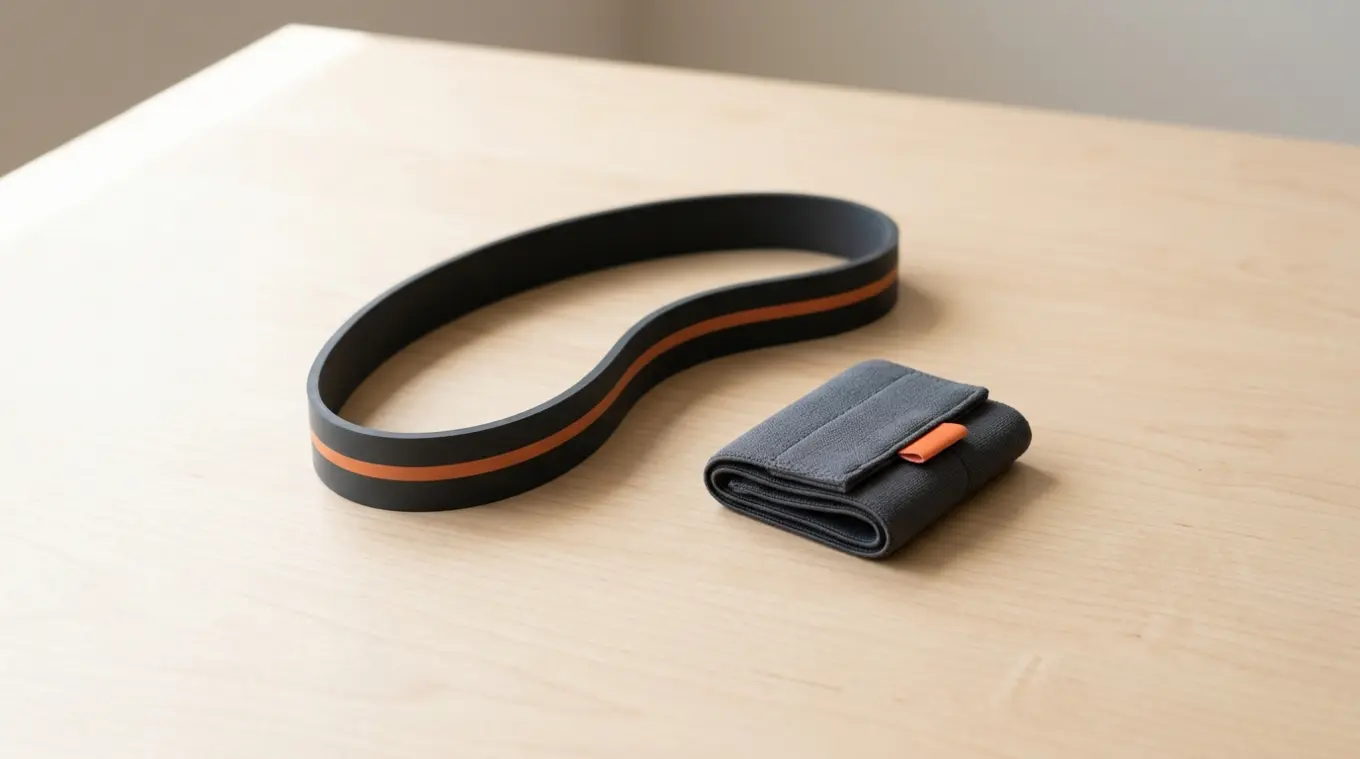
I use bands most for pre session prep. A few minutes of shoulder openers, scapular activation, and wrist loading progressions can make the whole session feel smoother. If you are stiff from desk work or previous training, this is often the difference between productive practice and fighting your own body.
GORNATION resistance bands are a solid recommendation because they are practical for both warm ups and broader calisthenics work. That matters if you want gear that stays useful beyond one skill. If you want a deeper look at options, this guide to the best resistance bands for calisthenics can help.
As for handstand wrist support, wraps can be useful when your wrists are already irritated or when you are increasing volume. They are not a fix for poor mobility or bad hand placement, but they can reduce strain enough to keep training productive. Good wrist-friendly handstand equipment should support sound technique, not replace it.
How to Build a Complete Home Handstand Setup on Any Budget
You do not need to spend a lot to build a useful setup. The right home handstand setup depends more on smart choices than on a big budget. The goal is to cover comfort, support, and progression without filling your room with gear you barely use.
Budget Setup (Under $50)
If your budget is tight, keep it simple. Start with a non-slip mat or training pad and a basic pair of wrist wraps if your wrists are sensitive. If you can still fit one more item into the budget, a light resistance band is usually the best add on because it helps with warm ups and mobility work.
This setup is enough for wall holds, kick up drills, shoulder taps, line drills, and wrist prep. It is not flashy, but it covers the basics. For a beginner, that is often all you need for several months of good practice.
Full Setup ($100 and Up)
Once you can spend more, the best upgrade is a quality pair of parallettes. That is where your setup starts to feel complete. Add a firmer mat, a set of resistance bands, and wrist supports if needed. If your space allows, wall bars or a sturdy pull up bar become useful secondary additions.
If I were building a full setup today for most people in the US market, I would choose wooden parallettes from a trusted brand like GORNATION, a quality mat, and a couple of band strengths. That combination gives you almost everything needed for beginner to intermediate handstand training and also supports push ups, L sits, pike work, and general calisthenics. It is one of the best handstand equipment for beginners and still stays useful as you get better.
How Much Space Do You Need for Handstand Training at Home?
This is a practical question that often goes unanswered in equipment guides. For wall handstand practice, you need a clear stretch of wall roughly one meter wide and enough floor space in front of it to kick up comfortably. That usually means around 1.5 to 2 meters of depth. A 2 by 2 meter practice area is enough for most wall drills and kick up work.
For freestanding handstand attempts, ceiling height matters more. A standard room with a ceiling height of around 2.4 meters can feel tight for a full handstand, so it is worth checking your clearance before you start. Garages, basements, and open outdoor areas are often better suited if your ceiling is on the lower side.
The good news is that most handstand equipment is compact. Parallettes, mats, resistance bands, and wrist wraps all store flat or in a small bag and do not require a dedicated gym room. If space is limited, a mat that rolls up and a pair of compact parallettes are ideal because they can be set up and cleared away in minutes.
What to Look for When Buying Handstand Equipment
First, check stability. If the equipment moves when you load it, skip it. Handstand training demands trust in the surface. Cheap gear often looks fine in product photos but feels shaky in real use. I have learned over the years that unstable equipment does not just feel annoying, it changes how confidently you train.
Second, think about wrist angle and grip. This is especially important for wrist-friendly handstand equipment. A good grip surface and a comfortable handle diameter make a real difference in hold quality. Too slick, too thin, or too thick can all create problems depending on your hands and training level.
Third, buy for your actual space. The best handstand equipment for home gym use is equipment that fits where you train and gets used often. A compact pair of parallettes that lives in your bedroom corner is more valuable than a big trainer you never set up.
Fourth, think beyond one exercise. This is why parallettes are such a strong buy. They work for handstands, push up variations, L sits, and planche basics. If you want more ideas, this guide to how to train the L sit shows how one piece of equipment can support multiple goals.
Finally, avoid the trap of buying the absolute cheapest option. For hand balancing, quality matters. Better materials, better grip, and better construction usually mean safer, more consistent practice. That does not mean you need luxury gear, just equipment that is built well enough to trust under load.
Final Verdict: The Best Calisthenics Handstand Equipment for Most People
If you want the simplest honest answer, the best calisthenics handstand equipment for most people is a solid pair of wooden parallettes, a firm mat, and a light set of resistance bands. That combination covers comfort, wrist relief, progression, and warm up support without overcomplicating your training.
For beginners, parallettes are usually the smartest first purchase because they are effective, versatile, and easier on the wrists than flat floor practice. For people training at home, a mat is a close second because it improves comfort and confidence. Bands and wrist wraps round out the setup well, especially if mobility or wrist stress is a limiting factor.
If you want a practical brand recommendation, GORNATION is a good place to start for parallettes, mats, resistance bands, and wrist support because their products are built specifically for calisthenics rather than generic fitness use. That does not mean every athlete needs the same setup, but it does mean you are looking at gear designed with actual bodyweight training in mind.
So if you are wondering where to start, keep it simple. Buy equipment that solves your current problem, helps you train consistently, and still makes sense six months from now. That is usually the difference between gear that collects dust and gear that genuinely improves your handstand.
Handstand training does not require a huge home gym, but the right tools can save your wrists, improve confidence, and help you progress faster. For most people, a pair of quality parallettes, a firm mat, and a resistance band or wrist support setup are more than enough. Start with what matches your current level, then add more specialized handstand equipment only when your practice gives you a clear reason. If you want one simple recommendation, build around reliable wooden parallettes first and grow from there.
Frequently Asked Questions
What is the best handstand equipment for beginners?
For most beginners, the best handstand equipment is a pair of low parallettes and a firm mat. Parallettes reduce wrist strain and make hand placement feel more secure, while a mat adds comfort and confidence. A light resistance band can also help with warm ups and shoulder mobility before practice.
Do I need parallettes for handstands?
No, you can learn handstands on the floor, especially with wall drills. But parallettes for handstands are one of the best upgrades you can make. They are more wrist friendly, improve grip, and can make longer practice sessions more comfortable. They also stay useful for push ups, L sits, and planche basics.
Are handstand blocks better than parallettes?
Not usually for most people. Handstand blocks can feel nice and compact, but parallettes are more versatile and often give better value. If your goal is to build a complete home handstand setup, parallettes usually make more sense because they support more exercises and progression steps.
What kind of mat is best for handstand practice?
A firm, non-slip mat is usually best. You want enough cushioning for comfort on hard floors, but not so much softness that your hands sink in. Thick crash mats are not ideal for normal handstand balance work because they change the feel of the position too much.
Do wrist wraps help with handstand training?
Yes, handstand wrist support can help if your wrists feel irritated or fatigued, especially during higher volume phases. That said, wrist wraps should support training, not cover up poor mobility or bad technique. It is still important to warm up properly and build wrist tolerance over time.